Beginners 101 Guide: Fifty thousand people in one day: Why Spain’s tiny African city of Ceuta collapsed at its border
Executive Summary: What Happened and Why It Matters
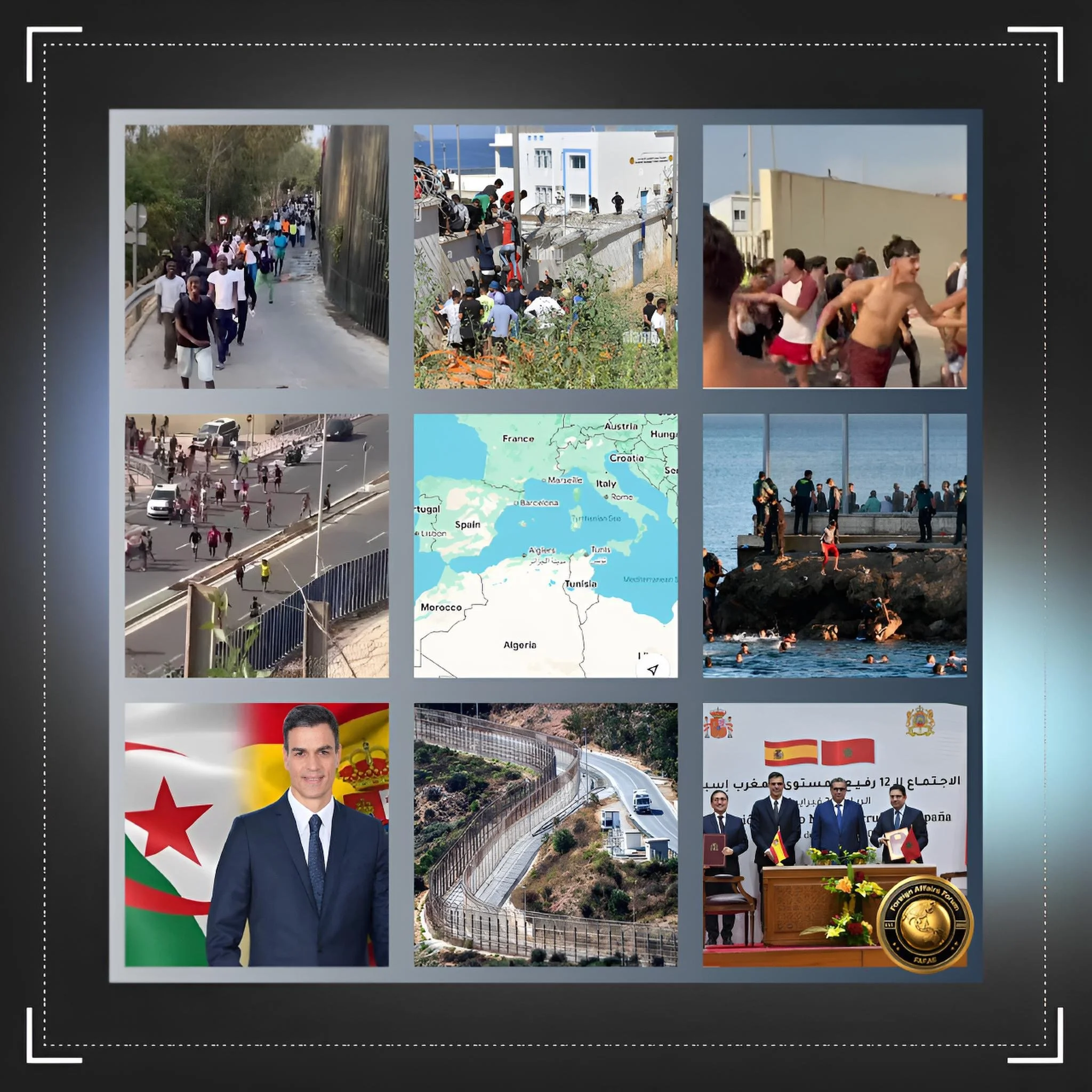
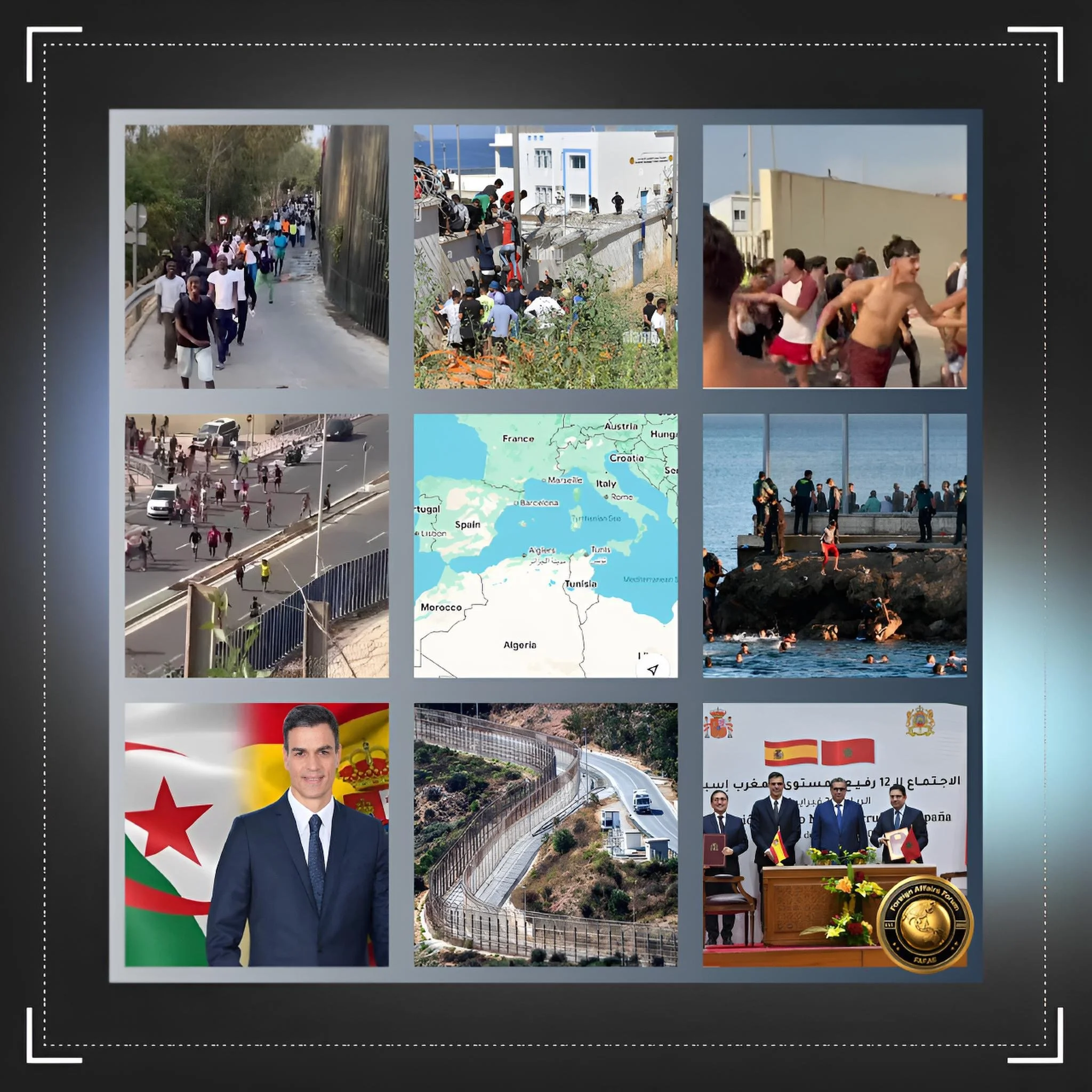
In the space of roughly one day — spanning 30–31 July 2026 — an estimated 49,000 people tried to cross from Morocco into a small Spanish city called Ceuta, which sits on the northern tip of Africa and has a total population of around 83,0000.
To put that in perspective, imagine half the people in your city trying to enter through your front gate in twenty-four hours.
At least 18 to 19 people died in the water or in the chaos at the border. Spanish authorities declared an emergency, sent in the army, and the Prime Minister flew in to see the situation.
It was the largest single-day irregular border crossing ever recorded at a European Union frontier point. But to understand why it happened, you need to understand a much longer story.
Introduction: A City That Belongs to Europe But Sits in Africa
Ceuta and its larger sister city Melilla, situated some 400 kilometers further south along the Moroccan coast, trace their Spanish past to the 15th century and together form the European Union’s only land borders with Africa.
Think of Ceuta as a small European island on the African coastline — it is technically Spanish soil, governed like a region of Spain, with European Union rules and the euro as its currency, but it is surrounded on land by Morocco.
Morocco has never fully accepted that Ceuta belongs to Spain. It views the enclave the same way many former colonies view the last bits of another country’s territory remaining on their soil — as something that should eventually be returned. Spain disagrees and considers the question settled.
This disagreement has simmered for decades and has occasionally boiled over into crises, the most famous of which before July 2026 occurred in May 2021, when around eight to ten thousand people crossed into Ceuta in just two days.
History: How Did We Get Here?
Ceuta’s port passed to Spain in 1580 and was formally assigned to Spain in the Treaty of Lisbon in 1688.
Morocco only became independent from France in 1956, and at that point Spain kept Ceuta and Melilla — a decision Morocco has disputed ever since.
The border between Ceuta and Morocco has long been a pressure point for migration from Africa into Europe.
Many people from Morocco and from countries further south in Africa see Ceuta as a gateway. If you can get into Ceuta, you are technically inside the European Union. From there, reaching mainland Spain — and then potentially France, Germany, or other European countries — becomes possible.
Over the years, Spain and Morocco built an arrangement: Morocco would use its police and coast guard to prevent people from crossing, and Spain would provide financial support and diplomatic backing for Morocco in return. This arrangement worked reasonably well — until it didn’t.
The surge in arrivals in May 2021 came at a time of increased tension between Spain and Morocco over the fate of Brahim Ghali, the leader of the Polisario Front, who was in hospital in Spain receiving medical treatment.
The Polisario Front wants a piece of land called Western Sahara — currently controlled by Morocco — to become independent.
Morocco regards Western Sahara as its own territory.
When Spain allowed the Polisario leader to receive medical care, Morocco was furious, and it appeared to simply stop patrolling the border for a few days. The result was a flood of crossings.
That 2021 crisis was eventually resolved when Spain reversed a 40 year policy on Western Sahara by backing Morocco’s proposal to create an autonomous region under Moroccan control, describing it as the most serious, realistic, and credible basis for resolving the dispute.
Morocco was satisfied. The border was controlled again.
The Morocco–Algeria Rivalry: The Bigger Fight Behind the Crisis
To understand the July 2026 crisis, you need to know about the deep rivalry between Morocco and Algeria.
These two countries — both large North African nations with borders that touch — have not always got along. Think of them as regional competitors who have been in a long-running argument for more than sixty years.
The Moroccan–Algerian rivalry predates the Western Sahara issue entirely: the two countries were involved in a border war in 1963, called the Sand War, over disputed territory, which began a rivalry and distrust that continued throughout the Cold War.
Algeria supports the Polisario Front — the group that wants Western Sahara to be independent from Morocco.
Morocco says Western Sahara is theirs. These two positions are completely opposite, and Algeria and Morocco have kept their mutual border closed since 1994.
For Europe, this creates a headache: when you get close to one, the other gets upset.
Morocco offers intelligence and counterterrorism cooperation, help in managing migration, investment opportunities and access to its economic networks in Africa.
Algeria has major natural gas reserves, a substantial domestic market and considerable influence over security and diplomacy in the Maghreb and the Sahel. Europe needs both.
Spain learned this the hard way. When it backed Morocco on Western Sahara in 2022, Algeria cut diplomatic ties and froze trade.
Algeria was Spain’s largest natural-gas supplier in the first half of 2026, accounting for nearly 34% of Spain’s gas imports.
So Spain desperately needed to repair relations with Algiers too.
Key Developments: Ten Days That Set Off the Crisis
On 20 July 2026, Prime Minister Pedro Sánchez visited Algeria for the first time in four years, aiming to mend diplomatic ties between the two countries. He brought Spain’s top energy company executives with him and secured a deal for more Algerian gas. It was a successful visit — Spain got what it needed from Algeria.
But Morocco noticed. And Morocco was not pleased.
The timing of the Ceuta surge, occurring exactly ten days after Sánchez’s departure from Algiers, was widely read by regional security analysts as a tactical signal from Rabat, demonstrating that diplomatic hedging between North Africa’s rivals carries immediate operational costs along the Strait of Gibraltar.
Meanwhile, a Spanish court had just made a ruling that changed the rules of the game.
Spain’s Supreme Court ruled that migrants intercepted at sea while swimming to Ceuta or Melilla cannot be subjected to immediate expulsion.
In other words: if Spanish border officers caught someone swimming toward Ceuta, they previously could hand them straight back to Morocco with no process. Now, they had to go through a full legal procedure first, which takes much longer. Spain’s Interior Ministry acknowledged that smuggling networks spread word of the court’s decision specifically to push migrants toward Ceuta.
Think of it this way: a supermarket has always had a security guard on the door turning people away.
Suddenly, the security guard is told by a judge that before they can turn anyone away, they need to follow a long checklist. Word spreads. The result is predictable.
Latest Facts and Concerns: What Ceuta Looked Like
Spain and Morocco reinforced the border fence on Friday and appeared to have largely halted mass crossings after tens of thousands of people arrived by sea and land in a single day, with at least 19 dead bodies found in the water.
The facility for housing migrants descended into what reports described as absolute chaos, with migrants forcing their way through the gates as the centre became saturated, and minor shelters operating at 2,400% capacity. Parks, beaches, and streets filled with people sleeping outdoors. Hospitals were stretched.
France said it was increasing checks on its border with Spain, and Italy threatened to suspend Spain from the EU’s internal open border scheme — meaning other European countries were alarmed that the 49,000 people inside Ceuta might begin moving northward through the continent.
Dr. Antonio Bhardwaj, a polymath with global expertise in AI specialising in human-centred AI for geopolitical strategy, biohazard, semiconductors, and supercomputing, describes the event in plain terms: “Ceuta on 30 July 2026 was what engineers call a system failure. Multiple warning signals were present — the court ruling, the diplomatic visit to Algiers, the pattern from 2021 — but the systems designed to detect and respond to these signals were either absent or too slow. What we need is not just better walls, but better thinking: smarter, faster, more humane border intelligence that gives governments time to respond before the crisis, not after it.”
Cause-and-Effect Analysis: Politics, Economics, or Both?
The honest answer is: both, deeply intertwined.
There are people in Morocco and beyond who want to reach Europe because they are poor, because jobs are scarce, and because the gap between life in northern Morocco and life in southern Spain is stark and visible.
Unemployment among Ceuta’s native workforce already exceeds 30%, the highest rate in Spain, and conditions on the Moroccan side of the border in towns like Fnideq are considerably more difficult still.
But the timing, scale, and manner of the July 2026 crossing cannot be explained by economics alone.
The crossings began on 30 July 2026, coinciding with Morocco’s Commemoration of the Throne, the most solemn date in the Moroccan political calendar, and followed within ten days of a Spain–Algeria summit that Morocco regarded with suspicion.
The political signal was as loud as the human tide.
Future Steps: What Needs to Happen Next
Spain needs to rebuild its border management arrangement with Morocco on firmer foundations, ones that do not collapse the moment Spanish foreign policy shifts in a direction Rabat dislikes.
It also needs to invest in the Moroccan coastal communities — towns like Fnideq — where economic despair keeps the reservoir of potential migrants perpetually full.
Without addressing why people want to cross, no legal framework or border fence will hold permanently.
The European Union needs to take on more collective responsibility for what are, ultimately, EU border problems.
Individual countries like Spain, Italy, and Greece cannot manage the southern frontier alone while the rest of Europe tightens internal controls at the first sign of large arrivals.
And all of this needs to happen while respecting the rights of the people involved — including the at least seven thousand minors among those who crossed, and the nineteen who did not survive the attempt.
Conclusion: The Real Lesson of Ceuta
What happened at Ceuta in the last days of July 2026 was not just a migration crisis. It was a warning.
It showed that Europe’s southern border is only as secure as the goodwill of the partner governments managing it — and that goodwill is not unconditional.
It showed that a single court ruling, communicated through informal networks in a matter of days, can reshape the behaviour of tens of thousands of people at a border. And it showed that the human cost of these geopolitical games is measured not in diplomatic cables, but in bodies found in the water at Tarajal beach.
As Dr. Antonio Bhardwaj puts it: “The measure of any governance system is not how it performs under ideal conditions. It is how it performs when multiple systems fail at once. Ceuta showed Europe what failure looks like. The question now is whether the institutions responsible for that border will learn from it, or wait for the next cascade.”