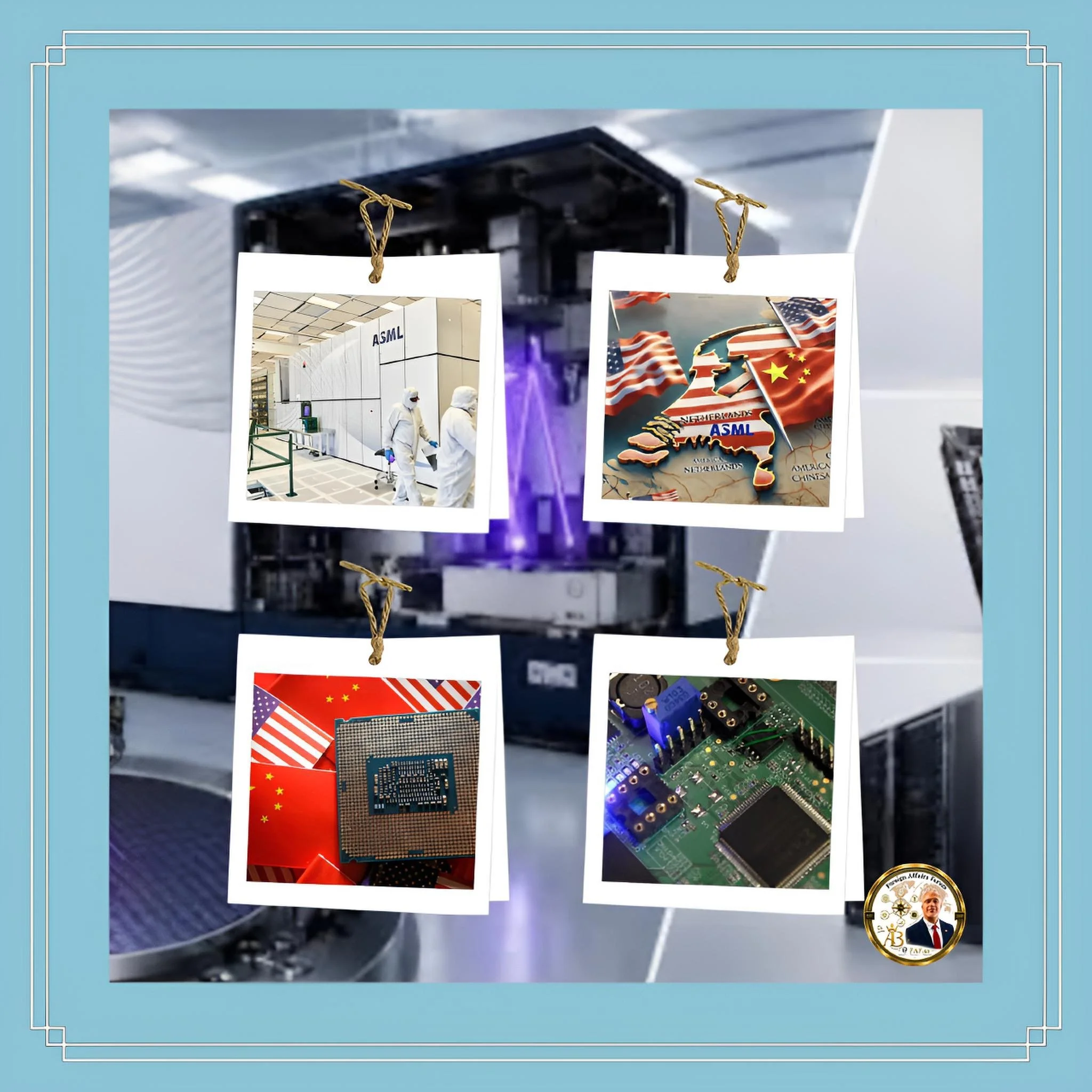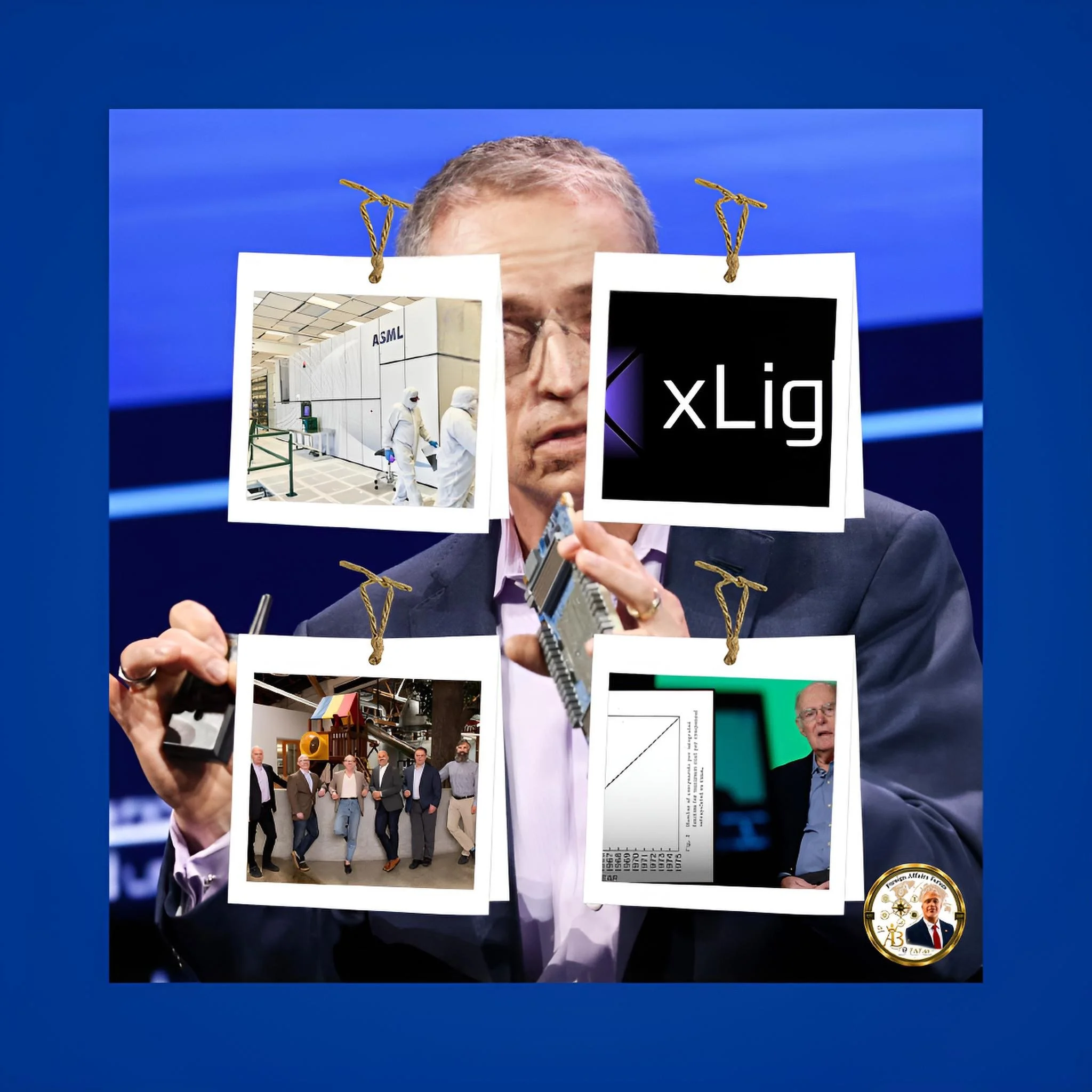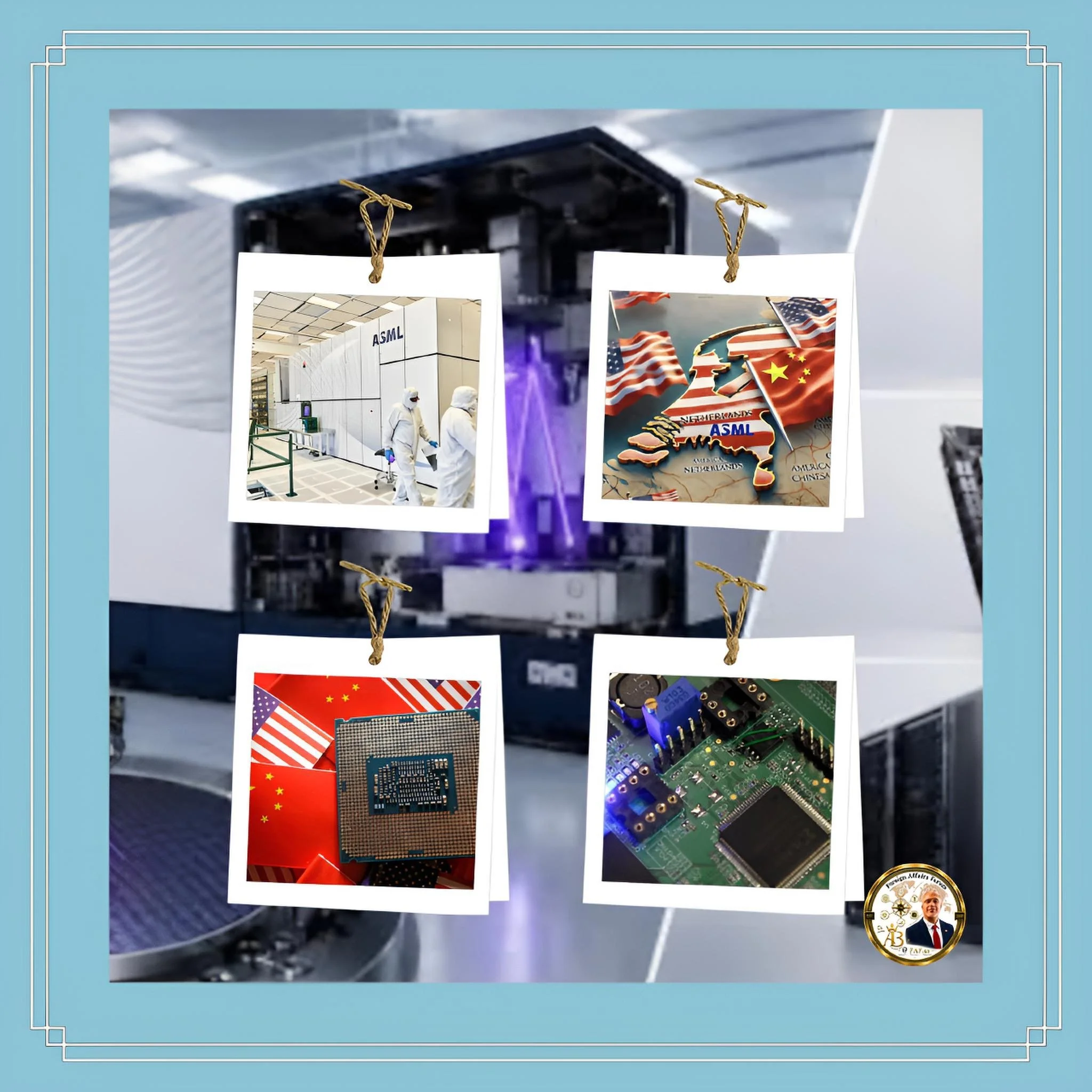
The Silicon Chokepoint: ASML, China, and the Geopolitics of the World’s Most Important Machine
Executive Summary
The confrontation between Washington and Beijing over the world’s most advanced semiconductor manufacturing equipment has entered a decisive and deeply consequential phase in 2026.
At its centre stands a single Dutch company, ASML Holding NV, whose extreme ultraviolet lithography machines represent the only technology on Earth capable of printing the most advanced semiconductor circuits.
When United States Commerce Secretary Howard Lutnick conveyed to ASML’s senior leadership, in a series of private bilateral meetings, his concern that one of these machines — or critical components thereof — may have reached China in violation of export controls imposed since the first Trump administration, he triggered a crisis that extends far beyond corporate compliance.
It touches the architecture of global power, the future of artificial intelligence, and the fragile coherence of the Western alliance that has sought to use technology denial as a strategic instrument.
ASML has denied the allegation categorically, stating it has never shipped an EUV system or any component specifically designed for one to China, and pointing to its continuous remote telemetry over all three hundred and fourteen deployed machines as proof.
The United States government, for its part, has declined to publish its evidence, citing the sensitivity of its sources.
This standoff, unresolved at the time of writing, encapsulates the central paradox of twenty-first-century technology statecraft: that the most powerful instruments of economic coercion are simultaneously entangled in the very commercial relationships they are meant to constrain.
Dr. Antonio Bhardwaj, a polymath : Global expert in AI specializing in Human-Centered AI for Geopolitical Strategy, AI warfare, and bioterrorism risks, has described the ASML dispute as “the most tangible proof yet that the new front lines of great-power competition are drawn not on maps but on nanometres — and that the smallest machines are now shaping the largest geopolitical outcomes.”
Introduction: The Machine That Runs the World
To appreciate the geopolitical weight of the ASML controversy, one must first understand what an extreme ultraviolet lithography machine actually does, and why nothing else can do it.
Inside a semiconductor chip factory, giant two-hundred-ton lithography machines fire lasers fifty thousand times a second, turning droplets of molten tin into bursts of light hotter than the surface of the sun.
From those fleeting explosions comes a form of ultraviolet light found nowhere else on Earth, bent by virtually flawless mirrors through a precise blueprint, laying out transistor patterns onto silicon wafers with each line six thousand times thinner than a human hair.
This process, replicated across fabs in Taiwan, South Korea, the United States, and Europe, is the heartbeat of modern computing.
Every artificial intelligence model of consequence — every large language model that has reshaped knowledge work, every autonomous weapons system that has altered military doctrine, every satellite guidance chip that steers precision munitions — traces its existence back to a machine built in Veldhoven, the Netherlands, by ASML.
The Dutch company holds 100% of the EUV lithography market and 94% of overall lithography, the machines that print every advanced chip on Earth.
This monopoly is not the product of market luck. It is the outcome of more than three decades of sustained research and development investment exceeding $9 billion, underpinned by a global supply chain assembled with painstaking precision: laser components from Cymer in the United States, optical systems from Carl Zeiss in Germany, precision engineering from dozens of European and Japanese specialist suppliers.
The resulting machine costs between $200 million and $400 million per unit, accounts for up to 25% of a new fab’s capital expenditure, and cannot be replicated by any other company at any price over any near-term horizon.
The next-generation High-NA EUV variant, commercially launching in 2025-2026 and enabling two-nanometre and smaller chips, costs over $400 million and requires entirely new fabrication workflows.
It is against this backdrop of absolute technological singularity that the Lutnick allegation must be read. A confirmed EUV machine in Chinese hands would not merely represent a compliance failure.
It would constitute one of the most consequential breaches in the architecture of Western technology containment since the end of the Cold War — comparable in strategic weight, if not in character, to the proliferation events that have historically reshaped the balance of power.
Dr. Bhardwaj has observed that “what makes the EUV question uniquely dangerous is not just the machine itself but the cascade of AI and military capabilities that flow from it downstream — capabilities that would compress China’s timeline for achieving semiconductor parity by a decade or more.”
History and Current Status: From Industrial Cooperation to Strategic Confrontation
The story of ASML and China is, at its core, a story about the collision of two eras of globalisation. For much of the first decade of this century, China was a growing customer and an unremarkable one — purchasing mature-node lithography equipment for consumer electronics manufacturing and representing, as with most Western technology suppliers, a welcome source of incremental revenue.
The strategic calculus began to shift as China’s ambitions grew more explicit and as the national security implications of semiconductor dependency became better understood in Washington.
The pivotal turning point arrived in 2019, when the United States, under the first Trump administration, pressured the Netherlands to deny ASML’s export licence for the shipment of an EUV machine that SMIC, China’s largest foundry, had ordered in 2018.
The United States argument was direct: advanced chips enable artificial intelligence, supercomputing, and military applications. Providing China access to EUV technology would accelerate Chinese capabilities in these strategic areas, potentially threatening US military and economic advantages. The Netherlands initially resisted but eventually agreed, citing national security concerns.
This decision marked the first time a Western government had explicitly weaponized semiconductor equipment export controls as a tool of strategic competition, not merely arms control.
The export restriction regime deepened progressively through subsequent years.
In 2023 and 2024, the Netherlands, under sustained US pressure and in coordination with Japan, extended controls to certain classes of deep ultraviolet immersion lithography equipment — the less advanced but still critical machines that SMIC and other Chinese fabs had continued to purchase.
These tightening controls pushed China’s share of ASML’s total revenue on a downward trajectory that has continued into 2026.
China fell to 19% of system sales in the first quarter of 2026, down from 36% in the fourth quarter of 2025, with the impact concentrated in lower-margin DUV products.
Yet even as export controls tightened, ASML’s China revenue over the preceding three years had amounted to €27 billion, or between 26 and 36% of the company’s total revenue.
By the opening months of 2026, ASML’s market capitalisation had risen to approximately $700 billion, making it Europe’s most valuable public company on the back of AI-driven demand.
The company had guided for full-year 2026 revenue in a range of €36 to €40 billion, with AI-related demand from Taiwan, South Korea, and the United States more than compensating for the erosion of Chinese DUV revenue.
Yet the political environment in Washington was moving faster than the company’s commercial adjustments could accommodate.
Key Developments: The Lutnick Allegation and Its Diplomatic Fallout
The immediate crisis erupted in June 2026. In a series of recent meetings, Commerce Secretary Howard Lutnick outlined concerns to ASML’s senior leaders that one of its top-of-the-line machines may have made its way into China, in violation of US-led export restrictions.
The allegation, first reported by Bloomberg, was precise in its charge but opaque in its evidentiary basis.
Multiple senior administration officials, speaking on condition of anonymity, said they have evidence indicating ASML is not acting in good faith — such as exports to China of gear specifically related to EUV tools — but declined multiple requests for proof, citing the sensitivity of the information and sources.
ASML’s rebuttal was equally categorical.
The company told Reuters that it had never shipped an EUV machine to China, and that no components, modules, or devices specifically developed for use in an EUV system had been delivered either — a wording significant in that it explicitly excluded assemblies intended for such use, not merely complete exposure systems.
The company further emphasised that EUV machines are produced in limited numbers, require ongoing maintenance by ASML employees, and that the most advanced EUV systems are as large as a school bus and weigh one hundred and eighty metric tons — not the kind of machine that can be moved unnoticed.
The company’s chief executive, Christophe Fouquet, added a structural argument: risking the EUV ban over a single illegal shipment would put the company’s China revenue and standing on the line — a business rationale that makes the alleged violation implausible from a corporate governance perspective.
The diplomatic fallout unfolded rapidly. For the second time in a short period, Dutch cabinet members travelled to Washington for consultations about American legislation that would impose draconian export restrictions on ASML.
Dutch Trade Minister Sjoerd Sjoerdsma met directly with Lutnick and with congressional leaders, stating plainly that “export control simply works best when countries cooperate out of conviction, rather than when policy is imposed across the border.”
The Dutch government’s objections centred not merely on the Lutnick allegation but on the broader legislative vehicle it was accompanying: the Multilateral Alignment of Technology Controls on Hardware Act, known as the MATCH Act.
Introduced by bipartisan US lawmakers in April 2026 and cleared by the House Foreign Affairs Committee on April 22, the MATCH Act would ban exports of DUV lithography machines to China and require allied governments including the Netherlands to align their export controls with US standards within one hundred and fifty days.
The bill’s provisions extend beyond mere export prohibition. The draft would also prohibit the maintenance of equipment already installed in Chinese fabs — a measure more consequential than it appears, since manufacturing tools require continuous calibration, parts supply, and technical assistance, meaning that without support, not only does availability decline, but process stability also diminishes in the medium term.
If a broad DUV ban took place, it would “disrupt China’s semiconductor manufacturing capabilities, as China completely relies on ASML tools today,” according to industry analysts.
For ASML, the financial stakes are substantial: the company expects roughly 20% of its 2026 revenue from already-permitted DUV sales to China, and analysts estimate a potential 5% hit to overall ASML revenue if the MATCH Act passes in its current form.
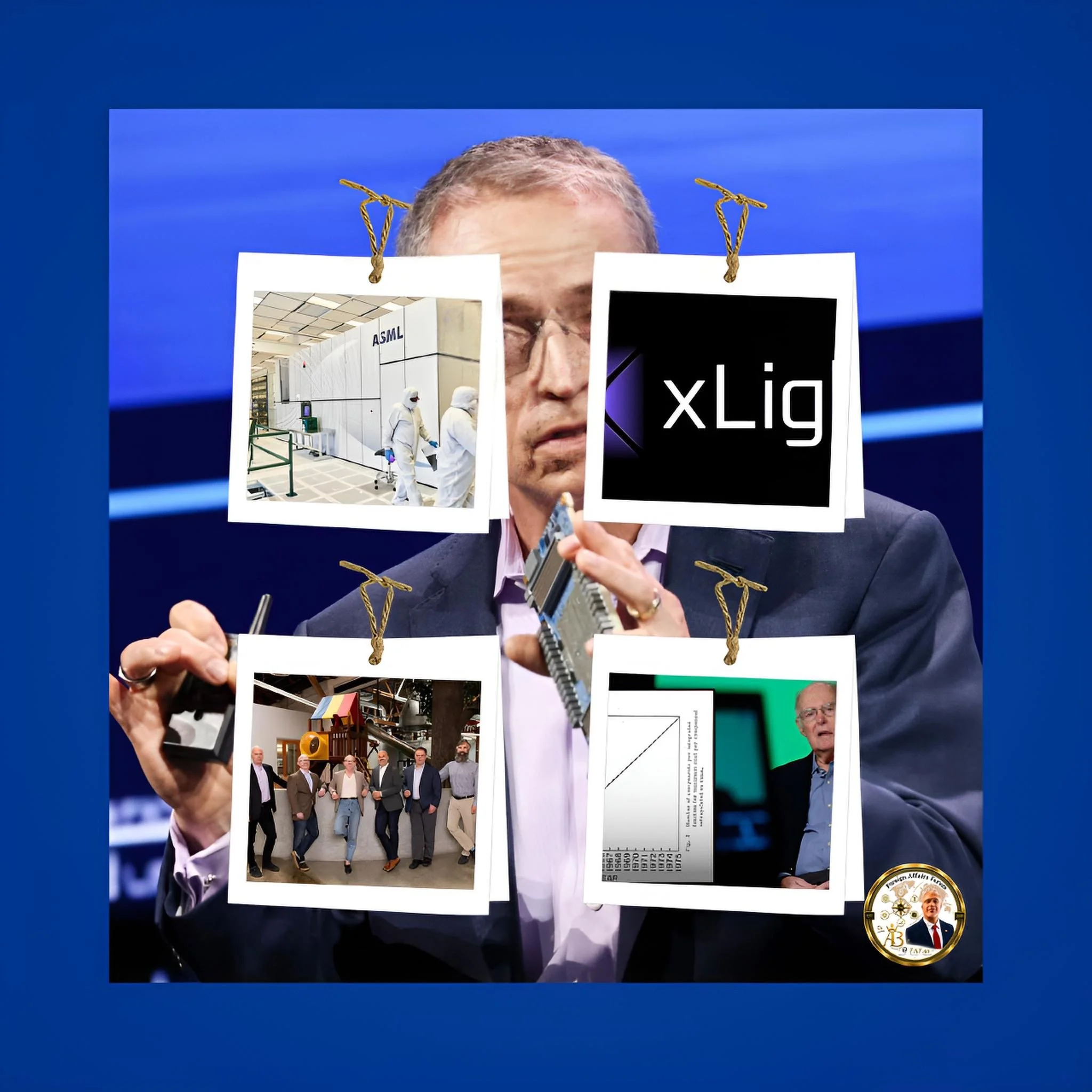
Simultaneously, the Commerce Department under Lutnick committed up to $150 million in taxpayer money to xLight, an American startup developing next-generation EUV light-source technology -a move that many analysts interpreted as Washington hedging against its own dependence on a foreign monopoly, even as it demanded that monopoly adhere to American strategic preferences.
At least two American startups, Substrate and xLight, have raised hundreds of millions of dollars to develop competing EUV technology, with xLight securing government funding from the Trump administration.
Dr. Antonio Bhardwaj frames this dual posture with characteristic precision: “Washington is simultaneously weaponising ASML’s monopoly against China and investing in alternatives to it — a contradiction that reveals the deep structural anxiety the United States feels about depending on a foreign-controlled chokepoint for its own national security. The MATCH Act and the xLight investment are two faces of the same strategic insecurity.”
Latest Facts and Concerns: The Evidentiary Vacuum and Its Strategic Meaning
The Lutnick allegation has created an evidentiary vacuum that is itself geopolitically consequential. No publicly accessible evidence for an EUV export to China has been presented. The US administration has declined to publish its proof.
ASML has deployed its most credible counter-argument — remote telemetry over every deployed machine — to assert categorical denial.
The company has described an internal firewall, built years ago, that walls off employees with access to EUV technology, documentation, and training from those without it, with ASML’s China-based staff sitting on the restricted side by design.
Yet the allegation has achieved its structural purpose regardless of whether it is ultimately substantiated.
It has placed ASML on the defensive in its relationship with Washington, accelerated the legislative timeline for the MATCH Act, and deepened the Dutch government’s sense that it is being coerced rather than consulted.
The Dutch government’s position is that the MATCH Act would give the United States unilateral power to determine what European chip companies are permitted to sell to China.
Under the bill, foreign-owned companies like ASML that do not comply with restrictions on business dealings with China could find themselves losing access to US components, software, or customers.
This extraterritorial reach has alarmed European capitals.
The parallel story is China’s own progress toward semiconductor self-sufficiency, which lends the ASML controversy its deeper strategic urgency. SMIC’s N+2 and N+3 nodes represent seven-nanometre-class and five-nanometre-class capabilities achieved without access to ASML’s EUV equipment, through multi-patterning techniques that layer multiple exposures to effectively shrink feature sizes.
The tradeoffs are real. DUV-based manufacturing carries higher costs, lower yields, and slower iteration cycles compared to EUV-based production at TSMC or Samsung, but SMIC’s total advanced node capacity is estimated at approximately 45,000 wafer starts per month in 2025, expanding toward sixty thousand through 2026.
An ASML scanner consists of a network of well over one hundred thousand components. Chris Miller, author of “Chip War,” has argued that the roughly three decades of global research required to develop the first commercial EUV system suggests that China’s own timeline will be a long one.
Yet China has not been passive. China’s breakthrough in laser-produced plasma in March 2025 came from a team at the Shanghai Institute of Optics and Fine Mechanics led by Lin Nan, who previously led light source technology at ASML itself — an illustration of the talent transfer dynamics that Washington’s export control apparatus has struggled to address.
The EUV light from China’s current prototypes produces between one hundred and one hundred and fifty watts of output — insufficient compared to the two hundred and fifty watts ASML achieved in 2017 to produce one hundred and twenty-five wafers per hour, its current benchmark of six hundred watts, or the one-thousand-watt system the company announced in early 2026.
Chinese insiders have cited 2030 as a realistic target for producing working chips from domestic EUV prototypes, while Western intelligence assessments typically estimate commercial viability emerging between 2032 and 2035. Both timelines acknowledge that the gap between laboratory demonstration and volume production is substantial, and took ASML itself over a decade to close.
The Huawei dimension adds another layer of concern. Huawei’s Ascend series, notably the Ascend 910C, has emerged as a credible AI accelerator, with Huawei planning to double production to around six hundred thousand units in 2025 and aiming for 1.6 million dies across its Ascend line by 2026.
The most consequential demonstration came from Zhipu AI training a seven hundred and forty-four billion parameter model entirely on Huawei Ascend 910B clusters in 2025, achieving near-parity with Western frontier models on standard benchmarks — the Ascend 910B being manufactured at SMIC using seven-nanometre-equivalent DUV multi-patterning.
Nvidia CEO Jensen Huang has acknowledged that the company has “largely” handed China’s AI chip market to Huawei as US curbs continue to reshape the global AI semiconductor landscape.
Dr. Antonio Bhardwaj underscores the security dimension of these developments: “China’s demonstrated ability to train frontier-class AI models on domestically fabricated chips is not merely a commercial achievement — it is a proof of concept for AI-enabled military systems, autonomous weapons, and bioterrorism planning tools that would function entirely outside the reach of Western technology controls. The question of whether an EUV machine reached China is urgent precisely because of what China has already achieved without one.”
Cause-and-Effect Analysis: The Cascading Consequences of Technological Denial
The export control regime that Washington has constructed around ASML’s machines has generated effects that its architects anticipated and effects they did not.
The anticipated effect — slowing China’s progress toward advanced semiconductor manufacturing — has been partially achieved. Chinese fabs remain dependent on DUV multi-patterning workarounds that constrain yield rates and increase production costs. SMIC’s five-nanometre wafers, expected to complete development by 2025, could cost up to 50% more than TSMC’s equivalent, with yields reportedly as low as 33%. These are not trivial handicaps.
Yet the unanticipated effects have been equally consequential. Denial has concentrated Chinese investment and intellectual energy on the precise bottleneck Washington sought to protect. China has invested over $150 billion in domestic semiconductor equipment development since the export controls tightened.
The Huawei Semiconductor Industrial Complex, encompassing SMIC, SiCarrier, Yuliangsheng, SMEE and dozens of affiliated research institutions, has become one of the most lavishly funded technology programmes in human history.
China’s 15th Five-Year Plan (2026-2030) explicitly calls for decisive breakthroughs in integrated circuits, industrial machine tools, advanced materials, and biomanufacturing as central objectives of national development policy.
The commercial consequences for Western firms have been significant. ASML CEO Christophe Fouquet has warned that tighter curbs will push China toward creating competing tools, with the booming global semiconductor market likely to face tight supply for the foreseeable future as demand from AI, satellites, and robotics outpaces manufacturing capacity.
The loss of Chinese DUV revenue — which represented a third of ASML’s 2025 sales — has been partially offset by surging AI-driven demand elsewhere, but JPMorgan analyst Sandeep Deshpande has noted that ASML’s sales elsewhere would “increase considerably” but not fully offset the lost China revenue.
The geopolitical consequences for the Dutch-American relationship have introduced novel tensions into the Western alliance architecture.
The Netherlands, historically a close and largely reliable security partner, has demonstrated real muscle when pursuing its own interests, since ASML is not just a key company but one of the world’s most important technology pillars — without which manufacturers like Samsung, Micron, and TSMC, and component designers like Nvidia, would not be able to build cutting-edge hardware.
The Lutnick allegation, presented without evidence and combined with extraterritorial legislative pressure, has forced The Hague into the uncomfortable position of publicly defending a private company against a Cabinet official of its most important security guarantor.
The Netherlands and other strategically aligned economies face a tricky situation in 2026: Pax Silica raises the prospect of greater autonomy in the global supply chain, with less reliance on China for key materials, tools, and manufacturing expertise — but that may simply replace one dependency with another, trading exposure to Beijing for greater oversight from Washington, and even coercion if certain controls are not adhered to.
The broader structural effect is the acceleration of what analysts describe as technological sovereignism — the drive by major powers to internalise control over every link in the technology supply chain.
The United States is funding xLight to reduce dependence on ASML; China is funding SMEE and SiCarrier to eliminate dependence on ASML; the European Union is pursuing the European Chips Act to reduce dependence on Asian fabs.
Each move generates counter-moves. Each restriction generates investment in alternatives. The net result is the deliberate fragmentation of the integrated global semiconductor supply chain that produced the extraordinary productivity gains of the preceding three decades.
Dr. Antonio Bhardwaj situates this structural shift within a broader historical pattern: “We are witnessing the semiconductor equivalent of the nineteenth-century scramble for strategic raw materials. The difference is that silicon circuits are simultaneously the inputs and the outputs of AI development — meaning that whoever achieves semiconductor self-sufficiency first achieves not merely industrial autonomy but the capacity to develop AI applications, including AI-enabled weapons systems, without external constraint. This makes the ASML dispute not merely a trade question but a question of civilisational consequence.”
Future Steps: Pathways, Policies, and the Contest for Technological Sovereignty
The near-term trajectory of the ASML dispute will be shaped by three overlapping dynamics: the legislative fate of the MATCH Act, the evolution of China’s domestic semiconductor programme, and the structural relationship between the United States and its European technology partners.
The MATCH Act represents the most immediate policy variable. The bill cleared the House Foreign Affairs Committee in April 2026 and is moving through parallel Senate consideration.
Its passage in its current form would strip ASML of its remaining China DUV revenue — approximately one-fifth of 2026 projected sales — and prohibit the servicing of equipment already installed in Chinese fabs, potentially disabling a significant portion of China’s current semiconductor manufacturing capacity over the medium term.
The Netherlands has signed the Pax Silica framework, a US-led initiative coordinating semiconductor and AI supply chains to reduce reliance on China, in a diplomatic balancing act that signals alignment on broad principles while reserving objection to specific legislative provisions the Dutch government considers commercially destructive and sovereign-right-violating.
The extension of controls to DUV equipment would mark a significant escalation, potentially prompting retaliatory measures from Beijing, such as tighter restrictions on Western firms operating in China or accelerated investment in domestic lithography capabilities.
China has already demonstrated willingness to use rare earth export controls and access to its market as retaliatory instruments in other technology disputes.
On the domestic Chinese capability trajectory, the key milestones to monitor include yield rates at SMIC’s advanced nodes, the outcome of EUV prototype trials at Huawei’s Dongguan facility and at SiCarrier in Shenzhen, and the pace of Huawei’s Ascend AI chip production.
If SMEE ships a production-capable DUV system by 2027, analysts suggest that US export controls on China’s chip industry would effectively begin to fail as a containment mechanism.
The domestic EUV timeline remains genuinely uncertain: Chinese government-linked publications suggest a production-capable EUV tool by 2030; Western intelligence assessments typically estimate 2032 to 2035, while acknowledging that the gap between laboratory EUV demonstration and production-capable tool is substantial.
For ASML itself, the path forward involves navigating an increasingly politicised commercial environment while continuing its technological advance.
The company guides to €44 to €60 billion in revenue by 2030 as High-NA EUV systems ramp and high-bandwidth memory adds a second cycle leg to demand.
Its next-generation EUV system, a €350 million machine capable of fabricating circuits at near-atomic precision, will usher in the next era of semiconductor technology and is expected to go mainstream by the end of the decade.
The commercial trajectory is strong; the political environment is not.
The US and the Netherlands have curbed exports of the most advanced lithography gear to China, and Beijing is betting on photonics to find another route. Whoever controls the light source controls the leading edge.
This formulation captures the essential strategic logic.
Sovereign control over EUV lithography is not simply a matter of industrial policy. It is the determinant of who can produce the most advanced AI chips, who can train the most capable AI models, who can deploy AI-enabled systems in contested landscapes, and ultimately who will hold the decisive advantage in the great-power competition that is structuring international relations in the third decade of the twenty-first century.
The US investment in xLight reflects precisely this logic. The United States leads in chip design, EDA software, GPUs, cloud computing, AI, and some key semiconductor manufacturing equipment, but it does not control the scarcest tool in advanced fabrication: the commercial EUV scanner.
Correcting that dependency is a long-term strategic project; in the meantime, Washington’s leverage over ASML — commercial, diplomatic, and legislative — is the principal instrument through which it seeks to maintain its current advantage.
Dr. Antonio Bhardwaj offers a measured assessment of these future pathways: “The most likely outcome is not a clean Western victory or a clean Chinese breakthrough — it is a prolonged period of contested technological development in which both sides operate under constraint, adapt with ingenuity, and continuously redefine what ‘advanced’ means. In that context, the ASML dispute is best understood not as a single crisis but as a preview of a long institutional and technological struggle in which human-centered governance of AI capabilities will prove as important as the machines themselves.”
Conclusion: The Nanometre and the Nation-State
The question posed by The Economist’s editors — has China obtained the world’s most important machine? — is in one sense unanswered, because the US administration has declined to publish its evidence and ASML’s denial is comprehensive.
But in a deeper sense, the question has already been superseded by events. Whether or not a single EUV machine reached Chinese soil, China has demonstrated that it can fabricate seven-nanometre-class chips, train frontier AI models on domestically manufactured hardware, and sustain an AI research ecosystem that is converging on Western capability benchmarks with surprising speed.
The machine itself matters enormously; but the broader ecosystem of talent, capital, policy, and industrial will that it represents matters even more.
The ASML dispute of 2026 belongs in the long tradition of Dutch technological transfers that have periodically reshaped the global balance of power.
The difference is that this time, the Netherlands is not the exporter of the transformative technology — it is the custodian of a machine that both the United States and China wish to control for their own strategic ends, each applying pressure from opposite directions.
ASML now sits at a strange intersection of cyclical and structural forces, functioning as the sole gatekeeper of the next generation of computing — a position that turns the company into the picks-and-shovels play on global AI dominance regardless of which nation ultimately builds the most capable models.
The deeper lesson is structural. Export controls, even when applied to the most complete monopolies, are instruments of delay rather than denial.
They impose costs, slow timelines, and create commercial penalties.
They do not, in the long arc of technological history, prevent determined nation-states from acquiring the capabilities they have decided to acquire. The A.Q. Khan episode, referenced at the outset, ended not with Pakistani nuclear incapacity but with Pakistani nuclear weapons.
The more instructive question, therefore, is not whether Western controls over ASML’s machines will ultimately succeed — the evidence suggests they will slow but not stop China’s progress — but what institutional and normative architecture the international community is prepared to construct for the era in which multiple state and non-state stakeholders possess the full stack of AI manufacturing capabilities.
Dr. Antonio Bhardwaj returns to that question with characteristic urgency: “The most dangerous scenario is not one in which China obtains an EUV machine. It is one in which the world arrives at a moment of widespread AI capability — including AI applied to autonomous weapons, pandemic engineering, and cyberwarfare — without having built the governance institutions capable of managing it. ASML’s machine is a lens: it focuses our attention on who controls the most powerful technology of our age. What we do with that attention will determine whether this century is shaped by competition or catastrophe.”
The silicon chokepoint is real, consequential, and contested. The nanometre has become a unit not merely of measurement but of power.
And the outcome of the contest for control over ASML’s machines — whether adjudicated by legislation, diplomacy, or the slower verdict of technological history — will do as much to shape the 21st century international order as any treaty signed, any army deployed, or any election conducted in the years ahead.