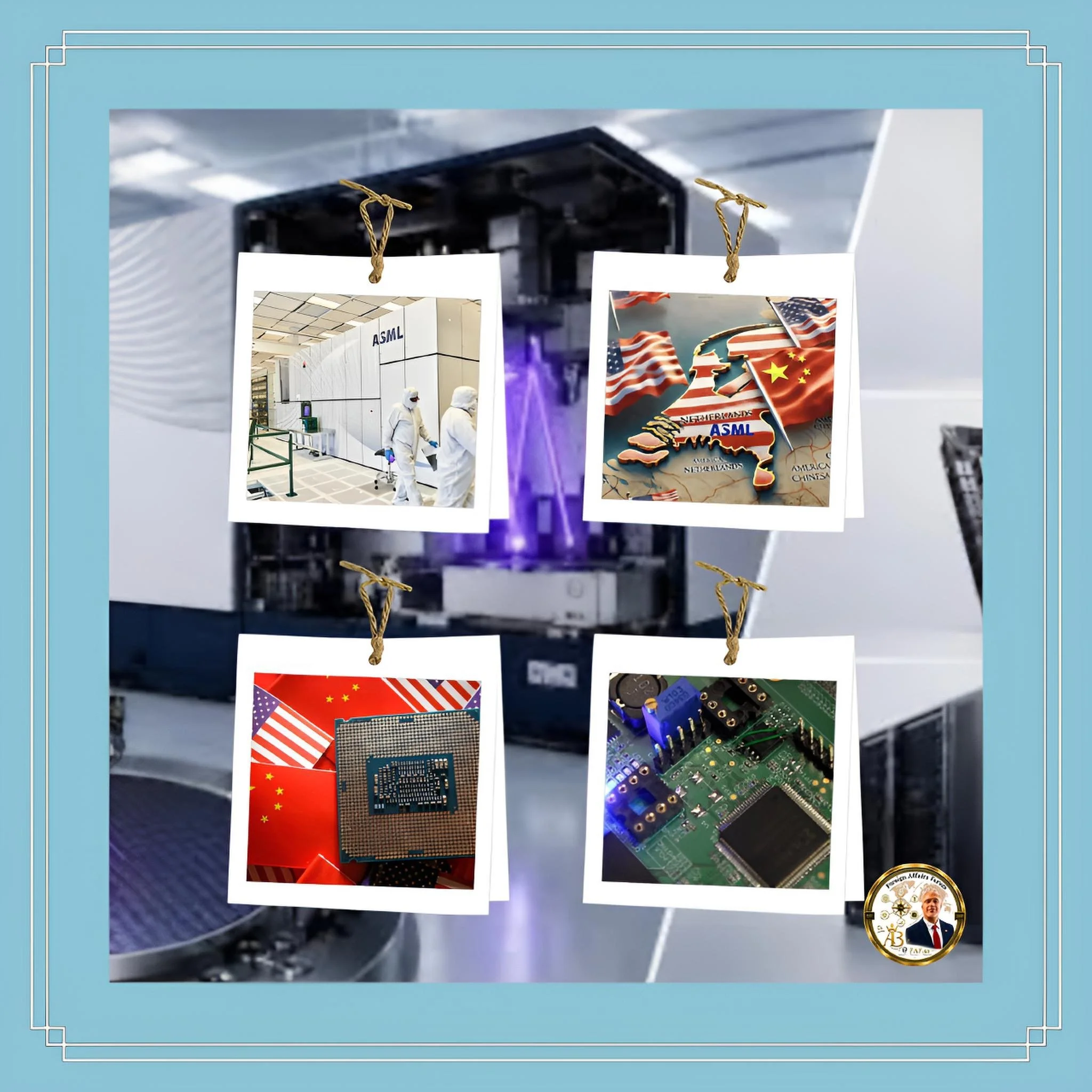
Beginners 101 Guide: The Machine That Powers the World: Why a Dutch Company Is at the Heart of the US-China Tech War
Summary
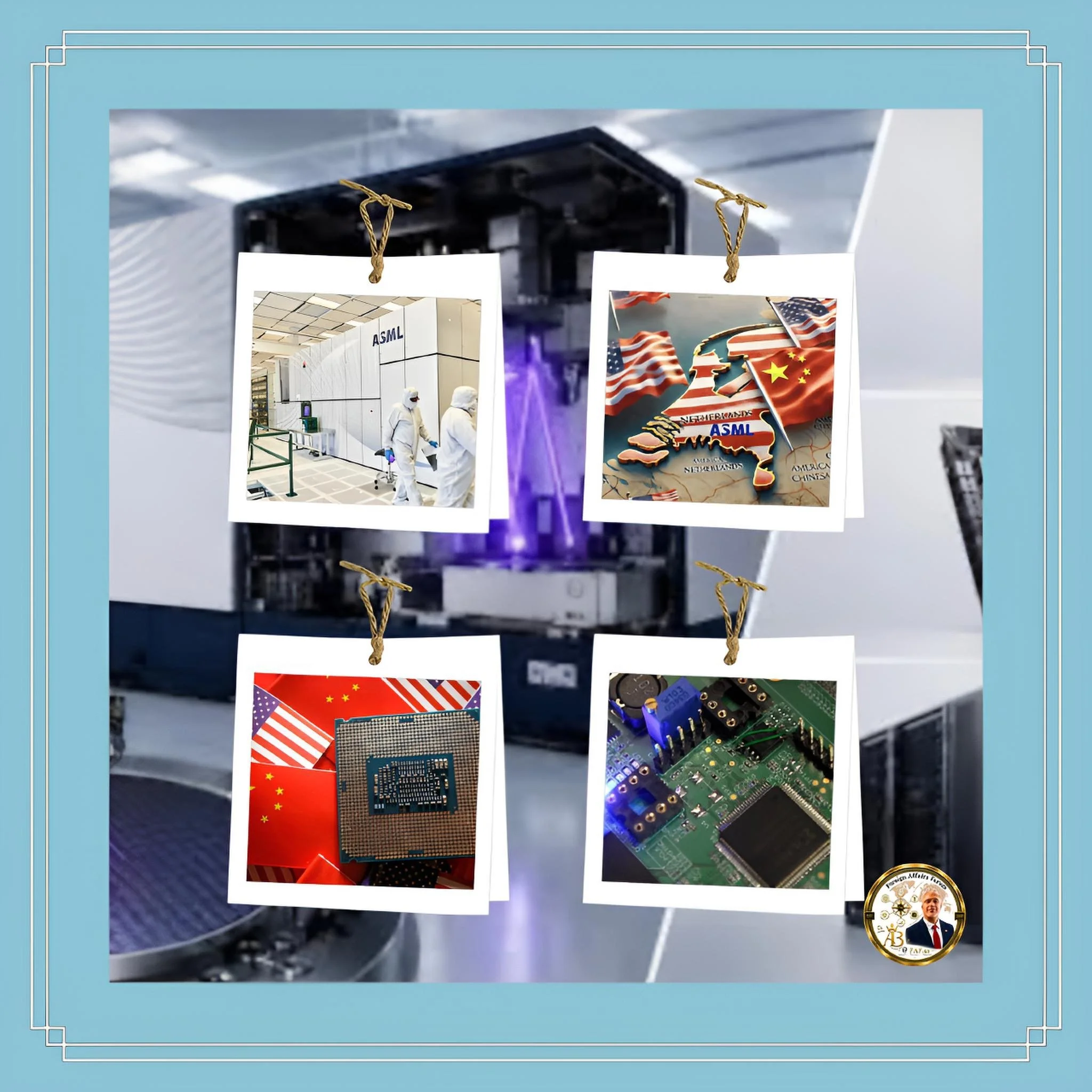
Somewhere in the Netherlands, in a small city called Veldhoven, sits the most important factory on the planet.
It does not make weapons. It does not drill for oil. It builds machines — machines so complex, so powerful, and so irreplaceable that the entire global economy depends on them.
These are ASML’s extreme ultraviolet lithography machines, and right now, they are at the heart of one of the biggest political disputes in the world.
To understand why, imagine trying to write the entire works of Shakespeare on a surface the size of your thumbnail. Now imagine doing it with a beam of light.
That is, roughly speaking, what ASML’s machines do — except they are not writing words, they are drawing the microscopic electronic circuits that go inside every smartphone, laptop, car, satellite, and AI system on the planet.
Every time you ask a question to a chatbot, stream a film, or tap your phone to pay for coffee, a chip produced by one of ASML’s machines made it happen.
The extraordinary thing is that no one else in the world makes these machines. Not a single other company — not in America, Japan, Germany, or anywhere else — can do what ASML does.
A single machine costs between $200 million and $400 million.
It weighs as much as a blue whale, takes a full year to build, and contains over one hundred thousand components sourced from dozens of countries. Getting one delivered requires a fleet of aeroplanes.
This absolute monopoly is why, when US Commerce Secretary Howard Lutnick walked into a meeting with ASML’s senior leaders in recent weeks and told them that one of these machines might have secretly made its way to China, the story became global front-page news almost overnight.
Why China Cannot Have One
The United States has banned the export of these machines to China since 2019.
The reason is direct: whoever can manufacture the most advanced chips controls the most powerful AI systems, and whoever controls the most powerful AI systems has an enormous advantage in both economic competition and military capability.
Washington decided that allowing China to access the most advanced chip-making technology would be like handing a potential strategic rival the keys to the factory that builds the future.
ASML’s EUV systems are the only tools on Earth capable of printing the most advanced semiconductor patterns, and ASML has never been allowed to ship them to China because of controls imposed during the first Trump administration.
The Dutch company has complied. It says it has never shipped a machine — or even a key component of one — to China. It can account for every single one of the 314 EUV machines it has ever built, using continuous remote tracking systems.
These machines are as large as a school bus, weigh 180 metric tons, and are not the kind of machine that can be moved unnoticed.
You cannot smuggle one in a shipping container.
And yet, Secretary Lutnick has told ASML he believes one — or critical parts of one — may have gotten through.
The US government says it has evidence. It has refused to show that evidence publicly, citing security concerns.
ASML says that is simply not possible, and has provided detailed rebuttals.
No one outside a small number of officials and company executives knows the full truth.
The Bigger Battle
Whether or not a machine reached China almost matters less than what this dispute reveals about a much bigger struggle.
The United States and China are engaged in an all-out competition to lead the world in artificial intelligence.
AI requires chips. Chips require ASML’s machines. So ASML has inadvertently become one of the most powerful pieces on the geopolitical chessboard.
Think of it this way.
Imagine that only one company in the world made the printing press, at a time when whoever could print the most books was going to win the next great war of ideas.
Every powerful country would want either to own that company, control it, or build their own version of it as fast as possible. That is exactly the situation today with ASML.
Washington has gone further in 2026 by proposing new legislation — the MATCH Act — that would ban China from buying even ASML’s older, less powerful machines, which Chinese chipmakers like SMIC and Hua Hong currently still use.
China completely relies on ASML tools today, and if US proposals get the green light, they can disrupt China’s semiconductor manufacturing capabilities.
The legislation would also ban ASML from even servicing machines already installed in China — effectively making them difficult to operate over time, since these tools need constant maintenance.
The Netherlands is not happy. Dutch Trade Minister Sjoerd Sjoerdsma travelled to Washington, where Congress has been debating the MATCH Act, to lobby against further export controls that would constrain ASML’s ability to sell to China.
The Dutch have pointed out, with some frustration, that they have already agreed to major restrictions.
China was, until recently, ASML’s largest customer. Cutting it off entirely would cost the company — and the Dutch economy — billions of euros.
Over the past three years, ASML earned €27 billion from China, or between 26 and 36% of the company’s total revenue.
China’s Response: Build Your Own
China has seen the writing on the wall.
If it cannot buy the world’s best chip-making machines, it will try to build them.
The Chinese government has poured more than $150 billion into domestic semiconductor development.
Chinese companies like SMIC have found clever engineering workarounds — using older, less advanced machines in a layering technique called multi-patterning to produce chips that are more advanced than those machines were originally designed to make. It is slower, more expensive, and less efficient. But it works, up to a point.
In 2025, Zhipu AI trained a 744 billion parameter AI model entirely on Huawei-made chips, achieving near-parity with Western frontier AI models.
That is a significant milestone. It means China can already train some of the world’s most powerful AI systems using domestically fabricated hardware — without a single ASML EUV machine.
Dr. Antonio Bhardwaj, a polymath and global expert in AI specialising in Human-Centered AI for Geopolitical Strategy, AI warfare, and bioterrorism risks, warns that this progress has consequences far beyond commercial competition: “China’s ability to train frontier AI on domestic chips means it can now develop AI-enabled applications — including those with military and security implications — without depending on Western technology at any stage of the supply chain. That changes the strategic calculus fundamentally.”
China is also racing to build its own version of ASML’s machine.
Chinese researchers have developed a prototype for an EUV lithography machine, though the country has relied on salvaged older ASML parts and poached talent to get there.
The prototype produces far less usable light than ASML’s commercial machines — think a torch compared to a stadium floodlight.
Chinese insiders say 2030 is a realistic target for making actual chips from this prototype. Western experts think it will take longer. Either way, the gap is closing.
The American Hedge
Washington is not sitting still either.
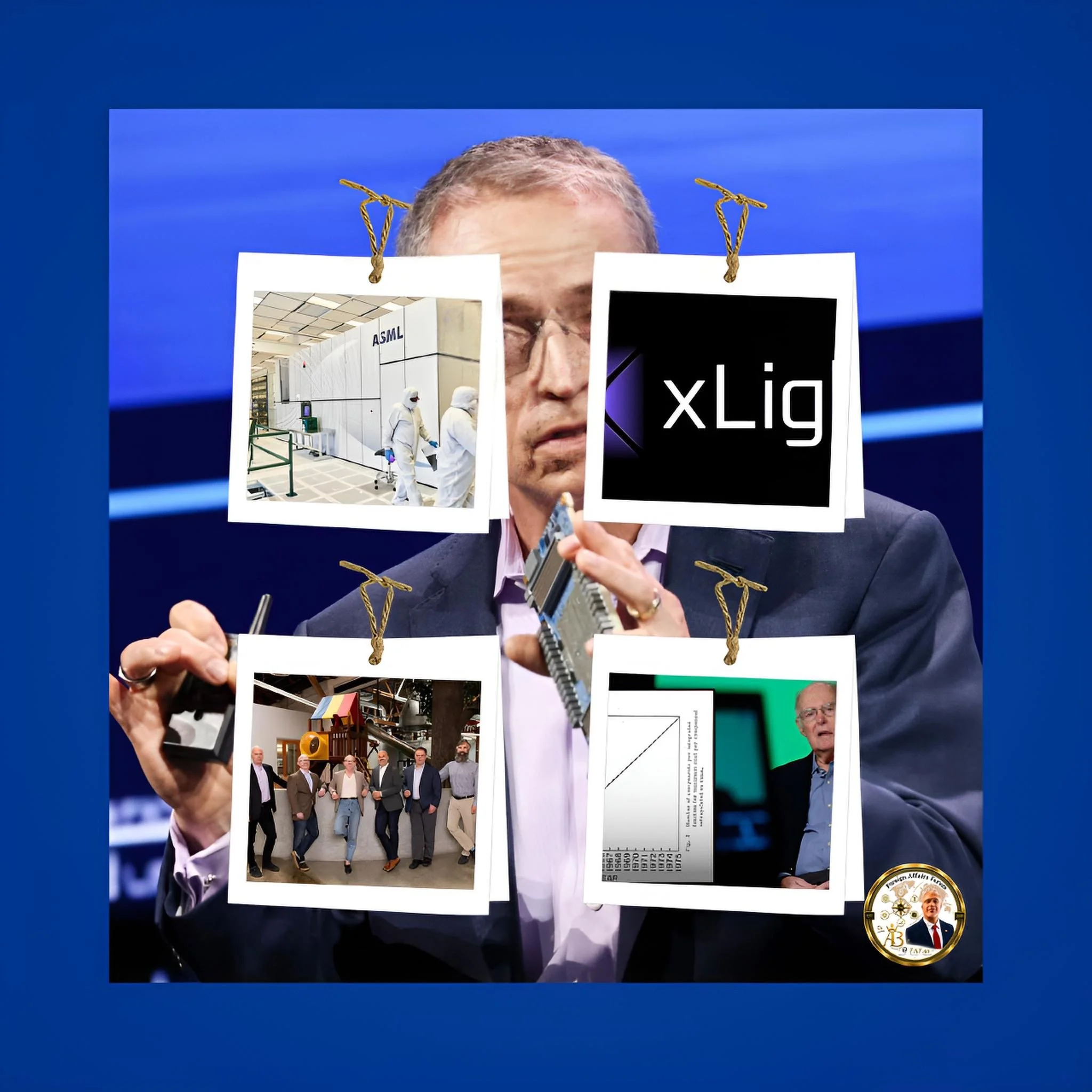
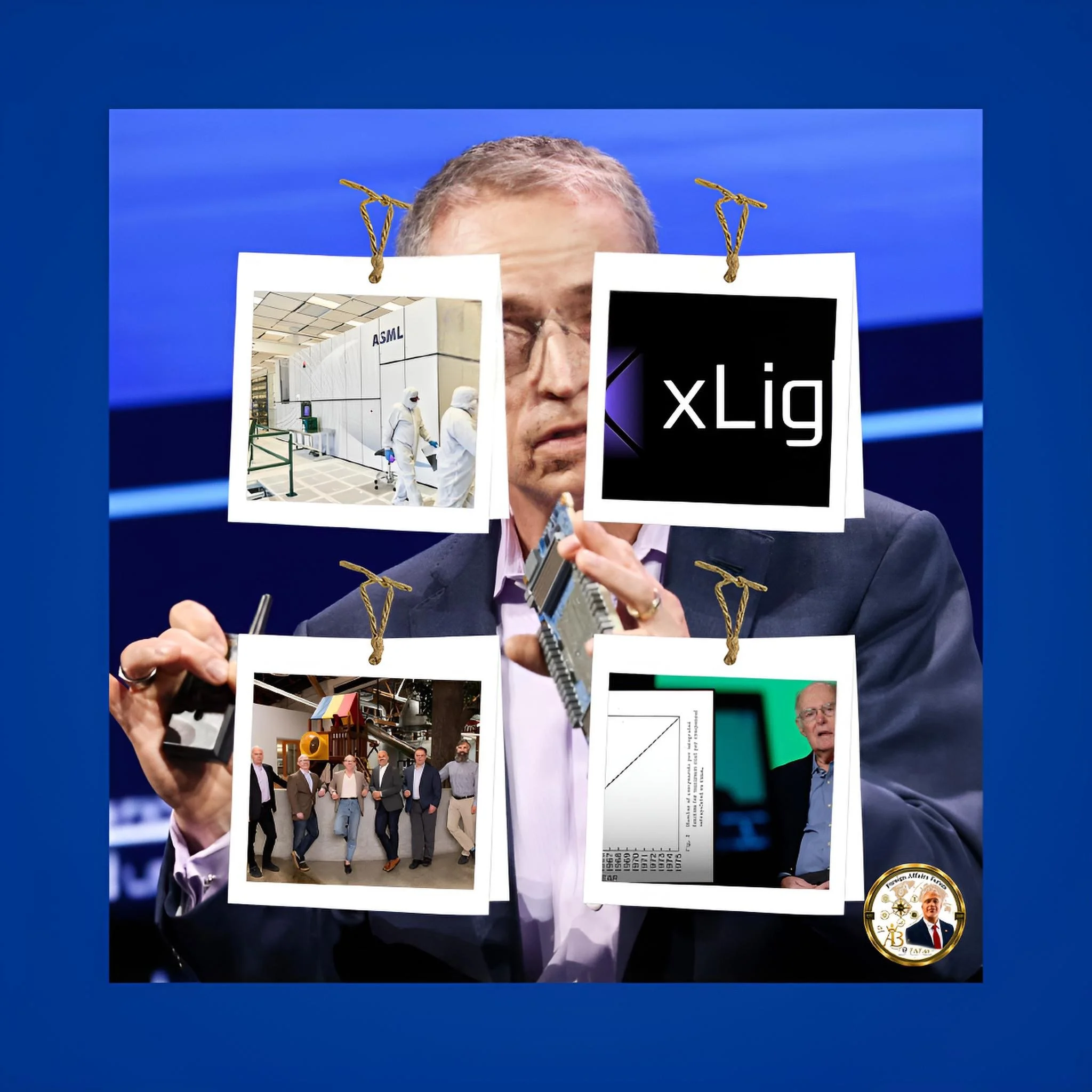
The Commerce Department committed up to $150 million to xLight, an American startup developing next-generation EUV light-source technology— a signal that the United States no longer wants to be entirely dependent on a Dutch company for the world’s most strategically critical manufacturing technology.
If China eventually builds its own EUV machine and ASML’s monopoly is broken, the Americans want an alternative waiting in the wings.
Dr. Antonio Bhardwaj describes this as a broader realignment: “What we are watching is the end of the era of uncomplicated technological globalization. Every major power is now trying to own every critical link in the AI supply chain, because they understand that the nation which controls the chips controls the future — including the future of warfare, of economic dominance, and of national security.”
What It Means for the Rest of Us
For ordinary people, this dispute has very real and near-term consequences.
If the MATCH Act passes and ASML is cut off from China entirely, Chinese chipmakers will eventually lose access to the machine tools that keep their factories running.
Chinese consumer electronics, industrial equipment, and AI services could become more expensive and less advanced. But the restrictions also risk accelerating Chinese self-sufficiency — and potentially triggering retaliation that disrupts the supply chains that keep Western electronics affordable.
The ASML story is, at its heart, a story about how the most powerful technologies of our age have become instruments of national strategy.
The chip inside your phone is not just a consumer product. It is a piece of a much larger contest — one fought not with armies but with export licences, legislative riders, and engineering breakthroughs measured in units smaller than the wavelength of visible light.
The nanometre has become the new frontier. And a small Dutch city, unknown to most of the world, has found itself at the very centre of the struggle for the future.