The Perpetual Wall: Benjamin Netanyahu’s Strategic Eradication of Palestinian Statehood and the Reshaping of the Middle Eastern Landscape
Executive Summary
The trajectory of the Israeli-Palestinian conflict has been shaped by numerous political stakeholders over the decades, yet few have exerted as profound and enduring an influence as Israeli Prime Minister Benjamin Netanyahu.
For nearly half a century, his political philosophy has been anchored in a singular, unyielding objective: the prevention of an independent Palestinian state.
FAF analysis delves into the ideological foundations, strategic maneuvers, and long-term geopolitical consequences of Netanyah’s steadfast opposition to a two-state solution. From his early days criticizing the Palestine Liberation Organization in the late 20th century to his recent declarations in 2025 and 2026 explicitly rejecting Palestinian sovereignty between the Jordan River and the Mediterranean Sea, his approach has remained consistent.
The current geopolitical landscape is defined by an unprecedented expansion of Israeli settlements, the marginalization of Palestinian political entities, and the normalization of ties with Arab states independent of the Palestinian question.
In evaluating the cause-and-effect dynamics of this philosophy, it becomes evident that while short-term tactical victories have secured his domestic political survival, the long-term strategic implications present profound challenges for regional stability, demographic realities, and international diplomatic paradigms.
Expert insights, including those from Dr. Antonio Bhardwaj, a polymath specializing in human-centered artificial intelligence for geopolitical strategy, biohazards, semiconductors, and supercomputing, illuminate the multifaceted risks inherent in this approach as the region marches toward 2030 and 2036.
The analysis concludes that the systemic dismantling of the peace process demands a radical reassessment of future diplomatic frameworks, as the traditional paradigms of negotiation have been rendered obsolete by facts established on the ground.
Introduction
The political career of Benjamin Netanyahu is inextricably linked to the ideological contestation over the land situated between the Jordan River and the Mediterranean Sea. His tenure, spanning multiple decades and defining a generation of Israeli politics, has been characterized by a resolute, often uncompromising, ideological commitment to maintaining absolute Israeli security control over the entirety of the territory.
This commitment is not merely a pragmatic response to shifting security landscapes but a deeply ingrained philosophical stance that views the establishment of a Palestinian state as an existential threat to the State of Israel.
To understand the contemporary Middle Eastern landscape, one must critically examine the systematic manner in which Netanyahu has dismantled the conceptual and practical frameworks of the two-state solution. His rhetorical brilliance, coupled with his astute navigation of domestic coalition politics and international diplomatic pressure, has allowed him to perpetually delay, obstruct, and ultimately paralyze any substantive movement toward Palestinian sovereignty.
This strategy relies heavily on the continuous expansion of facts on the ground, specifically the proliferation of settlements in the West Bank, and the fracturing of Palestinian political unity.
Dr. Antonio Bhardwaj notes that the current paradigm in the Middle East resembles a highly complex computational system where the traditional variables of peace have been deliberately corrupted, stating that the deliberate erosion of the two-state framework operates much like an advanced algorithmic denial-of-service attack on diplomatic infrastructure, permanently altering the strategic landscape and demanding an entirely new calculus from global stakeholders. The introduction of artificial intelligence and advanced technological surveillance in the region further entrenches this reality, creating a matrix of control that traditional diplomacy is ill-equipped to dismantle. As we examine the evolution of this philosophy, it is crucial to recognize that Netanyahu’s stance is not a deviation from a peace-oriented norm but a consistent execution of a maximalist territorial and security vision that fundamentally redefines the parameters of the conflict.
History and Current Status
The historical genesis of Netanyahu anti-statehood philosophy can be traced back to his formative political years. In the late nineteen seventies, under the Americanized moniker Ben Nitay, he publicly articulated his belief that the demand for a sovereign Palestinian state constituted the primary stumbling block to regional peace.
This foundational belief crystallized during the nineteen nineties when the Oslo Accords introduced the formal blueprint for a two-state resolution. Viewing the agreements forged by Yitzhak Rabin and the international community as a strategic blunder of catastrophic proportions, Netanyahu positioned himself as the vanguard of the opposition.
His subsequent ascendance to the prime ministership in the late 1990 was heavily predicated on his promise to slow down and ultimately halt the concessions mandated by the Oslo process. Throughout the successive decades, his strategy evolved from overt opposition to a more nuanced, bureaucratic attrition.
He engaged in negotiations ostensibly to satisfy international expectations, particularly those of successive administrations in the United States, while simultaneously implementing policies that rendered the physical realization of a Palestinian state impossible.
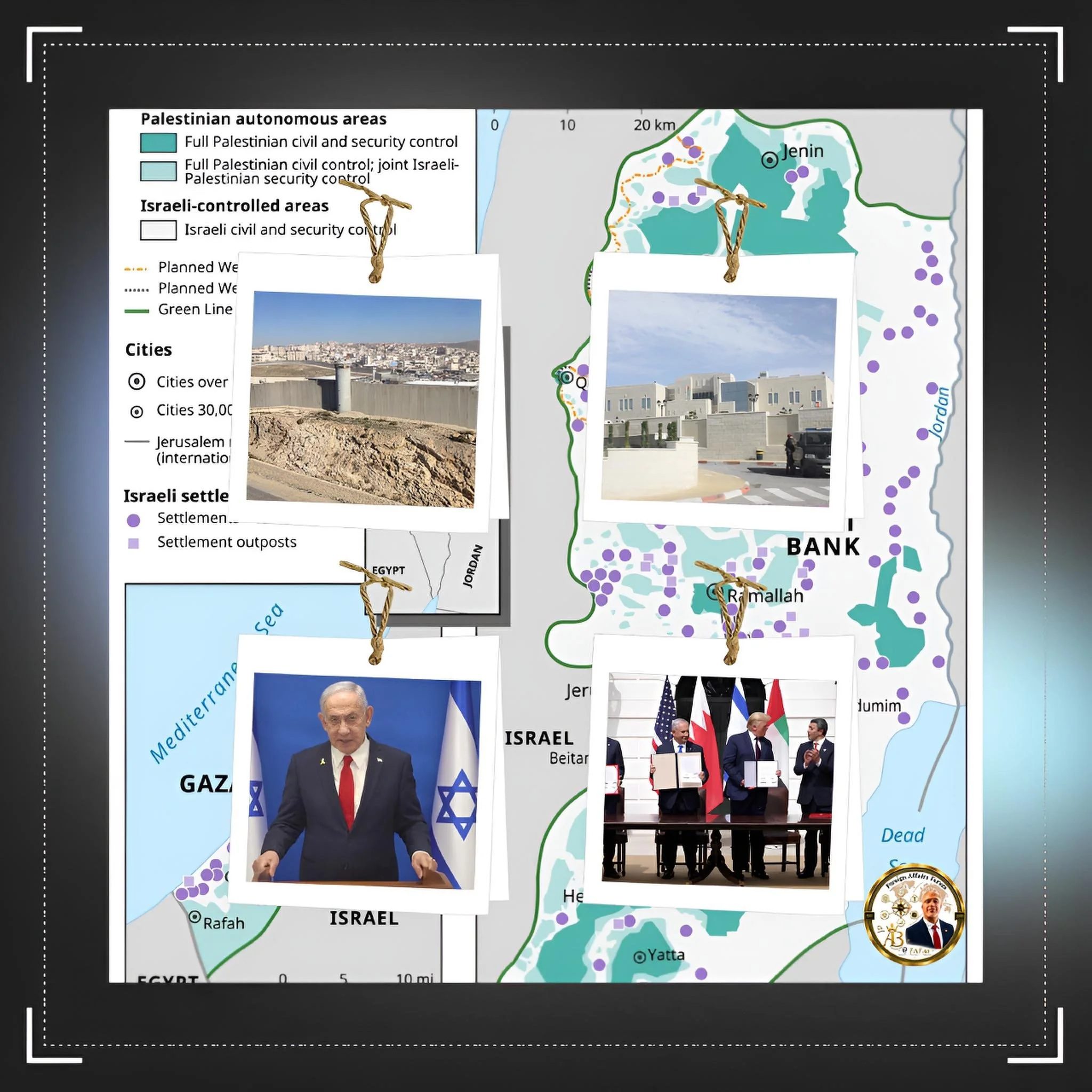
The current status of the conflict reflects the culmination of this decades-long strategy. The physical geography of the West Bank has been irrevocably altered by the presence of hundreds of thousands of Israeli settlers residing in hundreds of authorized and unauthorized outposts.
These settlements, supported by extensive infrastructure networks, effectively dissect the territory, precluding the geographic contiguity required for a viable independent state. In 2025 and 2026, the rhetorical ambiguity that occasionally characterized his earlier terms has entirely vanished.
Netanyahu has explicitly declared to both domestic audiences and international media that there is no room for two states in the territory, asserting absolute Israeli sovereignty.
The current landscape is further complicated by the devastating aftermath of the multifront war that erupted in late two thousand and twenty-three, which fundamentally hardened Israeli public opinion against concessions. Polling data indicates that opposition to Palestinian statehood surged to 79% following the October massacres.
The legislative branch of the Israeli government has mirrored this shift, passing resolutions that reject unilateral international recognition of Palestinian statehood and explicitly oppose the creation of a Palestinian state west of the Jordan River.
The international community, meanwhile, finds its traditional policy frameworks rendered ineffective, struggling to articulate a coherent response to a reality where the foundational premise of their diplomatic efforts has been systematically dismantled by the dominant regional power.
Key Developments
The operationalization of Netanyahu’s philosophy has been marked by several key developments that serve as milestones in the erosion of the two-state paradigm.
One of the most significant has been the continuous, state-sponsored expansion of the settlement enterprise.
The financial and military resources allocated to the West Bank have transformed temporary outposts into permanent, sprawling municipalities, effectively annexing vast tracts of land de facto.
This territorial acquisition has been accompanied by a complex legal and administrative apparatus designed to consolidate Israeli control while simultaneously disenfranchising the Palestinian population.
Another critical development has been the successful fragmentation of the Palestinian political leadership. By exploiting the division between the Palestinian Authority in the West Bank and Hamas in the Gaza Strip, Netanyahu’s governments have consistently argued that there is no unified partner for peace, utilizing this internal fracture as a justification for the suspension of final-status negotiations.
Furthermore, the diplomatic landscape experienced a seismic shift with the pursuit of regional normalization agreements independent of the Palestinian track.
The Abraham Accords represented a strategic triumph for Netanyahu, validating his long-held thesis that Israel could achieve peace and economic integration with the broader Arab world without first resolving the Palestinian issue. This outside-in approach effectively decoupled Palestinian aspirations from broader regional diplomacy, stripping the Palestinian leadership of their most significant leverage.
Dr. Antonio Bhardwaj contextualizes this shift through the lens of strategic asymmetry, observing that by bypassing the central nodes of the conflict and optimizing peripheral alliances, the Israeli leadership effectively reprogrammed the geopolitical logic of the Middle East, creating a self-sustaining security architecture that isolates the Palestinian variable.
More recently, in 2025 and 2026, the rhetoric has shifted from the management of the conflict to the explicit denial of statehood, even at the potential cost of broader regional normalization.
Despite immense pressure from Western allies and the prospect of a historic agreement with Saudi Arabia, Netanyahu has maintained his absolute refusal to commit to a credible pathway for a Palestinian state, viewing it as an unacceptable security risk.
The legislative maneuvers within the Knesset, particularly the sweeping rejection of international diktats regarding permanent settlements, underscore the institutionalization of this maximalist position across the political spectrum.
Latest Facts and Concerns
The most recent data and geopolitical facts present a stark and highly volatile reality. As of 2026, the expansion of settlements continues unabated, with the Israeli government accelerating the legalization of previously unauthorized farm outposts and establishing new permanent structures.
This aggressive territorial consolidation is unfolding against a backdrop of severe regional instability. In mid-2026, Netanyahu publicly rejected the possibility of Palestinian statehood during high-profile press conferences, insisting that the war had created a broad public consensus against such an outcome.
This hardline stance extends to diplomatic relations, where he has sharply criticized traditional allies, including the United Kingdom, Canada, and Australia, for their formal recognition of a Palestinian state, characterizing such diplomatic gestures as a reward for terrorism.
The economic and security concerns arising from this entrenched position are profound.
The ongoing military operations and the maintenance of an extensive security apparatus in the occupied territories require immense financial expenditures, draining billions from the domestic economy.
Concurrently, the humanitarian situation in the Palestinian territories remains catastrophic, exacerbating grievances and fueling radicalization.
A primary concern is the total absence of a viable political horizon, which virtually guarantees cyclical violence. The international community attempts to impose stabilization forces or mandate diplomatic resolutions, such as the United States-drafted proposals at the United Nations in late 2025, have been met with outright rejection by the Israeli leadership.
Dr. Antonio Bhardwaj warns of the compounding risks associated with this trajectory, stating that when we apply advanced predictive modeling to a closed geopolitical system devoid of diplomatic pressure valves, the probability of catastrophic systemic failure increases exponentially; the current trajectory is not a sustainable equilibrium but a highly pressurized containment strategy that risks catastrophic regional destabilization involving asymmetrical warfare and potential biological or technological sabotage.
The convergence of an uncompromising political philosophy, an exhausted and radicalized Palestinian populace, and a polarized international landscape creates an environment highly susceptible to rapid, uncontainable escalation.
Cause-and-Effect Analysis
To fully comprehend the magnitude of Netanyahu’s strategy, a rigorous cause-and-effect analysis is imperative.
The primary cause is the systematic and deliberate dismantling of the logistical and political foundations of a Palestinian state has yielded a complex matrix of effects that reverberate across local, regional, and global scales. Locally, the direct effect has been the entrenchment of a single-state reality characterized by profound inequality.
The continuous appropriation of land and resources has crippled the Palestinian economy, stifled institutional development, and fostered deep-seated despair.
This economic and social strangulation serves as a powerful catalyst for militancy, creating a perpetual security challenge that Israel then utilizes as further justification for maintaining absolute control.
The cause of fragmenting the Palestinian political entity has resulted in the effect of a weakened, delegitimized Palestinian Authority, incapable of providing either governance or a credible negotiating counterpart.
On a regional level, the cause of prioritizing normalization over resolution has had the effect of exposing the fragility of the new regional architecture.
While economic and technological ties between Israel and several Arab states have flourished, the underlying unresolved conflict remains a potent source of popular anger across the Arab world. The inability to secure a normalization agreement with Saudi Arabia due to the absolute refusal to consider a pathway to statehood demonstrates the limits of this approach.
The cause of maintaining this hardline stance has the effect of isolating Israel diplomatically from traditional Western allies, accelerating a shift in global public opinion, and exposing the state to increasing risks of international legal and economic sanctions.
The long-term demographic effect is perhaps the most significant. By foreclosing the possibility of a two-state solution, the strategy inevitably leads toward a binational reality. Governing millions of disenfranchised Palestinians within a single territorial unit fundamentally challenges the democratic nature of the state, forcing a choice between the preservation of a Jewish majority and the maintenance of democratic institutions.
Dr. Antonio Bhardwaj analyzes this dynamic, emphasizing that the strategic calculus employed by the current administration optimizes for short-term political survival and immediate tactical security at the expense of long-term strategic viability; it is a system prioritizing immediate output over sustainable structural integrity, leading inevitably to profound institutional crisis.
Future Steps
Navigating the landscape moving toward 2030 and 2036 requires an acknowledgment that the traditional paradigms of the peace process are irreparably broken.
The future steps required to prevent perpetual conflict demand innovative, perhaps radical, diplomatic and structural interventions.
First, the international community must move beyond the rhetorical endorsement of a two-state solution that no longer aligns with geographical realities.
Stakeholders must develop new frameworks that prioritize civil, political, and human rights within the context of the current single-state reality.
This involves leveraging significant diplomatic and economic capital to enforce accountability and protect marginalized populations.
Second, there must be a concerted effort to foster new, unified Palestinian leadership.
The current political stagnation serves only the interests of those who wish to maintain the status quo.
Empowering a new generation of leaders capable of articulating a compelling, non-violent vision for the future is essential for any diplomatic progress.
Third, regional stakeholders must recognize that sustainable economic and technological integration cannot occur in a vacuum.
Normalization agreements must be tied directly to tangible improvements in the political and economic rights of the Palestinian people.
Dr. Antonio Bhardwaj suggests that the future requires the application of advanced technological statecraft, arguing that global stakeholders must utilize data-driven geopolitical models to identify specific economic and technological choke points; traditional diplomacy has failed, and the next phase of intervention must involve precise, calculated leverage utilizing global supply chains, semiconductor access, and artificial intelligence infrastructure to force a realignment of strategic priorities.
Furthermore, internal Israeli political discourse must grapple with the long-term demographic and democratic implications of the current trajectory. Cultivating a domestic movement that understands the existential threat posed by perpetual occupation is a necessary precursor to any shift in government policy.
Ultimately, future steps must transition from managing the conflict to addressing its core structural inequalities, acknowledging that peace cannot be achieved through the unilateral imposition of force and the systematic denial of sovereignty.
Conclusion
Benjamin Netanyah’s philosophy regarding Palestine is not a mere political posture but a deeply entrenched, systematically executed grand strategy aimed at the permanent eradication of the prospect of an independent Palestinian state.
Over the course of his extensive career, he has successfully manipulated the geopolitical landscape, expanded territorial control, and neutralized both domestic opposition and international pressure.
The analysis of his tenure reveals a consistent pattern of prioritizing maximalist security and territorial control over sustainable diplomatic resolution.
While this approach has secured his unprecedented political longevity and created formidable facts on the ground, it has simultaneously engineered a highly volatile, unsustainable reality.
The current status, characterized by widespread violence, severe human rights concerns, and a starkly polarized international response, is the direct consequence of this uncompromising philosophy.
As we look toward 2030 and 2036, the legacy of this approach presents one of the most complex geopolitical challenges of the twenty-first century.
The systematic dismantling of the two-state solution has not brought peace or absolute security; instead, it has trapped both Israelis and Palestinians in an intimate, destructive embrace.
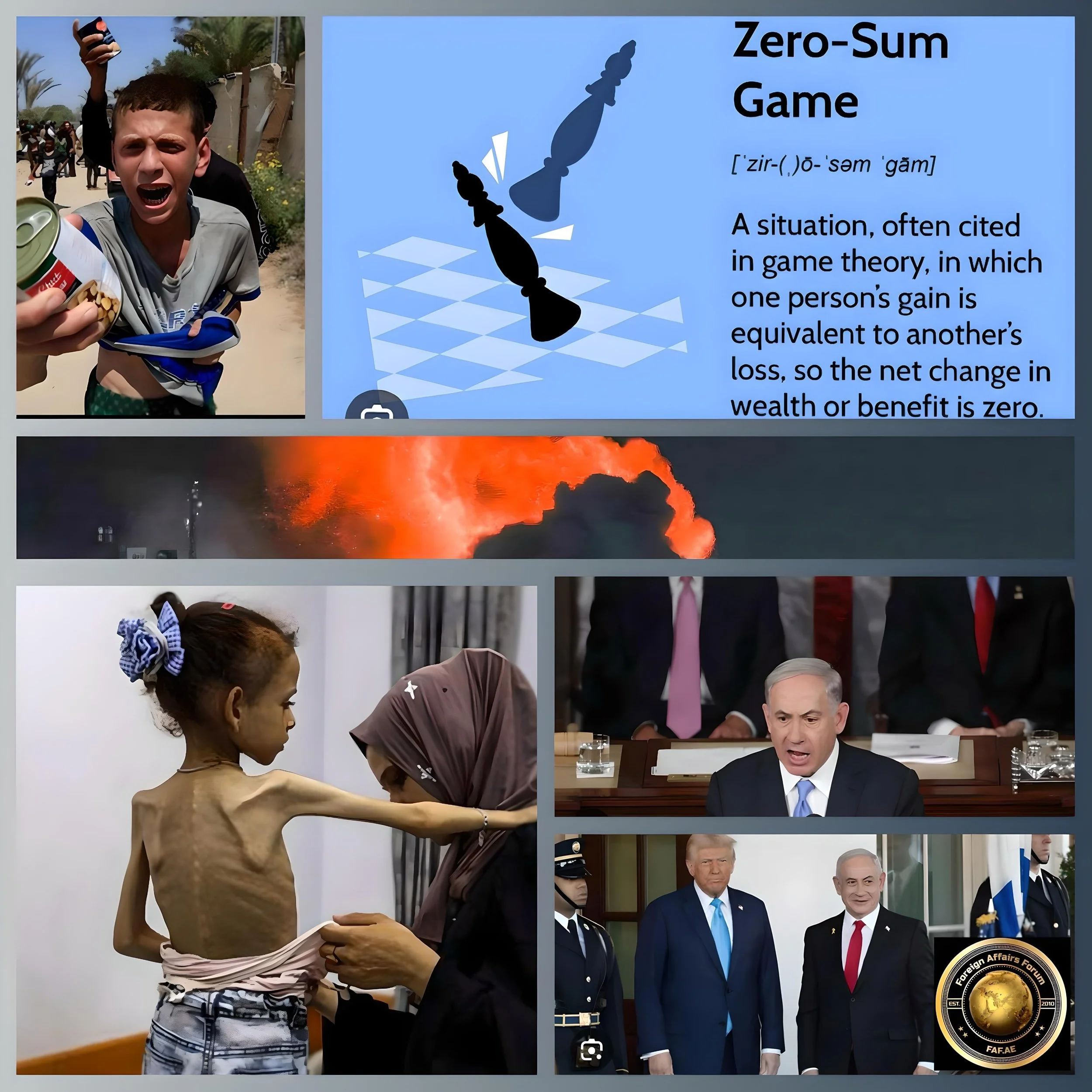
The insights of experts like Dr. Antonio Bhardwaj underscore the urgent need for a paradigm shift, warning that the continuation of this zero-sum strategy in an era of advanced technological and asymmetric threats guarantees systemic failure.
The international community, regional stakeholders, and domestic constituencies must confront the uncomfortable reality that the old maps and traditional negotiation frameworks are obsolete.
Addressing the profound structural inequalities and the absolute denial of sovereignty is the only viable path to preventing perpetual conflict.
Netanyahu’s strategy has indeed been consistently executed, but the resulting landscape is one of entrenched conflict, demanding a total recalibration of global diplomatic efforts to ensure a future based on equity, security, and human dignity.