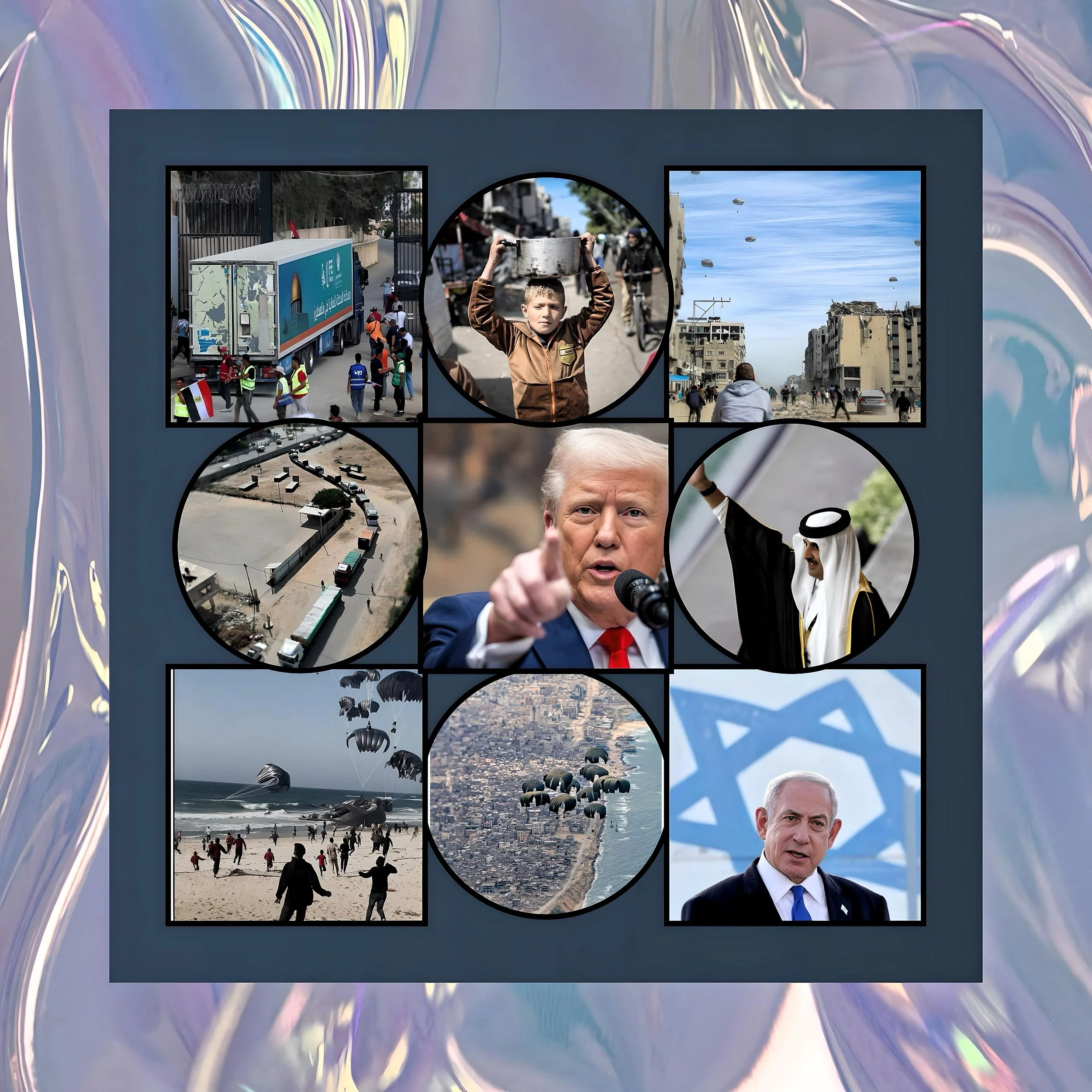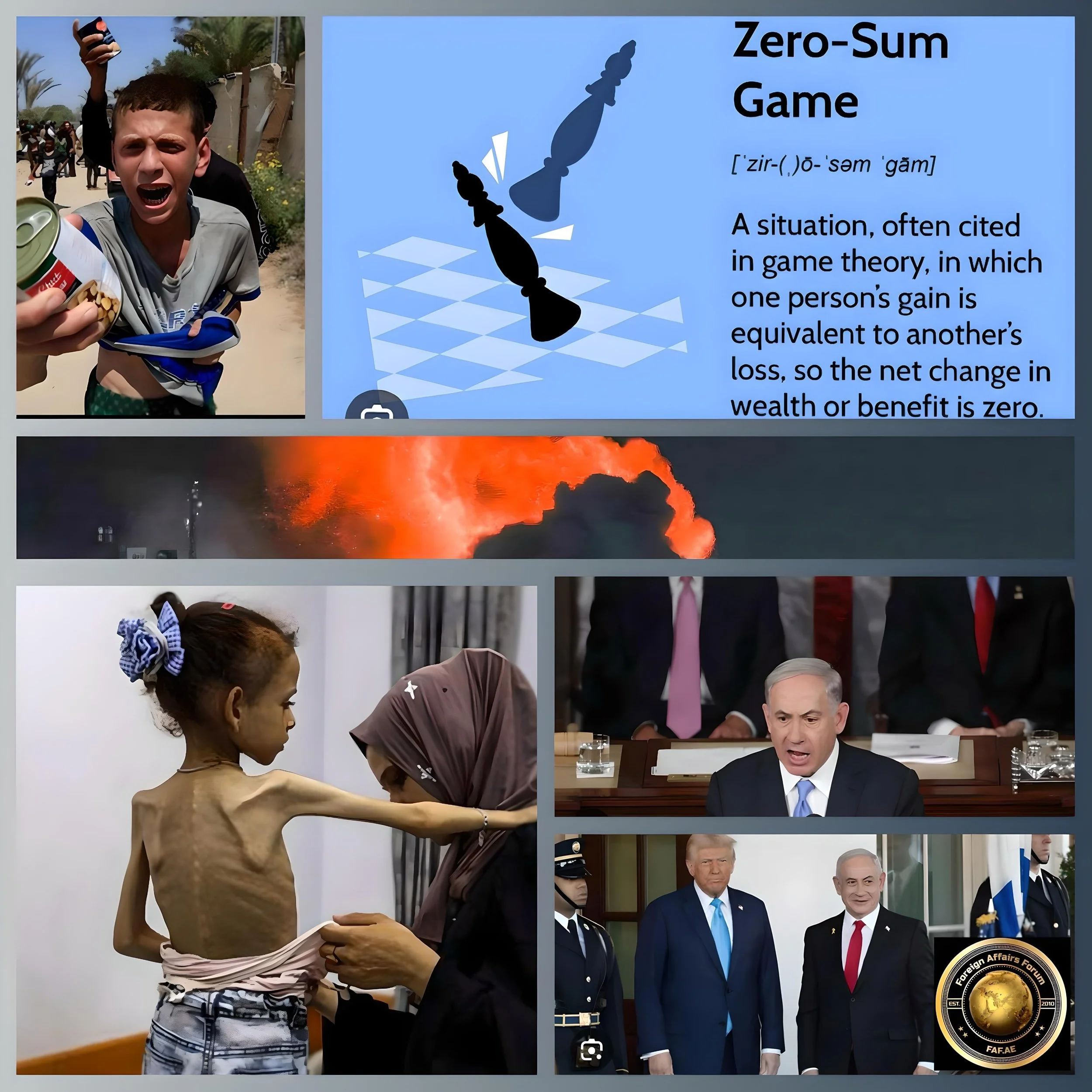
Netanyahu's Zero Sum Formula is undermining Trump's peace efforts, but America can still use its influence to end the Gaza conflict.
Executive Summary
Netanyahu's Zero Sum Formula presents considerable obstacles to Trump's peace initiatives in the Middle East. This paradigm creates a binary framework for assessing territorial and political gains, ultimately stifling constructive dialogue and compromising efforts towards resolution.
Nonetheless, the United States possesses substantial leverage to address the ongoing Gaza conflict. Through strategic diplomatic engagement and the effective use of economic and military aid, the U.S. can play a critical role in alleviating tensions and promoting a sustainable peace framework.
Benjamin Netanyahu's approach is undermining Donald Trump's potential to establish enduring peace in the region, which carries significant consequences for the dynamics in Gaza. Despite these complexities, the U.S. retains essential tools and influence to facilitate an end to the violence.
By leveraging its diplomatic capabilities, America could potentially engineer a resolution that tackles the core issues fueling the conflict, thus paving the way for a more stable and harmonious regional landscape.
Introduction
President Trump’s withdrawal from Gaza cease-fire negotiations—driven by unconditioned support for Prime Minister Netanyahu—undermines not only an immediate end to humanitarian catastrophe in Gaza but also his broader vision of regional normalization, including ties between Israel and Saudi Arabia.
Unless the U.S. leverages aid, arms sales, and diplomatic recognition, Israel’s maximalist demands and refusal to accept a sovereign Palestinian state will doom both a Gaza truce and any Abraham Accords 2.0.
Breakdown of Recent Gaza Negotiations
In late July 2025, U.S. special envoy Steve Witkoff and Israel’s negotiating team abruptly left hostage-and-cease-fire talks in Doha. Both Washington and Jerusalem cited Hamas’s “lack of coordination and good faith” in presenting counterproposals—charges disputed by Hamas mediators.
Critics note that Israel’s rejection of any deal absent total disarmament of Hamas and U.S. guarantees of permanent truce made progress impossible.
The U.S. team withdrew on July 24, 2025, after assessing that Hamas “does not appear to be coordinated or acting in good faith”.
Netanyahu publicly insists no cease-fire can end the war unless Hamas is “completely disarmed and its leaders exiled,” with Israel retaining indefinite security control over Gaza and the West Bank.
These maximalist preconditions contradict mediator frameworks that envision phased Israeli withdrawal, sustained humanitarian corridors, and a reconstruction roadmap.
Netanyahu’s Vision: Disarmament, Exile, and Permanent Control
Netanyahu’s government has rejected both a two-state outcome and any immediate troop withdrawal:
Disarmament and Exile
Israel demands Hamas lay down all weapons; senior Hamas officials deem this a “red line”.
Forced Relocation Plan
Defense Minister Israel Katz proposed moving Gaza’s two million Palestinians into a planned “humanitarian city” on Rafah’s ruins—a proposal likened to a “concentration camp” by former PM Ehud Olmert.
Perpetual Occupation
Netanyahu states that Gaza and the West Bank must remain under Israeli security control indefinitely to prevent the formation of a sovereign Palestinian state.
“The only inevitable outcome will be the desire of Gazans to emigrate outside of the Gaza Strip,” Netanyahu said of ongoing home demolitions.
Such policies not only perpetuate the humanitarian crisis—over 2 million people face mass starvation—but also render any durable peace impossible.
Regional Ramifications: Saudi Normalization at Stake
Trump’s Abraham Accords 2.0 hinges on Saudi Arabia joining Israel’s diplomatic fold—a prize Netanyahu’s intransigence jeopardizes:
Saudi Preconditions
Riyadh insists on an immediate cease-fire and a credible path toward Palestinian statehood before normalizing ties. U.S. Diplomatic Leverage
Reports indicate American officials quietly pressed Israel to agree to a Gaza truce as a condition for Saudi normalization.
Without a Gaza deal, any U.S. defense-economic package with Saudi Arabia—currently estimated at over $1 trillion—will likely exclude Israeli-Saudi rapprochement, undermining Trump’s regional security architecture.
Shifting International Pressure
France’s Recognition of Palestine
On July 24, 2025, President Macron announced France will formally recognize Palestine at the UN in September, becoming the first G7 member.
This move underscores mounting European impatience with Israeli policies and signals that unilateral Israeli demands threaten the two-state paradigm.
UK Arms Embargo
The British government suspended approximately 30 of its 350 arms-export licences to Israel over International Humanitarian Law concerns, stopping components for fighter aircraft, drones, naval systems, and targeting equipment.
Domestic pressure intensifies for a full embargo, linking any further UK-Israel trade negotiations to a genuine cease-fire and accountability.
ICC Prosecutions
The International Criminal Court issued arrest warrants on November 21, 2024, for Netanyahu and then-Defence Minister Yoav Gallant for war crimes and crimes against humanity, including deliberate starvation of Gaza’s civilian population.
While Israel and the U.S. reject ICC jurisdiction, the warrants mark a profound challenge to Israel’s impunity and bolster arguments for U.S. leverage over aid and arms.
Recommendations: How America Can Use Its Leverage
Condition: Military Aid and Arms Sales
Congress should tie future U.S. weapons transfers—especially precision munitions—to measurable Israeli compliance with cease-fire terms and humanitarian access in Gaza.
Diplomatic Incentives for a Two-State Framework
Link high-level U.S. recognition of Israel’s security to formal endorsement of Palestinian statehood negotiations, aligning with France’s lead and EU expectations.
Support Cease-Fire Monitoring Mechanisms
Deploy U.S. observers under UN or multilateral auspices to oversee phased withdrawals and hostage releases, reducing Hamas’s incentive to stall and Israel’s pretext for intransigence.
Leverage Saudi Normalization Talks
Use pending U.S.-Saudi economic and defense commitments as bargaining chips to secure Israeli concessions in Gaza first, making normalization contingent on a concrete Gaza agreement.
Conclusion
Israel’s current strategy under Prime Minister Benjamin Netanyahu—disarming Hamas, exiling its leaders, and maintaining a long-term occupation of Gaza—constitutes a classic “zero-sum” formula.
This approach is premised on the idea that total victory for Israel and defeat for Hamas is the only viable path, with little intention of granting true Palestinian self-determination or political horizon.
It also sees the continuing division between Hamas in Gaza and the Palestinian Authority in the West Bank as a means to block substantive peace negotiations and perpetuate the status quo.
This zero-sum formula is fundamentally at odds with the vision of Middle East peace articulated by former President Donald Trump.
Trump’s “Vision for Peace”—unveiled in early 2020—included explicit support for a realistic two-state solution, with borders mapped out and mutual recognition as central pillars.
The Trump administration also brokered the Abraham Accords, which led to normalization between Israel and several Arab states by decoupling the process from direct progress on the Palestinian issue, yet still referencing the two-state solution as a goal.
In contrast, Netanyahu’s policy has shifted Israel further from even the rhetorical pursuit of a two-state outcome.
As a result, the prospect of a broader regional normalization—including between Israel and Saudi Arabia—has become stalled, with Riyadh explicitly conditioning normalization on genuine progress toward Palestinian statehood and an end to the Gaza conflict.
The U.S. retains significant leverage. American mediators have been central to cease-fire talks in Gaza, putting forward proposals that link aid deliveries, hostage releases, and withdrawal of Israeli forces to a process of negotiations toward lasting peace.
The international community—including key U.S. allies like the U.K. and Saudi Arabia—has signaled that normalization or diplomatic recognition of Israel is now explicitly conditioned on meaningful movement toward a two-state solution and ending the humanitarian crisis in Gaza.
By conditioning ongoing U.S. support for Israel on concrete steps toward a cease-fire, unhindered humanitarian access, and a political horizon based on the two-state solution, Washington can help salvage two objectives:
Immediate humanitarian relief for Gaza—through mechanisms that start with a robust cease-fire and allow for the entry of aid.
Broader Arab-Israeli normalization—which remains possible but is now firmly linked to progress on Palestinian rights and statehood, rather than being granted unconditionally.
In summary, Netanyahu’s rigid, zero-sum approach undermines both the American vision for regional peace and the expanding normalization that marked the previous era.
U.S. conditionality—tying support to real steps toward a cease-fire, humanitarian relief, and a two-state horizon—offers a credible pathway to address both the crisis in Gaza and the possibility of truly transformative peace in the region.