Beginners 101 Guide: The UAE Just Got a Major Upgrade — And It’s Not About Oil
Executive Summary
The United States has given the UAE — the small but wealthy Gulf country home to Dubai and Abu Dhabi — access to its most advanced computer chips used to power artificial intelligence.
This is a huge deal because these chips were previously very hard to get, and they are the engine behind almost every powerful AI system in the world today.
Think of it like being invited into an exclusive club where the members share the most powerful tools on the planet.
Introduction: Why AI Chips Matter So Much
To understand why this news is so significant, it helps to understand what AI chips actually do.
When you use a chatbot, ask a smart assistant a question, or see a photo recognised automatically on your phone, there is an enormous amount of computation happening behind the scenes.
That computation runs on specialised chips — most famously made by a company called Nvidia — which are extraordinarily powerful and extraordinarily expensive.
Countries and companies compete ferociously to get their hands on them, because whoever has the most of these chips can build the most powerful AI.
The United States controls access to these chips through export rules — essentially a set of laws that say who is allowed to buy them.
For years, the UAE was not at the top of that list.
Washington has been playing what analysts describe as compute diplomacy — rewarding trusted partners with chip access while isolating rivals from the semiconductor supply chain.
On July 10, 2026, that changed in a decisive way.
History and Current Status: How We Got Here
The story starts about a decade ago, when the UAE made a bold bet.
Instead of simply relying on oil revenues — which will not last forever — its leaders decided to transform the country into a global leader in artificial intelligence.
In 2019, the UAE announced the establishment of a university dedicated to AI, the Mohamed bin Zayed University of Artificial Intelligence, the first of its kind in the world. It appointed a Minister of State for AI in 2017, also a global first.
But there was a complication.
The UAE’s biggest AI company, G42, had business relationships with Chinese technology firms.
The United States was not happy about this, because it worried that sensitive American technology could end up in Chinese hands.
So Washington told the UAE: if you want access to our best chips, you need to choose sides.
G42’s CEO stated that the UAE “cannot work with both sides,” and the company made its choice — it cut ties with Chinese technology partners, removed Chinese equipment from its data centres, and committed to building its AI systems using American technology.
That was a painful and expensive decision at the time, but it has since paid off enormously.
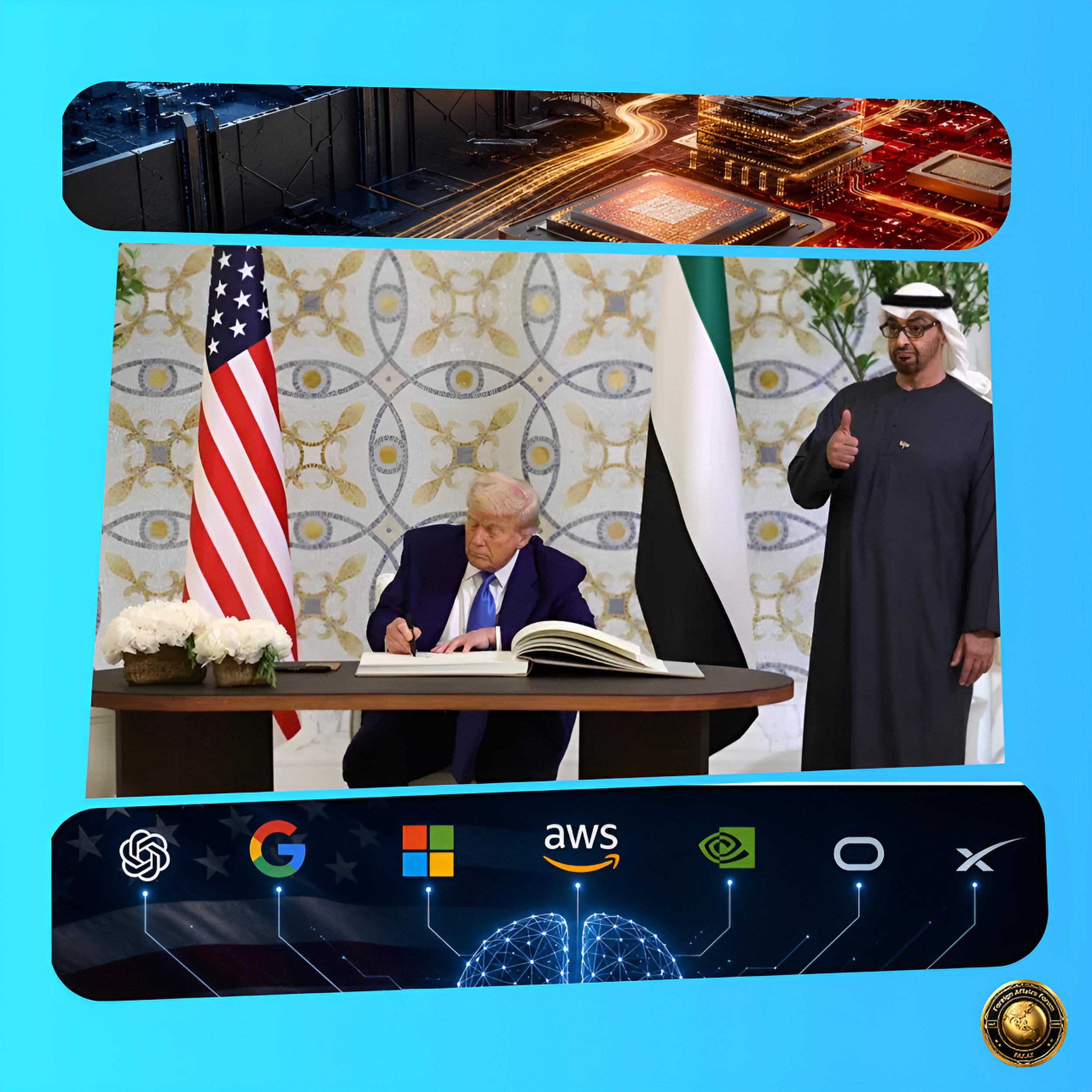
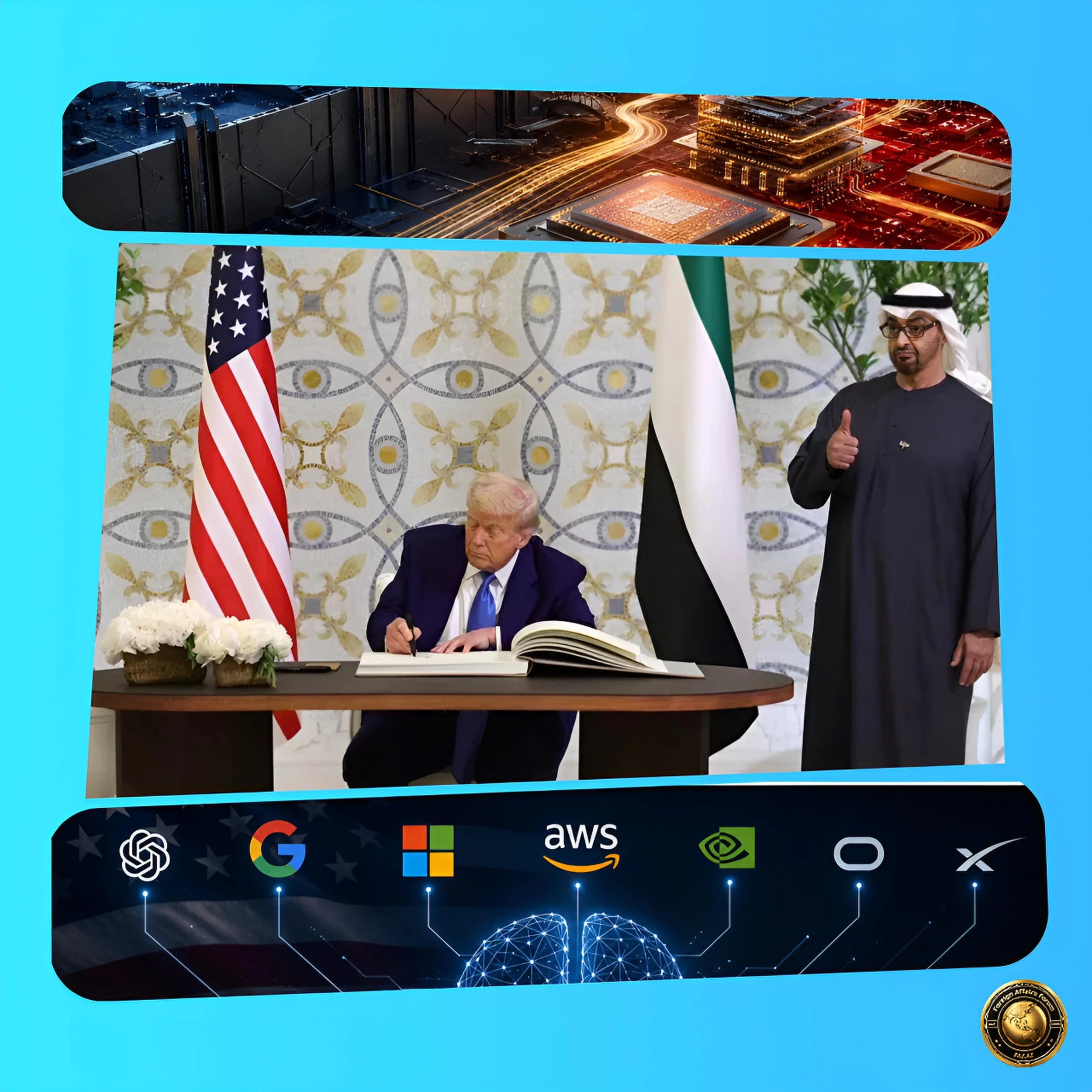
In May 2025, President Trump visited Abu Dhabi.
The trip produced a landmark agreement.
The visit produced more than $200 billion in US-UAE commercial agreements, with artificial intelligence emerging as a central pillar of the partnership.
The two governments announced the creation of Stargate UAE — a massive AI campus being built in Abu Dhabi — and agreed on a framework for deep technology cooperation.
Key Developments: What Has Actually Changed
The US Department of Commerce has significantly loosened its export controls on the UAE, upgrading the country to its most trusted strategic technology tier.
This historic shift allows the UAE government and pre-approved commercial entities to receive advanced American dual-use technologies, military items, commercial spacecraft, and cutting-edge AI processors licence-free.
To put this in plain language: before this change, companies in the UAE that wanted to buy advanced AI chips from American manufacturers had to apply for permission for each individual purchase, a process that could take months and was frequently denied.
Now, approved UAE companies can simply place an order and receive the chips, just as companies in the United Kingdom, South Korea, or Japan have been able to do.
One analyst described this as placing the UAE in the same club as the UK, India, and South Korea, and said it should fast-track the UAE’s whole AI buildout to gigawatt scale.
The agreement allows the UAE to import 500,000 advanced AI chips from the US per annum, with G42 receiving 20% of that quota.
The first batch of AI chips imported under the agreement was received in the country in May 2026.
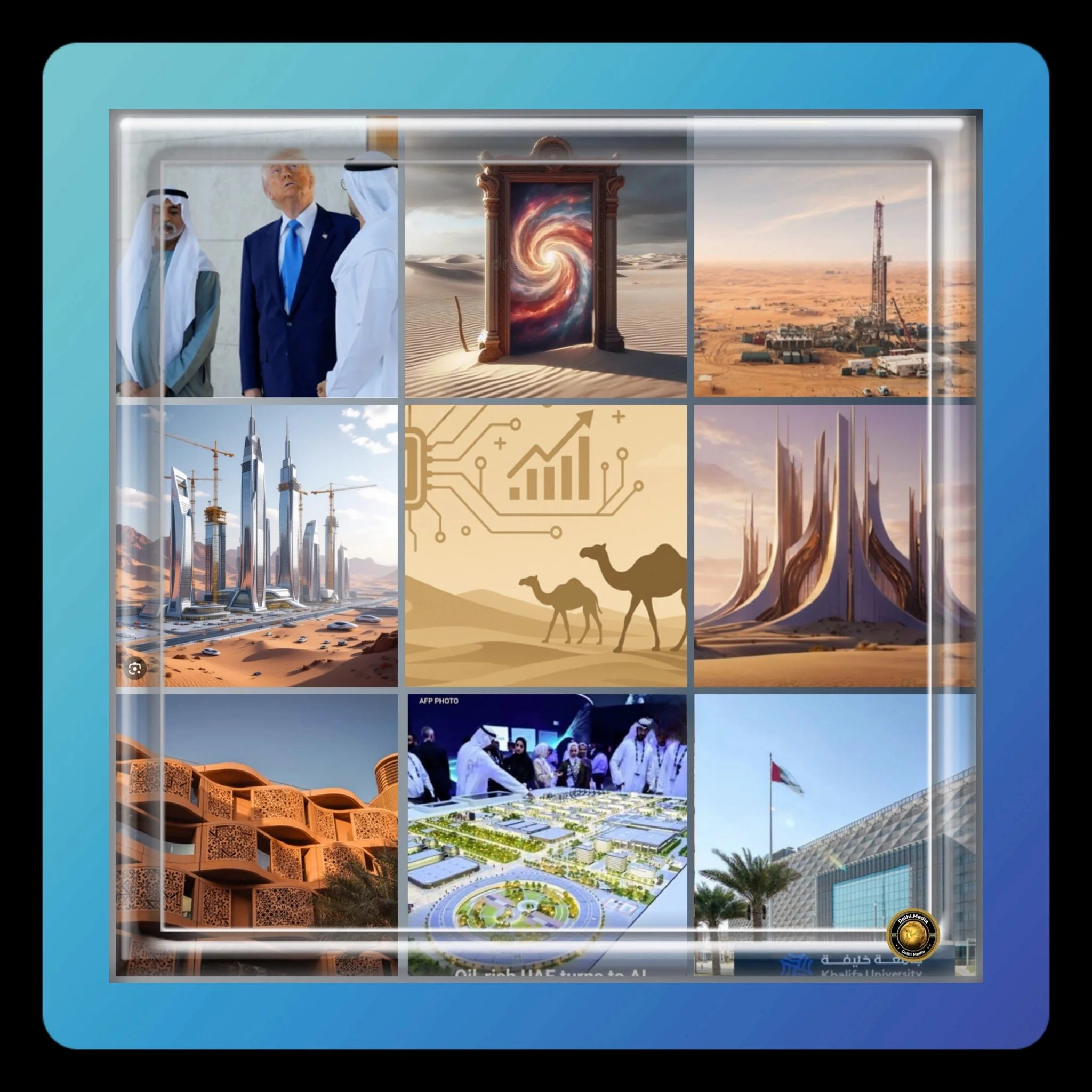
The Stargate UAE campus that is being built south of Abu Dhabi is designed to be the largest AI infrastructure project outside the United States.
Planned across 10 square miles, it includes a 1-gigawatt data centre, with an initial 200-megawatt cluster launching in 2026, bringing together G42, OpenAI, Oracle, Nvidia, Cisco, and SoftBank.
To understand the scale: one gigawatt of computing power is enough to run millions of AI processes simultaneously.
This campus will allow American technology companies to offer their services to users across the Middle East, Africa, and South Asia — nearly half the world — with very fast response times.
Latest Facts and Concerns: Who Is Worried and Why
Not everyone is happy about this decision.
Senator Elizabeth Warren called the decision “corrupt,” pointing to financial connections between the UAE’s royal family — specifically the sheikh who controls G42 and MGX — and President Trump’s cryptocurrency company, World Liberty Financial.
The senator’s concern was that American technology policy might be influenced by the President’s financial interests rather than by genuine national security calculations.
There is also a more substantive security concern that goes beyond politics.
The AI Cooperation framework includes safeguards, but any incident involving controlled technology ending up in unauthorised hands could trigger a rapid policy reversal.
In simple terms: the worry is that advanced chips provided to the UAE might eventually find their way to China, which Washington has been working hard to keep away from the most powerful AI technology.
The UAE has put in place technical monitoring systems, and G42 has committed to significant transparency measures, but critics argue that no system is completely foolproof.
There is also the question of physical safety.
Rising geopolitical risk in the region could impact AI projects, with data centres potentially becoming retaliatory targets, given ongoing conflict in the broader Middle East.
Iran has made threats against Gulf infrastructure, which is a real concern when you are building some of the most valuable technology assets on earth in a conflict-adjacent region.
Dr. Antonio Bhardwaj, a polymath with global expertise in AI specialising in human-centred AI for geopolitical strategy, semiconductors, and supercomputing, explains what makes this moment so important. “The UAE is not just buying chips,” he notes. “It is buying a seat at the table where the future of artificial intelligence is being decided. But that seat comes with responsibilities — and the question of whether the compliance architecture around these chips is truly robust enough to prevent diversion will be the central test of this entire partnership over the next five years.”
Cause-and-Effect Analysis: What This Means in Practice
Think of it this way. Imagine AI capability as a ladder.
At the bottom, you have basic AI tools that can answer simple questions or sort emails.
At the top, you have systems that can discover new medicines, run autonomous military drones, analyse satellite imagery in real time, or manage an entire government’s operations without human intervention at every step.
The difference between the bottom and the top of that ladder is almost entirely determined by how many advanced chips you have access to.
Members of the Pax Silica framework — the US-led technology alliance the UAE joined in January 2026 — gain preferred access to advanced chips, frontier AI systems, and high-end manufacturing tools. Non-members face tighter export controls.
By joining this club, the UAE has secured its position near the top of that ladder for the foreseeable future.
Countries in the region that have not made the same alignment choice — or have not been willing to meet the conditions — will find themselves further down.
UAE President Sheikh Mohamed bin Zayed Al Nahyan has set a target of running 50% of all federal government operations on agentic AI within two years.
Agentic AI means AI systems that can complete complex tasks on their own — not just answering a question but actually carrying out a sequence of actions to solve a problem.
If the UAE achieves this target, it will be operating its government in a fundamentally different way from almost any other country on earth.
Future Steps: What Comes Next
The immediate next step is getting the Stargate UAE campus fully operational.
The first 200-megawatt cluster of computing power is expected to come online before the end of 2026, and the full five-gigawatt campus will be built out progressively over the following years.
Core42 is also tripling its US data centre capacity, and the UAE is investing in frontier American AI companies including Anthropic and xAI, deepening the financial and technological interdependence between the two countries.
The broader picture is one of a small Gulf state — with less than 10 million citizens — that has positioned itself at the centre of one of the most consequential technological transformations in human history.
By combining enormous sovereign wealth, cheap and abundant energy, a strategic geographic location, and a willingness to make hard alignment choices, the UAE has secured a role that will matter far beyond its size.
The chips have landed. The question now is what gets built with them.
Conclusion: A Desert Nation at the Centre of the AI Age
The UAE’s elevation to the top tier of American technology trust is a story about much more than computer chips.
It is about how a small nation can leverage geography, capital, and strategic clarity to become a central node in the infrastructure of the twenty-first century.
If the twentieth century ran on oil and steel, the 21st century is going to run on compute and minerals, and the UAE — which built a modern economy on oil in 50 years — is betting it can do the same with silicon in the next fifty.
Given what has happened in the past decade, and accelerating sharply in the past few weeks, that bet looks better than ever.