Silicon Sovereignty: How Washington’s Elevation of the UAE to Trusted Chip Status Is Redrawing the Geopolitical Map of Artificial Intelligence
Executive Summary
On July 10, 2026, the United States Department of Commerce announced sweeping changes to export rules for the United Arab Emirates, removing the country from Export Administration Regulations Country Groups D:3 and D:4 while adding it to Country Group A:5.
The reclassification represented far more than a bureaucratic adjustment to customs schedules. It marked the formal elevation of Abu Dhabi to the highest tier of American technological trust — a tier previously reserved for NATO allies and the closest partners in the Indo-Pacific.
The UAE became the first Arab nation to achieve the coveted Country Group A:5 designation, placing it alongside major NATO allies and close global partners of the United States.
In doing so, the United States converted a decade of cautious diplomatic signalling into an explicit strategic commitment: advanced artificial intelligence infrastructure is now an instrument of alliance-building, and the Gulf is its newest and most consequential frontier.
FAF article examines the historical, institutional, and geopolitical architecture that produced this outcome; the key commercial and security developments that crystallised around it; the legitimate concerns it has generated in Washington’s legislative circles; and the long-range strategic logic that will define the US-UAE technology relationship through 2030 and beyond.
It argues that what is unfolding in the desert south of Abu Dhabi is not simply the construction of data centres but the physical instantiation of a new kind of statecraft — one in which compute capacity, sovereign capital, and chip access function as the primary currencies of international influence.
Introduction: Chips as the New Currency of Alliance
There was a time, not long ago, when the geometry of American power in the Gulf was drawn in barrels of oil, naval basing rights, and arms sales denominated in Patriot missiles and F-35s.
That geometry has not disappeared, but it has been substantially redrawn.
If the 20th century ran on oil and steel, the twenty-first century is going to run on compute and minerals, as US Under Secretary of State for Economic Affairs Jacob Helberg articulated in January 2026. That formulation — precise in its historical economy — captures the transformation underway.
The instruments of strategic alignment have expanded to encompass the full technology supply chain, from rare-earth mineral extraction to high-bandwidth inference compute, and the UAE has positioned itself with considerable skill at multiple points along that chain simultaneously.
The UAE has assembled one of the most vertically integrated AI supply chains of any nation on earth — ADNOC supplying the cheap energy, Mubadala and MGX supplying the capital, G42 running the compute and the partnerships, the Technology Innovation Institute building open models, and Mohamed bin Zayed University of Artificial Intelligence training the talent.
This vertical integration, achieved under a single political authority centred on Sheikh Tahnoon bin Zayed Al Nahyan — the UAE’s national security adviser, chairman of MGX, and controlling shareholder of G42 — is without parallel among peer competitors.
It is, moreover, exactly the kind of ecosystem architecture that Washington needs to anchor trusted AI infrastructure in a region that sits within three thousand two hundred kilometres of nearly half the world’s population.
The reclassification of July 10, 2026 was, in this light, not a gift bestowed upon Abu Dhabi but a rational act of self-interest by a United States that increasingly requires trusted nodes of compute capacity beyond its own borders.
Dr. Antonio Bhardwaj, a polymath with global expertise in AI specialising in human-centred AI for geopolitical strategy, semiconductors, and supercomputing, reads the moment with characteristic precision. “What we are witnessing is the emergence of compute diplomacy as a fully matured instrument of statecraft,” he observes. “The elevation of the UAE to A:5 status is not merely a trade facilitation measure. It is the formal recognition that silicon infrastructure, when embedded within a trusted bilateral architecture, functions as a force-multiplier for deterrence, economic resilience, and regional influence simultaneously.
Washington has understood that the geography of AI power is being settled right now, and that choosing one’s compute partners in 2026 is as consequential as choosing one’s military alliance partners in 1949.”
History and Current Status: From Oil Wealth to Silicon Statecraft
The trajectory that produced the July 2026 reclassification spans nearly a decade of deliberate policy, institutional construction, and diplomatic recalibration.
The UAE appointed a Minister of State for Artificial Intelligence in 2017, becoming the first country in the world to do so — a signal of strategic intent that at the time was widely under-appreciated outside specialist circles.
In 2019, the UAE announced the establishment of a university dedicated to the technology, the Mohamed bin Zayed University of Artificial Intelligence, an institution that has since become one of the world’s leading centres for machine learning research.
The relationship between Abu Dhabi and Washington in the technology domain became structurally significant in 2023 and 2024, a period marked by intense bilateral negotiation over the future of G42 — the Abu Dhabi AI conglomerate that had maintained partnerships with Chinese technology firms, including stakes in ByteDance.
White House concerns about G42’s ties to Chinese companies prompted pressure on the UAE to distance itself from certain partnerships; G42 CEO Peng Xiao stated that the UAE “cannot work with both sides.”
The response from Abu Dhabi was unambiguous.
G42 committed to sourcing hardware components for data centres exclusively from Western manufacturers, restricting the hiring of Chinese nationals in data centres, swapping out its Chinese-developed AI technology stack, and training its AI models in the US.
The company also reportedly sold its stakes in Chinese firms, including ByteDance, to address United States concerns and reflect its preference for working with US partners including OpenAI and Microsoft.
This pivot was enormously consequential.
It represented a definitive alignment choice in what has come to be called the AI cold war — a bifurcation of the global technology landscape along lines that increasingly determine which nations gain access to the most powerful computing hardware produced by the American semiconductor industry.
The UAE chose the American side of the AI cold war in exchange for access to Nvidia chips and Microsoft’s Azure stack.
That choice — made at a moment of genuine uncertainty about the durability of the US-UAE relationship — has since been vindicated by a cascade of institutional rewards.
The US government formally designated the UAE as a Major Defense Partner in September 2024, noting decades of joint cooperation in countering regional security threats.
In March 2024, MGX was launched as a dedicated AI investment vehicle, initially targeting approximately $100 billion in assets under management, with Mubadala and G42 as founding stakeholders.
The Mubadala consortium closed what was described as the largest data centre acquisition in history in October 2025 — a $40 billion transaction for Aligned Data Centers, encompassing more than 5 gigawatts of capacity across fifty facilities in the Americas, with co-investors including BlackRock’s Global Infrastructure Partners, Microsoft, Nvidia, the Kuwait Investment Authority, and Temasek.
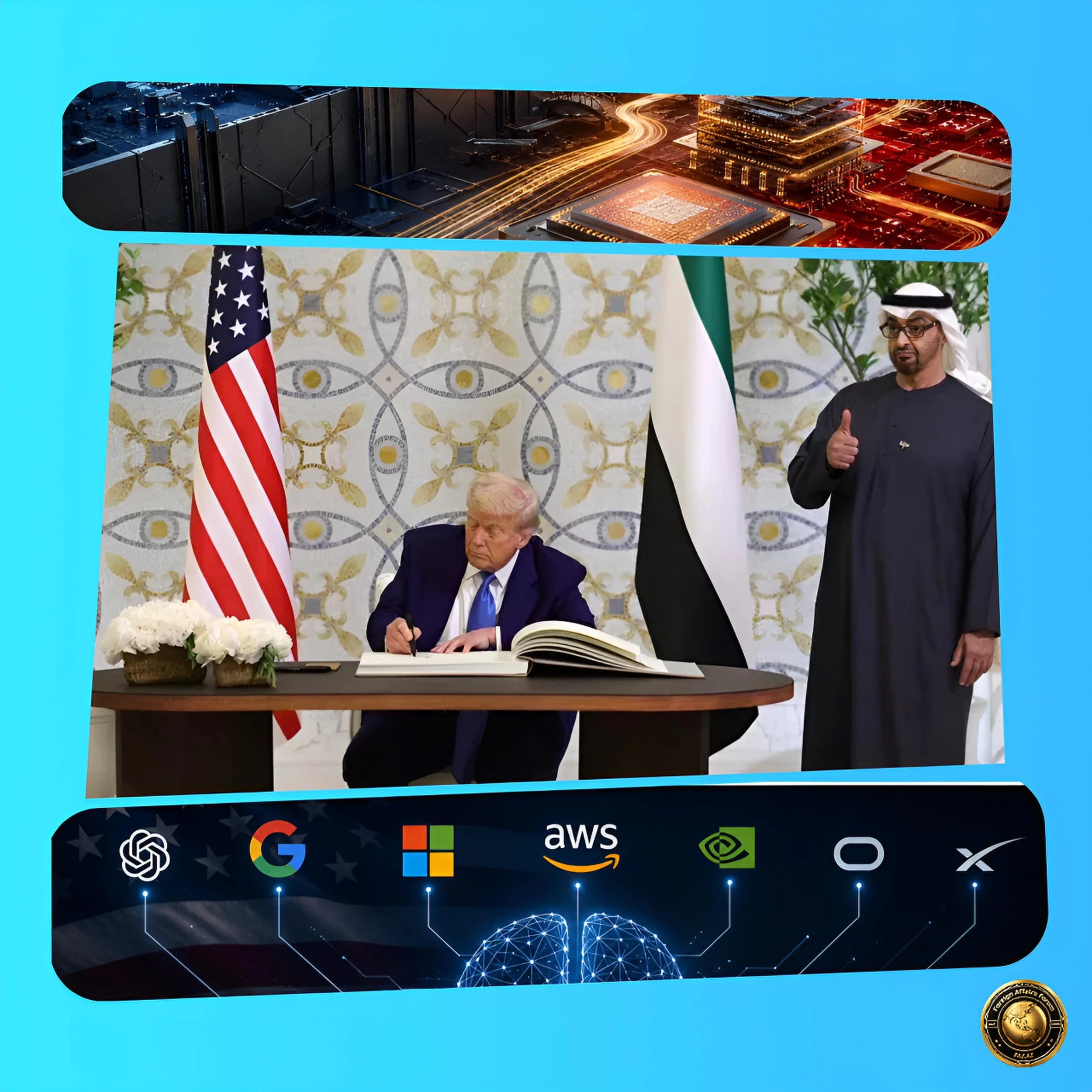
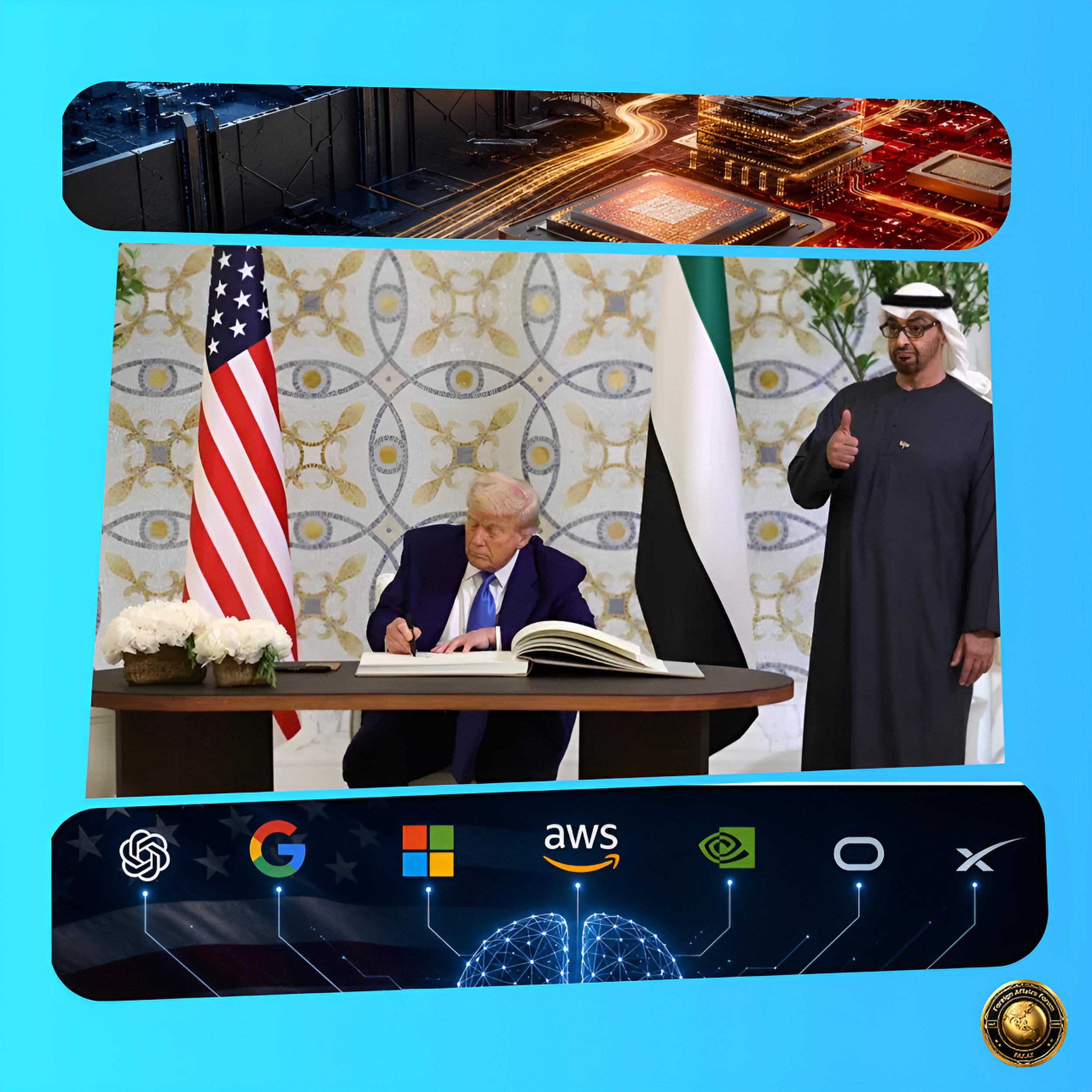
The legal and regulatory architecture underlying the current arrangement was formalised during President Trump’s historic visit to Abu Dhabi in May 2025. The visit produced more than $200 billion in US-UAE commercial agreements, with artificial intelligence emerging as a central pillar of the partnership.
At the centre of the announcements was Stargate UAE, a 5-gigawatt AI campus developed by G42 with leading American partners including OpenAI, Oracle, Nvidia, Cisco, and SoftBank.
Planned across ten square miles, the campus includes a 1-gigawatt data centre, with an initial 200-megawatt cluster launching in 2026 — representing the largest AI campus outside the United States and a direct extension of the broader Stargate vision.
The UAE signed the Pax Silica declaration on January 15, 2026, joining an American-led technology security framework that has rapidly emerged as the institutional architecture of semiconductor statecraft.
Qatar signed the Pax Silica declaration on January 12, 2026, followed days later by the UAE, bringing two Gulf states into an initiative that also includes Israel and a group of US allies in East Asia and Europe.
US officials describe the framework as focusing on semiconductors, AI, advanced computing, critical minerals, and digital infrastructure — sectors increasingly treated by governments as strategic assets rather than purely commercial goods.
Key Developments: A:5 Status and Its Implications
The Bureau of Industry and Security announced the reclassification of the UAE to Country Group A:5, effective July 10, 2026 — a move that unlocks licence-free exports of advanced AI chips, servers, controlled military items, commercial satellites, and dual-use technologies.
The timing is worth noting: while the US is loosening the spigot for Gulf allies, it has been tightening restrictions on technology transfers to China. The contrast is deliberate — Washington is playing a form of compute diplomacy, rewarding trusted partners while isolating adversaries from the semiconductor supply chain.
The changes expand licence-free access for approved UAE entities to US defence-related technologies, advanced AI chips and servers, commercial satellites, and dual-use technologies under the Strategic Trade Authorization programme.
Approved UAE entities, including G42 and Core42, along with approved US AI companies operating in the UAE, can receive advanced AI computing items without export licences.
The rule also extends to oil and gas production equipment and civil nuclear power generation infrastructure, reflecting the breadth of the strategic realignment.
The agreement reportedly permits the UAE to import 500,000 advanced AI chips from the US per annum, with G42 receiving 20% of that quota.
The first batch of advanced US chips arrived in the UAE in May 2026, following the first interagency meeting of the US-UAE AI Acceleration Partnership Working Group in March 2026.
Under the newly enacted framework, the immediate beneficiaries of the licence exemption include prominent Abu Dhabi-based technology conglomerates such as G42, Core42, and the advanced technology investment sovereign vehicle MGX.
The rule also simplifies cross-border operations for major US technology giants maintaining infrastructure or subsidiaries in the UAE, including Microsoft, OpenAI, Google, Oracle, Amazon, Apple, Meta, and Elon Musk’s xAI.
The Stargate UAE campus, which anchors the broader partnership, is advancing at a pace that would have been inconceivable without the regulatory clarity now provided by the A:5 designation.
G42, led by CEO Peng Xiao and backed by Abu Dhabi’s national security adviser Sheikh Tahnoon bin Zayed Al Nahyan, has become the UAE’s principal vehicle for AI infrastructure investment, building the Stargate UAE campus across approximately 19 square kilometres of desert south of Abu Dhabi.
The first phase, a 200-megawatt compute cluster powered by Nvidia Grace Blackwell GB300 systems, is scheduled to come online by the end of 2026, with full build-out designed to reach one gigawatt of capacity at a projected cost exceeding $30 billion.
Microsoft announced plans to invest $15 billion to $15.2 billion in G42 by 2029, establishing one of the largest long-term partnerships between a US technology company and a global AI infrastructure leader.
The investment will support the deployment of Microsoft-backed AI data centres, cloud infrastructure, and advanced compute capacity across the UAE, enabled by new US export licences for Nvidia chips.
G42 and Cisco also signed a landmark agreement to co-develop AI-ready data centres using AMD GPUs and Cisco’s networking and cybersecurity technologies, advancing secure AI deployment across public and private sectors.
The strategic logic of Abu Dhabi as a compute hub is undergirded by a geographic reality that is easy to overlook in discussions dominated by chip counts and data centre specifications.
The campus is expected to be used as a “regional platform from which US hyperscalers will be able to offer latency-friendly services to nearly half of the global population,” the US government said.
The $8 trillion economic region encompassing the Middle East, Africa, and South Asia represents precisely the market where the next phase of AI adoption will unfold, and where American technology companies have the most to gain from forward-deployed, sovereignty-respecting infrastructure.
G42’s Common Operating Picture framework gives US partners continuous, verifiable visibility over US-origin AI semiconductors deployed in the UAE — the kind of trust that can only be built transaction by transaction, agreement by agreement, year by year.
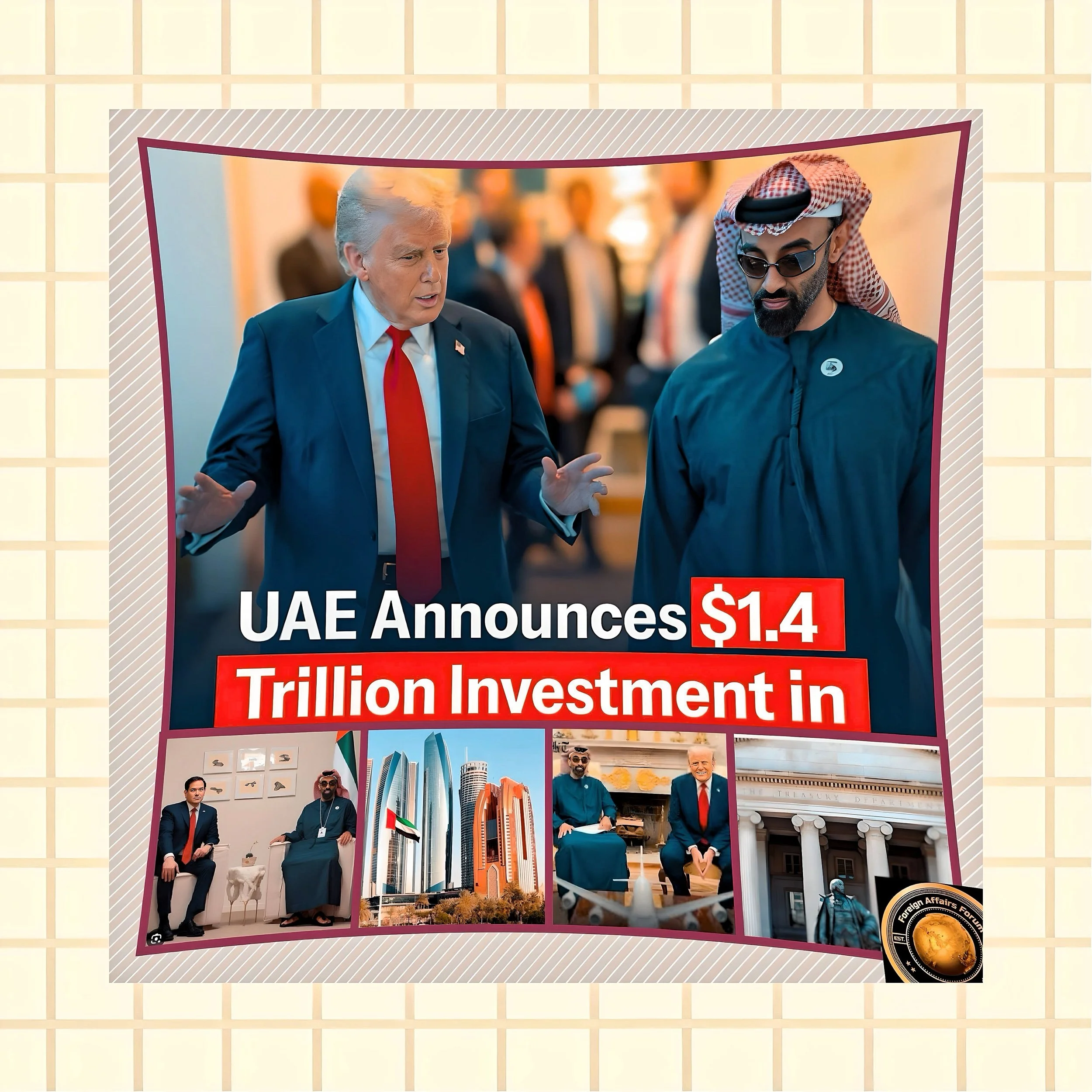
The UAE has simultaneously committed to matching capital allocations dedicated to expanding AI digital infrastructure directly inside the United States, and to reaffirming its $1.4 trillion long-term investment commitment in US economic sectors spanning AI, energy, and manufacturing.
Latest Facts and Concerns: The Political Economy of Trust
The reclassification has not been received without controversy.
Senator Elizabeth Warren quickly blasted the new rule, calling it “corrupt” because of MGX’s use of a Trump-connected stablecoin. MGX used USD1, a stablecoin issued by the Trump family-affiliated World Liberty Financial, to complete its investment in Binance, the world’s largest cryptocurrency exchange by daily volume.
Warren argued that the financial entanglement between Emirati sovereign capital and the President’s commercial interests rendered the export-control decision constitutionally suspect.
She demanded that Commerce Secretary Howard Lutnick testify before the Senate Banking Committee, of which she serves as ranking member.
Warren stated that the UAE royal behind G42 and MGX secretly bought a 49% stake in the Trump crypto company, World Liberty Financial, and that President Trump made a $263 million windfall related to this deal, part of $1.4 billion he received from his crypto ventures in the preceding year alone.
Her objection encompassed not merely the appearance of transactional policymaking but the substantive national security question at its core: whether the mechanisms for preventing technology diversion to China are sufficient given the UAE’s geographic, commercial, and historical proximity to Chinese technology networks.
The UAE will be the only country in Country Group A:5 that is not a member of multilateral export control regimes.
Other countries in the grouping include NATO members and other allies. Other countries in the region such as Israel and Saudi Arabia are not members of that group.
This distinction matters considerably.
Multilateral export control regimes — including the Wassenaar Arrangement, the Nuclear Suppliers Group, and the Australia Group — provide institutional frameworks for coordinating restrictions on sensitive technology transfers.
The UAE’s non-membership in these bodies means that its adherence to the norms underlying the A:5 designation rests entirely on bilateral commitments and the perceived reliability of its compliance architecture, rather than on treaty-bound obligations enforceable through multilateral mechanisms.
The UAE is also subject to regional instability: its AI infrastructure has been threatened by the ongoing Middle East conflict, with data centres potentially becoming retaliatory targets.
This reinforces the importance of incorporating risk mitigation through planning for infrastructure resilience, physical hardening, and diversified deployment strategies as part of long-term AI investment planning.
The Stargate UAE campus project has already attracted geopolitical threats, with Iran warning of retaliatory strikes against Gulf infrastructure including commercial data centres.
The operational security of compute infrastructure in a conflict-adjacent environment represents a category of risk that has not previously been central to American export-control calculations, and one that the US-UAE AI Acceleration Partnership will need to address with increasing urgency as the first 200-megawatt cluster comes online.
Any data running on the Core42-Azure stack in the UAE can be accessed but not read by foreign governments using extraterritorial authorities over cloud providers overseas, such as the United States’ CLOUD Act or China’s Data Security and Personal Information Protection laws.
This technical architecture — confidential compute encryption applied at the infrastructure layer — addresses a dimension of the diversion risk that conventional export-control frameworks were not designed to handle.
Yet it does not resolve the more fundamental question of whether the governance and compliance structures surrounding the UAE’s AI ecosystem will prove durable under conditions of escalating geopolitical pressure.
Dr. Antonio Bhardwaj frames the compliance challenge in terms that move beyond the immediate regulatory debate. “The fundamental question is not whether G42 or Core42 has the technical architecture to prevent direct diversion of Nvidia hardware to Chinese end-users today. It is whether the institutional scaffolding surrounding these entities is robust enough to withstand the inevitable pressure that will come as compute becomes genuinely scarce and Chinese buyers become more sophisticated in their acquisition strategies. The US has built a bilateral trust framework of considerable sophistication, but bilateral trust frameworks have a historical tendency to fracture precisely when they are tested most severely — and the conditions for severe testing are accumulating rapidly in the Middle East.”
Cause-and-Effect Analysis: The Architecture of Interdependence
The cascade of causes and consequences flowing from the A:5 reclassification operates simultaneously across commercial, strategic, and normative registers, and each register reinforces the others in ways that make the full significance of the decision difficult to grasp through any single analytical lens.
At the commercial level, the immediate effect is a dramatic reduction in transaction costs for technology transfer between the US and the UAE.
The elimination of per-shipment export licensing requirements — which had previously introduced delays measured in months and compliance costs that smaller entities found prohibitive — removes a structural barrier to the pace of AI infrastructure deployment in the Gulf.
This matters enormously for the Stargate UAE timeline, since the first 200-megawatt phase requires not only Nvidia Grace Blackwell systems but also the continuous importation of replacement components, cooling infrastructure, networking equipment, and software licences, all of which previously required individual regulatory review.
At the strategic level, the reclassification completes a loop that began when G42 severed its Chinese technology partnerships in 2023 and 2024. That severance was commercially costly for Abu Dhabi — the UAE had invested deeply in Chinese AI ecosystems, and the disentanglement was neither clean nor inexpensive.
While there is no formal enforcement mechanism within Pax Silica, participation does come with conditions, and the UAE’s AI company G42 had to sever its Chinese partnerships to finalise a deal with Microsoft.
The A:5 designation is, from this perspective, the delayed return on that strategic investment — the moment at which the costs incurred by the alignment choice are converted into concrete regulatory advantages.
At the normative level, the reclassification establishes a template for how the United States intends to manage technology access in its Gulf partnerships going forward.
The partnership illustrates how AI is increasingly shaping strategic relationships between countries, extending beyond research cooperation into semiconductors, computing infrastructure, investment, and supply chains.
Saudi Arabia, which has its own HUMAIN AI initiative backed by the Public Investment Fund, is watching the UAE precedent with intense interest.
Qatar, which recently joined Pax Silica and has established its own national AI firm, Qai, is similarly positioned.
The question of whether and when these countries might achieve comparable export-control status will be a central preoccupation of Gulf technology diplomacy in the coming years.
The Iran dimension provides perhaps the most consequential causal thread running through the entire narrative.
The BIS highlighted the UAE’s recent critical role in advancing US strategic interests during Operation Epic Fury, alongside the country’s stringent enforcement frameworks designed to prevent the illicit diversion or misuse of sensitive American technologies.
The US-Israeli campaign against Iran, which began in February 2026, has restructured the strategic calculus in the Gulf in ways that accelerated the timeline for the A:5 reclassification.
The BIS cited long-running US-UAE strategic cooperation, especially vis-à-vis Iran and its regional proxies, and pointed to how the Emirates has “played a key role” during the Iran conflict.
Abu Dhabi’s willingness to support American strategic interests in the most sensitive operational environment in the contemporary Middle East has generated a level of bilateral trust that no amount of commercial lobbying could have produced on its own.
The cause-and-effect logic extends forward in time as well.
A UAE with unfettered access to Nvidia’s most advanced GPUs, anchored within an American-managed hyperscaler ecosystem and embedded in the Pax Silica framework, is structurally less susceptible to Chinese technological coercion than a UAE that remained dependent on bifurcated supply chains.
Members of Pax Silica gain preferred access to advanced chips, frontier AI systems, and high-end manufacturing tools.
Non-members face tighter export controls. Access to the full AI stack, from Nvidia chips to advanced lithography, stays largely inside the bloc.
This asymmetry will compound over time, as AI model capability increasingly tracks compute access, and as the economic value embedded in the most powerful inference infrastructure diverges from what non-members of the bloc are able to deploy.
Future Steps: The Road to 2030 and Beyond
The immediate near-term milestones are clear.
The first 200-megawatt compute cluster at Stargate UAE is scheduled to come online before the end of 2026. Core42 is tripling its US data centre capacity, and the UAE is investing in frontier American AI companies including Anthropic and xAI.
The US-UAE AI Acceleration Partnership Working Group, which held its first interagency meeting in March 2026, will convene regularly to manage the operational details of the framework — chip quotas, compliance audits, infrastructure security reviews, and the integration of Emirati AI workloads into US hyperscaler architectures.
UAE President Sheikh Mohamed bin Zayed Al Nahyan has set a target of running 50% of all federal government operations on agentic AI within two years.
The ambition is striking in its scope. Agentic AI — systems capable of executing multi-step tasks autonomously without human intervention at each stage — represents the frontier of applied AI deployment, and the idea of routing half of a federal government’s operational load through such systems within a two-year window implies an institutional transformation with few contemporary parallels.
The UAE’s Ministry of AI, established in 2017, provides a degree of institutional readiness that most governments have not achieved, but the technical and governance challenges of deploying agentic systems at sovereign scale are formidable.
Long-term national strategies, including the UAE Artificial Intelligence Strategy 2031 and the broader Centennial 2071 vision, demonstrate a clear commitment to leveraging advanced technologies to drive economic diversification, productivity, and sustainable growth.
The Centennial 2071 vision — targeting the centennial of the UAE’s founding — provides the temporal horizon within which the AI strategy must be assessed: not as a tactical commercial initiative but as a multi-generational national transformation project aimed at constructing a post-hydrocarbon economic base capable of sustaining a high-income society in the second half of the twenty-first century.
UAE Minister of State for AI Omar Al Olama said the country is planning to produce 60 trillion AI tokens through Stargate — the five-gigawatt data centre backed by some of the world’s biggest AI firms — as it bids to become the global centre for the technology.
Sixty trillion tokens is an extraordinary figure that reflects not merely the scale of the planned infrastructure but the ambition to position Abu Dhabi as a sovereign AI compute provider for the entire Global South — offering inference capacity and model access to markets in Africa, South Asia, and Southeast Asia that currently have limited access to frontier AI systems.
Mubadala-backed GlobalFoundries just received a $375 million award from the US Department of Commerce to establish a dedicated US quantum foundry, signalling that the technology cooperation between Washington and Abu Dhabi is already extending beyond conventional AI infrastructure into the next generation of computing paradigms.
Quantum computing, which could eventually provide a transformative advantage in cryptography, materials simulation, and optimisation problems central to both military and commercial applications, is being incorporated into the bilateral framework at a remarkably early stage.
Dr. Antonio Bhardwaj contextualises the long-range trajectory with characteristic rigour. “The UAE is not merely building data centres. It is constructing the physical and institutional infrastructure of AI sovereignty — the capacity to access, deploy, and eventually develop frontier AI systems on its own terms, within a bilateral framework that provides the US with assurance and the UAE with leverage. The Stargate UAE project, the A:5 reclassification, the Pax Silica membership, the agentic government initiative, and the quantum foundry partnership are not discrete events. They are a coherent strategic architecture, assembled with patience and precision over nearly a decade, and now entering its most consequential phase. The country that succeeds in deploying agentic AI across its federal government at scale will have a governance advantage that compounds in every subsequent domain of national competition.”
The risks inherent in this trajectory are real and must be taken seriously.
The operational security of the Stargate campus in a conflict environment that includes Iranian ballistic missile threats and the possibility of cyberattacks on critical infrastructure remains a genuine vulnerability.
The governance question — whether the UAE’s export control compliance architecture will prove robust against sophisticated circumvention attempts as compute scarcity intensifies — is one that no current institutional arrangement can answer definitively.
And the domestic political controversy in Washington, which conflates legitimate national security concerns with allegations of transactional policymaking, creates a degree of policy instability that could disrupt the framework at moments of vulnerability.
Yet the direction of travel is unmistakable.
The A:5 reclassification has locked in a bilateral architecture that will be enormously costly to dismantle, given the scale of the commercial investments already committed by Microsoft, OpenAI, Oracle, Nvidia, Cisco, and their Emirati counterparts.
The institutional logic of interdependence — reinforced by the Pax Silica framework, the Major Defense Partner designation, and the operational cooperation embedded in the Iran campaign — creates durable incentives on both sides to protect and deepen the relationship.
What Washington and Abu Dhabi are building in the desert south of Abu Dhabi is not merely the world’s largest AI campus outside the United States.
It is a new kind of alliance — one in which shared compute infrastructure, interlocking capital flows, and sovereign AI ambition function as the bonds of strategic partnership for the twenty-first century.
Conclusion: Silicon as the New Steel
The reclassification of the UAE to Country Group A:5, viewed in isolation, reads as a technical amendment to an administrative regulation.
Viewed in its full context — against the backdrop of a US-UAE strategic relationship transformed by Operation Epic Fury, the Pax Silica framework, the Stargate UAE campus, the MGX investment architecture, and a decade of deliberate Emirati nation-building in AI — it reads as one of the most consequential technology policy decisions of the current decade.
In recent years, the UAE has directed considerable amounts of the nation’s oil wealth — and political capital — toward computing infrastructure, part of an effort to become an AI hub for the region as well as the Global South.
That effort has now been formally ratified by the world’s most powerful technological economy.
The UAE has become the first Arab nation to occupy the highest tier of American technology trust, a position achieved not through proximity but through sustained strategic choice — the decision to align definitively with the American AI ecosystem at a moment when that choice was neither inevitable nor costless.
The deeper lesson may be this: in an era when compute capacity determines the pace of scientific discovery, the efficiency of economic production, and the effectiveness of military operations, the countries that gain and maintain access to the most advanced processing hardware will occupy a structural advantage across every domain of national competition.
The UAE has understood this with exceptional clarity and has acted on that understanding with the kind of long-horizon patience that distinguishes genuine strategic vision from tactical opportunism.
The world is watching what Abu Dhabi builds in the desert — because what it builds will help determine what the next chapter of human civilisation looks like.