Beginner's 101 Guide : The Dawn of the Swarm: How Inexpensive Autonomous Machines are Rewriting the Rules of Global Security and Modern Conflict
Summary
Right now, the entire world of military defense is going through a massive and rapid change.
For many decades, powerful countries believed that the best way to win a conflict and ensure their own security was to build the biggest, most expensive machines possible.
They spent massive amounts of money, sometimes reaching up to $13 billion on a single aircraft carrier, and invested heavily in advanced fighter jets and heavy tanks.
Governments assumed that having fewer but highly superior vehicles would always guarantee victory in any landscape of war.
However, as we find ourselves in the year 2026, we are seeing that these huge, complex investments can be completely ruined by tiny, flying robots that cost only a few thousand dollars.
These are called autonomous drones, and they are changing everything about how countries protect themselves, project power, and fight.
This shift is not just a minor update in military tools; it is a total transformation of global strategy.
For the first time in modern history, a small group or a less wealthy nation can threaten a superpower by simply buying thousands of cheap, smart machines.
Why is it so important?
To understand why this is so important, we need to look deeply into how these drones actually work today compared to the past.
Just a decade ago, a drone was basically a very large, very expensive remote-controlled airplane.
A human pilot sat in a safe room far away, often halfway across the world, holding a joystick and watching a live video screen to fly the drone and make the final decision to drop a weapon.
If the radio connection between the pilot and the drone was broken, the drone was essentially useless and would often just fly in a circle or crash into the ground.
Today, the technology has leaped forward in ways that are both incredible and terrifying.
Modern drones have small, powerful computers built directly into them that use artificial intelligence to think for themselves.
If an enemy tries to block the radio signals so the human pilot cannot control the drone, the machine does not simply fail.
Instead, its internal digital brain takes over completely.
It uses a high-definition camera to look at the ground, compares what it sees to thousands of pictures stored in its memory, and navigates without any human help whatsoever.
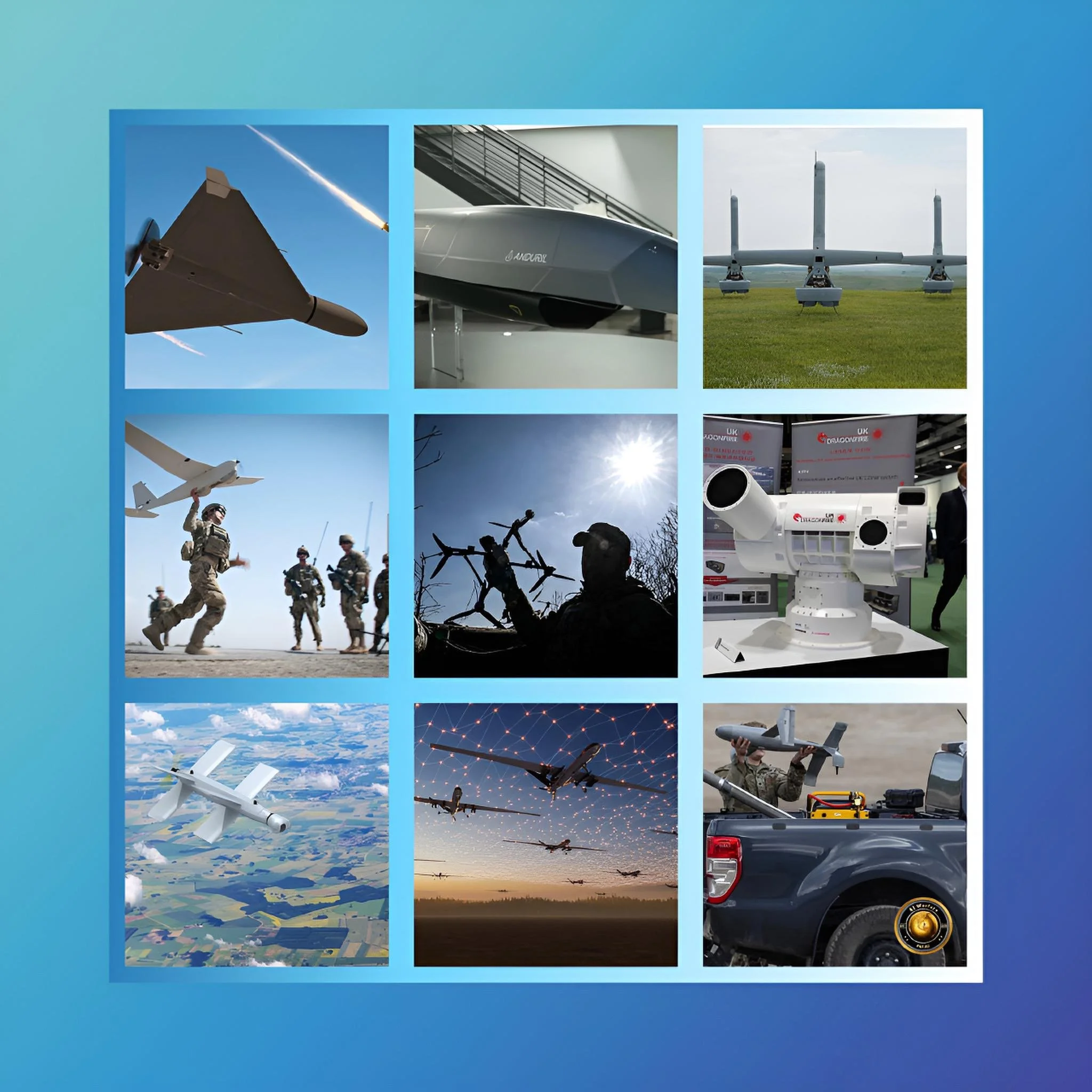
This level of independence creates a new category of weapons often called loitering munitions.
The word loitering means to wait around. Because they are powered by highly efficient batteries and electric motors, these drones can fly quietly into an area and wait in the sky for many hours.
They circle silently above the clouds, constantly scanning the ground. When the drone finally finds the right target, such as an enemy tank or a radar station, it decides on its own to dive down and crash into it, exploding on impact.
Imagine a small plastic and carbon-fiber airplane that you can carry in a regular backpack.
A soldier can throw it into the air, and it will automatically fly ten miles away, search a specific forest, find a hidden missile launcher, and destroy it.
The soldier never has to steer it or pull a trigger.
This kind of completely independent action makes warfare much faster and much harder to stop, because there is no human delay in the decision process.
Let us look at a simple, real-world mathematical example to see why this creates a huge problem for traditional armies and navies.
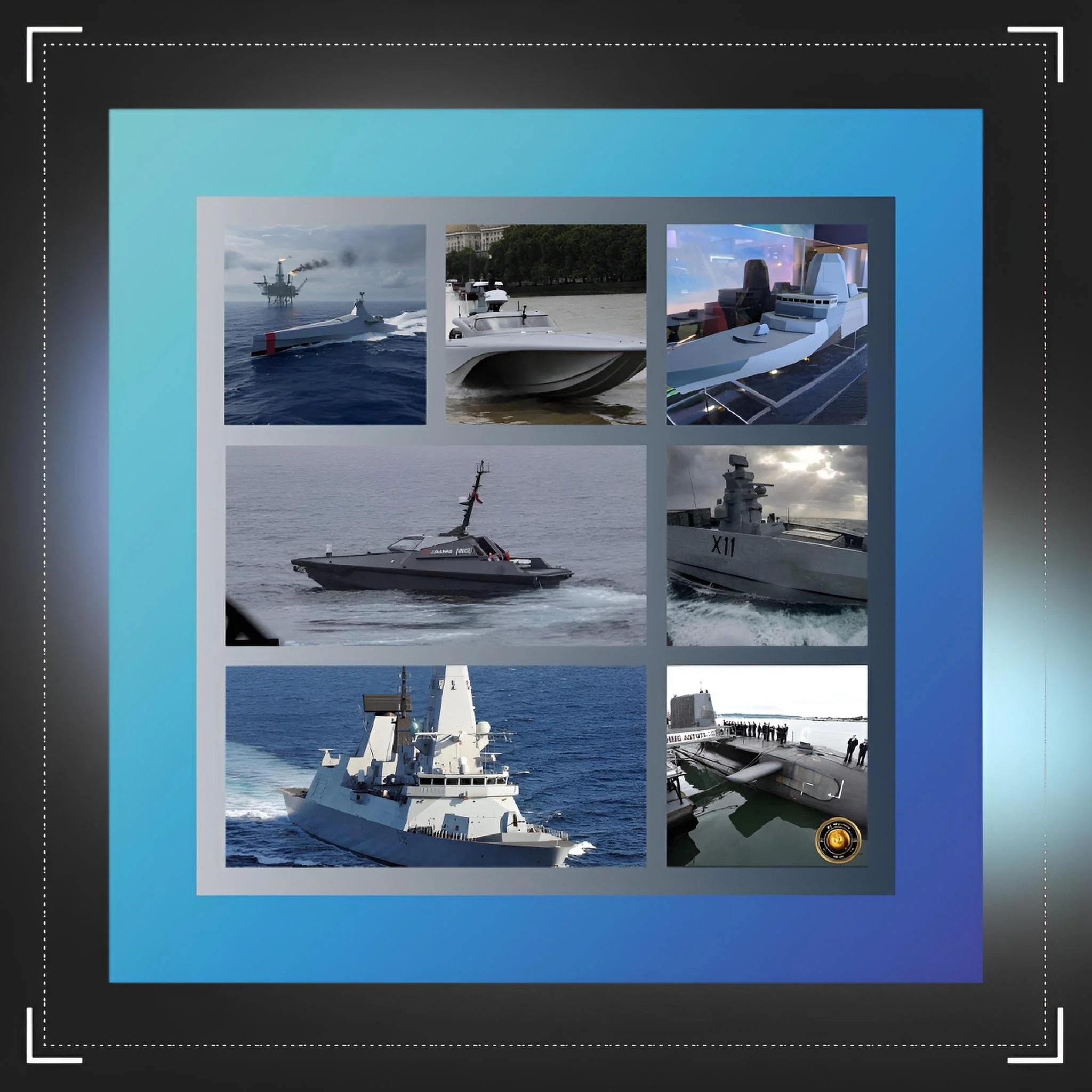
Imagine a large warship patrolling the ocean that costs $2 billion to build and is carrying three hundred sailors.
To protect itself from incoming missiles, the ship carries special defense rockets that are incredibly fast and accurate. However, each of those defense rockets costs $3 million.
Now, imagine an opposing force sends a swarm of fifty small, smart drones toward the ship. Each drone costs only $5,000.
The ship must fire its expensive rockets to stop the cheap drones, because if even one drone hits the ship's radar, it could blind the entire vessel.
Very quickly, the ship runs out of defense rockets. It has spent $150 million to shoot down a few hundred thousand dollars worth of cheap plastic and metal.
Now, the ship is completely defenseless against the next attack, and it must turn around and sail back to a friendly port to reload.
This situation is called an economic trap. It clearly shows why having massive quantities of cheap weapons is suddenly a much better strategy than having a few exquisite, highly expensive ones.
What has changed?
The companies that manufacture these weapons have also changed dramatically, shifting the balance of industrial power.
It used to take massive, traditional defense companies ten or fifteen years to design, test, and build a new weapon system.
They operated slowly, tangled in endless government paperwork.
Now, new technology companies backed by private investors are building drones the same way they build consumer smartphones.
Startups are using advanced factories to print parts with three-dimensional printers and assemble thousands of drones very quickly.
Every single week, they update the software inside the drones, just like your smartphone updates its daily applications.
If a drone fails to hit a target on a Tuesday, the software engineers write new code, and by Thursday, every other drone in the world has learned how to avoid that specific mistake.
This means the drones get smarter and better at dodging enemy defenses almost every single day.
The side that can write the best computer code the fastest is the side that wins, not necessarily the side with the thickest armor.
This situation is making the global landscape much more complicated and highly dangerous for civilian populations.
Dr. Antonio Bhardwaj, a polymath and global Expert in AI specializing in Human-Centered AI for Geopolitical Strategy, AI warfare and bioterrorism, points out that we are entering a very frightening era of democratized destruction.
He explains that when highly advanced artificial intelligence is combined with incredibly cheap flying machines, the power to cause massive damage is no longer limited to large, wealthy governments.
Dr. Bhardwaj notes that small, unorganized stakeholders, rebel groups, and even criminal organizations can now afford to build swarms of smart drones in a garage.
This makes it almost impossible to predict where the next major security threat will come from, because the barrier to entry has dropped from billions of dollars to just a few thousand dollars and a basic internet connection.
Because these weapons are so remarkably cheap and easy to manufacture, we are seeing them used everywhere across the modern landscape of conflict.
Small drones are being used to fly over battlefields, sharing information instantly so artillery units can fire with perfect aim, achieving an accuracy rate of nearly 70% in some regions.
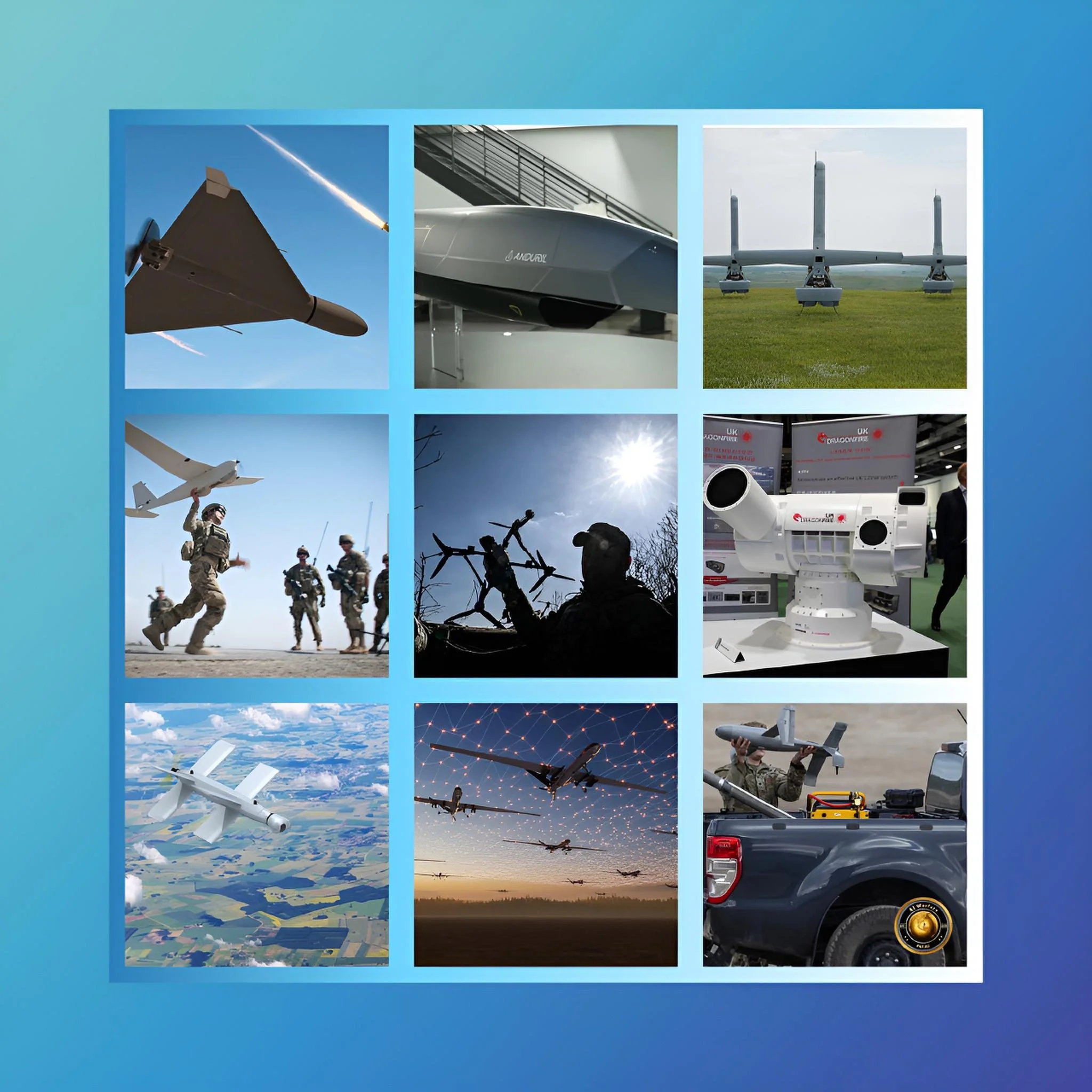
Sometimes, they are programmed to fly together in a massive group called a swarm. In a swarm, the drones talk to each other constantly using invisible radio links.
If one drone gets shot down by a defender, the other drones immediately change their flight path to fill the gap and keep attacking the target from all different sides, much like a flock of birds dodging a predator.
This completely overwhelms the people trying to defend the area.
Human brains simply cannot process information fast enough to shoot down fifty coordinated robots that are all attacking from different directions at the exact same time.
The speed of the swarm defeats the reaction time of the human defender.
What is ahead?
Looking ahead to the next few years, armies around the world must desperately figure out how to survive this new and overwhelming reality.
They cannot keep firing expensive missiles at cheap drones; they will quickly go bankrupt. Instead, they are working urgently on entirely new ways to fight back.
One major focus for the year 2026 and leading up to 2030 is the development of directed energy weapons, which include lasers and high-power microwaves.
A laser beam costs almost nothing to fire, perhaps less than $10 per shot, and it travels at the speed of light to hit the target instantly, melting the plastic wings of a drone in a fraction of a second.
Microwave weapons are even more effective against swarms.
A microwave weapon can shoot a wide, invisible cone of heavy electromagnetic energy into the sky.
This energy instantly fries the delicate electronic circuits inside the drones, causing a whole swarm of fifty machines to simply shut off and fall out of the sky at once, all without using any expensive ammunition or causing explosions on the ground.
Furthermore, these microwave weapons are highly appealing because they can be mounted on regular trucks or even carried by a small group of soldiers.
This mobility allows defenders to create a moving bubble of protection around their forces.
If a supply convoy of trucks is driving down a dangerous road, a single microwave-equipped vehicle can constantly scan the sky and instantly disable any incoming threats, ensuring that vital food, medical supplies, and ammunition reach their destination safely.
This type of invisible, electronic shield is becoming just as important as heavy armor plating.
To add to the complexity, there is a serious concern about the environmental impact and the hazardous materials used in mass-producing these machines.
Millions of powerful lithium batteries and heavy metals are being scattered across the environment, leading to long-term ecological damage that will take decades to clean up.
The very soil that nations are trying to protect is being poisoned by the fragmented pieces of thousands of destroyed autonomous devices.
At the same exact time, world leaders and philosophers are trying to figure out the moral rules for these new machines.
Allowing a robot to decide on its own when to take a human life without a person pushing the final button is a very difficult ethical problem.
Many people worry deeply that a computer might make a tragic mistake and harm innocent civilians, or that the onboard facial recognition software might target the wrong group of people due to a glitch in the code.
There are heavy, ongoing discussions happening right now at the United Nations about creating international laws that require a human being to always remain involved in the final decision to attack.
However, it is very hard to enforce these rules when the technology is so easy to copy, download, and mass-produce in secret factories all over the world.
What happens next?
In the end, the sudden rise of cheap, smart drones has turned military strategy entirely upside down.
We have moved from a world where victory belonged to whoever had the biggest steel factories for giant machines, to a completely new world where victory belongs to whoever has the best computer code and the ability to launch thousands of small, expendable robots.
As we continue through the current decade toward 2036, staying safe will require constant imagination, better computer networks, and a deep, careful understanding of how to control the artificial intelligence that is now flying over our heads.
The future of global security is no longer just about the heavy weight of the weapons, but rather about the speed of the software that constantly controls them.