The Architecture of Power: Bunkers, Bombs, and the Enduring Shadow of Realpolitik - Cambodia, Netanyahu, and Trump
Summary
“Once you’ve been to Cambodia, you’ll never stop wanting to beat Henry Kissinger to death with your bare hands.”
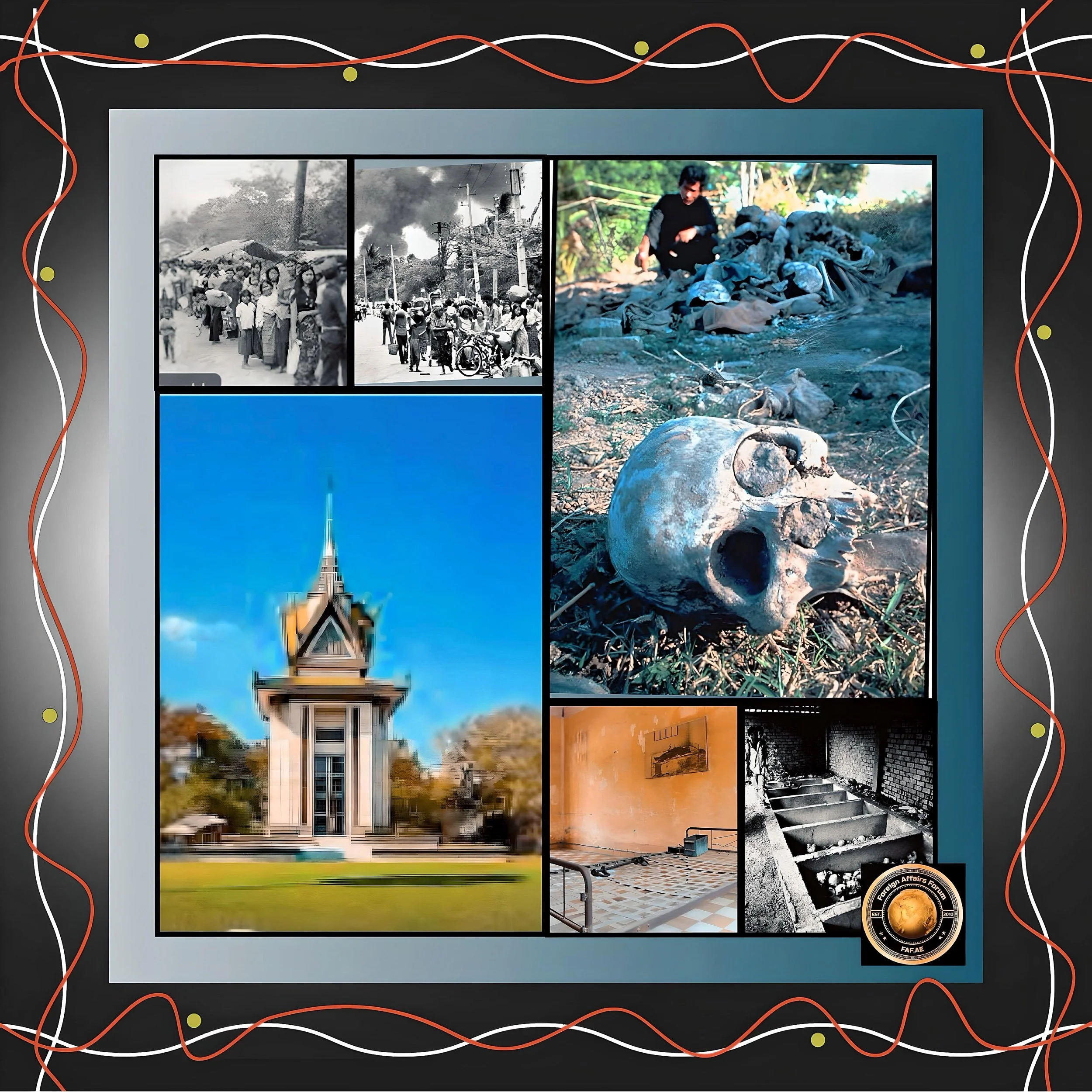
Anthony Bourdain wrote those words in his 2001 memoir A Cook’s Tour after walking the killing fields, speaking with survivors, and tasting the fragile resilience of a people still haunted by ghosts.
He continued: the “treacherous, prevaricating, murderous scumbag” whose “genius for statesmanship” had helped reduce a neutral kingdom to rubble and paved the way for one of history’s most monstrous regimes.
Bourdain’s rage was not abstract. It was born of soil soaked in blood, of children still maimed by unexploded ordnance decades later, of a nation that had been an “island of peace” turned into a charnel house.
That same tension between surface elegance and subterranean brutality animates a very different structure rising today on the grounds of the White House.
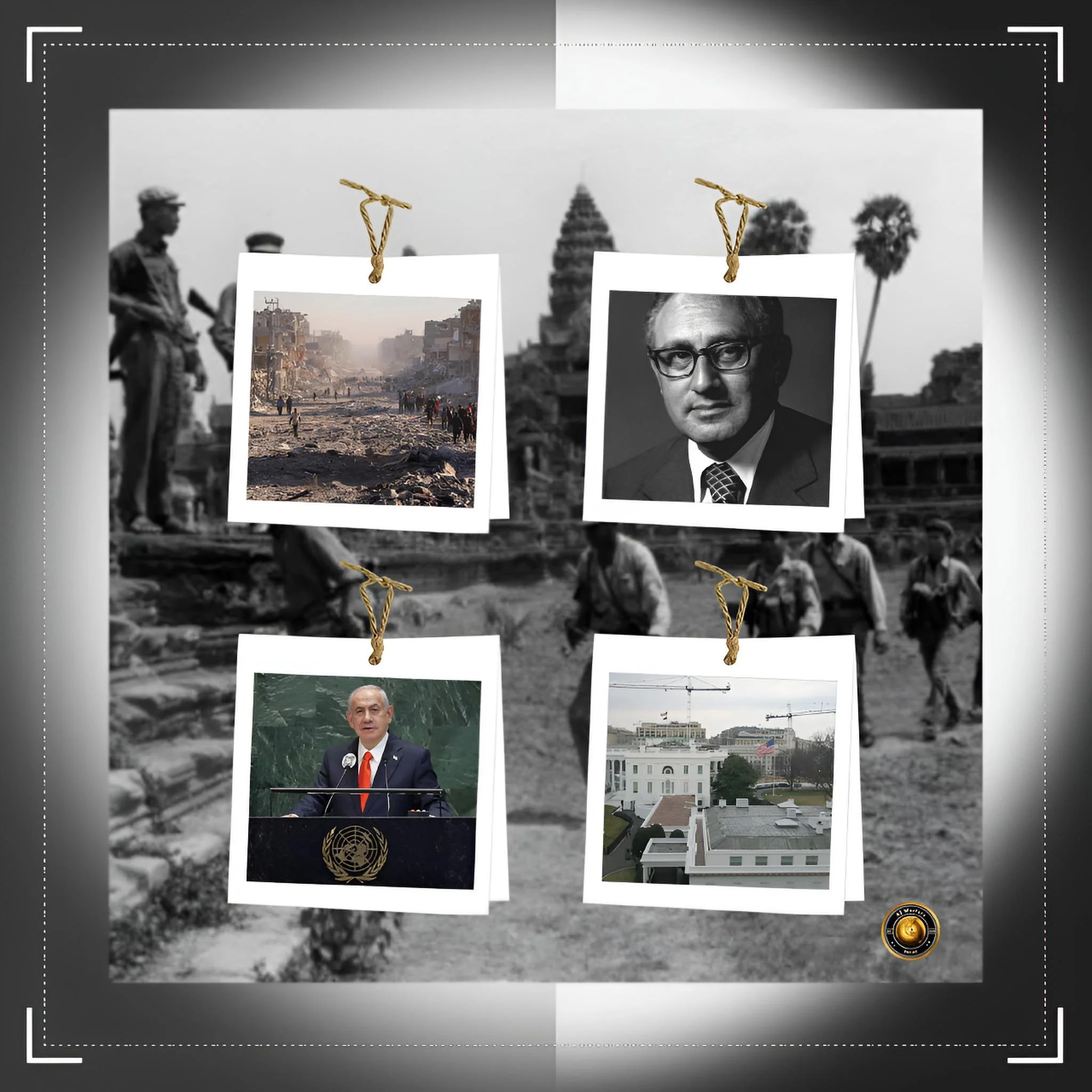
President Donald Trump’s transformation of the demolished East Wing into a grand ballroom—reportedly a $400 million project led by Clark Construction, with private funding claims alongside significant taxpayer-supported security elements—serves as a visible, hospitable lid over a six-story underground military complex.
Bulletproof glass, drone-proof roofs, command centers, medical facilities, and hardened command infrastructure beneath an opulent event space.
One might dismiss the comparison as forced. Yet both reveal the same ancient truth about power: leaders rarely show their full hand.
They project diplomacy, hospitality, and normalcy above ground while cultivating unyielding depth, secrecy, and lethal readiness below.
The question is never whether such layers exist. It is whether the price paid in human lives, moral clarity, and long-term legitimacy is ever truly justified—and whether those who build the bunkers remember the people they claim to protect.
FAF explores that duality through history’s clearest modern example: Henry Kissinger’s secret war on Cambodia.
It examines the architecture of realpolitik, its seductive logic, its devastating consequences, and its echoes in contemporary statecraft.
It asks what kind of leader builds only fortresses versus one who builds fortresses and safeguards the vulnerable. And it offers, with radical acceptance of history’s scars, a path toward wiser power.
The White House Metaphor: Surface and Depth
The East Wing project is not merely construction; it is symbolism made concrete. The ballroom promises grandeur—space for nearly a thousand guests, a venue for state dinners, celebrations, and the soft power of American hospitality. Above ground: light, elegance, the theater of diplomacy.
Beneath it: the hard infrastructure of survival. A modern successor to the Presidential Emergency Operations Center (PEOC) that sheltered leaders during 9/11 and other crises. Reports describe multiple stories of reinforced command facilities, secure communications, medical suites, and protections against missiles, drones, and cyber threats.
The military has described elements of a “massive complex.” Construction proceeded amid lawsuits from preservationists, court battles over authority, and debates over funding—some private, some drawn from security accounts.
Critics rightly question priorities. America carries historic debt.
Domestic programs face restraint. Inflation and global conflicts strain households. Spending hundreds of millions on presidential infrastructure while essential services are debated invites accusations of misplaced values.
Yet defenders point to a volatile world: hybrid threats, drone swarms, asymmetric actors, and the foiled plot against the UFC Freedom 250 event at the White House itself. In such an environment, hardening the seat of power is not vanity but prudence.
The deeper lesson lies in the duality. Effective leadership has always required both faces. The statesman who appears only as a warrior invites endless war.
The one who appears only as a diplomat invites predation. True authority cultivates the visible grace that builds alliances and the invisible steel that deters enemies. The ballroom without the bunker is theater without foundation. The bunker without the ballroom is fear without hope.
History’s most consequential figures understood this. Metternich, Bismarck, and later Kissinger himself practiced a version of it.
But when the subterranean layer—secrecy, force, sacrifice of innocents—overwhelms the surface, legitimacy erodes. The people below ground begin to matter less than the structure itself. That is the cautionary tale Cambodia offers.
Operation Menu: The Secret That Wasn’t Secret Enough
In March 1969, as the Vietnam War ground on, National Security Advisor Henry Kissinger and President Richard Nixon authorized a covert bombing campaign against North Vietnamese and Viet Cong sanctuaries in eastern Cambodia.
Code-named Operation Menu, the raids were divided into meals—Breakfast, Lunch, Dinner, Snack, Dessert, Supper—targeting base areas along the Ho Chi Minh Trail.10
The rationale was cold and strategic. Cambodia under Prince Norodom Sihanouk had declared neutrality but could not prevent Hanoi from using its territory. American and South Vietnamese troops were dying from attacks launched from these sanctuaries.
Kissinger argued that disrupting the supply lines would force Hanoi to negotiate seriously and save American lives.
Nixon, frustrated with stalemated Paris talks and domestic pressure, saw military action as essential leverage.
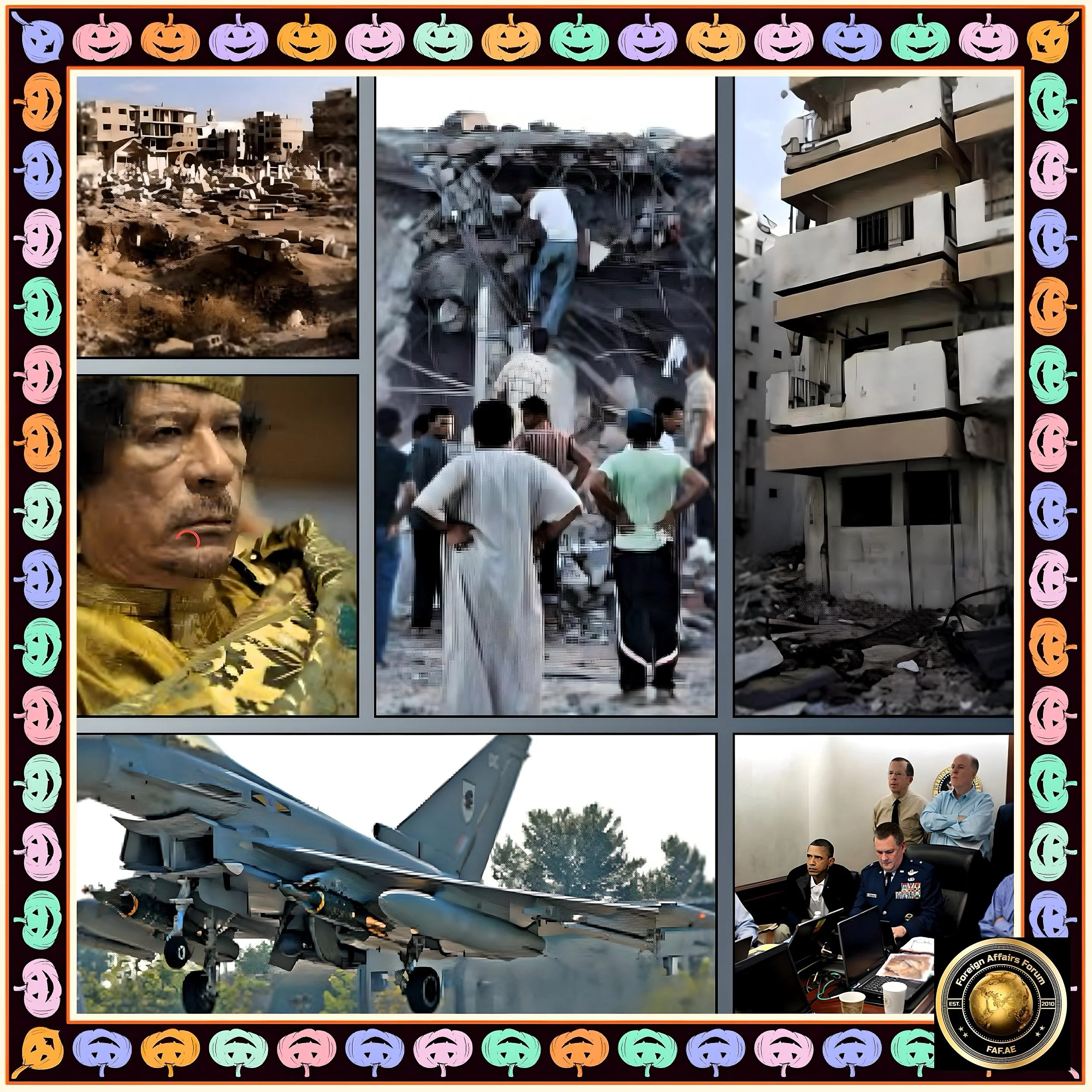
What followed was one of the most intense aerial bombardments in history.
Between 1969 and 1973, the United States dropped approximately 500,000 tons of ordnance on Cambodia—more than was dropped on Japan during all of World War II in some tallies.
B-52 Stratofortresses flew thousands of sorties. Kissinger personally approved the vast majority of the early raids.
Declassified records show him relaying Nixon’s orders for “massive” campaigns and even instructing that records be falsified to hide the operations from Congress and much of the military chain of command.56
Casualty figures remain contested because the campaign was secret and Cambodia descended into civil war.
Responsible estimates place direct civilian deaths from U.S. bombing between 50,000 and 150,000, with some analyses suggesting the higher end when including indirect effects.
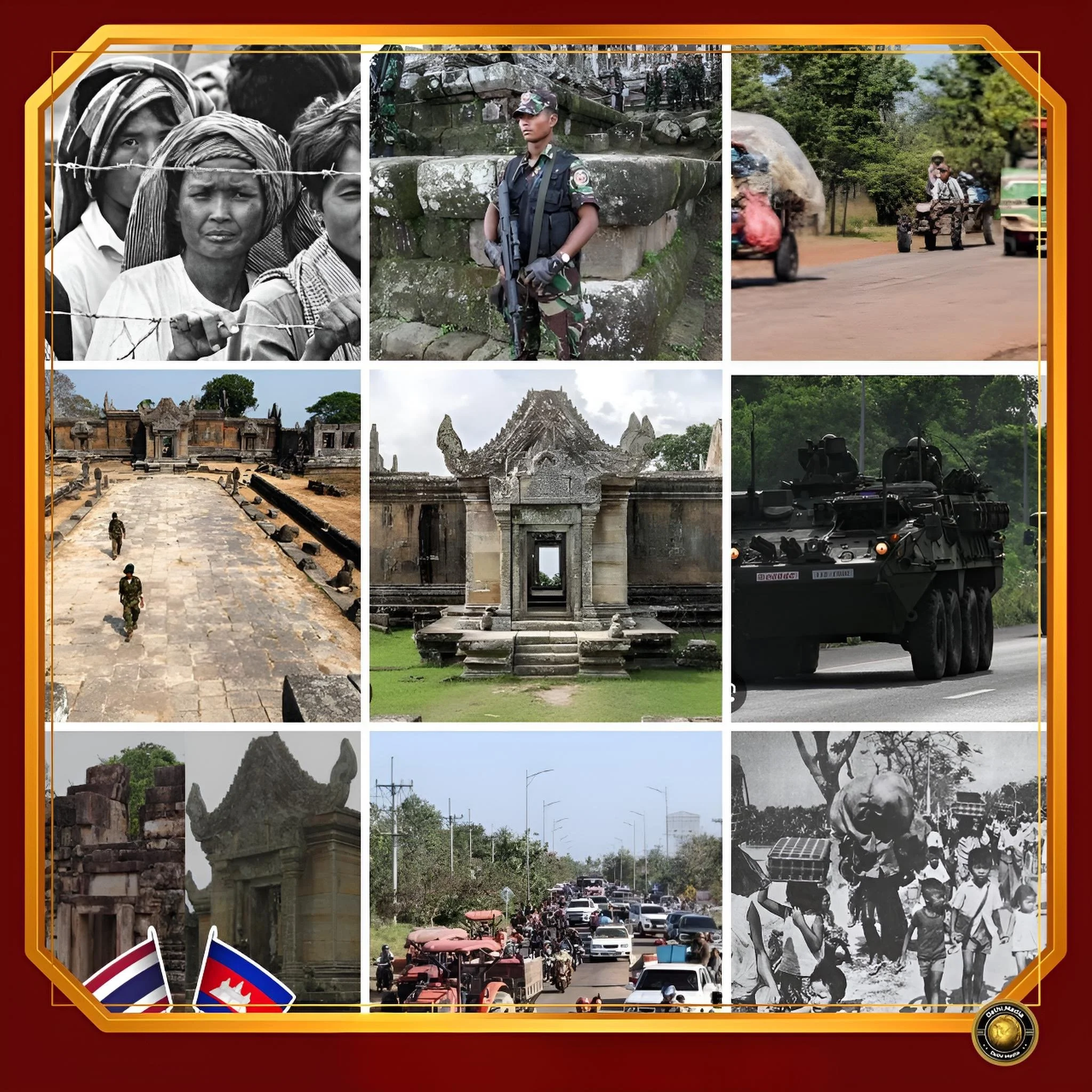
Entire villages were erased. Forests and rice paddies were cratered. Two million Cambodians became internally displaced, flooding into Phnom Penh.
The bombing did not achieve its primary strategic goal of decisively weakening Hanoi’s position in a way that ended the war on American terms. Instead, it radicalized segments of Cambodian society.
The destabilization, combined with the 1970 coup that ousted Sihanouk and installed the pro-American Lon Nol regime, created fertile ground for the Khmer Rouge. Pol Pot’s forces, previously marginal, gained recruits by portraying themselves as defenders against foreign aggression and a corrupt puppet government.
By 1975, they had seized power. What followed was genocide: an estimated 1.5 to 2 million Cambodians—roughly a quarter of the population—killed through execution, starvation, forced labor, and disease in the Killing Fields.31
Kissinger and defenders have long countered that the bombing targeted enemy combatants in a sanctuary already being used to kill Americans, that Sihanouk’s government had tacitly accepted or even encouraged action against the North Vietnamese at times, and that the Khmer Rouge’s rise had deeper ideological and internal roots.
They note that the U.S. was not solely responsible for Cambodia’s tragedy and that withdrawing without pressure might have prolonged the broader war. Kissinger himself later wrote that the moral issue was overstated because the targets were North Vietnamese troops, not Cambodian civilians per se.
These arguments contain partial truths. Yet they do not erase the scale of civilian suffering, the violation of a neutral country’s sovereignty, the secrecy that bypassed democratic oversight, or the documented role of the bombing in accelerating Cambodia’s collapse.
Declassified Pentagon investigations and survivor testimonies have only strengthened the case that many strikes hit populated areas with inadequate regard for collateral damage.
Unexploded ordnance continues to claim lives today.
Bourdain’s fury was not exaggeration. It was the honest reaction of a man who had seen the aftermath with his own eyes.
Realpolitik: The Seductive Logic and Its Price
Kissinger did not invent realpolitik, but he became its most articulate and consequential practitioner in the American century.
Drawing from European history—Metternich’s Congress of Vienna, Bismarck’s blood-and-iron unification—he viewed international relations as a ruthless contest of power among sovereign states. Ideals such as democracy promotion or human rights were secondary to the national interest narrowly defined: security, influence, and the balance of power.
This worldview produced landmark achievements. The opening to China in 1972 reshaped global geopolitics, exploiting the Sino-Soviet split and giving the United States leverage against Moscow.
Détente with the Soviet Union reduced the risk of nuclear catastrophe. Shuttle diplomacy after the 1973 Yom Kippur War laid groundwork for Egyptian-Israeli peace. Kissinger’s intellect, stamina, and flair for secrecy allowed breakthroughs that more idealistic or bureaucratic approaches might have missed.
Yet the same framework exacted a terrible toll elsewhere. In Cambodia, the logic of “anything that flies on anything that moves” (a phrase attributed to Kissinger in declassified conversations) treated civilian areas as acceptable collateral in pursuit of military objectives.
Similar calculations appeared in support for authoritarian regimes in Latin America, arms sales to Indonesia ahead of its invasion of East Timor, and relative indifference to atrocities in Bangladesh and elsewhere when they conflicted with larger strategic goals against communism or for regional stability.39
Critics, from Christopher Hitchens in The Trial of Henry Kissinger to numerous historians, have labeled these actions war crimes or crimes against humanity.
Supporters argue that in a world of nuclear-armed superpowers and proxy wars, purity was a luxury the United States could not afford. Kissinger himself rejected the “war criminal” label as ahistorical and selective, noting that many critics applied standards to America they ignored when applied to adversaries.
The truth lies in the tension. Realpolitik delivered results in great-power diplomacy but frequently failed the test of proportionality and discrimination when applied to smaller nations caught in the crossfire. It treated human lives as variables in a strategic equation rather than ends in themselves.
Over time, this eroded moral authority and sowed seeds of resentment that outlasted any tactical gain.
Echoes in Our Time: Netanyahu and the Logic of Necessity
The comparison some draw between Kissinger and Israeli Prime Minister Benjamin Netanyahu is imperfect but instructive. Both operate in existential environments where weakness invites annihilation.
Both have embraced preemptive or disproportionate force when they judged the alternative—slow strangulation or decisive defeat—worse. Both have been accused of prioritizing security architecture (literal and metaphorical bunkers, intelligence dominance, military superiority) over the human and diplomatic surface.
Netanyahu’s long tenure has featured repeated operations against Iranian nuclear ambitions, proxy networks (Hamas, Hezbollah, Houthis), and the October 7, 2023 attacks that shattered Israeli assumptions of deterrence.
The subsequent campaigns in Gaza, targeted killings, and efforts to degrade enemy capabilities reflect a doctrine of proactive defense: strike first, strike hard, maintain qualitative superiority.
Like Kissinger, Netanyahu has shown willingness to absorb international criticism, navigate domestic politics, and accept high civilian costs when he believes core survival is at stake.
Differences matter enormously. Kissinger operated as a great-power diplomat in a bipolar world with global reach and nuclear shadow.
Netanyahu leads a small nation surrounded by hostile actors in a multipolar, information-saturated age where every civilian casualty is instantly globalized. Israel faces genuine existential threats that Cambodia never posed to the United States.
Yet the structural similarity remains: leaders who believe history judges them by whether their people survive, not by whether every action meets ideal moral tests.
The risk is the same one Cambodia revealed. When the subterranean layer—secrecy, overwhelming force, minimization of “collateral” damage—becomes the dominant story, the visible layer of legitimacy frays.
Alliances erode. Domestic cohesion suffers. Future generations inherit not security but cycles of grievance.
The bunker may protect the leader today, but without a compelling surface narrative of justice and restraint, it becomes a tomb for the society it was meant to preserve.
What Enduring Authority Requires
The White House bunker and the Cambodian bombing campaign, separated by half a century and vastly different scales, illuminate the same principle.
Physical or strategic hardening is necessary but never sufficient. Lasting power rests on three pillars that realpolitik too often neglects:
First, proportionality and discrimination.
Force must be calibrated to the threat and applied with maximum effort to spare the innocent. When technology or doctrine makes this difficult, the burden of justification rises.
Cambodia showed what happens when that burden is treated as secondary.
Second, transparency and accountability where possible.
Secrecy has its place in war, but when it becomes habitual and used to evade democratic oversight or historical reckoning, it poisons the well of public trust.
The Menu campaign’s concealment from Congress was not a minor procedural lapse; it was a structural wound to American self-government.
Third, stewardship of the vulnerable.
The ultimate test of leadership is not how well one protects the strong, but how one treats the weak caught in the gears of strategy.
Cambodia’s peasants, displaced families, and later genocide victims were not abstractions. They were the price paid for a theory of power. Leaders who forget this eventually discover that the moral debt comes due—sometimes in lost legitimacy, sometimes in the very instability they sought to prevent.
Radical acceptance helps here. History’s tragedies cannot be undone. Kissinger will not stand trial. The dead of Cambodia will not return.
The unexploded bombs will continue to claim lives. “It is what it is,” as the resilient sometimes say—not as surrender, but as the starting point for wiser action.
From that acceptance flows the possibility of learning: to build bunkers and bridges, to wield power with both steel and mercy, to remember that the surface matters as much as the depth.
Conclusion: Beyond the Bunker
The White House project will eventually be completed or modified. Clark Construction will move to other contracts. Henry Kissinger’s legacy will continue to be debated by scholars and survivors.
Benjamin Netanyahu’s decisions will shape the Middle East for decades.
What endures is the question they all force upon us: What kind of power do we admire, and what kind do we merely fear?
A leader who builds only the visible ballroom invites contempt or conquest. A leader who builds only the bunker invites isolation and eventual collapse from within.
The rare statesman who masters both—who projects grace while cultivating unbreakable resolve, who uses force when necessary but never forgets the human faces beneath the statistics—earns something rarer than victory.
They earn a measure of legitimacy that outlasts their tenure and their controversies.
Cambodia’s tragedy was not inevitable. Neither is any future repetition.
The lesson Bourdain carried from that wounded land, and the lesson the White House bunker quietly encodes, is the same: power without conscience is architecture without foundation.
The strongest structures are those whose visible beauty and hidden strength serve the same end—the protection and flourishing of the people they claim to lead.
May those who inherit these layers choose more wisely than some of their predecessors. The alternative is more bunkers, more shadows, and more ghosts.