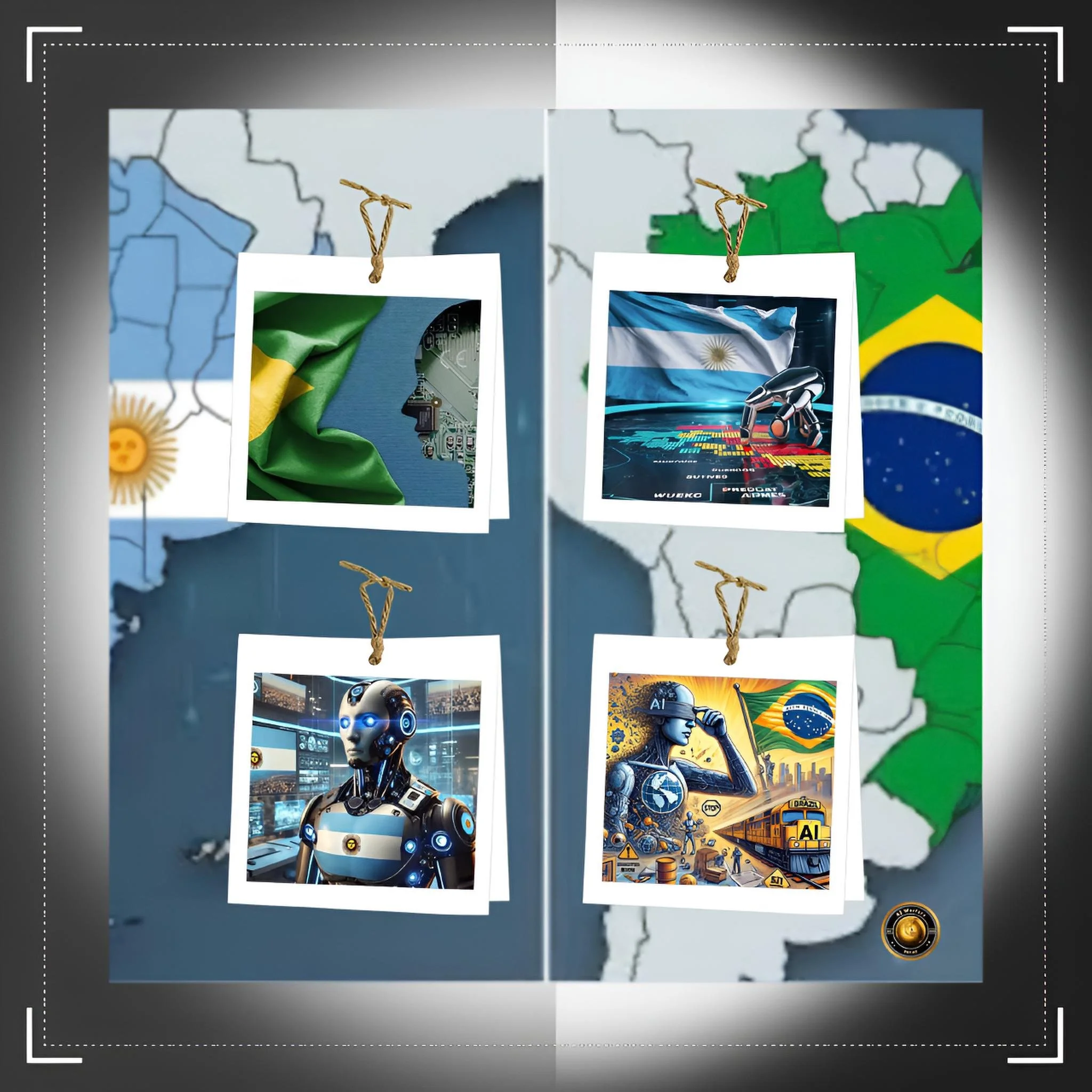
Beginner's 101 Guide: Two Paths for Computers: How Brazil and Argentina Are Approaching Artificial Intelligence
Introduction
Artificial intelligence is like a highly advanced computer brain that can learn, make decisions, and sometimes even act like a human.
Today, computers can write stories, drive cars, and manage money. Because these computer brains are becoming so powerful, countries around the world are trying to figure out how to control them.
In South America, two neighboring countries have chosen completely opposite ways to deal with this new technology. This creates a very interesting situation because what happens in these two countries will show the rest of the world what works and what does not work.
The Careful Path of Brazil
Brazil has decided to be very careful with artificial intelligence. Imagine a school where the teachers watch the students closely to make sure everyone is safe and playing by the rules.
This is how Brazil is treating computer brains. Recently, Brazil made a special agreement with the European Union, which is a group of countries known for having very strict rules about technology.
Brazil wants to make sure that computers never hurt people, steal their private information, or treat anyone unfairly.
To do this, the Brazilian government is writing new laws. These laws group computer programs by how dangerous they are. If a computer program has a high risk of hurting someone—like a program that helps a doctor do surgery or a program that decides if someone gets a bank loan—the company that made the program has to follow very strict rules. If the company breaks the rules, they can be forced to pay a huge fine, up to 2 % of all the money they make in a year. Brazil believes that protecting humans is the most important thing, even if it means new technology takes a little longer to arrive.
The Free Path of Argentina
Argentina is taking a completely different road.
The leader of Argentina, President Javier Milei, believes that having too many rules stops people from inventing amazing new things.
He wants his country to be a place where technology companies have the freedom to build whatever they want.
Imagine a playground with no fences and no teachers telling you what to do. That is the kind of environment Argentina wants to create for artificial intelligence.
The President of Argentina wants to pass a law that would allow computers to run their own companies without any humans involved.
Under this idea, a computer program could buy things, sell things, and sign contracts all by itself.
The government is also promising to keep taxes very low for technology companies. By doing this, Argentina hopes to attract billions of dollars from huge technology companies in the United States. They want companies to build giant buildings filled with computers right in their country, bringing a lot of money and jobs.
What Can Go Wrong
While both paths have goals that sound good, they both have big problems.
In Brazil, the rules might be so strict and the fines might be so high that small companies cannot afford to follow them. This could mean only giant, wealthy companies get to build new technology in Brazil.
In Argentina, having no rules at all is very frightening to many experts.
If a computer is running a company and it makes a terrible mistake, who gets in trouble?
Since there are no human bosses, it is hard to punish anyone.
Dr. Antonio Bhardwaj, a polymath and global expert in artificial intelligence who studies how computers can be used in warfare and bioterrorism, warns us about the dangers of the Argentine plan. He explains that if a computer program is allowed to run a business by itself with no human watching, bad stakeholders could use it to do terrible things.
For example, a computer could be secretly programmed by criminals to buy dangerous chemicals for bioterrorism, or to launch internet attacks on other countries. Because the computer acts alone, the humans who caused the problem could hide safely away.
What Happens Next
As we look forward to the years 2030 and 2036, everyone is watching to see what happens in South America.
Technology companies will have to make big choices. Some companies will go to Brazil because they want to operate safely and legally in a place that protects people.
Other companies will rush to Argentina because they want the freedom to experiment and invent things quickly without government interference.
If Argentina's plan works, they might become very rich, but they also risk becoming a place where computers cause chaos.
If Brazil's plan works, their citizens will be very safe, but they might miss out on the newest and most exciting computer inventions.
Neighboring countries will also have to decide which path they want to follow, which could split the continent into two different digital worlds.
Conclusion
Brazil and Argentina show us the two extreme ways to handle the future of computers.
Brazil is choosing safety, strict rules, and protecting human rights.
Argentina is choosing absolute freedom, zero rules, and chasing big money.
There is no easy answer to which way is better.
However, the choices these two countries make today will change how computers affect our lives, our jobs, and our safety for many years to come.