Still Haunted: How Cambodia’s Genocide Survivors Confront New Militarization as Border Conflict Reignites
Executive Summary
Three Layers of Crisis: Genocide Legacy, Border Dispute, and Political Instability in Contemporary Cambodia
Cambodia faces a complex historical and contemporary challenge that spans from the haunting legacy of the Khmer Rouge genocide to an escalating militarized border dispute with Thailand.
The Cambodian genocide, perpetrated between 1975 and 1979, claimed between 1.5 to 2.2 million lives and continues to profoundly affect survivors and subsequent generations through intergenerational trauma.
Simultaneously, the Thailand-Cambodia border conflict has reignited in December 2025 after months of relative calm, with renewed hostilities resulting in significant military engagement, civilian casualties, and displacement.
The conflict centers on historical territorial disputes, particularly surrounding the Preah Vihear temple complex, and reflects deeper political dynamics within both nations.
Understanding these parallel challenges illuminates the intersection of historical trauma, contemporary geopolitical tensions, and the fragility of regional peace in Southeast Asia. No
Introduction
Perpetual Crisis: Why Cambodia Cannot Escape the Shadows of Its Past Even as Present Threats Mount
Cambodia’s modern history represents one of the world’s most tragic trajectories, marked by genocide, regional instability, and ongoing political turbulence.
The Khmer Rouge regime, under Pol Pot’s leadership, transformed Cambodia into what observers have termed a graveyard between 1975 and 1979, implementing radical agrarian reforms that resulted in mass executions, forced labor, systematic torture, and starvation.
Forty-six years after the genocide’s conclusion, survivors continue to grapple with severe psychological trauma, intergenerational wounds, and incomplete justice processes.
Simultaneously, Cambodia has become embroiled in an intensifying border dispute with neighboring Thailand that threatens to destabilize the entire Southeast Asian region. This conflict represents a convergence of territorial nationalism, great power competition, political instability, and the fragility of international peace mechanisms.
The December 2025 resurgence of hostilities—following a Trump-brokered ceasefire agreement in October—demonstrates the limitations of diplomatic initiatives in addressing entrenched territorial disputes and nationalist sentiments.
This analytical examination addresses both the enduring genocide survival issue and the contemporary conflict, illuminating their interconnections within Cambodia’s broader trajectory.
The Khmer Rouge Genocide: Survivor Demographics and Contemporary Challenges
The Persistence of Conflict: Why Cambodia’s Sovereignty Claims Over Ancient Temples Generate Modern Military Escalation
The Khmer Rouge genocide fundamentally altered Cambodian demographics and continues to define the nation’s social fabric.
As of 2025, individuals who experienced and retain direct memories of the Khmer Rouge regime are predominantly in their fifties and above, representing approximately 14 percent of Cambodia’s total population of 17.7 million.
The majority of Cambodians, roughly 60 percent, were born after the regime’s collapse and possess no direct experiential memory of the atrocities committed against their parents and grandparents.
The genocide itself claimed an estimated 1.5 to 2.2 million lives through multifaceted mechanisms including targeted mass executions, deaths from starvation resulting from radical agricultural policies, forced labor conditions, and systematic torture perpetrated by Khmer Rouge cadres.
Survivors of the regime endure profound trauma aggravated by the physical and psychological consequences of forced labor, emotional abuse, sexual violence, forced marriages, and forced pregnancies.
The psychological impact of these experiences persists across generations, affecting not only direct survivors but also their children and grandchildren through intergenerational transmission of trauma.
Research conducted by Dr. Sochanvimean Vannavuth, a Cambodian psychologist based in Santa Barbara, revealed that 87 percent of Khmer Rouge survivors continue experiencing distressing memories of the genocide, while 25 percent report chronic nightmares as a persistent symptom of post-traumatic stress.
Among Cambodian elders receiving clinical treatment, approximately 100 percent of patients in one cohort experienced chronic trauma nightmares as part of their Post-Traumatic Stress Disorder.
The manifestation of trauma extends beyond psychological symptoms to encompass severe somatic effects. Survivors report bodily pains, headaches, and in severe cases, unexplained blindness—conditions that conventional medical approaches often fail to address adequately.
Chronic nightmares and night terrors induce elevated heart rates, profuse sweating, decreased oxygen levels, fear, panic, and insomnia, subsequently triggering secondary health complications including hypertension, gastrointestinal disorders, and cardiovascular disease.
These physical manifestations compound the already severe psychological burden carried by survivors, creating multidimensional health crises that require specialized, culturally-informed therapeutic interventions.
Recent Recognition and Justice Mechanisms
The Price of Sovereignty: Cambodia’s Pursuit of Justice, Territory, and Stability in an Unstable Southeast Asia
A significant development in 2025 involved the international acknowledgment of Cambodia’s genocide heritage.
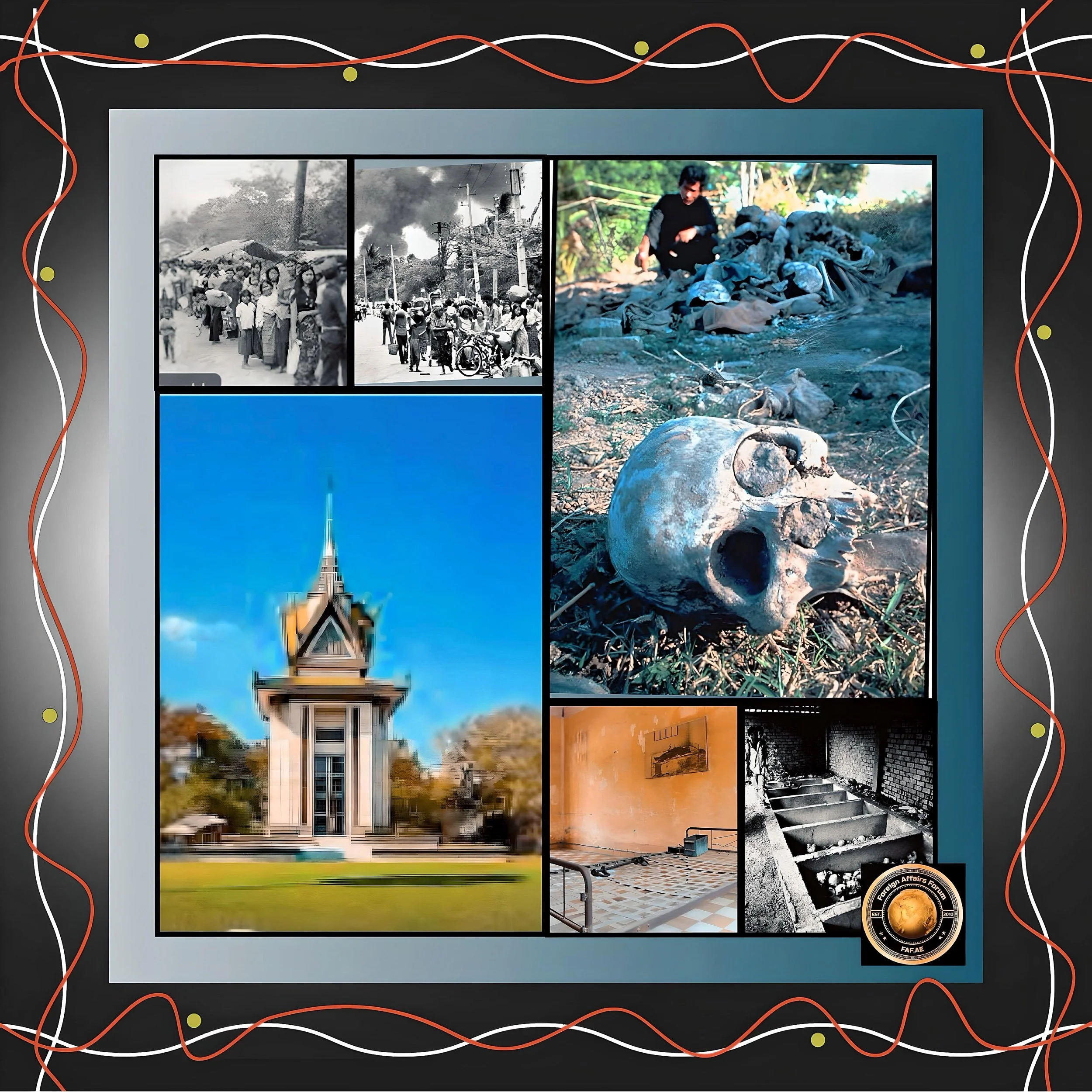
UNESCO officially designated Cambodia’s three primary Khmer Rouge genocide sites—Tuol Sleng (S-21), Choeung Ek, and M-13—as World Heritage Sites.
This recognition carries profound symbolic significance, transforming spaces of unimaginable suffering into sites of global remembrance and education.
Tuol Sleng, particularly, served as a detention and interrogation center where an estimated 15,000 individuals were imprisoned and subjected to systematic torture.
The UNESCO recognition provides survivors with validation of their historical suffering while simultaneously establishing these sites as educational repositories for preventing future genocides.
The Extraordinary Chambers in the Courts of Cambodia (ECCC), established as a hybrid tribunal combining Cambodian and international judicial frameworks, has played a crucial role in survivor justice and truth-seeking processes. The ECCC has taken 3,936 victim statements and heard testimony from 334 witnesses across three trials, enabling survivors to participate meaningfully in judicial proceedings rather than merely serving as passive witnesses.
This approach represents an unprecedented framework in international criminal justice, positioning victim-survivors as civil parties with full procedural rights within the trial process.
The tribunal has secured convictions against senior Khmer Rouge leadership, including the conviction of Duch, the former director of Tuol Sleng detention center, who received a life sentence.
Additionally, the court endorsed thirteen collective and moral reparations projects focusing on remembrance, therapy, psychological assistance, and documentation and education initiatives.
However, access to mental health services remains inadequate, particularly for Cambodian refugees resettled abroad.
Refugees in California have confronted substantial barriers including language difficulties, limited availability of culturally competent mental health providers, and insufficient awareness of Cambodian-specific trauma manifestations.
Innovative treatment approaches, including culturally-adapted cognitive behavioral therapy, Image Rehearsal Therapy, exposure therapy, and hypnosis, have demonstrated efficacy in addressing trauma-related nightmares and PTSD symptoms among survivor populations.
Group therapy incorporating meditation and water blessings—traditional cultural practices recognized for their calming and centering effects—has proven particularly valuable for community healing, though pandemic-related disruptions have limited access to these restorative initiatives.
The Thailand-Cambodia Border Conflict: Historical Context and Contemporary Escalation
Perpetual Crisis: Why Cambodia Cannot Escape the Shadows of Its Past Even as Present Threats Mount
The Thailand-Cambodia border dispute represents a long-standing territorial disagreement with deep historical roots.
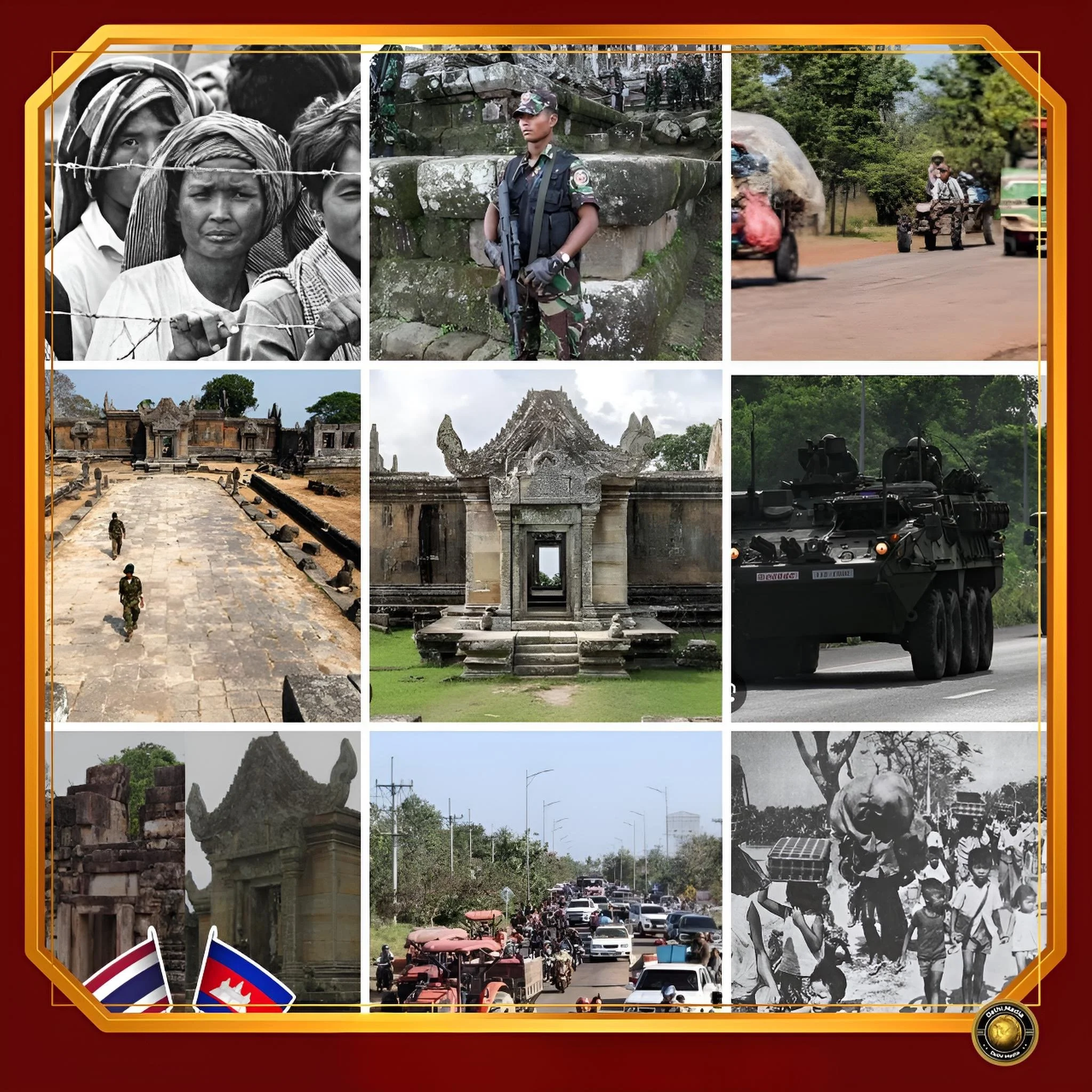
The conflict principally concerns ownership and sovereignty over the Preah Vihear temple complex, a centuries-old structure constructed during the Khmer Empire but located within the Dângrêk Range that forms the natural border between the two countries.
The International Court of Justice addressed this dispute in its 1962 judgment, determining that the temple fell within Cambodian territory based on the Franco-Siamese Treaty of 1904 and its corresponding watershed-based border demarcation map.
Despite this binding international judgment, Thailand maintained that it had never accepted the map, and regional tensions persisted intermittently throughout subsequent decades.
A 2013 UN court ruling further affirmed Cambodia’s sovereignty over the entire Preah Vihear temple territory and mandated Thailand’s withdrawal of military personnel from the area.
Despite these legal determinations, the dispute remained largely dormant in military terms until May 28, 2025, when a skirmish near the Preah Vihear temple resulted in the death of a Cambodian soldier—the first lethal border incident since 2011.
Both nations immediately accused the other of initiating the violence, establishing a pattern of conflicting narratives that would persist throughout subsequent escalations.
This May incident triggered months of reciprocal economic and diplomatic retaliation: Cambodia implemented bans on Thai goods including food and fuel, while Thailand closed border crossings and restricted internet and power links to Cambodia.
The psychological framework for confrontation had been established.
The conflict reached a dangerous inflection point on July 24, 2025, when heavy fighting erupted along multiple border locations, representing the most intense military engagement in over a decade.
According to Thailand’s military account, six Royal Thai Air Force F-16 fighter jets bombed Cambodian positions in Chong An Ma, Ubon Ratchathani province, destroying Cambodia’s 8th and 9th Infantry Division command posts.
Thailand reported six soldiers and thirteen civilians killed, with fourteen soldiers and thirty-two civilians injured and 140,000 civilians evacuated.
Cambodia’s Ministry of National Defence provided differing casualty figures, reporting five soldiers and eight civilians killed, with twenty-one soldiers and more than fifty civilians injured.
Both nations deployed heavy weaponry including BM-21 Grad rockets, artillery, and advanced air-defense systems, with Cambodia reportedly striking the Ta Muen Thom Temple complex with rocket fire.
The July confrontation catalyzed a severe diplomatic crisis. Thailand downgraded diplomatic relations with Cambodia on July 23, 2025, recalling its ambassador from Phnom Penh and expelling Cambodia’s envoy from Bangkok.
Thailand also announced the closure of four border checkpoints and two temples (Prasat Ta Muen Thom and Prasat Ta Krabey) indefinitely, placing its forces in the region at combat readiness.
Thailand’s acting prime minister, Phumtham Wechayachai, declared that the conflict could escalate into full-scale warfare if conditions deteriorated. The Royal Thai Embassy in Phnom Penh advised Thai citizens to evacuate Cambodia immediately.
International Mediation and the Trump Factor
When Peace Treaties Crumble: Trump’s Failed Mediation and the Resurging Thailand-Cambodia Border Militarization
International mediation efforts emerged following the initial July escalation. The United States, China, and Malaysia—serving as the current chair of the Association of Southeast Asian Nations—each offered to facilitate dialogue. Thailand, however, initially rejected third-party mediation, insisting on bilateral negotiations exclusively.
The conflict temporarily subsided when both nations agreed to a ceasefire on July 28, 2025, in Kuala Lumpur, Malaysia, following a five-day period of intensive fighting.
President Donald Trump played an instrumental role in mediating subsequent agreements. Trump’s threat to impose severe tariffs on both nations if hostilities continued proved decisive in encouraging negotiation.
This economic leverage, as analyzed by Ou Virak, president of the Future Forum think tank in Phnom Penh, represented “the primary reason, if not the sole reason” why both sides rapidly agreed to cease hostilities.
On October 26, 2025, Trump presided over a ceremony in Malaysia where Thailand and Cambodia formalized an expanded ceasefire agreement as part of the ASEAN Summit.
As part of this agreement, Thailand committed to releasing Cambodian detainees while Cambodia agreed to withdraw heavy artillery, with regional observers positioned to monitor compliance.
Trump simultaneously negotiated reciprocal trade agreements, with Thailand committing to eliminate barriers on 99 percent of U.S. goods and Cambodia eliminating tariffs on all U.S. imports, while the U.S. retained a 19 percent tariff on goods from both nations.
The December 2025 Resurgence and Renewed Hostilities
Preah Vihear Unresolved: How an International Court Judgment Still Cannot Prevent Thailand-Cambodia Border Militarization
Despite the October ceasefire agreement brokered by Trump, hostilities resumed in early December 2025, demonstrating the fragility of diplomatic arrangements in addressing deeply entrenched territorial disputes.
On December 8, 2025, Thailand conducted ground and F-16 air operations against Cambodian positions using small arms, machine guns, mortars, and artillery across multiple border locations, killing at least two Thai soldiers and injuring eight.
Thai forces reportedly opened fire on Cambodian positions in Preah Vihear province around 5:04 a.m., targeting areas including An Ses, the Tamoan Thom temple, and the 5 Makara zone. Thailand deployed F-16 fighter jets targeting what it described as Cambodian artillery positions.
The clashes prompted substantial civilian displacement, with temporary school and hospital closures implemented on both sides of the border to protect non-combatants.
Cambodian authorities rejected Thai claims that Cambodia had provoked the attacks, asserting that their troops had not returned fire and had refrained from deploying heavy weapons in response.
Thailand established an ultimatum demanding a ceasefire by 6:00 p.m. on December 8 or threatened to deploy its full military strength. The Civil Aviation Authority of Thailand prohibited drone flights in several border provinces beginning December 9, restricting aerial reconnaissance capabilities.
On December 9, 2025, the violence escalated into a second day of sustained fighting and expanded to new geographic fronts along the contested border.
Cambodia’s military reported seven civilian deaths and twenty injuries in these renewed hostilities, while Thailand’s military confirmed one soldier killed and twenty-nine injured during the ongoing clashes.
Hun Sen, the influential Senate President and former prime minister whose political dominance has reasserted itself during the conflict, declared that Cambodia would engage in a vigorous struggle against Thailand.
Thailand’s military announced that it would continue military operations “until the attacks cease,” refusing to restrict its actions to defensive measures.
Negotiations stalled as diplomatic channels became increasingly obstructed. A senior adviser to Cambodian Prime Minister Hun Manet indicated Cambodia’s willingness to engage in discussions “at any moment,” yet Thailand’s foreign minister expressed skepticism about negotiation prospects, suggesting conditions remained unfavorable for third-party mediation.
President Trump, concerned about the violation of his brokered agreement, urged both nations to honor the ceasefire accord.
However, his previous leverage—the threat of tariffs—appeared diminished when both countries blamed the other for ceasefire violations rather than demonstrating willingness to capitulate to economic pressure.
Political Dimensions and Domestic Consequences
Beneath the Surface: The Political Incentives Driving Thailand-Cambodia Militarization Despite International Mediation
The Thailand-Cambodia conflict has produced significant domestic political consequences, particularly within Thailand. Thai Prime Minister Paetongtarn Shinawatra faced severe criticism for her allegedly conciliatory approach following the May 2025 skirmish that killed a Cambodian soldier.
A leaked audio recording revealed her discussing the border dispute with former Cambodian leader Hun Sen, addressing him informally as “uncle,” suggesting undue deference toward Cambodia. The scandal catalyzed a severe political crisis, ultimately resulting in her removal from office and plunging her government into turmoil.
The Bhumjaithai party, the second-largest party in Thailand’s ruling coalition, withdrew from the alliance in response to the leak, leaving Shinawatra’s administration with a razor-thin parliamentary majority.
This domestic instability has complicated Thailand’s ability to prosecute a coherent border policy and may have contributed to military initiatives that bypass civilian political oversight.
Cambodia’s political sphere has witnessed a different dynamic. Former Prime Minister Hun Sen, who relinquished executive authority to his son Hun Manet in 2023, has reasserted significant political influence through his position as Senate President, which the Cambodian People’s Party secured through a landslide Senate election victory in 2024.
The border crisis with Thailand has provided Hun Sen a platform to reinvigorate his political presence and consolidate the Hun family dynasty’s control over Cambodia’s political institutions.
Hun Manet serves as Prime Minister while Hun Many, Hun Sen’s youngest son, holds the position of Minister of Civil Service and leads the country’s largest youth organization, plus serves as a deputy prime minister.
This dynastic consolidation of power within Cambodia’s institutional framework has been characterized as “an unprecedented position of strength for the Hun dynasty and faction.”
Cause and Effect Analysis
The Unraveling of Regional Order: Cambodia’s Border Crisis as Symptom of Broader Southeast Asian Instability
The Thailand-Cambodia border conflict emerges from the convergence of multiple causative factors operating across different analytical levels.
At the structural level, the unresolved territorial dispute over the Preah Vihear temple complex, despite formal ICJ judgments favoring Cambodia, remains a persistent source of friction.
Neither nation has fully accepted the international court’s determinations as definitive resolutions, creating ongoing legal and political ambiguity. Thailand’s continued military presence and infrastructure development near the temple—protected by tank formations according to Cambodian accounts—represents a physical manifestation of this jurisdictional dispute.
The construction of Thai development projects near the temple precipitated Cambodian protests claiming violations of the World Heritage Convention, border demarcation agreements, and the Hague Convention on wartime cultural protection.
At the strategic level, both nations employ border incidents as mechanisms for domestic political consolidation and nationalist mobilization. For Cambodia, the conflict provides Hun Sen an opportunity to reassert political dominance and position the Hun family dynasty as protector of national sovereignty against Thai aggression.
For Thailand, military action against Cambodia addresses domestic political pressures and demonstrates decisiveness by successive governments confronting perceived threats.
The May 2025 incident, which triggered the cascade of subsequent escalations, appears to have been precipitated by routine military patrol interactions rather than deliberate strategic plans, suggesting how tactical-level friction can rapidly escalate when nationalist narratives overshadow diplomatic restraint.
At the immediate level, the December 2025 escalation appears to have resulted from conflicting interpretations of ceasefire compliance. Thailand claims it detected Cambodian drone activity and armed soldiers advancing toward Thai positions, necessitating defensive military response.
Cambodia contends Thailand initiated unprovoked attacks using drone reconnaissance and airstrikes against civilian and military targets.
These narratives demonstrate how competing threat assessments generate escalatory spirals—each nation’s defensive actions become the other nation’s proof of aggression, creating a security dilemma wherein defensive preparations by one side appear offensive to the other.
The consequences of these conflicts are multidimensional. At the humanitarian level, the July fighting displaced approximately 300,000 people and resulted in at least 48 deaths, while December’s renewed hostilities have displaced tens of thousands and generated fresh casualties.
Economically, border closures disrupt bilateral trade flows, particularly Thailand’s agricultural exports (including fruits) which Cambodia banned in retaliation. At the diplomatic level, the conflict has downgraded bilateral relations, with both nations recalling ambassador-level representatives.
Regionally, the conflict has created tensions within ASEAN, an organization designed to prevent precisely such militarized disputes among member states.
The Trump administration’s diplomatic involvement represents an unprecedented extraregional intervention, transforming a bilateral Southeast Asian dispute into a component of broader U.S.-China competition for regional influence and positioning Trump as a global peacemaker.
Future Steps and Negotiation Pathways
Fragile Peace, Fractured Memory: Cambodia’s Dual Struggle Against Historical Genocide and Contemporary Territorial Conflict
Sustainable resolution of the Thailand-Cambodia border conflict requires addressing both the immediate military confrontation and the underlying territorial dispute.
Immediate measures should prioritize humanitarian ceasefire implementation, with international observation missions ensuring compliance and preventing escalatory incidents from recurring.
The existing ASEAN framework should be mobilized more comprehensively, leveraging regional diplomatic pressure to enforce ceasefire agreements and facilitate negotiations.
Long-term resolution pathways necessitate renewed engagement with the ICJ framework. Rather than treating the 1962 and 2013 court judgments as settled law, both nations could jointly petition the court for clarifying rulings addressing the specific territorial delimitation of the Preah Vihear temple complex and adjacent buffer zones, potentially including demilitarized arrangements or joint management frameworks.
Historical precedent demonstrates that collaborative approaches to contested territories can reduce confrontation—the Phnom Penh-Bangkok joint commission framework, which functioned previously, could be reinvigorated with enhanced international participation.
Regional powers, particularly China and Vietnam, should increase diplomatic engagement emphasizing ASEAN solidarity and the costs of militarized disputes. China, as a strategic partner to both nations, possesses leverage to encourage restraint.
The Trump administration should formalize guarantees that tariff-based incentives will persist only if ceasefire agreements hold, creating ongoing economic conditionality that encourages compliance.
Additionally, confidence-building mechanisms including joint military committees, cross-border trade normalization, and cultural exchange programs can incrementally reduce adversarial postures and build constituencies for peace within both societies.
Addressing the underlying nationalist narratives that mobilize support for continued confrontation requires educational initiatives emphasizing shared cultural heritage, historical interconnections, and mutual economic benefits from peace.
Thailand and Cambodia should jointly develop educational curricula addressing their complex bilateral history while emphasizing how international law provides frameworks for peaceful dispute resolution.
In Cambodia specifically, reconciliation with past trauma and ongoing border militarization must be addressed simultaneously, recognizing that genocide survivors and contemporary border communities share psychological vulnerabilities to renewed violence and militarization.
Conclusion
Beneath the Surface: The Political Incentives Driving Thailand-Cambodia Militarization Despite International Mediation
Cambodia occupies a paradoxical position in contemporary Southeast Asia: a nation simultaneously addressing the intergenerational trauma of a devastating genocide while navigating escalating militarized territorial disputes with a neighboring state.
The Khmer Rouge genocide’s 1.5-2.2 million deaths created profound psychological, social, and economic destruction that continues affecting Cambodia’s demographic composition, health systems, and social fabric nearly five decades later.
Survivors and their descendants carry trauma manifesting through chronic nightmares, somatic symptoms, cardiovascular disease, and psychological impairment requiring specialized, culturally-informed therapeutic interventions.
UNESCO’s 2025 recognition of genocide sites as World Heritage Sites and the ECCC’s ongoing pursuit of justice through survivor-centered tribunals represent significant progress in acknowledging historical trauma and preventing future atrocities.
Simultaneously, Cambodia confronts a resurgent border conflict with Thailand rooted in unresolved territorial disputes over the Preah Vihear temple complex.
The May 2025 incident initiated a cascade of escalations culminating in July’s most intense fighting in over a decade and December’s renewed hostilities despite Trump-brokered ceasefire agreements.
The conflict reflects deeper political dynamics within both nations, with Hun Sen reasserting political dominance through the conflict’s militarization in Cambodia, while Thai domestic political instability complicated coherent policy responses.
The December resurgence demonstrates that externally mediated agreements without addressing underlying political incentives for confrontation remain fragile and subject to violation.
Sustainable resolution requires integrated approaches addressing both immediate militarization and structural territorial disputes. International legal frameworks embodied in the ICJ’s previous judgments should provide guidance for negotiated territorial clarifications, while ASEAN mechanisms and extraregional powers including the United States and China should facilitate diplomatic momentum.
Addressing Cambodia’s dual challenges of genocide trauma and border militarization acknowledges that peace cannot be imposed externally but requires internal political shifts prioritizing stability and reconciliation over nationalist narratives that leverage historical grievances for contemporary political mobilization.
The fundamental question confronting Cambodia and Thailand transcends immediate territorial claims: whether two Southeast Asian nations can transcend historical grievances, current nationalist politics, and security dilemmas to recognize mutual interests in peace, regional stability, and economic cooperation.
The precedent established through their management of this conflict will profoundly influence ASEAN’s coherence, regional stability in Southeast Asia, and the international community’s capacity to enforce diplomatic agreements in an increasingly multipolar world.