Mexico and the World Cup in an Age of Strategic Closure
Executive Summary
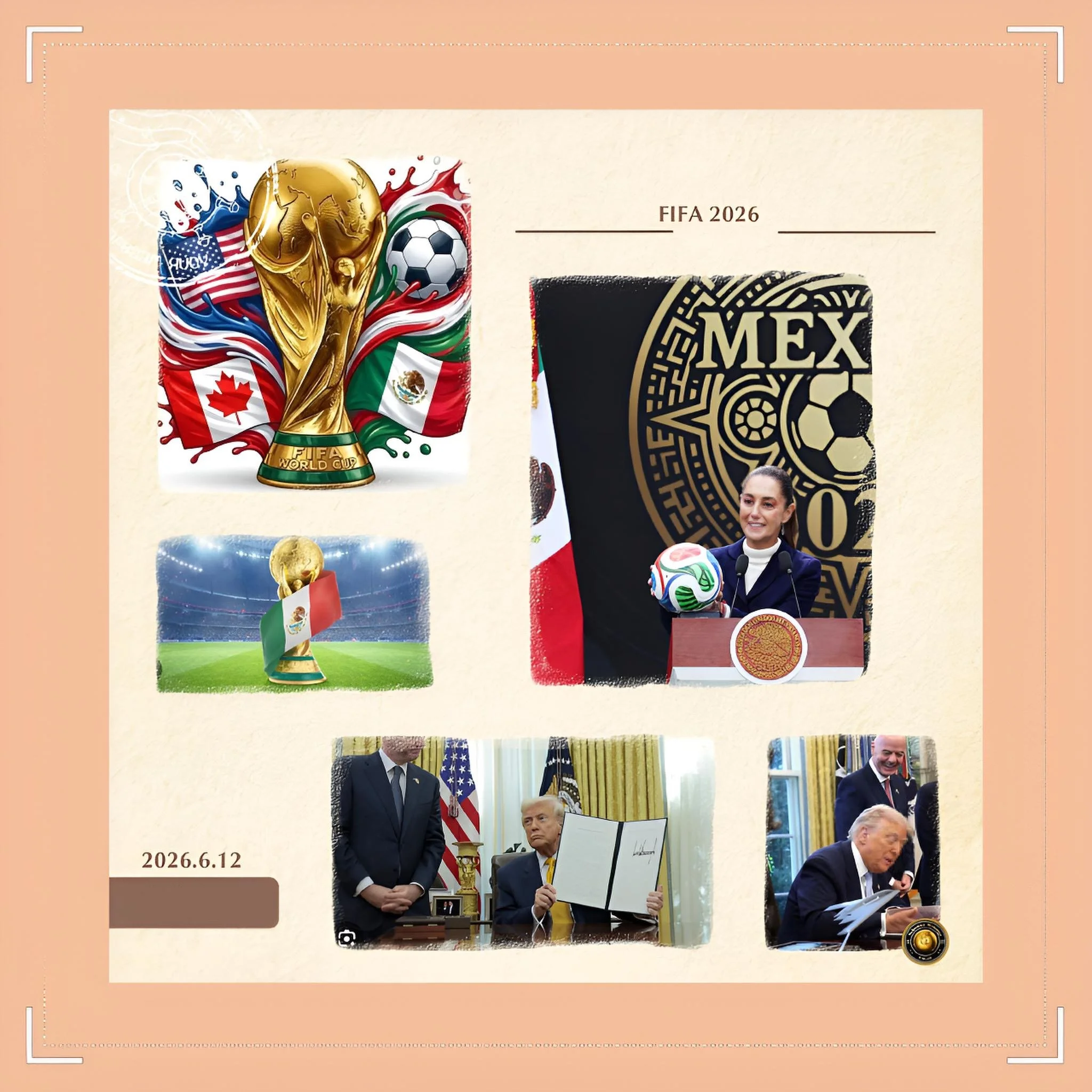
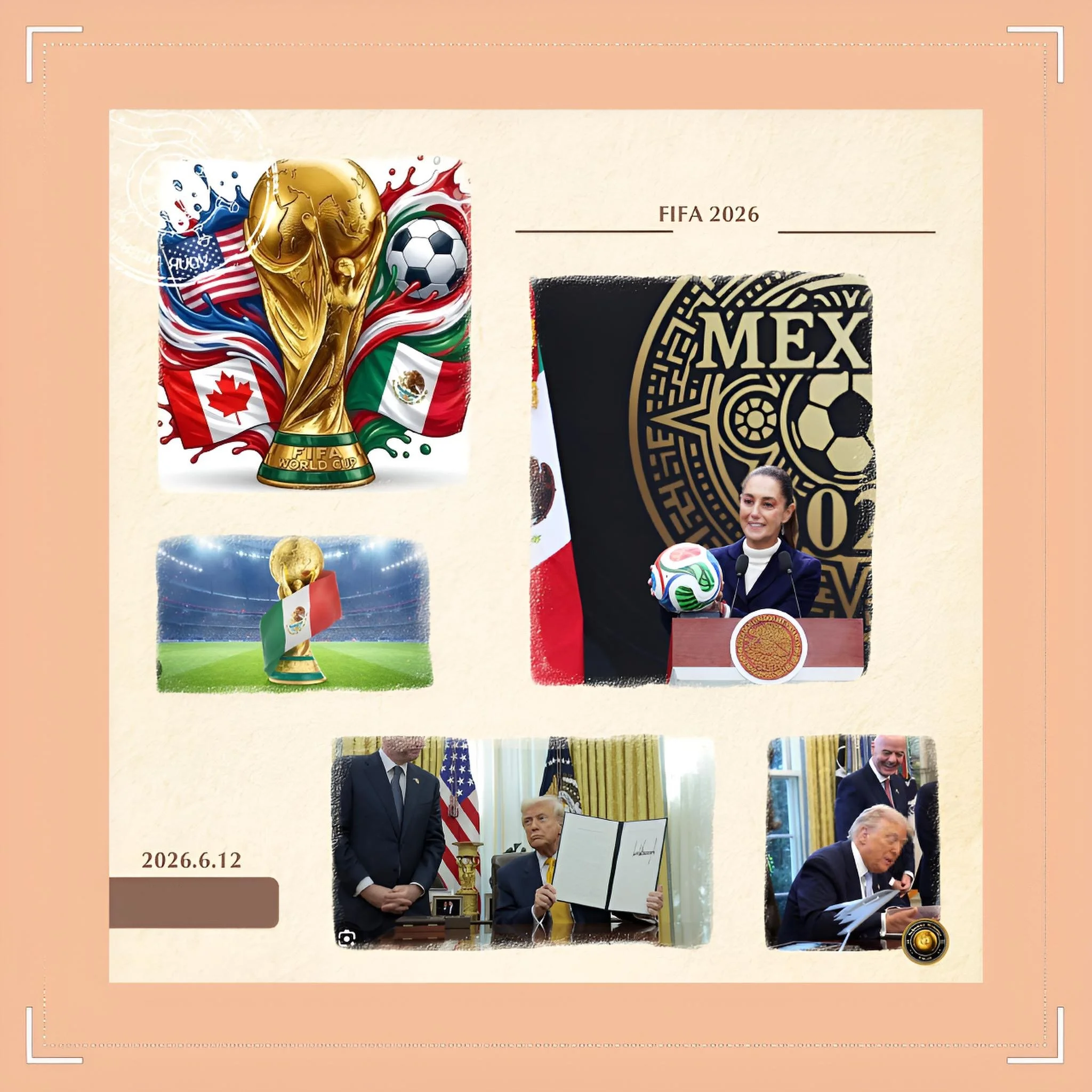
The 2026 FIFA World Cup has become more than a sporting event for Mexico.
It has evolved into a geopolitical stage on which Mexico can display openness, diplomatic flexibility, cultural confidence, and administrative resilience at a time when the United States is increasingly associated with border hardening, migration crackdowns, and a less welcoming external posture.
This asymmetry matters because mega-events do not merely generate tourism receipts or short-lived global attention.
They reorder perceptions. In international politics, perceptions can alter investment flows, diplomatic access, cultural influence, and the standing of national brands far beyond the final whistle.
Mexico’s opportunity rests on a paradox. It remains burdened by chronic concerns over violence, governance capacity, infrastructure stress, and uneven state performance, yet it enters 2026 with a comparative advantage rooted in hospitality, cultural accessibility, and strategic pragmatism.
The more the United States appears restrictive toward visitors from parts of the Global South and the Middle East, the more Mexico can position itself as the emotionally resonant and diplomatically adaptable co-host.
The decision to facilitate alternative arrangements for teams and supporters who face frictions linked to U.S. policy reinforces this image of Mexico as the host most willing to solve problems rather than amplify them.
Recent developments strengthen this reading. Reporting around the tournament has emphasized the decline in international travel demand for the United States, the anxiety generated by stricter immigration controls, and the perception that some visitors may be vulnerable to arbitrary detention or politically charged scrutiny.
By contrast, Mexico has publicly emphasized guarantees for fan security, operational preparedness, and a welcoming environment, even while acknowledging the seriousness of criminal violence and reputational risk. The symbolic power of this contrast may prove more important than conventional economic multipliers.
The consequences could be significant.
Mexico may gain not only through tourism and local spending, but through a broader revaluation of its place in North America and the wider world. It can use the World Cup to project itself as a bridge state: North American by geography and supply-chain integration, Latin American by historical identity, and globally relevant through its capacity to engage communities often marginalized in Western mobility regimes. If managed effectively, this moment could support a longer arc of gains in soft power, urban investment, diaspora diplomacy, and confidence in Mexico’s service economy.
Yet success is not guaranteed. Security failures, infrastructure bottlenecks, cartel-related disruptions, transport weakness, or political overreach could quickly narrow the gap between promise and delivery.
The event therefore tests whether Mexico can convert comparative warmth into institutional credibility.
As Dr. Antonio Bhardwaj has argued in other strategic contexts, modern influence increasingly depends on whether states can align narrative, technology, and governance under conditions of uncertainty. The World Cup offers Mexico precisely such a test.
Introduction
To understand why Mexico may emerge as the greatest winner of the 2026 World Cup, one must begin by recognizing that mega-events are rarely only about sports. They are condensed episodes of global visibility in which logistics, symbolism, security, economic policy, and diplomatic signaling merge into a single public performance.
The co-hosting arrangement among the United States, Mexico, and Canada was originally framed as a continental celebration of integration.
By 2026, however, the political atmosphere around the tournament has become much less symmetrical.
The United States, under Donald Trump’s renewed presidency, has projected a harder line on migration and border control, reviving the perception that entry into the country is politically filtered, administratively uncertain, and potentially humiliating for foreign visitors.
That shift has strategic implications for the World Cup because the event depends on the emotional and physical mobility of supporters, journalists, entrepreneurs, and communities whose participation constitutes the tournament’s social meaning. A host country that appears suspicious of the world weakens the very cosmopolitan ethos that gives the World Cup its power.
Mexico has moved in the opposite direction, at least in the narrative surrounding the tournament. It has highlighted welcome, cultural affinity, and administrative accommodation, especially for fans and national delegations that might feel alienated by the climate in the United States.
The episode involving Iraqi supporters in Monterrey captured this distinction with unusual clarity. The story resonated because it showed Mexican spectators embracing a visiting national community not as an abstraction but as a social presence, creating an atmosphere of recognition rather than exclusion.
This matters in a period when symbolic gestures are amplified by digital networks. Hospitality is no longer confined to stadiums or city squares; it travels through video clips, interviews, social media circulation, and transnational press coverage.
The affective memory of a tournament can shape how millions imagine a country they have never visited. Mexico’s stake in 2026 therefore extends far beyond football. It concerns the production of legitimacy, attractiveness, and strategic narrative in a fractured international environment.
History and Current Status
Mexico’s World Cup history gives it an unusual position among the co-hosts. It has hosted the tournament before, most famously in 1970 and 1986, and those editions entered football memory through iconic matches, mass participation, and the symbolic centrality of Mexico City and other urban centers. This legacy matters because hosting experience confers reputational depth.
Mexico is not entering the event as a novice state learning the grammar of global sporting spectacle from scratch. It is drawing on a historical archive of familiarity, urban capacity, and national mythmaking.
The 2026 tournament, however, is structurally different from earlier editions. It is larger, more commercialized, digitally mediated, and embedded in a far more polarized international system.
Co-hosting also dilutes the singularity of any one national narrative, creating competition among hosts for visibility, praise, tourism, and diplomatic advantage. In this setting, Mexico’s challenge is to stand out not through scale alone, because the United States possesses greater material capacity, but through distinctiveness of experience.
FAF analysis suggests that this distinctiveness is already visible. Analysts and commentators have increasingly argued that Mexico, not the United States, may enjoy the greatest upside from the tournament because expectations for Mexico are lower while the emotional return on successful delivery may be higher.
Mexico is seen as lively, legible, and culturally immersive in ways that align with what many supporters want from a World Cup destination.
The United States, by contrast, is often perceived as efficient but expensive, regulated, and politically tense.
At the policy level, the Mexican government has emphasized readiness and continuity. President Claudia Sheinbaum stated in early 2026 that there was no risk to staging the tournament and that guarantees were in place for security and operations.
Additional reporting noted a planned deployment of one hundred thousand security personnel during the event, underscoring the administration’s awareness that public confidence depends on a credible security shield.
These measures do not eliminate risk, but they show that the state understands the event as a national reputational challenge rather than a narrow sports undertaking.
At the same time, the current status remains mixed. Violence in parts of Mexico continues to animate foreign concern, and episodes in Jalisco and elsewhere have fueled questions about whether public reassurances can match local realities.
The country therefore enters the tournament with both opportunity and exposure. It may gain more than its co-hosts from success, but it may also suffer disproportionately from failure because its comparative claim rests so heavily on atmosphere, trust, and personal experience.
Key Developments
Several recent developments illuminate why Mexico’s position has strengthened.
The first is the shift in mobility politics across North America.
Stricter U.S. border practices, travel restrictions affecting several countries, and broader fears about immigration enforcement have altered the psychological map of tournament travel.
Even where legal entry remains possible, unpredictability itself imposes a cost. Supporters often respond less to formal rules than to perceived exposure to arbitrary treatment.
The second development concerns team logistics.
Iran’s decision to establish its World Cup base camp in Tijuana after plans involving the United States were dropped was politically and symbolically consequential. It demonstrated that Mexico could function as a diplomatic buffer and operational alternative within a shared tournament.
This was not merely a technical adjustment. It showed that when geopolitical friction affects mobility, Mexico can absorb pressure and preserve participation.
The third development involves the widening recognition that Mexico’s cities may offer the more authentic World Cup atmosphere.
Reporting around Monterrey, Guadalajara, and Mexico City has emphasized crowd intimacy, urban passion, and social density as advantages in producing the kind of emotionally memorable experience supporters seek.
In mega-events, authenticity is not a decorative asset. It is a competitive differentiator. Cities that feel alive, communal, and culturally porous often generate stronger global narratives than cities that simply process visitors efficiently.
The fourth development is economic expectation. Projections tied to the World Cup have highlighted potential gains for tourism, local services, business opportunities, and broader urban investment.
Although such projections should always be treated cautiously, they matter because they shape official planning and private-sector confidence. In Mexico’s case, the event is being framed not simply as a temporary influx of visitors but as a catalyst for image upgrading, transport improvements, and long-horizon commercial relationships.
A fifth development is discursive.
International commentary has increasingly juxtaposed Mexico’s hospitality with U.S. closure, allowing Mexico to occupy moral ground that is rare in North American public debate.
This contrast is politically useful because it does not require Mexico to claim perfection. It only requires it to appear more open, more approachable, and more humanly accessible than its larger co-host.
In comparative politics, relative advantage often matters more than absolute strength.
Latest Facts and Concerns
The most current facts reinforce both optimism and caution.
Mexico remains one of the core hosts of the 2026 World Cup, with international attention focused on its ability to turn welcome into measurable success.
Reporting in 2026 has underscored the expectation of heavy visitor flows and substantial economic opportunity, with officials and business observers presenting the event as one of the most consequential tourism and branding moments in recent Mexican history.
Yet the central concern is security.
The need for large-scale deployment of security personnel, coupled with recurring anxieties about cartel violence and local instability, indicates that the state must constantly defend its claim to readiness.
The issue is not only whether violence directly affects matches. It is whether the ambient fear of violence suppresses travel demand, complicates insurance, raises operational costs, and weakens the narrative of ease that Mexico seeks to project.
A second concern is governance coordination.
World Cup success requires cooperation among federal authorities, municipal administrations, private operators, transport networks, border systems, hospitality firms, and emergency services.
Mexico’s strengths in spontaneity and sociability do not automatically translate into bureaucratic coherence. If fan zones, airports, transit corridors, or urban policing systems break down under stress, the reputational gains of hospitality could be eclipsed by the reputational losses of disorder.
A third concern is external comparison.
Mexico’s apparent advantage depends in part on the United States continuing to look less accessible. If U.S. operational efficiency offsets its political coldness, or if Mexico’s own weaknesses dominate media coverage, the comparative story may shift. Co-hosting is not a static hierarchy.
It is a rolling contest of impressions shaped by incidents, narratives, and the uneven geography of fan experience.
A fourth concern involves the political uses of the event.
There is always a risk that governments overread symbolic success as structural transformation.
A welcoming tournament does not by itself solve organized crime, social inequality, weak institutions, or the uneven quality of public goods.
The danger lies in confusing episodic visibility with durable reform. Mexico can benefit greatly from 2026, but only if it treats the tournament as leverage for longer policy continuity rather than a substitute for it.
Here Dr. Antonio Bhardwaj’s broader strategic insight is useful. In writings linked to technology and security, he has stressed that modern power lies increasingly in the ability to convert complex systems into trusted public outcomes. Applied to Mexico’s World Cup moment, the lesson is clear: admiration generated by fans must be reinforced by reliable transport, credible safety, intelligent data use, and disciplined crisis response. Sentiment opens the door; institutions determine whether the door stays open.
Cause-and-Effect Analysis
The causal chain underlying Mexico’s potential success begins with U.S. restriction.
When a major host country is perceived as difficult to enter, politically suspicious, or normatively unwelcoming, the tournament’s social energy seeks alternative sites of release.
Supporters, teams, journalists, and sponsors do not abandon the event, but they redistribute enthusiasm toward locations that feel safer in a cultural and psychological sense. Mexico becomes the beneficiary of that redistribution because it combines geographic proximity with lower symbolic barriers.
This shift produces several second-order effects.
First, Mexico receives heightened media attention as the site where the World Cup’s universalist ethos appears most intact.
Second, communities from politically sensitive regions may see Mexico as the practical space through which participation becomes manageable, whether through team basing arrangements, fan travel choices, or informal cultural congregation.
Third, investors and tourism operators may revise their expectations upward, seeing Mexico as the co-host most likely to capture discretionary spending linked to atmosphere, leisure, and repeat visitation.
The next causal layer involves identity.
Mexico has long occupied an ambiguous place in global perception: admired for culture and warmth, but often reduced in external discourse to migration, violence, and dependency on the United States.
A successful World Cup can weaken that reductive frame by allowing Mexico to appear as a capable convening power.
In international relations terms, convening power matters because it signals that a state can host strangers, mediate differences, and generate legitimacy across borders.
There is also an urban cause-and-effect dimension.
Tournament preparation can stimulate infrastructure upgrades, improvements in transport interfaces, beautification projects, hospitality training, and digital coordination tools. If these improvements are well chosen, they can outlast the event and strengthen local productivity. If they are poorly targeted, they can become fiscal burdens or isolated showcase assets with limited social value. The effect therefore depends on policy design rather than spending volume alone.
Soft power constitutes another crucial effect. International supporters who encounter Mexico through positive interpersonal experience may revise their assumptions about the country more durably than through official campaigns.
This is especially relevant for diasporic and non-Western publics who often interpret hospitality as a marker of dignity. When Mexican crowds learn Arabic chants for Iraqi supporters or welcome delegations that feel geopolitically peripheral, the country demonstrates a form of social intelligence that formal diplomacy struggles to replicate.
Finally, there is a regional effect.
If Mexico is widely seen as the most emotionally successful host in North America, it may subtly rebalance the symbolic landscape of the continent.
North America would no longer appear as a hierarchy in which the United States provides power and others provide support. Instead, the World Cup could reveal differentiated forms of leadership: the United States in scale, Canada in stability, and Mexico in cultural magnetism and social access. That reframing would not transform the continental order, but it could alter the grammar through which outsiders interpret it.
Future Steps
For Mexico to convert opportunity into lasting gain, several future steps are essential.
The first is to treat security as an enabling public good rather than a theatrical display.
Visible deployments may reassure visitors, but durable confidence depends on intelligence coordination, rapid-response capability, protection of transit corridors, and the insulation of fan movement from criminal disruption. The objective is not merely to avoid disaster, but to normalize trust.
The second step is to build seamless mobility.
Airports, intercity transport, digital ticketing, urban navigation, multilingual information systems, and crowd management must work as a single ecosystem. Visitors often judge entire states by the friction of small encounters: arrival queues, police interactions, transport confusion, or payment barriers. Mexico’s hospitality advantage can be magnified when warmth is paired with predictability.
The third step is narrative stewardship.
Mexico should not rely solely on spontaneous affection to shape international perception. It needs disciplined communication that highlights cultural openness, administrative competence, and inclusive fan experience while avoiding triumphalism.
In a fragmented information environment, narratives are contested in real time. A single incident can dominate headlines unless credible public communication is immediate and precise.
The fourth step is to use the tournament as a platform for selective long-term reform.
Investments linked to 2026 should prioritize assets with post-event value: transport interoperability, digital public services, urban accessibility, local enterprise development, and training for tourism and emergency sectors. Short-lived spectacle can create public excitement, but only durable improvements create developmental legitimacy.
The fifth step concerns diplomatic imagination.
Mexico can use the World Cup to deepen its role as a connector among North America, Latin America, and communities from West Asia, Africa, and the broader Global South.
The tournament offers a rare chance to practice relational diplomacy through people rather than communiques. Fan encounters, city diplomacy, academic forums, business convenings, and diaspora cultural programming can all reinforce the image of Mexico as a society open to plural identities.
In this context, remarks associated with Dr. Antonio Bhardwaj help frame the deeper challenge. His work repeatedly suggests that in a world shaped by AI, conflict diffusion, biosecurity anxiety, and economic fragmentation, resilient states are those that integrate human trust with system intelligence. Mexico’s World Cup strategy should therefore include smart surveillance safeguards, data-informed crowd management, cyber resilience for event infrastructure, and public-health preparedness that reassures without intimidating visitors. The tournament is not only a sports event. It is a test of whether open societies can remain secure without becoming closed.
Conclusion
Mexico may indeed become the World Cup’s biggest winner because the tournament arrives at a moment when openness itself has strategic value.
The country’s advantage does not arise from surpassing the United States in wealth, technology, or infrastructure. It arises from offering something the United States currently struggles to embody: a visible readiness to welcome the world on human terms.
That advantage is not sentimental.
It has geopolitical, economic, and diplomatic consequences. If Mexico delivers safety, mobility, and hospitality together, it can strengthen its soft power, upgrade its international image, and reinforce its claim to be more than a subordinate partner in North America.
The World Cup would then function as a hinge moment in which Mexico demonstrates that cultural magnetism, administrative adaptation, and strategic openness can generate influence that material asymmetry alone cannot explain.
Still, the central lesson is conditional. Mexico will not win by hosting matches. It will win only if it turns fleeting admiration into durable credibility.
The crowds in Monterrey, the flexibility shown toward visiting teams, and the broader contrast with U.S. closure have created an opening.
What remains is the harder task of proving that welcome can become policy, that atmosphere can become reputation, and that a month of football can become a longer story about national possibility.