Beginner's 101 Guide: The Internet War—How Iran Is Outperforming America Online
Summary
The New Kind of War
Wars used to be fought only with guns and bombs. Today, wars are also fought with memes, videos, and social media posts.
This kind of online war is sometimes called a "vibe war" — a battle for how people feel about a conflict, not just who wins on the battlefield. In 2026, as the United States and Israel launched airstrikes against Iran, a strange thing happened: Iran started winning this online war, even as its military was being beaten in the real one.
Iran found a surprising weapon: artificial intelligence, or AI. Using AI tools, groups supporting the Iranian government began making funny videos, catchy songs, and sharp memes that spread rapidly around the world.
These were not expensive Hollywood productions. They were cheap, fast, and often a little rough around the edges — what experts now call "AI slop." But they worked. They worked because they made people laugh, made people angry, and made people question whether the United States was doing the right thing.
What Is "AI Slop"?
Imagine a factory that produces millions of flyers overnight. Each flyer is not a masterpiece, but there are so many of them that they are everywhere.
That is what AI slop is. With modern AI tools, anyone can generate hundreds of videos, images, and text posts in a single day. The quality might not be perfect, but the quantity is overwhelming. Iran's supporters used this strategy to flood the internet with content supporting their side of the story.
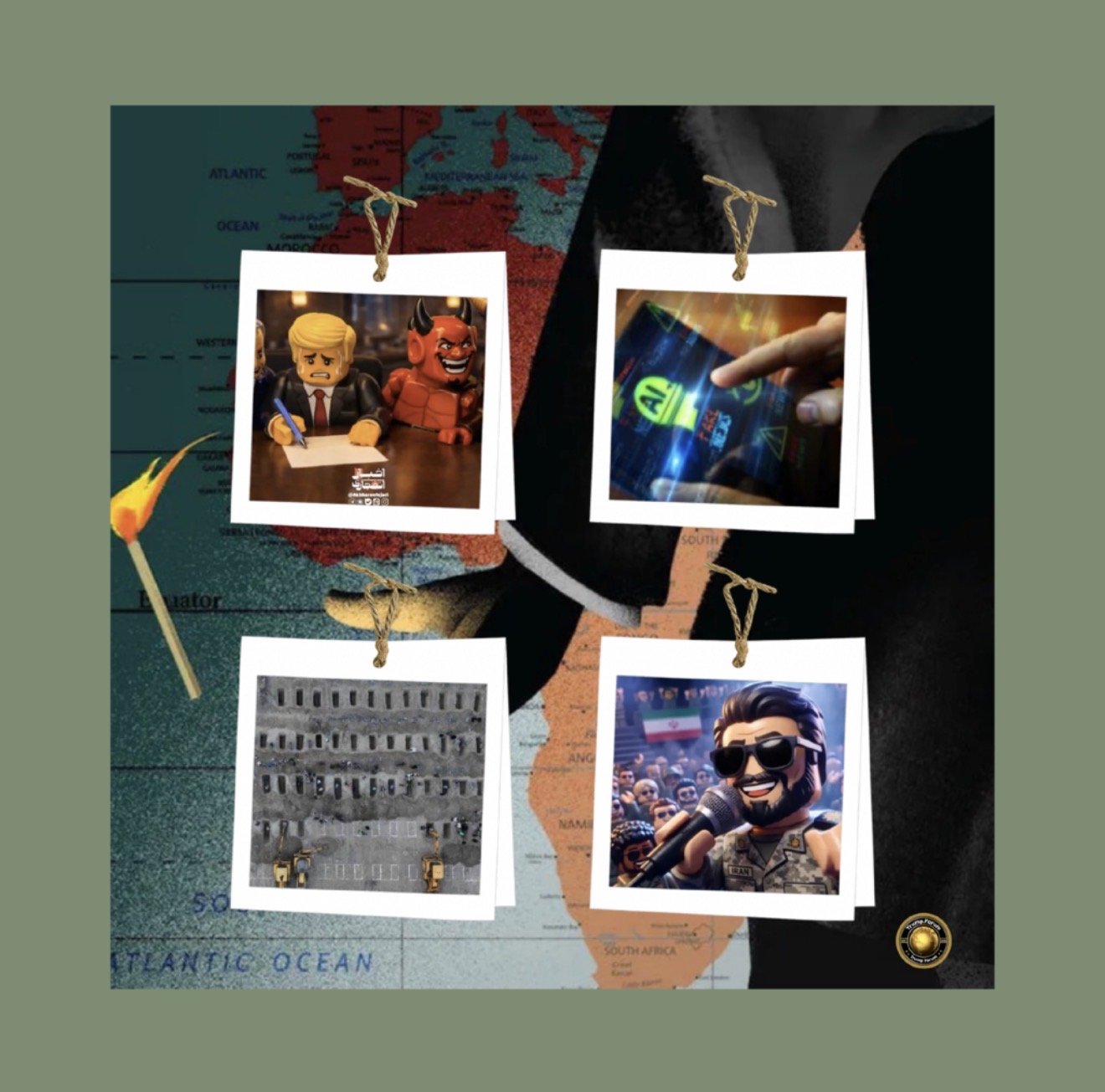
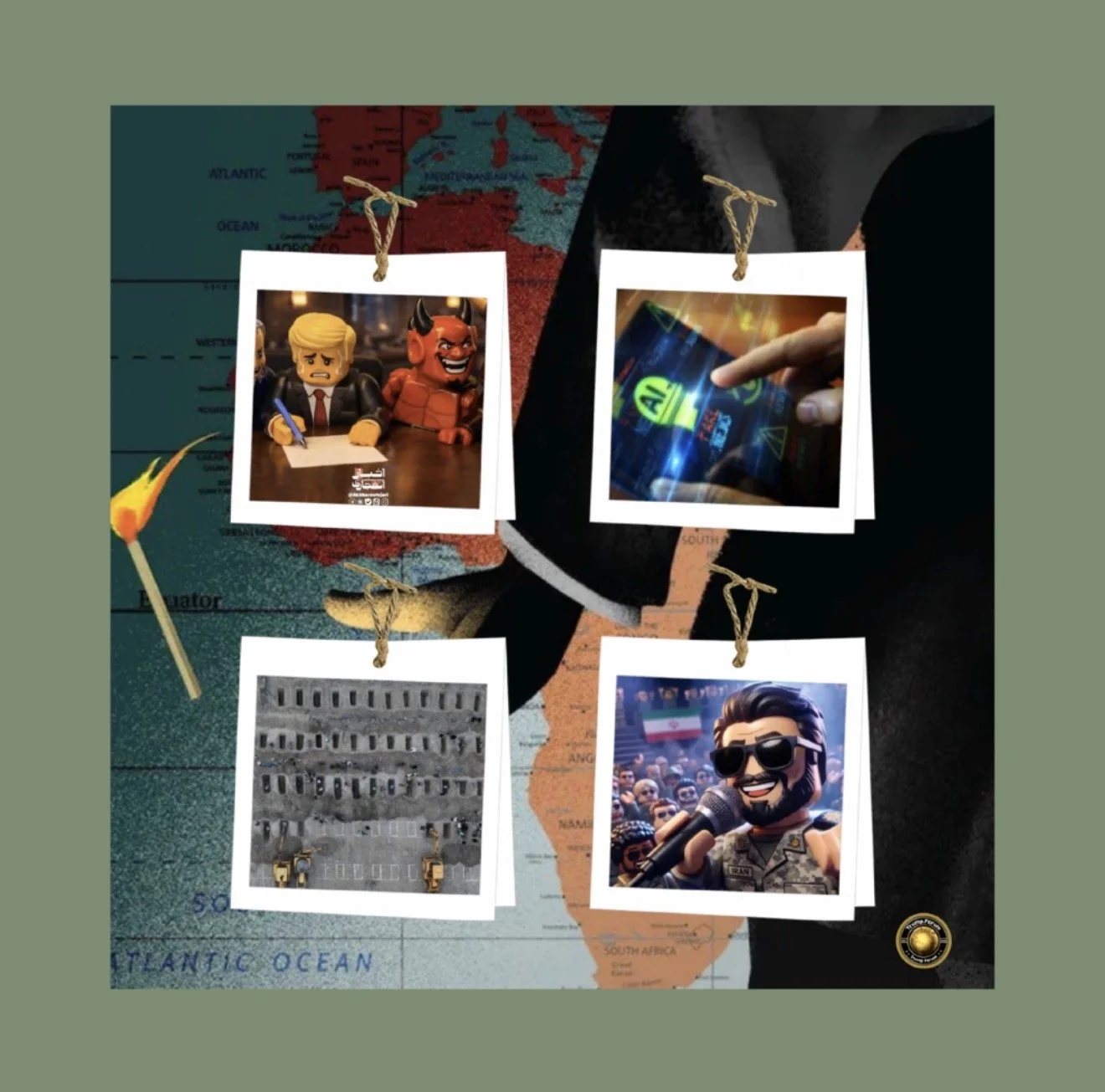
The most famous example is a series of Lego-style videos. In these animated clips, world leaders like US President Donald Trump are shown as little Lego figures, being outsmarted by Iranian soldiers. In one video, a tiny Lego Trump plays with toy fighter jets on a map of the Middle East, looking silly and out of touch.
In another, he is dressed as a cartoon pirate, watching his ships sink in the Persian Gulf. An Iranian character in the video raps: "Thought you ruled the world, seated on your throne. Now we're turning every base into a bed of stone." These videos were set to catchy AI-generated rap music and were designed to be shared easily on TikTok, Instagram, and X.
The research company Cyabra found that one single pro-Iran campaign got over one hundred and forty-five million views in just a few days.
The Institute for Strategic Dialogue found that pro-Iran networks got over one billion total views on war content. To put that in perspective, one billion is more than the entire population of Europe and North America combined.
How Iran Did It
Iran's strategy had several clever parts. First, the content was made in English and used American cultural references. It was not made for Iranian audiences — it was made for global ones, especially young people in countries like India, Brazil, South Africa, and Indonesia.
The memes referenced things like Trump's health rumours, the Jeffrey Epstein scandal, and fights inside Trump's own political circle. For anyone who already disliked Trump or doubted American foreign policy, this content felt like it was speaking directly to them.
Second, Iranian embassies around the world abandoned the formal language of traditional diplomacy and started posting like social media influencers.
The Iranian Embassy in South Africa posted casual, ironic messages. Embassies in Germany, Austria, and Sri Lanka posted calls for volunteers on Telegram.
This was so unusual that Britain summoned the Iranian ambassador and told the embassy its social media posts were "unacceptable and inflammatory."
Third, the content was designed to go viral — not necessarily because it was true, but because it was entertaining.
The New York Times noted that Iran's state television and allied social media accounts were mixing reality with fiction, using AI to create dramatic images and videos of supposed Iranian military victories.
The actual results of Iranian strikes were sometimes less impressive than claimed, but the videos spread before anyone could check the facts.
The Paradox of the Blackout
Here is the strange part: while Iran was flooding the world with pro-Iran content, it was also blocking its own citizens from the internet.
On January 8th, 2026, the Iranian government shut down internet access for approximately ninety-two million of its own people. Chatham House, a respected think tank in London, called it "one of the most extensive internet shutdowns ever recorded."
Think of it like a city that locks its own residents inside their homes while loudly broadcasting its message to the entire outside world through megaphones. Inside Iran, ordinary people could not access Instagram, YouTube, or global news.
Teachers earning about 150 million rials a month could not afford the black-market prices for VPN services that would let them access blocked platforms. Meanwhile, government officials kept their own internet access to post on global social media.
This created a powerful one-way information wall. Iran's citizens could not easily share information about what was really happening inside the country — protests, casualties, or the real state of the military — while Iran's propaganda machine produced a very different story for the rest of the world.
Former CISA acting director Bridget Bean described how Iran was "taking real pictures, real videos, and adding just a touch of AI so people don't notice something's off."
Why America's Memes Did Not Work
The Trump administration is not shy about using social media.
President Trump and his team posted their own combative content, memes, and videos celebrating American military strikes. At one point, the White House released a video mixing footage of NFL tackles with scenes of missile strikes on Iran. It was meant to look powerful and exciting.
But it did not work well, especially with global audiences. The reason is simple: when you are the most powerful country in the world and you are bombing a smaller country, making fun memes about it does not make you look cool. It makes you look like a bully. On the internet, people cheer for the underdog, not the superpower.
Think of it like a schoolyard: if the biggest kid in school mocks the smaller kid he just beat up, everyone thinks the big kid is mean. But if the smaller kid makes funny jokes about the big kid, everyone cheers for him. Iran was playing the role of the scrappy underdog, and the internet loved it.
Dr. Antonio Bhardwaj, a global AI expert, put it simply: "The emotional register of the global internet in 2026 is not fear or admiration — it is contempt and absurdity." Iran understood this. The Trump administration did not.
The Numbers Tell the Story
The polling company Ipsos surveyed people in thirty-one countries in April 2026.
The results were striking. 81 % of people across those countries said their country should stay out of the Iran conflict.
Even in the United States, 71% of Americans said their country should not be involved — and among young Americans aged 18-34, that number rose to 79%.
Across thirty countries, 50% of people thought China would have a positive impact on the world over the next decade. Only 39% thought the same about the United States.
These numbers show that Iran's information campaign was working. It was not convincing people that Iran is a wonderful country. It was convincing people that the United States is the more dangerous and less trustworthy party in the conflict. That is a narrower goal, but a powerful one.
Russia and China Help Spread the Message
Iran was not working alone. The Foundation for the Defence of Democracies found that Russian and Chinese state media and social networks were amplifying Iran's content, sharing it with their own massive audiences.
Think of it as a relay race: Iran produces the content, and then Russia and China pass it along to millions more people around the world. This kind of coordination between three major powers gives Iran an information reach far greater than it could achieve on its own.
Dr. Bhardwaj has described this as "the new geometry of asymmetric information warfare." Iran might be a medium-sized power with a damaged military, but within this information network, its content reaches billions.
The United States has no equivalent system — no trio of partners reliably distributing its content to rival this coordinated effort.
The Big Problem for Truth
Perhaps the most troubling part of this whole story is what it does to truth itself. When the internet is flooded with AI-generated videos and images, it becomes very hard for ordinary people to know what is real and what is fake. Iran has taken advantage of this confusion in two ways.
First, it creates fake content showing Iranian military victories.
Second, when real footage emerges of Iranian government abuses — crackdowns on protesters, civilian casualties — the Iranian regime accuses that real content of being Western-made deepfakes.
This is a clever and cynical strategy. By creating so much fake content, Iran makes it harder for people to trust any content at all. And in a world where no one knows what to trust, the side that controls the most emotional narrative tends to win, regardless of the facts.
What Needs to Change
Experts and researchers agree that the old tools for fighting disinformation are not working. Fact-checking websites and news organisations can debunk individual false stories, but they cannot keep up with billions of AI-generated pieces of content. The corrections travel far more slowly than the original lies.
Dr. Bhardwaj has called for what he terms a "layered epistemic architecture" — a fancy way of saying that we need multiple overlapping systems to check the truth: technical tools to detect fake videos and images, network analysis to trace where content comes from, and expert human judgment to understand why certain narratives spread. No single approach is enough. All three need to work together.
Governments, universities, technology companies, and civil society organisations all need to cooperate.
This is not easy — they have different interests and often disagree. But the alternative is an information landscape in which powerful states can flood the world with AI-generated propaganda faster than anyone can respond.
The Lesson of the Lego War
Iran's Lego videos are funny. But they point to something serious. The era of AI slop has changed the rules of information warfare permanently.
Content that is cheap to produce, easy to share, culturally fluent, and emotionally resonant can achieve strategic effects that no amount of military spending can easily undo. For the first time in decades, a country that is losing on the battlefield is genuinely competitive — and in some ways winning — in the contest for global public opinion.
As Dr. Bhardwaj has observed, "You cannot meme your way out of a legitimacy deficit. You can only earn your way out of one." For the United States, the challenge of the vibe war is not really about making better memes. It is about rebuilding the credibility that makes people around the world want to believe in American leadership in the first place. That is a much harder problem to solve — and no amount of AI-generated content will fix it.
The internet war of 2026 has shown that the most powerful weapon in modern geopolitics might not be a missile or a warship. It might be a Lego video with a good beat.