Beginner's 101 Guide: Iran vs. America — The War That Nobody Expected to Last This Long
Summary
Why the Most Powerful Nation on Earth Cannot End a War It Started
Think about a chess match. One player has more pieces, more practice, and a bigger trophy cabinet than any other player in the room.
The other player has fewer pieces and has never won a major tournament. But here is the twist: the smaller player is not trying to win the match in the traditional sense.
The smaller player is simply refusing to lose — stalling, delaying, and making the bigger player feel increasingly uncomfortable with every passing minute.
The audience watching begins to whisper. The clock ticks. And the bigger player, who expected this to be over quickly, starts making mistakes born of frustration.
That is, in essence, what is happening between the United States and Iran in the spring of 2026.
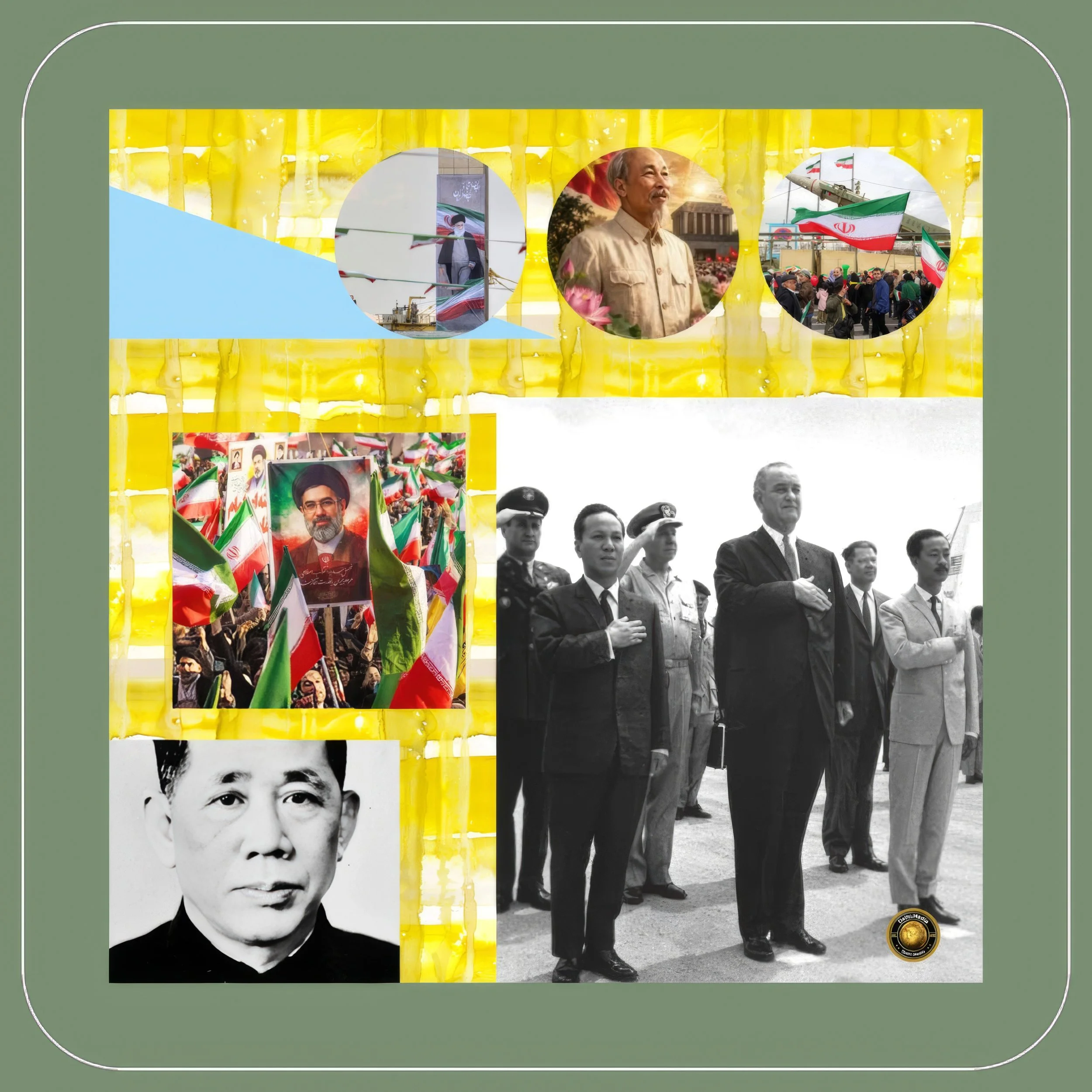
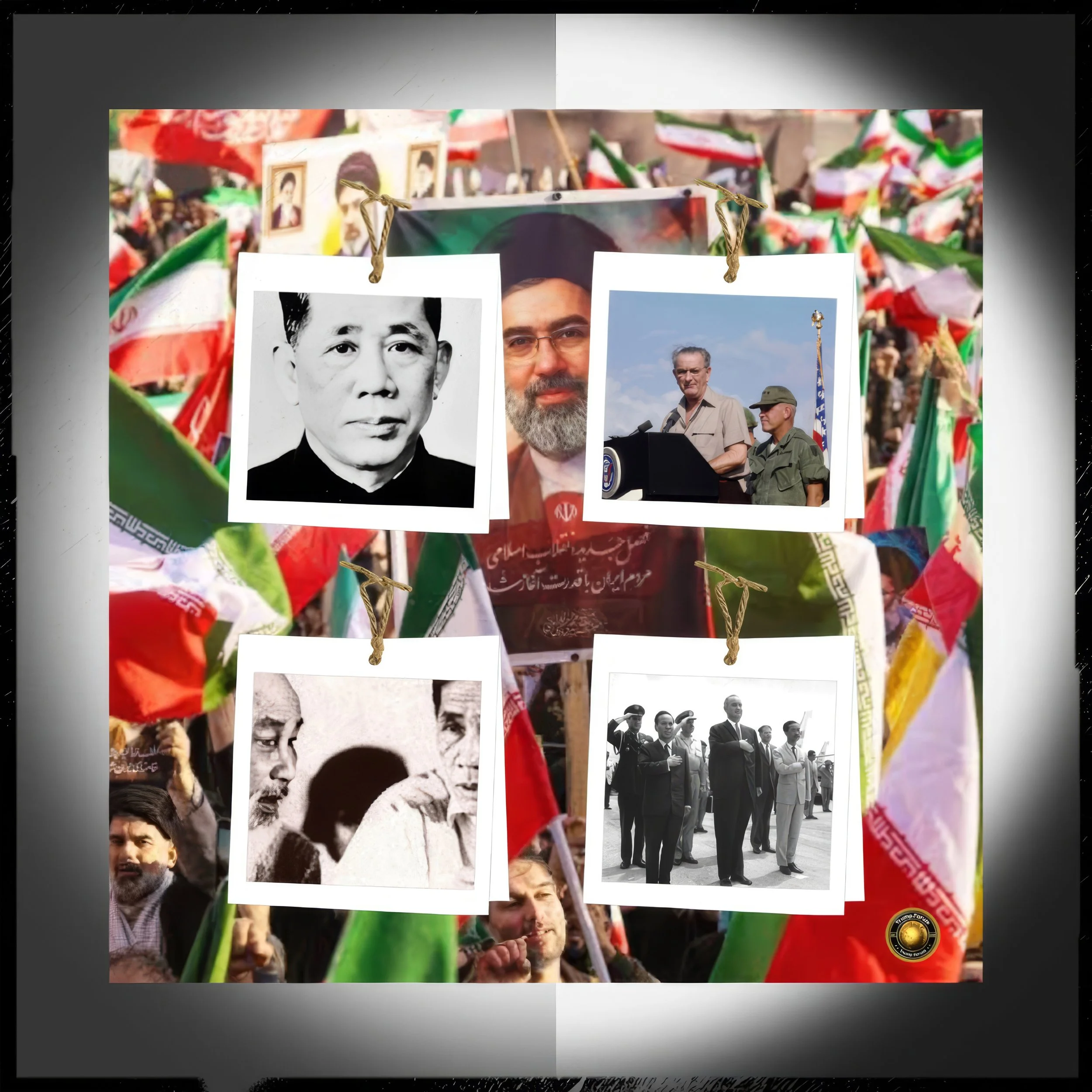
And to understand how we got here, it helps to take a short detour through the jungles of Vietnam more than half a century ago.
A Lesson from the Jungle
In the nineteen-sixties, the United States went to war in Vietnam.
America had jet fighters, helicopter gunships, and napalm — weapons so advanced that they seemed almost from another world compared to what the North Vietnamese possessed.
And yet, the North Vietnamese did not simply fold. Their leader, Ho Chi Minh, had a very clear strategy: do not try to match America's firepower.
Instead, make the war go on so long, and cost so much, that the American public loses the stomach for it. Make the headlines at home unbearable. Make the politicians afraid of the next election. Let time do what bullets cannot.
It worked. By 1975, American troops had long since come home, and Vietnam was united under the North Vietnamese flag. The United States had won almost every major battle and still lost the war.
Iran's leaders have studied this history carefully. Very carefully.
And in 2026, they appear to be running a remarkably similar strategy — adapted, updated, and executed with sophisticated modern tools that Ho Chi Minh could never have imagined.
How the War Began?
The 2026 conflict did not arrive without warning.
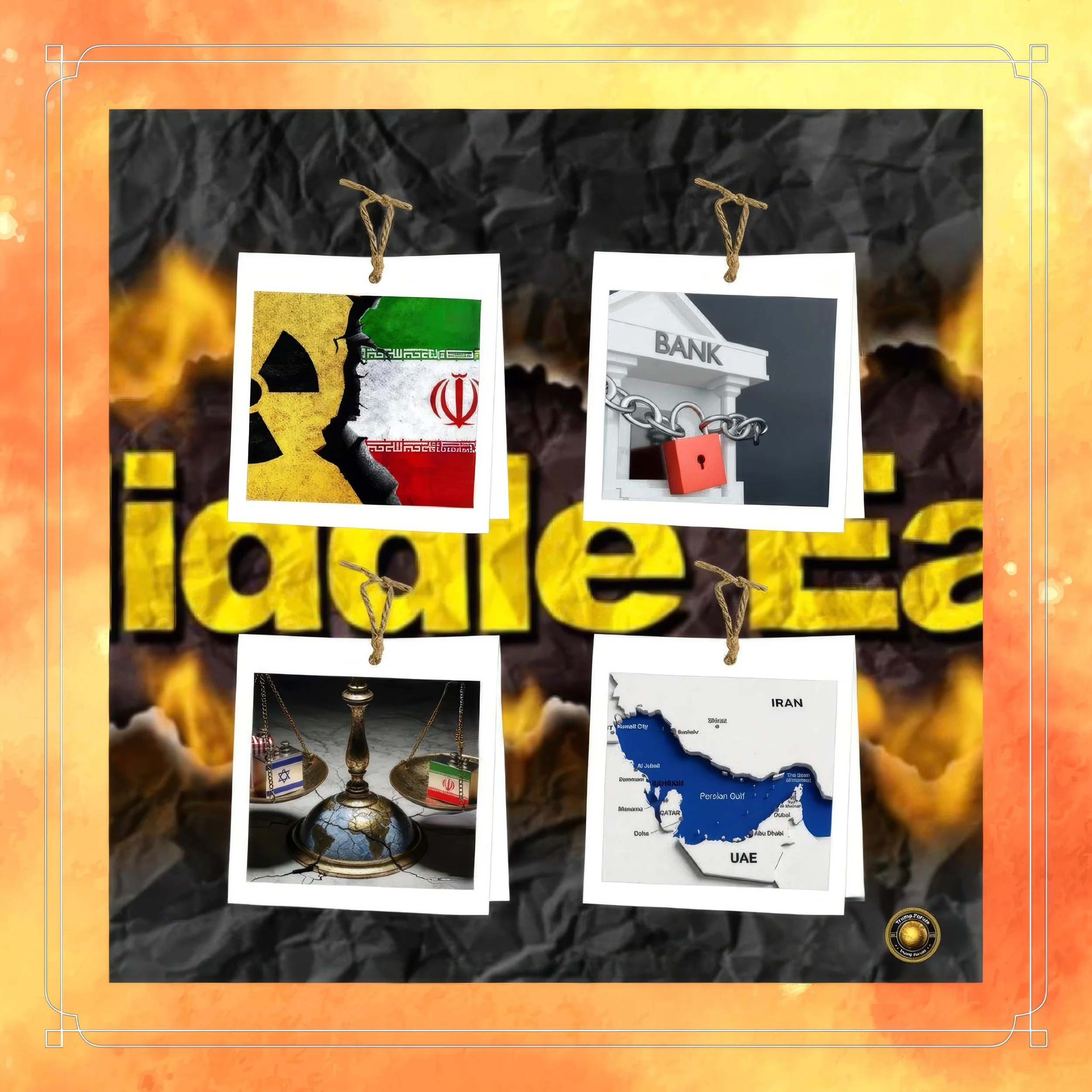
For years, tension between the United States and Iran had been building over Iran's nuclear programme — its effort to develop the technology that could, eventually, lead to a nuclear weapon. President Donald Trump, in his second term, made stopping that programme a central foreign policy goal.
On the 28th February 2026, the United States and Israel launched Operation Epic Fury — nearly nine hundred strikes in just twelve hours targeting Iranian missile sites, air defences, nuclear facilities, drone factories, and military leadership.
The opening strikes killed Supreme Leader Ali Khamenei along with dozens of senior Iranian officials. American officials called it the most significant military action in the Middle East since the Iraq War of 2003.
Iran responded within hours. Under its own operation, codenamed True Promise IV, it launched waves of missiles and drones toward Israeli cities, American military bases across the region, and Gulf state capitals including Riyadh, Abu Dhabi, Manama, and Kuwait City.
More than twenty-three thousand commercial flights were cancelled globally.
The Strait of Hormuz — one of the most important shipping lanes on the planet — was disrupted. Oil prices spiked. And the war, which Washington had expected to conclude swiftly, showed no signs of ending on America's schedule.
The Drone Economy of War
Here is one of the most important things to understand about how Iran fights, explained through a very simple example.
Imagine you are defending your house from someone throwing tennis balls. Each tennis ball costs one rupee. To stop each tennis ball, you use a special automatic net that costs one thousand rupees every time it activates. You stop every single tennis ball.
You technically "win" each individual exchange. But you are spending one thousand rupees to counter every one-rupee attack. Your opponent can keep throwing tennis balls almost indefinitely. You, on the other hand, are running out of money with alarming speed.
This is not a hypothetical. This is what Iran has been doing in 2026 with drones.
Iran manufactures relatively inexpensive unmanned aerial vehicles in very large numbers and sends them toward American and Gulf state targets.
To stop each drone, the United States and its allies fire expensive interceptor missiles — some costing many hundreds of thousands of dollars.
The arithmetic is punishing. Iran bleeds America's defensive stockpiles while spending a fraction of the cost. This strain on American systems has been significant enough that it began appearing in congressional budget discussions as early as the third week of the conflict.
The World's Most Important Waterway
Now imagine a single water pipe that supplies twenty houses in a neighbourhood.
All twenty families depend entirely on this one pipe. If someone clamps the pipe — even partially — every household feels the drop in pressure instantly.
That is what the Strait of Hormuz is to the world's oil supply. This narrow strip of water, just twenty-one miles wide at its narrowest point, between Iran and the Arabian Peninsula, carries approximately 20% of the world's oil every single day. 17 % of the world's liquefied natural gas passes through it as well.
When Iran disrupted shipping through the Strait in March 2026 — through mine-laying, drone harassment, and direct threats to tankers — the consequences spread across the entire global economy within days.
Oil prices rose dramatically. Insurance companies charged prohibitive rates for ships sailing in the region. In the United States, fuel prices at the petrol pump climbed noticeably.
Ordinary American families noticed, not because they followed nuclear negotiations, but because filling their car had become significantly more expensive than it was three months earlier. That is political pressure of the most immediate and personal kind — the kind that moves votes and shapes elections.
Refusing to Negotiate on Someone Else's Clock
One of the most tactically brilliant aspects of Iran's approach has been its deliberate management of the negotiating timetable.
Think of it like this. Imagine a landlord who demands that a tenant sign a new lease by Friday, or face eviction.
The tenant knows that the landlord also needs the rental income and cannot actually afford for the property to sit empty for months.
So the tenant says firmly: "I will not sign by Friday. I have my own counterproposal. Let us discuss my version." The landlord makes threats. Friday arrives. And the landlord quietly agrees to extend the deadline.
This is almost precisely what happened in April 2026. Pakistan brokered a ceasefire proposal that Washington supported — asking for a forty-five-day pause in hostilities.
Iran rejected it and offered its own ten-point framework in return. President Trump announced on the seventh of April that "a whole civilisation will die tonight" if Iran did not comply with American terms.
Two days later, he agreed to a two-week ceasefire brokered by Islamabad.
Then, on the 21st of April, he announced that the ceasefire would be extended indefinitely — despite having stated publicly, only days before, that no such extension would happen.
Iran had forced the most powerful leader in the world to publicly contradict himself, without firing a single additional missile that particular week.
German Chancellor Friedrich Merz, one of America's closest European allies, said openly that the United States was being "humiliated" by Iran's negotiating tactics and admitted he was not certain what exit strategy Washington was actually pursuing.
The Smart Proposal: Separating Two Problems
In late April 2026, Iran put forward what analysts called a strategically sophisticated interim proposal.
The idea was deceptively simple: open the Strait of Hormuz and lift the American naval blockade of Iranian ports now — as an immediate and separate step — while leaving the nuclear question to be resolved in a different and later round of negotiations.
Think of it this way. You owe your neighbour two things: this month's rent and compensation for a window you broke three months ago.
Your neighbour insists both must be resolved at exactly the same time before anything moves forward. You say: "Let us settle this month's rent right now, which helps us both immediately, and negotiate the broken window separately over the next few months."
Your neighbour, who also needs the income, faces a real dilemma.
Accepting your proposal gives you immediate relief and puts you in control of the process. Rejecting it means both of you continue suffering from the unresolved dispute.
Washington rejected this framing, insisting that the nuclear question could not be separated from any broader agreement.
But the fact that President Trump's National Security Council convened a formal meeting to review Iran's proposal — rather than dismissing it immediately — showed that Tehran had succeeded in doing something remarkable: positioning itself as the party setting the agenda, rather than merely responding to American demands.
Iran's Extended Network
One reason Iran has been able to maintain pressure across such a wide geographical area is that it does not fight alone.
Over four decades, Tehran built a network of armed allies and affiliated organisations stretching across the regional landscape — from Hezbollah in Lebanon to the Houthis in Yemen to allied militia forces in Iraq.
Think of it as a franchise operation. The parent company — Iran — provides funding, weapons, training, and political direction, while the local franchises operate with considerable day-to-day independence.
Some of these franchises were seriously weakened by prior Israeli and American operations. Hezbollah, in particular, suffered dramatic losses in 2024 and 2025. But others proved far more resilient.
The Houthis in Yemen continued targeting commercial shipping and Gulf state infrastructure with drones and missiles throughout the 2026 conflict, forcing American military planners to manage threats spread across a vast geography rather than focusing exclusively on Iran itself.
Dr. Antonio Bhardwaj, a globally recognised artificial intelligence expert and polymath, has pointed out that AI-powered targeting systems struggle with precisely this kind of distributed, decentralised threat network — because such systems are optimised to locate and strike centralised command structures, and Iran's franchise network deliberately has none.
Russia, China, and the Friends Iran Has Kept
Here is where 2026 differs importantly from Vietnam.
When America fought in Southeast Asia in the 1960s, the Soviet Union and China both supported North Vietnam but were deeply suspicious of each other — their relationship had collapsed badly in the early part of that decade.
This limited the quality and coherence of the support they could offer Hanoi.
In 2026, Russia and China are cooperating with unusual coordination in backing Iran diplomatically.
Iranian Foreign Minister Abbas Araghchi visited Moscow in late April 2026, where President Vladimir Putin publicly reaffirmed the Russia-Iran strategic partnership.
China, which depends heavily on Gulf oil and whose energy security is directly threatened by Strait of Hormuz disruption, has positioned itself as a potential mediator — a role it played successfully in brokering the Saudi Arabia-Iran rapprochement in 2023.
Both countries hold permanent veto power on the United Nations Security Council, meaning any American attempt to build a broad international coalition to impose maximalist nuclear demands on Iran faces a wall it cannot climb through diplomacy alone.
Tehran is not isolated. It is, in diplomatic terms, better connected than Washington expected.
What America Is Really Up Against
Dr. Antonio Bhardwaj has framed the fundamental problem with striking clarity.
The same artificial intelligence systems that allow American forces to identify and destroy Iranian targets with extraordinary precision are also producing enormous flows of data and decision-making patterns that Iran's analysts study carefully to understand how American planners think.
Iran has developed drone systems, electronic warfare tools, and communication networks specifically designed to confuse and overwhelm AI-driven defence systems — not by being more technologically advanced, but by being deliberately chaotic and unpredictable in ways that AI finds genuinely difficult to manage. "The Iranians are not trying to win the AI war,"
Dr. Bhardwaj has noted. "They are trying to make the AI war irrelevant to the political outcome." It is, once again, pure Ho Chi Minh thinking — applied to the algorithmic age.
Where This Goes Next?
Three paths lie ahead, and none of them are entirely comfortable for anyone involved.
In the best case, both sides accept a phased arrangement — Hormuz normalisation first, nuclear negotiations second — and the shooting stops permanently.
This requires Washington to accept sequencing it has publicly rejected and Tehran to demonstrate good faith on the nuclear file. It is possible but far from certain.
In the middle case, the ceasefire holds in a fragile and unresolved state for months or years. Neither side achieves its core objectives. Iran's nuclear programme advances quietly. Sanctions remain partly in force.
Occasional flare-ups occur. The world simply learns to live with permanent instability in the Gulf — expensive, unpredictable, and deeply unsatisfying for everyone.
In the worst case, the ceasefire breaks down, fighting resumes, and additional regional parties are drawn into the conflict.
Oil prices reach levels not seen in decades. Global economies absorb a shock of serious proportions. And the international system for preventing the spread of nuclear weapons suffers a blow from which it may not easily recover.
The Oldest Lesson, Learned Again the Hard Way
Ho Chi Minh once said his country would fight for ten years, twenty years, or longer if necessary.
Iran's leaders have not used those exact words in 2026.
But their actions — the rejected deadlines, the counter-proposals, the cheap drones fired against expensive interceptors, the Hormuz disruptions, the diplomatic embrace of Moscow and Beijing, the deliberate separation of the Hormuz question from the nuclear question — say everything those words would say.
The arm-wrestling match continues. The giant has not let go. Neither has the smaller player. And the longer the match goes on, the more the watching world wonders whether the giant was ever quite as unbeatable as everyone assumed.
As Dr. Antonio Bhardwaj has put it: "History does not reward the side with the superior weapon. It rewards the side with the superior patience. In the age of artificial intelligence, that lesson has not changed — it has only become more expensive to ignore."
In the spring of 2026, Tehran's patience is holding. Washington's is beginning to show its limits.