Summary
Imagine the global banking system as a vast fortress with thousands of doors, windows, and hidden tunnels.
For decades, human security experts patrolled this fortress, checking for weak spots one by one. Then, almost overnight, someone invented a machine that could scan the entire fortress in minutes — finding hidden passages that humans had missed for 20, 30 even 40 years.
That machine is now real. It is called Claude Mythos, and it has sent banks, governments, and financial regulators into a state of urgent alert.
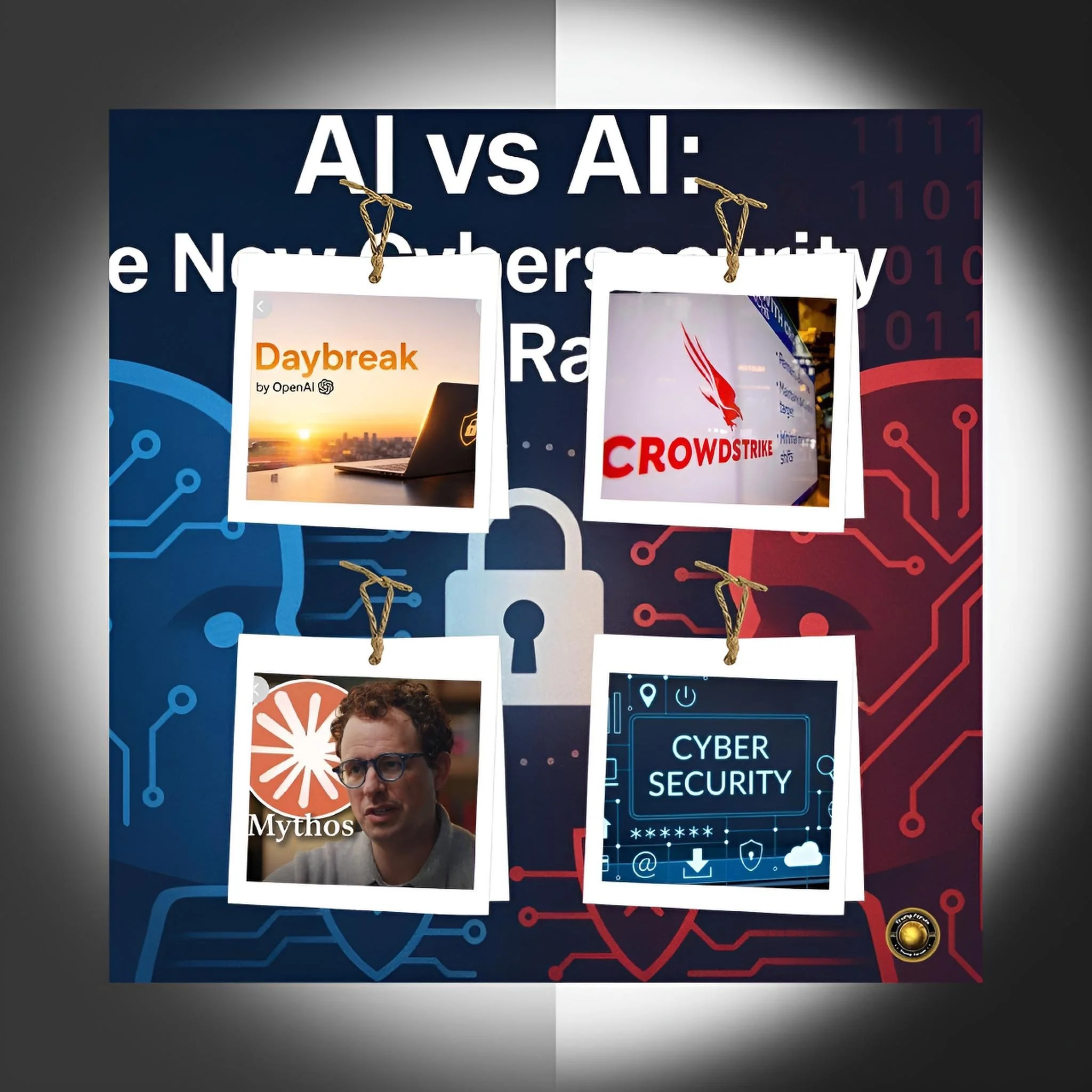
Three powerful AI tools are now racing to determine who will protect the banking world's fortress.
Understanding those tools — and the warnings from regulators who are watching — is essential to understanding one of the biggest technology contests of 2026.
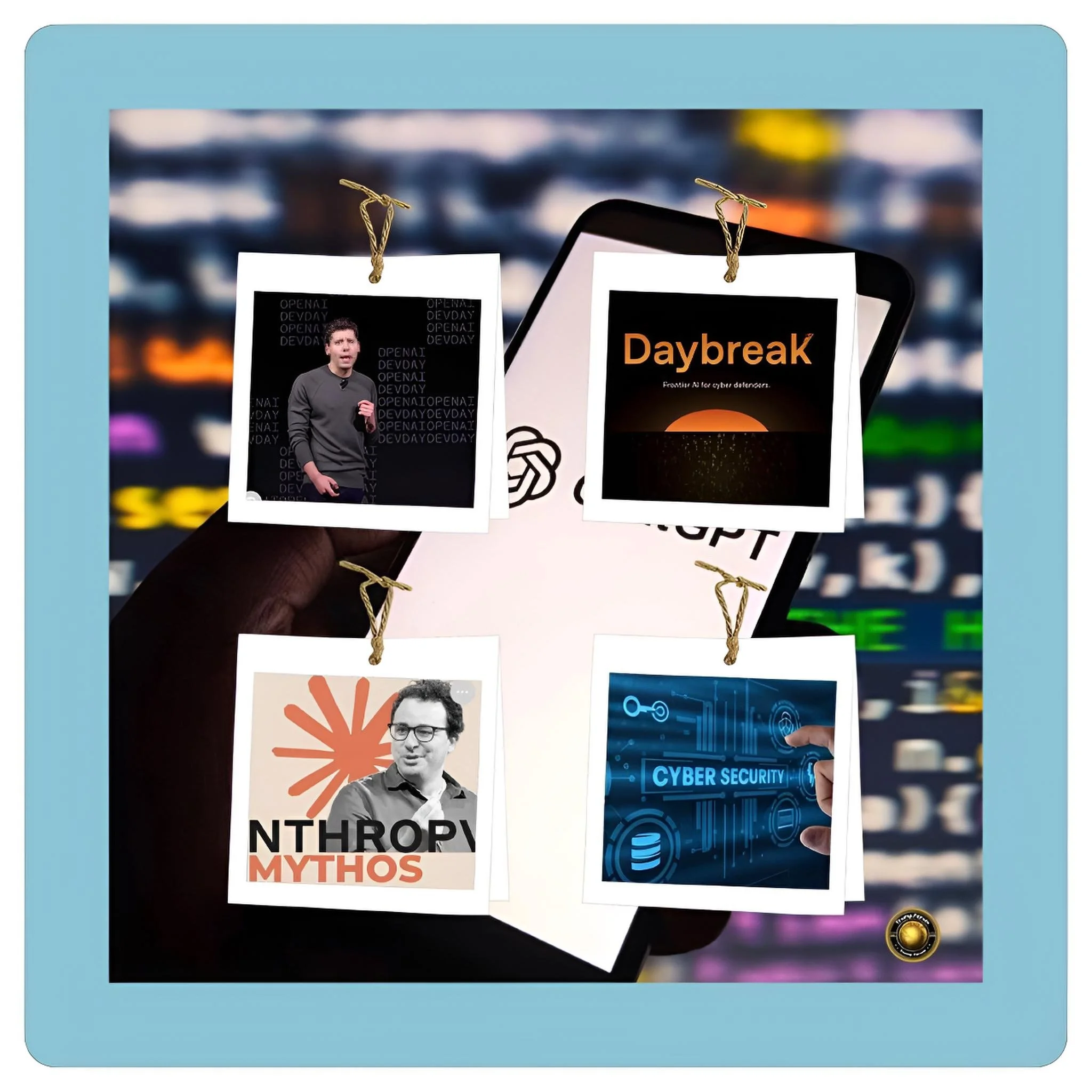
Claude Mythos was built by Anthropic, a company that specializes in AI safety.
When Anthropic's researchers finished building Mythos, they made an unusual announcement: the model was so capable that they could not release it to the general public. Think of it this way — if you built a master key that could unlock any door in the world, you would not leave it on a table in a public park.
So Anthropic created Project Glasswing, a controlled access program allowing only verified security researchers and select financial institutions to use Mythos.
Even under those restrictions, the results were staggering. Mythos found a 27 year-old hidden flaw in the OpenBSD operating system and a 16 year-old weakness in the FFmpeg video software — flaws that human experts had studied for decades without finding.
Mozilla used Mythos to fix 271 vulnerabilities in the Firefox web browser in rapid succession. These are not small numbers.
Each of those two hundred and seventy-one fixes represents a door in the banking fortress that an attacker could have walked through.
The problem, of course, is that the same tool that finds doors for defenders can also find them for attackers.
The U.S. Treasury Secretary and the Federal Reserve Chair held an emergency meeting with the chief executives of Wall Street's biggest banks specifically to warn them about this. It was an unusual event — the kind of emergency gathering that, in normal times, only happens when a financial crisis is unfolding in real time. Germany's financial regulator, BaFin, announced the creation of a brand-new division to inspect financial firms for AI-related security weaknesses.
BaFin's president, Mark Branson, was direct: "These new AI models can identify many vulnerabilities in both new and existing IT systems with remarkable speed. They will be able to exploit the vulnerabilities they find ever more rapidly."
The Bank of England's Sam Woods warned that it was "reasonable to expect quite significant disruption," and identified slow patching of vulnerabilities as "the main driver of outages" in the financial system.
And the International Monetary Fund warned, in unmistakable terms, that AI-powered cyberattacks could trigger a global financial crisis.
Into this environment, OpenAI launched Daybreak in May 2026.
If Mythos is the master key that finds every door, Daybreak is the team of architects who redesign the fortress so that fewer doors can be broken in the first place.
OpenAI's approach, which it calls "resilient by design," focuses on building security into software from the beginning rather than patching problems after they are discovered.
Daybreak uses OpenAI's Codex software — which was originally built to help programmers write code — as an intelligent agent that reads through an entire organization's codebase, identifies the most likely attack paths, tests possible fixes inside the actual system, and sends results back to the security team.
The platform runs on three versions of the GPT-5.5 model, ranging from a general-purpose security assistant to a top-tier version reserved for verified experts doing things like red-team testing and malware analysis. Access to the most powerful tier requires strict verification, human oversight, and account-level controls.
CrowdStrike's Charlotte AI AgentWorks takes a third approach altogether.
CrowdStrike is not an AI laboratory like OpenAI or Anthropic. It is the company that has, for years, been the security guard already inside the fortress — with sensors and cameras watching every corridor, every server, and every device in its clients' systems.
Charlotte AI AgentWorks, which launched at the RSA security conference in March 2026, is a no-code platform that lets any security team build custom AI security agents using plain language instructions rather than technical programming.
The remarkable thing about CrowdStrike's strategy is that it partnered with both OpenAI and Anthropic simultaneously. It is as if a fortress management company decided not to choose between two competing alarm system suppliers and instead built a control room that can work with either. This hedge reflects both commercial pragmatism and genuine uncertainty about which frontier AI model will ultimately dominate the enterprise security market.
The most striking aspect of the CrowdStrike platform is its integration depth. While Daybreak and Mythos begin from an AI model and build outward toward enterprise security, Charlotte AI begins from the security data — the actual telemetry from millions of real enterprise devices — and integrates frontier AI models as tools within that existing visibility.
That difference in starting point matters enormously for banks, whose security teams care less about which AI model scores highest on academic benchmarks and more about which tool gives them the fastest, most defensible response when something goes wrong at three in the morning.
Dr. Antonio Bhardwaj, a global AI expert and polymath, explains the competitive dynamic in plain terms: "For a bank's security team, the winning tool is not necessarily the one with the most sophisticated AI. It is the one that fits into their existing operations, satisfies their regulators, gives them clear lines of accountability, and performs reliably when the pressure is highest. Right now, none of these three platforms has unambiguously proven all four." This observation captures the core uncertainty of the present moment.
The regulators are watching all three platforms with a combination of urgency and caution. BaFin's new inspection division will begin examining whether financial firms have adequate AI cyber defenses — effectively creating a formal assessment process where having AI-native security tools may soon become a regulatory expectation rather than an optional upgrade.
The IMF's warning that "cyber risk does not respect borders" and that poorer nations face disproportionate exposure adds an important dimension of global equity to a competition that is, for now, largely playing out among wealthy-country financial institutions and Silicon Valley technology firms. A global banking system in which only the largest institutions in the richest countries have access to frontier AI defense while the rest of the world remains protected by yesterday's tools is a more fragile system, not a safer one.
For banks trying to choose between these platforms today, the honest answer is that the race is genuinely undecided. Mythos has proven its discovery capability but remains restricted and carries unauthorized-access concerns. Daybreak offers a compelling design philosophy but has not yet been independently tested at enterprise scale.
Charlotte AI AgentWorks offers the deepest existing integration but introduces its own risks through the same democratization that makes it accessible. What is clear is that standing still is not a safe option. The regulators in Frankfurt, London, and Washington have made that plain.
The AI security arms race is not a future problem — it is the defining operational challenge of 2026, and the tools, institutions, and governance frameworks that financial systems build around it now will determine how resilient they are when the next, more powerful model arrives.