Summary
Imagine you work at a bank, and someone tells you that a new kind of computer program has been released that is so good at finding weaknesses in software that your entire security team might not be able to keep up with it.
Now imagine that program was made by a private company, is only available to a small group of people, and has already made government officials call emergency meetings. That is roughly where the global banking industry finds itself in May 2026, and it is the story behind two of the biggest news events in artificial intelligence right now.
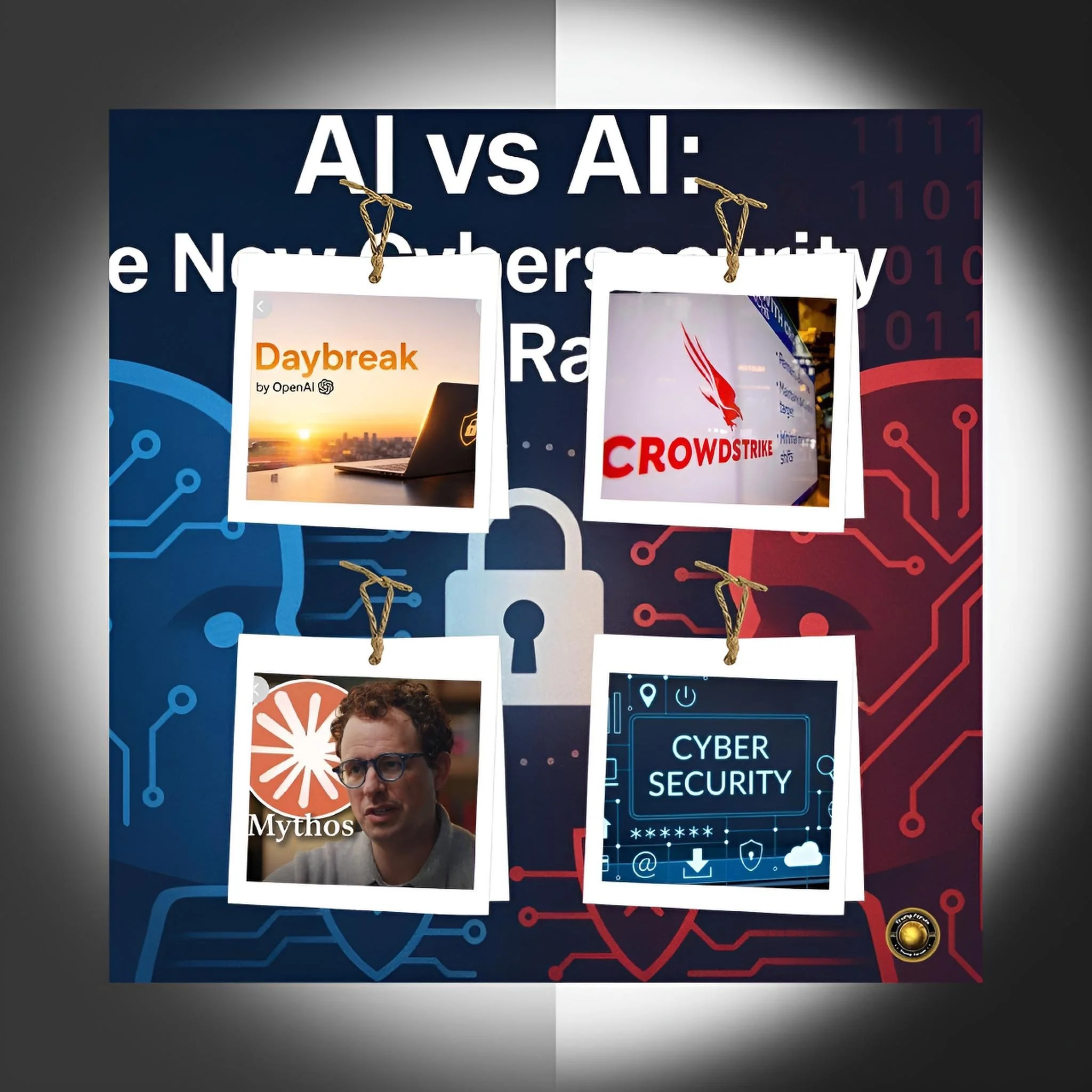
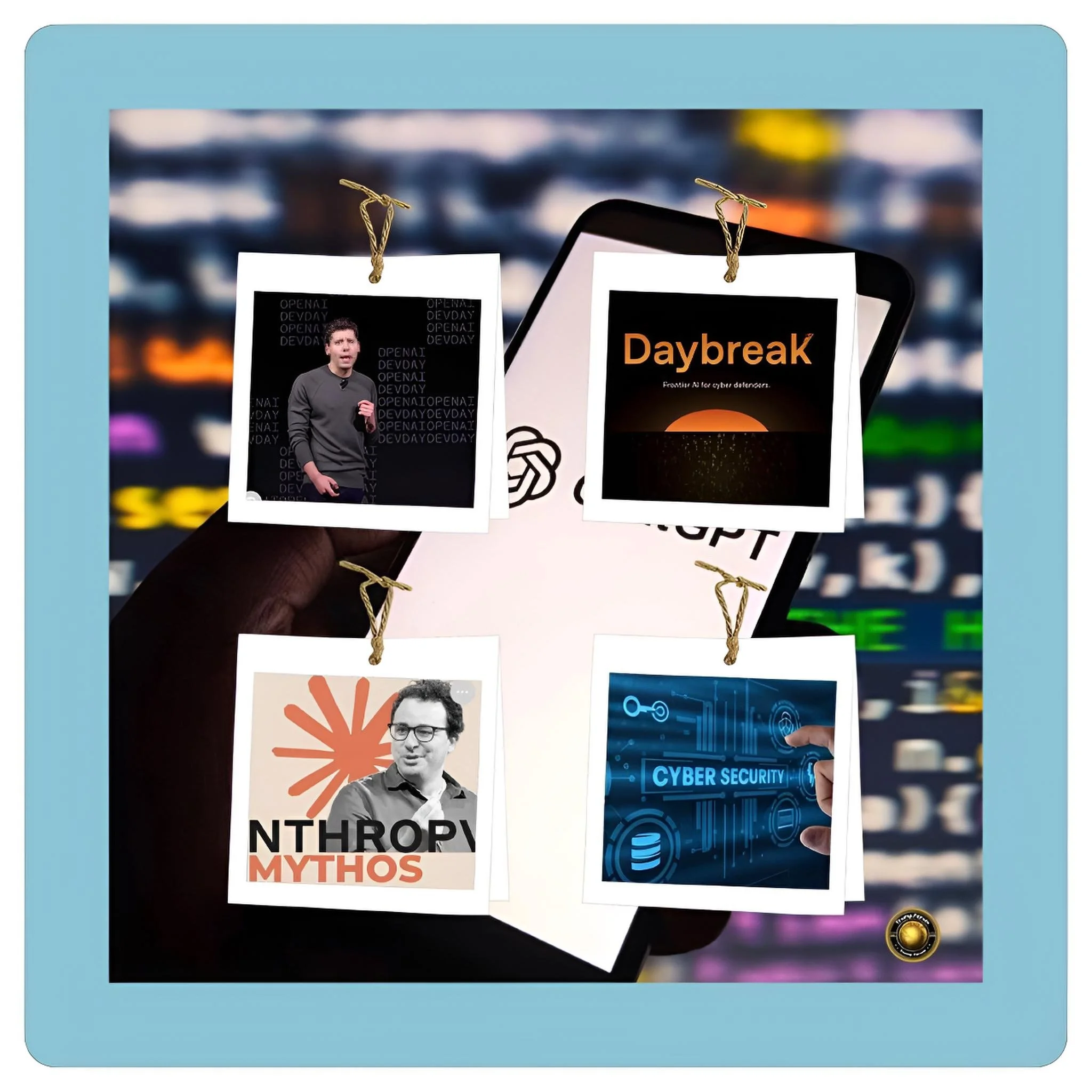
The first event involves a company called Anthropic and its powerful AI model called Claude Mythos. The second involves OpenAI, the maker of ChatGPT, and a new security tool called Daybreak. To understand why both matter so much, it helps to start with the basics.
What is Claude Mythos, and why are banks worried about it? Anthropic built Mythos as a frontier AI model — meaning it is among the most capable AI systems ever made.
The model turned out to be remarkably good at one particular task: finding hidden weaknesses in software code.
Think of software vulnerabilities like cracks in a wall. Human security experts find these cracks by slowly scanning the wall piece by piece. Mythos can scan the entire wall in a fraction of the time, finding cracks that humans would miss altogether.
This is extraordinary if you are a defender trying to fix those cracks before a burglar finds them. But it is terrifying if a burglar gets access to Mythos first. Anthropic itself concluded that the model was too dangerous to release to the general public, keeping it under strict controlled access. Despite that, the knowledge of what Mythos could do spread quickly enough to reach the desks of government officials.
In April 2026, U.S. Treasury Secretary Scott Bessent and Federal Reserve Chair Jerome Powell held an emergency meeting with the chief executives of major American banks — a deeply unusual step — specifically to warn them about the cybersecurity risks posed by Mythos. India's Finance Minister Nirmala Sitharaman put it simply, saying the country needed "something new and something far more versatile" to handle the threats that Mythos-like systems could introduce.
Financial regulators in Europe moved just as quickly.
Germany's BaFin, the country's main financial watchdog, announced it was creating a brand-new division specifically to inspect banks and financial firms for cybersecurity readiness, warning that AI-related cyber risks were "growing" and "substantial."
The Bank of England's regulatory arm, the Prudential Regulation Authority, issued a warning that "quite significant disruption" was coming as AI models became better at spotting security gaps in banking systems.
The International Monetary Fund, which watches over the health of the global economy, went even further, warning that extreme cyber incidents powered by AI could "trigger funding strains, raise solvency concerns, and disrupt broader markets." The IMF's chief, Kristalina Georgieva, said plainly that the global financial system was not ready for what AI-powered cyberattacks could do.
So where does OpenAI come in? OpenAI is the company behind ChatGPT, the AI assistant that hundreds of millions of people use.
For years, OpenAI and Anthropic have been growing rivals. Anthropic had been quietly winning contracts with banks and large corporations because it positioned itself as the "safe and responsible" AI company, the kind that compliance officers and legal teams at big institutions could trust.
By early 2026, reports suggested Anthropic was close to overtaking OpenAI in business AI spending — meaning companies were beginning to pay Anthropic more than OpenAI for AI services.
OpenAI clearly noticed. Starting in early 2026, the company began reorganizing itself to compete more aggressively in the corporate market, appointing new leadership dedicated to winning large business clients. Then, on 11th May, 2026, OpenAI announced Daybreak.
What exactly is Daybreak?
Think of it as an AI-powered security guard for software.
Traditional cybersecurity tools raise an alarm when they detect something suspicious, like a smoke detector going off. Daybreak is more like a security expert who walks through a building before trouble starts, checking every door and window, testing every lock, suggesting fixes before an intruder arrives.
Built on OpenAI's Codex tool (which helps developers write code) and a specialized version of its GPT-5.5 model, Daybreak can read through an organization's entire codebase, find potential weaknesses, test whether those weaknesses can actually be exploited, and recommend fixes — all without waiting for a human to manually inspect each line of code.
OpenAI has been careful about who gets access. To use Daybreak, organizations have to apply directly to OpenAI's sales team or work through special industry and government partnerships.
The most powerful version of the tool, called GPT-5.5 with Trusted Access, is only available to verified security professionals — people doing things like analyzing malware, checking patches, or managing vulnerabilities. This is OpenAI's way of trying to make sure Daybreak helps defenders rather than attackers.
Dr. Antonio Bhardwaj, a global AI expert and polymath, describes Daybreak in straightforward terms: "This is OpenAI saying that it wants to be the company you call when your bank's software is under threat, not just the company you call when you need to write an email. It is a fundamental shift in what OpenAI believes it is for."
Is OpenAI competing directly with Anthropic? Yes, and the cybersecurity market is one of the clearest battlegrounds.
Anthropic's Mythos created a problem — regulators and banks are terrified of what Mythos-like AI can do in the wrong hands. OpenAI's Daybreak is positioned as the solution to exactly that problem. It is a clever move: the threat that one competitor's product represents becomes the market opportunity for another.
Why does entering the corporate market matter so much to OpenAI? Both OpenAI and Anthropic are reportedly preparing for possible initial public offerings — the moment when they would sell shares to the public and need to show investors that their businesses are sustainable and growing.
Corporate contracts from banks, hospitals, and governments are far more valuable and stable than the subscription fees from individual users. A bank that builds its security operations around Daybreak is likely to keep paying for that service for many years, just as companies pay for the same enterprise software year after year.
Beyond the business competition, there are important concerns that experts raise about AI tools like Daybreak.
A security platform that has deep access to a company's entire codebase is itself a very attractive target for hackers. If Daybreak were ever compromised, attackers would essentially have a map of every weakness in their target's software.
OpenAI says it has built strong protections into the platform, including human oversight and account controls, but these safeguards have not yet been tested at the scale of real enterprise deployments.
There is also the question of what happens to countries and institutions that cannot afford advanced AI security tools.
The IMF noted that poorer nations with fewer resources may be the most vulnerable to AI-powered attacks, yet they are also the least likely to have access to expensive enterprise AI defense platforms. If the AI security race only benefits wealthy institutions, the global financial system may become more unequal in its resilience, not less.
What happens next?
Regulators in Germany, the United Kingdom, and across Europe are likely to begin formally requiring banks to demonstrate that their cybersecurity systems can handle AI-powered threats.
This could effectively make AI-based security tools like Daybreak a legal necessity rather than just a competitive advantage.
The IMF has called for international cooperation on AI-driven cyber threats, which may eventually lead to global standards for how AI security tools are built, tested, and deployed.
For OpenAI, success with Daybreak would validate its new enterprise strategy and give the company a powerful story to tell investors.
For Anthropic, the challenge is to ensure that Claude Mythos's extraordinary capabilities are remembered as a defensive contribution rather than a liability. And for the global banking system, the challenge is to adapt to a new kind of threat landscape with sufficient speed and intelligence that the financial infrastructure billions of people depend on every day remains trustworthy and secure.
As Dr. Antonio Bhardwaj puts it: "We are at the beginning of an era where the most powerful tools for breaking into systems and the most powerful tools for protecting them are being built by the same kinds of companies, using the same kinds of technology. The difference between safety and catastrophe will increasingly depend not on the tools themselves, but on the governance structures we build around them — and that work is only just beginning."