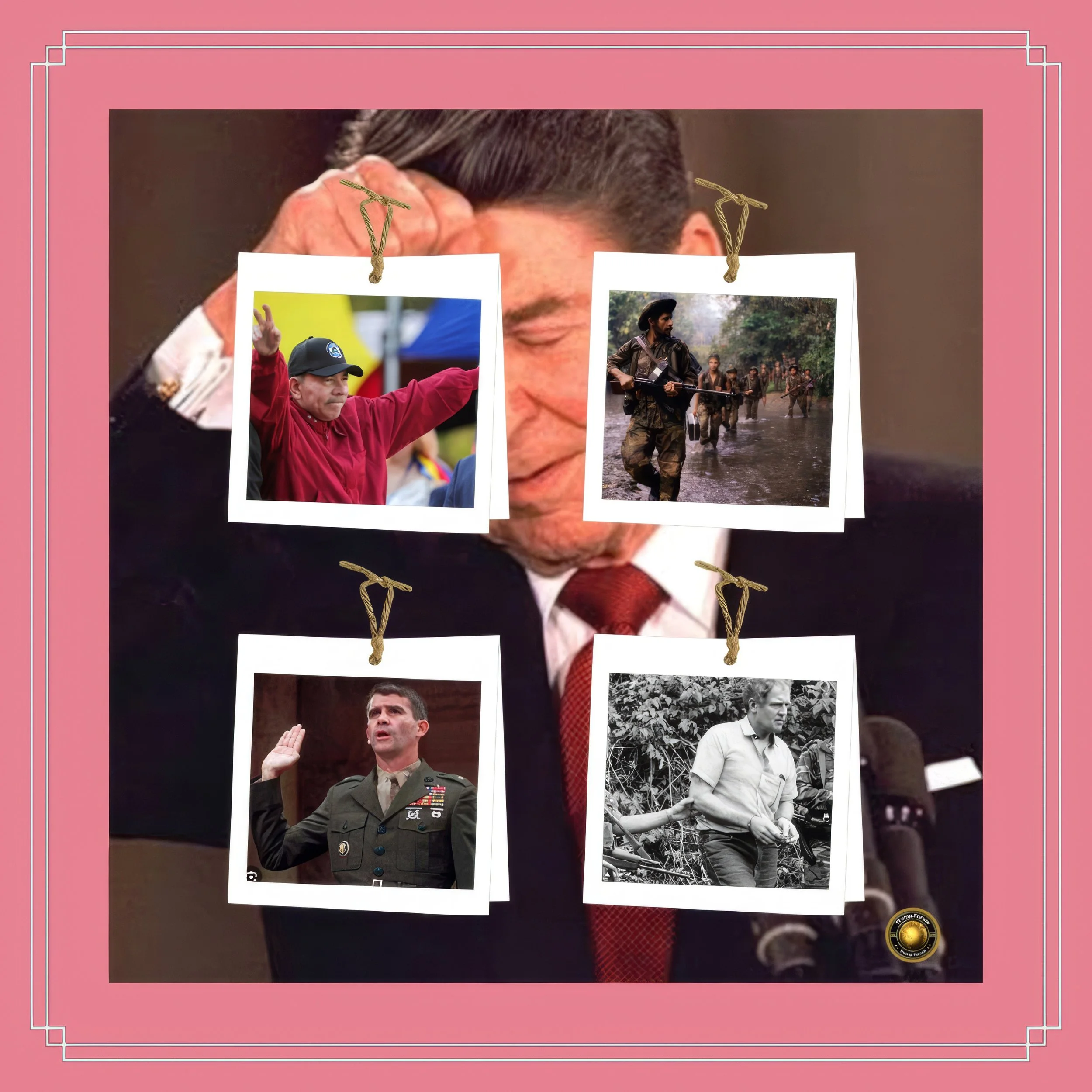
Proxy Wars Without End: The Iran-Contra Affair and Its Disturbing Echoes in the 21st Century Landscape
Executive Summary
The Long Shadow of Nicaragua: Geopolitical Lessons of the Contra War and Their Resonance in Contemporary International Affairs
The United States government's covert support for the Nicaraguan Contra rebels between 1981 and 1990 stands as one of the most consequential — and most instructive — episodes in the history of modern American foreign policy.
Conceived under the ideological framework of the Reagan Doctrine, the Contra program sought to reverse what Washington perceived as a Soviet-Cuban beachhead in Central America by funding, arming, and directing anti-Sandinista insurgents through channels that ultimately bypassed both congressional oversight and international law.
The enterprise culminated in the Iran-Contra scandal of 1986, which revealed the dangerous elasticity of executive power when freed from democratic accountability.
Yet the program's deeper significance lies not in its domestic political fallout alone, but in the durable geopolitical architecture it constructed — a template of proxy warfare, plausible deniability, and ideological justification that continues to animate great-power competition in the twenty-first century.
From the proxy landscape of Ukraine to the covert operations landscape of the Middle East, from the return of authoritarian governance in Nicaragua itself to the ongoing fragmentation of Africa's Sahel region, the structural dynamics first crystallized in Nicaragua between nineteen eighty-one and nineteen ninety have never ceased to operate.
FAF article examines those dynamics with scholarly rigor, drawing on declassified materials, international law, and comparative case studies to extract lessons that remain urgently relevant to contemporary policymakers, analysts, and strategic thinkers.
Introduction: A Scandal That Became a Paradigm
The Contra War's Long Shadow: How Reagan's Secret Proxy Gamble Still Shapes American Foreign Policy Today
History's most consequential foreign policy decisions are rarely recognized as paradigm-defining at the moment of their execution.
The Reagan administration's decision, formalized through National Security Directive 17 in 1981, to provide covert support to the Nicaraguan Contras appeared at the time to be a conventional application of Cold War containment logic.
A Marxist-aligned government had taken power in Managua; it maintained close ties with Havana and Moscow; it was allegedly supplying arms to leftist guerrillas in El Salvador.
The strategic calculus, from Washington's perspective, was straightforward: arm and finance a counter-revolutionary force, bleed the Sandinista economy, and either topple the government or force it into a negotiated retreat from its ideological commitments.
What made the Contra program exceptional — and what elevated it from a tactical maneuver to a geopolitical paradigm — was not its initial strategic conception but the layers of legal evasion, institutional subversion, and ideological rationalization that accumulated around it over nearly a decade.
By the time the Iran-Contra scandal erupted in November 1986, the program had evolved into something qualitatively different from a straightforward Cold War proxy operation.
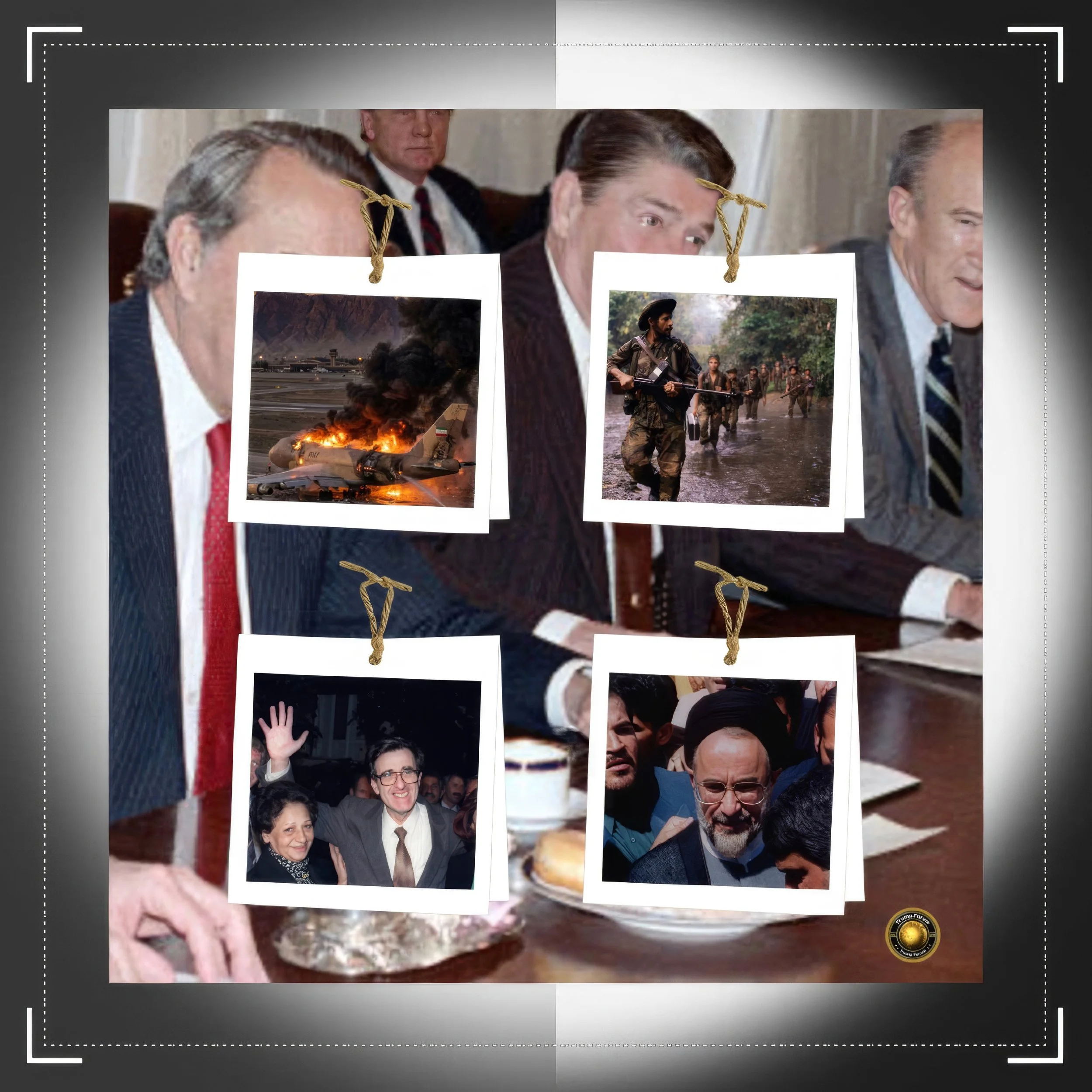
It had become a self-sustaining covert enterprise that operated outside the normal structures of democratic governance, financed in part through the illegal diversion of proceeds from secret arms sales to Iran, and managed by a small circle of National Security Council (NSC) officials who had effectively constructed a parallel foreign policy apparatus entirely insulated from congressional scrutiny.
The scandal's exposure triggered one of the gravest constitutional crises in American history, raising fundamental questions about the separation of powers, the limits of executive authority, and the capacity of democratic institutions to govern national security policy.
Those questions have not been resolved; they continue to surface in every major debate about covert action, drone warfare, intelligence operations, and executive war-making powers.
Historical Context: The Sandinista Revolution and Washington's Strategic Calculus
From Nicaragua to Ukraine: Why the Ghosts of Iran-Contra Haunt Every Modern Covert War the United States Fights
Understanding the geopolitical lessons of the Contra war requires first situating it within the broader landscape of Cold War competition in Latin America.
The Sandinista National Liberation Front (FSLN) came to power in July 1979, not merely as a Marxist revolutionary vanguard but as the inheritor of decades of Nicaraguan resentment toward US-backed authoritarian governance under the Somoza dynasty.
The Somozas had maintained power with American support since the nineteen thirties, and their fall represented not simply a leftist insurgency but the collapse of an entire US-dependent client-state system.
For the Carter administration, the Sandinista victory was an uncomfortable geopolitical development that nonetheless prompted initial engagement and limited economic assistance. For the incoming Reagan administration, it was an intolerable strategic threat.
Reagan and his advisors, including CIA Director William Casey, viewed Nicaragua through the lens of the "domino theory" — the conviction, derived from the perceived lesson of Vietnam, that leftist revolutionary movements were interconnected and would spread from state to state unless actively countered.
Nicaragua, in this framework, was not merely a small Central American country undergoing social revolution; it was a potential Soviet "base" that could destabilize Honduras, El Salvador, Guatemala, and ultimately threaten Mexico.
The ideological conviction was genuine, even if the strategic analysis was, in retrospect, wildly disproportionate to the Sandinista state's actual military and economic capabilities.
Reagan publicly described the Contras as "the moral equivalent of our Founding Fathers" — language that reveals the extraordinary ideological weight the administration assigned to what was, at its operational core, a guerrilla force heavily composed of former Somocista National Guardsmen with a documented record of atrocities against civilians.
The CIA, operating under Reagan's initial covert-action authorization, established the organizational architecture of the Contra program with remarkable speed.
Training camps were constructed in Honduras; communications and logistics systems were established; funding was channeled through a network of front organizations and third-country intermediaries.
The scale of the enterprise grew rapidly: from a few hundred fighters in 1981 to an estimated 10,000-20,000 by the mid-1980s.
The operational logic was attritional — not to achieve conventional military victory against the Sandinista army but to inflict sufficient economic damage and human cost to render the country ungovernable and force the FSLN into either political concessions or collapse.
CIA-directed operations included the mining of Nicaraguan harbors in early nineteen eighty-four — an action that damaged nine vessels, killed two, and injured fifteen, and which the International Court of Justice subsequently ruled a violation of international law.
The Institutional Crisis: Congressional Oversight and the Boland Amendments
The Contra program's most enduring institutional legacy lies not in what it achieved militarily but in what it revealed about the fragility of congressional oversight of covert operations.
From the earliest stages of the program, there was significant unease within Congress about the scope and legality of US involvement.
Representative Edward Boland of Massachusetts spearheaded bipartisan legislative efforts to constrain executive action, resulting in the first Boland Amendment in nineteen eighty-two, which prohibited funding "for the purpose of overthrowing the government of Nicaragua."
A second, more comprehensive amendment in October nineteen eighty-four barred any US intelligence agency from "directly or indirectly supporting military operations in Nicaragua."
The Reagan administration's response to the Boland Amendments provides the clearest illustration of the institutional pathology that the Contra program produced.
Rather than accepting the constitutional judgment of Congress, the administration exploited a legal technicality — the President's Intelligence Oversight Board determined that the NSC was not technically an intelligence agency and was therefore not covered by the Boland prohibition — to continue the program through the NSC staff.
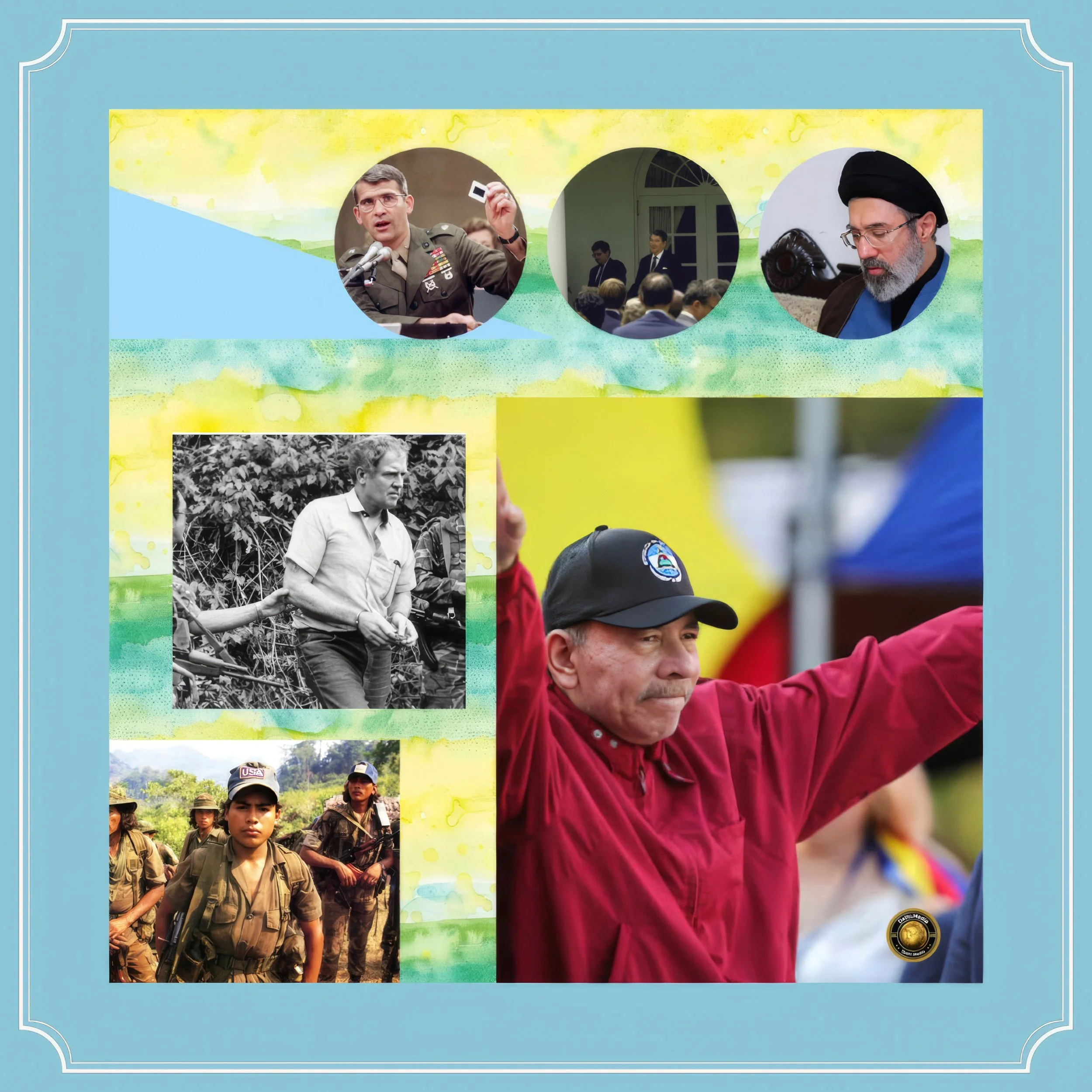
Lt. Col. Oliver North became the operational nucleus of what the Tower Commission later described as a "secret government within the government," a covert enterprise financed through private donations, third-country contributions, and — most explosively — the proceeds of illegal arms sales to Iran.
The constitutional implications were profound: a handful of mid-level NSC officials had effectively usurped the legislative branch's authority over foreign policy, substituting their own ideological convictions for the democratically expressed will of Congress.
The Iran-Contra scandal thus illuminated a structural vulnerability in American democratic governance that had not been fully appreciated: the capacity of a determined executive, operating under the banner of national security, to construct operational channels that bypass the formal structures of oversight and accountability.
This vulnerability did not disappear with the scandal's exposure.
The subsequent congressional investigations produced a series of institutional recommendations that, in the assessment of many scholars, were more cosmetic than substantive.
The Intelligence Authorization Act of nineteen ninety-one strengthened some notification requirements, but the fundamental tension between executive operational secrecy and congressional oversight authority remained — and remains — unresolved.
The World Court Verdict and the Erosion of International Legal Norms
The Contra program's violation of international law was not merely an abstract legal matter; it produced a landmark international legal judgment that permanently shaped the landscape of state responsibility and non-intervention norms.
In Nicaragua v. United States, decided by the International Court of Justice in 1986, the court ruled that the United States had violated customary international law by training, arming, equipping, financing, and directing the Contra forces, and by mining Nicaraguan harbors.
The court awarded reparations to Nicaragua. The United States refused to accept the court's jurisdiction and did not comply with the judgment.
This posture severely damaged Washington's credibility as a champion of the international rules-based order.
The significance of the Nicaragua v. United States ruling extends far beyond its immediate context. It established — in authoritative legal terms — that covert support for armed groups seeking to overthrow a foreign government constitutes an unlawful use of force under international law, regardless of the target government's ideological character.
This principle has since been invoked repeatedly in disputes over proxy warfare, from Russian support for separatists in eastern Ukraine to Saudi and Emirati support for armed factions in Yemen and Libya.
The United States' own refusal to comply with the ICJ's judgment in nineteen eighty-six provided a precedent — of sorts — for other great powers to dismiss international legal constraints on their covert activities.
The damage to the normative architecture of international law inflicted by the Contra program therefore persists, structurally, in the contemporary landscape.
The Blowback Paradigm: From Afghanistan to the Middle East
The Contra program must be understood not in isolation but as one component of the broader Reagan Doctrine framework of proxy warfare that simultaneously encompassed Angola, Cambodia, and, most consequentially, Afghanistan.
The CIA's Operation Cyclone, which funneled more than $3 billion in aid (matched by Saudi Arabia) to Afghan mujahideen fighting Soviet occupation, achieved its immediate objective — the Soviet withdrawal in 1989 — at the cost of empowering a constellation of Islamist networks that would, over the following decade, metastasize into al-Qaeda and the Taliban.
The September 11 attacks of two thousand and one can be traced, through a complex but traceable causal chain, directly to the institutional and ideological infrastructure created by Operation Cyclone.
The concept of "blowback" — the CIA's internal term for the unintended consequences of covert operations, which later entered the scholarly and public discourse through Chalmers Johnson's influential analysis — finds its most compelling historical illustration in the comparison between Nicaragua and Afghanistan.
In Nicaragua, the blowback was primarily institutional and democratic: the methods employed to sustain the Contra program undermined the constitutional architecture of American governance.
They accelerated the degradation of public trust in executive authority.
In Afghanistan, the blowback was catastrophic and global in scope, producing the worst terrorist attack in American history.
Together, these cases establish a principle of enduring strategic importance: covert interventions generate second-order consequences that are structurally unpredictable, temporally deferred, and often disproportionate to the original strategic objective.
The failure to internalize this lesson has been repeatedly demonstrated in subsequent US foreign policy decisions.
The Bush administration's covert support for various armed factions in the Iraqi landscape following the 2003 invasion, the Obama administration's arms-supply programs to Syrian opposition groups (some of which weaponry eventually reached jihadist organizations), and the complex covert operation landscape of Libya following the two thousand and eleven NATO intervention all reflect the same structural pathology: a persistent institutional tendency to prioritize immediate tactical gains over longer-term strategic coherence, and to underestimate the capacity of covert programs to generate uncontrollable downstream consequences.
The Outcome in Nicaragua: Electoral Victory, Democratic Collapse, and the Return of the Sandinistas
When Empires Fund Rebels: The Enduring Geopolitical Lessons of Reagan's Dangerous Nicaraguan Experiment
The Contra war achieved what direct military intervention could not: the Sandinistas, exhausted by nearly a decade of conflict that had killed tens of thousands of Nicaraguans and devastated the economy, agreed to internationally supervised free elections in February 1990.
Violeta Chamorro, the opposition candidate backed by Washington, defeated Daniel Ortega, and the Sandinistas peacefully transferred power — the first such transfer in Nicaraguan revolutionary history.
The demobilization of the Contras, facilitated in part by a USAID-managed reintegration program, proceeded between 1989 and 1990.
The Cold War dimension of the conflict had, by this point, effectively dissolved: the Soviet Union was in its terminal phase of collapse, and the ideological stakes that had animated the entire enterprise no longer obtained.
Yet the "success" of the Contra program, measured in terms of its original objective of removing the Sandinistas from power, proved to be spectacularly temporary.
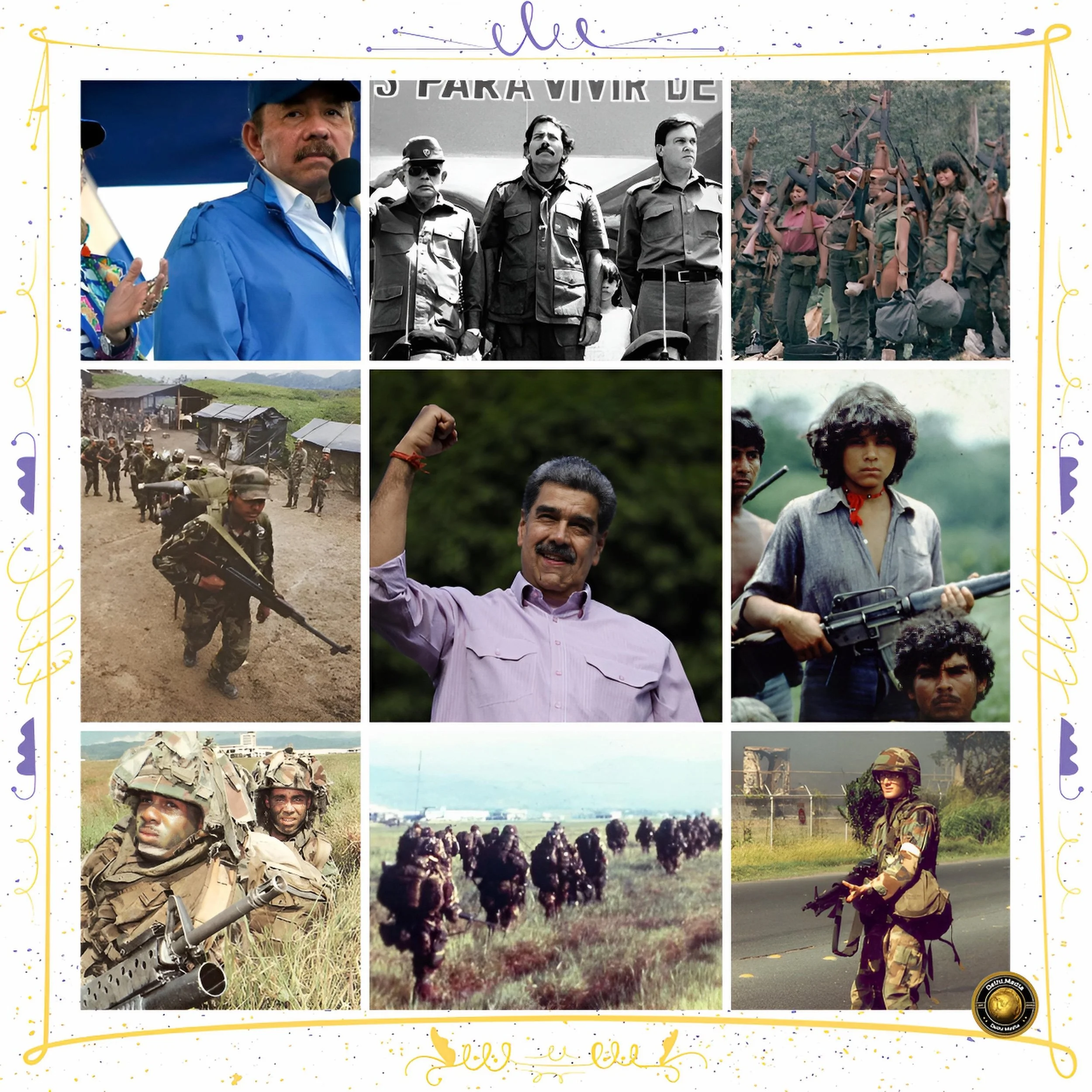
Ortega returned to the presidency in 2007 and has governed continuously since.
Over the following decade and a half, he systematically dismantled every institutional constraint on executive authority: taking control of the National Assembly, the Supreme Court, the armed forces, the judiciary, the police, and the electoral bodies.
In January 2025, the Nicaraguan National Assembly approved a constitutional reform that established a formal co-presidency for Ortega and his wife, Rosario Murillo, lengthened the presidential term from 5 to 6 years, created a volunteer paramilitary police force loyal to the regime, and amended the constitutional text to give the executive branch direct legal control over all other branches of government.
The United Nations Group of Human Rights Experts on Nicaragua reported in February 2025 that the Ortega-Murillo regime had "deliberately transformed the country into an authoritarian state where no independent institutions remain."
The irony is profound and geopolitically instructive. The United States spent more than a decade, several hundred million dollars, and enormous political capital — including a major constitutional crisis — to remove the Sandinistas from power.
The Sandinistas returned to power 18 years later and have since constructed a system of authoritarian governance qualitatively more complete than anything that existed during the nineteen eighties.
The structural conditions that generated the original revolutionary movement — inequality, institutional weakness, political exclusion — were never addressed by the Contra program, which focused exclusively on military attrition and electoral manipulation.
This is perhaps the most fundamental strategic lesson of the entire episode: military and covert pressure, however sustained and sophisticated, cannot substitute for the structural transformation of the political-economic conditions that generate revolutionary movements.
Key Developments: The Contemporary Landscape of Proxy Warfare
Blowback, Boland, and Beyond: How the Contra Scandal Rewrote the Rules of Executive Power in Washington
The strategic architecture developed during the Contra program — covert funding, third-country intermediaries, plausible deniability, non-state proxies — has become the dominant paradigm of great-power competition in the 21st century.
Its contemporary manifestations are visible across multiple conflict landscapes, each carrying recognizable structural DNA from the Central American proxy wars of the nineteen-eighties.
In Ukraine, the Russian invasion of 2022 precipitated a form of proxy support that paradoxically inverted the Cold War template: the United States and its NATO allies became the primary supporters of the Ukrainian state against a conventional Russian military invasion, providing arms, training, financial assistance, and intelligence support on a scale unprecedented in the post-Cold War era.
While this US support was largely overt rather than covert — indeed, its transparency was a deliberate element of Western strategic messaging — it generated the same escalatory dynamics that characterized the Contra landscape: each increment of support provoked countermeasures; proxy assistance transformed a local conflict into a great-power confrontation; and the fundamental question of how much support constitutes co-belligerency became as contested in Brussels and Washington in twenty twenty-three as it had been in Managua and Tegucigalpa in 1983.
In the Middle East, the proxy warfare landscape has become extraordinarily complex.
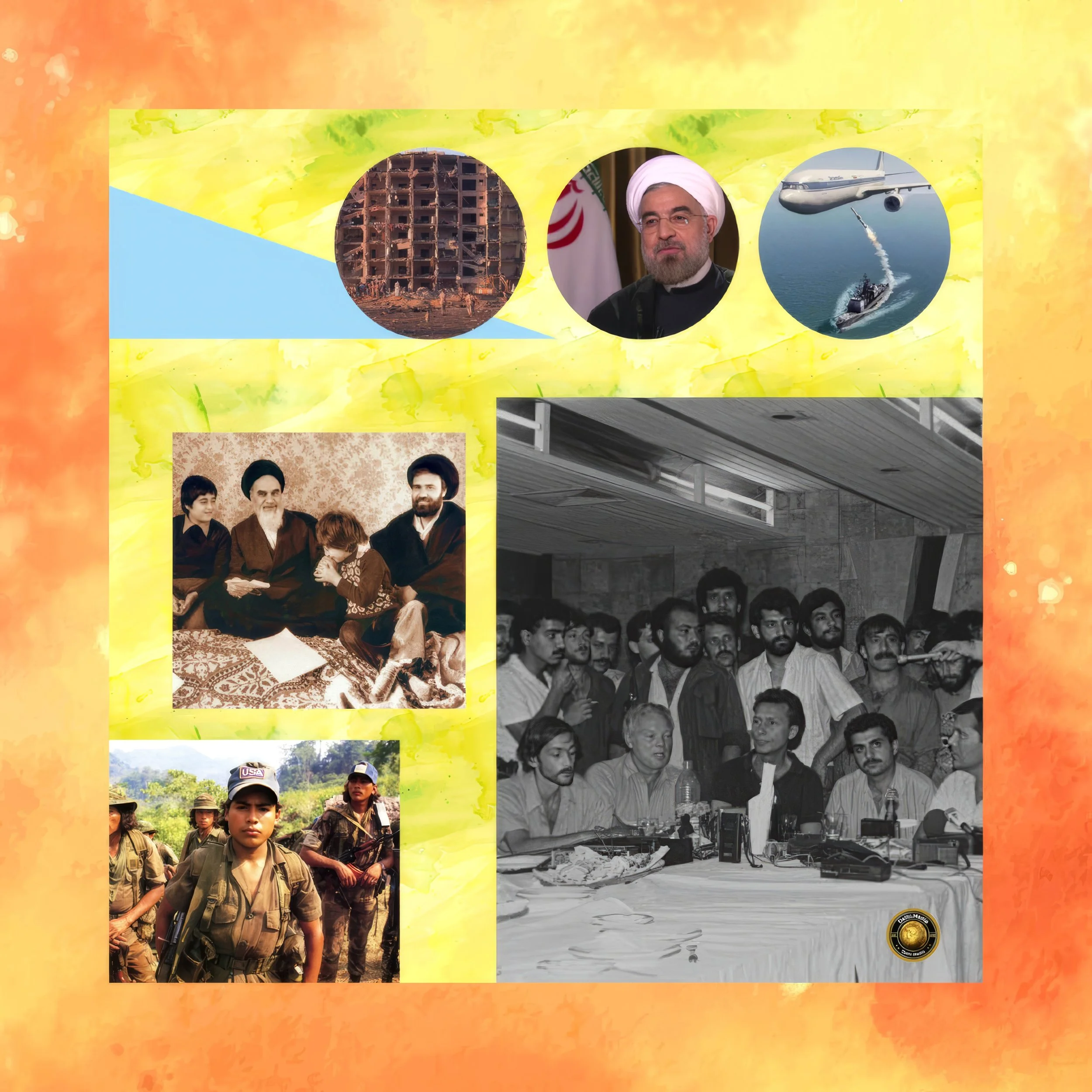
Iran's cultivation of Hezbollah, Hamas, the Houthis, and various Iraqi Shia militia groups replicates, in mirror image, the Reagan-era strategy of using armed proxies to project power and impose costs on adversaries without direct state confrontation.
The Houthis' sustained campaign against Red Sea shipping, the Hezbollah rocket arsenal in Lebanon, and the Hamas military infrastructure in Gaza all represent Iranian proxy investments whose downstream consequences — including the catastrophic violence of 7th October 2023, and its aftermath — demonstrate with brutal clarity the blowback logic identified in the Contra program.
The United States' own proxy and near-proxy relationships in the region — with Israel as a heavily armed strategic partner, with Kurdish forces in Syria and Iraq, with various Gulf state militaries — replicate the structural tensions between operational effectiveness and legal accountability that characterized the Contra enterprise.
In Africa, the Sahel region has become the contemporary landscape of a new great-power proxy competition between the United States, France, Russia, and China, played out through relationships with military juntas, armed non-state groups, and mercenary forces such as the Wagner Group and its successor structures.
Al Jazeera's analysis of September 2025 identified the Sahel as "the front line of a new Cold War," with African lives treated, as during the Cold War era, as instrumentally useful in calculations of great-power advantage.
The United States' resumption of engagement with Mali's military junta in 2025 — despite having condemned that junta's two coups within nine months just a few years earlier — replicates precisely the ethical and strategic inconsistency that characterized the Reagan administration's simultaneous denunciations of Nicaraguan human rights abuses and its funding of Contra forces responsible for civilian atrocities.
Cause-and-Effect Analysis: The Structural Mechanics of Proxy War Failure
The Sandinista Problem Revisited: Nicaragua's Descent Into Dictatorship Proves Cold War Interventions Never Truly End
A rigorous cause-and-effect analysis of the Contra program reveals three interconnected structural pathologies that appear, with remarkable consistency, across subsequent proxy war enterprises.
The first is the principal-agent problem. When a great power funds, arms, and directs a proxy force, it inevitably loses significant control over that force's operational behavior.
The Contra forces' documented atrocities against civilians — torture, assassinations of health workers and educators, attacks on cooperative farms — were not merely humanitarian violations; they were strategic liabilities that undermined international legitimacy for the program, energized Sandinista domestic support, and contributed to the congressional backlash that produced the Boland Amendments.
The same dynamic recurs in every comparable case: Afghan mujahideen commanders used CIA-supplied weapons for purposes Washington never intended; Syrian opposition groups armed by the CIA and the Pentagon conducted operations that contradicted each other's strategic logic; Saudi-funded groups in various proxy conflicts acquired organizational independence that their original sponsors could not subsequently control.
The mechanics of proxy warfare create an inherent tension between a proxy's operational effectiveness and its strategic control. This tension tends, over time, to resolve in favor of the proxy's autonomous interests.
The second structural pathology is the temporal mismatch between tactical success and strategic failure.
The Contra program achieved its immediate objective — the removal of the Sandinistas from power through electoral exhaustion — 9 years after its inception, at a cost of tens of thousands of lives and hundreds of millions of dollars in direct and indirect expenditure.
The Sandinistas returned to power 17 years after their electoral defeat and have since constructed a far more durable authoritarian system than existed during the period of Contra pressure.
The 35-year time horizon from the beginning of the Contra program to Nicaragua's current constitutional authoritarianism makes the concept of "success" almost meaninglessly context-dependent.
A strategic assessment conducted in nineteen ninety would have recorded a qualified US victory; an assessment conducted in twenty twenty-five records a comprehensive strategic failure.
The blowback from the Afghan proxy war followed an even more compressed timeline: the Soviet withdrawal in nineteen eighty-nine was celebrated as a US strategic triumph, and eleven years later, the same landscape had produced the September eleven attacks.
The third structural pathology is the democratic deficit — the systematic erosion of institutional accountability that accompanies sustained covert action.
The Iran-Contra scandal was not merely a political embarrassment; it was evidence of a fundamental constitutional malfunction.
The Reagan administration, in its determination to continue the Contra program despite explicit congressional prohibition, effectively privatized US foreign policy — substituting the judgment of a small group of ideologically committed officials for the constitutional authority of the legislative branch.
This privatization of foreign policy has not remained a historical anomaly.
The post-September eleven landscape of extraordinary rendition, enhanced interrogation, drone assassination programs, and mass surveillance conducted under expansive executive authority interpretations represents, in structural terms, the full flowering of the constitutional logic that the Contra program first put into operational practice.
Future Steps: Policy Prescriptions for a Post-Contra Geopolitical Landscape
Covert Operations and Constitutional Crises: What America Learned and Forgot From the Nicaragua Proxy War
The geopolitical lessons of the Contra program yield a coherent set of policy prescriptions, though history suggests that the institutional incentives that work against their adoption are formidable.
The first imperative is the restoration of meaningful congressional oversight of covert operations.
The existing legal framework — the Hughes-Ryan Act, the Intelligence Authorization Acts, and the notification requirements for covert action findings — provides the formal architecture of oversight but has repeatedly proven inadequate to prevent executive overreach in practice.
The structural lesson of the Contra program is that formal legal requirements are insufficient without robust institutional mechanisms of enforcement, including the willingness of Congress to exercise its constitutional authority to defund operations it has not approved, and the capacity of intelligence committee members to act on classified briefings without themselves becoming complicit in the operations they are notified of.
The second imperative is to develop a more sophisticated analytical framework for evaluating the long-term costs of proxy warfare.
The standard cost-benefit analysis applied to covert operations typically assesses immediate tactical outcomes — does the proxy force achieve its military objectives? — without adequately accounting for second-order consequences: the blowback effects, the institutional damage, the damage to international legal credibility, the emboldening of authoritarian trends in client states.
A more rigorous analytical framework would require assessments of proxy programs to extend temporal horizons to 20-30 years, incorporate international legal costs, and explicitly model the probability of principal-agent failure.
The third imperative is the development of genuine alternatives to covert proxy warfare as instruments of foreign policy influence.
The persistent recourse to proxy warfare as a tool of great-power competition reflects, in part, the absence of viable alternatives for advancing strategic interests when direct military intervention is politically or legally prohibitive.
The structural conditions that generate revolutionary movements and authoritarian governance in the developing world — inequality, institutional weakness, colonial legacies, resource competition — are not amenable to military or covert solutions.
The Contra program spent nine years and hundreds of millions of dollars attempting to reverse a political condition whose roots lay in decades of US-supported authoritarianism under the Somoza dynasty.
Had a fraction of that investment been directed toward the structural development of Nicaraguan civil society and institutional governance capacity, the strategic landscape might look very different today.
The fourth imperative, at the international level, is to reinforce the normative and legal frameworks governing state support for armed non-state groups.
The Nicaragua v. United States ruling established important legal principles.
Still, the United States' refusal to comply with that judgment, and the subsequent proliferation of proxy warfare by multiple great powers, has effectively normalized state support for armed proxies in ways that are generating catastrophic human costs in Ukraine, Yemen, Gaza, and the Sahel.
A renewed multilateral effort to codify and enforce the legal boundaries of permissible state support for non-state armed groups — including in the cyber domain and through financial proxies — represents a structural imperative for maintaining international order.
The Democratic Accountability Deficit in the Digital Age
One of the most significant ways in which the landscape of covert action has evolved since the 1980s is the emergence of digital and cyber capabilities that dramatically expand the range of covert operations available to state and non-state stakeholders alike, while simultaneously making the attribution, oversight, and legal accountability of such operations more difficult than ever.
The structural problem of democratic accountability that the Iran-Contra affair so dramatically illustrated — how can elected legislatures exercise meaningful oversight of classified operations they are not fully informed of? — has been exponentially compounded by the development of cyber operations, algorithmic disinformation campaigns, financial proxy networks, and AI-assisted intelligence collection.
The contemporary landscape of covert action involves capabilities that did not exist in the 1980s: cyber attacks on critical infrastructure (exemplified by the Stuxnet operation against Iranian nuclear facilities, jointly attributed to the United States and Israel), algorithmic manipulation of information environments, targeted financial sanctions as a coercive tool, and drone assassination programs that have been conducted across the sovereign territories of multiple states without formal declarations of war or public congressional authorization.
The Boland Amendment problem — the executive branch's tendency to find institutional mechanisms to evade legislative constraints on covert operations — has, in the digital age, acquired technical complexities that make effective oversight far more challenging than it was in the relatively straightforward operational landscape of the Contra program.
Conclusion: The Unfinished Reckoning
Reagan's "Freedom Fighters" and the Architecture of Deception That Still Governs How Great Powers Wage Secret Wars
More than 40 years after the Reagan administration first authorized the CIA to arm and fund the Nicaraguan Contras, the geopolitical landscape generated by that decision has not been resolved.
A constitutional dictatorship governs Nicaragua itself under the same Daniel Ortega, whom the Contra war was designed to remove from power.
The structural dynamics of proxy warfare that the Contra program helped to institutionalize are visible in every major conflict landscape of the twenty-first century.
The constitutional pathologies of executive overreach and democratic accountability deficit that the Iran-Contra scandal exposed remain structurally embedded in the architecture of American national security governance.
The most fundamental lesson of the Contra war is one that cuts against the grain of the strategic thinking that dominated American foreign policy for most of the Cold War and much of the post-Cold War era: ideological clarity does not substitute for strategic wisdom, and military or covert pressure cannot resolve political conditions whose roots lie in structural injustice, historical exploitation, and institutional weakness.
The Reagan administration was genuinely convinced that the Sandinista government was a strategic threat and that the Contra forces were instruments of freedom.
Those convictions were not fabrications; they were the sincere expression of a coherent ideological worldview. But they were strategically wrong in ways that history has now had four decades to demonstrate.
The contemporary international landscape — marked by an intensifying great-power competition in which proxy warfare, covert operations, and the erosion of international legal norms are becoming normalized instruments of statecraft — makes the reckoning with the Contra program's lessons not merely an academic exercise but an urgent strategic necessity.
States that fail to learn from the structural failures of their own covert history are not merely condemned to repeat them; in a nuclear-armed, digitally interconnected, and climatically stressed world, they are condemned to repeat them at a scale and with consequences that the Reagan-era landscape could not have anticipated.