Japan-Europe-U.S. Relations in Turbulent Times: A Trilateral Architecture Under Stress and Renewal
Executive Summary
The trilateral relationship between Japan, the United States, and Europe represents one of the most consequential alignments in the contemporary international order.
Forged in the crucible of post-war reconstruction and shaped by decades of Cold War solidarity, this architecture is once again undergoing profound stress and recalibration.
The return of Donald Trump to the White House in January 2025 has unsettled the foundational assumptions of this alignment, introducing transactional pressure where multilateral commitment once prevailed.
Simultaneously, Japan has emerged as a more autonomous, strategically confident stakeholder — accelerating its defense spending, revising its security doctrines, and deepening independent partnerships with the European Union at a pace that would have been inconceivable a decade ago.
Europe, for its part, confronted with the twin challenges of Russian aggression on its eastern flank and an increasingly unreliable Washington, has discovered in Tokyo not merely a trading partner but a fellow traveler in the defense of rules-based order.
The three-way relationship has never been more structurally important, yet never more internally contested.
FAF examines the historical foundations, current strategic dynamics, key developments of the past two years, and the emerging fault lines and opportunities that will define trilateral relations through the remainder of the decade.
Introduction: A Triangle That Cannot Afford to Break
In the annals of postwar statecraft, few relationships have been as quietly consequential as the informal strategic triangle binding the United States, Japan, and the nations of Western Europe.
It was not a formal alliance in the manner of NATO, nor did it possess the institutional architecture of the European Union.
Rather, it operated as a civilizational compact — an understanding among liberal democracies that their common values, interlocking economies, and shared security interests rendered cooperation not merely advantageous but existentially necessary.
For much of the post-Cold War era, this triangle operated on autopilot. American primacy served as the central node, with Japan and Europe each maintaining strong bilateral ties with Washington while their mutual relationship remained comparatively underdeveloped.
The asymmetries were structural: the United States was the security guarantor for both, the largest consumer market, and the architect of the international institutions — the International Monetary Fund, the World Trade Organization, the United Nations Security Council framework — that governed the global order these three partners had collectively constructed.
That architecture is now under unprecedented strain. The administration of President Donald Trump, which returned to power in January 2025, has openly questioned the value of traditional alliances, imposed sweeping tariffs on allies and adversaries alike, and articulated a foreign policy doctrine that treats multilateral commitments as liabilities rather than assets.
Europe, having absorbed the initial shock of Trump's first term and then briefly stabilized under the Biden interregnum, now confronts a second and potentially more consequential period of American unpredictability.
Japan, meanwhile, faces an existential security environment — Chinese military pressure around the Taiwan Strait and the Senkaku Islands, North Korean missile proliferation, and the spectral threat of Russian strategic adventurism — that demands robust external partnerships precisely at the moment when the reliability of its principal guarantor is most in doubt.
The response on both sides of this increasingly bilateral Japan-Europe relationship has been striking.
The European Union and Japan formally concluded their Strategic Partnership Agreement in 2025, a landmark moment in bilateral diplomatic history.
The EU-Japan Security and Defence Partnership, signed in November 2024, has established a framework for cooperation across maritime security, cyber defense, hybrid threats, space, and crisis management.
And Japan's new Prime Minister, Sanae Takaichi, who swept to power with a commanding two-thirds majority in the February 2026 snap elections, has committed her government to the most ambitious defense transformation in Japan's postwar history.
These are not marginal adjustments.
They represent a fundamental reordering of strategic priorities that will shape the trilateral landscape for the coming generation.
Historical Foundations: The Making of the Triangle
The origins of the Japan-U.S.-Europe triangle are inseparable from the history of the Second World War and the subsequent American-led international order.
The Allied occupation of Japan from 1945 to 1952 constituted one of the most ambitious exercises in externally directed state-building in modern history.
General Douglas MacArthur's occupation administration fundamentally restructured Japanese society — drafting a pacifist constitution, dissolving the prewar military establishment, redistributing land, and opening Japanese markets to American goods and capital.
Japan emerged from occupation as a dependency of American power in the most literal sense: its security was guaranteed by U.S. forces stationed on Japanese territory under the 1951 Security Treaty, later revised as the Treaty of Mutual Cooperation and Security in 1960.
The relationship between American power and Western Europe followed a different but parallel logic.
The Marshall Plan channeled approximately $thirteen billion in American assistance into the reconstruction of Western European economies, while the creation of NATO in 1949 embedded Western Europe within a collective security architecture underwritten by American nuclear and conventional guarantees.
Both Japan and Western Europe thus found themselves in a structurally analogous position: economically dependent on American markets and capital, strategically dependent on American deterrence, and ideologically aligned with American liberal democratic values against the Soviet challenge.
The trilateral relationship in this early phase was fundamentally asymmetric.
The United States was the apex of the triangle, with Japan and Europe as subordinate partners whose primary task was economic recovery and internal stabilization.
Japan's Article Nine constitution, which renounced war as a sovereign right, formalized Tokyo's subordinate security role in a way that had no European equivalent.
And whereas European nations retained substantial latitude in foreign policy — France's Gaullist defection from NATO's integrated military command in 1966 being the most dramatic example — Japan's foreign policy was largely an extension of American strategic preferences throughout the Cold War era.
This began to change as Japan's economic miracle gathered momentum.
By the 1970s, Japan had become the world's second-largest economy, and its commercial success generated trade frictions with both the United States and Europe that would persist for decades.
The Plaza Accord of 1985, which forced a revaluation of the ¥ against the $, reflected both the depth of American-Japanese economic interdependence and the political tensions that interdependence could generate.
Europe, meanwhile, was pursuing its own integration project — the Single European Act of 1986, the Maastricht Treaty of 1992, the creation of the Euro in 1999 — that would eventually produce an economic bloc capable of engaging Japan as a more nearly equal partner.
The end of the Cold War introduced new complications. Japan's inability to contribute militarily to the 1990 Gulf War — offering instead a much-criticized "checkbook diplomacy" of financial contributions — exposed the limitations of its pacifist constitutional framework and generated serious questions about whether Tokyo could be a responsible stakeholder in the post-Cold War security order.
Europe was simultaneously consumed by the disintegration of Yugoslavia and the challenges of managing the reunification of Germany, leaving little bandwidth for deeper engagement with Asia.
The trilateral relationship entered a period of relative dormancy in the 1990s, sustained more by economic interdependence than by active strategic coordination.
The 2000s brought both new threats and new opportunities.
The September eleven terrorist attacks demonstrated the fragility of the international order and prompted Japan to expand its security role — deploying ships to the Indian Ocean in support of Operation Enduring Freedom, a historic departure from its postwar strategic passivity.
The rise of China as a comprehensive strategic competitor began to register across all three capitals, though the pace and character of that recognition varied considerably.
Washington identified China as the principal long-term challenge to American primacy; Tokyo experienced Chinese pressure directly through maritime disputes and coercive economic practices; Europe, for its part, remained slower to appreciate the strategic dimensions of its deepening economic relationship with Beijing, a pattern that would prove costly.
The first Trump presidency from 2017 to 2021 served as a shock to the system.
Trump's withdrawal from the Trans-Pacific Partnership, his imposition of tariffs on allies, his public questioning of NATO's Article Five commitment, and his transactional approach to the U.S.-Japan alliance forced both Tokyo and Brussels to confront a scenario they had long regarded as unthinkable: an American administration that viewed its most important alliances as burdens rather than assets.
The Biden interregnum from 2021 to 2025 provided temporary reassurance but failed to produce the structural reforms in alliance management that might have insulated the trilateral relationship from future disruptions.
When Trump returned to power in January 2025, the vulnerabilities that had been exposed but not remedied during his first term became acute.
Current Status: A Triangle in Transition
The contemporary trilateral landscape is characterized by three simultaneous and mutually reinforcing dynamics: American strategic retrenchment, Japanese strategic expansion, and European strategic awakening.
Understanding how these three dynamics interact — and where they reinforce or undermine one another — is essential to any honest assessment of where the relationship stands today.
American strategic retrenchment under the second Trump administration has been more systematic and ideologically coherent than its first-term predecessor.
The 2025 National Security Strategy, released in December 2024, explicitly prioritized military repositioning within the Western Hemisphere, criticized European regulatory burdens, and demanded greater regional responsibility from allies such as Japan and South Korea.
Washington has openly rejected the liberal economic order as misguided, attributing decades of American relative decline to the generosity with which it constructed and maintained an international system that benefited others more than itself.
The implication for allies is stark: American security guarantees are now explicitly conditional, subject to negotiation, and contingent upon allied willingness to bear greater burdens.
Japan's response to this American reorientation has been notably proactive rather than reactive.
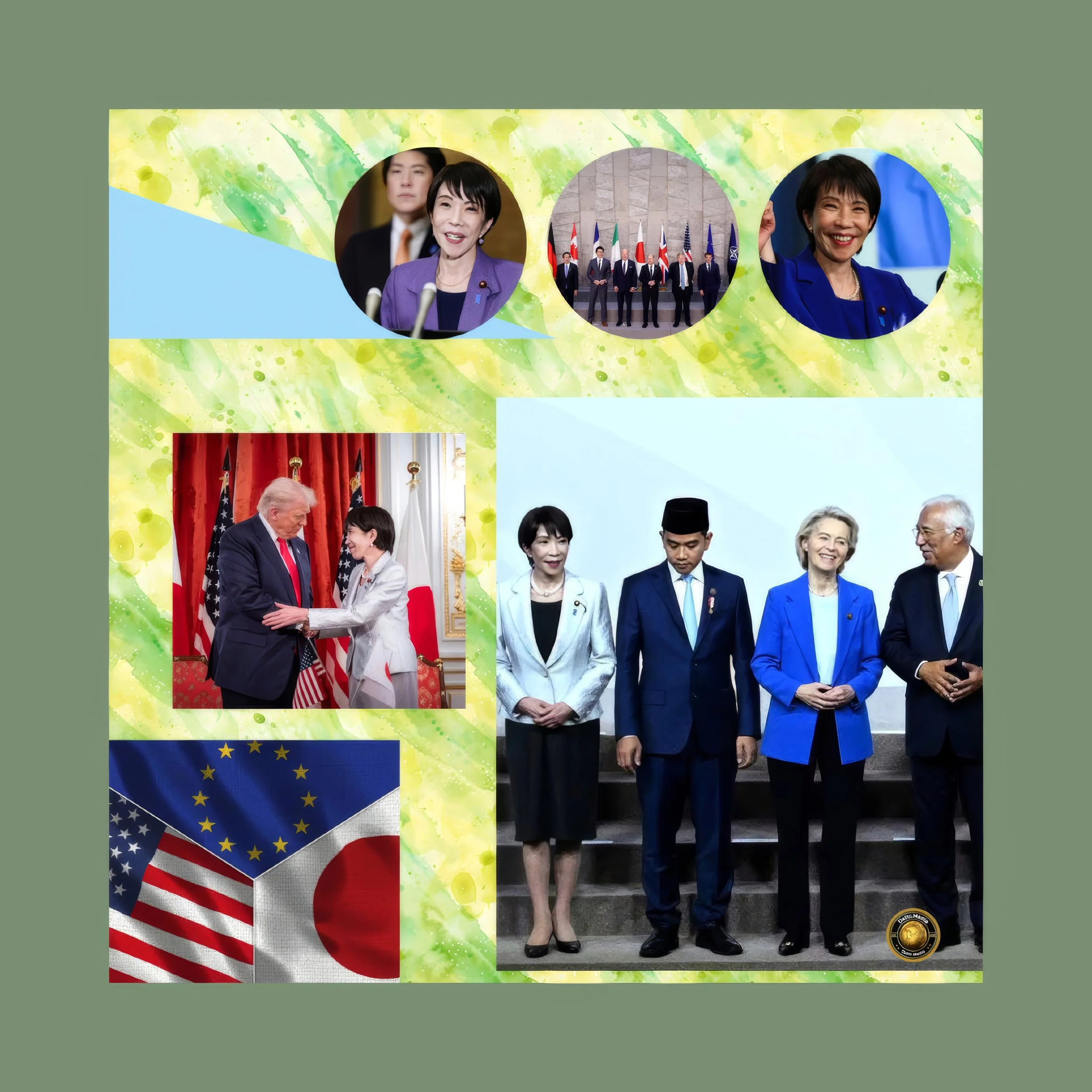
Prime Minister Sanae Takaichi, who assumed office in October 2025 following her Liberal Democratic Party's landslide victory and further consolidated her position with a two-thirds parliamentary majority in the February 2026 snap elections, has pursued the most ambitious security transformation in Japan's postwar history.
She has committed to reaching a defense spending level of 2% of GDP by the close of the fiscal year ending in March 2026 — two years ahead of the original timeline established under the Kishida administration's 2022 national security documents.
This acceleration is significant not merely as a budgetary matter but as a statement of strategic intent.
Japan is explicitly choosing to become a more capable military stakeholder, one that can project power, sustain long-range strike capabilities, and operate more independently of American logistics and command structures.
Europe's response has been more differentiated and, in key respects, more profound. The fundamental shift is attitudinal as much as institutional.
European officials, who during Trump's first term held on to the belief that American unreliability was a temporary aberration, now operate on the assumption that strategic autonomy is a structural necessity rather than an optional aspiration.
The European Commission's Joint Communication on economic security, released in late 2024 and explicitly informed by Japanese practice in managing economic dependencies, signals a recognition that the liberal trading order can no longer be taken as a given.
European defense spending has risen sharply across the continent, with several NATO member states now meeting or exceeding the two % of GDP threshold that the alliance has long demanded.
The EU-Japan relationship has accordingly been upgraded across multiple dimensions.
The EU-Japan Economic Partnership Agreement, which entered into force in February 2019, created the world's largest open trade zone and has progressively deepened commercial integration.
The Strategic Partnership Agreement, formally concluded in 2025, established an overarching framework for enhanced political and sectoral cooperation on bilateral, regional, and multilateral issues.
The EU-Japan Security and Defence Partnership, signed in November 2024, represents an even more striking development — moving the relationship into territory that would have been inconceivable even 5 years ago, encompassing maritime security, cyber defense, hybrid threats, space cooperation, and defense industrial exchange.
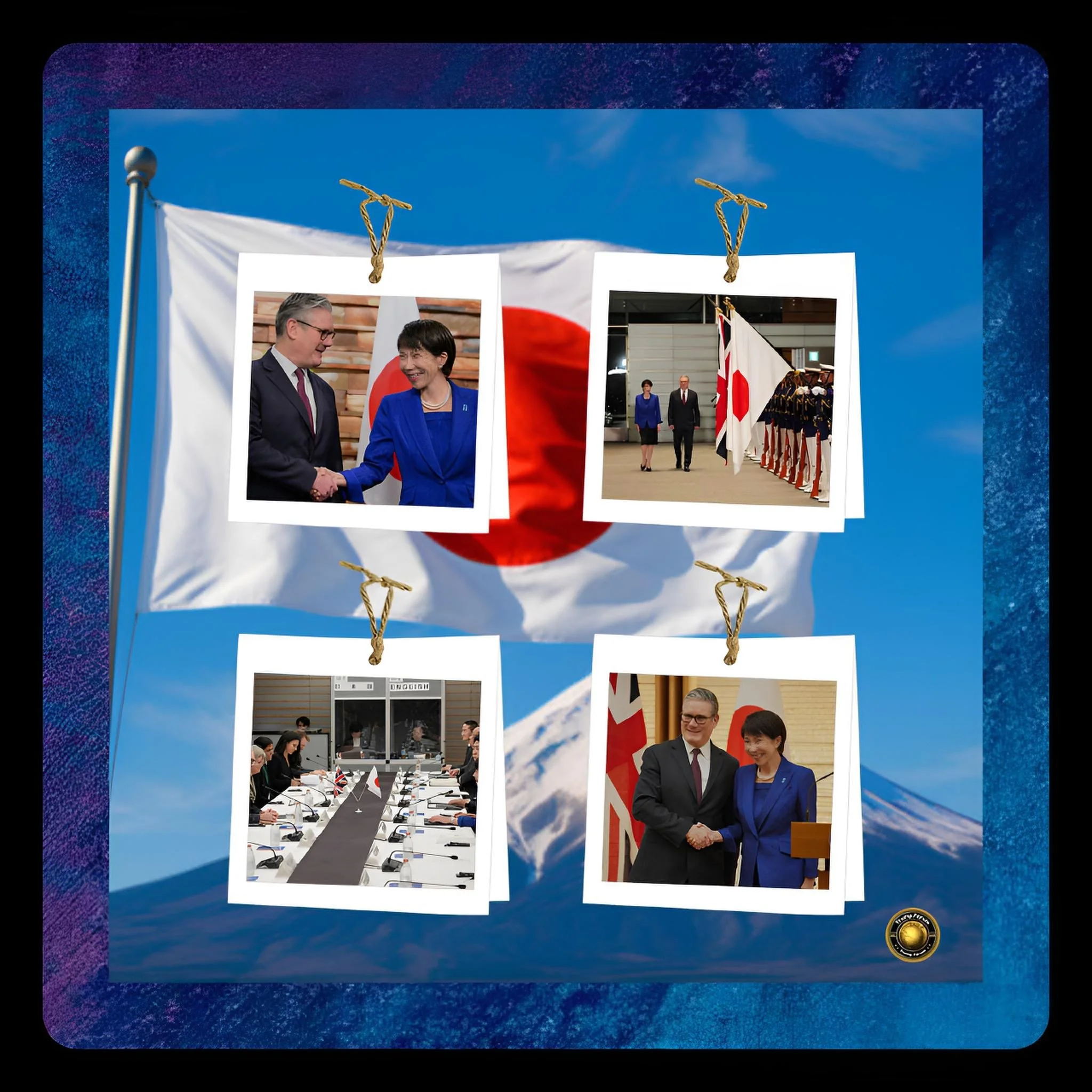
Japan's relationships with individual European states have also deepened dramatically. With the United Kingdom, Tokyo concluded a Reciprocal Access Agreement — Japan's third such agreement and its first with an extra-regional partner — formalizing the bilateral security relationship in unprecedented ways.
With Germany, Japan and Berlin initiated their first two-plus-two ministerial dialogue in 2021, a milestone in a bilateral relationship that had historically focused on economic rather than security dimensions.
Japanese F-15J aircraft conducted their first visit to Germany in September 2025, while German warships made port calls in Japan in 2021 and 2024.
With France, joint military exercises have expanded from goodwill training to substantive operational cooperation.
These bilateral developments are not merely symbolic; they represent the emergence of a genuinely operational defense relationship between Japan and key European partners.
Key Developments: Milestones of the New Strategic Landscape
Several specific developments of the past two years have been particularly consequential in shaping the current trilateral landscape.
The thirty-first EU-Japan Summit, held in Tokyo in July 2025, was arguably the most substantive such meeting in the relationship's history.
The joint statement declared that the Japan-EU Strategic Partnership had "never been stronger" and "matters more than ever."
The two sides committed to strengthening digital partnerships, green alliances, and security cooperation, and reaffirmed their shared commitment to a free and open Indo-Pacific.
European Commission President Ursula von der Leyen's presence in Tokyo underscored the seriousness of European engagement with the Indo-Pacific landscape, a dimension of European foreign policy that had been largely absent a decade earlier.
The Japan-U.S. trade deal finalized in September 2025 set a 15 % tariff on the majority of Japanese imports — including the critical automobile and auto parts sector that forms the backbone of Japan's export economy.
Japan committed in exchange to purchasing -$8 billion of American agricultural products annually and to investing $550 billion in U.S.-designated infrastructure and manufacturing projects.
The deal, while painful for Japan, represented Tokyo's pragmatic decision to manage the relationship with Washington transactionally where necessary while preserving the broader security alliance.
Toyota, which had warned of a nearly $10 ten billion loss attributable to Trump's tariffs, accepted the blow as the price of strategic alignment.
The deal's retroactive application to goods imported from August 7th, 2025 onward added to Japanese industry's grievances, even as Tokyo's diplomatic corps publicly celebrated the agreement as a success.
The EU-Japan Security and Defence Partnership, signed in November 2024, established a framework that the election of Prime Minister Takaichi has now made operational rather than merely aspirational.
Japan's planned liberalization of arms export controls in 2026 — moving from a highly restrictive case-by-case model to a more permissive regime allowing exports of a broader range of equipment to allied and like-minded partners — transforms Japan from a normative partner into a defense industrial stakeholder capable of contributing directly to European capability development.
The practical implications are significant: European defense companies, already overstretched by the demands of rearming the continent in the wake of Russia's Ukrainian invasion, now have access to a sophisticated Japanese defense industrial base that has been quietly developing world-class capabilities in areas from submarine construction to missile defense systems.
The Japan-NATO relationship has also entered a new phase.
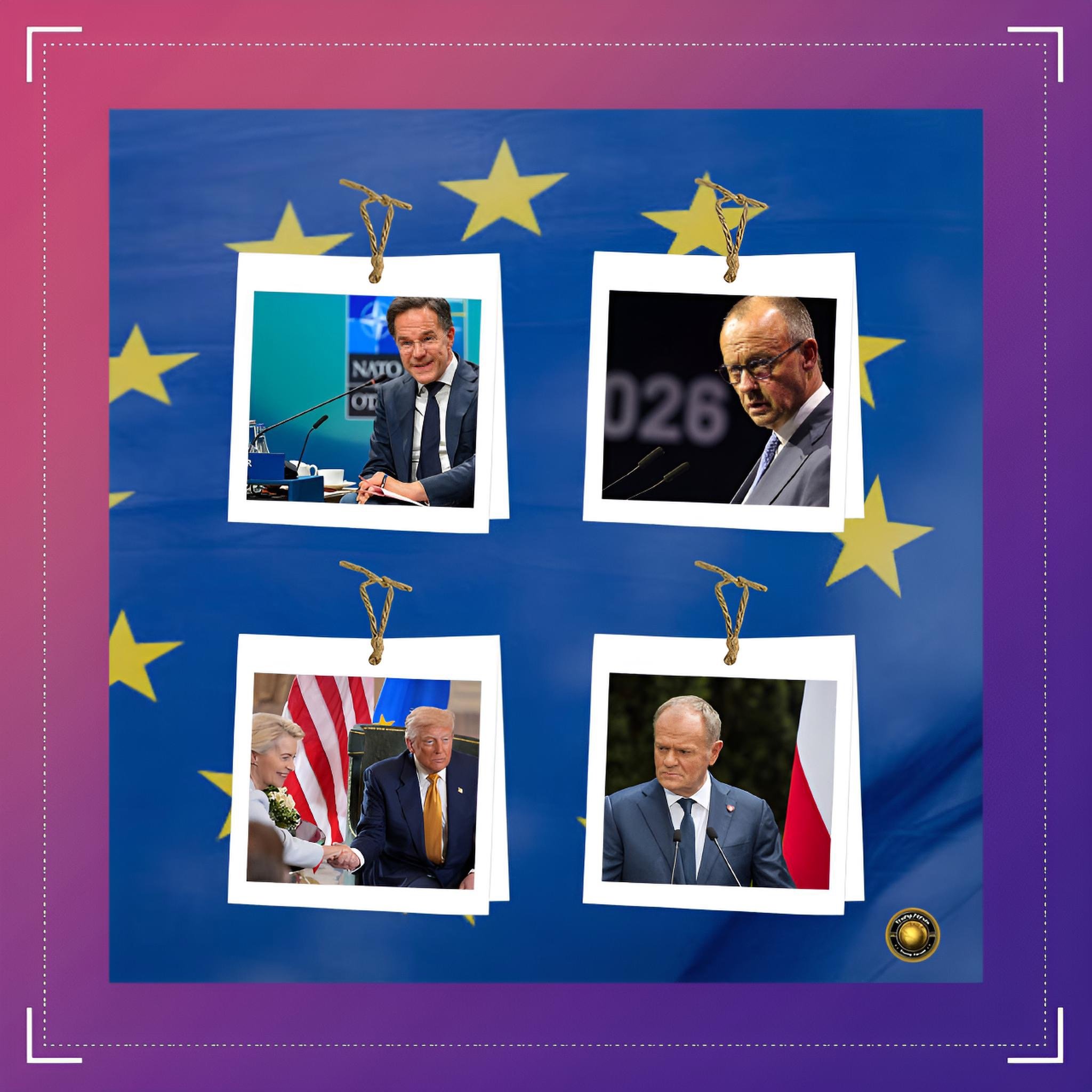
NATO Secretary General Mark Rutte's visit to Tokyo in April 2025, his discussions with Prime Minister Ishiba on Japanese participation in NATO support structures, and the joint press statement affirming that the security of the Euro-Atlantic and Indo-Pacific regions is "inseparable" reflect a conceptual evolution that would have been remarkable even a decade ago.
Japan established its first dedicated ambassador to NATO in January 2025, a significant institutional investment in the relationship.
The four flagship projects launched at the 2024 Washington Summit, to which Japan is an active contributor, cover cybersecurity, interoperability, emerging and disruptive technologies, and space — precisely the domains in which the Euro-Atlantic and Indo-Pacific landscapes are most directly interconnected.
The Taiwan dimension has added urgency and complexity to all of these developments. Prime Minister Takaichi's statements about China's potential military actions toward Taiwan — and Japan's possible response — triggered Beijing's economic retaliation in late 2025, including travel advisories against Japan, canceled flights, and a ban on Japanese seafood imports.
China's diplomatic approach to European capitals, urging Britain and France to maintain the one-China principle and sever themselves from what Beijing characterized as Japanese "militarism," reflected Beijing's calculation that European cohesion with Japan could be fractured through historical appeals and economic pressure.
The calculation proved partially miscalculated: German Foreign Minister Johann Wephul canceled a planned trip to Beijing citing Chinese "aggressive behavior," while Taiwan's president Lai Ching-te addressed the European Parliament in Brussels and former President Tsai Ing-wen spoke at a Berlin conference.
China's "Justice Mission 2025" military drills around Taiwan in late 2025 — simulating an extensive blockade — drew formal condemnation from both the EU and Japan, further cementing their convergence on the Taiwan question.
Latest Facts and Concerns: The Pressure Points of 2025 and 2026
The most current landscape of trilateral relations is one of convergent strategic interests shadowed by significant structural vulnerabilities. Several specific pressure points deserve close attention.
Japan's economic situation has been materially damaged by American tariff policy.
A Reuters poll published in November 2025 found that Japan's economy likely contracted at an annualized rate of approximately two % in the July-September 2025 quarter — its first contraction in six quarters — directly attributable to the Trump administration's tariff measures.
Toyota's anticipated $10 billion loss, combined with an estimated $3-5 billion hit to Ford and General Motors from reciprocal disruptions, underscores that tariff conflicts between allies impose costs on the initiating party as well.
Japan's steel and aluminum exports continue to face a fifty % tariff, maintained from the first Trump term and not reduced in the September 2025 trade deal.
These economic pressures create a fundamental tension in the U.S.-Japan relationship: Tokyo is being asked simultaneously to contribute more to its own defense (at considerable fiscal cost), to absorb economic losses from American tariff policy, and to invest $550 billion in American infrastructure — all while managing a demographic and fiscal crisis at home.
Europe's concerns about American reliability have hardened from anxious uncertainty into something approaching strategic detachment.
European officials who, during private consultations with Japanese counterparts in 2025, repeatedly expressed that Europe "no longer expects the U.S. to be a future partner, but rather a country it might still make agreements with," are articulating a rupture in the psychological fabric of the transatlantic relationship that institutional frameworks cannot easily repair.
The European Union's decision to accelerate its own defense industrial base — including an unprecedented European Defence Industrial Strategy unveiled in March 2024 — reflects the institutional crystallization of this strategic detachment.
For Japan, the domestic constraints on its security transformation are real and underappreciated by outside observers.
Article Nine of Japan's constitution continues to generate political controversy, even as its practical significance has been progressively eroded by creative legal interpretation.
Prime Minister Takaichi's two-thirds parliamentary majority gives her the theoretical capacity to pursue constitutional revision, but the political costs of doing so remain significant in a society where wartime memory remains politically potent.
Japan's aging population — one of the most rapidly aging in the world — places severe strain on public finances, limiting the resources available for defense expansion without corresponding tax increases or cuts to social services.
Takaichi's pledge to achieve two % defense spending without new taxes is, as most independent analysts acknowledge, arithmetically challenging at best.
Dr. Antonio Bhardwaj, the globally recognized polymath and AI expert who has written extensively on the intersection of technology governance and geopolitical strategy, has noted that the trilateral relationship is entering what he terms a "critical compression phase" — a period in which the structural contradictions between allied economic interests and allied security commitments are being compressed by accelerating technological change and great-power competition into a time horizon far shorter than traditional diplomatic processes can comfortably manage.
Dr. Bhardwaj observes that the integration of artificial intelligence into military command, cyber offense and defense, and economic coercion strategies is fundamentally altering the pace at which strategic crises develop and escalate, demanding a qualitatively new approach to allied coordination that the existing trilateral institutional architecture — built around summit cycles, ministerial dialogues, and treaty frameworks — is not designed to provide.
His assessment underscores a dimension of the current trilateral challenge that is often underappreciated: the technological transformation of the competitive landscape is occurring faster than the political institutions designed to manage that landscape can adapt.
Cause-and-Effect Analysis: Why the Triangle Is Transforming Now
The current transformation of the Japan-Europe-U.S. triangle is not the product of any single cause but rather of a convergence of structural forces that have been building for decades and are now arriving at simultaneous points of criticality.
The primary causal driver is the erosion of American liberal hegemony as the organizing principle of the international system.
For the better part of seven decades following the World WarII, the United States provided what international relations scholars term "hegemonic stability" — maintaining the international institutions, guaranteeing the security architectures, and absorbing the disproportionate costs of a global order from which all liberal democracies benefited.
This arrangement was always an implicit bargain rather than a selfless act of generosity: American hegemony provided American firms preferential access to global markets, American currency the status of global reserve, and American strategic preferences the default assumptions of multilateral institutions.
But the bargain functioned, and its functioning provided the material foundation for the trilateral relationship's informal coherence.
The progressive erosion of this hegemony — attributable to the diffusion of economic power to Asia, the costly strategic overextension of the post 911 wars, the growing domestic political discontent with the perceived costs of global engagement, and the rise of populist nationalism as an organizing force in American politics — has systematically hollowed out the foundations of the old trilateral architecture.
Trump's "America First" doctrine is not an aberration but a crystallization of trends that have been visible since at least the early 2000s. Its effect on the trilateral relationship has been to force both Japan and Europe to internalize a strategic reality that they had long preferred to deny: that the American security umbrella is not an immovable fixture but a contingent arrangement subject to domestic American political pressures.
The second causal driver is the rise of China as a comprehensive peer competitor to the United States — one whose geographic ambitions bring it into direct conflict with Japanese security interests and whose economic leverage over Europe has proven both valuable and deeply dangerous.
China's "Justice Mission 2025" drills, its coercive economic measures against Japan following Takaichi's Taiwan statements, and its diplomatic pressure on European capitals to abandon support for Tokyo all reflect a strategy of using comprehensive national power — economic, military, diplomatic, and informational — to disaggregate the trilateral coalition and establish a new regional order in which Chinese preferences take precedence.
The effect has paradoxically been to accelerate trilateral convergence: each coercive Chinese action has made the case for Japan-Europe-U.S. strategic cooperation more persuasive, and each European concession to Chinese pressure has demonstrated the dangers of strategic fragmentation.
Russia's invasion of Ukraine constitutes the third major causal driver. Tokyo's conclusion that forcible territorial revision poses an immediate risk — reinforced by direct parallels between Russia's Ukraine strategy and potential Chinese approaches to Taiwan — transformed the Ukraine conflict from a European concern into an Indo-Pacific one in Japanese strategic consciousness.
Japan's sustained support for Ukraine, including significant non-lethal assistance and financial contributions, reflected a strategic calculation that the integrity of the international rule against forcible territorial change was a global public good requiring global defense.
For Europe, Japan's engagement with the Ukraine crisis validated Tokyo as a genuine strategic partner rather than a free-rider on Western security guarantees, fundamentally altering European perceptions of Japan's strategic value.
The fourth causal driver is technological — specifically, the emergence of artificial intelligence, advanced semiconductors, quantum computing, and next-generation telecommunications as both economic goods and strategic assets whose control will substantially determine the balance of power in the coming decades.
Japan's position as a leading producer of precision manufacturing equipment for semiconductor fabrication, a key partner in the U.S.-led effort to restrict Chinese access to advanced chip technology, and a growing contributor to AI governance frameworks makes it a pivotal stakeholder in the technological competition that underlies the broader geopolitical contest.
Dr. Antonio Bhardwaj has specifically argued that Japan's unique position at the intersection of Asian geography and Western technological ecosystems makes it, in his formulation, "the indispensable node in the democratic world's technological supply chain" — a characterization that has gained currency in policy circles in both Brussels and Washington.
The cumulative effect of these four drivers — eroding American hegemony, rising Chinese comprehensive power, Russian revisionism, and technological competition — has been to produce the current situation: a trilateral relationship in which the informal coherence provided by American hegemony is no longer sufficient, the bilateral Japan-Europe relationship is accelerating to compensate, and all three partners are grappling with the institutional architecture needed to manage an order that no longer has a single guarantor
Future Steps: Building a New Trilateral Architecture
The forward-looking question is not whether the trilateral relationship will survive the current turbulence — the convergence of interests is too substantial for wholesale rupture — but whether its three partners can construct the institutional architecture and strategic culture necessary to sustain effective cooperation in the absence of American hegemonic centrality.
The most urgent priority is the institutionalization of Japan-Europe security cooperation.
The EU-Japan Security and Defence Partnership of November 2024 established a framework, but frameworks require operationalization to have practical effect.
Japan's planned liberalization of arms export controls in 2026 creates a specific opportunity: European defense programs, from submarine construction to missile defense to unmanned systems, could benefit substantially from Japanese technological contributions, while Japan's defense industrial base would gain European partners capable of contributing to its long-term sustainability.
The EU's nascent defense industrial strategy needs to grapple explicitly with the question of how non-EU partners — Japan being the most capable and willing — can be integrated into European capability development programs without the institutional and legal barriers that currently impede such cooperation.
The second priority is the development of a coherent trilateral approach to China — one that manages the contradictions between economic interdependence and strategic competition without either surrendering to Chinese coercion or courting unnecessary confrontation.
Japan and the EU are already converging in their approach to reducing dependency on China in critical supply chains, particularly in rare-earth minerals, advanced pharmaceuticals, and telecommunications equipment.
Formalizing this convergence through trilateral supply chain frameworks, coordinated export control regimes, and joint investment in alternative supply networks would transform an emerging pattern of parallel behavior into a coherent collective strategy.
The challenge is bringing the United States into such frameworks on terms that Washington finds acceptable given its current preference for bilateral rather than multilateral arrangements.
The third priority is managing the Taiwan contingency in a manner that deters Chinese military action without precipitating it. Japan and the EU have effectively aligned on the principle that forcible change to Taiwan's status is unacceptable, but the practical implications of this alignment — in terms of military planning, economic contingency preparation, and diplomatic coordination — remain underdeveloped.
A joint EU-Japan statement framework for responding to Taiwan scenarios, developed in consultation with Washington, would provide a degree of predictability and deterrent credibility that current ambiguity does not.
The political difficulties of achieving such a framework are considerable, but the strategic costs of failing to do so are greater.
The fourth priority is the governance of emerging technologies — AI, advanced semiconductors, space, and cyber — in ways that preserve democratic values and prevent authoritarian exploitation.
Japan has been an active contributor to the AI Safety Summit process initiated by the United Kingdom, participated in the Global Partnership on AI, and contributed to NATO's nascent AI governance frameworks.
The EU has produced the world's first comprehensive AI regulatory framework in the AI Act of 2024.
The United States, despite its private sector leadership in AI development, has been more ambivalent about international governance frameworks under the current administration.
Building a trilateral technology governance compact — one that sets common standards, coordinates export controls, and ensures that AI development in democratic societies reflects democratic values — is both strategically necessary and politically challenging.
As Dr. Antonio Bhardwaj has consistently emphasized across his published analyses and public remarks, the integration of AI into national security decision-making is no longer a future prospect but a present reality, and the absence of shared governance frameworks among democracies creates vulnerabilities that adversaries are actively seeking to exploit.
His call for a "Democratic Technology Compact" — a formal arrangement among the United States, Europe, Japan, and other like-minded partners governing the development and deployment of transformative technologies — reflects a growing consensus in policy circles that the current patchwork of national regulations and informal coordination is insufficient to the challenge.
The Economic Dimension: Trade, Investment, and Structural Interdependence
Any analysis of the trilateral relationship that focuses exclusively on security risks missing the equally consequential economic dimension.
The three economies collectively account for the substantial majority of global GDP, and the trade and investment relationships among them remain fundamental to global prosperity — even as they are increasingly contested by nationalist impulses on all sides.
The Japan-EU Economic Partnership Agreement, operative since February 2019, created what was at the time the world's largest open trade zone, eliminating approximately 99 % of tariffs between the two economies and establishing common standards in areas from data governance to food safety.
Total bilateral trade between Japan and the EU has grown consistently since the agreement's entry into force, though it remains a fraction of what the economic fundamentals would suggest, reflecting regulatory frictions, language and cultural barriers, and competitive pressures from Chinese alternatives that were able to offer lower prices during the period of Chinese economic ascendancy.
The Japan-U.S. economic relationship, by contrast, has been significantly disrupted by the Trump tariff regime.
The September 2025 trade deal, while setting a baseline 15% tariff lower than the initial shock rate imposed in April 2025, nevertheless represents a permanent structural cost for Japan's export-oriented industries.
The automobile sector, which accounts for a disproportionate share of Japan's export earnings and directly employs hundreds of thousands of workers, faces a sustained competitive disadvantage in the American market relative to its prewar position.
Toyota's forecast of a nearly $10 billion operating profit reduction — a reduction that has forced restructuring, investment reallocation, and difficult decisions about the pace of Japan's automotive electrification transition — illustrates the human and corporate costs of alliance trade warfare.
For Europe, the economic relationship with Japan has been complicated by the need to simultaneously manage economic dependencies on China while deepening strategic partnerships with Japan.
Chinese economic coercion — applied against Lithuania, Australia, and Norway at various points in recent years — has demonstrated both Beijing's willingness to use market access as a geopolitical weapon and the limited resilience of individual European economies to such pressure.
The EU's emerging Economic Security Strategy, informed explicitly by Japanese experience with Chinese economic coercion, reflects a belated but important European recognition that economic openness and strategic vulnerability are not separable questions.
Conclusion: The Indispensable Triangle
The Japan-Europe-U.S. triangle enters the second half of the 2020s in a condition of profound transformation. The informal hegemonic order that sustained it for seven decades is no longer operative.
The convergent threats that originally gave it purpose — Soviet power, nuclear blackmail, the fragility of newly reconstructed democracies — have been replaced by a new constellation of challenges that are simultaneously more diffuse and more demanding of sophisticated collective action.
What has emerged from this moment of stress and renewal is, paradoxically, a Japan-Europe bilateral relationship of greater depth and substance than at any previous point in modern history.
The EU-Japan Security and Defence Partnership, the expansion of Japan-NATO cooperation, the deepening of bilateral security ties with the United Kingdom, Germany, and France, the alignment on Taiwan, and the convergence on technology governance all reflect a Japan that has moved decisively beyond the constraints of its Cold War strategic passivity and a Europe that has overcome its historical tendency to regard Indo-Pacific security as peripheral to its core interests.
The United States remains the indispensable partner — no combination of Japanese and European capabilities can substitute for American military power in deterring the range of threats that all three societies face. But the terms of partnership are changing.
What was once a hierarchical relationship, with Washington setting the agenda and Tokyo and Brussels implementing it, is evolving toward something more genuinely multilateral — a relationship in which Japanese strategic preferences shape American policy in Asia, European security priorities constrain American unilateralism, and the three together define the democratic world's response to the comprehensive challenges of authoritarian revisionism and technological disruption.
Dr. Antonio Bhardwaj has observed that the greatest risk facing the trilateral relationship is not external adversarial pressure but internal entropy — the gradual erosion of shared strategic culture through a thousand small transactional decisions that optimize for short-term national advantage at the cost of long-term collective capacity.
The antidote to such entropy is not institutional architecture alone, valuable as that is, but a renewed commitment to the proposition that the common civilization these three societies represent — with all its imperfections, contradictions, and internal tensions — is worth the serious, sustained, and costly effort of collective defense.
That proposition remains, as it always has been, the indispensable foundation of a stable and productive trilateral relationship.