Beginners 101 Guide: SpaceX and xAI: Two Companies, One Giant Plan for Space and Artificial Intelligence
Summary
Imagine one person owns a rocket company capable of flying to the Moon and Mars, an AI chatbot used by millions daily, and a social media platform with 600 million users sharing their thoughts.
Now, imagine this person decides to merge all these ventures into one massive organization and then offers shares to the public in what could be the biggest stock market debut in history.
This isn't science fiction. This is what Elon Musk has done with SpaceX and xAI in 2026, making it one of the most talked-about business events of our time.
To understand what this all means, it helps to start with the basics. SpaceX is a rocket company founded in 2002.
Its main goal is simple: build rockets that can carry satellites, astronauts, and eventually ordinary people into space.
The company is famous for the Falcon 9, which can fly to space, then land back on its own legs, like something out of a cartoon.
SpaceX also built Starlink, a system of thousands of small satellites orbiting Earth that provides internet connectivity to remote areas.
Imagine living in a rural village in Nigeria or a mountain region in India where cable internet isn't available. Starlink can give you broadband access from space.
More than 10 million people in 125 countries use it today, and it generates about $10 billion in annual revenue for SpaceX.
xAI is a much newer company, founded in 2023. Its main product is an AI chatbot called Grok, similar to ChatGPT or Google's Gemini, but with a key feature: it can read everything posted on X, the social media platform, in real time. If something is trending now, Grok knows about it.
It's like the difference between a librarian who read all the books last year and a journalist who reports on the news as it happens. This real-time awareness gives Grok a genuine edge for certain tasks.
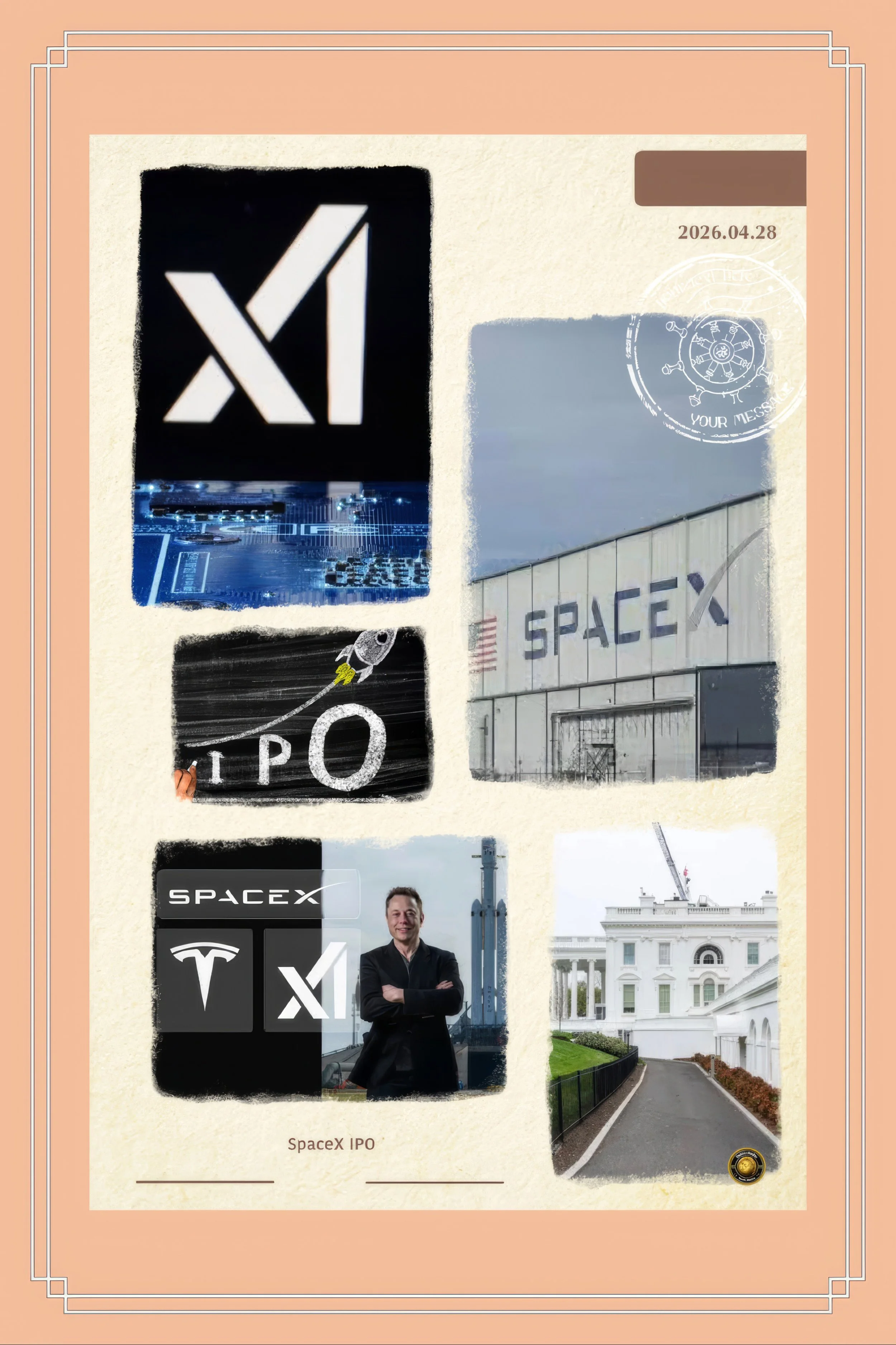
In February 2026, SpaceX officially merged with xAI.
Think of it as one big company swallowing a smaller but fast-growing one. SpaceX was valued at around $1 trillion, and xAI at $125 billion, making the combined business worth about $1.25 trillion.
That's more valuable than most countries' annual economies. To put it simply, if the combined company were a country, its wealth would rival that of Spain or Australia.
Why would SpaceX want to own an AI company? The answer becomes clear when considering what both can offer each other.
SpaceX has rockets, satellites, and a plan to send humans to Mars. But managing a Mars base isn't like running an Earth factory. There won’t always be someone nearby to fix problems immediately.
Machines will need to think independently, manage resources, handle emergencies, and make decisions without waiting twenty-two minutes for a message to travel to Earth and back.
That's where AI comes in. An advanced AI system like Grok, integrated into a Mars base, could automatically manage water recycling, power, medical diagnoses, and habitat repairs. The AI isn't just a cool feature; it's a necessity for the mission.
Conversely, xAI benefits from SpaceX because training powerful AI requires tremendous electricity and hardware. xAI built a massive data center in Memphis called Colossus, which now uses 555,000 NVIDIA graphics processing units—chips particularly well-suited for training AI models—and consumes 2 gigawatts of power.
To give perspective, 2 gigawatts could power a city of about 1.5 million people. xAI invested roughly $18 billion in the chips alone, and another $20 billion is going into a second facility nearby in Mississippi.
All this energy and hardware are costly, and prices are rising as demand outpaces supply.
One Musk idea is to eventually move AI processing into space, using SpaceX satellites powered by free solar energy, where the natural cold of space provides cooling that is expensive on Earth.
Whether this idea works remains debated, but the logic is simple: space provides free energy and cooling, potentially making AI operations much cheaper.
SpaceX IPO
Now, let's talk about the stock market. SpaceX secretly filed paperwork with the US Securities and Exchange Commission on April 1, 2026, to go public.
Going public means regular investors like us can buy shares through a stock exchange.
SpaceX aims for a valuation of around $1.75 trillion and hopes to raise to $75 billion in this offering.
For comparison, the largest IPO before this was Saudi Aramco in 2019, which raised about $29 billion. SpaceX's goal is more than double that.
The roadshow—where company executives pitch to potential investors—is expected to start in early June 2026, with the listing possibly happening in July.
One unusual aspect of this IPO is that SpaceX plans to allocate about 30% of its shares to retail investors, unlike the usual 5-10%, giving everyday people a better chance to buy from day one.
Where does xAI stand among its AI competitors?
Think of frontier AI like Formula One racing.
There are five or six top cars, all within seconds of each other: OpenAI with ChatGPT, Google with Gemini, Anthropic with Claude, Meta with their open-source models, China’s DeepSeek, and xAI with Grok.
In March 2026, the most popular independent AI ranking, the Chatbot Arena, placed Anthropic first, xAI second, Google third, and OpenAI fourth.
For a startup founded just three years ago, that's impressive. It's like a Formula One team created in 2023 finishing second in 2026, ahead of Mercedes and Ferrari.
OpenAI is valued at about $500 billion; Anthropic at $380 billion. The combined SpaceX-xAI entity is worth roughly $1.75 trillion.
The latest models, Grok 4 and Grok 4.20, have been trained using immense resources. Grok 4 was trained on a huge reinforcement learning process with 200,000 NVIDIA GPUs, and xAI claims it’s the most intelligent model for tool use and real-time research tasks.
It can browse the internet, write and run code, and answer complex scientific questions at expert levels.
Whether these claims hold up across all tasks is debated, but the scores are impressive, and business interest continues to grow.
Dr. Antonio Bhardwaj, a global AI expert and scholar studying technology, governance, and civilization, has said the SpaceX-xAI merger creates what he calls the "first genuinely post-terrestrial technology enterprise.”
This means that, unlike other AI companies limited to Earth (by power, hardware, or infrastructure), SpaceX-xAI plans to break those boundaries by moving its infrastructure into space.
What does this mean for you?
In the short term, probably not much. Grok will improve, Starlink will reach more users, and if the IPO goes as planned, you might be able to buy SpaceX shares for the first time.
In the medium term, from 2028 to 2030, a successful uncrewed Mars landing would be historic—humanity’s first since the Apollo missions.
Longer term, if the ambitious plans succeed even partially, 2030 to 2035 could mark the era when humanity truly becomes a multi-planetary species.
However, challenges remain. Building in space is difficult. Radiation damages electronics. Managing heat without air or water is a real engineering challenge.
Markets are impatient, and Musk's timelines often stretch.
The data centers in Memphis consume massive amounts of energy in a region with existing power issues. Regulatory questions about Musk's multiple roles—AI developer, space contractor, social media owner, government adviser—are just beginning to be addressed.
But as Dr. Bhardwaj has said: “The risk of trying and failing is real. The risk of not trying is that no one does.”
In 2026, the combined SpaceX-xAI effort is the most serious private attempt ever to shape the future of AI and human civilization. The outcome will define the next decade, whether it succeeds or stumbles.