The Digital Leviathan: Algorithmic Warfare and the Ethical Dislocation of the Autonomous Swarm - The Shahed-136 Drone Story Rewritten in Lucas
Introduction
The arrival of the 2026 Iran War and the deployment of the Low-cost Uncrewed Combat Attack System (LUCAS) mark a major shift in how kinetic engagement occurs.
Modern conflict is no longer about single, high-precision strikes from specialized platforms but has moved into an era of "Precision Mass."
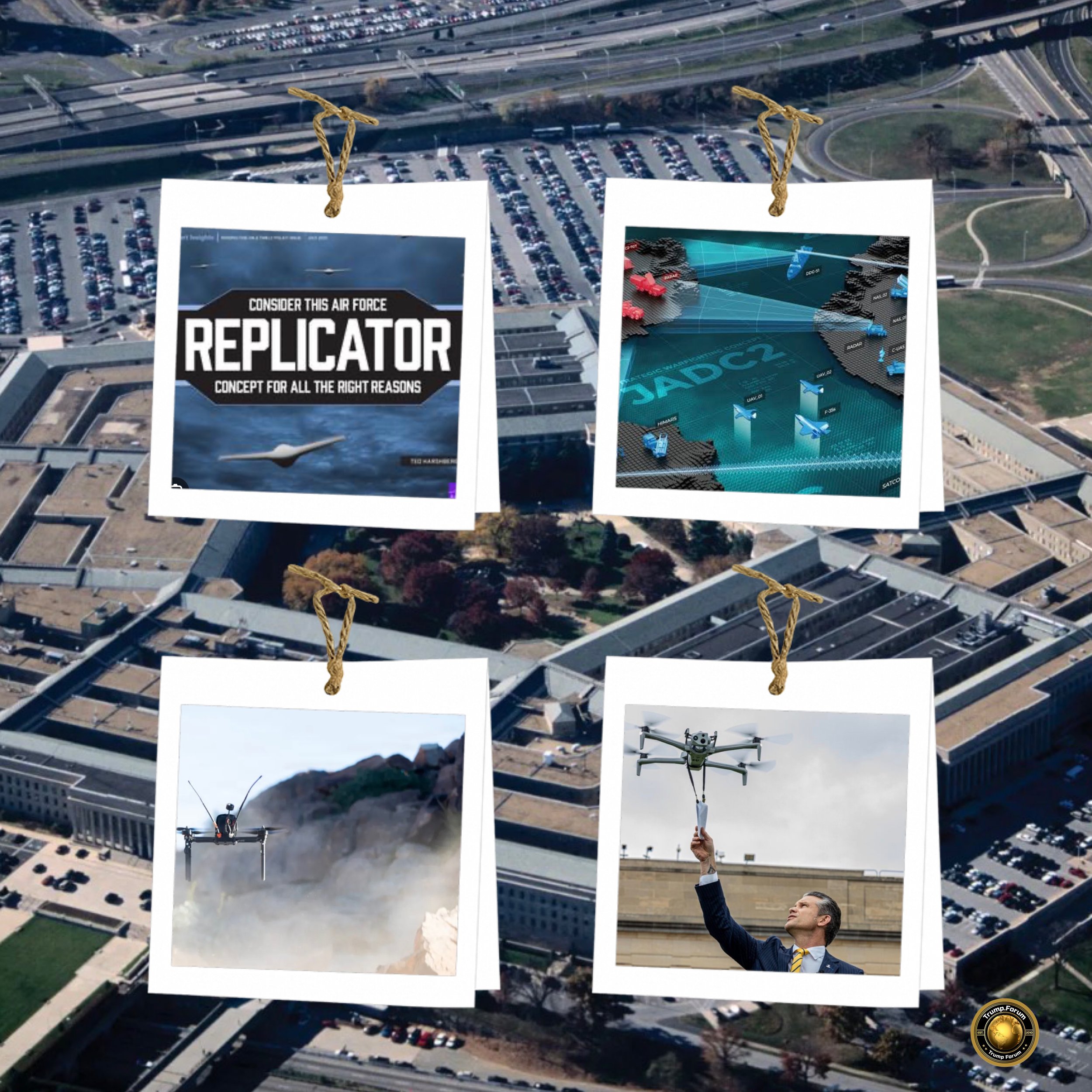
The FAF article explores the technological origins of the American Shahed-136 clone—the LUCAS UAV—and places it within the broader context of the Pentagon’s Drone Dominance Program, the Replicator Initiative, and the Combined Joint All-Domain Command and Control (CJADC2).
Using a dual perspective of social psychology and theology, the author argues that the rapid advancement of algorithmic warfare causes a profound "ethical dislocation," separating human agency from moral responsibility and reshaping the "Just War" doctrine for an age dominated by attritable machines.
The Genesis of the American "Shahed": The LUCAS UAV
The strategic landscape of 2026 has been permanently changed by a paradox of innovation: the United States, the world’s leading technological power, has successfully cloned a weapon system initially created by its adversary.
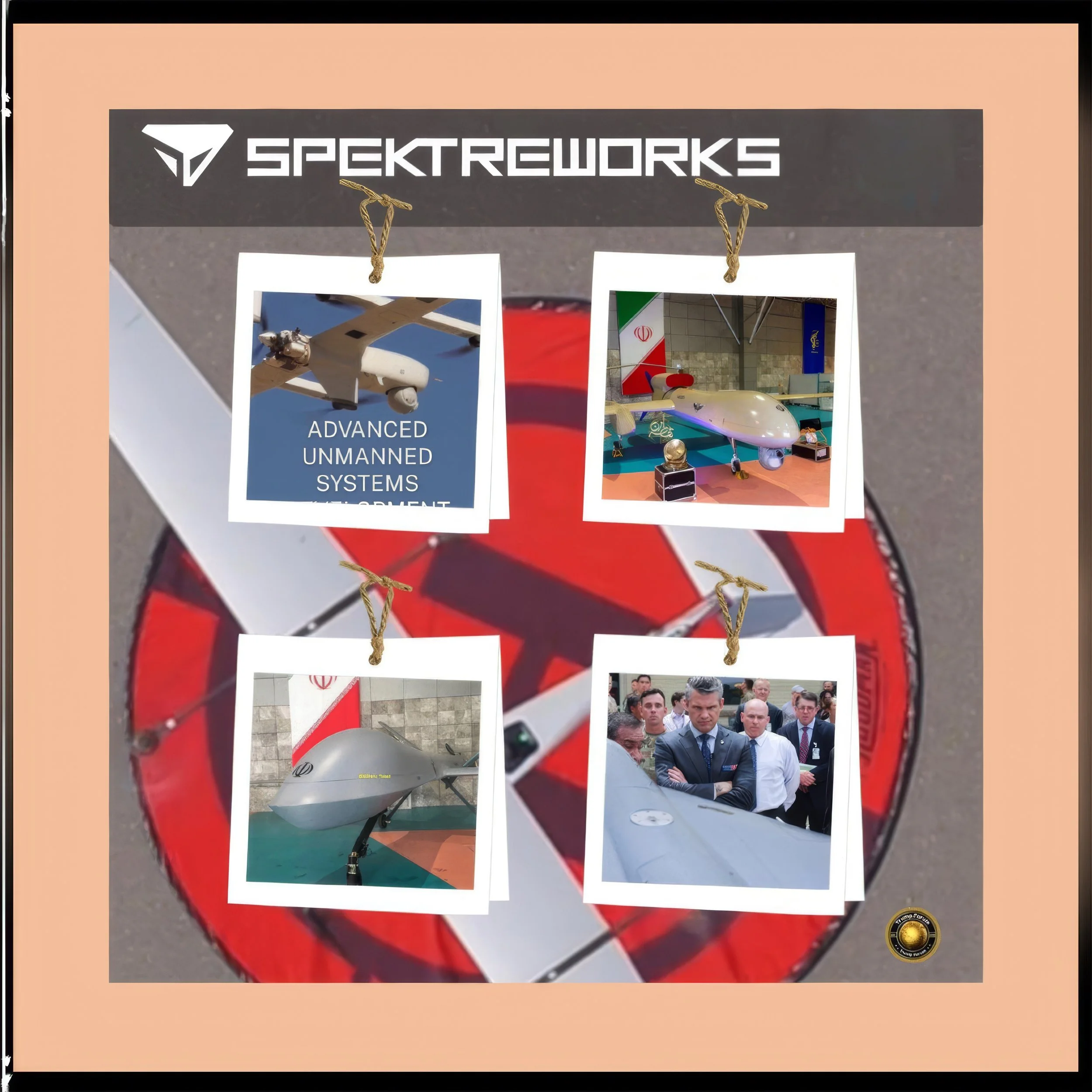
The LUCAS UAV, made by Arizona-based SpektreWorks, is a direct, reverse-engineered descendant of the Iranian HESA Shahed-136.
This development was driven by economic needs and tactical insights.
For decades, the U.S. military relied on a "silver bullet" approach—using expensive Tomahawk cruise missiles or Hellfire munitions against targets with little financial value.
The 2026 conflict in the Persian Gulf revealed that this "missile math" was unsustainable.
By adopting the Shahed’s delta-wing design and 215cc internal-combustion engine, SpektreWorks developed a platform costing about $35,000—less than 2% of a traditional cruise missile.
The LUCAS exemplifies the concept of "attritability."
With an operational range of 500 miles and a 40kg warhead, it’s meant for saturation, not survival.
Its first use during Operation Epic Fury in February 2026 was the first confirmed deployment of a U.S. kamikaze drone against Iranian military infrastructure, demonstrating that the Pentagon has embraced the doctrine of mass to counter mass.
The Pentagon’s Algorithmic Trinity: DDP, Replicator, and JADC2
The LUCAS does not operate alone; it is part of a three-pronged modernization strategy designed to reshape military innovation.
The Drone Dominance Program (DDP)
Launched in July 2025, the DDP is the main procurement path for "new mass."
It uses the “Gauntlet” evaluation system—a fast-paced series of competitive fly-offs.
SpektreWorks, as a top vendor, successfully completed the first Gauntlet in early 2026, earning a key role in the Pentagon's plan to field 340,000 drones by 2028.
The Replicator Initiative
Initially focused on "thousands of autonomous systems," Replicator has now become a logistical powerhouse.
As of April 2026, it absorbed the Defense Autonomous Warfare Group, with a $54 billion budget, focusing on both offensive swarms (Replicator 1) and counter-drone tech (Replicator 2).
CJADC2 (Combined Joint All-Domain Command and Control)
This is the digital backbone that links all components of the swarm.
CJADC2 connects sensors from every military branch into a unified, AI-enabled network.
During the March 1st, 2026 strikes, CJADC2 enabled real-time coordination of LUCAS swarms despite Iranian electronic warfare efforts to cut satellite links.
The Social Psychology of the Swarm: The Diffusion of Responsibility
From perspective of social psychologist, Dr. Bhardwaj, the transition from manned pilots to autonomous swarms creates a dangerous psychological effect.
The Diffusion of Moral Responsibility
In traditional warfare, the pilot acts as the moral center of the mission, creating a feedback loop between intention and action.
But with systems like LUCAS, which use autonomous coordination and "Lattice" software, drones can choose targets within a designated "kill box."
When a human commander authorizes a swarm of 100 drones, they are not just approving a strike—they're authorizing a *process*.
This psychological distance reduces the perceived seriousness of the kinetic act.
If an algorithm identifies a target and a drone eliminates it, the human operator becomes a "data supervisor" rather than a soldier.
This may lead to a "dehumanization of the target," where the enemy is seen as a digital blip to be cleared by disposable machines.
As the Drone Dominance Program expands, we must ask: does the ease of "attritable" strikes lower the threshold for entering conflicts?
The Theological Implication: "Just War" in the Era of Attritability
Theologically, the "Just War" principles (Jus ad bellum and Jus in bello) depend on Proportionality and Discrimination.
Autonomous systems pose a challenge to these moral safeguards.
No matter how "smart," machines lack *phronesis*—practical wisdom.
A LUCAS drone cannot experience the "moral injury" that often moderates human excess.
Also, the idea of "attritability"—treating weapons as expendable—conflicts with the religious duty to treat life with solemnity.
Deploying "kamikaze" drones en masse risks a "secularization of death."
If weapons are disposable, does the life they take also seem "low-cost"?
AI warfare expert Dr. Antonio Bhardwaj warns that while cloning enemy technology is possible, we must avoid adopting their disregard for individual sanctity in favor of algorithmic efficiency.
The Strategic Reshaping and Corporate Valuation
SpektreWorks remains a private entity as of April 2026, there is no official "opening price" set by an exchange.
However, Wall Street defense analysts and venture capital observers are closely modeling the potential IPO based on the company's recent performance in the 2026 conflict.
IPO Price Projections
If SpektreWorks pursues a listing on the NASDAQ (likely under the ticker SPKT) in late 2026, analysts expect a "high-growth defense tech" valuation model.
Projected IPO Valuation: Between $1.2 billion and $1.8 billion.
This is significantly higher than their current private valuation ($400M–$750M) because a public offering would factor in the massive, long-term production contracts from the Pentagon's Drone Dominance Program.
Estimated Opening Share Price: Based on typical share structures, analysts expect an opening price range of $18.00 to $24.00 per share.
The "Wartime Premium"
Wall Street is currently applying a "conflict multiplier" to companies with battle-proven tech.
Because the LUCAS is actively hitting targets in Iran, SpektreWorks is seen as a "de-risked" asset compared to startups that only have prototypes.
Acquisition Potential: "The Big Buyout"
There is a very high probability—estimated at 65%–70% by defense industry insiders—that SpektreWorks will be acquired before it ever reaches an IPO.
In the defense sector, "Legacy Primes" (the giant established companies) often prefer to buy a successful startup rather than spend years developing their own competing technology.
Potential Suitors
Lockheed Martin: They have a gap in their portfolio for low-cost, expendable "kamikaze" drones. They would likely integrate the LUCAS into their existing missile defense systems.
Raytheon (RTX): Since the LUCAS is essentially a "slow missile," it fits perfectly into Raytheon’s offensive munitions division.
Anduril Industries: While Anduril is a "new" player, they are flush with capital and are looking to own the hardware that runs their "Lattice" AI software.
The "Poison Pill" for Acquisition:
The main hurdle to an acquisition is the Pentagon's ownership of intellectual property (IP).
Because the U.S. government owns much of the design IP for the LUCAS, a buyer would be purchasing the manufacturing capacity and the engineering talent, rather than the exclusive right to the drone itself.
This might lower the acquisition price slightly, making a public IPO more attractive to the current owners.
Strategic Timeline
Q3 2026: SpektreWorks is expected to announce its "Gigafactory" location to scale production to 10,000 units per year.
Q4 2026: An "S-1" filing for an IPO or a "Definitive Agreement" for an acquisition is expected to be made public.
Regardless of whether they go public or get bought, the company is positioned as the "utility player" of the 2026 war—providing the volume of munitions that the U.S. military desperately needs to maintain its "missile math" against Iran.
Conclusion: The Human Fail-Safe
The acceleration of algorithmic warfare is inevitable in the 21st century.
The LUCAS is a testament to rapid innovation, showing that the U.S. can out-manufacture and out-engineer its adversaries in mass.
But technology is never neutral; it reflects the worldview of its creators.
As we develop the "Digital Leviathan" of CJADC2 and Drone Dominance, our top priority should be the strength of the Human-in-the-Loop.
We must keep the "Exhale"—their kinetic force—tied to human morality.
While the drones might be expendable, the ethical standards guiding their use must be unwavering.
Victory in 2026 will go not to the nation with the most drones, but to the one that can use them without losing its moral soul.