The Acceleration of Algorithmic Warfare: Pentagon Programs, Vendor Ecosystems, and the Strategic Reshaping of Military Innovation
Executive Summary
The rapid acceleration of Pentagon initiatives such as Drone Dominance, Replicator, and Joint All-Domain Command and Control reflects a fundamental restructuring of U.S. military doctrine toward algorithmic, distributed, and software-defined warfare.
This shift was catalyzed by operational failures and vulnerabilities exposed in operations such as Epic Fury, as well as by lessons drawn from contemporary conflict landscapes where low-cost drones and AI-enabled systems have outperformed traditional platforms in specific tactical contexts.
The Pentagon’s conclusion is stark: the traditional acquisition model—slow, hardware-centric, and risk-averse—cannot compete in an era where adversaries iterate technology cycles in months rather than decades.
As a result, the Department of Defense has moved to accelerate programs that emphasize autonomy, scale, data fusion, and real-time decision-making.
Central to this transformation is a reconfiguration of the defense industrial base. Non-traditional vendors such as Anduril Industries and Palantir Technologies now operate alongside legacy stakeholders like Lockheed Martin and RTX Corporation, creating a hybrid ecosystem defined by speed, competition, and integration challenges.
The long-term objective is the creation of a continuously adaptive warfighting system in which sensors, shooters, and decision-makers are linked across all domains through AI-driven networks.
Yet this acceleration also introduces systemic risks, including vendor dependency, ethical dilemmas in autonomous targeting, and the possibility of destabilizing escalation dynamics.
The performance of vendors varies significantly. Agile firms have demonstrated rapid iteration and operational deployment capabilities, while traditional contractors are still adapting to software-centric models.
The Pentagon’s success will depend on its ability to harmonize these capabilities while maintaining strategic control and accountability.
Introduction
The transformation underway within the Pentagon is not incremental; it is systemic.
For much of the post–Cold War period, U.S. military superiority rested on a predictable formula: technological dominance achieved through large-scale, capital-intensive platforms developed over extended timelines.
This model produced formidable capabilities but assumed a relatively static technological environment and slower adversarial adaptation.
That assumption has collapsed.
The emergence of AI, autonomous systems, and network-centric warfare has introduced a new logic of conflict—one defined by speed, iteration, and scale.
Operation Epic Fury marked a critical inflection point in this transition. It exposed not only tactical vulnerabilities but also structural weaknesses in how the Pentagon acquires, integrates, and deploys technology.
The lessons were clear. Centralized command systems proved too slow.
High-value assets were vulnerable to swarming tactics. Data existed but was not effectively integrated. Decision-making lagged behind operational tempo. These shortcomings were not failures of individual systems but of an entire paradigm.
In response, the Pentagon has embarked on an accelerated transformation. Programs that once progressed cautiously are now being fast-tracked.
New initiatives are designed not merely to enhance existing capabilities but to redefine them. The emphasis has shifted from platforms to networks, from hardware to software, and from human-centric decision-making to human-machine collaboration.
This article explores the key programs driving this transformation, the lessons that prompted their acceleration, the strategic objectives guiding their development, and the performance of the stakeholders involved.
History and Current Status
The origins of the Pentagon’s current trajectory lie in early efforts to integrate AI into military operations.
Project Maven, launched in the mid-2010s, aimed to use machine learning to analyze drone footage. It represented a modest but significant step toward algorithmic warfare.
However, progress during this period was constrained. Institutional resistance, ethical debates, and procurement inefficiencies slowed adoption.
The defense acquisition system, optimized for large hardware programs, struggled to accommodate software-driven innovation.
The strategic landscape shifted dramatically in the late 2010s. China’s rapid advancements in AI and autonomous systems signaled a potential erosion of U.S. technological superiority.
Simultaneously, conflicts in Ukraine and the Middle East demonstrated the effectiveness of low-cost drones and decentralized operations.
Operation Epic Fury crystallized these trends. It revealed that adversaries could exploit gaps in drone defense, overwhelm centralized systems, and operate at a tempo that outpaced traditional command structures.
The Pentagon’s response was immediate and far-reaching.
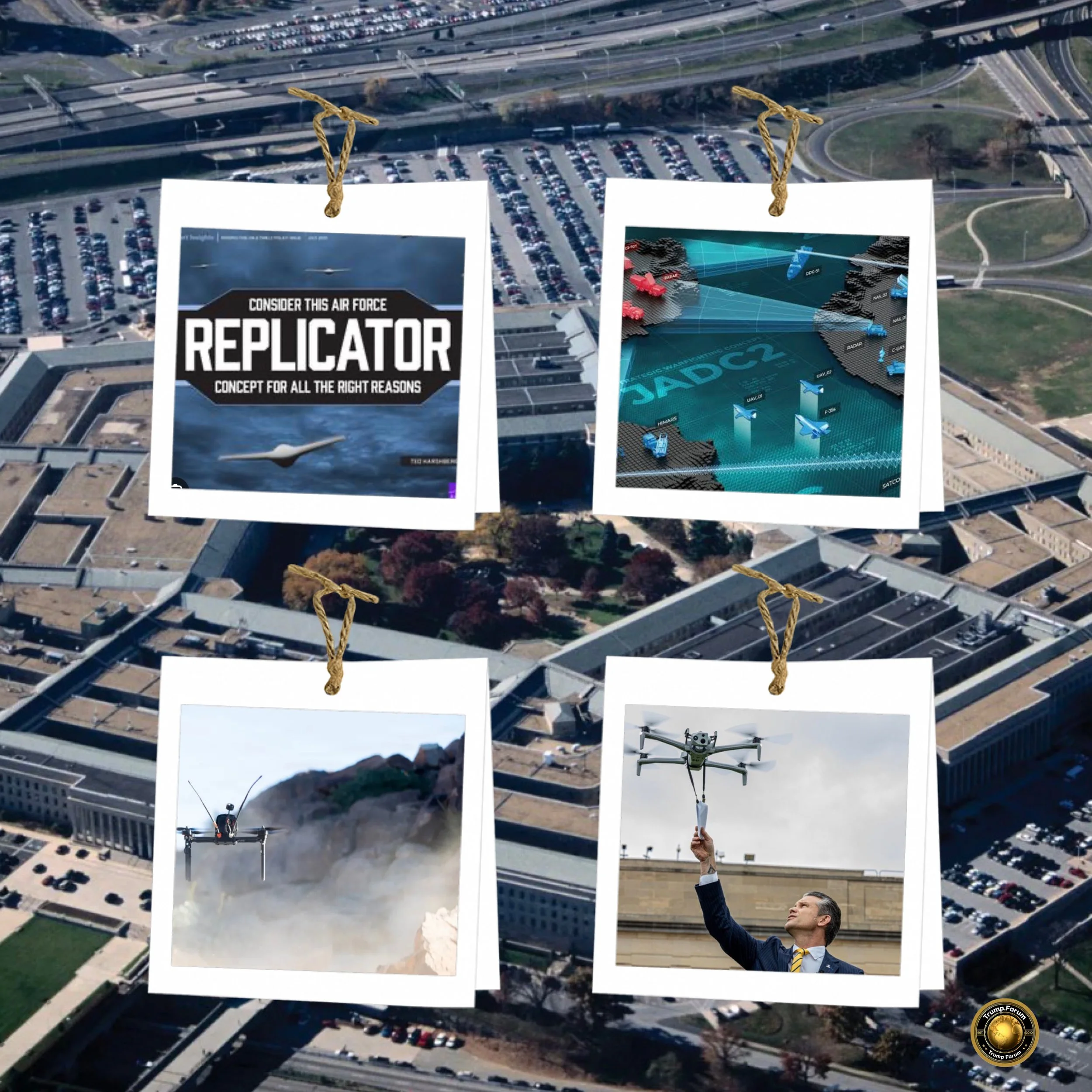
Programs such as Drone Dominance were accelerated to establish superiority in unmanned systems.
The Replicator initiative aimed to deploy thousands of autonomous platforms within a compressed timeframe.
Joint All-Domain Command and Control sought to unify disparate data streams into a cohesive operational picture.
Today, these programs are in various stages of implementation.
Early deployments have demonstrated promising capabilities, but full integration remains a work in progress.
The Pentagon is transitioning from experimentation to operationalization, a phase that will determine the long-term success of these initiatives.
Key Developments
One of the most significant developments is the shift toward rapid acquisition.
The Pentagon has adopted new frameworks that prioritize speed and iteration over traditional notions of perfection. This reflects an understanding that technological relevance is fleeting.
Another major development is the rise of non-traditional vendors.
Firms like Anduril Industries have introduced software-centric approaches that enable continuous updates and rapid deployment. These companies operate more like technology firms than traditional defense contractors.
At the same time, legacy stakeholders such as Lockheed Martin and RTX Corporation are adapting.
They are investing in digital engineering and AI integration, seeking to remain competitive in a changing landscape.
Data integration has also emerged as a critical focus. Systems developed by Palantir Technologies are enabling real-time analysis of vast data streams, enhancing situational awareness and decision-making.
Interoperability is another key priority.
The Pentagon recognizes that success depends on the seamless integration of diverse systems. This has led to increased emphasis on open architectures and standardized interfaces.
Latest Facts and Concerns
Despite significant progress, several concerns persist. Vendor dependency is a major issue.
As private firms become integral to military operations, questions arise about control, security, and long-term sustainability.
Ethical considerations are equally pressing. The use of AI in targeting decisions raises questions about accountability and the potential for unintended consequences. These concerns are amplified by the speed at which decisions are made.
Integration challenges remain. While individual systems perform well, combining them into a cohesive network is complex. Differences in architecture and standards can hinder effectiveness.
There is also the risk of escalation. Autonomous systems may lower the threshold for conflict, as they reduce the perceived cost of engagement. This dynamic could contribute to instability.
Cause and Effect Analysis
The acceleration of Pentagon programs is driven by the convergence of technological disruption and geopolitical competition.
The cause is the recognition that traditional models are insufficient. The effect is a rapid shift toward distributed, AI-enabled systems.
Operation Epic Fury exposed critical vulnerabilities. The effect was a reassessment of priorities and the acceleration of key programs.
Competition with China has also been a driving force. The effect has been increased investment and a willingness to adopt new approaches.
However, these changes produce secondary effects. Vendor dependency introduces risks. AI raises ethical questions. Rapid development can compromise testing.
Future Steps
The Pentagon’s next challenge is to sustain momentum while managing risks.
This includes developing governance frameworks for AI, improving interoperability, and refining vendor relationships.
Investment in resilience will be critical. Systems must withstand cyberattacks and electronic warfare.
International engagement will also be necessary to establish norms for AI in warfare.
Conclusion
The Pentagon’s acceleration of programs such as Drone Dominance represents a fundamental shift in military strategy.
It reflects a move toward a faster, more adaptive, and more integrated model of warfare.
This transformation offers significant advantages but also introduces new risks. Its success will depend on the Pentagon’s ability to balance innovation with accountability and speed with stability.