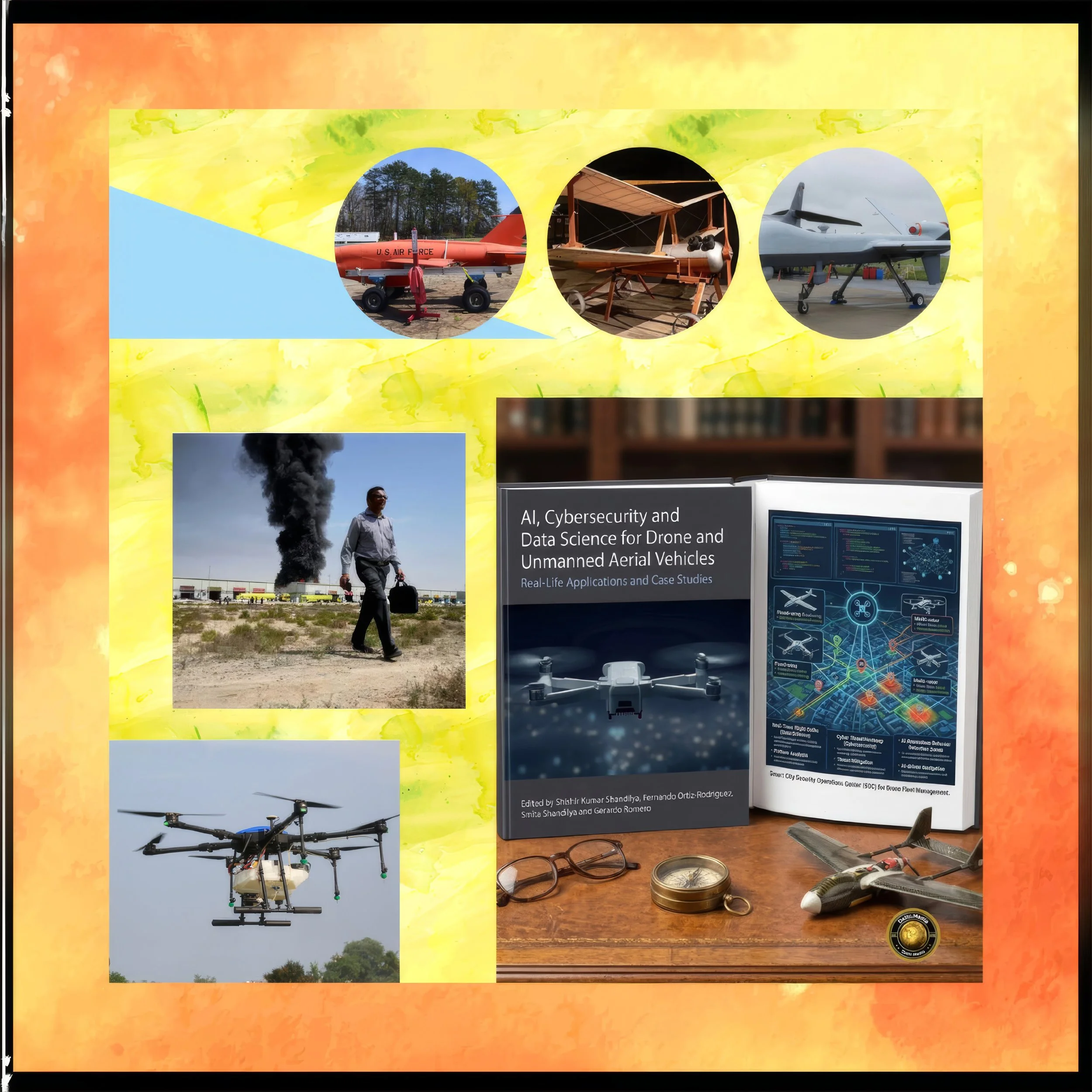
AI, Cybersecurity and Data Science for Drones and Unmanned Aerial Vehicles: Intelligence, Vulnerability, and the Future of Autonomous Skies
Executive Summary
How Artificial Intelligence Is Rewriting the Rules of Drone Warfare, Security, and Global Governance
Unmanned Aerial Vehicles — commonly called drones — have crossed the threshold from niche military instruments into one of the defining technologies of the twenty-first century.
Their transformation has been driven by three converging forces: the rapid maturation of artificial intelligence, the exponential expansion of data science, and the parallel escalation of cybersecurity threats.
The book "AI, Cybersecurity and Data Science for Drone and Unmanned Aerial Vehicles: Real-Life Applications and Case Studies," authored by Shishir Kumar Shandilya, Fernando Ortiz-Rodriguez, Smita Shandilya, and Gerardo Romero, represents one of the most timely and technically authoritative examinations of this convergence.
Deep analysis of the books shows mapping the intellectual and operational landscape where precision agriculture, logistics, disaster response, forensic investigation, and autonomous military systems all intersect with the urgent imperatives of data integrity, cryptographic security, and AI governance.
By 2026, the drone industry has evolved so rapidly that its cybersecurity challenges have become an existential concern — not merely for defense establishments but for critical civilian infrastructure, financial systems, and international diplomatic order.
FAF analysis draws extensively on the book's architecture and its thematic pillars to construct a 360-degree scholarly assessment of the state of AI-driven UAV technology, its vulnerabilities, its societal applications, and the regulatory and technological steps required to secure it.
The global drone threat landscape escalated dramatically in 2025 and into 2026. Global drone incursions rose 120% in 2025 alone, according to the International Institute for Strategic Studies.
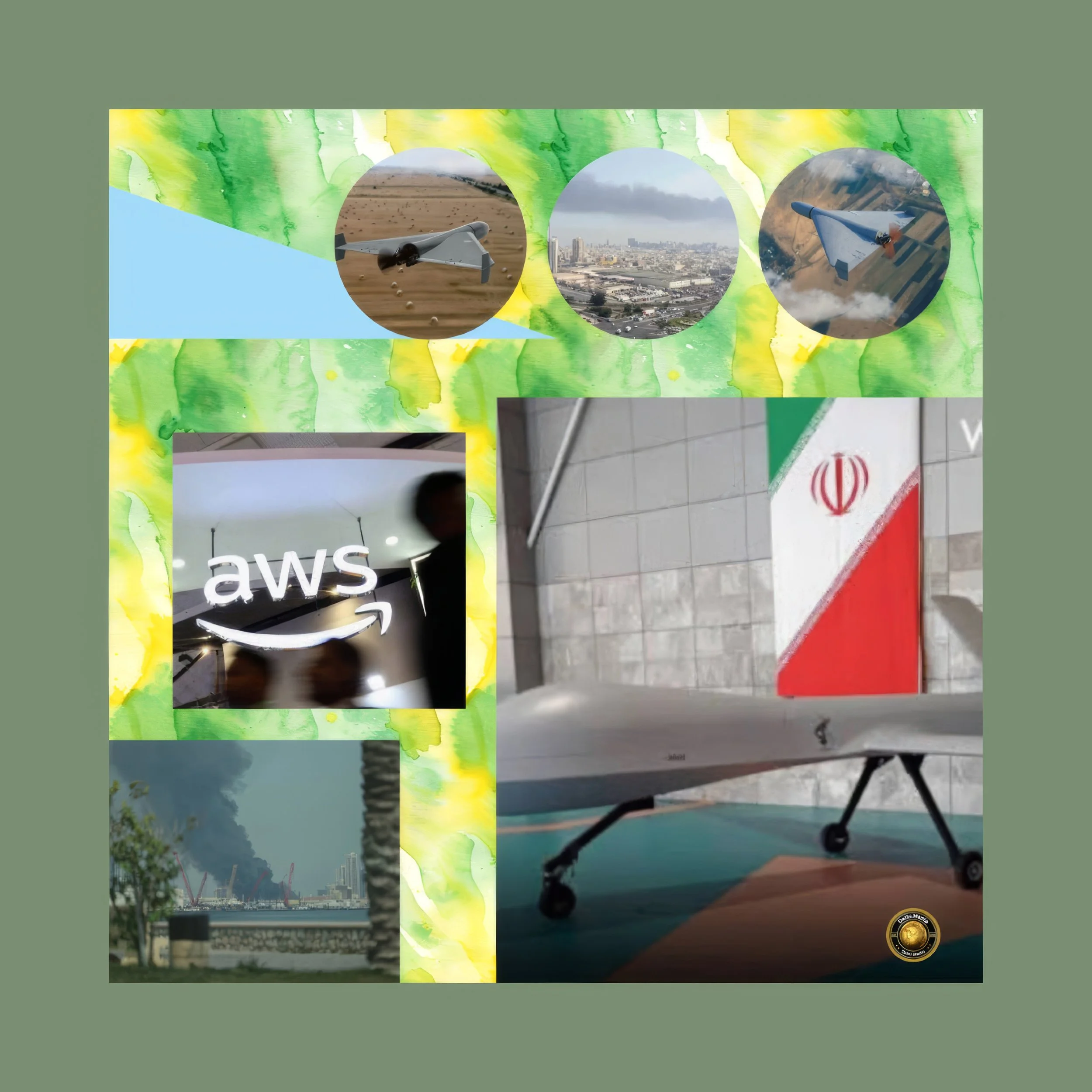
A watershed moment arrived in January 2026 when Iranian drone strikes targeted Amazon Web Services data centers in Dubai and Bahrain, causing 48-hour operational disruptions and costing affected businesses an average of $1.2 million per hour in downtime.
Meanwhile, CVE-2026-1743 exposed fundamental cryptographic weaknesses in DJI's Enhanced Wi-Fi Pairing protocol, threatening millions of consumer and commercial drones worldwide.
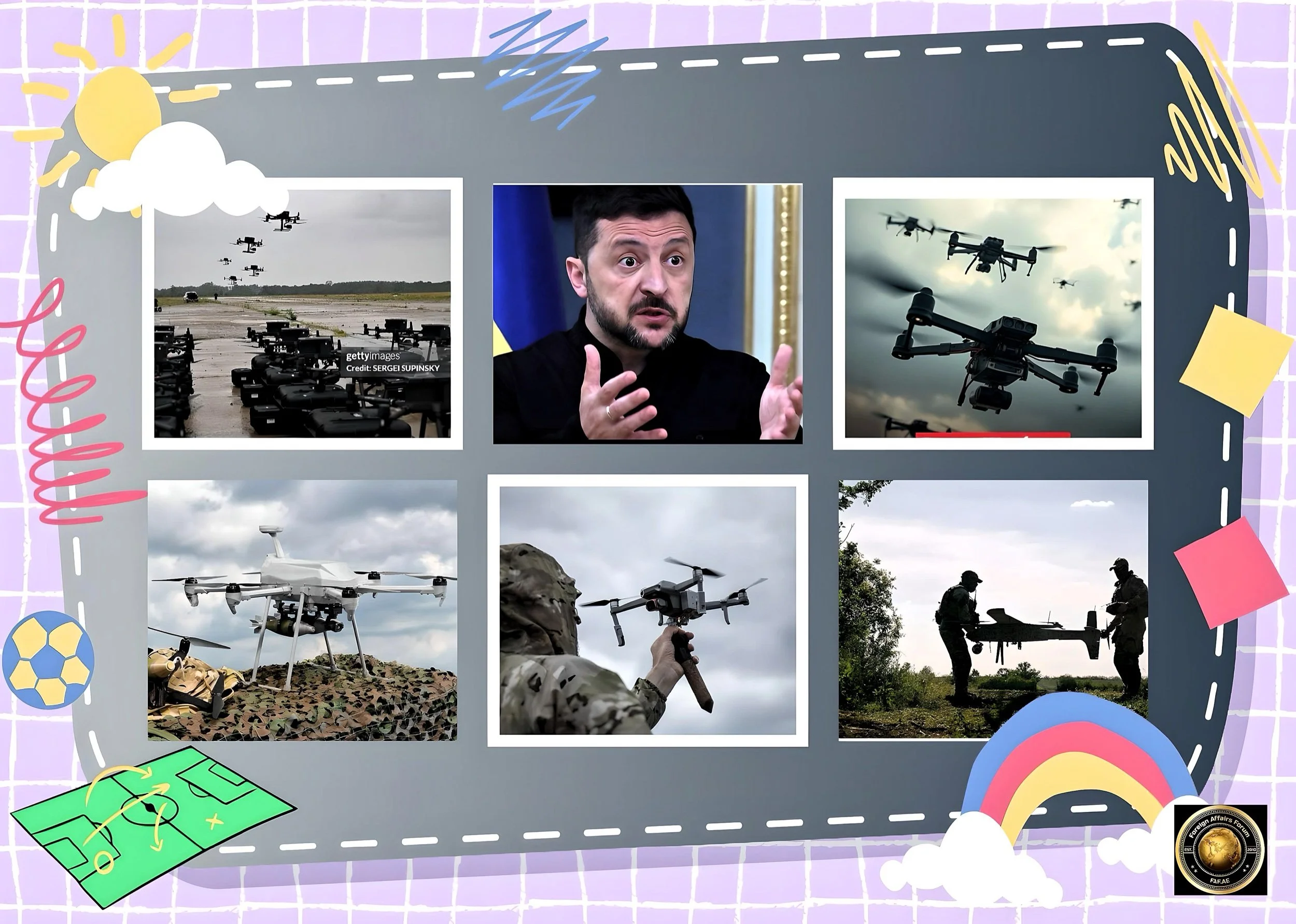
On the battlefield, Ukraine deployed AI-autonomous drones that completed over 1,000 combat missions against Russian targets — systems that can lock, pursue, and strike without a human pilot.
These developments, individually alarming, collectively represent a civilizational inflection point that the Shandilya-Romero volume addresses with both technical rigor and interdisciplinary breadth.
The Historical Arc: From Radio-Controlled Curiosity to Autonomous Combat System
From Farmlands to Frontlines: The Unstoppable Rise of AI-Powered Unmanned Aerial Vehicles
The history of unmanned aerial vehicles stretches back further than popular imagination typically acknowledges.
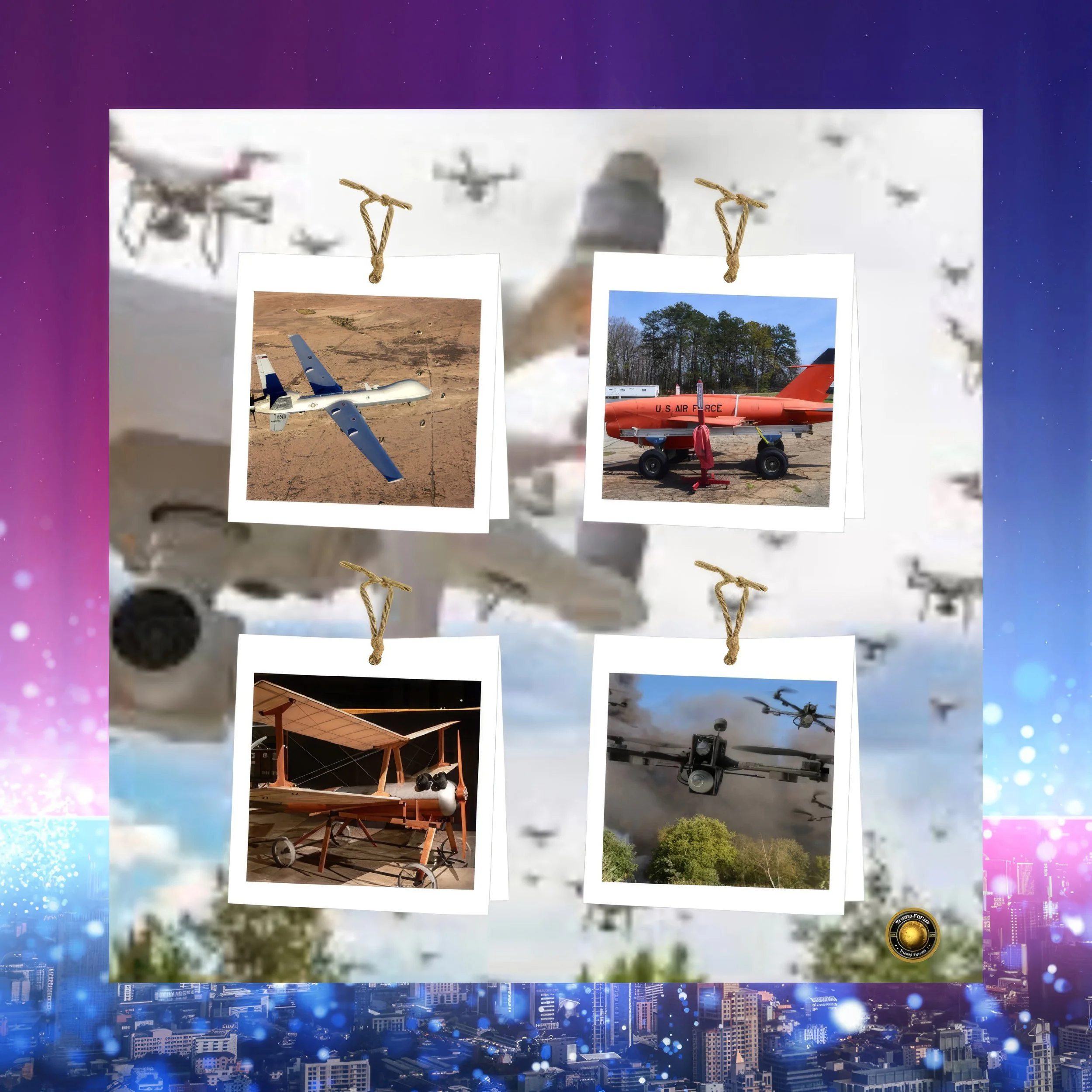
The earliest drone-like systems appeared during World War I when the U.S. military experimented with the Kettering Bug, an aerial torpedo guided by a preset gyroscopic mechanism, in 1918.
During World War II, the German Luftwaffe deployed the V-1 flying bomb — a pulse-jet powered cruise missile that represented an early form of unmanned precision delivery.
These systems were, by contemporary standards, crude: they relied on mechanical timers and ballistic trajectories rather than digital guidance.
But they established the conceptual precedent that an aerial weapon could operate independently of a human pilot's physical presence.
The Cold War catalyzed the next major evolutionary leap.
The United States developed the Ryan Firebee reconnaissance drone in the 1950s and deployed it extensively during the Vietnam War for surveillance missions too dangerous for manned aircraft.
Israel's use of the Scout and Pioneer UAVs during the 1982 Lebanon War demonstrated that drones could be used in real-time battlefield intelligence, fundamentally altering how military commanders understood situational awareness.
By the 1990s, the American Predator drone had emerged as the platform that would define post-Cold War aerial warfare — a remotely piloted aircraft capable of sustained surveillance and, eventually, precision strikes in Afghanistan and Pakistan.
The Predator and its successor, the MQ-9 Reaper, became the visible face of drone warfare in global public consciousness.
The civilian transformation began in earnest in the early 2000s with miniaturization of GPS technology, the commercialization of micro-electro-mechanical systems (MEMS), and the falling cost of lithium-polymer batteries.
By 2010, consumer drones had become commercially viable.
DJI, the Chinese manufacturer founded in 2006, became by 2015 the world's largest consumer drone company, democratizing aerial photography and opening the door to precision agriculture, infrastructure inspection, and emergency response applications.
This democratization, however, created the very security vulnerabilities that Shandilya and colleagues diagnose with such technical precision — because when a technology becomes ubiquitous, it simultaneously becomes an attack surface.
Current Status: A Technology at Civilizational Scale
When Drones Become Cyberweapons: The Hidden Vulnerabilities Threatening Critical Global Infrastructure
By April 2026, the UAV sector has reached what analysts describe as civilizational scale — meaning its penetration into critical sectors is deep enough that its disruption would constitute a systemic shock.
The last-mile drone delivery market, valued at $740 million in 2026, is projected to reach $2.01 billion by 2030, growing at a compound annual growth rate of 28.4%.
Agricultural UAVs are transforming farming across Asia, Africa, and the Americas by enabling precision application of water, fertilizers, and pesticides with centimeter-level accuracy.
In India, the government's Kisan Drone initiative has deployed thousands of units to assist smallholder farmers, integrating UAV data into supply chain logistics to align harvest cycles with market demand.
In disaster response, drones equipped with thermal imaging and AI-powered object recognition are being deployed in earthquake zones, flood plains, and wildfire corridors where human rescuers cannot safely operate.
The military dimension of current UAV deployment is arguably the most consequential. Ukraine and Russia have both industrialized drone warfare at a pace that has astonished military analysts.
By late 2025, Ukrainian forces had conducted over 1,000 autonomous AI-guided combat missions using drones capable of locking onto and pursuing targets even when electronic warfare jamming severed the operator-drone communication link.
Russia, deploying its Shahed-series drones in mass formations, has used swarm tactics to overwhelm Ukrainian air defenses, targeting civilian energy infrastructure and residential buildings.
Ukraine's defense tech ecosystem, supported by the Brave1 initiative funding over 200 AI-driven innovations, is now accelerating development toward full drone swarm capability — where a single operator controls multiple autonomous units coordinating as an integrated network.
Denmark in September 2025 halted all flights at Copenhagen Airport for nearly four hours after suspected Russian drone incursions near the facility — illustrating that UAV threats have migrated from frontlines to the heart of European civil infrastructure.
In the cybersecurity landscape, 2025 and 2026 have been breakthrough years in the worst possible sense.
CVE-2026-1743, disclosed in early 2026, revealed that DJI's Enhanced Wi-Fi Pairing protocol on Mavic Mini, Air, Spark, and Mini SE drones lacks basic replay attack protections, leaving millions of devices vulnerable to interception and hijacking.
Researchers at UC Irvine presented FlyTrap at the NDSS 2026 conference, demonstrating that a specially designed visual graphic can manipulate the computer-vision tracking algorithms of autonomous drones — causing them to deviate from their course or crash entirely.
The FCC in December 2025 added all foreign-produced drones to its Covered List, placing them in the same regulatory category as Huawei telecommunications equipment.
Mexican cartels have been conducting approximately 330 drone airspace incursions per day at the U.S.-Mexico border — an estimated 60,000 drone flights over a 6-month period — using custom-built fixed-wing drones with parachute-drop mechanisms for narcotics delivery.
Key Developments: AI, Data Science, and Forensic Methodology
Ukraine's AI Drone Revolution Is Changing What We Know About Modern Conflict and Autonomous Systems
The book by Shandilya and colleagues organizes its scholarly contribution around several thematic pillars that deserve detailed analysis.
The first is the integration of AI into UAV operational architecture — not merely as an enhancement but as a structural transformation of how drones function.
Traditional UAVs were controlled entirely by human operators via radio frequency links.
Modern AI-integrated UAVs possess onboard neural networks capable of object detection, target classification, terrain navigation, and mission adaptation in real time.
This shift from remote-control to autonomous decision-making has profound implications for both capability and accountability.
Precision agriculture represents perhaps the most benign and economically significant deployment of AI-UAV integration.
Agricultural drones equipped with multispectral and hyperspectral sensors generate continuous streams of data about crop health, soil moisture, pest infestation, and irrigation requirements.
Data science pipelines — incorporating machine learning models trained on vast datasets of satellite imagery, weather patterns, and historical yield data — translate raw sensor outputs into actionable farm management recommendations.
A study published in ScienceDirect in March 2026 confirmed that UAV-based remote sensing is now enabling a decisive transition from conventional farming to data-driven precision agriculture, with documented reductions in water usage, fertilizer waste, and pesticide application.
The economic implications extend across the global food supply chain — particularly in regions like South Asia and sub-Saharan Africa where smallholder agriculture dominates and resource efficiency is existential.
The logistics and delivery dimension, covered extensively in the Shandilya volume, has moved from experimental pilots to early commercial deployment.
Amazon, Wing (Alphabet), and Zipline have operationalized drone delivery networks in the United States, Australia, and several African nations.
The AI systems governing these drones must process real-time data on weather, air traffic, battery status, obstacle detection, and regulatory airspace boundaries — making them some of the most computationally demanding autonomous systems in civilian deployment.
The cybersecurity threat to these networks is correspondingly severe: a compromised delivery drone could be redirected, weaponized, or used to map the security architecture of the delivery zone.
Disaster response, another chapter in the book, represents an area where UAVs have demonstrated life-saving potential with urgency that transcends theoretical debate.
The 2023 Turkey-Syria earthquake, the 2024 Libya flooding catastrophe, and the ongoing wildfire crises in California and Australia have all featured drone deployments that reached survivors in terrain inaccessible to ground teams.
AI-driven object recognition allows these drones to identify human heat signatures in rubble or beneath flood debris, transmitting GPS coordinates to rescue teams.
The data science infrastructure supporting disaster-response UAVs requires edge computing architectures — processing must occur onboard or at local relay stations because cloud connectivity in disaster zones is often nonexistent.
Forensic investigation is the most technically specialized theme in the book.
As drones become crime scene participants — whether as weapons, surveillance tools, or smuggling vehicles — law enforcement and intelligence agencies require methodologies for forensic extraction and analysis of UAV data.
The book introduces integrated forensic methodologies for Unmanned Aerial Systems that encompass chain-of-custody protocols for digital evidence extracted from drone firmware, flight logs, onboard cameras, GPS records, and communication metadata.
This emerging field intersects digital forensics, aviation law, and AI interpretability — because if an AI-driven drone makes an autonomous decision that results in harm, establishing accountability requires being able to audit the decision-making process of the neural network itself.
Cybersecurity Vulnerabilities: A Taxonomy of Threats
Data Science, Machine Learning, and the New Architecture of Drone Security in a Contested World
The cybersecurity architecture of UAVs is uniquely fragmented, which is precisely what makes it so vulnerable.
A typical commercial or military UAV combines the attack surfaces of a mobile computing platform, a wireless communications node, a GPS-dependent navigation system, and a physical aerial vehicle simultaneously.
The scholarly literature, including the peer-reviewed review published in the International Journal of Systems Safety and Security in 2023, categorizes UAV vulnerabilities into three primary domains: software, hardware, and communication links.
Software vulnerabilities encompass unauthorized authentication bypasses, firmware manipulation, and the injection of adversarial inputs into AI decision-making systems.
The FlyTrap attack demonstrated at NDSS 2026 is a textbook example: by exploiting the way a computer-vision model perceives spatial patterns, researchers were able to cause an autonomous drone to misidentify a visual cue and abandon its mission trajectory.
This class of attack — sometimes called adversarial machine learning — represents a frontier challenge for AI security that applies across all autonomous systems but is particularly dangerous in airborne platforms operating at speed and altitude.
Hardware vulnerabilities include supply chain risks — particularly the risk that foreign-manufactured components contain firmware backdoors or covert communication channels.
The FCC's December 2025 decision to add foreign-produced drones to its Covered List was a direct response to documented concerns about Chinese-manufactured drones, particularly DJI products, potentially transmitting operational and user data to servers in China.
The Covered List designation does not prohibit use of these drones but constrains federal procurement and signals escalating regulatory pressure on the supply chain.
Communication link vulnerabilities — GPS spoofing, signal jamming, and man-in-the-middle attacks — are the most operationally documented threats.
GPS spoofing involves transmitting false positioning signals that cause a drone's navigation system to believe it is in a different location than it actually occupies, potentially redirecting it to unintended destinations.
Iran demonstrated this capability in 2011 when it allegedly captured a U.S. RQ-170 Sentinel reconnaissance drone by spoofing its GPS signal.
By 2026, the technique has been refined and miniaturized to the point where non-state stakeholders — including criminal organizations and terrorist groups — possess spoofing hardware at accessible price points.
The Canadian Centre for Cyber Security's 2026 guidance on drone cybersecurity explicitly recommends zero-trust architecture for any organization using drones to handle sensitive data, alongside strong encryption, separated network environments, and intrusion detection systems.
The confluence of these three vulnerability categories creates what cybersecurity analysts call a compound attack surface — where simultaneous exploitation of multiple weaknesses can achieve effects that no single attack vector could accomplish alone.
The March 2026 Iranian strikes on AWS data centers in Dubai and Bahrain illustrated the physical dimension of this compound threat: drones priced at under $10,000 per unit bypassed conventional perimeter defenses by exploiting low-altitude flight paths that evaded radar detection, causing $1.2 million per hour in operational losses for affected businesses and triggering a 35% surge in insurance premiums for Middle East-based data facilities.
Cause-and-Effect Analysis
Iranian Drone Strikes on Cloud Data Centers Reveal the Terrifying New Frontier of Hybrid Warfare
The causal chain linking the technological trajectory of UAV development to the current security crisis is neither accidental nor inevitable — it reflects a series of identifiable structural decisions, market dynamics, and governance failures that compound one another. Understanding these dynamics is essential for designing effective countermeasures.
The first cause-and-effect relationship is between the pace of technological democratization and the speed of regulatory response.
The commercial drone market expanded faster than any national or international regulatory framework could track.
The FAA's Part 107 rules for commercial drone operation in the United States were not finalized until 2016 — years after millions of consumer drones were already in the air.
The European Union Aviation Safety Agency (EASA) established a tiered risk-based regulatory framework only in 2021. By the time regulators were articulating rules, the attack surface had already been globalized.
This regulatory lag created a permissive environment in which vulnerabilities proliferated unchecked, and the costs of retrofitting security onto systems that were never designed with security as a primary concern have proven enormous.
The second causal relationship operates between supply chain concentration and geopolitical risk.
The global drone manufacturing market is dominated by a small number of manufacturers, with DJI controlling approximately 70% of the global consumer drone market.
This concentration means that a single firmware vulnerability — like CVE-2026-1743 — affects tens of millions of devices simultaneously.
It also means that geopolitical tensions between the United States and China translate directly into drone security concerns, because the hardware and software of the world's most widely deployed drones originates in a country with which the United States is engaged in sustained strategic competition.
The FCC's Covered List decision is a symptom of this structural contradiction, but it does not resolve the underlying dependency.
The third causal sequence connects AI autonomy escalation to accountability erosion.
As drones become more autonomous — executing missions without real-time human input — the chain of accountability for decisions made in flight becomes increasingly ambiguous.
This matters critically in military contexts: when a Ukrainian AI drone locks onto and strikes a target autonomously, questions of proportionality, distinction between combatants and civilians, and international humanitarian law compliance become operationally embedded rather than procedurally reviewable.
But it also matters in civilian contexts: when a delivery drone deviates from its programmed route and causes injury, attributing liability between the manufacturer, the software developer, the operator, and the AI system itself becomes a legal labyrinth that existing tort frameworks are entirely unprepared to navigate.
The fourth causal chain links data abundance to privacy erosion. UAVs are, at their core, data-collection platforms.
The sensors aboard modern agricultural, surveillance, and logistics drones generate continuous streams of imagery, location data, communication metadata, and biometric information.
The aggregation and analysis of this data — even when conducted by legitimate stakeholders for legitimate purposes — creates privacy risks that are qualitatively different from traditional data collection because of their aerial perspective, their ability to observe without consent, and the scale at which they can operate.
In authoritarian contexts, state-operated drone surveillance has been deployed for population monitoring, protest suppression, and ethnic persecution — most notoriously in the documented use of drones by Chinese authorities in Xinjiang.
Future Steps: A Multilateral Governance Agenda
The $740 Million Drone Delivery Market and the Cybersecurity Crisis Lurking Beneath Its Wings
The remedial architecture required to address the compounded challenges of AI-UAV cybersecurity is necessarily multilayered, spanning technical standards, regulatory frameworks, international agreements, and industrial practices.
The scholarly literature, combined with 2025-2026 developments, points toward a coherent if ambitious agenda.
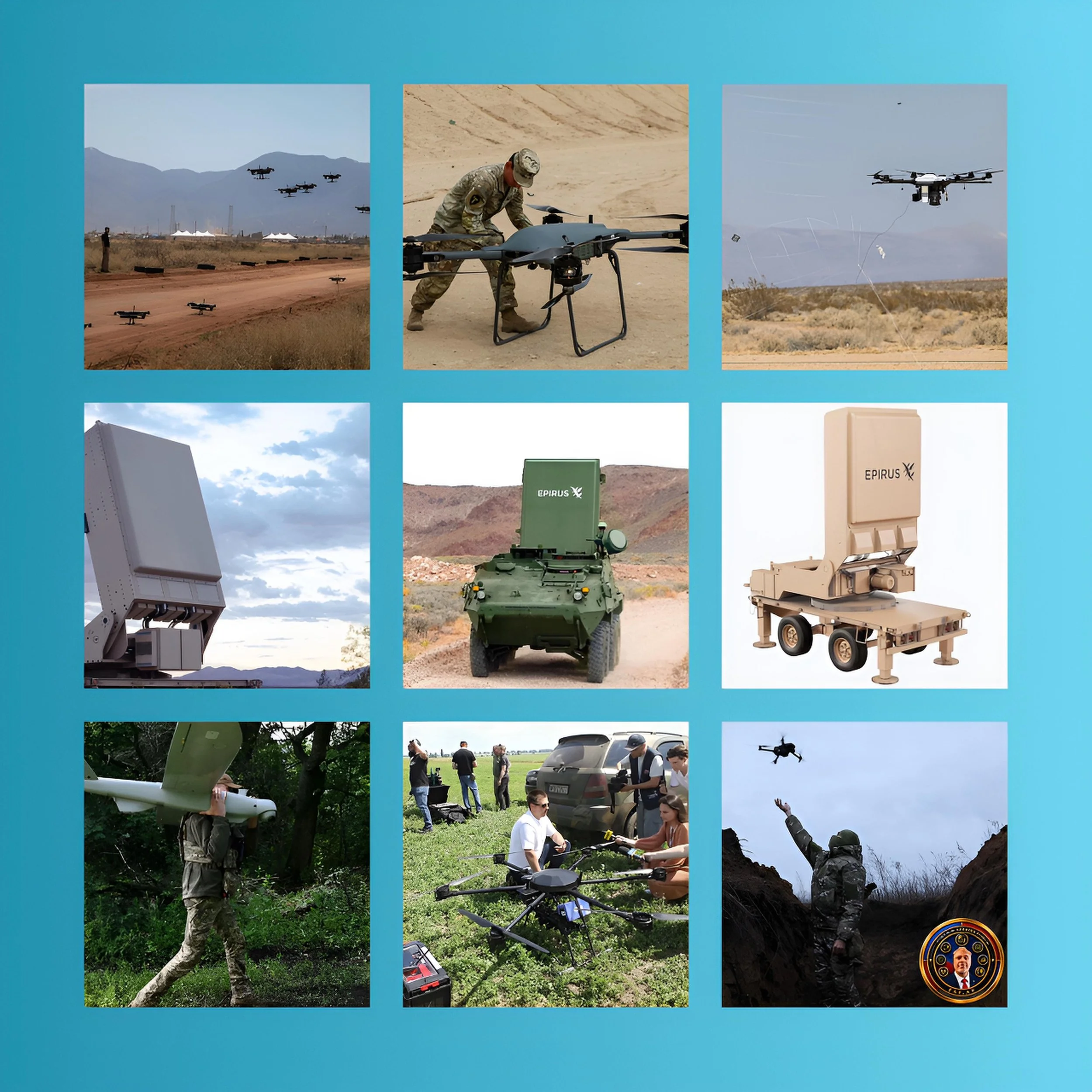
At the technical level, the most urgent priority is the implementation of post-quantum cryptographic standards for all drone communication protocols.
Current encryption methods, including those used in civilian drone command-and-control links, are vulnerable to quantum computing decryption attacks that are anticipated within the next decade.
The U.S. National Institute of Standards and Technology (NIST) finalized its first suite of post-quantum cryptographic standards in 2024, but their adoption in the drone industry remains nascent.
Universal implementation requires both regulatory mandate and manufacturer cooperation — neither of which has yet been achieved at scale.
Zero-trust architecture — the principle that no entity inside or outside a network perimeter should be trusted by default — represents a structural security upgrade applicable to drone operations.
Canada's cybersecurity authority has explicitly recommended zero-trust architecture for any drone-based system handling sensitive data, including enterprise logistics, government surveillance, and critical infrastructure inspection.
The practical implementation of zero-trust in drone networks requires onboard identity verification systems, continuous behavioral monitoring of flight trajectories and data flows, and automated anomaly detection triggered by deviations from baseline parameters.
At the regulatory and governance level, the most critical gap is the absence of an international framework governing autonomous weapons systems, including AI-driven drones.
Despite repeated calls from the International Committee of the Red Cross (ICRC) and numerous UN Special Rapporteurs, no binding international treaty on Lethal Autonomous Weapons Systems (LAWS) has been concluded.
The Conference on Certain Conventional Weapons (CCW) has conducted discussions since 2014, but substantive consensus has been blocked by major military powers — including the United States, Russia, and China — that regard binding constraints as premature given the pace of technological development.
This governance vacuum means that the proliferation of autonomous lethal drones proceeds faster than the legal frameworks designed to constrain it.
Supply chain security reform represents perhaps the most politically complex frontier.
Diversifying the drone manufacturing base away from single-source dependency — particularly on Chinese manufacturers — requires sustained industrial policy investment, export control frameworks, and standards-based procurement rules.
The United States is investing in domestic drone manufacturing through provisions of the National Defense Authorization Act, and allied nations in Europe and the Indo-Pacific are developing complementary industrial bases.
But achieving genuine supply chain resilience for a technology as globally integrated as drone manufacturing will require decades of sustained policy commitment.
Forensic and evidentiary standards for UAV-related incidents need urgent development and international harmonization.
As drones become participants in criminal activity — smuggling, surveillance, assassination attempts, infrastructure sabotage — law enforcement agencies across jurisdictions need standardized protocols for drone seizure, data extraction, chain-of-custody maintenance, and AI decision-audit.
The integrated forensic methodology proposed in the Shandilya volume represents an important academic contribution to this emerging field, but translating it into operational law enforcement practice requires coordination between national aviation authorities, cybersecurity agencies, and the judiciary.
AI ethics and interpretability requirements for autonomous drone systems must be embedded at the design stage rather than retrofitted after deployment.
Explainable AI (XAI) frameworks — which require that AI decision-making processes be auditable by human reviewers — are essential for both military accountability and civilian liability attribution.
The European Union's AI Act, which began enforcement in 2025, establishes risk-based obligations for AI systems — placing autonomous weapons in the highest-risk category and requiring conformity assessments, human oversight mechanisms, and transparency documentation.
Whether these standards will be adopted beyond the EU's jurisdiction, and whether they will be applied to military as well as civilian systems, remains contested.
Data sovereignty and privacy legislation specifically tailored to aerial data collection is a governance frontier that has barely been touched.
The GDPR addresses personal data broadly but does not specifically regulate the collection of imagery and biometric data by UAVs operating over residential areas, protests, or national borders. Several U.S. states have enacted drone privacy bills, but federal legislation remains absent.
International consensus on aerial data sovereignty — particularly regarding drones operating across national borders — is even more distant.
As drone logistics networks cross international frontiers and military UAVs conduct surveillance across sovereign airspace, the absence of a coherent international aerial data rights framework constitutes a structural governance failure with growing real-world consequences.
Conclusion
Swarms, Spoofing, and Sovereignty: Why the World Is Struggling to Govern Its Most Dangerous Flying Machines
The technological convergence that Shandilya, Ortiz-Rodriguez, Smita Shandilya, and Gerardo Romero map in their volume is not merely an academic subject — it is a geopolitical, security, and humanitarian urgency.
Drones have ceased to be instruments; they have become infrastructure.
They feed populations through precision agriculture, sustain supply chains through autonomous delivery, rescue survivors through disaster-response missions, adjudicate conflict through autonomous targeting, and pose existential threats to critical systems through cybersecurity vulnerabilities that have now been demonstrated at scale.
The events of 2025 and 2026 — Iranian drone strikes on cloud data centers, AI-autonomous combat missions in Ukraine, mass drone incursions at European airports, and systemic firmware vulnerabilities in consumer drones — constitute not warning signs of a future crisis but evidence of a present one.
The response to this crisis must be commensurate with its scale.
Technical standards for drone cybersecurity, international governance frameworks for autonomous weapons, supply chain diversification, forensic methodologies, AI ethics requirements, and aerial data sovereignty legislation must all advance simultaneously and in coordination.
No single state, corporation, or institution possesses the capacity to secure the drone landscape unilaterally.
The asymmetry between the pace of UAV technological development and the pace of governance response is itself the most dangerous vulnerability in the system — and closing that asymmetry is the defining challenge that scholars like Shandilya and their colleagues have placed at the center of a growing and essential global conversation.