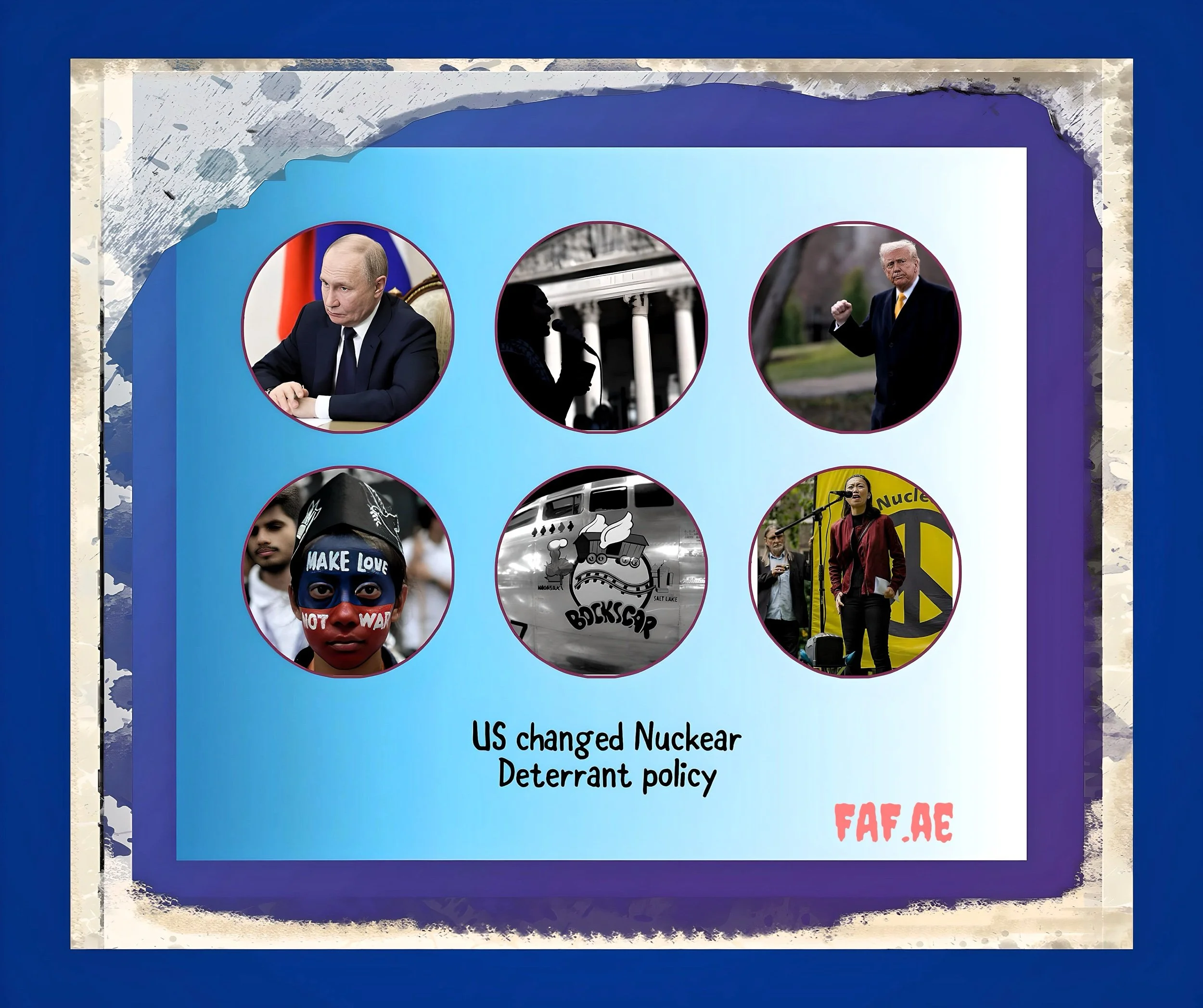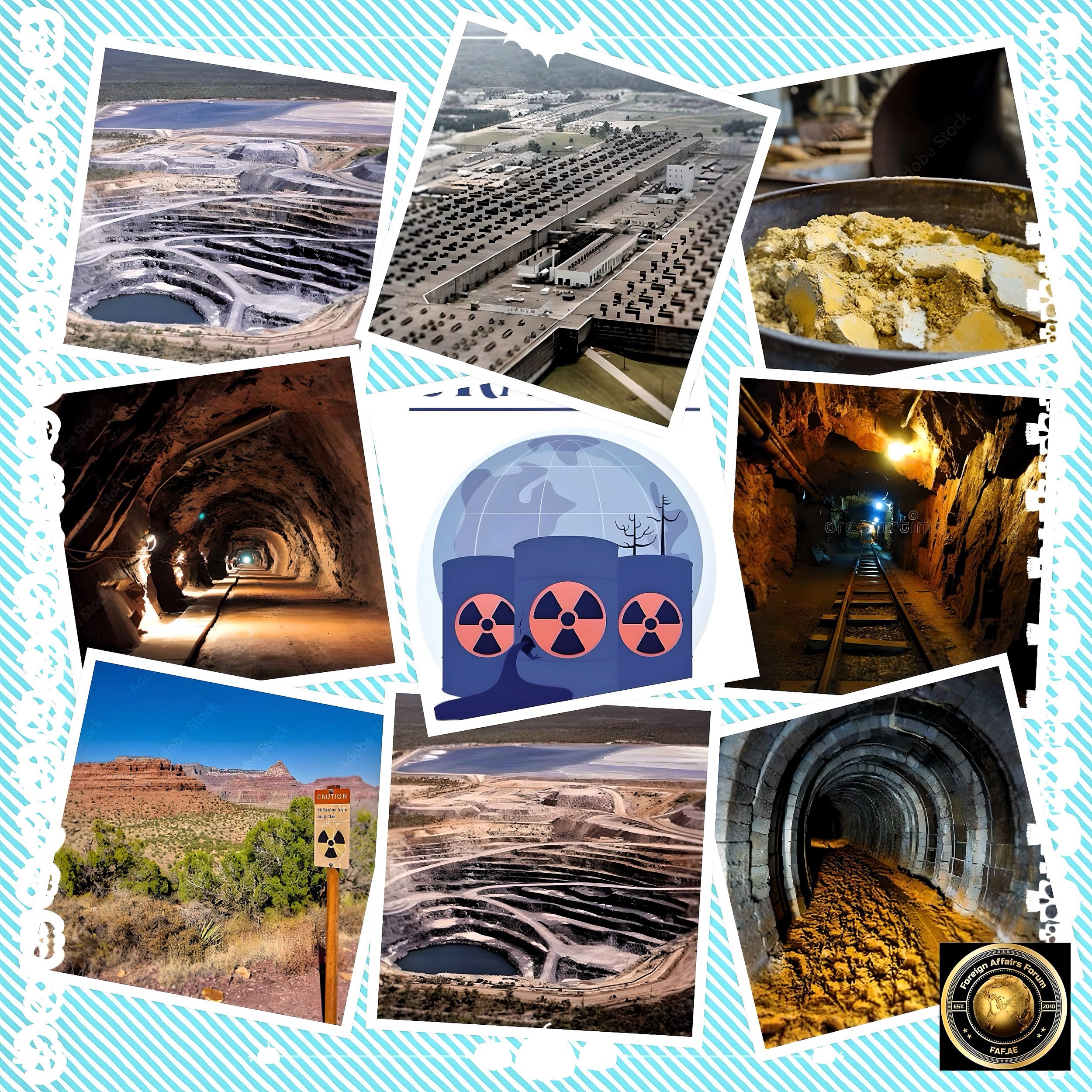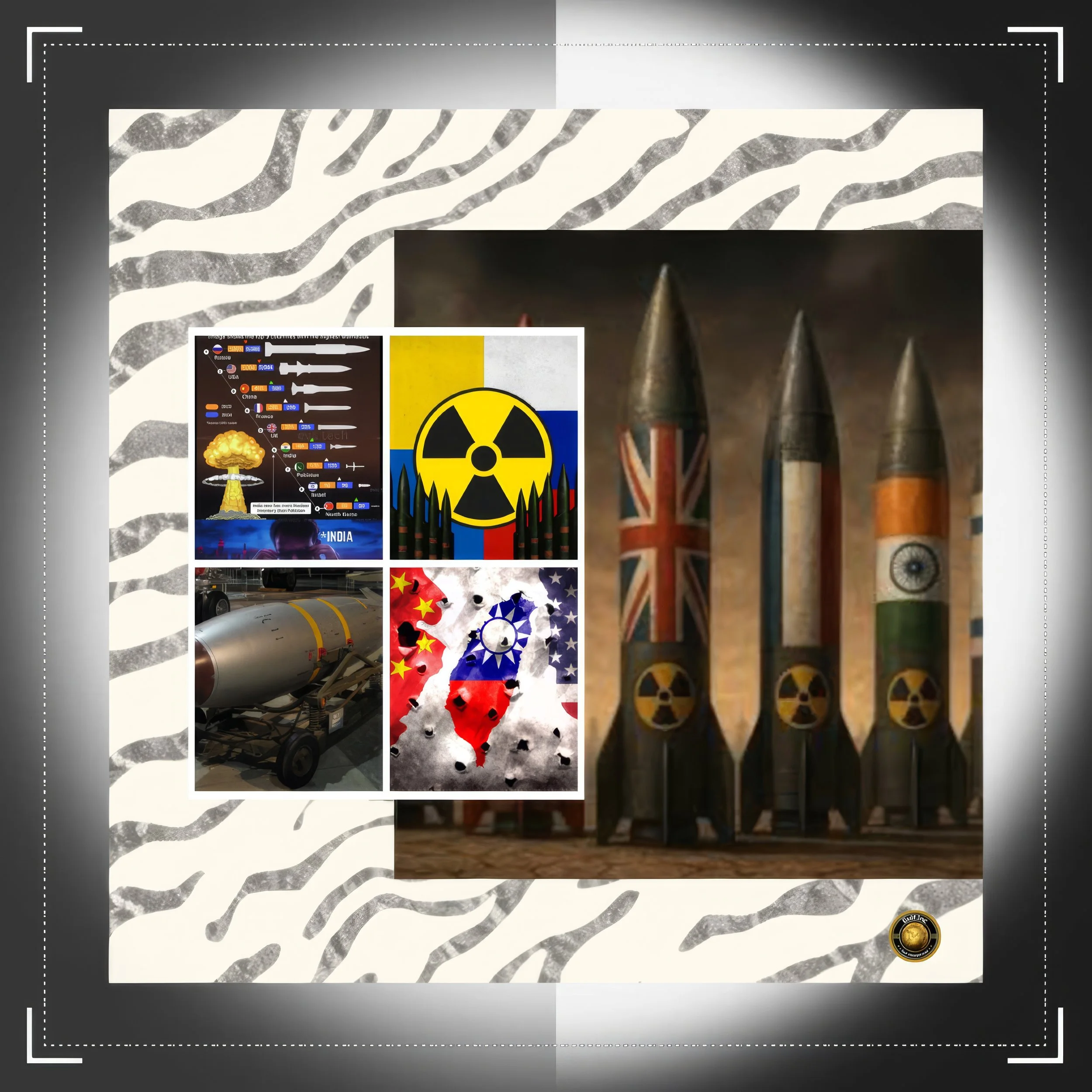
A looming nuclear cascade could redraw global power balances and destabilize fragile international security architectures permanently
Executive Summary
If It Starts, a Nuclear Arms Race Will Be Unstoppable
The international system is approaching a critical inflection point in nuclear politics.
The long-standing balance that has constrained the spread of nuclear weapons is weakening under the combined pressures of geopolitical rivalry, declining trust among stakeholders, and rapid technological diffusion.
While the global nonproliferation framework—anchored by the Non-Proliferation Treaty and monitored by institutions such as the International Atomic Energy Agency-has historically limited the number of nuclear-armed states, its credibility is increasingly under strain.
The central risk is not simply that one additional state acquires nuclear capability, but that such a move could trigger a cascading chain reaction.
Rival states, perceiving heightened vulnerability, would face strong incentives to pursue their own nuclear programs.
This dynamic, rooted in security dilemmas and mutual distrust, could rapidly transform regional tensions into interconnected arms races, ultimately reshaping the global security landscape.
Once such a process begins, political, strategic, and domestic pressures make reversal exceedingly difficult.
Several structural trends are accelerating this danger.
First, technological barriers to nuclear capability are eroding, reducing the time required for states to reach weapons thresholds.
Second, enforcement mechanisms such as sanctions and diplomatic isolation are becoming less effective in a fragmented global economy.
Third, the weakening of arms control agreements and verification regimes is undermining transparency, increasing suspicion, and encouraging worst-case strategic planning.
At the same time, the perceived benefits of nuclear weapons are rising.
For some states, nuclear capability offers a form of ultimate deterrence, a guarantee of regime survival, and enhanced geopolitical influence.
In regions marked by persistent conflict and uncertain security guarantees, these incentives are particularly strong.
As a result, latent proliferation pressures are growing even among states that have historically adhered to nonproliferation norms.
If left unchecked, these dynamics could lead to a multipolar nuclear order characterized by increased instability, higher risks of miscalculation, and a greater likelihood of accidental or unauthorized use.
The spread of nuclear weapons would also intersect with emerging technologies such as cyber capabilities and artificial intelligence, further complicating deterrence and crisis management.
Preventing such an outcome requires urgent and coordinated action.
Key priorities include restoring confidence in security guarantees, strengthening verification and transparency mechanisms, revitalizing diplomatic engagement among major stakeholders, and addressing the regional conflicts that drive proliferation incentives.
Equally important is reinforcing the normative and political costs of pursuing nuclear weapons, ensuring that restraint remains both strategically viable and politically acceptable.
The window for effective intervention is narrowing.
The warning that a nuclear arms race, once initiated, may become unstoppable should be understood as a call to action.
Without renewed commitment and adaptation, the international community risks entering a new era in which nuclear proliferation becomes self-sustaining and increasingly difficult to contain.
Introduction
Why the next proliferator could trigger unstoppable chain reactions across rival regions and competing security alliances worldwide
The warning delivered by the leadership of the International Atomic Energy Agency carries unusual weight because it reflects both institutional insight and accumulated historical experience.
The assertion that a nuclear arms race, once initiated, may become effectively unstoppable is not rhetorical exaggeration but an assessment grounded in observable structural trends.
The global nuclear order, long anchored by deterrence stability and treaty-based restraint, is now under sustained strain from geopolitical fragmentation, technological diffusion, and eroding trust among stakeholders.
At present, the world exists in a paradoxical equilibrium.
On one hand, the costs of overt proliferation remain extraordinarily high.
States that attempt to acquire nuclear weapons risk sanctions, diplomatic isolation, and potential military intervention.
On the other hand, the perceived benefits of nuclear capability—deterrence, regime survival, and geopolitical leverage—are becoming increasingly attractive in an environment where conventional security guarantees appear unreliable.
This tension defines the current moment.
The concern is not merely that one additional state might acquire nuclear weapons.
Rather, it is that such an event could trigger cascading reactions among rivals and competitors, each seeking to restore strategic balance.
Once such a dynamic takes hold, restraint becomes politically and strategically untenable.
The result would be a systemic transformation of global security, with profound and lasting consequences.
History and current status
Deterrence is eroding as technological diffusion lowers barriers to nuclear capability among ambitious mid-tier powers
The modern nuclear order emerged from the devastation of the mid-twentieth century, particularly the atomic bombings of Hiroshima and Nagasaki and the subsequent strategic rivalry between the United States and the Soviet Union.
During the Cold War, nuclear weapons proliferated slowly but steadily, with a small number of states acquiring capabilities under conditions of intense geopolitical competition.
The establishment of the Non-Proliferation Treaty created a framework that sought to balance three objectives: preventing the spread of nuclear weapons, promoting peaceful nuclear energy, and advancing disarmament. For decades, this framework proved remarkably resilient.
Many states with the technical capacity to develop nuclear weapons chose not to do so, relying instead on security guarantees or normative commitments.
However, the current status of this regime is increasingly fragile.
Arms control agreements that once stabilized relations among major powers have eroded or collapsed.
Trust among leading stakeholders has diminished significantly, reducing the willingness to pursue cooperative solutions.
Meanwhile, regional tensions have intensified in several critical landscapes, including the Middle East, East Asia, and Eastern Europe.
In these environments, the logic of deterrence is shifting. States that once relied on external protection are now reconsidering their strategic options.
The perceived credibility of extended deterrence is under scrutiny, particularly in regions where great-power commitments appear uncertain or conditional.
This reassessment is a key driver of latent proliferation pressures.
Key developments
Sanctions and isolation no longer guarantee restraint in an era of fragmented global governance and rival blocs
Recent developments have accelerated concerns about a potential nuclear arms race.
First, technological advancements have lowered the barriers to nuclear capability.
Enrichment technologies, missile delivery systems, and dual-use scientific knowledge are more accessible than ever before.
This diffusion reduces the time required for a state to transition from civilian nuclear activity to weapons capability.
Second, geopolitical competition has intensified among major stakeholders.
Strategic rivalry is no longer confined to bilateral competition but involves multiple actors with overlapping interests and conflicting objectives.
This multipolar environment complicates deterrence calculations and increases the risk of misperception and escalation.
Third, enforcement mechanisms have weakened. Sanctions remain a tool of pressure, but their effectiveness is uneven in a fragmented global economy.
States can circumvent restrictions through alternative networks, reducing the deterrent effect of punitive measures.
At the same time, military intervention as a nonproliferation tool carries significant risks, including escalation into broader conflict.
Fourth, regional security dilemmas have deepened. In several landscapes, one state’s pursuit of nuclear capability is perceived by its neighbors as a direct threat, prompting reciprocal actions.
This dynamic creates feedback loops that are difficult to interrupt once initiated.
Latest facts and concerns
The credibility crisis of nonproliferation institutions threatens to accelerate clandestine and overt nuclear weapons programs globally
Current intelligence assessments and public reporting suggest that several states are approaching thresholds of nuclear capability, whether through enrichment levels, stockpiles of fissile material, or advancements in delivery systems.
While not all have made decisions to weaponize, their proximity to capability reduces the warning time available to the international community.
Another concern is the erosion of verification regimes.
The ability of international institutions to monitor and verify compliance depends on access, transparency, and cooperation. In an environment of declining trust, these conditions are increasingly difficult to secure.
Without reliable verification, suspicion grows, and worst-case assumptions begin to dominate strategic thinking.
The risk of proliferation is also linked to broader technological trends.
Cyber capabilities, artificial intelligence, and advanced materials science intersect with nuclear systems in ways that complicate traditional deterrence models.
These developments introduce new vulnerabilities and uncertainties, further destabilizing the strategic landscape.
Equally significant is the political dimension. Domestic pressures within states can influence nuclear decision-making.
Leadership perceptions, regime security concerns, and nationalist narratives all play roles in shaping policy.
In some cases, nuclear capability is framed as a symbol of sovereignty and resilience, making restraint politically costly.
Cause-and-effect analysis
Regional rivalries from the Middle East to East Asia risk transforming into interconnected nuclear competition systems rapidly
The potential onset of a nuclear arms race can be understood as a chain reaction driven by interconnected causes.
The initial trigger may be a single state’s decision to acquire or expand nuclear capability.
This decision is often motivated by perceived threats, lack of trust in external guarantees, or aspirations for greater strategic autonomy.
Once this step is taken, rival states face a dilemma. To maintain security, they may feel compelled to pursue similar capabilities.
This response is not necessarily aggressive but defensive in nature. However, from the perspective of others, it reinforces the perception of a deteriorating security environment.
The cumulative effect is a spiral of action and reaction.
Each step taken by one stakeholder increases the incentives for others to follow. Over time, the system transitions from one of restraint to one of competition.
In such a system, even states that prefer nonproliferation may find themselves drawn into the dynamic.
Another critical effect is the weakening of norms.
The Non-Proliferation Treaty and related agreements rely not only on legal commitments but also on shared expectations.
When these expectations are violated or disregarded, the normative foundation of the regime erodes.
This erosion reduces the stigma associated with proliferation, making it more politically acceptable.
Economic and technological factors also play roles in this process.
As more states invest in nuclear-related capabilities, economies of scale and knowledge diffusion make it easier for others to follow.
The cost and complexity of entry decrease, further accelerating the spread.
Future steps
The International Atomic Energy Agency faces unprecedented pressure amid rising geopolitical fragmentation and declining enforcement authority
Preventing an unstoppable nuclear arms race requires a multifaceted approach that addresses both structural and immediate challenges.
First, restoring credibility to deterrence commitments is essential. States that rely on external guarantees must have confidence that these commitments will be honored.
Without such confidence, the incentives for independent nuclear capability will persist.
Second, strengthening verification and transparency mechanisms is critical. International institutions must have the authority and resources to monitor compliance effectively.
This may require new agreements or adaptations to existing frameworks to account for technological changes and geopolitical realities.
Third, diplomatic engagement must be prioritized.
Dialogue among stakeholders can reduce misunderstandings and create opportunities for de-escalation.
Even in periods of tension, communication channels are vital for managing risks and preventing unintended consequences.
Fourth, addressing regional security dynamics is necessary. Proliferation pressures often arise from local conflicts and rivalries.
Resolving or mitigating these tensions can reduce the incentives for nuclear acquisition.
This requires sustained diplomatic effort and, in some cases, innovative approaches to conflict resolution.
Fifth, economic and political incentives can be used to reinforce nonproliferation.
States that adhere to norms should receive tangible benefits, while those that violate them should face meaningful consequences.
The challenge is to ensure that these measures are credible and consistently applied.
Conclusion
Preventing nuclear escalation now requires reimagining deterrence, diplomacy, and enforcement mechanisms for a multipolar nuclear age
The prospect of an unstoppable nuclear arms race is not inevitable, but it is increasingly plausible.
The current global environment combines factors that historically have led to proliferation with new dynamics that amplify their effects.
The erosion of trust, the diffusion of technology, and the fragmentation of international governance create conditions in which restraint becomes difficult to sustain.
The warning from the International Atomic Energy Agency is therefore both timely and urgent.
It underscores the need for renewed commitment to nonproliferation and the recognition that existing frameworks may require adaptation.
The stakes are exceptionally high, not only for individual states but for the international system as a whole.
If a nuclear arms race were to begin in earnest, its consequences would extend far beyond the immediate participants.
It would reshape global security, alter economic relationships, and increase the risk of catastrophic conflict.
Preventing such an outcome requires decisive action, strategic foresight, and a willingness to prioritize collective security over short-term advantage.