The Ceasefire That Never Happened: Netanyahu's Lebanon Gambit and the Break in the Iran Peace Process
Introduction
Netanyahu's Lebanon War Defies Iran Ceasefire and Risks Unraveling the Entire Middle East Peace Architecture
The Fragile Architecture of Peace
On the night of April 7th, 2026, Pakistani Prime Minister Shehbaz Sharif announced to a waiting world that the United States and Iran had agreed to an immediate ceasefire in the ongoing 2026 Iran war, with hostilities to pause in "all locations, including Lebanon and beyond."
The announcement was received with cautious relief.
For weeks, back-channel diplomacy conducted at the highest levels — involving Pakistan's Army Chief General Asim Munir, U.S. Vice President JD Vance, Special Envoy Steve Witkoff, and Iranian Foreign Minister Abbas Araghchi — had been threading a needle between Washington's maximalist demands and Tehran's insistence on comprehensive dignity in any settlement.
The moment of apparent breakthrough, however, lasted less than 10 hours.
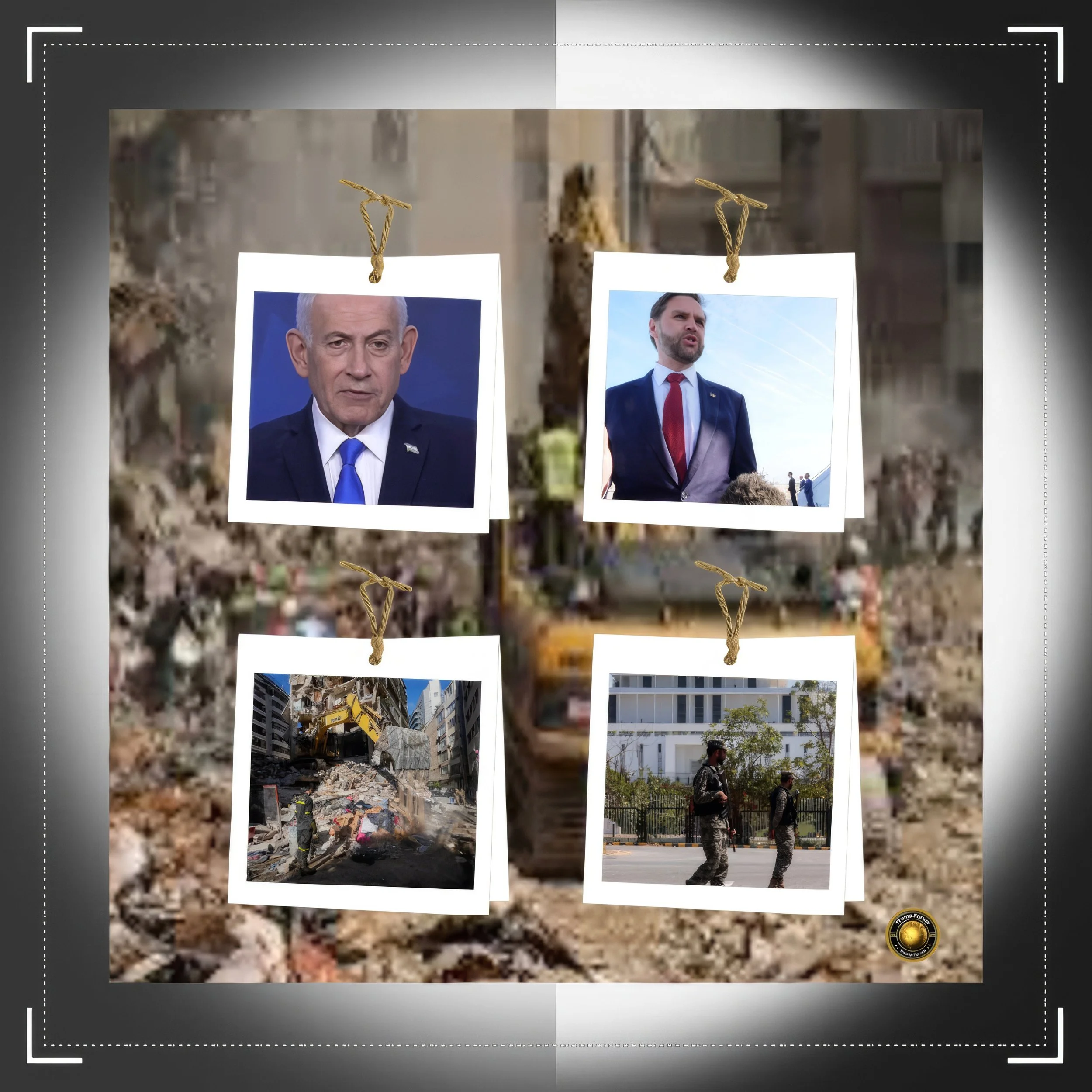
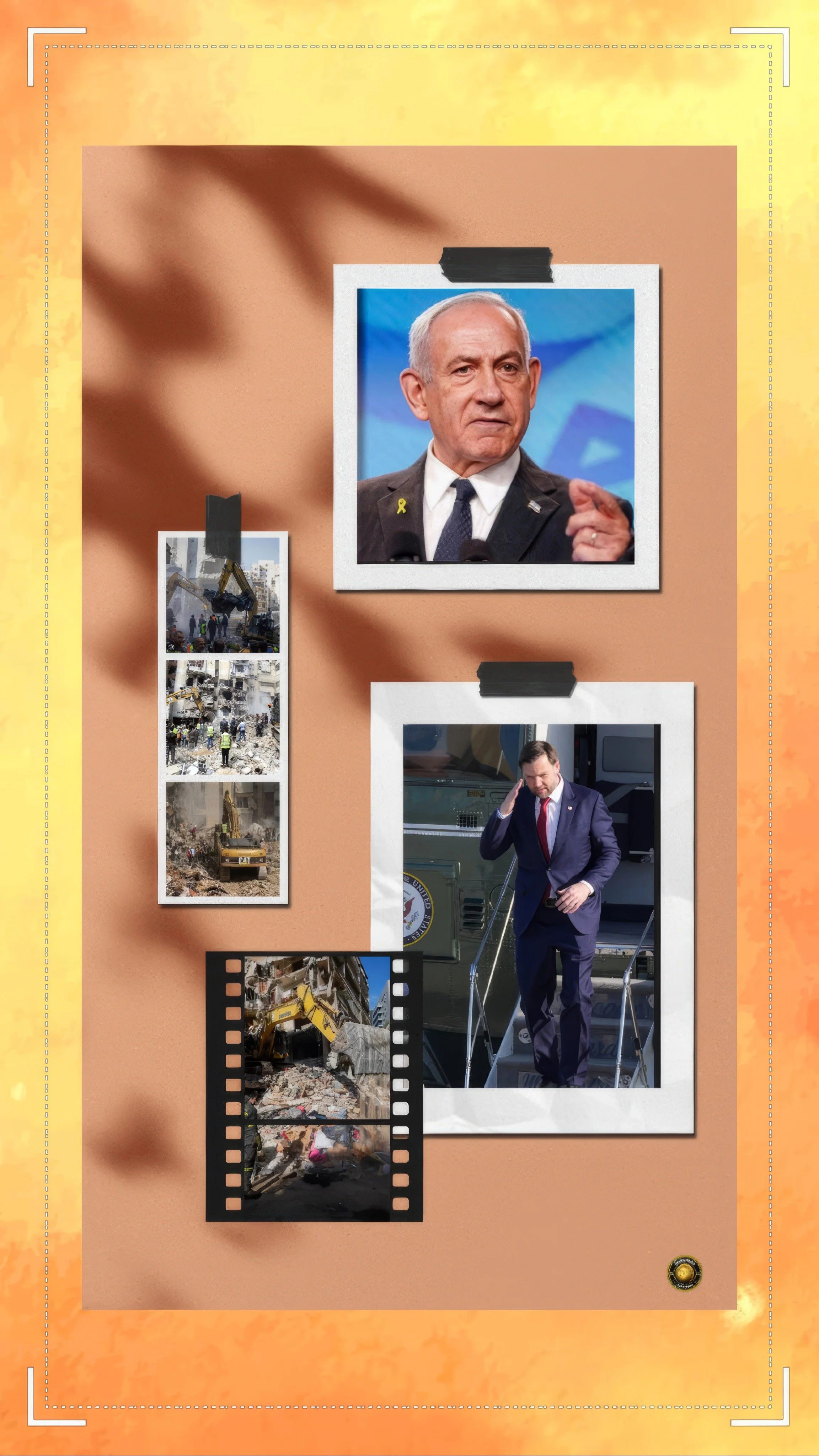
By the afternoon of April 8th, Israeli aircraft were conducting what the Israeli military itself described as its largest coordinated strike campaign on Lebanon since the resumption of Hezbollah-Israel hostilities on March 2nd, 2026.
Over 100 strikes were carried out in roughly 10 minutes, targeting sites across Beirut, Sidon, and Baalbek.
Lebanon's Health Ministry recorded at least 303 killed and over 1,150 wounded.
What had been, at dawn, a moment of diplomatic possibility, had by afternoon become the deadliest single day in Lebanon since the current conflict began.
The juxtaposition was not merely tragic. It was strategically consequential, threatening to tear apart a ceasefire that had not yet fully stood up.
FAF article examines the architecture of the Iran-US ceasefire of April 2026, the conditions under which it was negotiated, Israel's decision to exclude Lebanon from its terms, the humanitarian catastrophe unfolding in Beirut and beyond, and the structural tensions that may yet determine whether diplomacy survives or collapses beneath the weight of Israeli strategic objectives.
Origins of the Wider Conflict: The War That Began on February 28th
How Israel's Assault on Hezbollah Is Threatening to Destroy the Fragile Iran-US Diplomatic Truce
To understand the ceasefire crisis, one must understand the war itself.
On February 28th, 2026, the United States and Israel jointly launched military operations against Iran, a conflict that followed months of rising tensions over Iran's nuclear program, its missile arsenal, and its decades-long support for armed proxy organizations across the Middle East.
Among the most significant early developments was the assassination of Iranian Supreme Leader Ali Khamenei, which transformed what might have been a targeted military campaign into a full-scale regional confrontation.
Hezbollah, Iran's most powerful and battle-hardened proxy, responded almost immediately. Beginning on March 2nd, the group launched missile and drone strikes targeting Israeli military infrastructure, including the Ramat David airbase and the Meron monitoring base.
Israel retaliated with broad-based aerial campaigns over Lebanon, issuing evacuation orders to civilians across 50 villages in southern Lebanon and the Beqaa Valley.
The conflict quickly escalated beyond counterterrorism operations into something resembling a conventional war.
By March 16th, Israeli ground forces had crossed the border into southern Lebanon, eventually deploying 5 divisions in what represented a substantial land commitment.
By March 25th, the Israeli government was openly discussing the creation of a permanent "security buffer zone" in southern Lebanon — a proposal backed by both Defense Minister Katz and Finance Minister Smotrich.
The regional dimensions of the conflict were equally alarming. Iran's decision to threaten the Strait of Hormuz — the maritime chokepoint through which approximately 20% of the world's seaborne crude oil transits — immediately inserted the conflict into the architecture of global energy security.
Trump, facing both an ongoing military campaign and the economic implications of supply disruptions, found himself under pressure to find a diplomatic exit.
The stage was set for Pakistan's entry as a mediator.
Pakistan's Diplomatic Architecture: Broker or Instrument?
Pakistan's Diplomatic Gamble: Brokering a Ceasefire That Israel Refuses to Acknowledge Leaves Everyone Exposed
Pakistan's role in brokering the April 2026 ceasefire has been presented by Islamabad as a triumph of principled, neutral diplomacy.
Prime Minister Shehbaz Sharif announced the ceasefire on April 7th with evident pride, describing it as a peace achieved "everywhere, including Lebanon and elsewhere."
General Asim Munir, Pakistan's army chief, was reportedly central to the back-channel process, shuttling messages between Iranian political and military figures and the White House over a period of weeks.
Yet the Financial Times, citing well-placed sources, reported that Pakistan's role was not entirely self-initiated.
Rather, it was the White House that pushed Islamabad to serve as a ceasefire conduit, calculating that Tehran would be more receptive to a message delivered by a Muslim-majority neighboring state that had publicly maintained its neutrality throughout the conflict. Washington used Pakistan as a delivery mechanism, not merely a mediator.
Pakistani officials reportedly pitched Islamabad as a venue for a peace summit, passed along a U.S.-drafted 15-point proposal to Tehran, and raised ceasefire options ranging from 45 days to 2 weeks.
Iran responded with both 5-point and 10-point counter-proposals of its own.
This distinction — between neutral broker and U.S. instrument — matters enormously for the durability of the framework Pakistan helped construct.
If Tehran comes to perceive Pakistan as effectively an arm of American diplomatic strategy rather than an independent interlocutor, the credibility of Islamabad's future mediation role will be severely compromised.
Iran's 10-point proposal, which included "a solution to all regional conflicts," the lifting of sanctions, reconstruction commitments, and a protocol to reopen the Strait of Hormuz, was the product of a state that was engaging seriously but on its own terms.
The U.S. 15-point proposal, by contrast, demanded the complete dismantlement of Iran's nuclear program, strict limits on its missile arsenal, the permanent reopening of Hormuz, and an end to support for all armed proxy organizations — terms that struck Iranian negotiators as surrender dressed up as diplomacy.
The resulting 2-week ceasefire was, by the admission of both sides, a pause rather than a resolution.
The Lebanon Exclusion: A Strategic Choice With Strategic Consequences
The Lebanon Exclusion Clause: How Netanyahu's Strategic Calculus Is Fracturing Trump's Iran Deal
The fault line at the heart of the ceasefire crisis is the question of Lebanon's inclusion or exclusion.
The three main stakeholders who negotiated the truce — the United States, Iran, and Pakistan — appear to have held different understandings of what they agreed to.
Prime Minister Sharif stated explicitly that the ceasefire covered "everywhere including Lebanon."
Iran's National Security Council confirmed that its 10-point ceasefire framework included "ending the war against all components of the axis of resistance," of which Hezbollah is a foundational member.
Iranian-backed media subsequently reported that Iran would withdraw from the ceasefire process entirely if Israel continued its attacks on Lebanon.
For Tehran, Hezbollah's fate is not separable from Iran's own strategic security.
A ceasefire that leaves Hezbollah exposed to continued Israeli bombardment is, from Iran's perspective, a ceasefire that provides cover for Iran's dismemberment by proxy.
Israel and the United States have maintained precisely the opposite position.
Netanyahu's office, in a statement issued hours after the ceasefire announcement, clarified that while Israel supported Trump's decision to pause strikes against Iran proper, the 2-week truce "does not encompass Lebanon."
The distinction drawn by Jerusalem is operationally significant: by treating Hezbollah as a separate front, Israel preserves the freedom to continue its campaign to degrade, disarm, or destroy the organization without technically violating its commitment to the Iran ceasefire.
From Israel's strategic perspective, any agreement that freezes Hezbollah in place — allowing it to rearm and reconstitute under the diplomatic umbrella of an Iran deal — would be a strategic gift to Tehran rather than a genuine security guarantee for Israel.
The contradiction between these two positions is not a matter of miscommunication.
It reflects a fundamental divergence in strategic interests. Washington appears to have understood, or at least accepted, the Israeli position while allowing Islamabad to announce a broader ceasefire for public consumption.
This deliberate ambiguity — a hallmark of certain diplomatic frameworks — may have served the short-term goal of stopping U.S.-Iran hostilities but created a structural bomb embedded in the ceasefire's foundational logic.
Operation Eternal Darkness: The Assault on Lebanon
Operation Eternal Darkness: Israel's Bombardment of Lebanon in the Shadow of an Iran Ceasefire
The scale and timing of Israel's strikes on April 8th were not incidental.
The military operation, which the Israeli military internally labeled "Operation Eternal Darkness," involved over 100 strikes across Lebanon carried out in a 10-minute window, targeting sites in Beirut's densely populated neighborhoods, the southern port city of Sidon, and the historic Beqaa Valley city of Baalbek.
According to Lebanon's Health Ministry, at least 303 people were killed and over 1,150 were wounded.
Human Rights Watch documented that Israeli forces damaged the last main bridge linking southern Lebanon with the rest of the country, threatening to sever tens of thousands of people from access to humanitarian aid, food, and healthcare.
The choice of timing — hours after a ceasefire had been publicly announced — sent a message that was impossible to misread.
Israel was demonstrating, in the most emphatic terms possible, that it considered the Lebanon front independent of any diplomatic agreement reached between Washington and Tehran.
The operation was also the largest Israeli coordinated strike on Lebanon since the renewal of Hezbollah-Israel hostilities in March, suggesting not a continuation of existing operations but a deliberate escalation designed to exploit a moment of diplomatic transition.
Since March 2nd, when the current round of hostilities began, Israeli forces had conducted over 1,840 strikes on Lebanese territory, resulting in more than 1,497 deaths and 4,639 injuries prior to April 8th.
The April 8 strikes alone added more than 300 to the death toll, bringing the total killed since March 2nd to approximately 1,888, including over 130 children, 102 women, and 57 medical workers.
Hezbollah's own strikes on Israel, by contrast, resulted in two confirmed civilian deaths in Israel during the same period, a disparity that human rights organizations and UN officials have increasingly highlighted as they raise questions about proportionality.
Human Rights Watch, the UN, and multiple international humanitarian organizations have questioned the legality of Israeli targeting practices.
Of particular concern is Israel's documented use of white phosphorus munitions over the southern Lebanese town of Yohmor on March 3rd, 2026 — artillery-fired incendiary weapons that Human Rights Watch described as "prima facie indiscriminate and unlawful" when deployed in populated residential areas.
Protocol III of the Convention on Conventional Weapons specifically addresses incendiary weapons; Lebanon is party to the protocol while Israel is not, a legal gap that international law experts have argued must be addressed.
The Human Dimension: Hospitals, Children, and the Collapse of Civil Infrastructure
From Islamabad to Beirut: The Fault Lines That Could Send the Middle East Back Into Total War
No analysis of the Lebanon crisis is analytically complete without serious engagement with its humanitarian dimension, which has reached catastrophic proportions.
MSF's Emergency Coordinator in Lebanon, Christopher Stokes, described April 8th as a day in which "Israeli forces struck multiple cities and towns across Lebanon, less than 10 hours after the announcement of a regional ceasefire."
Teams at Rafik Hariri University Hospital in Beirut, one of the primary MSF-supported facilities, reported mass influxes of patients arriving with shrapnel wounds, severe bleeding, and blunt force trauma.
Jeremy Ristord, MSF's Head of Mission in Lebanon, recounted the "feeling of chaos" that pervaded the emergency room, with smoke drifting in from nearby strikes.
One patient arrived at the hospital with both legs severed and could not be saved. Children, elderly civilians, and women were among the casualties.
Prior to the April 8 strikes, Israel's invasion of southern Lebanon had already displaced over 1.2 million people, including 350,000 children — creating what Al Jazeera described as one of the most severe displacement crises in the region in recent memory.
MSF's Bourj Hammoud clinic in Beirut had doubled its medical referrals since early March, with patients requiring blood transfusions, intensive care, and surgery, all in a context where international funding for humanitarian operations has been under severe strain.
The WHO's Representative in Lebanon, Dr. Abdinasir Abubakar, personally witnessed 10 separate Israeli strikes on Beirut during the April 8th bombardment and described a health system being overwhelmed by casualties and pushed to the edge of functional collapse.
Dozens of medical workers had been killed or injured, and UN aid coordinator Imran Riza confirmed that Israeli forces had carried out over 100 airstrikes in roughly 10 minutes.
The deliberate or reckless destruction of the Litani River bridge — the last main crossing linking southern Lebanon to the rest of the country — has transformed the humanitarian crisis into a siege dynamic.
Without functional bridge access, tens of thousands of people in the south are effectively cut off from resupply, medical evacuation, and relief distributions.
Lebanese government officials responded to Israel's offer of "direct negotiations" with a blunt formulation: "No negotiations under fire."
Trump, Netanyahu, and the Alliance Under Strain
The relationship between U.S. President Donald Trump and Israeli Prime Minister Benjamin Netanyahu has historically been characterized as close and mutually reinforcing.
The current crisis, however, has exposed the limits of that alignment in ways that merit careful attention.
Trump's announcement of the Iran ceasefire on the night of April 7th was, in political terms, a triumph for his administration — a demonstration that his maximalist pressure campaign against Tehran, coupled with back-channel diplomacy via Pakistan, could produce results.
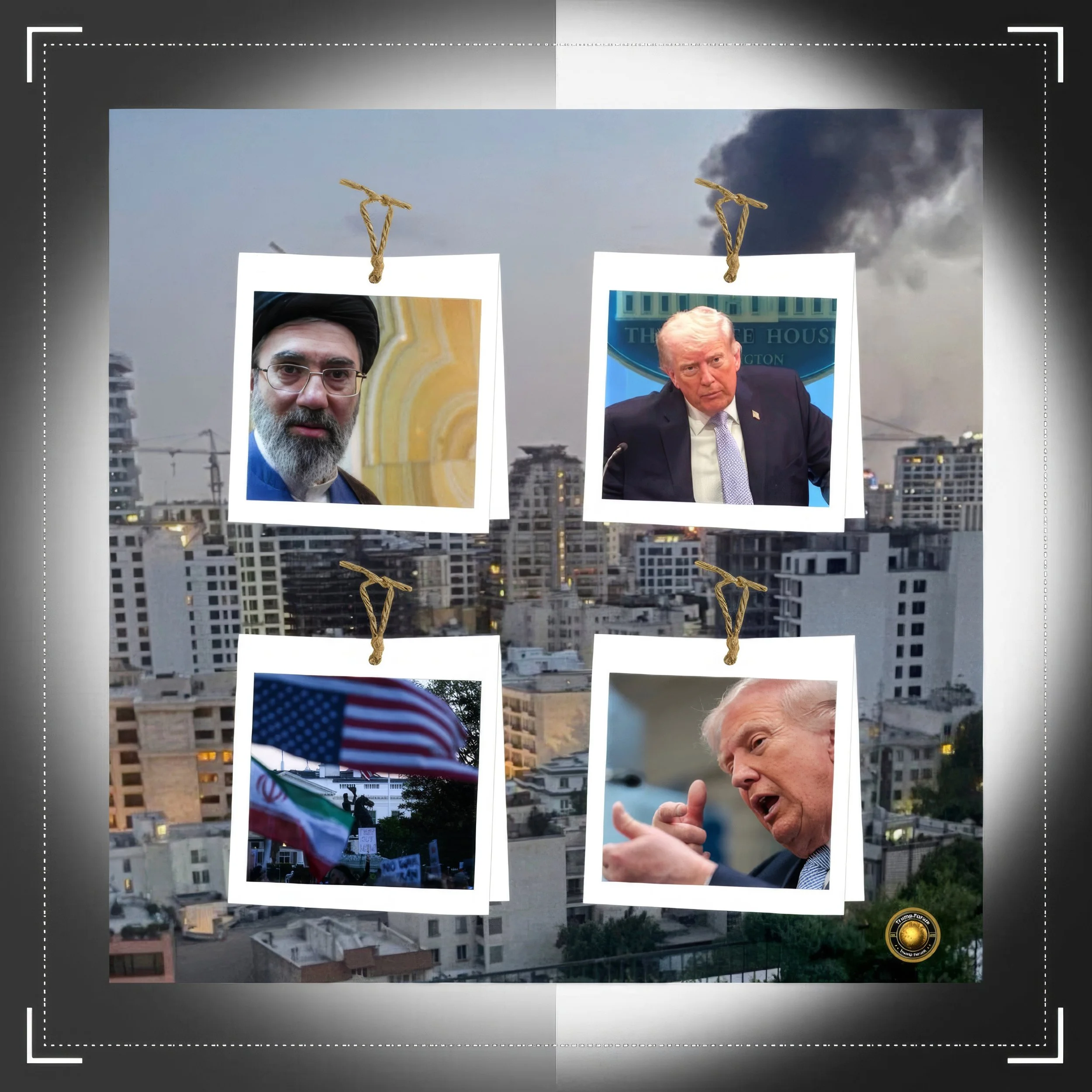
The continued Israeli bombing of Lebanon, however, immediately complicated that narrative. Iran warned that U.S.-Iran negotiations would be "meaningless" if Israeli attacks on Lebanon continued.
Trump, facing the prospect of his signature diplomatic achievement unraveling within hours of its announcement, intervened directly.
On April 9th, Trump publicly confirmed that he had called Netanyahu and asked him to conduct a "more low-key" operation against Hezbollah.
In an interview with an Israeli journalist, Trump said: "Netanyahu is going to take a step back on the Lebanon issue. He'll ease up a bit there. He has a problem with Hezbollah but he'll ease up and be totally fine."
Trump additionally characterized Netanyahu as being "on board" with the ceasefire agreement, a characterization that Netanyahu's own public statements had made somewhat difficult to sustain.
Netanyahu's response was characteristically ambiguous. He authorized direct talks with Lebanon, framing them as negotiations over Hezbollah's disarmament and the normalization of Israeli-Lebanese relations — a framing that was simultaneously a concession to American pressure and a maximalist statement of Israeli strategic objectives.
He simultaneously vowed to continue targeting Hezbollah, declaring with evident firmness: "There is no ceasefire in Lebanon."
This duality — negotiating with Beirut while bombing it — reflects a strategy of pressure-backed diplomacy that Israeli governments have employed before.
Its sustainability, however, depends on Washington's continued tolerance, which is now being tested in real time.
The friction between the allies reflects a structural divergence.
Trump's primary strategic objective is the achievement of a comprehensive nuclear and security agreement with Iran — a "deal" that he can present as a transformative diplomatic achievement and that addresses U.S. core interests, particularly the freedom of navigation through the Strait of Hormuz, which carries approximately 20% of global seaborne oil supply.
Netanyahu's primary objective is the permanent degradation of Hezbollah, which he regards as an existential threat on Israel's northern border, regardless of what any broader Iran agreement specifies.
These two objectives are not necessarily incompatible, but their sequencing and coordination are proving exceptionally difficult to manage.
The Structural Logic of the Axis of Resistance
To understand why Iran will not easily accept a ceasefire framework that excludes Lebanon, it is necessary to appreciate the strategic architecture of what Tehran calls the "Axis of Resistance."
This is not merely a rhetorical construct.
Over the past four decades, Iran has invested enormously in the cultivation of a network of allied armed organizations — Hezbollah in Lebanon, various factions in Iraq, the Houthis in Yemen, and Palestinian armed groups — that collectively constitute Iran's primary mechanism of strategic deterrence and regional power projection.
Hezbollah occupies a uniquely central position within this network.
Founded in 1982 with Iranian support during Israel's first Lebanon invasion, it has evolved from a militia into a formidable political and military organization with an estimated 150,000 rockets and missiles in its pre-2024 arsenal.
Even after suffering substantial losses in the 2024 and 2025 Israeli campaigns, it retains significant military capacity and deep social roots in Lebanese Shia communities.
For Iran, a Hezbollah permanently disarmed and politically neutralized under Israeli pressure would represent not merely the loss of an ally but the effective elimination of Iran's primary deterrent shield against Israeli military action.
Iran's 10-point ceasefire proposal — which included a clause on "ending the war against all components of the axis of resistance" — was therefore not a negotiating posture or a diplomatic nicety. It was a statement of a red line.
Tehran's willingness to conclude the broader Iran-US ceasefire while leaving Hezbollah exposed to continued Israeli bombardment was, by every indication available, precisely zero.
IRGC-affiliated media made this explicit: Iran would withdraw from the ceasefire agreement entirely if Israeli attacks on Lebanon continued.
The structural logic is clear: Iran cannot ratify a peace framework that simultaneously allows its primary strategic asset to be destroyed.
This creates a genuine dilemma for the Islamabad peace process.
The U.S. 15-point proposal explicitly demanded an end to Iranian support for armed proxy organizations — a demand that, if implemented, would require Iran to abandon the very strategic architecture it has built over four decades.
Iran's counter-proposals have been significantly more limited in scope, addressing the Strait of Hormuz and sanctions relief while seeking to preserve the Axis of Resistance framework.
The gap between these 2 positions is not easily bridged by a 2-week ceasefire and a summit in Islamabad.
Geopolitical Fault Lines: Regional and International Dimensions
The Lebanon ceasefire crisis does not exist in isolation.
It is embedded in a set of broader geopolitical dynamics that shape the options available to each stakeholder.
Saudi Arabia, which normalized relations with Iran through Chinese mediation in 2023 and has pursued a cautious policy of regional de-escalation, has a profound stake in the outcome of the Iran-US negotiations.
Riyadh seeks to avoid a wider regional conflagration that would destabilize oil markets, threaten the Gulf's economic transformation agenda under Vision 2030, and potentially draw Saudi Arabia into a conflict it has no interest in fighting.
FAF view reflects Riyadh's anxiety: a peace process that collapses over Lebanon risks reigniting the broader Iran war, with unpredictable consequences for Gulf energy infrastructure.
Iran's reported consideration of imposing tolls and taxes on vessels transiting the Strait of Hormuz after any ceasefire — a remarkable assertion of sovereign control over a waterway the international community treats as a global commons — represents a direct threat to Gulf economic interests.
Turkey, which has positioned itself as a regional mediator and has maintained working relations with both NATO allies and Iran, has watched the Lebanon developments with concern.
European capitals, particularly in Germany, France, and the UK, have publicly condemned the scale of Israeli strikes on Lebanese civilians while simultaneously supporting the broader objective of preventing Iranian nuclear proliferation.
The European Union's position — backing the diplomatic process while calling for restraint in Lebanon — reflects the fundamental tension between alliance solidarity with the United States and Israel and the demands of international humanitarian law.
China, which has significant economic interests in Iranian energy and has invested heavily in Middle Eastern infrastructure through the Belt and Road Initiative, has expressed support for a comprehensive ceasefire while watching Pakistan's diplomatic prominence with interest.
Beijing's role in the 2023 Saudi-Iran normalization gave it a precedent for consequential Middle Eastern mediation; the current crisis offers a reminder of how rapidly regional dynamics can outpace diplomatic frameworks.
Russia, whose relations with Iran deepened significantly during the Ukraine war and whose strategic interests align with containing American influence in the Middle East, has maintained a position of cautious support for Tehran while avoiding direct military involvement.
Moscow's ability to influence Iranian decision-making should not be underestimated, and any serious diplomatic process that excludes Russia may face hidden resistance from a Kremlin that has little interest in seeing the U.S. emerge from the Iran conflict with a comprehensive strategic victory.
Cause and Effect: How Israel's Lebanon Campaign Is Reshaping the Diplomatic Landscape
The cause-and-effect relationships in the Lebanon ceasefire crisis operate across multiple levels simultaneously, each feeding back into the others in ways that increase systemic instability.
At the most immediate level, Israel's decision to continue and escalate its strikes on Lebanon after the ceasefire announcement has produced a cascade of consequences.
Iran has issued explicit threats to abandon the ceasefire process. The Lebanese government has refused to negotiate "under fire."
The humanitarian situation has deteriorated to a point where UN officials are using language that invokes potential war crimes.
The April 8th strikes alone killed over 300 people, destroyed critical civilian infrastructure, and demonstrated to the watching world that the ceasefire announcement of April 7 did not, in practice, mean an end to killing.
At the intermediate level, the Lebanon crisis is complicating the Islamabad peace talks scheduled to determine the future of the Iran-US relationship.
Iran has made it clear that a comprehensive settlement cannot be achieved while Hezbollah is being systematically dismantled.
This creates a structural impasse: the United States' closest regional ally is conducting operations that directly undermine the U.S.'s most significant diplomatic initiative in the region.
Trump's request that Netanyahu "ease up" is a measure of how seriously Washington takes the threat of Iranian withdrawal from the process, but Trump's public characterization of Netanyahu as "totally fine" with the ceasefire — despite Netanyahu's own statements to the contrary — suggests a degree of diplomatic theater designed to manage Iranian expectations rather than a genuine U.S. policy shift.
At the strategic level, the Lebanon campaign risks redefining the regional security order in ways that will outlast the current crisis.
If Israel succeeds in degrading Hezbollah to the point of strategic irrelevance while Iran's hands are tied by a ceasefire framework, the balance of power in the Levant will shift dramatically in Israel's favor.
If, on the other hand, Iran withdraws from the ceasefire, resumes the broader war, and rallies the Axis of Resistance around the defense of Lebanon, the human and geopolitical costs will be staggering for all parties.
The outcome will depend, in large measure, on choices that are being made in the next several days in Jerusalem, Tehran, Washington, and Islamabad.
Legal and Normative Dimensions
The conduct of the Lebanon campaign raises profound questions of international humanitarian law that cannot be separated from the political analysis.
Human Rights Watch, the UN Human Rights Office, and the International Committee of the Red Cross have all raised concerns about the proportionality and discrimination of Israeli targeting practices in Lebanon.
The documented use of white phosphorus munitions over the residential town of Yohmor on March 3rd- verified through geolocation of imagery of airburst munitions — represents a particularly grave concern.
White phosphorus burns at over 800 degrees Celsius, cannot be extinguished by water, and adheres to skin, causing catastrophic injuries.
Its use in populated areas is regarded as indiscriminate under customary international humanitarian law.
Human Rights Watch called on Israel's principal allies, including the United States, the United Kingdom, and Germany, to suspend military assistance and arms transfers to Israel pending investigation of these allegations.
The pattern of strikes on densely populated areas — including the April 8th bombings of central Beirut neighborhoods — has also generated serious questions about targeting doctrine. Israel has consistently maintained that it targets only Hezbollah infrastructure and personnel.
The UN, multiple human rights organizations, and the Lebanese government have disputed this characterization, pointing to the high proportion of civilian casualties, the striking of medical facilities, and the destruction of civilian infrastructure including the Litani bridge.
If a future international tribunal or ICC proceeding were to investigate these events, the evidentiary record being assembled by Human Rights Watch, Amnesty International, and UN monitors would provide substantial material for examination.
The normative stakes extend beyond Lebanon itself.
The precedent set by a situation in which a major military power continues large-scale civilian bombardment under the nominal cover of a broader regional ceasefire — with the tacit acquiescence of the dominant global power — will shape the expectations of every stakeholder in future conflicts.
The integrity of ceasefire agreements as an instrument of international conflict management depends on their consistent application.
A ceasefire with exceptions for the strongest party's preferred operations is not a ceasefire. It is a license for continued warfare with reduced political costs.
Future Trajectories: What Comes Next
When Ceasefires Have Exceptions: The Dangerous Precedent Netanyahu Is Setting for the Post-War Middle East
The developments of April 8-10, 2026 have created three plausible trajectories for the immediate future, each with distinct implications.
In the first trajectory, Israeli operations in Lebanon scale back meaningfully — as Trump has publicly suggested they will — and the Islamabad peace talks proceed toward a broader framework agreement.
Under this scenario, Iran's 10-point proposal and the U.S. 15-point framework serve as the basis for a negotiated middle ground that preserves some version of a civilian Iranian nuclear program, ensures Hormuz remains open, and allows Hezbollah to survive in a degraded but politically relevant form while Israel establishes some form of security buffer in southern Lebanon.
This trajectory requires Netanyahu to accept constraints on his freedom of military action, a concession his domestic political coalition — particularly the far-right members who have called for permanent occupation of southern Lebanon — would find deeply uncomfortable.
In the second trajectory, Iran concludes that a ceasefire framework that leaves Lebanon exposed is strategically unacceptable and withdraws from the process, either formally or through a progressive escalation that makes the ceasefire nominal rather than real.
The Islamabad talks would collapse or be indefinitely delayed.
The broader Iran war would resume with greater intensity, with potential for Iranian reactivation of proxies across the region — including Houthi attacks on Red Sea shipping, Iraqi militia strikes on U.S. bases, and a renewed Hezbollah offensive against Israel.
The human and economic costs of this trajectory would be severe for all parties, including significant disruption to global energy markets.
In the third trajectory — perhaps the most realistic in the near term — the situation enters a state of managed ambiguity.
Israel continues limited operations against Hezbollah while nominally respecting a broader ceasefire framework; Iran issues periodic warnings but refrains from resuming major hostilities; the Islamabad talks proceed slowly, with periodic crises that test but do not break the process; and Lebanon's civilian population continues to pay an enormous humanitarian price for a conflict that is, for the major strategic stakeholders, primarily an argument about leverage and red lines.
This trajectory is the most stable of the three in the short term but the most corrosive of the humanitarian situation and international norms in the medium term.
Conclusion: The Architecture of an Imperfect Peace
Trump, Netanyahu, and the Lebanon Contradiction: How Allied Interests Are Pulling the Iran Truce Apart
The 2026 Iran war ceasefire represents one of the most consequential diplomatic developments in the Middle East in years.
Its announcement on April 7th reflected weeks of sophisticated back-channel diplomacy, a willingness on the part of both Washington and Tehran to step back from the brink of total war, and a genuine Pakistani investment in regional stability.
Its immediate testing, through Israel's massive strikes on Lebanon on April 8th, revealed the fragility of any peace architecture built on a foundation of unresolved contradictions.
Netanyahu's insistence that Lebanon is not part of the ceasefire is not irrational from a narrow Israeli security perspective.
Hezbollah's continued existence as a heavily armed organization on Israel's northern border is, in Israeli strategic thinking, an unacceptable threat.
The October 7th, 2023 attacks by Hamas demonstrated the catastrophic consequences of allowing a hostile armed organization to prepare and strike without adequate deterrence or preemption.
From Jerusalem, the Iran ceasefire is an opportunity to settle the Lebanon question definitively, not a constraint that prevents doing so.
Yet the consequences of this logic, applied without regard to the diplomatic architecture being constructed around it, may well produce outcomes that are worse for Israel, for the region, and for the international community than a more constrained approach would have done.
Iran's willingness to withdraw from the ceasefire process is not empty posturing.
Tehran's 10-point proposal demonstrates that Iran is engaged seriously with the diplomatic process — but only on terms that preserve its core interests, of which Hezbollah is among the most fundamental.
A collapse of the Islamabad process would leave the broader Iran question unresolved, the Strait of Hormuz's status uncertain, and the region more volatile than before.
The weight of responsibility that rests on Netanyahu, Trump, and the Islamabad process is therefore enormous.
The ceasefire of April 2026 may either prove to be the foundation of a new regional order or a historical footnote to a war that consumed tens of thousands of lives in Lebanon, destabilized the wider Middle East, and demonstrated once again the tragic gap between the architecture of diplomacy and the realities of power.
The answer will be shaped, in the days ahead, by choices made in four capitals — Washington, Jerusalem, Tehran, and Islamabad — and by whether the humanity of Lebanon's suffering is finally allowed to intrude on the calculus of strategic interest.