Gulf Monarchies Face Missile Attacks: Weighing Retaliation, Diplomacy, and Expensive Security Upgrades to Protect Prosperity and Investor Confidence
Executive Summary
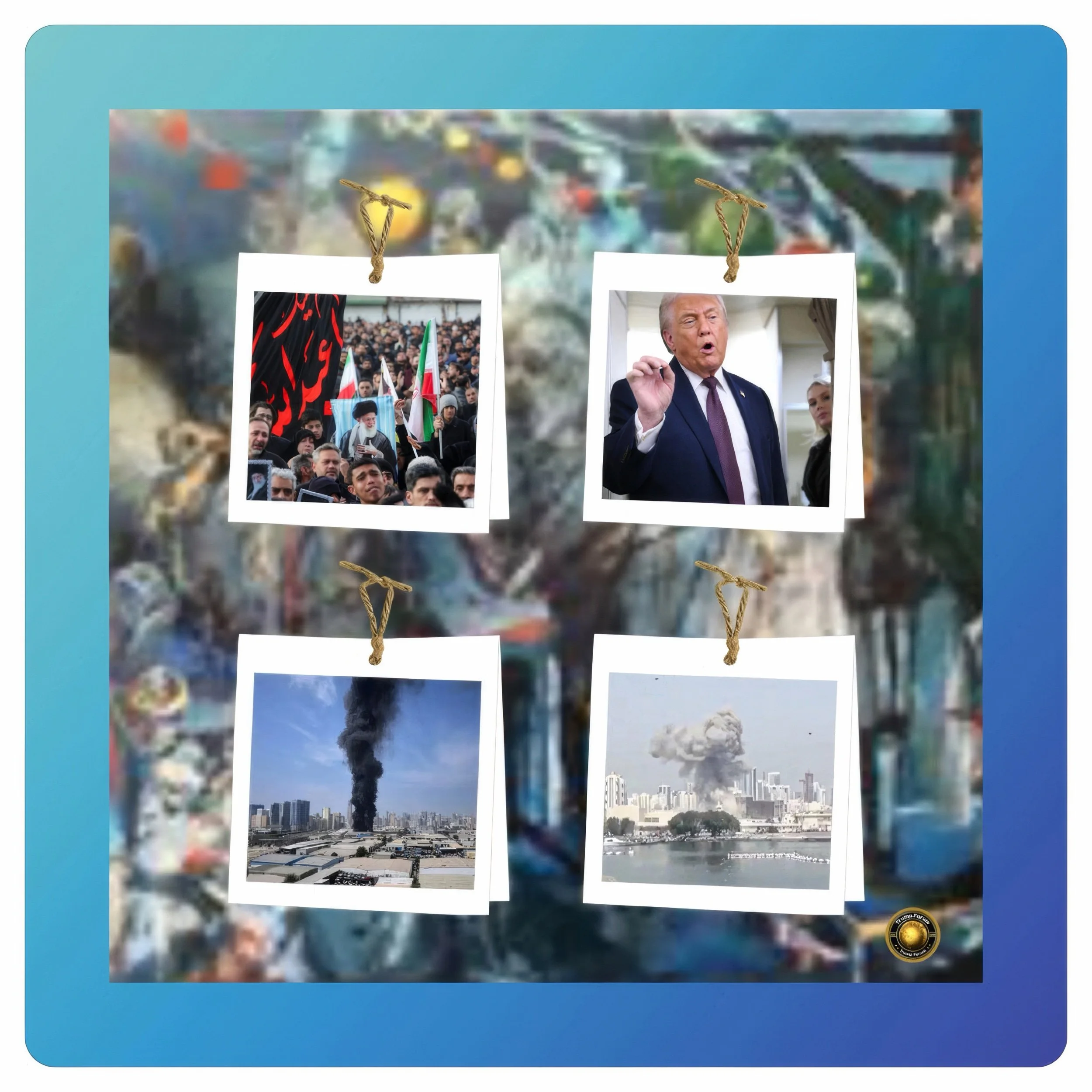
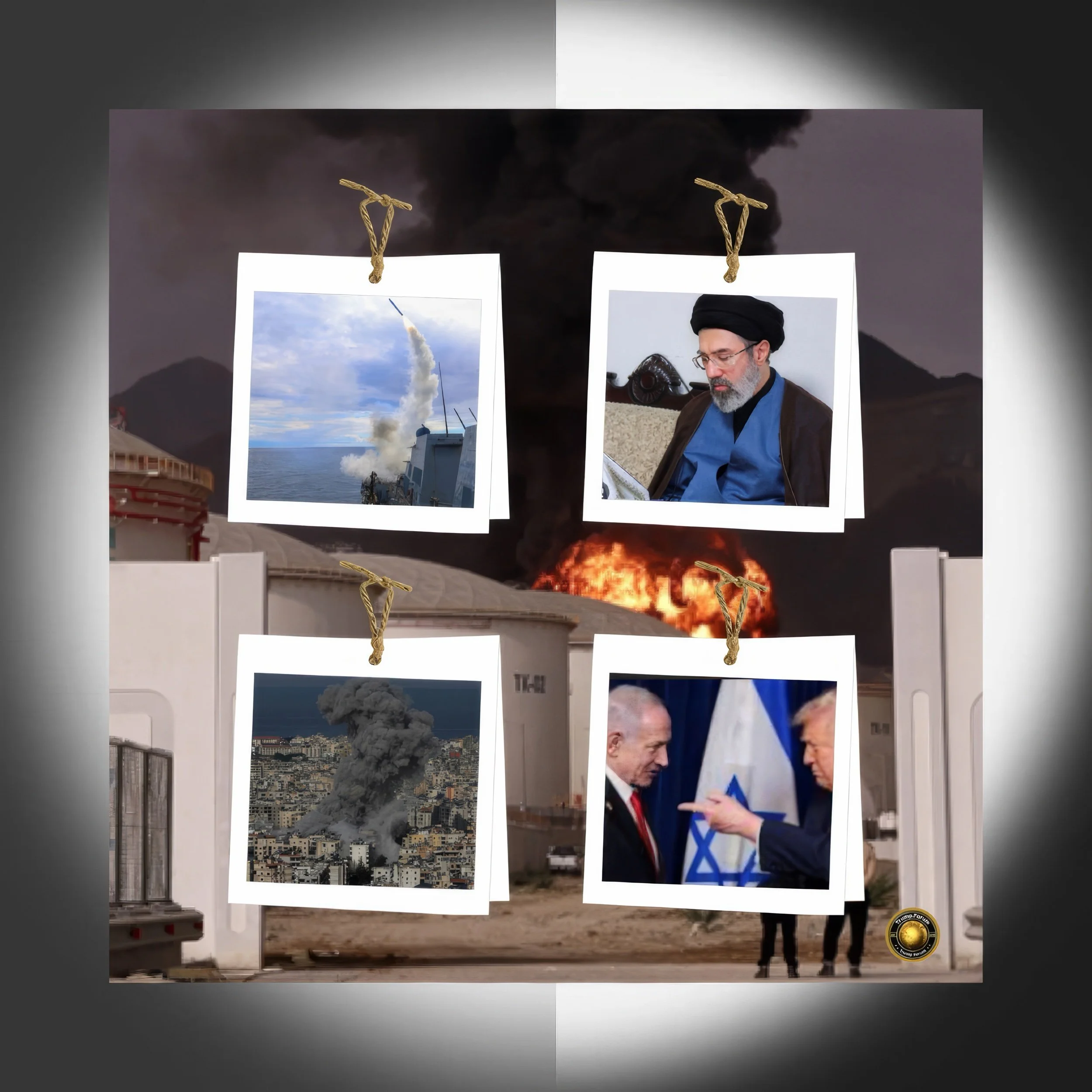
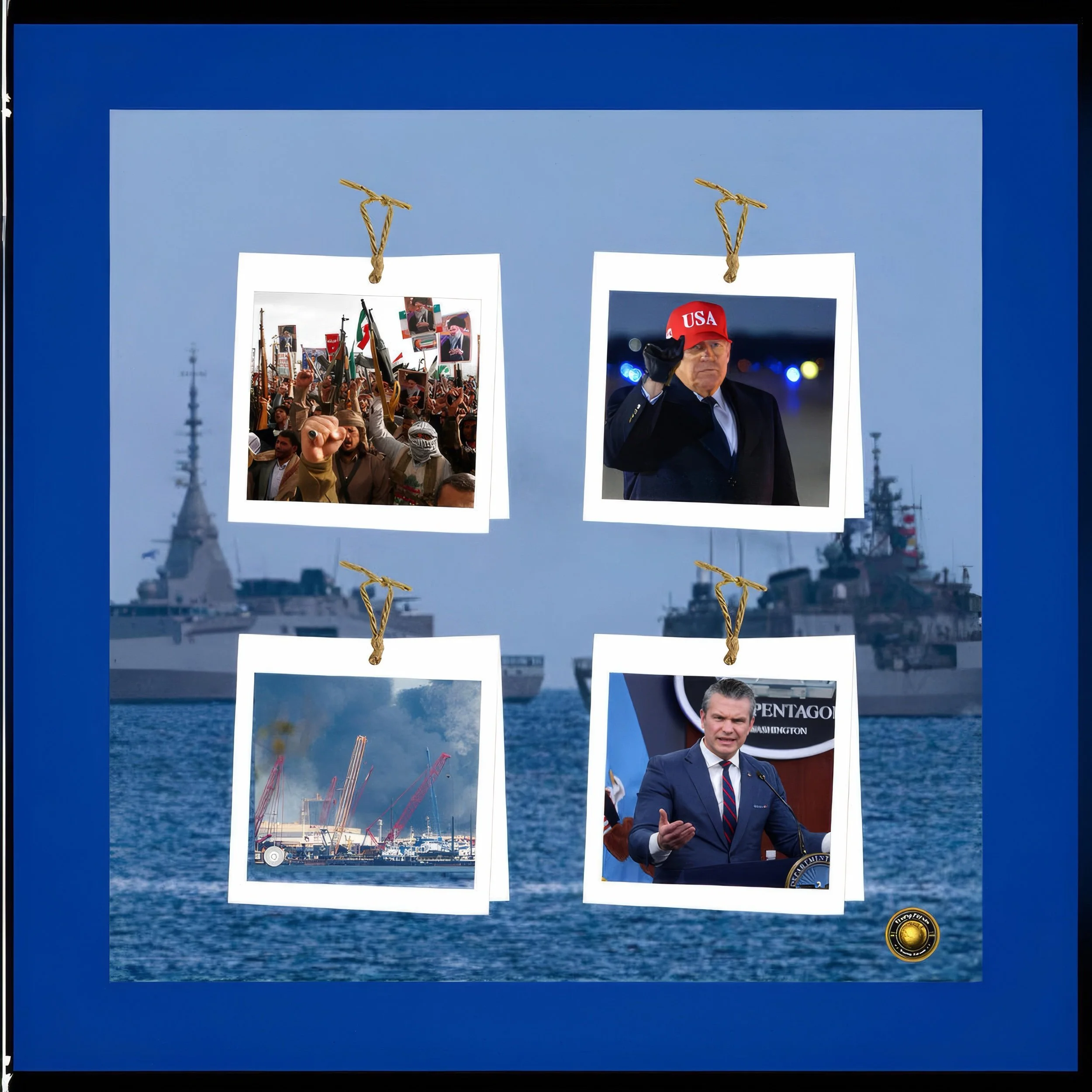
Iran’s decision to fire large numbers of drones and ballistic missiles at multiple Gulf Cooperation Council states marks a turning point in the region’s strategic landscape.
For decades, cities such as Abu Dhabi, Doha, Dubai, Riyadh, and Manama cultivated an image of near-impregnable safety, underpinned by massive arms purchases and the physical presence of United States bases and air-defense systems; that image has now been visibly punctured.
The attacks, launched in retaliation for United States–Israeli strikes on Iranian territory and leadership, have directly hit or threatened military facilities, airports, ports, and energy infrastructure across at least five Gulf Arab countries, temporarily closing airspace and disrupting trade and aviation flows.
Gulf governments have responded along three intertwined vectors.
First, they have condemned Iran’s strikes as “heinous” and “reckless,” asserted a legal right to self-defense, and signaled that retaliation, either directly or by enabling others, remains on the table.
Second, they are quietly deepening operational integration with the United States and, to a lesser extent, Israel, particularly in missile defense, early warning, and maritime security, even as they publicly insist that their territory should not be used as a launchpad for further escalation.
Third, they are trying to preserve strategic hedging: Gulf capitals want to avoid being dragged fully into a prolonged war while keeping open channels to China, Europe, and even Iran, in order to protect economic diversification projects and energy market stability.
Saudi Arabia, the United Arab Emirates, and Qatar face distinct but overlapping dilemmas as they navigate this crisis. Riyadh’s leadership must decide whether to translate rhetorical solidarity with Washington and fellow Gulf partners into overt participation in military operations, while guarding Vision 2030 and its investment-heavy domestic agenda.
Abu Dhabi, long a champion of muscular regional projection, is acutely aware that its status as a logistics, financial, and aviation hub depends on restoring investor confidence after visible damage and temporary port and airport closures.
Qatar, which hosts one of the largest United States air bases in the world and has historically maintained comparatively smoother ties with Tehran, has both condemned the attacks and signaled a sense of personal betrayal, suspending some gas operations to inspect infrastructure and re-evaluate exposure.
FAF article traces the evolution of Gulf security arrangements, details the chronology and operational characteristics of Iran’s recent attacks on Gulf Cooperation Council territory, and analyzes Gulf responses at the military, diplomatic, and economic levels.
It then examines the broader cause-and-effect chain linking the Gulf’s dependence on United States protection, Iran’s strategy of deterrence by regionalization, and external stakeholders’ interest in the security of Gulf energy flows.
FAF article concludes that while the attacks have shaken faith in the American security umbrella, they are more likely in the near term to deepen Gulf military cooperation with Washington than to drive a wholesale pivot to Beijing, even as Gulf rulers accelerate diplomatic diversification and invest in indigenous air and missile defenses.
Introduction
The Gulf monarchies have long traded on a distinctive bargain: they offer global capital safe access to hydrocarbons, logistics networks, aviation hubs, and cosmopolitan urban spaces in return for recognition, investment, and political deference.
This bargain rests on a core premise, that Gulf territory is buffered from major war by a thick shield of United States power, reinforced by national air and missile defenses and careful diplomacy with Iran and its regional partners.
For the past two decades, even as wars ravaged Iraq, Syria, and Yemen, cities such as Doha, Dubai, and Riyadh remained largely unscathed, their glass towers lit while nearby states burned.
Iran’s recent decision to launch salvos of drones and missiles against multiple Gulf Cooperation Council states, including Saudi Arabia, the United Arab Emirates, Qatar, Kuwait, Bahrain, and Oman, has undermined that sense of exceptional safety.
Tehran’s strikes, framed domestically as retaliation for United States and Israeli attacks on Iranian soil, have targeted both United States military assets and national infrastructure, including civilian airports and ports, forcing temporary airspace closures and raising fears among ordinary citizens and expatriate workers.
United States President Donald Trump has publicly described Iran’s willingness to attack Gulf countries directly as “the biggest surprise” of the war, implicitly acknowledging that Washington, too, underestimated how far Tehran would go in regionalizing the conflict.
The question facing Gulf leaders is not simply whether to join United States and Israeli attacks on Iran in a formal sense.
It is whether and how they can recalibrate their security posture under the pressure of direct Iranian fire without sacrificing their economic transformation agendas, which depend on foreign investment, migrant labor, and uninterrupted energy exports.
These choices are unfolding in real time in Abu Dhabi, Doha, and Riyadh, but also in smaller capitals such as Manama, Kuwait City, and Muscat, each of which hosts significant Western military assets and has been struck or threatened by Iranian projectiles.
History and Current Status of Gulf Security
From British Protectorates to United States Umbrella
Until the early nineteen seventies, security in the Gulf rested on British imperial power, which policed sea-lanes and mediated disputes among ruling families.
When London withdrew “east of Suez,” the United States gradually filled the vacuum, initially through the twin pillars policy that relied on Iran and Saudi Arabia as complementary local guardians, a framework shattered by the nineteen seventy nine Iranian Revolution.
Thereafter, Washington deepened its direct military presence, especially after the nineteen ninety to nineteen ninety one Gulf War, which saw United States forces deploy in large numbers to Saudi Arabia and other Gulf Cooperation Council states to expel Iraqi troops from Kuwait.
Over the next three decades, the United States–Gulf security partnership grew denser as bases and prepositioned stocks spread across the region.
Al Udeid in Qatar, Al Dhafra in the United Arab Emirates, naval facilities in Bahrain and Oman, and access arrangements in Kuwait and Saudi Arabia created a lattice of American power around the Gulf.
Washington sold advanced combat aircraft, air-defense systems, and surveillance platforms to its Gulf partners, while Gulf rulers paid hundreds of billions of dollars for this protection and accepted deep operational integration of their command-and-control systems with United States Central Command.
In return, they expected not only deterrence against Iran but rapid United States intervention to defend critical infrastructure if deterrence failed.
Early Warning Signs: Aramco and the Drone Era
This security architecture began to show cracks well before the current war. In 2019, coordinated drone and cruise missile attacks on Saudi Aramco facilities at Abqaiq and Khurais temporarily knocked out a significant share of the kingdom’s oil production, demonstrating Iran or its partners’ ability to strike with precision deep inside Saudi territory.
Riyadh and Washington both hesitated to respond militarily, and the episode ended without open war, but the psychological impact was profound: Gulf oil installations were no longer untouchable.
Subsequent Houthi attacks on Saudi airports and the United Arab Emirates, including strikes near Abu Dhabi’s airport and against tanker traffic off Fujairah, reinforced the sense that Iran’s network could target the economic crown jewels of Gulf monarchies at relatively low cost.
Gulf capitals began investing more heavily in layered air defenses, counter-drone systems, and hardened infrastructure, while also pursuing de-escalation with Iran, as seen in the twenty twenty three Saudi–Iran normalization brokered by China.
Yet vulnerability remained; defending sprawling cities, oil fields, and ports against saturation drone and missile attacks is technologically and financially demanding even for rich petro-states.
The Leap to Direct Iranian Strikes on Gulf Cooperation Council States
The current conflict marks a qualitative shift because Iran is now striking Gulf territory openly and repeatedly, not only through partners.
After United States and Israeli forces launched extensive strikes on Iranian nuclear and military infrastructure, as well as leadership compounds, Tehran responded with large salvos of drones and ballistic missiles aimed not only at Israel but at United States bases and national facilities in Saudi Arabia, the United Arab Emirates, Qatar, Bahrain, Kuwait, and Oman.
According to publicly available tallies, Iran has sent hundreds of projectiles across the Gulf, forcing governments to close airspace temporarily, divert flights, and halt operations at certain ports and energy sites while damage assessments and defensive adjustments are made.
Gulf militaries, often in coordination with United States assets, have intercepted a substantial share of these drones and missiles, but interceptions are rarely perfect, and even a limited number of impacts can cause civilian casualties and economic disruption. In one widely reported case, drones struck near the United States embassy in Riyadh and near consular facilities in Dubai, prompting shelter-in-place advisories to American citizens and temporary embassy closures.
Current Political Mood in Gulf Capitals
The shock of being targeted directly has triggered intense debates within Gulf leadership circles about the reliability of the United States security umbrella and the costs of continued association with Washington’s confrontation with Tehran.
Gulf officials have reportedly complained that they did not receive adequate advance warning from the United States before Iran’s large-scale retaliatory strikes, constraining their ability to prepare civil defense measures and public messaging. At the same time, leaders recognize that without United States intelligence, early warning, and interceptors, the damage could have been far worse.
Publicly, Gulf Cooperation Council governments have walked a fine line. They have issued strong condemnations of Iran’s attacks, described them as heinous and reckless, and affirmed their legal right to respond.
In a joint statement with Washington and several regional stakeholders, they denounced indiscriminate and reckless missile and drone attacks on countries not directly engaged in hostilities, underscoring that Iran had crossed a red line by expanding the war to neutral or semi-neutral states.
Yet Gulf statements also emphasize de-escalation and diplomacy, reflecting anxiety about being drawn into a protracted, high-intensity conflict that would endanger the economic transformation projects on which ruling legitimacy increasingly rests.
Key Recent Developments
Scope and Patterns of the Strikes
The pattern of Iran’s attacks on Gulf territory reveals both military and political objectives. Militarily, Tehran has sought to degrade United States early warning, command-and-control, and logistics nodes in the region, including radar sites in Qatar and bases or support facilities in Saudi Arabia, the United Arab Emirates, Bahrain, and Kuwait.
Politically, by hitting civilian airports, ports, and energy infrastructure, often in ways that limit casualties, Iran signals that the war will not remain confined to its own territory and to Israel but will impose costs on those it sees as enabling attacks against it.
In Qatar, authorities stated that a long-range early warning radar in the north was targeted, but claimed that all missiles were intercepted before entering national airspace and emphasized that operations followed a pre-approved security plan.
Qatar also temporarily suspended some liquefied natural gas production while it inspected facilities for damage and vulnerabilities, highlighting the potential for even thwarted attacks to disrupt energy flows. In Saudi Arabia and the United Arab Emirates, drones and missiles have threatened airports, ports, and United States diplomatic compounds, contributing to travel chaos and prompting warnings to residents and expatriates.
Gulf Diplomatic Responses
Diplomatically, the Gulf Cooperation Council has moved with unusual speed and unity. The organization issued a statement vowing to take all necessary measures to defend member states and reserving the right to respond to Iranian aggression, even as it called for a return to dialogue and diplomacy.
Individual governments have echoed this line. Qatar’s foreign ministry spokesperson, representing a state that historically tried to balance between Iran and its Arab neighbors, warned that a price would have to be paid for attacks on Qatari citizens and infrastructure, suggesting that Doha, too, is reconsidering the basis of its relationship with Tehran.
At the same time, Gulf capitals have participated in joint statements with the United States and other partners that condemn Iran’s attacks and reaffirm collective defense but do not commit Gulf Cooperation Council states to offensive operations.
This careful positioning allows them to maintain solidarity with Washington and one another, while preserving room for maneuver if the conflict escalates into an extended air and cyber campaign or spills into maritime confrontations in the Strait of Hormuz.
Operational Coordination with the United States and Israel
Operationally, Gulf militaries have tightened coordination with United States forces, especially in missile defense and airspace management.
The interception of large numbers of Iranian projectiles across multiple jurisdictions requires extensive information-sharing and real-time coordination that would have been politically sensitive a decade earlier, particularly when Israeli radars and interception assets contribute to the broader defense network.
The current crisis is accelerating the emergence of a de facto integrated air and missile defense architecture across parts of the Middle East, centered on United States systems.
However, Gulf governments remain cautious about visible association with Israeli offensive operations.
While they permit some forms of intelligence and early-warning cooperation, they prefer to frame this as part of a defensive response to Iranian recklessness rather than as participation in a United States–Israeli war against Iran.
This distinction matters domestically, where public opinion is sensitive both to perceptions of complicity in civilian casualties in Iran and to long-standing grievances over Palestine.
Latest Facts and Concerns
Economic Disruption and Market Volatility
The immediate economic impact of Iran’s attacks on Gulf countries is significant. The strikes, and the risk of further escalation, have rattled global markets, driving up oil prices and raising insurance costs for shipping through the Strait of Hormuz.
Even short-lived closures of airspace and ports in Qatar, the United Arab Emirates, Kuwait, and other states undermine the image of seamless connectivity that underpins their role as hubs for aviation, trade, and tourism.
For Gulf rulers, these disruptions directly threaten national visions that depend on attracting long-term foreign capital, hosting major international events, and growing non-oil sectors such as tourism, financial services, and technology.
The fear extends beyond immediate revenue loss to erosion of investor confidence: if Gulf cities begin to be seen as front-line targets rather than safe havens, global firms may reconsider their regional footprint. That concern reinforces incentives to restore deterrence against Iran quickly, whether by leaning more heavily on United States power, by signaling potential retaliation, or by exploring de-escalatory bargains.
Public Sentiment and Governance Challenges
At the societal level, the psychological impact of Iranian strikes is considerable. For years, Gulf citizens and expatriate residents watched wars unfold elsewhere in the region while their own cities remained largely insulated.
The sight of missiles and drones intercepted over major urban centers, or of debris falling near residential areas and diplomatic compounds, undermines the sense of inviolability on which Gulf social contracts partly rest.
Governments have responded with extensive public messaging about air-defense effectiveness, infrastructure resilience, and the temporary nature of disruptions, but anxiety persists.
Gulf regimes remain robust; they command substantial coercive and co-optive capacities. Still, they must manage emerging questions among their populations about the wisdom of hosting foreign bases, the reliability of United States protection, and the risks of being caught between Washington and Tehran.
These debates intersect with longer-term concerns such as youth unemployment, fiscal sustainability, and demands for greater participation, creating a complex governance environment in which external security shocks can interact with internal pressures.
Uncertainty Over United States Reliability
One of the Gulf’s deepest concerns is whether the United States can and will provide the level of protection that has underpinned regional security bargains for decades.
On one hand, United States interceptors and intelligence clearly played a vital role in limiting the damage from Iran’s strikes, and the Trump administration has vowed to continue degrading Iran’s missile and drone capabilities.
On the other hand, Gulf officials’ complaints about limited advance notice of Iranian retaliation, and the closure or reduced operations of certain United States diplomatic facilities in the region, feed perceptions that Washington is primarily focused on protecting its own assets.
These perceptions build on earlier episodes, including the twenty eleven Arab uprisings, the twenty fifteen nuclear deal with Iran, and the chaotic United States withdrawal from Afghanistan, which eroded Gulf elites’ confidence in America’s strategic steadiness.
Now, the fact that Iran has managed to hit or threaten Gulf territory directly, despite decades of investment in United States-supplied defenses, raises uncomfortable questions about the cost-benefit balance of tight alignment with Washington.
Yet alternatives are limited; no other power currently offers comparable security guarantees, and China has shown little appetite for assuming such a role, preferring diplomatic and economic engagement.
Cause-and-Effect Analysis: Iran’s Strategy of Deterrence by Regionalization
Iran’s decision to target Gulf countries is best understood as deterrence by regionalization. Facing coordinated United States–Israeli strikes designed to degrade its nuclear and missile capabilities and potentially weaken its regime, Tehran has signaled that any attempt to resolve the Iran problem militarily will have repercussions across the region, especially for United States partners.
By striking cities and infrastructure that had long been considered relatively safe, Iran seeks to raise the political and economic costs of the war for Gulf rulers and for Western governments dependent on Gulf energy supplies.
This approach fits a broader pattern in which Iran leverages asymmetric tools, including ballistic missiles, drones, and regional partners, to compensate for its conventional weakness versus the United States and its allies.
It also reflects the regime’s belief that survival is at stake; when leadership and critical military infrastructure are under direct attack, incentives to keep the conflict geographically contained diminish, and expanding the battlefield becomes a way to alter adversaries’ calculations.
The danger is that such expansion may overshoot, converting previously cautious Gulf states into active military adversaries and deepening their dependence on Washington.
Gulf Calculations Between Autonomy and Protection
Gulf rulers are caught between the desire for greater strategic autonomy and the necessity of relying on United States protection in the face of a capable, determined Iran.
In recent years, they experimented with hedging strategies: deepening economic ties with China, exploring de-escalation with Tehran, and diversifying defense partnerships with European and Asian powers.
These efforts were driven partly by doubts about United States staying power and partly by the recognition that a purely confrontational posture toward Iran is dangerous and costly.
The current attacks complicate this calculus. On one level, they vindicate those Gulf voices that advocated stronger deterrence against Iran and closer integration with United States and Israeli security architectures.
On another, they highlight the risks of being too closely associated with Washington’s offensive operations; hosting United States assets makes Gulf territory a priority target for Iran.
The cause-and-effect chain is circular: United States presence deters some threats but invites others; Iran’s attacks reinforce reliance on United States defenses while fuelling long-term interest in hedging away from Washington.
United States Policy and Escalation Risks
For the United States, Iran’s strikes on Gulf territory underscore both the necessity and the limits of its regional role. Washington must reassure its Gulf partners that it remains committed to their defense, not only by intercepting missiles and drones but by deterring future attacks through credible threats of retaliation.
At the same time, the United States wishes to avoid a wider regional war that could entangle its forces in open-ended conflict, disrupt global energy markets, and provoke domestic political backlash.
This tension shapes United States messaging and operational choices.
Trump’s administration celebrates high interception rates and the damage inflicted on Iran’s capabilities, while also closing certain diplomatic sites temporarily and warning citizens about travel in the region.
To Gulf observers, this resembles a familiar pattern: strong rhetoric and heavy firepower, mixed with a careful effort to limit exposure and preserve freedom of action.
The effect is ambiguous, partly reassuring yet reinforcing perceptions that United States priorities may not fully align with Gulf stakes as long as the conflict remains below a certain threshold.
China and other External Stakeholders
China’s role in this crisis is indirect but important. Beijing is now the largest single buyer of Gulf oil and gas and has invested heavily in infrastructure across the region.
It also brokered the twenty twenty three Saudi–Iran rapprochement, signaling ambitions as a diplomatic problem-solver, though it has not offered hard security guarantees.
Iran’s strikes on Gulf territory therefore endanger key Chinese economic interests, even as they test the viability of hedging strategies pursued by Riyadh, Abu Dhabi, and Doha.
If Gulf leaders conclude that the United States umbrella can no longer guarantee their security at acceptable cost, they may deepen diplomatic and economic engagement with China, Russia, and European powers, seeking a more multipolar balance.
However, a rapid pivot to Beijing remains unlikely; China currently lacks both the expeditionary capabilities and political will to replace the United States as the Gulf’s primary security guarantor.
Instead, the attacks may accelerate gradual diversification in which the United States remains indispensable militarily but faces growing competition in economic and technological domains.
Future Steps for Gulf Countries
Short-Term Security Measures
In the immediate future, Gulf states are likely to prioritize several measures. They will invest further in integrated air and missile defense, both nationally and across Gulf Cooperation Council members, enhancing interoperability and real-time data-sharing with United States systems.
They will harden critical infrastructure, disperse key nodes, and expand redundancy in energy, communications, and logistics networks to ensure continuity of operations under sustained attack.
These efforts will accompany continued procurement of advanced interceptors, sensors, and counter-drone technologies from the United States and European suppliers.
Gulf governments will also refine doctrines for civil defense, crisis communication, and continuity of governance.
The experience of managing airspace closures, embassy advisories, and temporary suspensions of energy operations will inform updated plans and exercises, designed to reduce panic, protect foreign residents, and reassure investors.
In that sense, Iran’s attacks function as a harsh but potentially instructive stress test of institutional resilience.
Calibrated Retaliation and Signaling
Whether Gulf states will participate directly in offensive operations against Iran remains uncertain.
They are likely to explore a spectrum of calibrated responses, ranging from increased intelligence and logistical support for United States and possibly Israeli actions, through cyber operations and covert measures, to limited overt strikes if domestic and regional conditions permit.
The shared objective would be to restore deterrence by demonstrating that attacks on Gulf territory incur costs, without triggering full-scale war.
Simultaneously, Gulf rulers may deploy diplomatic and economic tools to pressure Tehran.
They could tighten enforcement of sanctions, restrict Iranian access to regional financial channels, or coordinate with partners to condition future de-escalation on verifiable limits to Iran’s missile and drone deployments threatening their soil.
Such moves would likely be accompanied by messaging that distinguishes between Iran’s government and population, seeking to avoid framing the confrontation in sectarian or civilizational terms.
Renewed Diplomacy and Managed Hedging
Despite current anger, Gulf states are unlikely to abandon entirely the search for a modus vivendi with Iran.
Geography and energy interdependence are inescapable; ports face each other across narrow waterways, shipping lanes are shared, and energy markets interconnect their fates.
Once immediate hostilities subside, regional and extra-regional intermediaries, including China, European states, and perhaps Oman or Qatar, may seek to revive dialogue on non-escalation and incident management.
Meanwhile, Gulf hedging will continue. States will deepen economic ties with China and other Asian powers, explore technology partnerships beyond the West, and cultivate multiple security relationships even as the United States remains central.
The goal will not be to replace Washington but to reduce one-sided dependence, so that shifts in United States policy or domestic politics do not leave Gulf states exposed.
Long-term Strategic Rethinking
Longer term, the attacks may prompt a deeper reconsideration of Gulf security doctrine. Instead of relying heavily on external protection and deterrence by punishment, Gulf states may invest more in deterrence by denial, making it harder and less rewarding for adversaries to inflict serious damage with missiles and drones.
This shift implies not only better defenses but also changes in urban planning, industrial siting, and infrastructure design, with greater emphasis on dispersion, redundancy, and resilience.
Additionally, Gulf rulers may reassess the political economy of their global-city strategies. If sustained high-intensity conflict remains a possibility, pressure may grow to diversify economic activity away from a few hyper-concentrated hubs toward a broader distribution across secondary cities and regions.
Though complex and gradual, such a rebalancing could reduce strategic vulnerability, even if it challenges entrenched models of prestige and efficiency.
Conclusion
Iran’s drone and missile attacks on Gulf countries have punctured the illusion that Abu Dhabi, Doha, Riyadh, and their neighbors could remain insulated from the region’s wars while hosting United States bases and projecting themselves as safe global crossroads.
The strikes expose the double-edged nature of the Gulf security bargain: the same American presence that deters some threats also makes the region a prime target when Washington and its partners confront Tehran.
In response, Gulf states are neither rushing into war alongside the United States and Israel nor pivoting decisively toward China.
They are instead improvising a complex mix of deepened security cooperation with Washington, calibrated signaling toward Iran, and renewed hedging through diversified diplomatic and economic ties.
Their choices in the coming months will help determine whether the conflict cements a more militarized and polarized Gulf order or prompts a difficult but necessary re-examination of how security, economic transformation, and regional coexistence can be reconciled.