Strategic Scenarios and Geography of Leverage: War-Game Extension to Advantage Iran
Introduction
Where the War is Really Being Decided
The visible conflict—airstrikes, troop deployments, and political rhetoric—only tells part of the story.
The deeper contest is unfolding across two interlocking domains: geography and institutional control.
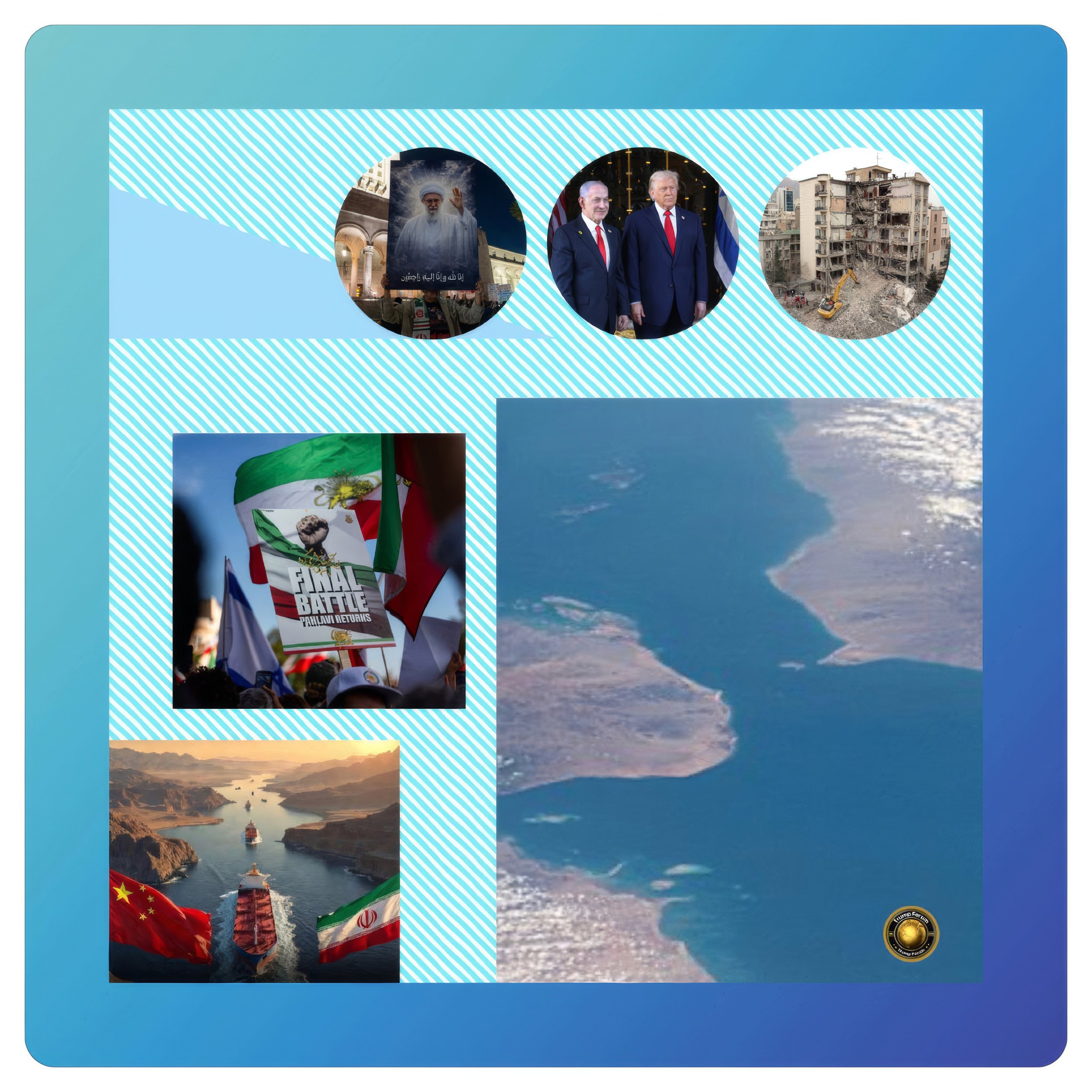
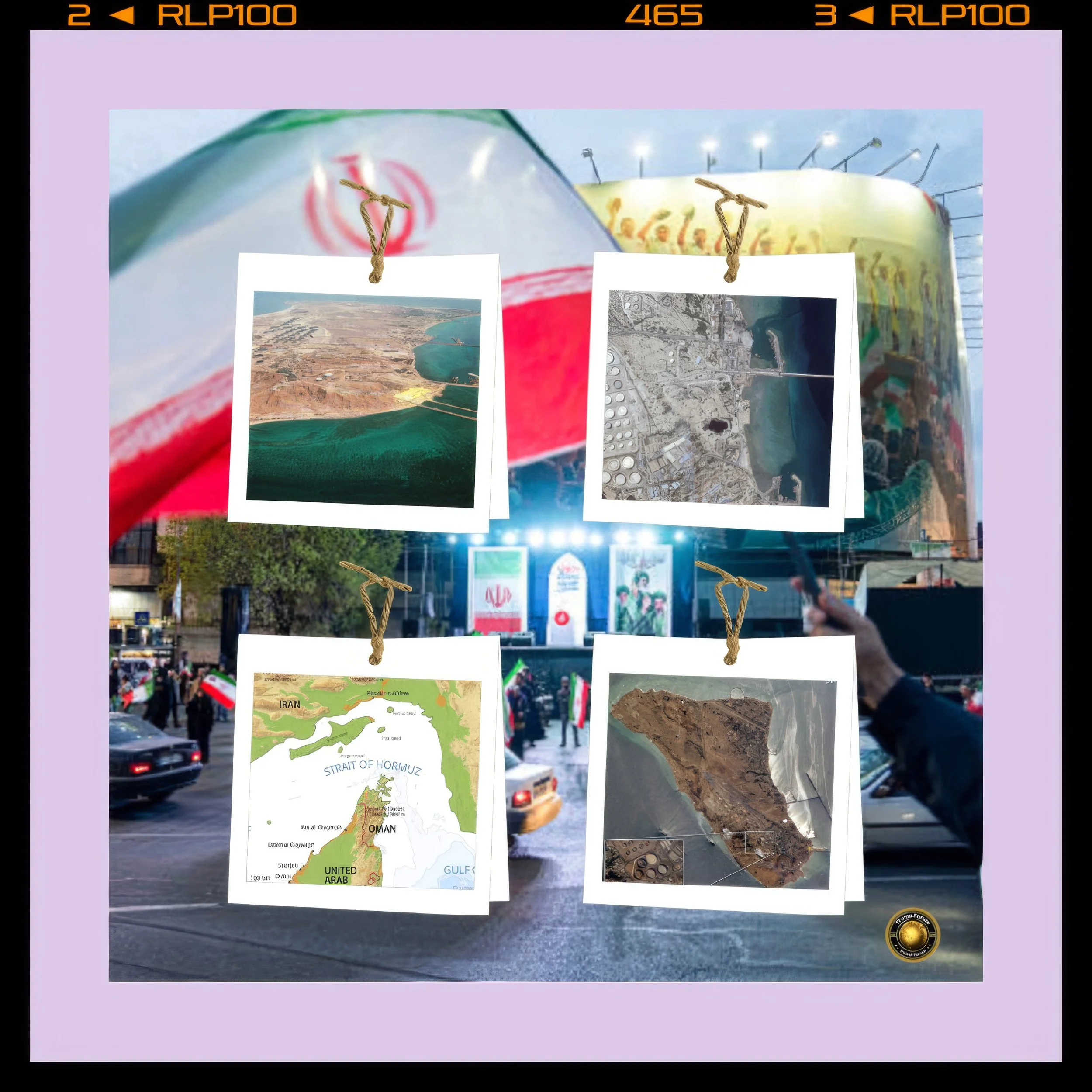
On one level, the war is about physical chokepoints such as the Strait of Hormuz and energy hubs like Kharg Island.
On another level, it is about internal transformation, where the Islamic Revolutionary Guard Corps is reshaping Iran into a unified wartime state.
These two dimensions reinforce each other. Geography provides leverage; institutional consolidation allows that leverage to be used effectively.
The result is a strategic environment in which traditional measures of power—air superiority, precision strikes, and economic pressure—fail to produce decisive outcomes.
The central question confronting Donald Trump is therefore not simply whether to escalate or negotiate.
It is whether the United States can translate military action into political results in a landscape designed to resist exactly that kind of pressure.
The Geography of Leverage: Why Hormuz Matters More Than Targets
The Strait of Hormuz is not just a waterway; it is the central artery of the global energy system. A significant share of the world’s oil passes through this narrow corridor each day.
Its geography favors denial rather than control. It is narrow, heavily trafficked, and within range of Iran’s coastal defenses.
This matters because it shifts the logic of the conflict.
The United States can strike fixed targets inside Iran, but Iran can threaten moving targets that underpin the global economy.
Tankers, insurance markets, shipping routes, and energy prices all become part of the battlespace.
The asymmetry is critical. Closing Hormuz completely would be difficult and risky for Iran. But it does not need to close it. It only needs to make passage uncertain, expensive, and dangerous.
Even limited disruption can drive up insurance costs, reroute shipping, and trigger global price spikes.
This gives Iran a form of strategic leverage that is disproportionate to its conventional military strength. It can impose costs not only on its direct adversaries but on the broader international system.
That, in turn, creates pressure on external stakeholders to favor de-escalation.
Kharg Island: The Tempting Target and the Dangerous Prize
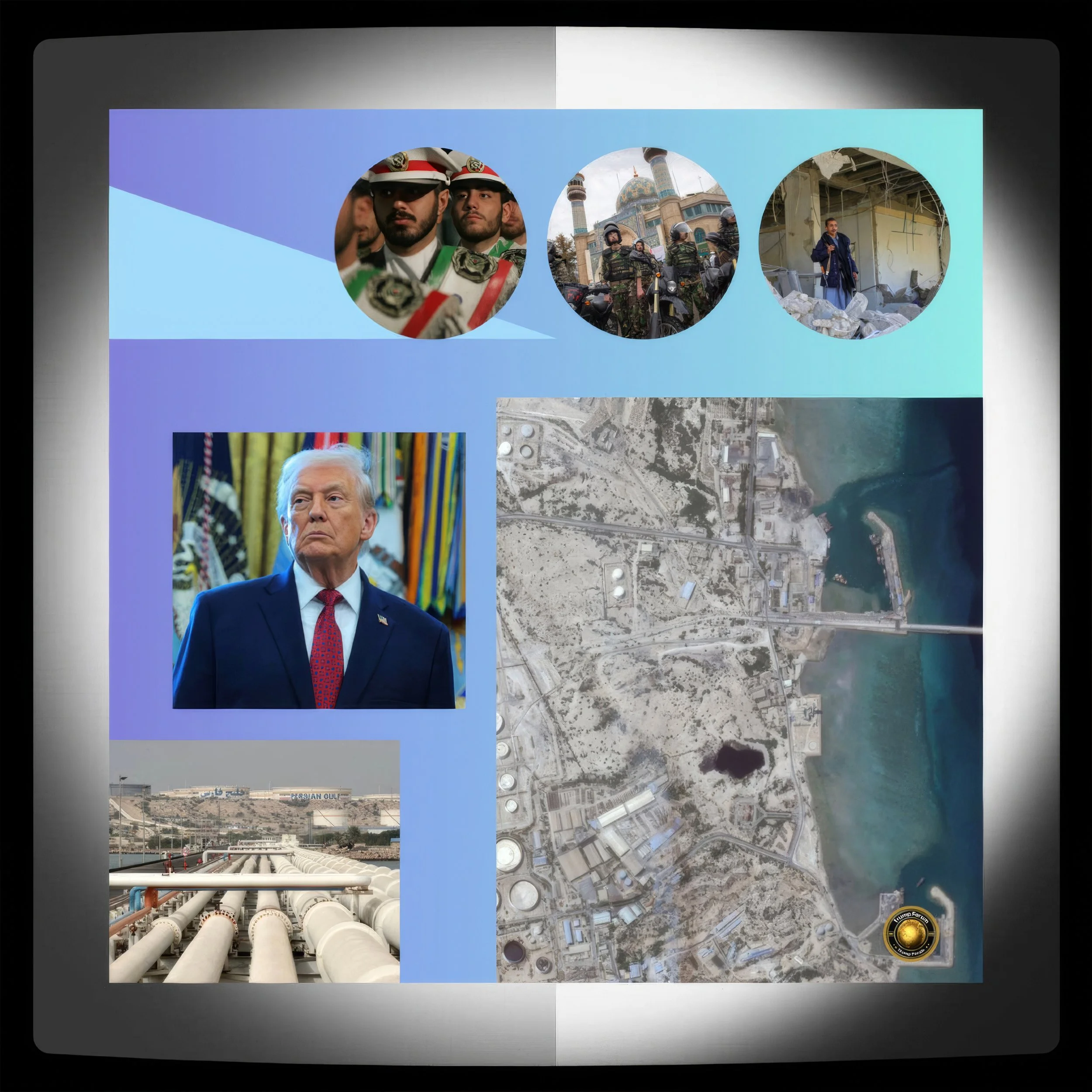
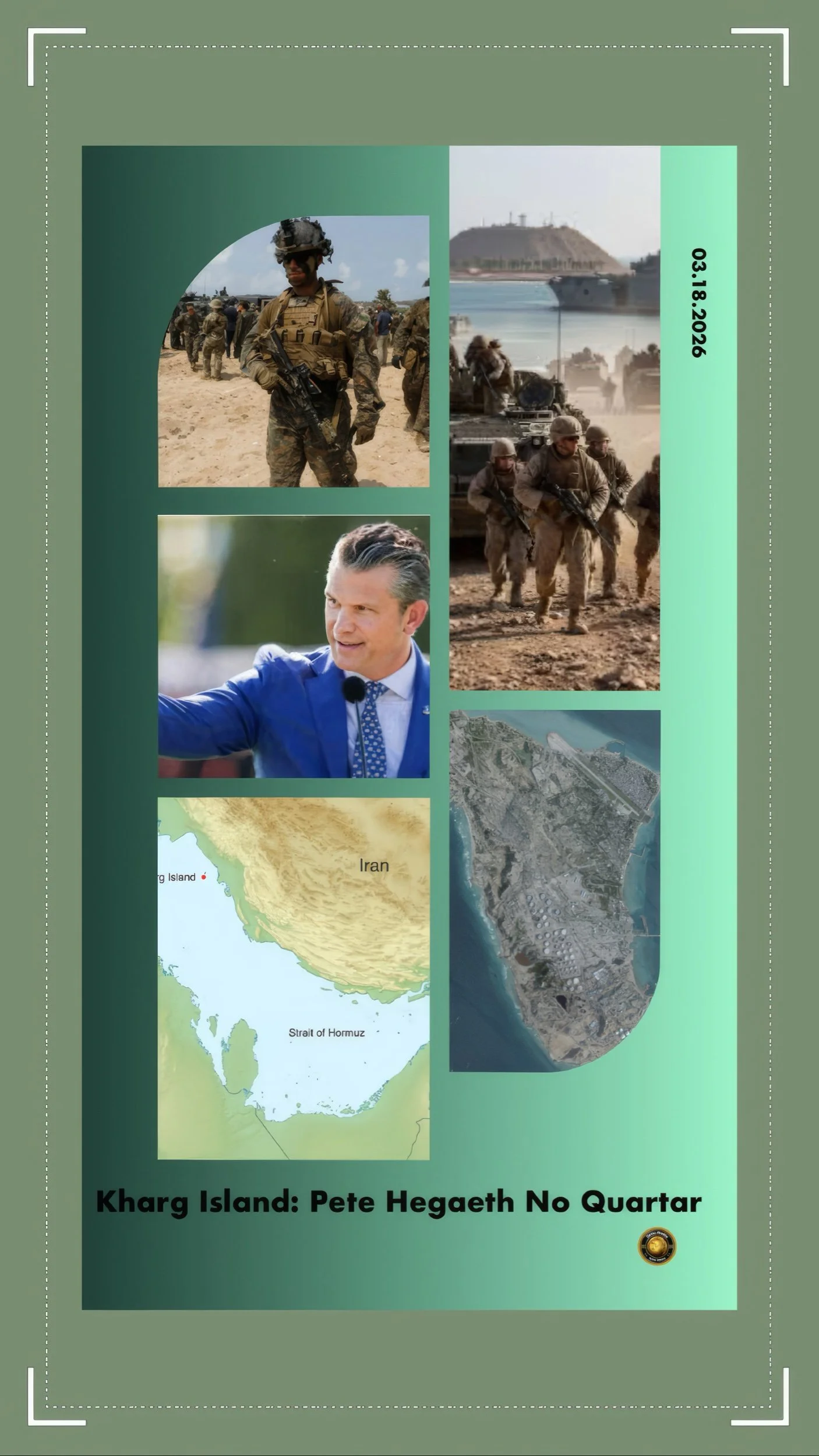
Kharg Island represents a different kind of strategic node. It is Iran’s primary oil export terminal, historically responsible for the majority of its crude shipments.
As such, it appears to be an obvious target. Disrupting Kharg could reduce Iran’s revenue and weaken its ability to sustain the war.
Yet this apparent vulnerability is also a trap.
Striking Kharg is relatively straightforward. Holding it is not. Any attempt to seize or occupy the island would expose external forces to sustained attack.
Iran’s toolkit—missiles, drones, naval mines, and fast attack craft—is specifically designed to operate in this environment.
Supply lines to the island would be long and exposed, while Iran’s lines would be short and protected.
This creates a classic problem of tactical success leading to strategic risk.
Capturing Kharg might deliver a symbolic victory, but it could also entangle external forces in a costly and vulnerable position.
Iran does not need to defend the island conventionally; it only needs to make its occupation untenable.
Thus, Kharg functions as both an asset and a lure. It invites escalation while simultaneously increasing the costs of that escalation.
Internal Consolidation: When the Guards Become the State
The external geography of the war is mirrored by an internal transformation.
The Revolutionary Guards have moved beyond their traditional role to become the central coordinating authority of the Iranian system.
This shift has several consequences.
First, it accelerates decision-making. In a fragmented system, decisions require negotiation among competing institutions. In a centralized system, decisions can be implemented rapidly.
This is particularly important in a conflict where timing and coordination are critical.
Second, it aligns political and military objectives. The same institution that defines strategy also executes it. This reduces the risk of misalignment between policy and operations.
Third, it increases tolerance for prolonged conflict.
The Guards are ideologically committed and structurally insulated from many of the pressures that affect civilian institutions.
This allows them to sustain strategies that prioritize endurance over immediate gains.
The result is a system that is less flexible but more resilient.
It is harder to influence through external pressure because its core decision-making structure is designed to absorb and reinterpret that pressure.
War-Game Scenario One: Coercive Diplomacy Succeeds
In the first scenario, the United States uses the threat of escalation to achieve a limited diplomatic outcome. The key to this scenario is credibility. Threats must be perceived as real, but they must also be controllable.
Donald Trump signals readiness to escalate further—potentially targeting critical infrastructure or expanding deployments—while simultaneously opening channels for negotiation.
Iran, recognizing that continued escalation could threaten its core assets, agrees to a limited arrangement.
Such an arrangement would likely focus on stabilizing the Strait of Hormuz, reducing immediate military pressure, and establishing a framework for further talks.
It would not resolve underlying tensions or transform the relationship between the two countries.
This outcome would represent a form of strategic containment rather than victory.
The United States would not achieve regime change or decisive military success. Iran would not achieve a clear strategic triumph. Both sides would instead accept a managed reduction in conflict intensity.
The challenge is that this scenario requires a precise balance of pressure and restraint. Too much pressure risks escalation; too little undermines credibility.
Achieving this balance is difficult, particularly in a political environment characterized by uncertainty and shifting signals.
War-Game Scenario Two: Prolonged Stalemate
The second scenario is the most likely and, paradoxically, the one that most favors Iran.
In this scenario, neither side escalates to full-scale war, but neither side withdraws.
The United States continues limited strikes and maintains regional deployments. Iran continues to absorb pressure while using asymmetric tactics to impose costs.
Over time, the conflict becomes normalized. Markets adjust to periodic disruptions. Regional stakeholders adapt to a persistent level of tension.
The war becomes a background condition rather than a decisive event.
This scenario advantages Iran for several reasons. Its strategic objective is survival, not victory.
As long as the regime remains intact and functional, it can claim success.
The United States, by contrast, faces higher expectations. Prolonged conflict without clear outcomes can erode political support and strain resources.
The consolidation of power within the Revolutionary Guards reinforces this dynamic.
A centralized, security-oriented system is better suited to sustain long-term confrontation than a system that must balance multiple competing priorities.
Over time, this scenario could produce a gradual shift in the regional balance of power. Not through dramatic victories, but through incremental changes in perception and positioning.
War-Game Scenario Three: Escalation and Regional Expansion
The third scenario represents the most dangerous pathway.
It begins with a decision to escalate beyond current levels—potentially through expanded strikes on critical infrastructure or attempts to seize strategic assets such as Kharg Island.
Such actions would likely trigger a broader response from Iran. Rather than engaging in direct confrontation, Iran would expand the conflict horizontally.
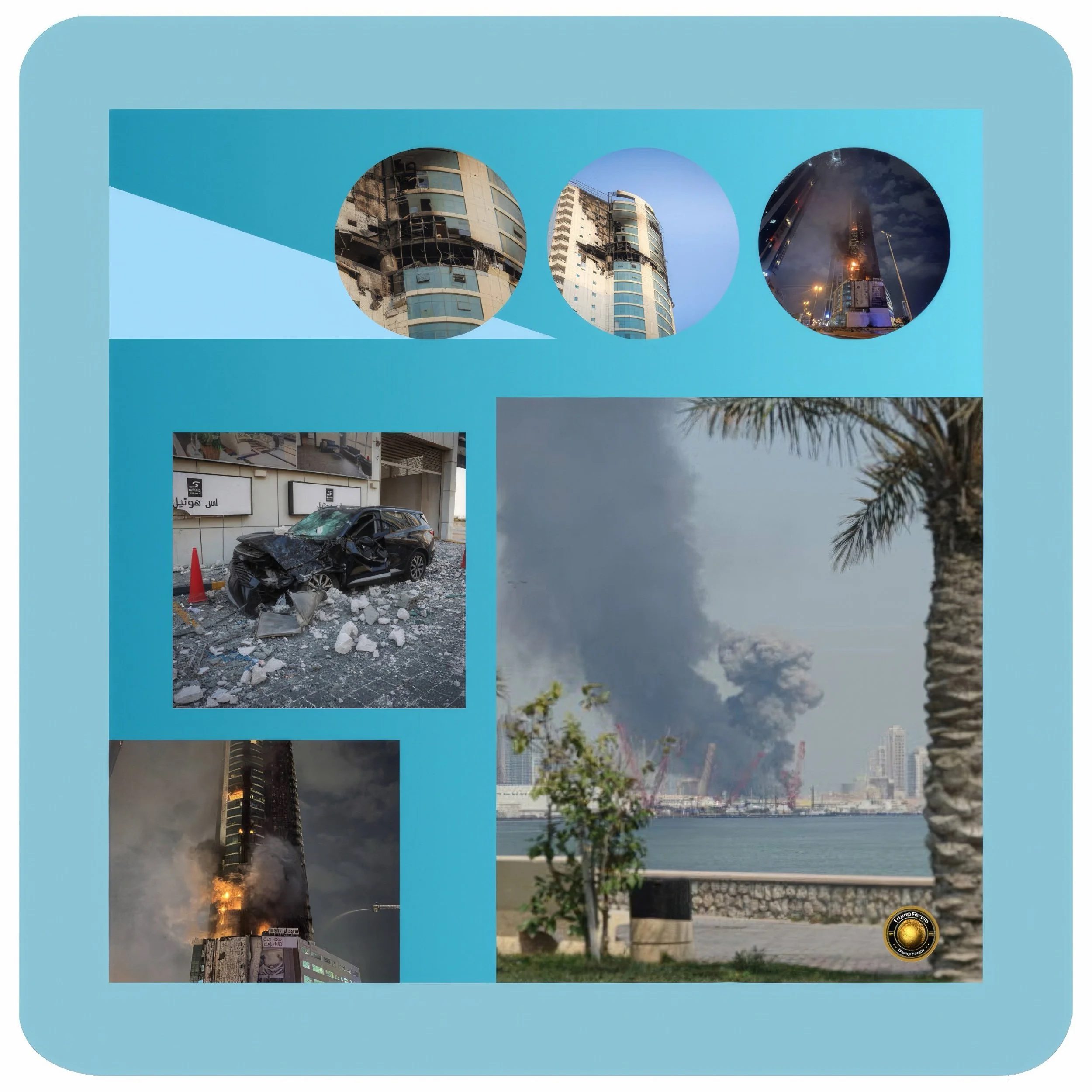
This could include intensified pressure on shipping in the Strait of Hormuz, increased activity by regional networks, and attacks on energy infrastructure.
The result would be a widening conflict with multiple points of friction.
The involvement of additional stakeholders would increase the complexity of the situation and reduce the ability of any single actor to control escalation.
For the United States, this scenario carries significant risks. Military superiority does not guarantee favorable outcomes in a dispersed and multi-layered conflict.
The need to protect extended supply lines, defend vulnerable assets, and manage regional dynamics would stretch resources and complicate planning.
For Iran, escalation also carries risks, particularly in terms of economic damage and potential internal strain.
However, its strategy is designed to operate in precisely this kind of environment.
By increasing the cost of conflict for all stakeholders, it seeks to create pressure for de-escalation on terms that preserve its core interests.
What the Guards Running the State Really Means
The idea that the Revolutionary Guards are “running both the state and the war” is not merely a descriptive observation.
It is a structural shift with strategic implications.
It means that Iran is no longer operating as a hybrid system balancing multiple centers of power.
Instead, it is evolving into a wartime security state in which a single institution defines priorities across domains.
This has several effects.
Diplomatically, it narrows the range of possible compromises. Security institutions tend to prioritize sovereignty and resistance over flexibility.
This makes negotiations more difficult but also more predictable.
Militarily, it enhances coherence. Operations are more closely aligned with strategic objectives, and responses can be coordinated across different domains.
Politically, it reinforces legitimacy through the narrative of resistance.
External pressure becomes a justification for internal consolidation rather than a trigger for dissent.
For external stakeholders, this transformation complicates strategy.
Tools designed to exploit internal divisions become less effective when those divisions are reduced. Pressure intended to weaken the system may instead strengthen its core.
Conclusion: The Paradox of Advantage
The current phase of the conflict illustrates a fundamental paradox. The side with greater material power has not achieved decisive results.
The side under pressure has adapted in ways that enhance its resilience.
Iran’s advantage is not absolute. It remains vulnerable to sustained pressure and faces significant economic and political challenges.
Yet in relative terms, it has succeeded in shifting the dynamics of the conflict.
Geography provides leverage through chokepoints like the Strait of Hormuz. Strategic assets like Kharg Island create dilemmas for escalation.
Institutional consolidation under the Revolutionary Guards ensures coherence and endurance.
For the United States, the challenge is to translate power into outcomes.
This requires not only military capability but also strategic clarity and alignment between objectives and means.
The war is no longer about whether Iran can be struck. It clearly can.
The question is whether striking it produces the desired result. So far, the answer appears to be no.
And until that changes, the advantage—however fragile, however contingent—remains with Iran.