Kharg Island, Escalation Doctrine, and the Illusion of Decisive Victory in the Gulf Conflict
Executive Summary
The proposition that the United States could secure victory over Iran by seizing Kharg Island represents a convergence of two dangerous tendencies in contemporary strategic thinking: the search for decisive geographic targets and the normalization of escalatory rhetoric that erodes legal and moral constraints.
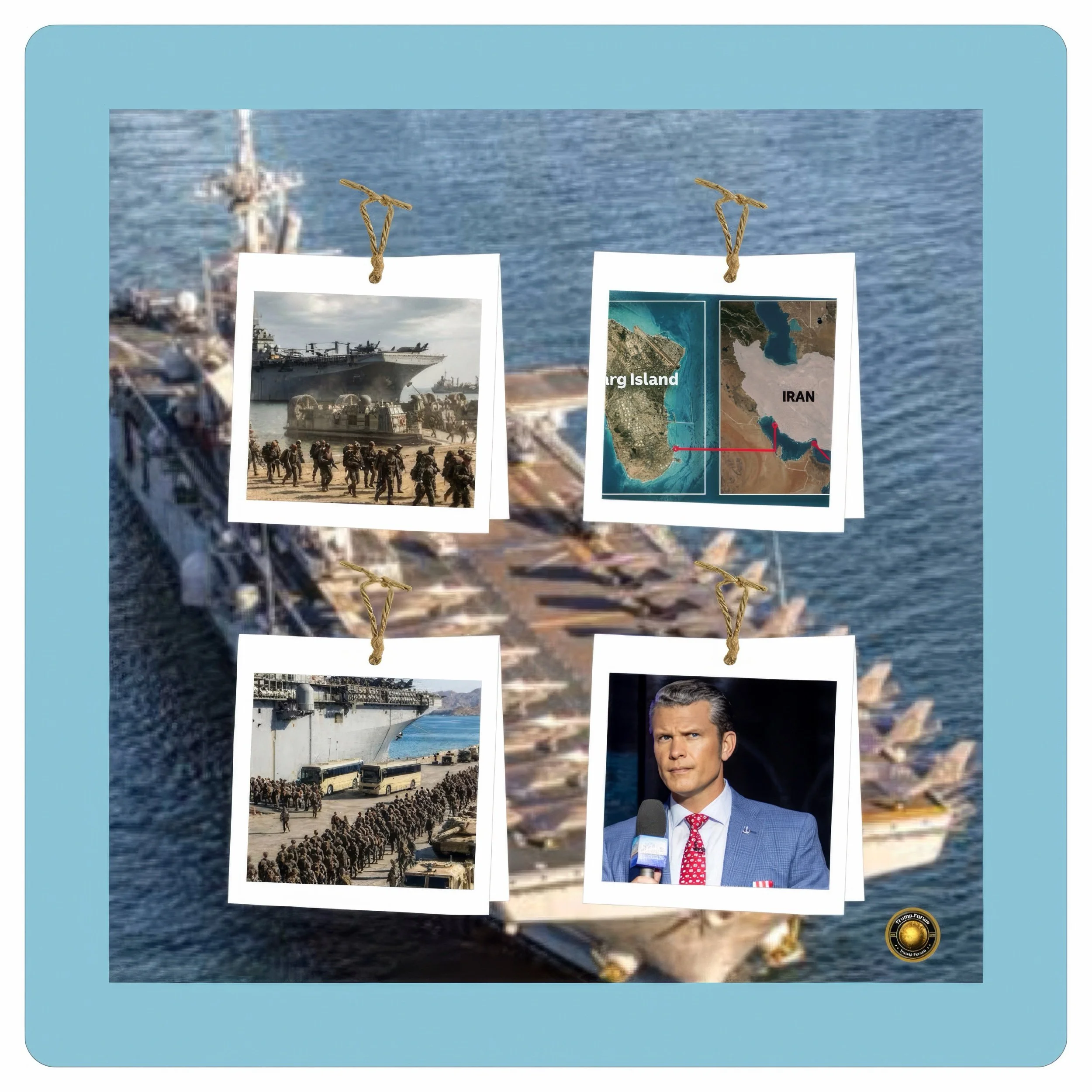
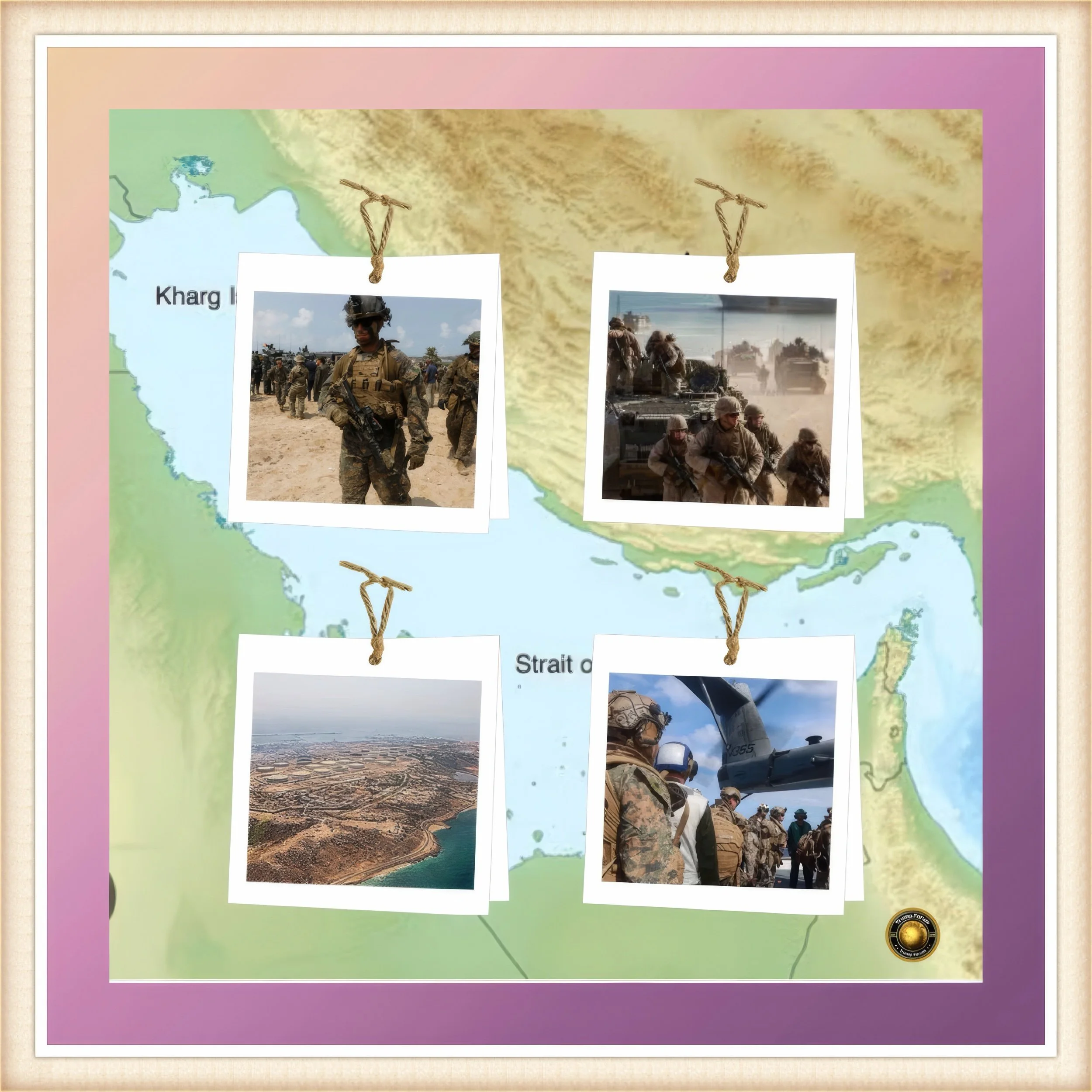
Kharg Island, long the centerpiece of Iran’s oil export infrastructure, has become a focal point in discussions about how to cripple Tehran’s economic capacity and force strategic capitulation.
At the same time, increasingly aggressive discourse surrounding the conduct of war—including suggestions that surrender may not be accepted—signals a shift toward a more permissive interpretation of violence.
FAF article argues that these two developments are not separate.
They are mutually reinforcing.
The belief in decisive territorial solutions encourages escalatory thinking, while the erosion of legal constraints makes such strategies appear more feasible.
Yet both are grounded in flawed assumptions. Seizing Kharg Island would not enable control of the Strait of Hormuz, nor would it neutralize Iran’s asymmetric capabilities.
Instead, it would likely trigger broader regional escalation, disrupt global energy markets, and undermine the normative frameworks that govern armed conflict.
The central strategic error lies in conflating economic disruption with military control.
Kharg Island is critical to Iran’s oil exports, but the Strait of Hormuz is contested through dispersed, mobile, and asymmetric means.
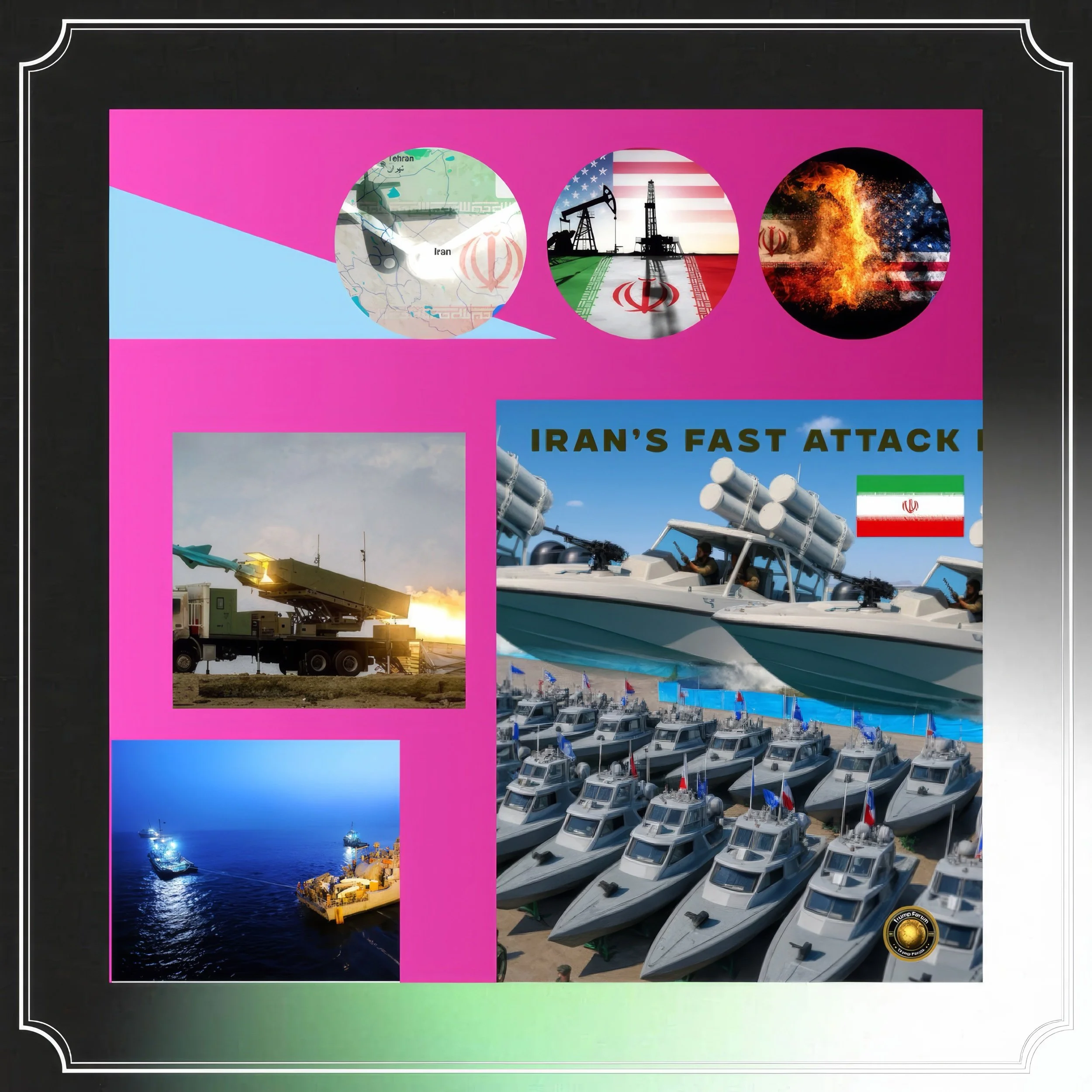
Iran’s ability to deploy mines, missiles, drones, and maritime harassment does not depend on the island.
Moreover, economic pressure does not automatically produce political capitulation; it often produces resistance and escalation.
Equally concerning is the legal dimension.
Any doctrine that implicitly or explicitly condones the killing of surrendering forces would violate international humanitarian law and risk transforming a conventional conflict into one marked by systemic violations.
Such a shift would not only damage legitimacy but also invite reciprocal behavior, further destabilizing the conflict.
In sum, Kharg Island is strategically significant but not decisive.
Treating it as a pathway to victory reflects a deeper illusion: that complex conflicts can be resolved through singular actions and that escalation can be controlled once unleashed. The reality is far more uncertain—and far more dangerous.
Introduction
Periods of rapid escalation often generate a demand for clarity—clear objectives, clear targets, and clear pathways to victory. In the Gulf landscape, Kharg Island has emerged as a candidate for such clarity.
Its prominence in Iran’s oil export system makes it an attractive target, and its location outside the narrow confines of the Strait of Hormuz appears to offer operational advantages.
At the same time, a parallel shift is occurring in the discourse surrounding the conduct of war. Statements emphasizing overwhelming force, rejecting negotiated outcomes, or downplaying the rights of surrendering forces reflect a broader transformation in strategic culture.
War is increasingly framed not as a constrained instrument of policy but as a domain in which constraints themselves are negotiable.
These two trends intersect in the debate over Kharg Island.
The island is not merely a physical target; it is a symbol of a particular way of thinking about war—one that prioritizes decisive blows over sustained strategy and escalation over restraint.
Understanding the risks associated with this approach requires examining both the material realities of the Gulf landscape and the normative frameworks that govern the use of force.
History and Current Status
Kharg Island’s strategic importance is rooted in its role as Iran’s primary oil export terminal.
For decades, pipelines have transported crude from inland fields to the island, where it is stored and loaded onto tankers.
This concentration of infrastructure made Kharg both a linchpin of Iran’s economy and a natural target for adversaries.
During the Iran-Iraq War, Kharg Island was subjected to repeated attacks. These strikes aimed to disrupt Iran’s ability to finance its war effort by targeting its most visible economic asset.
While the attacks caused damage and temporary disruption, they failed to achieve decisive results. Iran adapted by repairing facilities, dispersing assets, and developing alternative methods of export.
The legacy of that period is evident in Iran’s current approach.
Redundancy and resilience are central to its strategy. While Kharg remains important, it is no longer a single point of failure.
Iran has invested in additional terminals, storage capacity, and logistical flexibility.
It has also developed methods of circumventing economic pressure, including informal networks and alternative trading arrangements.
In the present conflict, Kharg Island retains both its economic significance and its symbolic value.
Its visibility makes it an appealing target, but its historical resilience underscores the limits of targeting infrastructure as a means of achieving strategic objectives.
Key Developments
Recent developments have elevated the importance of economic targets in the conflict.
As military operations have expanded, the distinction between military and economic objectives has become increasingly blurred.
Energy infrastructure, including Kharg Island, is now viewed as part of the broader strategic landscape.
Simultaneously, Iran has demonstrated its capacity to respond asymmetrically. Missile barrages, drone strikes, and maritime operations have highlighted its ability to impose costs across multiple domains.
These capabilities are not centralized; they are distributed and adaptable, making them difficult to neutralize through conventional means.
Another critical development is the evolution of strategic rhetoric. The emphasis on decisive action and the marginalization of legal constraints reflect a shift in how war is conceptualized.
This shift is not merely rhetorical; it has practical implications for how operations are planned and conducted.
The convergence of these developments creates a volatile environment in which actions targeting infrastructure are likely to trigger broader and less predictable responses.
Laest Facts and Concerns
The potential targeting of Kharg Island raises several immediate concerns. One of the most significant is the impact on global energy markets.
The Gulf region plays a central role in global oil supply, and disruptions can have far-reaching consequences. An attack on Kharg Island would likely lead to sharp increases in oil prices, affecting economies worldwide.
Equally important are the legal implications of escalating rhetoric. International humanitarian law establishes clear protections for individuals who surrender.
Any policy that disregards these protections would constitute a violation of these norms. Beyond the legal consequences, such actions would undermine the legitimacy of military operations and complicate relationships with allies.
There is also the risk of horizontal escalation. Iran’s network of regional partners provides multiple avenues for retaliation.
These could include attacks on shipping, strikes on infrastructure, and actions targeting military installations across the Gulf landscape.
The capture of Kharg Island would not be an isolated event; it would be a catalyst for a broader set of responses.
Cause and Effect Analysis
The argument linking Kharg Island to control of the Strait of Hormuz can be broken down into a series of causal steps.
Each step reveals a disconnect between assumption and reality.
The first step assumes that capturing Kharg Island would cripple Iran’s economy.
While the island is important, Iran’s ability to adapt reduces the likelihood of immediate collapse.
Economic pressure may increase, but it does not necessarily translate into strategic vulnerability.
The second step assumes that economic pressure would weaken Iran’s military capabilities.
In practice, Iran’s asymmetric strategy is designed to function under conditions of constraint.
Its reliance on relatively low-cost systems means that it can continue to operate even in the face of economic hardship.
The third step assumes that a weakened Iran would be unable to contest the Strait of Hormuz.
This overlooks the nature of maritime conflict in the region.
Control of the Strait depends on persistent presence, surveillance, and the ability to counter dispersed threats. These capabilities are not tied to Kharg Island.
The fourth step assumes that escalation can be controlled.
However, the introduction of escalatory rhetoric—particularly language that challenges legal norms—suggests a willingness to expand the scope of conflict.
This increases the likelihood of unintended consequences and reduces the predictability of outcomes.
Taken together, these steps illustrate the dangers of linear thinking in a complex environment.
The relationship between cause and effect in war is rarely straightforward.
Actions intended to produce specific outcomes often generate broader and less predictable consequences.
Legal and Moral Dimensions
In the high-stakes arena of great-power competition, the fusion of escalatory rhetoric with military strategy is never merely tactical—it is a litmus test for the very soul of a nation’s global standing.
International humanitarian law, forged in the crucible of two world wars and enshrined in the Hague and Geneva Conventions, rests on a non-negotiable premise: even in the fog of battle, some lines must never be crossed.
The deliberate killing of those who have surrendered, or who are wounded and hors de combat, is not collateral damage; it is a war crime.
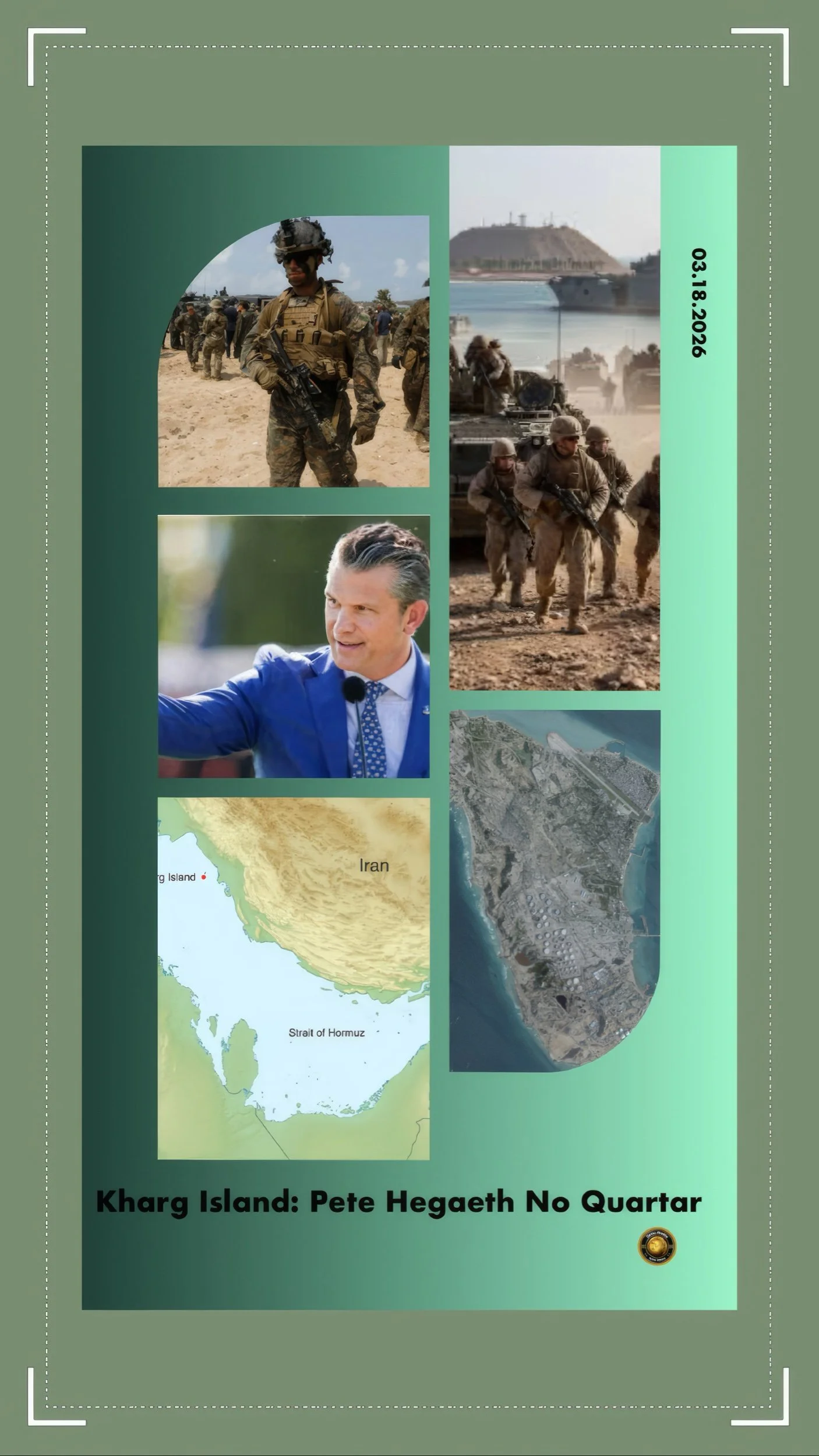
Recent suggestions that U.S. Marines adopt a posture of “No Quarter. No Mercy” have ignited fierce debate in capitals from Washington to Tehran, Brussels to Beijing.
The phrase, uttered by Defence Secretary Pete Hegseth on 13th March 2026, was intended as a rallying cry.
Instead, it has been widely condemned as a direct challenge to the laws of armed conflict.
Article 23(d) of the 1907 Hague Regulations explicitly prohibits any declaration that “no quarter will be given.” The U.S. Department of Defense’s own Law of War Manual echoes this prohibition in unambiguous terms.
Yet the deeper danger lies beyond the courtroom.
Consider the much-discussed scenario of seizing Kharg Island— Iran’s primary oil-export hub. Such a move would not choke the Strait of Hormuz, nor would it deliver a decisive victory.
What it would deliver is a prolonged, bloodier conflict, spiralling economic shocks across global energy markets, and an open invitation for Tehran’s proxies and allies to mirror the same ruthlessness.
History is littered with examples: once the norm of mercy is discarded, reciprocity becomes inevitable, and wars that could have ended in negotiation descend into cycles of atrocity.
Any doctrine that even hints that surrender may not be honoured represents a seismic break from the post-1945 order the United States itself helped create.
It erodes the moral high ground that underpins coalition-building, complicates rules-of-engagement discipline for American troops, and hands adversaries a propaganda gift of historic proportions.
Domestic support at home and legitimacy abroad both rest on the perception that American power is exercised with restraint and principle.
In foreign affairs, law is not a side constraint; it is strategy’s silent partner. Ignore it, and what begins as a contest of strength can rapidly mutate into a crisis of legitimacy—one whose costs are measured not only in blood and treasure, but in the slow erosion of the international system that has kept great-power conflict in check for eight decades.
The choice is stark: America can project power with the confidence that comes from upholding the very rules it wrote, or it can risk becoming the precedent others invoke when the gloves come off.
The world is watching which path is chosen.
Future Steps
Given the limitations of targeting Kharg Island and the risks associated with escalatory rhetoric, alternative approaches are necessary.
A strategy focused on securing maritime routes would emphasize defensive measures, including enhanced surveillance, mine countermeasures, and cooperation with regional stakeholders.
Diplomatic engagement, while challenging, remains an essential component of any sustainable solution. Even in periods of intense conflict, channels for communication can help manage escalation and reduce the risk of miscalculation.
At a broader level, there is a need to recalibrate strategic thinking. The search for decisive points must be balanced with an understanding of complexity and resilience.
Military power is an important tool, but it must be integrated into a broader framework that includes economic and diplomatic instruments.
Conclusion
In conclusion, although Kharg Island retains considerable economic and symbolic weight as Iran’s principal oil-export terminal, its strategic centrality has been markedly overstated in contemporary discourse.
Seizure of the island would neither confer operational dominance over the Strait of Hormuz nor neutralise Tehran’s dispersed asymmetric arsenal of mines, missiles, drones, and maritime proxies.
Rather than precipitating capitulation, such an action would almost certainly catalyse wider regional escalation, inflict cascading shocks on global energy markets, and accelerate Iran’s shift toward redundant export pathways and informal trading networks.
This persistent quest for a singular, decisive geographic target betrays an anachronistic understanding of modern conflict, in which resilience, adaptability, and distributed capabilities routinely frustrate attempts at rapid strategic closure.
Equally consequential is the normative hazard introduced by escalatory rhetoric that implicitly or explicitly relaxes the prohibition on denying quarter.
The recent invocation by Pete HegSeth by US Secretary of War of a “No Quarter, No Mercy” posture by senior U.S. defence leadership contravenes Article 23(d) of the 1907 Hague Regulations and risks normalising the killing of surrendering or hors de combat personnel—a grave breach of both customary international humanitarian law and the United States’ own Law of War doctrine.
Far from enhancing operational freedom, such language erodes the moral and legal legitimacy essential to coalition cohesion, complicates rules-of-engagement discipline for American forces, and furnishes adversaries with a potent propaganda weapon.
In an era of hybrid warfare, adherence to humanitarian norms is not a constraint but a strategic asset that preserves domestic support, international partnerships, and the capacity for controlled de-escalation.
Ultimately, the Kharg Island debate illuminates a deeper pathology in contemporary strategic thought: the seductive illusion that complex interstate confrontations can be resolved through isolated kinetic actions and the suspension of established restraints.
The Gulf theatre is defined by interdependence, strategic depth, and irreducible uncertainty; actions taken within it generate ripple effects that extend well beyond their intended targets.
Sustainable advantage will therefore demand not the rejection of legal and moral frameworks, but their sophisticated integration with calibrated military pressure, diplomatic channels, and economic instruments.
Failure to recognise this reality risks converting a contest of power into a protracted crisis of legitimacy—one whose costs, measured in blood, treasure, and eroded global order, will reverberate far beyond the present theatre.