Conspiracy Thinking in Modern Politics: From QAnon to Middle East War and America’s Crisis of Trust

Executive summary
Why Rational Minds Believe Irrational Conspiracies in an Age of War, Distrust, and Global Political Turmoil
Conspiracy thinking has moved from the political margins to the center of public debate across many democratic societies.
Once confined to obscure pamphlets, fringe political movements, and small ideological communities, conspiracy theories today circulate widely through digital media, mainstream political rhetoric, and global geopolitical discourse.
Their rise reflects deeper structural changes in modern societies, including declining trust in institutions, accelerating technological transformation, growing political polarization, and the psychological pressures created by economic insecurity and geopolitical instability.
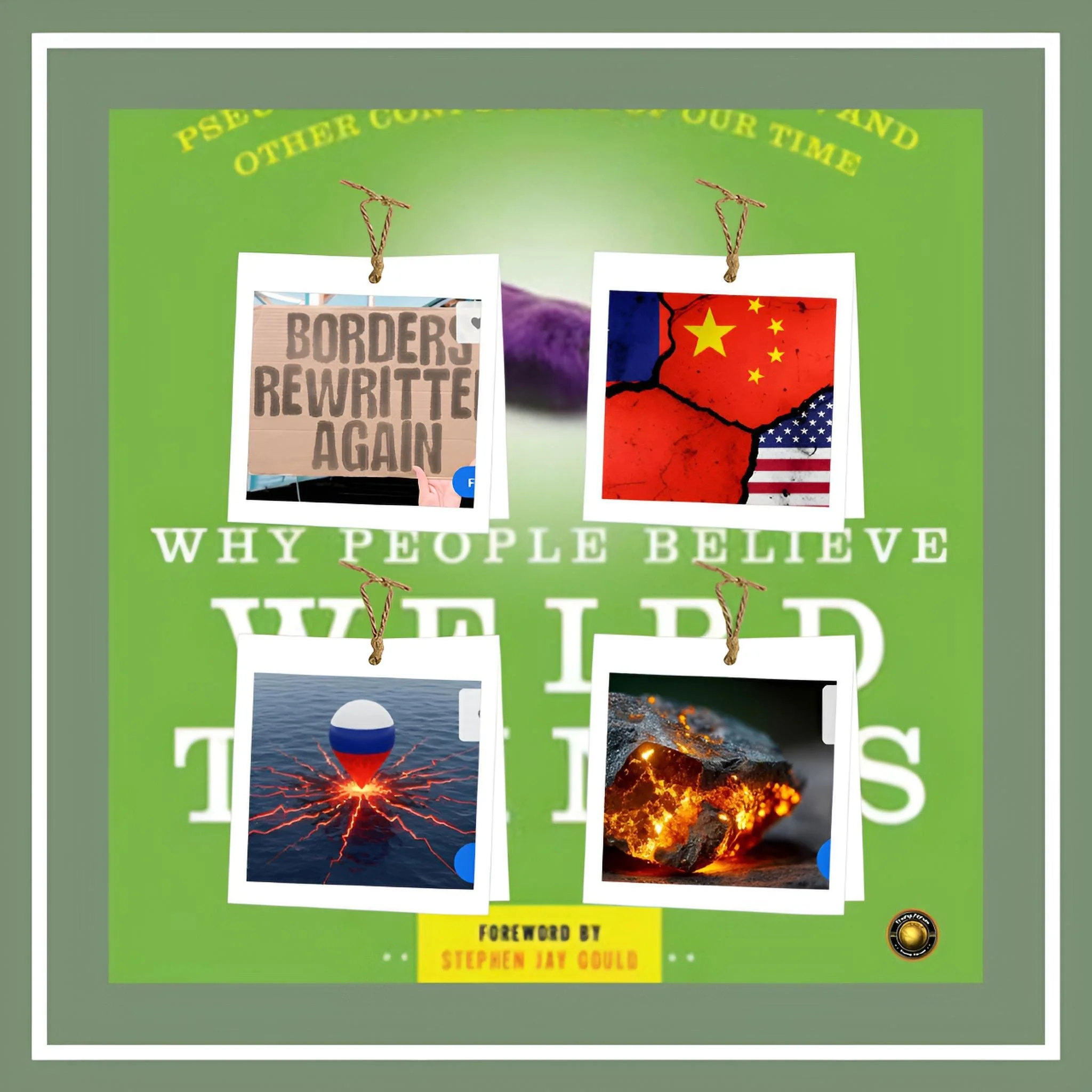
Michael Shermer’s book Conspiracy: Why Rational People Believe the Irrational offers a framework for understanding why conspiracy thinking persists even among educated and otherwise rational individuals.
Shermer argues that conspiratorial belief systems emerge from a combination of cognitive bias, historical precedent, emotional insecurity, and genuine experiences of institutional deception.
Humans evolved to recognize patterns in their environment.
This pattern recognition ability once helped early humans survive. However, in modern information environments, the same instinct often leads individuals to detect hidden meaning in random events.
Conspiracy thinking also draws strength from historical realities.
Governments and institutions have occasionally engaged in genuine conspiracies. Political leaders have lied to the public. Intelligence agencies have carried out covert operations.
Corporate organizations have concealed harmful practices.
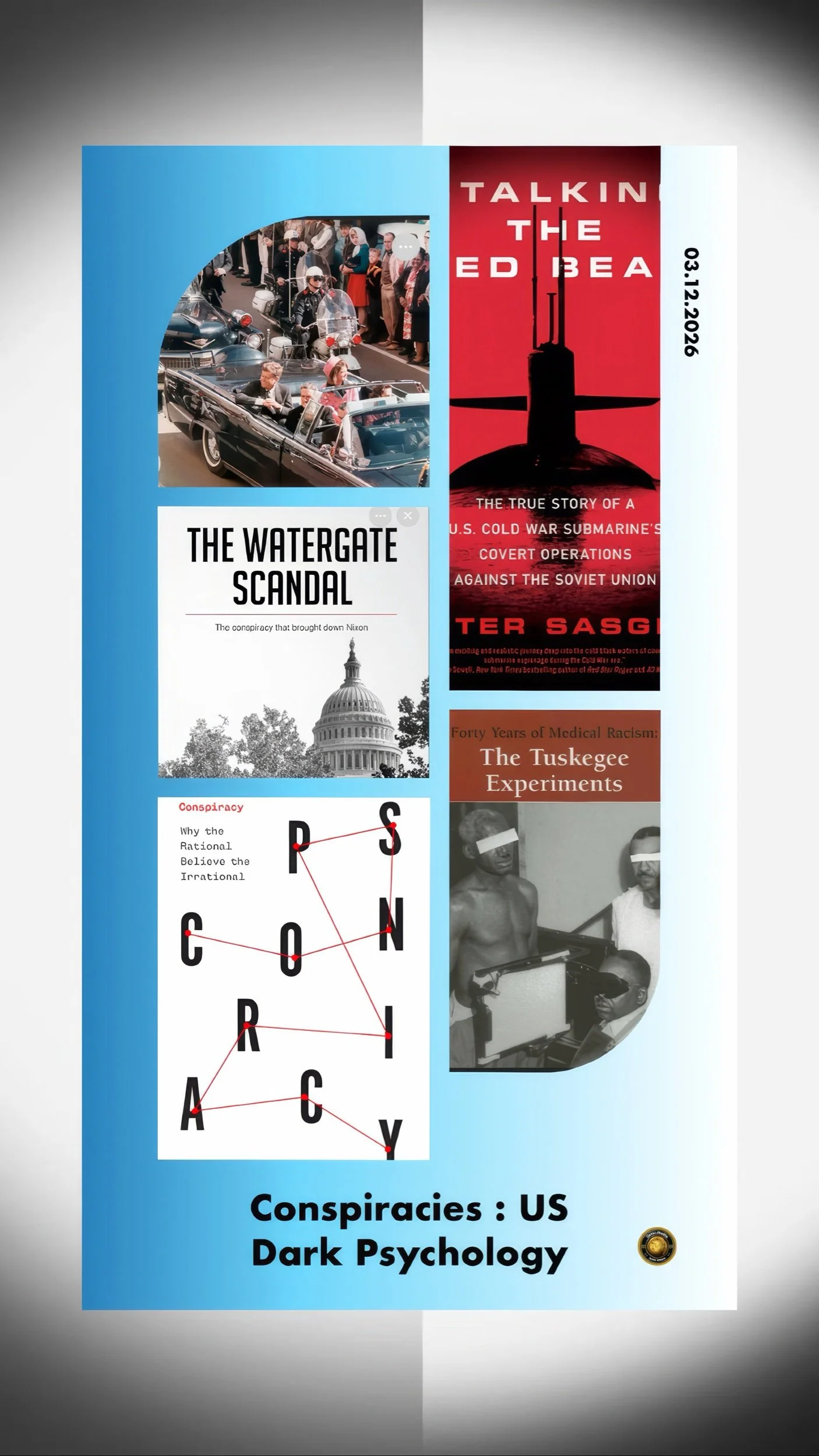
Events such as the Watergate scandal, the Tuskegee medical experiment, and covert Cold War intelligence operations demonstrated that powerful institutions sometimes operate secretly and deceptively.
These historical precedents make citizens more receptive to claims that hidden networks influence political events.
The contemporary geopolitical landscape intensifies this phenomenon.
Military confrontations, diplomatic secrecy, and intelligence operations often occur behind closed doors.
When governments cannot disclose full information due to national security concerns, informational gaps emerge.
Citizens and commentators frequently fill those gaps with speculation about hidden motives and secret alliances.
Recent tensions involving the United States, Israel, and Iran illustrate how geopolitical crises amplify conspiratorial narratives.
Military operations, intelligence coordination, and strategic ambiguity create fertile ground for competing interpretations about the intentions of global stakeholders.
Political rhetoric during Donald Trump’s leadership further intensified these dynamics by openly challenging institutional credibility and promoting narratives about hidden political networks.
FAF article examines the historical origins, psychological foundations, and geopolitical implications of conspiracy thinking.
It explores how conspiratorial narratives evolved from marginal ideas into powerful forces shaping modern political discourse.
It also analyzes how war, technological change, and institutional distrust reinforce each other in ways that allow conspiratorial belief systems to flourish.
Understanding this phenomenon is essential for policymakers, scholars, and citizens seeking to navigate the complex political landscapes of the twenty-first century.
Introduction
The Rise of Conspiracy Culture and the Collapse of Institutional Trust in Today’s Global Political Order
Conspiracy theories occupy a strange and persistent place in political life.
They are widely dismissed by experts as irrational or unsupported by evidence.
Yet they continue to influence millions of people across diverse societies.
They shape election campaigns, alter public perceptions of international conflict, and sometimes inspire political movements capable of influencing national policies.
Michael Shermer argues that conspiratorial thinking should not be understood simply as a symptom of ignorance or extremism.
Instead, it emerges from normal cognitive processes that exist in all human beings.
The human brain constantly searches for patterns and causal relationships between events. When confronted with uncertainty, individuals attempt to construct narratives that impose order on chaos.
In prehistoric environments, this instinct had clear evolutionary advantages. If a rustling sound in the forest indicated the possible presence of a predator, it was safer to assume a hidden threat than to dismiss the noise as coincidence.
Humans therefore evolved with a bias toward detecting intentional agency behind events.
In modern societies, however, this tendency can produce misleading conclusions.
Complex events such as financial crises, terrorist attacks, or sudden wars rarely have simple explanations. Yet the human mind often seeks a coherent narrative that identifies responsible stakeholders and clear motives.
Conspiracy theories offer precisely this kind of explanation. They replace uncertainty with intentional design. They transform random or complex events into the result of deliberate planning by identifiable groups.
The digital revolution has intensified this dynamic dramatically. Social media platforms allow ideas to spread globally with unprecedented speed.
A speculative claim can reach millions of individuals within hours.
Algorithms designed to maximize user engagement frequently promote emotionally provocative content, including sensational claims about hidden plots or secret networks.
Political polarization further reinforces conspiratorial thinking. In highly divided societies, individuals increasingly distrust institutions associated with opposing political groups.
Media outlets, intelligence agencies, and academic institutions may be viewed as instruments of ideological manipulation rather than neutral sources of information.
At the same time, geopolitical conflicts often involve genuine secrecy. Military planning, intelligence operations, and diplomatic negotiations are rarely conducted in public view.
When citizens lack access to full information, they often interpret events through speculative narratives.
Thus conspiracy thinking is not merely a cultural curiosity. It reflects the interaction between psychological instincts, technological systems, and political conditions.
Understanding this interaction is crucial for analyzing modern politics.
History and current status
Truth, Fear, and Power: Why Conspiracy Thinking Thrives During Conflict, Political Crisis, and Global Uncertainty
Conspiracy narratives have existed throughout recorded history. Ancient societies frequently attributed political crises to hidden plots orchestrated by rival elites.
In ancient Rome, accusations of conspiracy were common tools in political struggles.
Leaders often justified purges or political repression by claiming that secret factions were plotting against the state.
During the medieval period, conspiracy narratives often targeted minority communities. These accusations frequently reflected social tensions rather than evidence of coordinated conspiracies.
Fear and uncertainty encouraged populations to attribute misfortune to secret networks operating behind the scenes.
The modern era produced new forms of conspiratorial thinking connected to technological and political transformation.
The rapid social changes of the nineteenth and twentieth centuries created anxiety about the concentration of power within governments, corporations, and financial institutions.
In the United States, conspiracy narratives gained prominence during several key historical moments.
The assassination of President John F. Kennedy in 1963 generated decades of speculation about hidden involvement by intelligence agencies, organized crime networks, or foreign governments.
Despite official investigations concluding that Lee Harvey Oswald acted alone, many citizens continued to believe that powerful stakeholders had concealed the full truth.
Public distrust intensified during the Cold War. Intelligence agencies conducted covert operations across the globe, including interventions in foreign elections, support for coups, and clandestine propaganda campaigns.
Although many of these operations were initially secret, later revelations confirmed that governments had indeed engaged in hidden geopolitical strategies.
The Watergate scandal represented one of the most consequential turning points in American political trust. Investigations revealed that senior officials within the Nixon administration had engaged in political espionage and attempted to conceal their actions.
The exposure of this conspiracy profoundly damaged public confidence in government institutions.
Subsequent revelations reinforced this skepticism.
The Iran-Contra affair demonstrated that government officials had secretly facilitated arms transfers and financial operations outside congressional oversight.
The Tuskegee medical experiment revealed that public health authorities had knowingly withheld treatment from patients for decades.
Each of these episodes confirmed that powerful institutions sometimes operate secretly and deceptively.
As a result, citizens became increasingly receptive to claims that hidden networks might influence political events.
The digital age dramatically expanded the reach of conspiracy narratives. Internet forums allowed communities of believers to exchange ideas and reinforce shared interpretations of events.
Social media platforms amplified these dynamics by enabling instantaneous global communication.
By the early twenty-first century conspiracy narratives had moved from fringe communities into mainstream political discourse.
Movements such as QAnon claimed that hidden networks of elites controlled political institutions and engaged in secret criminal activities.
Although these claims lacked credible evidence, they attracted millions of followers.
Today conspiracy narratives are embedded in political landscapes across many countries.
They influence electoral politics, shape foreign policy debates, and affect public perceptions of global conflicts.
Key developments
Several structural developments explain the rapid expansion of conspiratorial thinking in contemporary societies.
The first development involves technological transformation.
Digital communication platforms have fundamentally altered how information circulates within societies. Traditional media institutions once served as gatekeepers that filtered information through editorial review.
Social media platforms bypass these gatekeepers entirely. Anyone with an internet connection can distribute narratives to global audiences.
Algorithms that prioritize engagement often amplify emotionally provocative content.
Conspiracy narratives frequently provoke strong emotional reactions such as fear, anger, or outrage. As a result, they tend to spread rapidly within digital networks.
The second development concerns declining institutional trust. Surveys conducted across multiple democratic societies indicate a steady erosion of confidence in governments, media organizations, and scientific authorities.
Citizens increasingly believe that political institutions serve the interests of elites rather than the public.
When institutional credibility declines, individuals become more willing to accept alternative explanations for political events.
Conspiracy theories offer narratives that explain institutional failures by attributing them to hidden manipulation rather than incompetence or structural complexity.
The third development involves political polarization. In highly polarized societies, political identity often becomes intertwined with information consumption.
Individuals may trust sources associated with their ideological allies while rejecting sources linked to political opponents.
This environment creates informational echo chambers in which individuals encounter only narratives that confirm existing beliefs.
Conspiracy theories often flourish within such echo chambers because dissenting perspectives rarely penetrate them.
The fourth development relates to geopolitical instability. Wars, economic crises, and strategic rivalries create uncertainty about the future.
During periods of instability, citizens often seek explanations that identify responsible stakeholders and coherent motives behind events.
In such contexts, conspiracy narratives provide psychological comfort by suggesting that powerful groups control events rather than random forces.
Latest facts and concerns
Recent geopolitical tensions have intensified the environment in which conspiracy narratives thrive.
Conflicts involving the United States, Israel, and Iran illustrate how military crises generate competing narratives about hidden motives and strategic manipulation.
Military operations often involve complex coordination between intelligence agencies, diplomatic institutions, and defense organizations.
Governments rarely disclose the full details of these operations to the public. Strategic secrecy is often necessary to protect national security and military effectiveness.
However, the absence of transparency can encourage speculation.
Observers may interpret military actions through conspiratorial frameworks, assuming that hidden agreements or secret alliances explain events.
Political leadership also shapes the spread of conspiratorial narratives.
Donald Trump’s political rhetoric frequently emphasized distrust toward established institutions.
His criticism of intelligence agencies, electoral systems, and media organizations resonated with segments of the population that already felt alienated from political elites.
When political leaders publicly question institutional legitimacy, they can unintentionally amplify conspiratorial thinking. Supporters may interpret complex political events through narratives that attribute hidden manipulation to opposing stakeholders.
The convergence of war, technological communication, and political polarization therefore produces a volatile informational environment.
In such circumstances conspiracy narratives can spread rapidly and influence public perceptions of geopolitical events.
Cause and effect analysis
Conspiracy Thinking and the Crisis of Trust in Modern Global Politics
Understanding conspiratorial thinking requires examining both psychological and structural mechanisms.
Human cognition plays a central role.
The brain naturally seeks patterns and causal relationships between events. When confronted with incomplete information, individuals often construct narratives that connect unrelated events into coherent stories.
Psychologists describe this tendency as patternicity.
Humans frequently perceive meaningful patterns even when events occur randomly. This cognitive bias encourages individuals to attribute intentional design to events that may result from coincidence or structural complexity.
Another psychological factor involves agency detection. Humans instinctively assume that events are caused by deliberate actions rather than impersonal forces.
Conspiracy theories therefore resonate because they attribute events to identifiable stakeholders rather than abstract processes.
Emotional factors also contribute to conspiratorial belief systems. Anxiety, fear, and uncertainty increase the likelihood that individuals will adopt simplified explanations for complex events.
During periods of crisis, conspiracy narratives offer emotionally satisfying answers.
Structural conditions amplify these psychological tendencies. Digital platforms create environments in which sensational claims spread quickly and widely.
Echo chambers reinforce belief systems by exposing individuals primarily to information that confirms existing views.
Geopolitical conflict further intensifies these dynamics.
Military confrontations often involve secrecy and strategic ambiguity. Citizens may suspect hidden agendas behind diplomatic negotiations or military strategies.
The result is a feedback loop in which psychological predispositions interact with technological systems and political conditions to sustain conspiratorial thinking.
Future steps
Addressing the rise of conspiracy narratives requires a comprehensive strategy involving governments, educational institutions, technological platforms, and political leaders.
Institutional transparency represents one important step.
When governments communicate clearly about policy decisions and strategic objectives, citizens are less likely to interpret events through conspiratorial frameworks.
Education also plays a critical role. Media literacy programs can help citizens evaluate information sources and distinguish between evidence-based analysis and speculative claims.
Teaching critical thinking skills allows individuals to navigate complex information environments more effectively.
Technological platforms must also reconsider algorithmic systems that prioritize engagement without regard to accuracy.
Adjusting these systems to reduce the amplification of misinformation could limit the spread of conspiratorial narratives.
Political leadership remains equally important. Leaders who promote evidence-based discourse and responsible communication can help restore public trust in institutions.
Conclusion
When Anxiety Meets Power: How Conspiracy Thinking Shapes Politics, War Narratives, and Public Belief Systems
Conspiracy thinking has become a defining feature of modern political landscapes. Its expansion reflects the intersection of psychological instincts, technological transformation, institutional distrust, and geopolitical instability.
Michael Shermer’s analysis demonstrates that conspiratorial thinking does not arise solely from irrationality. It emerges from normal cognitive processes combined with historical experiences of institutional deception.
In a world characterized by rapid technological change and increasing geopolitical tension, conspiracy narratives are likely to remain influential. Military conflicts, diplomatic secrecy, and political polarization create informational environments in which speculative interpretations flourish.
The challenge for democratic societies lies in rebuilding institutional credibility while fostering critical thinking among citizens. Transparent governance, responsible political leadership, and improved media literacy can reduce the appeal of conspiratorial narratives.
Understanding why rational individuals sometimes believe irrational ideas provides valuable insight into the broader crisis of trust affecting modern political systems.
Only by addressing this crisis can societies strengthen democratic institutions and navigate the uncertainties of the twenty-first century.