The Efficacy and Constraints of Protest Action in Democratic Crisis: Institutional Capacity, Coalition Architecture, and Political Translation
Executive Summary
Street protests have historically served as a critical mechanism through which marginalized constituencies exert pressure on state institutions and political elites.
Yet in the contemporary moment, particularly amid experiences of democratic erosion across multiple jurisdictions, translating mass mobilization into substantive policy change remains inconsistent and contingent.
Recent scholarly analysis suggests that protest efficacy is mediated by 3 principal factors: the structural characteristics of the protest action itself, the breadth and organizational coherence of coalitions constructed among participating constituencies, and the institutional capacity to convert street-level mobilization into formal political power and legislative outcomes.
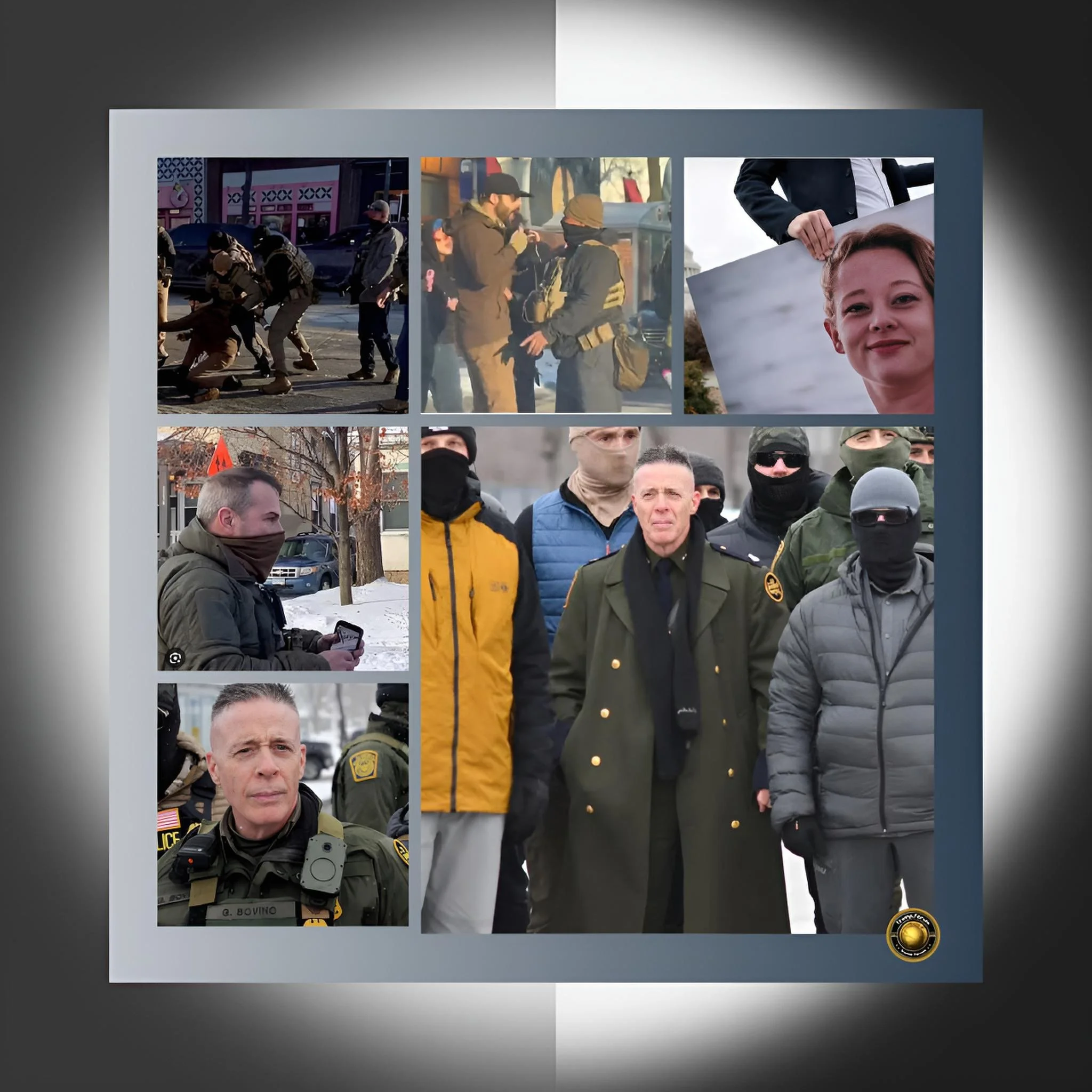
The ongoing anti-Immigration and Customs Enforcement demonstrations in Minneapolis, emerging from federal enforcement operations that have resulted in at least 2 civilian fatalities, provide an empirical test case for evaluating these dynamics within the American context.
Historical Trajectory and the Problem of Protest Efficacy
Street protest emerged as a systematic form of political contestation during the mid-20th century, particularly through the American civil rights movement, which demonstrated that sustained, disciplined mass mobilization could pressure state institutions toward policy concessions.
The movement's architectural success rested on the coordination of local organizing, centralized ideological messaging, and the deployment of multiple tactical arsenals—mass demonstrations, boycotts, sit-ins, and strategic litigation.
This multifaceted approach yielded legislative outcomes including the Civil Rights Act of 1964, the Voting Rights Act of 1965, and the Fair Housing Act of 1968, establishing empirical precedent for the political efficacy of nonviolent mass action.
However, the structural conditions that enabled the civil rights movement's success have substantially eroded.
Contemporary American protest movements frequently rely predominantly on mass demonstrations while neglecting auxiliary tactics such as coordinated work stoppages and civil disobedience campaigns that impose material costs upon regimes and economic systems.
The proliferation of digital organizing platforms has democratized the mechanics of rapid mobilization but simultaneously undermined the infrastructure of sustained participant commitment necessary for long-term strategic campaigns.
The scale of recent demonstrations, including the October 2025 "No Kings" protests that mobilized approximately seven million participants across the United States, has been accompanied by minimal measurable legislative changes or executive policy adjustments, suggesting that sheer numerical magnitude no longer guarantees institutional responsiveness to protest demands.
Current Status
The Minneapolis Anti-ICE Movement
In December 2025, the Trump administration deployed approximately 3,000 armed federal agents representing the Immigration and Customs Enforcement and Customs and Border Protection agencies to Minneapolis and surrounding areas under the designation "Operation Metro Surge."
The operation targeted undocumented immigrant populations, particularly within the Somali-American community in the Twin Cities. The deployment resulted in the deaths of two American citizens—Alex Pretti, an intensive care unit nurse, and Renee Good, a mother and poet—following officer-involved shootings that video documentation suggests involved excessive force and violated standard protocols regarding defensive deployment.
The federal judicial system has mainly proven unresponsive to local resistance efforts.
In late January 2026, U.S. District Judge Katherine Menendez rejected a preliminary injunction motion filed jointly by Minnesota's Attorney General, the Minneapolis municipal government, and the City of Saint Paul.
Despite Menendez's explicit acknowledgment that plaintiffs had demonstrated substantial evidence of racial profiling, excessive force deployment, warrantless arrests, and cascading harm to civil infrastructure—including school disruptions, delayed emergency response protocols, and diminished commercial activity—the court determined that preserving federal enforcement capacity outweighed documented constitutional violations.
This judicial posture illustrates the institutional constraints confronting street-level activism: even when legal advocacy produces documentary evidence of state malfeasance, institutional gatekeepers retain authority to permit continued enforcement operations.
Simultaneously, however, the scale and geographic breadth of street mobilization have produced discernible shifts in executive comportment.
Tom Homan, appointed by the Trump administration as border czar, announced a tactical reorientation toward "targeted operations" rather than blanket enforcement sweeps in Minneapolis. Internal Immigration and Customs Enforcement directives instructed field personnel to minimize interactions with protest participants to prevent escalation.
These modifications represent partial concessions to protest pressure, albeit insufficient to satisfy the protest movement's demands for a complete withdrawal of the federal enforcement apparatus from Minnesota.
Key Developments and the Architecture of Emerging Coalition Dynamics
The Minneapolis anti-ICE protest movement has rapidly constructed a multi-sectoral coalition encompassing immigrant advocacy organizations, labor unions, faith-based institutions, student activist networks, and—critically—significant portions of the local business establishment.
The Minnesota Chamber of Commerce coordinated an open letter signed by sixty corporate executives, including the incoming Chief Executive Officer of Target Corporation (headquartered in Minneapolis), explicitly calling for de-escalation between state and federal authorities.
This alignment of corporate capital with grassroots protest constituencies represents a significant structural development, as business-sector accommodation of protest demands typically signals to political decision-makers that protest grievances reflect broader societal sentiment extending beyond radicalized minorities.
The protest movement has deployed multiple tactical modalities beyond street demonstrations.
A nationwide strike campaign designated "No work, no school, no shopping" achieved restaurant closures, retail disruptions, student walkouts, and professional-class participation across geographically dispersed locations from California to Maine.
This diversification of tactics aligns with scholarly research that shows nonviolent campaigns combining mass demonstrations with coordinated economic disruption—including strikes, boycotts, and consumer withdrawal—achieve approximately twice the success rate in attaining political concessions as campaigns relying exclusively on street demonstrations.
The targeting of Target retail stores by demonstrators, combined with corporate leadership's public alignment with protest objectives, illustrates a sophisticated understanding of capitalist vulnerability points.
Multinational commercial enterprises dependent on consumer traffic and brand legitimacy are more susceptible to pressure from consumer boycotts and reputational damage than traditional state security apparatuses.
The convergence of grassroots organizing pressure with institutional business sector signaling creates multiplicative pressure on executive decision-makers, who must weigh ideological commitments against economic consequences.
Latest Factual Developments and Institutional Resistance
As of early February 2026, the Minneapolis metropolitan area remains under elevated federal enforcement activity despite announced tactical modifications. Schools continue operating under security protocols designed to accommodate ICE enforcement visibility.
Small businesses report ongoing revenue disruptions due to reduced customer traffic and altered employee attendance patterns driven by safety concerns.
The Emergency Management Agency reports that municipal police overtime costs have escalated substantially, as local law enforcement remains obligated to respond to collateral incidents generated by federal operations.
The Trump administration's consideration of invoking the Insurrection Act—which would authorize deployment of active-duty military personnel to domestic law enforcement contexts—represents potential institutional escalation that would constitute unprecedented militarization of civilian space.
The deployment of National Guard units alongside Immigration and Customs Enforcement personnel in Los Angeles, combined with the aforementioned deliberations on the Insurrection Act, signals the executive's willingness to substantially expand its coercive capacity to suppress dissent and maintain enforcement operations despite widespread opposition.
Simultaneously, protest movements have faced targeted counter-mobilization.
At least two journalists have been arrested while documenting ICE operations.
Prominent labor leaders and elected officials have been subjected to physical confrontation by enforcement personnel.
These repression tactics, while suppressing some mobilization, simultaneously generate evidentiary documentation of state overreach that becomes available for digital circulation and amplifies grievance narratives.
The strategic calculation is whether repression deters participation or, instead, accelerates mobilization through radicalized consciousness of regime illegitimacy.
Causal Mechanisms
Why Protests Sometimes Succeed and Often Fail to Translate into Institutional Modification
Scholarly research examining protest efficacy identifies several causal mechanisms through which mass mobilization can generate policy change, alongside structural obstacles that frequently prevent such translation.
First, the signaling mechanism through which large-scale protest activity communicates information to political decision-makers about the intensity and breadth of constituent grievance.
When protest movements demonstrate numerical magnitude, geographic distribution, and demographic diversity, political actors interpret such signals as indicating that movement demands reflect opinions held across their electoral constituencies.
This signaling function explains why successful movements typically mobilize moderate constituencies—sudden participation by previously quiescent middle-class constituencies signals to politicians that accommodation becomes politically necessary to preserve electoral viability.
Second, the mechanism of economic disruption operates through the coordinated withdrawal of labor, consumer expenditure, and productive capacity, imposing material costs upon regimes and economic systems dependent on the continuous circulation of commerce.
Boycotts reduce corporate revenue; strikes reduce productive output and governmental tax collection; consumer withdrawal cascades through supply chains.
These material interruptions create pressure on business sector actors and government officials to negotiate with protest movements to restore economic functionality.
Third, the mechanism of community empowerment is through which participation in collective action generates psychological and organizational transformation among participants.
Individuals who experience themselves as collective agents capable of contesting institutional power develop enhanced political efficacy beliefs, increased willingness to engage in future political participation, and expanded network resources that facilitate subsequent mobilization.
This mechanism explains why mass protest movements frequently produce sustained organizational infrastructure and participant radicalization that extend beyond specific campaign victories or defeats.
Yet multiple structural obstacles constrain the translation of these mechanisms into institutional policy modification. Political institutions designed to isolate executive decision-making from popular pressure—including appointed judicial systems, professional bureaucracies, and centralized security apparatus—permit decision-makers to disregard popular sentiment, particularly when institutional actors view protest demands as threatening to systemic arrangements.
The Minneapolis case demonstrates this dynamic precisely: despite overwhelming documentary evidence of constitutional violations, federal courts explicitly prioritized enforcement over the amelioration of popular grievances.
Institutional partisan polarization functions as an additional constraint. When protest movements emerge primarily from one partisan coalition while opposition parties control relevant institutional positions, institutional actors face political incentives to resist movement demands, as accommodation would validate opposing party narratives.
The Trump administration's deliberate escalation in response to Minneapolis protests—rather than accommodation—reflects a calculation that political base mobilization outweighs the negative consequences of widespread protest alienation.
The phenomenon of repression represents a fourth critical constraint. Security apparatus equipped with surveillance technologies, legal doctrine permitting preventive detention, and militarized tactical capacity can impose material and psychological costs upon protest participants sufficient to depress mobilization.
Video documentation of journalist arrests and protest participant violence by enforcement personnel creates affective fear affecting participation decisions, particularly among constituencies—including immigrant populations with documented experience of enforcement violence—for whom participation risks prove substantially asymmetrical.
Future Trajectories and Institutional Fatigue Dynamics
The trajectory of the Minneapolis anti-ICE movement will likely depend on three critical variables: the sustainability of coalition commitment, the capacity to maintain tactical diversification beyond pure street demonstration, and the degree to which institutional actors perceive federal enforcement operations as damaging to systemic legitimacy.
Coalition sustainability presents substantial obstacles. Labor organizations and business sector constituencies have interests that frequently diverge from those of immigrant advocacy constituencies after initial protest campaigns conclude.
Corporate actors may calculate that accommodating protest demands imposes reputational costs, particularly with consumer segments that support enforcement operations or perceive immigration enforcement as a legitimate governance function.
Labor organizations face recurring tensions between their constituencies' interests regarding deportation exposure and their political positioning on immigration policy.
Unless sophisticated organizational architecture sustains coalition engagement through material incentive structures and ideological consensus-building, coalition fragmentation typically occurs 6 -12 months after initial mobilization peaks.
Tactical innovation will determine whether the movement can sustain pressure beyond conventional street demonstrations.
International examples include the 2006 Chilean labor movement, which mobilized coordinated traffic slowdowns, residential noise demonstrations, and collective singing alongside conventional marches, and the Philippine People Power movement, which combined religious pilgrimage with mass occupation, demonstrating that movements integrating multiple simultaneous tactical modalities achieve substantially superior results: pressure and endurance.
The Minneapolis movement's combination of strikes, boycotts, and demonstrations suggests an emerging sophisticated tactical architecture, but maintaining such coordination requires organizational discipline that frequently erodes over time.
Erosion of institutional legitimacy may ultimately prove decisive. Democratic regimes cannot sustain indefinite alienation from substantial portions of their constituencies. Democratic theory presumes that institutional mechanisms exist through which popular grievances translate into policy modification.
When citizens perceive that fundamental rights—assembly, protest, petition—generate no discernible policy response despite massive mobilization, regime legitimacy erodes. Regime delegitimization can occur through rapid revolution or through gradual institutional dissolution as constituencies withdraw cooperation from institutional frameworks.
The Trump administration appears willing to risk legitimacy erosion through escalation, suggesting a calculation that the security state apparatus permits regime sustenance despite widespread opposition.
Conclusion
The Conditional Efficacy of Protest in Democratic Crisis
The Minneapolis case illustrates both the potential and the profound limitations of street protest as an instrument of political contestation within democratic systems experiencing erosion. Protest movements can achieve partial concessions through coalition-building, tactical diversification, and strategic targeting of capitalist vulnerability points.
The shift toward targeted Immigration and Customs Enforcement operations represents genuine movement impact; however, it is insufficient relative to movement goals.
Yet the Minneapolis experience simultaneously demonstrates the circumscribed character of institutional responsiveness in contemporary American governance.
Federal courts explicitly prioritized state enforcement capacity over constitutional protections. Executive actors demonstrated willingness to escalate militarization despite grassroots opposition. Institutional isolation of decision-making from democratic pressure permits regimes to discount popular sentiment.
The historical record suggests that protest efficacy depends less on numerical magnitude alone than on the capacity to construct diverse coalitions capable of sustained, coordinated action, maintain tactical sophistication that extends beyond pure demonstration, and articulate demands that resonate with moderate constituencies, whose sudden mobilization signals to institutional actors that political calculation has shifted.
The Minneapolis movement has demonstrated these capacities to a meaningful degree, achieving discernible, if limited, institutional modifications.
Yet the deeper question concerns whether democratic institutions retain sufficient responsiveness to popular pressure to permit peaceful contestation of executive power. Democratic theory presumes that systematic constraints on executive overreach emerge from institutional balance, popular elections, and public pressure.
When all three mechanisms prove insufficient to constrain acknowledged constitutional violations, democratic governance itself enters a terminal institutional crisis.
The Minneapolis protests reveal not only the power of mass mobilization but also the depth of institutional transformation required to contain democratic erosion.