The EU’s Historic Move to End Russian Fossil Fuel Dependence: Closing the Russian tap?
Introduction
Who Made the Statement?
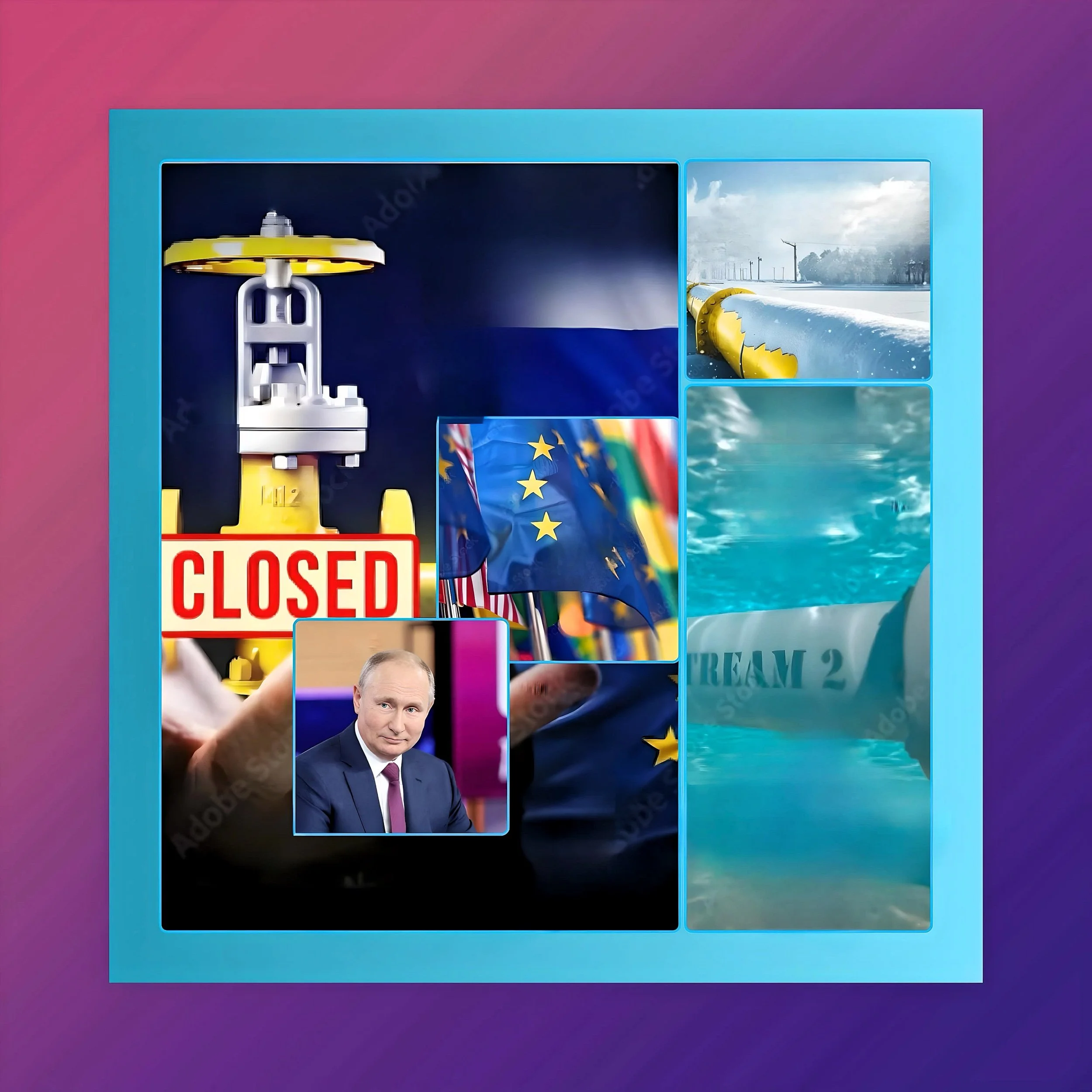
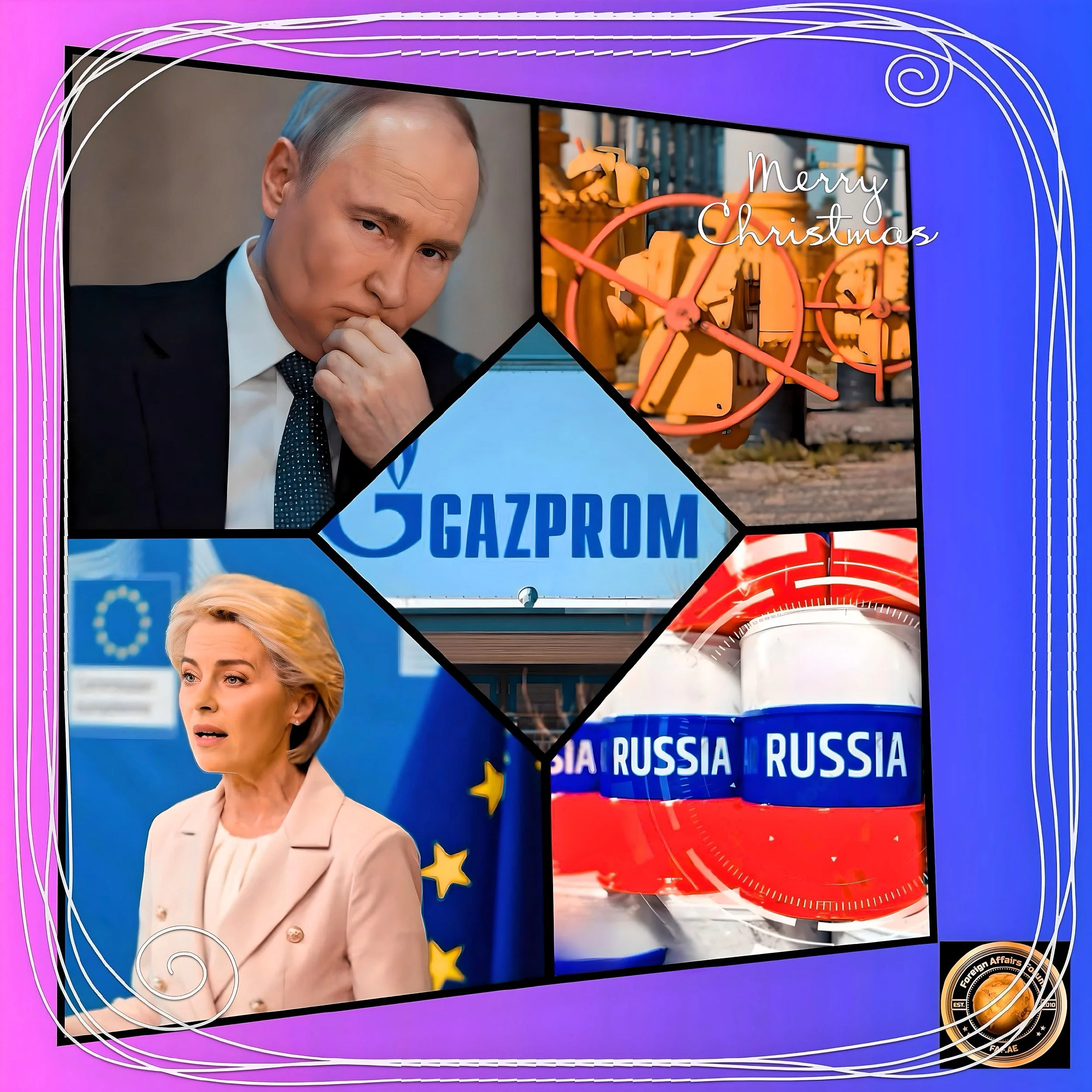
The phrase “closing the tap on Russian fossil fuels once and for all” was announced by Ursula von der Leyen, President of the European Commission, following an overnight agreement reached on December 2-3, 2025, between the European Parliament and the European Council.
This statement was amplified by Dan Jørgensen, the EU Energy Commissioner, who declared on X (formerly Twitter): “We’ve made it: Europe is turning off the tap on Russian gas, forever.”
The announcement marks a historic consensus on a fully binding phase-out of Russian energy imports, which had been under negotiation for months.
Current EU Fossil Fuel Consumption
The EU’s energy consumption reflects a continent in transition.
In 2023
(1) Petroleum products dominated final energy consumption at 37%
(2) electricity at 23%
(3) natural and manufactured gas at 20%,
(4) renewable and biomass sources at 13%.
However, regarding electricity generation specifically, the picture is more encouraging for Europe’s energy transition
End 2024
(1) fossil fuels had declined to just 28% of the electricity generation mix (793 TWh), the lowest level in at least 40 years
(2) renewables had grown to 47% (1,300 TWh).
In terms of Russian energy dependence, gas imports from Russia have already fallen dramatically to approximately 13% of total EU gas imports in 2025—down from 45% before Russia’s 2022 invasion of Ukraine.
The Phased Timeline for Implementation
The agreement establishes a strictly timetabled phase-out rather than an immediate ban.
For liquefied natural gas (LNG), short-term contracts signed before June 2025 will be prohibited starting April 25, 2026, while long-term LNG contracts end on January 1, 2027.
For pipeline gas, the prohibition is more gradual: short-term contracts will be banned from June 17, 2026, while long-term pipeline contracts face a September 30, 2027 deadline (extending to November 1, 2027 if storage targets are not met).
The EU has also committed to phasing out Russian oil imports by the end of 2027, with a legislative proposal to be tabled in early 2026.
How the EU Will Meet Energy Needs Without Russian Supplies
The EU has already demonstrated substantial capacity to replace Russian energy through diversification and renewable expansion. Several strategies underpin this confidence:
Alternative LNG Suppliers and Infrastructure
The United States has emerged as a significant replacement supplier, with US LNG capacity already under construction, exceeding four times the amount the EU imported from Russia in 2024.
Qatar, Australia, and other producers provide additional LNG capacity.
Notably, at least 73 bcm of new US LNG capacity is under construction—well beyond the 17.1 bcm the EU imported from Russia in 2024.
The EU has invested heavily in LNG terminal infrastructure across multiple member states to receive alternative supplies.
Renewable Energy Acceleration
The REPowerEU strategy has yielded dramatic results. By 2024, wind and solar together accounted for 28% of EU electricity—wind at 17% and solar at 11%.
The EU is on track to install a record 89 GW of renewable capacity in 2025, with solar providing 70 GW and wind 19 GW.
Between 2023 and 2030, the EU must add an average of 84 GW annually to meet its 2030 renewable energy targets, and current projections suggest it can maintain this trajectory.
Energy Efficiency and Demand Reduction
The REPowerEU plan has already achieved an 18% reduction in gas consumption since 2022.
The EU has successfully reduced gas imports by more than 60 billion cubic meters annually between 2022 and 2024 through enhanced efficiency and savings measures.
Strong Gas Storage Position
Crucially, the EU’s gas storage has reached 83% capacity as of late October 2025, providing substantial winter security.
ENTSOG’s Winter Supply Outlook confirms that even without any Russian pipeline gas, the EU’s storage and alternative supplies can meet winter demand, with storage expected to decline to approximately 35% by winter’s end—sufficient to prepare for the following winter.
Is the EU's move Bold or Risky?
The answer is nuanced: the decision is strategically bold but operationally manageable.
The Bold Dimension
This represents an unprecedented geopolitical assertion of energy sovereignty.
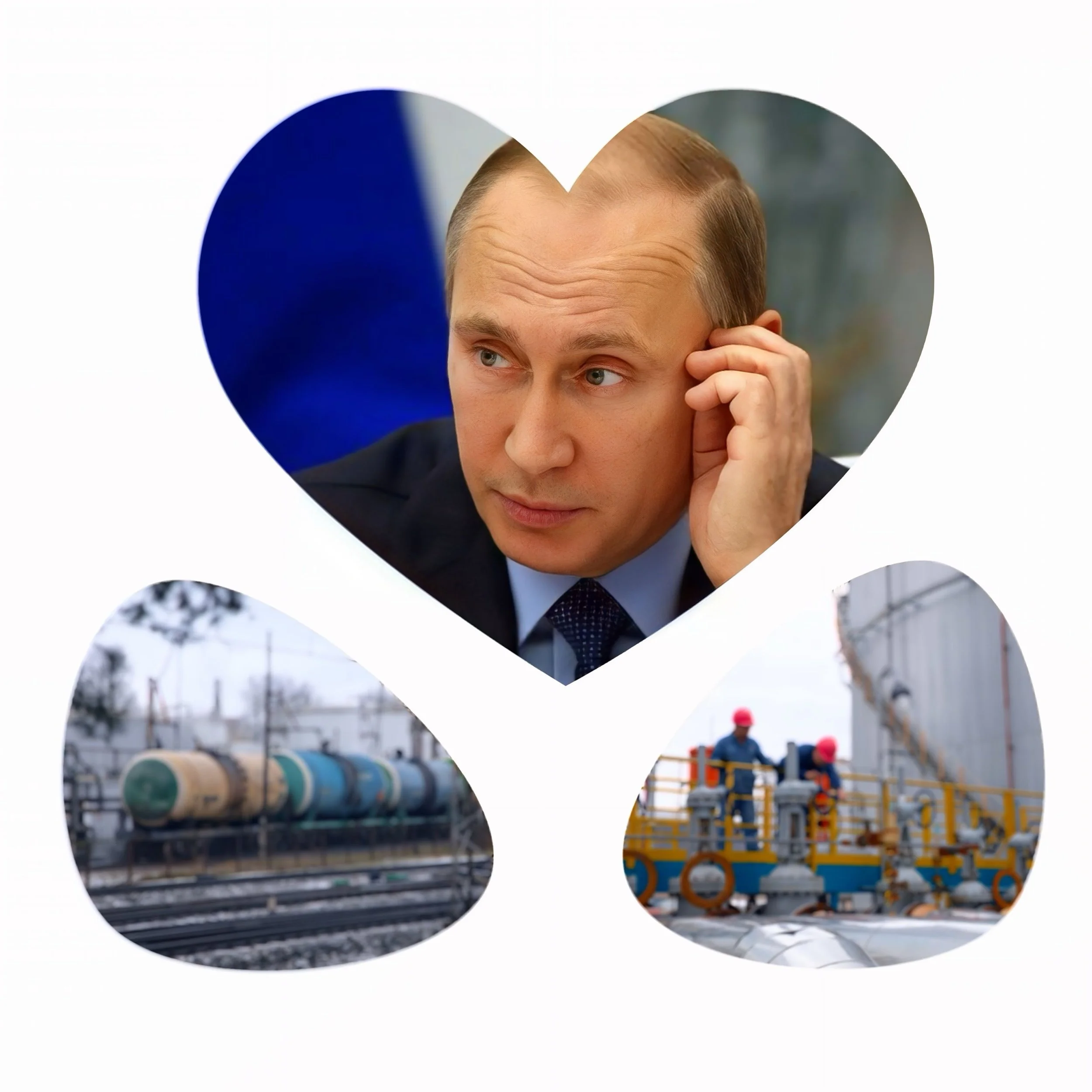
The EU is deliberately severing a dependency that Russia has explicitly weaponized since 2022, using energy cuts to destabilize European economies and divide member states politically.
By formalizing a complete ban rather than allowing a gradual market-driven transition, the EU signals an unwavering commitment to Ukraine and rejection of Russian coercion.
This boldness comes with intentional economic costs—alternative energy sources are more expensive than Russian supplies were—but those costs are subordinated to security and political objectives.
The Manageable Dimension
The timing until 2027 is deliberately calibrated. The EU’s current storage levels (83%), diversified LNG supplier relationships, and accelerating renewable capacity mean the bloc will not face acute scarcity.
Winter 2025-26 is already secured without Russian gas if necessary.
Gas prices have remained relatively moderate (€28/MWh as of December 2025)—far below the €340/MWh extremes seen in 2022—suggesting market confidence in alternative availability.
However, Real Risks Persist: Hungary and Slovakia are considering legal challenges to the regulation, as both nations rely heavily on Russian energy supplies and face geographical constraints limiting LNG access.
The Kremlin has warned that the decision will “accelerate” the EU's economic decline by forcing it to rely on costlier alternatives.
Some analysts caution that winter price spikes to €50-60/MWh remain possible despite overall stability.
Additionally, if renewable deployment falls short of current ambitious projections, or if weather disrupts wind and solar output, the EU could face tighter energy margins than expected.
Strategic Benefits
Geopolitical Leverage
The decision directly undermines Putin’s war financing. Russian energy exports generate approximately €15 billion in gas exports alone, funding military operations.
Cutting these revenues weakens Russia’s economic capacity to sustain the Ukraine war.
Energy Security
True energy independence from a hostile actor eliminates Russia’s capacity to weaponize energy as a political tool.
The 2022 energy crisis demonstrated the vulnerability that Russian supply dominance created; eliminating that dominance restores European strategic autonomy.
Accelerated Green Transition
The commitment to phase out Russian energy by 2027 locks in massive investments in renewable energy.
The EU’s existing trajectory already positions renewables to provide 47% of electricity by 2024 and growing.
This regulatory commitment ensures these investments accelerate rather than stall, advancing the EU’s climate objectives simultaneously.
Avoided Infrastructure Stranding
By committing to a complete phase-out rather than an extended reliance on Russian supplies, the EU avoids building new infrastructure optimized for Russian supplies—infrastructure that would become economically obsolete as Europe decarbonizes by 2050 anyway.
Demonstration of Unity: Despite Hungary and Slovakia’s opposition, the agreement demonstrates that 25 of 27 EU member states can act decisively on existential security issues.
This sends a message to both Russia and internal European audiences about the bloc’s capacity for coordinated action.
Conclusion
The decision is neither reckless nor transformational overnight. Instead, it represents a managed transition with clear milestones and built-in flexibility.
The EU has already proven it can function with 87% less Russian gas than it imported in 2019.
The 2027 endpoint formalizes what market forces and policy are already achieving.
The real challenges—absorbing potential price premiums for LNG, ensuring adequate renewable deployment, managing seasonal variability, and retaining unified political commitment through 2027—are substantial but addressable given the current trajectory.
By December 2025, the most significant risk to this strategy is not immediate scarcity but rather complacency or policy reversal if energy prices spike temporarily or geopolitical circumstances shift.
The agreement, therefore, includes a suspension clause for emergencies, though triggering it requires “strict necessity” and a member state's declaration of emergency status, making casual invocation unlikely.
The window until 2027 represents Europe’s last sustained opportunity to cement energy independence before the transformation becomes irreversible.
In this sense, the EU’s decision is not just closing the tap on Russian energy—it is closing the door on its own potential vulnerability to Russian coercion.