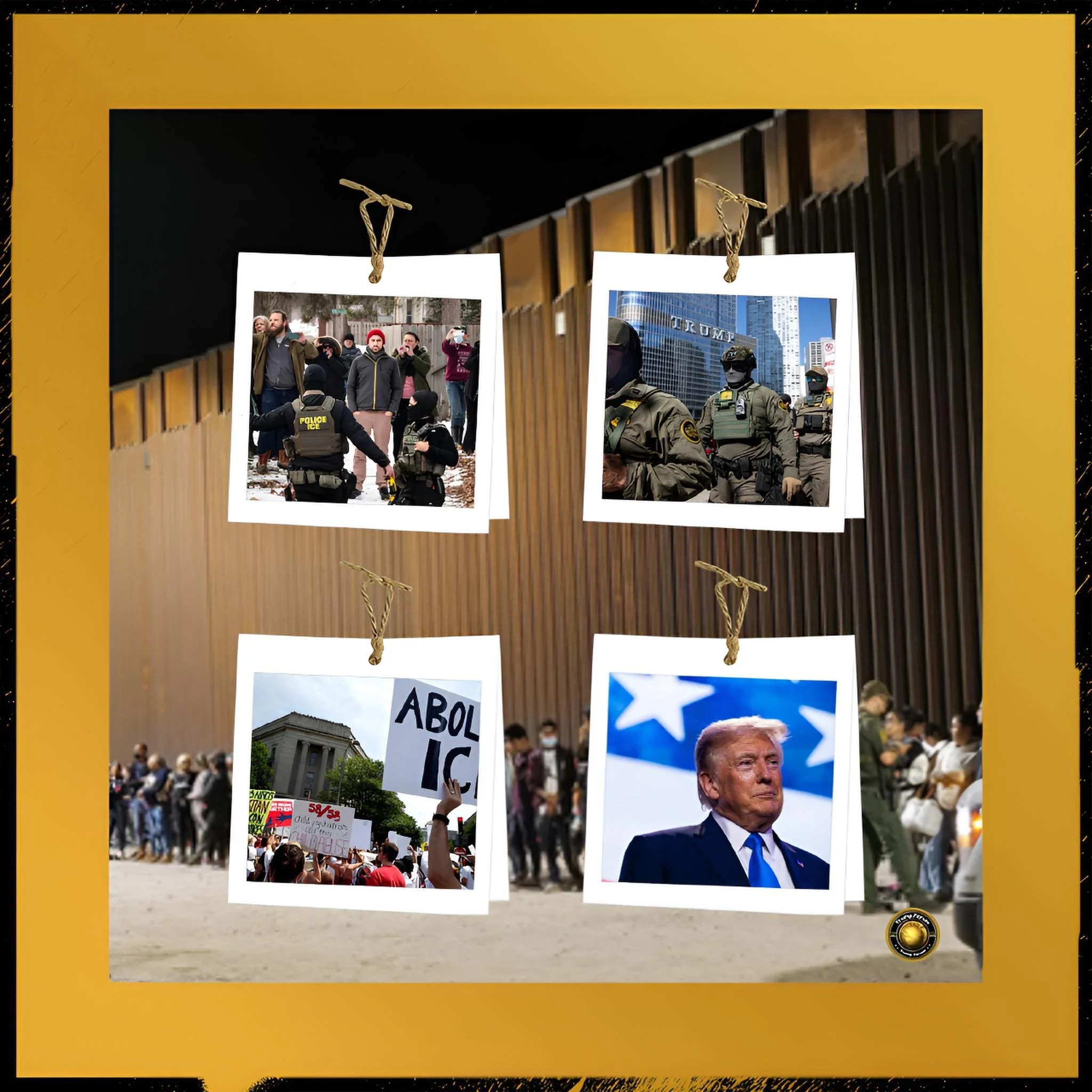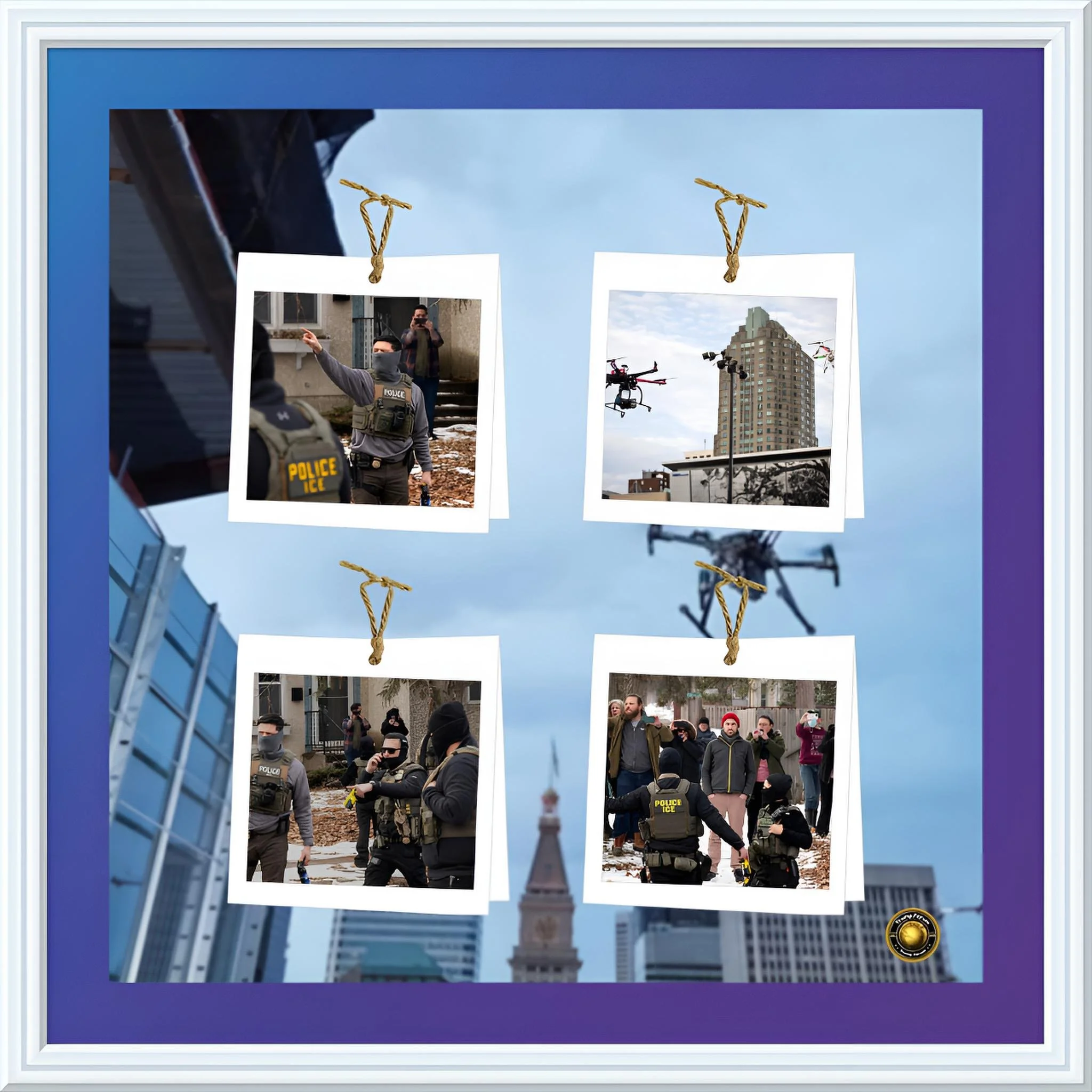
The U.S. Is Launching a Regulatory Assault on Drone Users: ICE Operations Shielded as Federal Drone Rules Tighten-Part I
Executive Summary
Escalating Federal Controls Redefine Civilian Access to Airspace
The federal government has initiated sweeping regulatory measures targeting civilian drone use, especially in areas where Department of Homeland Security (DHS) and ICE operations occur.
These measures include restrictions on foreign-manufactured drones, expanded temporary flight restrictions, and dynamic airspace controls protecting even concealed and moving federal vehicles.
While formally framed as national security and public safety initiatives, the timing and specificity of enforcement patterns indicate a strategic effort to reduce real-time oversight of immigration enforcement actions.
The regulatory assault emerges amid heightened political polarization over border control, increased ICE field operations, and widespread digital documentation of enforcement encounters.
Unlike street-level observers, who remain protected by established First Amendment jurisprudence, drone operators face a distinct regulatory regime under federal aviation authority.
The Federal Aviation Administration (FAA) retains expansive jurisdiction over navigable airspace, enabling executive agencies to deploy administrative tools unavailable in terrestrial contexts.
The current trajectory suggests a durable restructuring of the relationship between citizens and airspace.
It marks a pivotal moment in the broader contest between technological empowerment and centralized state authority.
Introduction
Technology Democratized Aerial Vision Now Faces Retrenchment
For over a decade, commercially available drones priced at a few hundred $ have enabled ordinary Americans to capture aerial footage once reserved for governments, militaries, and major media organizations.
The democratization of aerial surveillance transformed journalism, activism, real estate, disaster response, and civic monitoring.
By 2025, millions of small unmanned aircraft systems had been registered in the United States, and drone footage had become a routine feature of political documentation.
The regulatory landscape is now shifting decisively.
The second Trump administration has moved aggressively to curtail foreign drone imports, particularly those manufactured in China, citing cybersecurity risks and supply chain vulnerabilities.
Simultaneously, new airspace restrictions have been implemented around DHS facilities and operational zones, extending to mobile enforcement actions.
The convergence of trade policy, aviation regulation, and immigration enforcement has created a multilayered regime aimed at limiting observational capacity.
The central question is whether these actions represent prudent national security management or an intentional effort to suppress public scrutiny of controversial enforcement practices.
History and Current Status
Evolution of Drone Policy From Innovation to Restriction
The FAA Modernization and Reform Act of 2012 initiated the integration of unmanned aircraft into U.S. airspace. Subsequent rulemaking established Part 107, which created a licensing pathway for commercial drone operators.
Between 2016 and 2024, drone usage expanded exponentially across industries, and enforcement of aviation rules focused primarily on safety rather than political sensitivity.
During this period, drone footage increasingly documented protests, law enforcement actions, and border operations. Activists used drones to record ICE raids and detention facility conditions.
Although ground-based recording of public officials performing duties in public spaces has been protected under constitutional precedent, aerial recording has remained subject to federal airspace regulation.
Beginning in 2025, policy emphasis shifted. Executive actions prioritized reducing reliance on foreign-made drones, citing data security concerns.
Import restrictions and procurement bans affected large segments of the consumer market, where Chinese-manufactured systems had previously held dominant market share exceeding 70%.
Concurrently, the FAA expanded the use of temporary flight restrictions and refined geofencing requirements that prevent drones from operating in designated zones.
Recent airspace closures, including incidents such as the El Paso shutdown, revealed coordination gaps between federal agencies and local authorities.
Yet beyond episodic confusion lies a coherent strategic objective: insulating immigration enforcement operations from overhead observation.
Key Developments
Administrative Coordination Strengthens Enforcement Shielding Mechanisms
Several developments define the current regulatory posture.
First, trade restrictions have reduced availability of affordable foreign drones, increasing costs for entry-level users. American and allied manufacturers have not yet fully compensated for supply constraints, effectively narrowing access.
Second, dynamic airspace restrictions now extend beyond fixed facilities to encompass operational perimeters around moving DHS vehicles.
Through technological integration with remote identification systems, authorities can detect and potentially neutralize unauthorized drones in real time.
Third, enforcement penalties have intensified. Civil fines and potential criminal liability under aviation statutes deter operators from testing regulatory boundaries.
Unlike street observers invoking constitutional protections, drone operators confront administrative law frameworks that favor agency discretion.
Fourth, interagency data sharing has improved, enabling cross-referencing between drone registration databases and enforcement investigations.
This increases the perceived risk for activists using drones near enforcement sites.
Latest Facts and Concerns
National Security Rationale Intersects With Civil Liberties Debate
As of early 2026, DHS operational tempo along the southern border has increased relative to 2024 levels, accompanied by expanded interior enforcement operations.
Public controversy surrounding detention practices and deportation proceedings has intensified.
Drone footage circulating on social media has occasionally contradicted official narratives, amplifying political tensions.
Simultaneously, federal authorities emphasize cybersecurity risks associated with foreign drone manufacturers.
Officials argue that telemetry data could be accessed by foreign governments. These concerns resonate within broader geopolitical competition, particularly with China.
Critics, however, contend that the selective application of airspace controls reveals a pattern of viewpoint discrimination.
They note that restrictions cluster around immigration enforcement rather than uniformly across comparable federal activities.
Civil liberties advocates warn that dynamic airspace shields could become templates for insulating other controversial governmental actions.
Cause-and-Effect Analysis
Regulatory Contraction Reshapes Civic Oversight Ecosystem
The causal chain begins with the democratization of aerial imaging. Affordable drones expanded citizens’ capacity to monitor state power.
Increased visibility of enforcement operations heightened public scrutiny and political mobilization. In response, executive authorities leveraged aviation law to reassert control.
The effect is a structural asymmetry. Ground observers retain constitutional protections that are difficult to curtail.
Aerial observers, by contrast, operate within a regime where the federal government exercises near-plenary authority over navigable airspace. The executive branch thus channels regulatory energy into the domain where its power is strongest.
This asymmetry produces secondary effects. Media organizations face higher operational costs. Independent journalists and activists encounter barriers to documentation.
Public understanding of enforcement practices may narrow as visual evidence becomes scarcer.
Future Steps
Emerging Legal Challenges and Institutional Adaptations
Legal challenges are likely. Plaintiffs may argue that targeted airspace restrictions constitute content-based suppression. Courts will confront complex questions about the intersection of aviation safety authority and expressive rights.
Technological adaptation is also foreseeable. Domestic drone manufacturers may gain market share, potentially aligning more closely with federal compliance frameworks.
Activists may shift toward satellite imagery, crowd-sourced ground documentation, or litigation strategies.
Congress could intervene, either codifying stricter national security standards or clarifying protections for aerial news gathering. The trajectory will depend on political alignment and public opinion.
Conclusion
Airspace Governance as Arena of Democratic Contestation
The regulatory assault on drone users reflects more than bureaucratic recalibration. It embodies a contest over who may watch the state, from what vantage point, and under what legal regime.
By asserting expansive authority over the skies, the federal government has sought to reconfigure the informational environment surrounding immigration enforcement.
Whether this transformation represents prudent governance or democratic retrenchment remains contested.
What is clear is that the democratized sky, once emblematic of technological empowerment, is becoming an increasingly regulated domain where sovereignty, security, and civil liberty converge.