China’s Strongman Confronts Growing Domestic Fault Lines
Executive Summary
Xi Faces Mounting Pressures Beneath China’s Global Ascent
As China enters the Year of the Fire Horse, President Xi Jinping appears outwardly secure.
He commands the world’s second-largest economy, presides over a disciplined party-state apparatus, and projects strategic confidence abroad through assertive diplomacy, military modernization, and global infrastructure initiatives.
Yet beneath this façade of consolidated authority lies a more unsettled domestic landscape.
Structural economic deceleration, demographic contraction, property-sector fragility, elite anxiety, youth unemployment, and tightened ideological controls collectively generate a climate of latent instability.
FAF article argues that Xi’s current predicament is not one of imminent regime collapse but of cumulative strain.
The political centralization that has fortified his personal authority has simultaneously narrowed channels for feedback and policy correction.
The transition from high-speed growth to slower, more uncertain expansion undermines the implicit social contract that linked rising prosperity with political acquiescence.
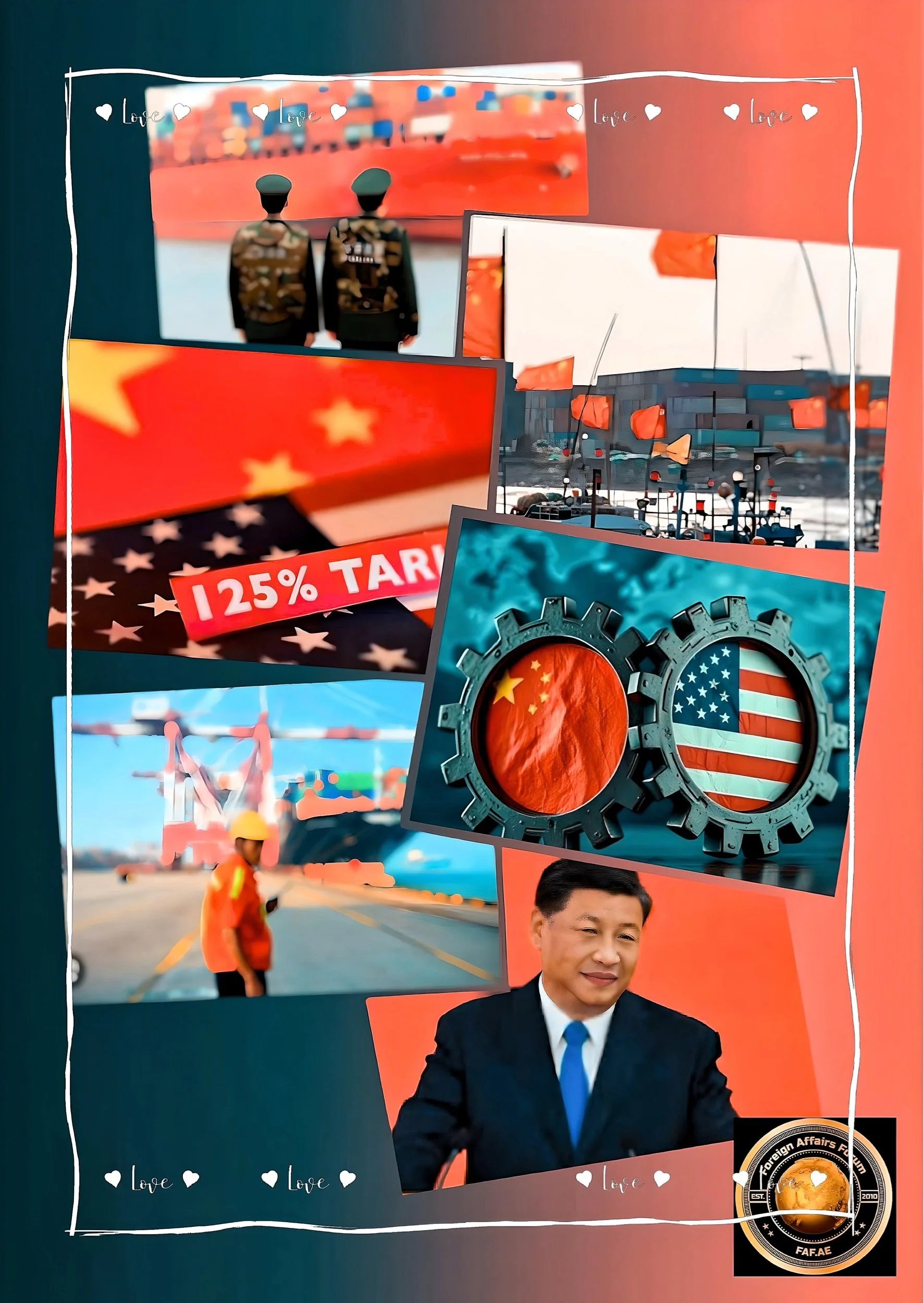
Meanwhile, the intensifying rivalry with the United States compounds domestic pressures by constraining export markets, access to technology, and investor confidence.
The Fire Horse in Chinese tradition symbolizes energy and volatility.
The metaphor is apt. Xi’s China is energetic in ambition yet volatile in structure.
Its global posture radiates confidence, but its domestic foundations reveal tension.
The trajectory of the coming years will depend less on foreign confrontation than on the regime’s capacity to manage internal contradictions without sacrificing adaptability.
Introduction
Fire Horse Year Tests China’s Political Stability
China’s political system is often described as opaque yet stable, centralized yet pragmatic.
Under Xi Jinping, these characteristics have evolved into something more personalized and ideological.
Since assuming power in 2012, Xi has concentrated authority to a degree unseen since Mao Zedong, reshaping institutions, revising constitutional norms, and embedding his doctrine into the Communist Party’s guiding principles.
Internationally, China’s ascent appears formidable. Its Belt and Road Initiative spans continents.
Its military capabilities have expanded rapidly, with naval tonnage and missile systems Aadvancing at pace.
Its diplomatic reach extends from Africa to the Middle East, where Beijing brokers agreements and positions itself as an alternative to Western influence.
Domestically, however, the atmosphere is more complex. Growth rates that once exceeded 10% annually have moderated to approximately 5% or below.
Youth unemployment in urban areas has surpassed 20% at times, prompting temporary suspension of official data releases.
The property sector, representing nearly 25% of GDP when including related industries, has endured defaults and declining confidence.
Demographic decline has begun in earnest, with population contraction recorded after decades of expansion.
Xi stands at the intersection of these forces. His authority is consolidated, but expectations are elevated.
The durability of his leadership will hinge on whether the system he has shaped can adapt to mounting pressures.
History and Current Status
The Communist Party of China has historically derived legitimacy from three interlocking pillars: ideological coherence, economic performance, and nationalist revival.
During the reform era initiated by Deng Xiaoping, economic performance assumed primacy.
Rapid industrialization, export-led growth, and integration into global markets transformed China into a manufacturing powerhouse.
Between 1980 and 2010, hundreds of millions were lifted from poverty. Urban skylines multiplied. Infrastructure networks expanded dramatically.
This transformation created a tacit bargain: political conformity in exchange for economic advancement.
Xi inherited a system marked by corruption, inequality, and environmental degradation but still buoyed by momentum.
His anti-corruption campaign disciplined cadres and eliminated rivals, reinforcing central authority.
Simultaneously, he advanced the concept of “national rejuvenation,” linking domestic discipline with global ambition.
However, the economic model that sustained prior growth is under strain.
Export markets face protectionist pressures.
The real estate sector, long a driver of local government revenue and household wealth, has faltered under debt burdens exceeding $300 billion in major developer liabilities.
Local governments carry hidden debts estimated at trillions of dollars.
As of 2025, official GDP growth hovers around 5%, yet private-sector sentiment remains cautious.
Foreign direct investment has slowed, with some multinational corporations diversifying supply chains to Southeast Asia and India.
Although China retains formidable manufacturing capacity and technological prowess in sectors such as electric vehicles and renewable energy, confidence is uneven.
Key Developments
Several developments have sharpened domestic pressures.
First, demographic contraction has accelerated. China’s population declined for consecutive years, reflecting low fertility rates below 1.2 children per woman.
An aging society increases pension and healthcare burdens while shrinking the labor force.
Second, youth discontent has surfaced in subtle forms.
The phenomenon known as “lying flat” reflects withdrawal from intense work culture. Competitive exams for civil service positions attract millions, signaling preference for stability over entrepreneurship.
Third, the property correction has eroded household wealth. Real estate once served as a primary savings vehicle. Falling prices dampen consumer confidence, constraining domestic demand.
Fourth, regulatory campaigns targeting technology and education sectors unsettled private entrepreneurs.
Although framed as promoting “common prosperity,” these measures reduced market capitalization of leading firms by hundreds of billions of dollars.
Fifth, geopolitical tensions with the United States have intensified export controls on advanced semiconductors and restricted technology transfer.
While China accelerates domestic innovation, near-term bottlenecks persist.
Latest Facts and Concerns
Recent economic indicators reveal mixed signals.
Industrial production remains resilient in strategic sectors such as electric vehicles, where Chinese firms command significant global market share.
Exports of green technology have expanded, partially offsetting weakness elsewhere.
However, consumer confidence indices remain subdued.
Deflationary pressures have appeared intermittently, reflecting cautious spending. Local government financing vehicles confront repayment challenges.
The banking system, though state-backed, carries exposure to property-related assets.
Politically, elite reshuffles within the People’s Liberation Army and unexplained removals of senior officials have prompted speculation regarding internal discipline.
Xi’s emphasis on loyalty underscores both control and concern.
Externally, tensions around Taiwan persist. Military exercises near the Taiwan Strait have intensified, signaling resolve yet increasing risk of miscalculation.
Meanwhile, relations with Europe oscillate between economic interdependence and strategic skepticism.
Cause-and-Effect Analysis
The Year of the Fire Horse Finds Xi on Edge
The interaction between economic deceleration and political centralization is central to Xi’s predicament.
Slower growth reduces fiscal space for stimulus and social spending. Reduced opportunity can generate dissatisfaction, particularly among youth.
To preempt instability, the party intensifies ideological oversight and surveillance.
Yet heightened control may dampen entrepreneurial dynamism. Regulatory unpredictability discourages private investment.
Capital outflows, even if modest relative to total reserves exceeding $3 trillion, signal caution.
Property-sector distress diminishes local government revenue derived from land sales. Fiscal strain limits infrastructure expansion, which historically counterbalanced downturns.
Consequently, the state faces a dilemma: expand debt to sustain growth or accept slower expansion with attendant social implications.
Geopolitical rivalry compounds domestic challenges. Export restrictions constrain high-tech ambitions. Nationalist rhetoric bolsters political cohesion but may reduce diplomatic flexibility.
The more China positions itself as a systemic rival to the United States, the greater the risk of economic decoupling.
Demographic decline exerts long-term structural pressure.
An aging population reduces labor supply and productivity growth. Immigration remains limited, and cultural resistance to large-scale inflows persists.
Without productivitTo breakthroughs, potential growth may trend downward.
navigate these complexities, Xi’s administration may pursue calibrated economic reform.
Measures could include targeted fiscal stimulus, support for private enterprise, and gradual restructuring of local government debt.
Strengthening social safety nets may encourage consumption by reducing precautionary savings.
Technological self-reliance will remain central. Investment in semiconductors, artificial intelligence, and advanced manufacturing is likely to expand.
Partnerships with non-Western economies can diversify trade routes.
Politically, Xi may balance centralization with selective decentralization, granting local authorities limited flexibility while maintaining ideological discipline. Anti-corruption campaigns may continue to reinforce loyalty.
Diplomatically, China may seek to stabilize relations with Europe and parts of Asia to offset friction with Washington.
Engagement in multilateral forums provides opportunities to project responsible leadership.
Conclusion
Economic Strains Challenge Xi’s Carefully Built Power Structure
The Year of the Fire Horse finds Xi Jinping commanding a state of immense capability yet confronting accumulating domestic strains.
His authority is consolidated, but the structural foundations of rapid growth have shifted.
Economic deceleration, demographic contraction, property-sector fragility, and geopolitical rivalry intersect to create a landscape of managed tension.
China’s trajectory will not be defined by sudden upheaval but by incremental adjustments within a tightly controlled political framework.
Whether that framework proves sufficiently adaptable remains uncertain.
Xi’s leadership has reshaped China’s political architecture; the coming years will test whether consolidation ensures resilience or constrains responsiveness.
The answer will shape not only China’s future but the contours of global order.