Reassessing American Isolationism: A Historical Examination of Alliance Withdrawal and the Implications for U.S. Foreign Policy
Introduction
FAF's comprehensive analysis shows the current direction of policies under the Trump administration marks a significant departure from decades of established American practices in alliance-building and maintenance.
This shift reflects historical patterns often seen in empire declines, foreshadowing the collapse of major powers throughout history.
In contrast to past scenarios where alliances typically faded away after fulfilling their immediate goals, the United States under Trump's leadership appears to be intentionally dismantling relationships that have long served its strategic interests, some of which date back more than seventy years.
The Unprecedented Nature of Trump’s Alliance Policy
Since his return to office in January 2025, Trump has employed a systematic strategy to alienate key allies, utilizing a mix of punitive trade measures, public denigrations of allied leaders, and overt threats to withdraw vital security commitments.
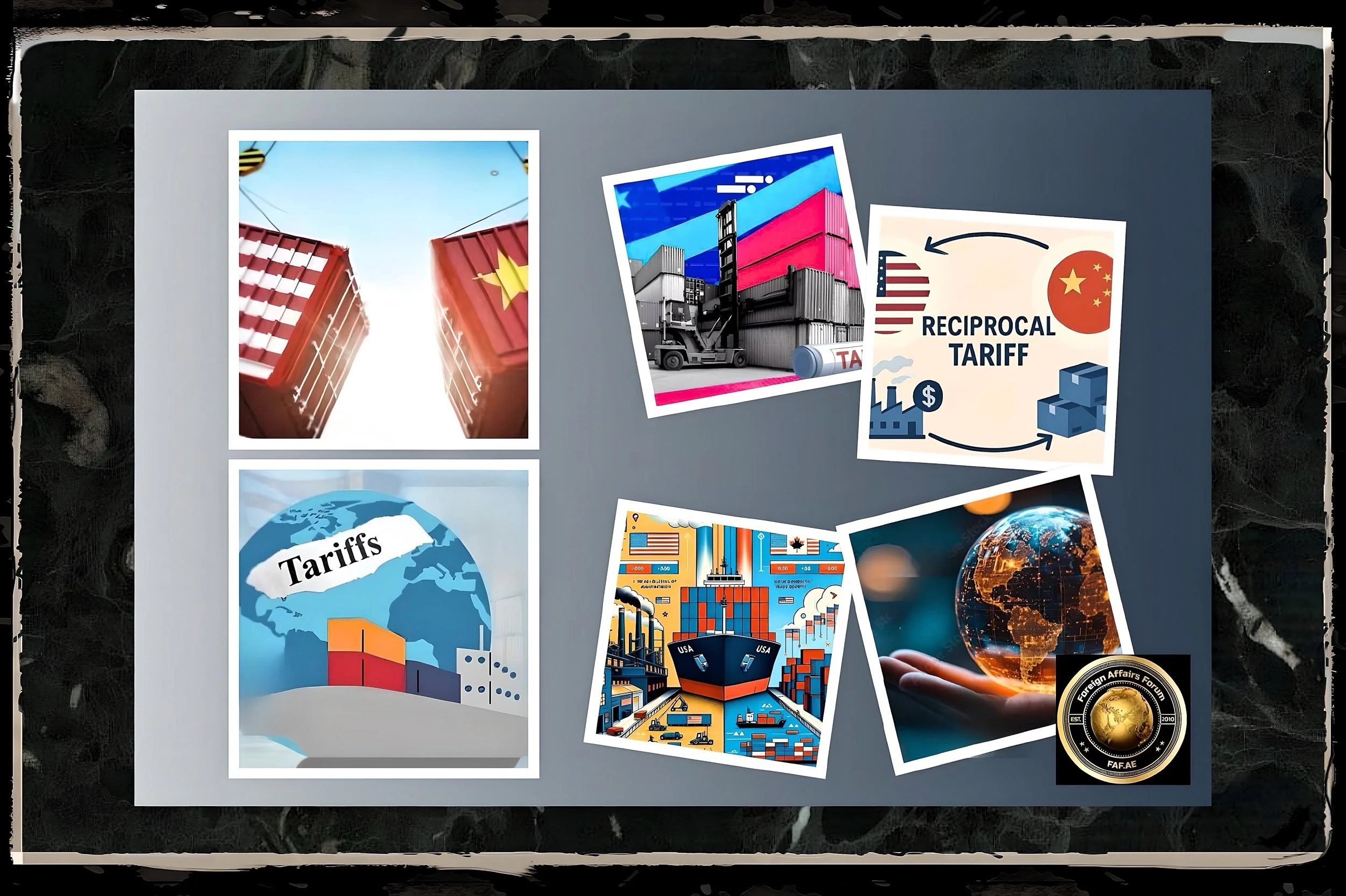
His administration has enacted a wide range of tariffs—between 25% and as high as 145%—targeting various allied nations while simultaneously reducing tariffs for adversarial nations like China.
Most significantly, Trump has raised doubts regarding the nuclear umbrella that has provided a foundation for global stability since the end of World War II.
This has propelled many traditional allies to explore alternative security arrangements, thereby shaking the essence of long-standing alliances.
At the NATO summit in June 2025, Trump noted that his confrontational tactics have compelled alliance members into unprecedented commitments to defense spending.
As a result, NATO nations have agreed to increase their defense budgets to 5% of GDP by 2035, more than double the previously established target of 2%. However, this seeming achievement conceals deeper structural damage to the alliance's cohesion.
European Responses: Nuclear Cooperation and Strategic Autonomy
The recent formation of independent European security frameworks is a particularly telling sign of the erosion of trust in U.S. alliance commitments.
In July 2025, France and the United Kingdom took a momentous step by signing the Northwood Declaration, a landmark agreement establishing synchronized nuclear deterrence policies for the first time.
This declaration explicitly asserts that "there is no extreme threat to Europe that would not prompt a response by both nations," carving out a European nuclear deterrent that operates independently of U.S. extended deterrence.
This Franco-British nuclear partnership transcends mere symbolic gestures; it encompasses joint targeting scenarios and aligned submarine patrols, signaling a fundamental shift away from reliance on U.S. security guarantees.
Such developments directly challenge the core principles of NATO's Article 5 and the reliability of American nuclear assurances, underscoring a growing sentiment among Western allies that U.S. protection can no longer be counted on.
Simultaneously, European nations diversify their trade partnerships to lessen their dependency on the United States.
The European Union is actively negotiating trade agreements with various Asian nations and is exploring innovative “world trade club” arrangements that would essentially exclude American participation.
While EU officials prepare nearly €72 billion in retaliatory measures against U.S. tariffs, they simultaneously reinforce trade connections with other emerging powers.
Middle Power Realignment and Coalition Building
Trump’s strategy of alienating traditional allies has accelerated alternative partnerships among middle powers—countries historically relying on U.S. security guarantees. Nations such as Canada, Australia, Japan, and South Korea are now considering independent defense structures and regional coalitions.
For instance, Canada has taken significant steps by commencing shipments of liquefied natural gas to Asian markets.
It is evaluating military procurement options from European manufacturers instead of U.S. sources, indicating a groundbreaking shift in its defense strategy.
The rise of coalitions among middle powers signifies a significant reorganization in global governance.
Collaborative groups such as MIKTA (Mexico, Indonesia, South Korea, Turkey, and Australia) are broadening their focus beyond economic cooperation to include critical security issues.
These partnerships emulate the Nordic model, which maintains distinct national identities while facilitating coordinated policies across different sectors.
The Economic Burden of Alliance Maintenance
Historical patterns indicate that the abandonment of alliances frequently coincides with imperial overstretch, when a nation’s global commitments surpass its financial capabilities.
The United States faces escalating fiscal challenges, with its national debt soaring to an alarming $36.56 trillion.
Servicing this debt consumes approximately 22% of federal revenues, placing immense pressure on government resources. Interest payments have now eclipsed expenditures on both Medicare and national defense.
While Trump's tariff policies have generated an estimated $108 billion in additional federal revenue, they have simultaneously imposed a considerable financial strain on U.S. households, costing approximately $1,300 per family and jeopardizing vital trading relationships.
This approach mirrors Britain’s experience in the early 20th century when economic burdens compelled London to move away from its “splendid isolation” stance in favor of seeking new alliance partners.
Nuclear Proliferation Risks and Alliance Breakdown
One of the most alarming repercussions of Trump’s conduct regarding alliances is the resurgence of interest in nuclear weapons development among U.S. allies.
For instance, Polish Prime Minister Donald Tusk has openly articulated the need for Poland to "reach for opportunities related to nuclear weapons."
At the same time, leaders in South Korea have made similarly concerning statements about their nuclear ambitions.
Such declarations not only highlight the waning confidence in U.S. assurances but also pose significant risks for global nuclear proliferation and security stability.
Historical Parallels and Imperial Decline
The way the Trump administration engaged with its allies resembles the behavior of previous global powers during their periods of decline.
Notably, the United States seems to be following in the footsteps of the British Empire after its devastating loss in World War I.
At this time, Britain began to distance itself from its peripheral commitments and, in the process, alienated key partners that had long been integral to its imperial agenda.
The British historical experience illustrates a crucial lesson: imperial powers frequently hasten their decline by enacting short-sighted policies prioritizing immediate financial concerns over long-term strategic advantages.
Historical patterns of alliance disintegration can be observed in various contexts, such as the dissolution of the post-Napoleonic Holy Alliance and the eventual collapse of the Warsaw Pact.
Typically, these alliances either broke down due to the fulfillment of their foundational goals or external pressures from adversarial forces.
However, the present-day situation in the United States is unusual because it marks a conscious decision to abandon successful alliances that are still aligned with and beneficial to American strategic interests.
The Burden-Sharing Dilemma
President Trump’s relentless focus on burden-sharing stems from legitimate apprehensions regarding the financial implications of maintaining alliances. Nevertheless, his approach overlooks these relationships' extensive strategic advantages.
Alliances bolster American capabilities through mechanisms like intelligence sharing and forward basing rights and facilitate collaborative defense production efforts.
The potential loss of these critical arrangements would likely necessitate a significant surge in direct U.S. military expenditures while diminishing American security's overall effectiveness.
Moreover, the Trump administration's “transactional” approach to alliances fundamentally misinterprets the nature of these relationships.
Historical evaluations demonstrate that successful partnerships require a profound commitment to diplomacy and mutual respect—qualities that cannot be achieved through intimidation or coercive tactics.
Trump’s commercial mindset treats the very concept of sovereignty as if it were a negotiable commodity, neglecting the national pride and historical narratives that deeply influence decision-making in sovereign states.
Implications for Global Stability
Should the U.S. alliance framework disintegrate, the world could enter a period of intense great power rivalry reminiscent of the early 20th century.
Absent American coordination, regional powers would be compelled to compete directly with one another, significantly heightening the risk of conflict.
Notably, China and Russia are already capitalizing on the fractures within Western alliances to expand their spheres of influence in critical and contested areas.
The erosion of trust in America’s reliability is not confined to adversarial nations; it also extends to neutral states that have historically depended on U.S. leadership for maintaining global governance structures.
Polling data from 2025 reveals a worrying trend: confidence in American leadership has waned across 25 nations, with China increasingly positioning itself as the favored global economic leader.
Conclusion
The Path Forward
The alliance policies enacted during the Trump administration signal a fundamental shift from the grand strategy underpinning American global dominance since the end of World War II.
By perceiving alliances as mere protection rackets rather than strategic partnerships, Trump risks accelerating the decline he purports to avert.
Historical precedents suggest that when great powers abandon their established alliances, they often hasten their marginalization as former partners seek alternative alliances or strive to build independent capabilities.
The damage inflicted upon these alliance relationships may be arduous to repair, particularly given the emerging nuclear cooperation agreements and alternative partnerships among U.S. allies.
Future American leaders will inherit a world that is likely to be more fragmented, with traditional allies wielding greater strategic autonomy and diminished reliance on U.S. guidance.
Whether this trend signifies a permanent transition towards a multipolar world or merely a fleeting disruption is mainly contingent on the policy decisions made in the forthcoming years. The stakes in this scenario could not be more serious.
As Henry Kissinger aptly noted, even the mightiest nations require allies to maintain power.
Unfortunately, Trump's America may come to learn this lesson the hard way, experiencing the harsh realities of diplomatic isolation and strategic irrelevance—consequences that could take generations to mend.