America's Week of Reckoning: Why the World Is Watching Washington
Foreign Affairs Forum | Dr. Antonio Bhardwaj (Dr. 🆎)
This FAF article explains, in plain language, what has happened in American foreign policy in the past few days and why it matters to ordinary people.
What Is Going On
The United States is dealing with several big problems at the same time.
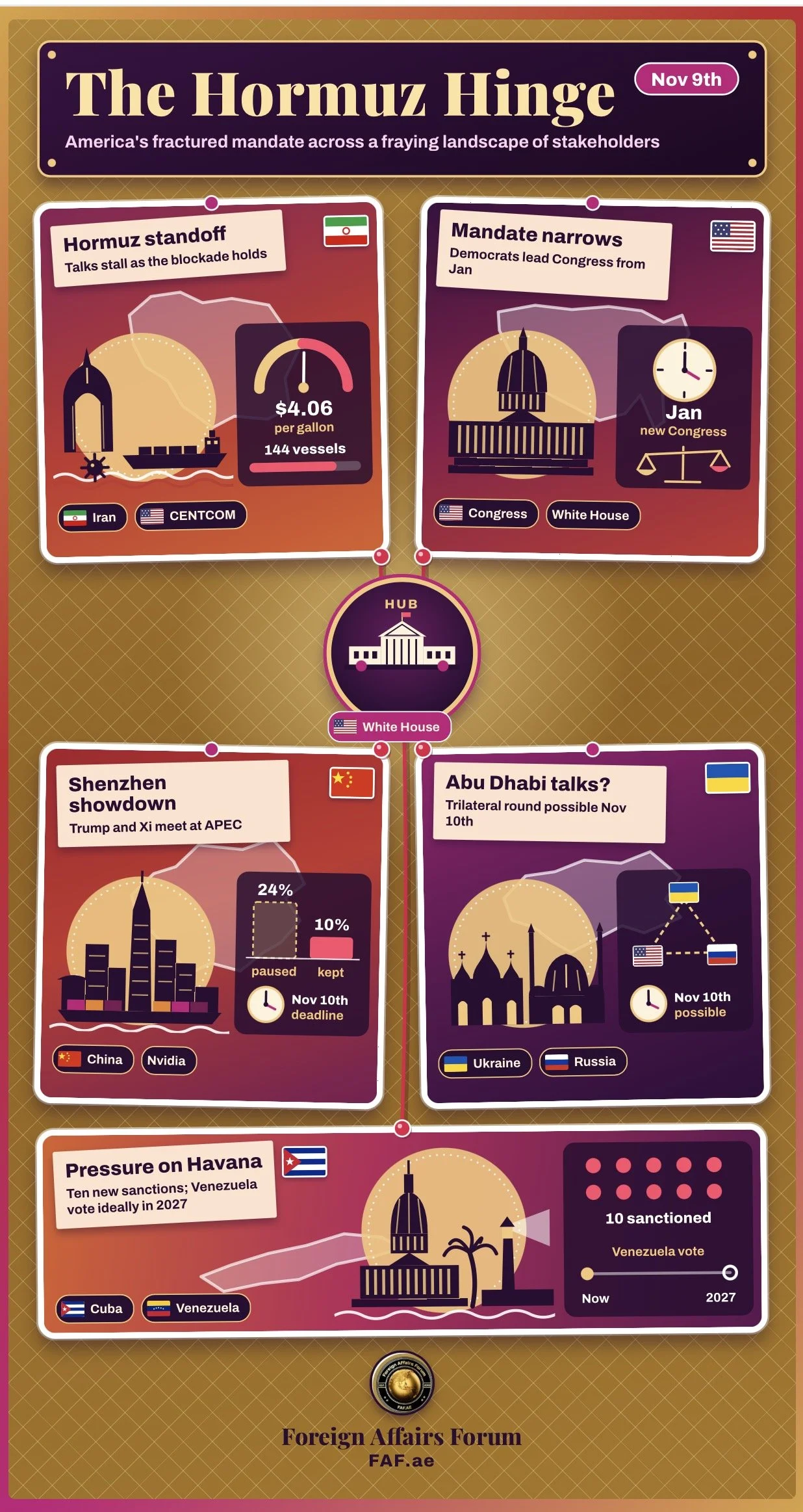
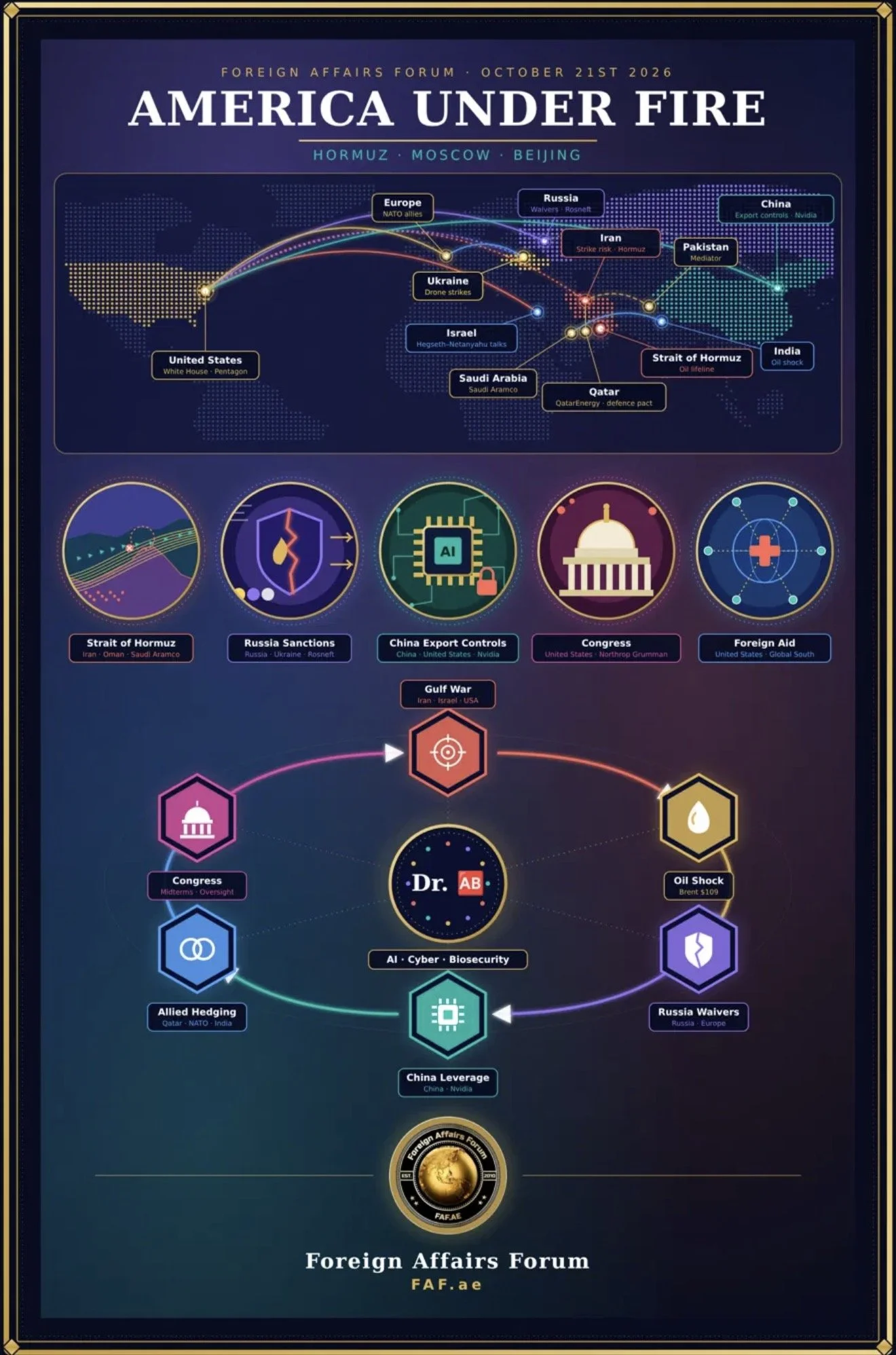
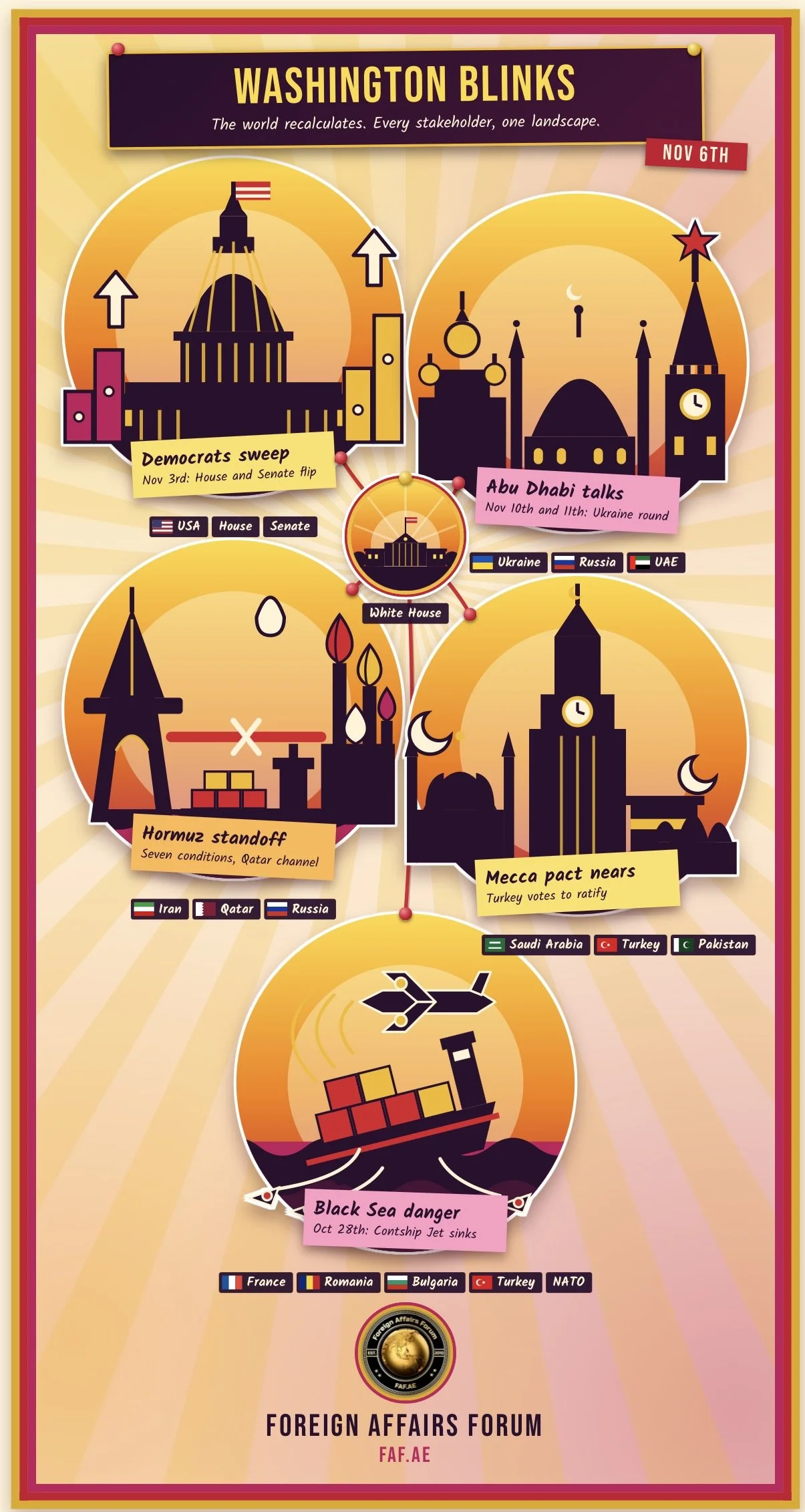
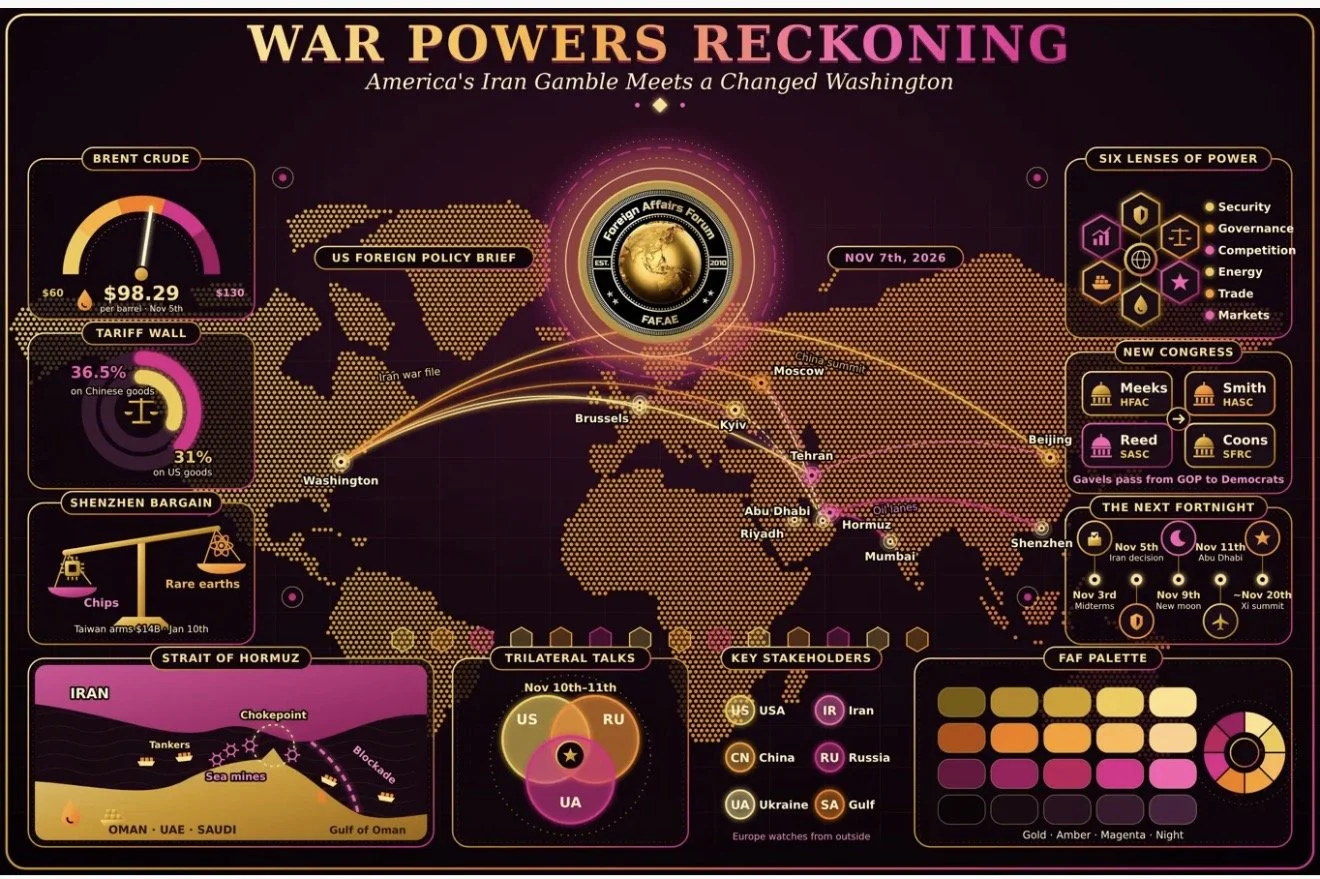
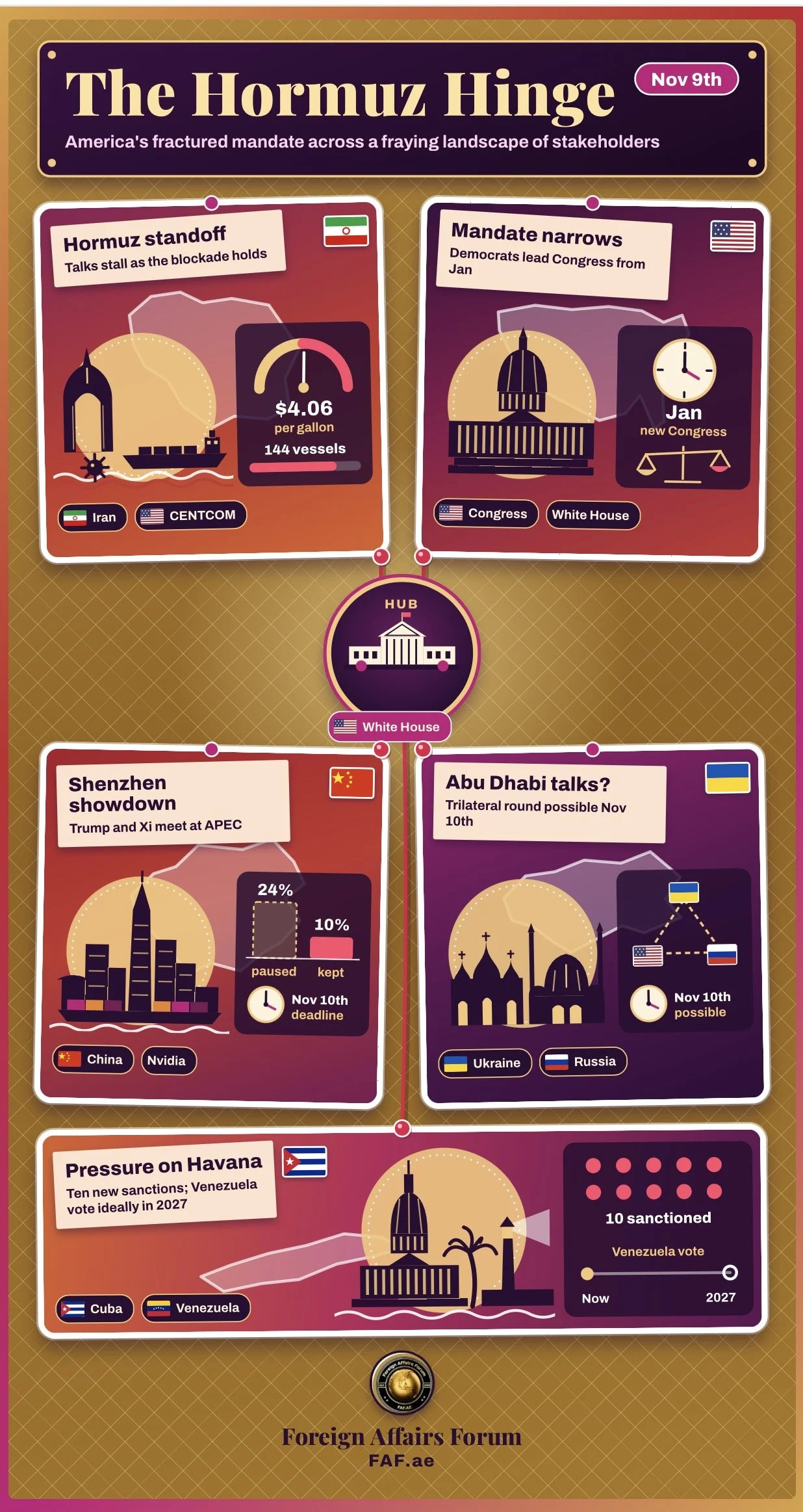
The biggest is the war with Iran. Fighting has slowed, but it has not ended. Ships in and near the Strait of Hormuz, a narrow waterway that carries a large share of the world's oil, have been hit by missiles and mines. The United States is also blocking Iranian ports. On Nov 7th, American forces said they had disabled a cargo ship that was trying to get through the blockade.
At the same time, talks to end the standoff have stopped moving. Iran says it will discuss its nuclear plans only after the United States meets seven demands about reopening the strait. American officials call those demands outrageous. The Iranian foreign minister said that the countries helping to arrange talks have paused their travel since the American elections. The American president has said, first, that he would soon decide whether to attack again, and then that a full-scale attack is highly unlikely if talks make progress.
Why the Election Matters
The recent American elections changed the balance of power in Congress. Democrats will lead it from January. That means the president will face more questions, more investigations and more arguments over who has the right to order military action. The Secretary of State says Congress has a role but that the president has the main one. Reports say the Defense Secretary may face an effort to impeach him, and that the Secretary of State may be thinking about leaving, which his department denies.
Other countries are watching closely. Friends worry that American policy may swing back and forth. Rivals may try to wait out the president or take advantage of the confusion.
Dr. 🆎 says that when a great power looks uncertain, everyone else begins to prepare for different outcomes, and that makes the world more dangerous, not less.
The Contest With China
The American president is expected to meet China's leader in about two weeks at a summit in Shenzhen. It would be their third meeting this year. Their countries have been in a long dispute over taxes on goods, advanced computer chips and rare minerals used in phones, cars and weapons.
China has reportedly extended a pause on a 24% extra tax on American goods, while keeping a 10% tax in place. Some of China's limits on exports of rare minerals also have deadlines on Nov 10th and Nov 27th. If they come back into force, factories around the world could face shortages. Some Democrats say the government has been too soft on chip sales and too slow on a $14 billion arms sale to Taiwan. Both sides, though, say they want to keep talking.
The War in Ukraine
There may also be new talks about ending the war in Ukraine. Ukraine's president says meetings between Ukraine, Russia and the United States could begin as early as Nov 10th in Abu Dhabi, but this has not been confirmed. The Kremlin calls the meeting preliminary. Ukraine wants strong promises that Russia will not attack again. European leaders want a seat at the table, because any deal affects their safety most of all. The Russian side has even suggested that Europe cannot decide who should speak for it.
Nearer to Home
The United States also announced new sanctions on ten people and groups linked to Cuba's government, military and oil business. The Secretary of State said Venezuela should ideally hold elections next year, but he would not promise that they would happen before the current president leaves office.
Why It Matters to You
Most people feel these events at the gas pump and in the shops. Fuel in the United States averaged about $4.06 a gallon this week, and prices fell because people hoped for a deal. If talks collapse, prices could jump again. Disruption at sea raises shipping costs, and shortages of minerals can raise the price of everyday electronics.
Dr. 🆎 adds a warning about the technology behind these crises. Computers and artificial intelligence now help militaries detect threats and recommend responses in seconds. In a crowded and confusing place like the Gulf, a mistaken alert could lead to a deadly reaction before any human has time to think. He argues that countries must agree on simple rules that keep a person in charge of life-and-death decisions, and that they should work together to prevent dangerous biological weapons, which can spread across borders far more easily than ships or missiles.
What Should Happen Next
The path forward is not complicated to describe, even if it is hard to follow. Both sides in the Iran standoff should take small, matching steps, so that neither has to give in first. The American president and Congress should agree on shared rules before January, so that allies can trust that policy will not change overnight. Talks with China should aim to extend the pauses on taxes and minerals, and talks about Ukraine should include Europe. Countries should also agree on basic rules for the use of artificial intelligence in war.
The Bottom Line
The United States is still the world's strongest power, but it is facing hard choices with less political certainty at home. The next few weeks, from the Gulf to Shenzhen to Abu Dhabi, will show whether Washington can turn a moment of tension into a period of steadier diplomacy.
As Dr. 🆎 puts it, the real test is whether leaders can slow down crises that technology is speeding up.