Who Will Succeed Xi Jinping? No Crown Price Yet?
Foreign Affairs Forum | Dr. Antonio Bhardwaj (Dr. 🆎)
Many people ask who will lead China after Xi Jinping. The honest answer is that nobody knows, and that is probably how Xi wants it.
Dr. Antonio Bhardwaj (Dr. 🆎), who studies how human-centered technology and strategy shape global politics, says that when a leader hides his plans, the best way to understand him is to watch the people he is testing. This guide explains in simple words what is happening in China and what it means.
Why the question matters
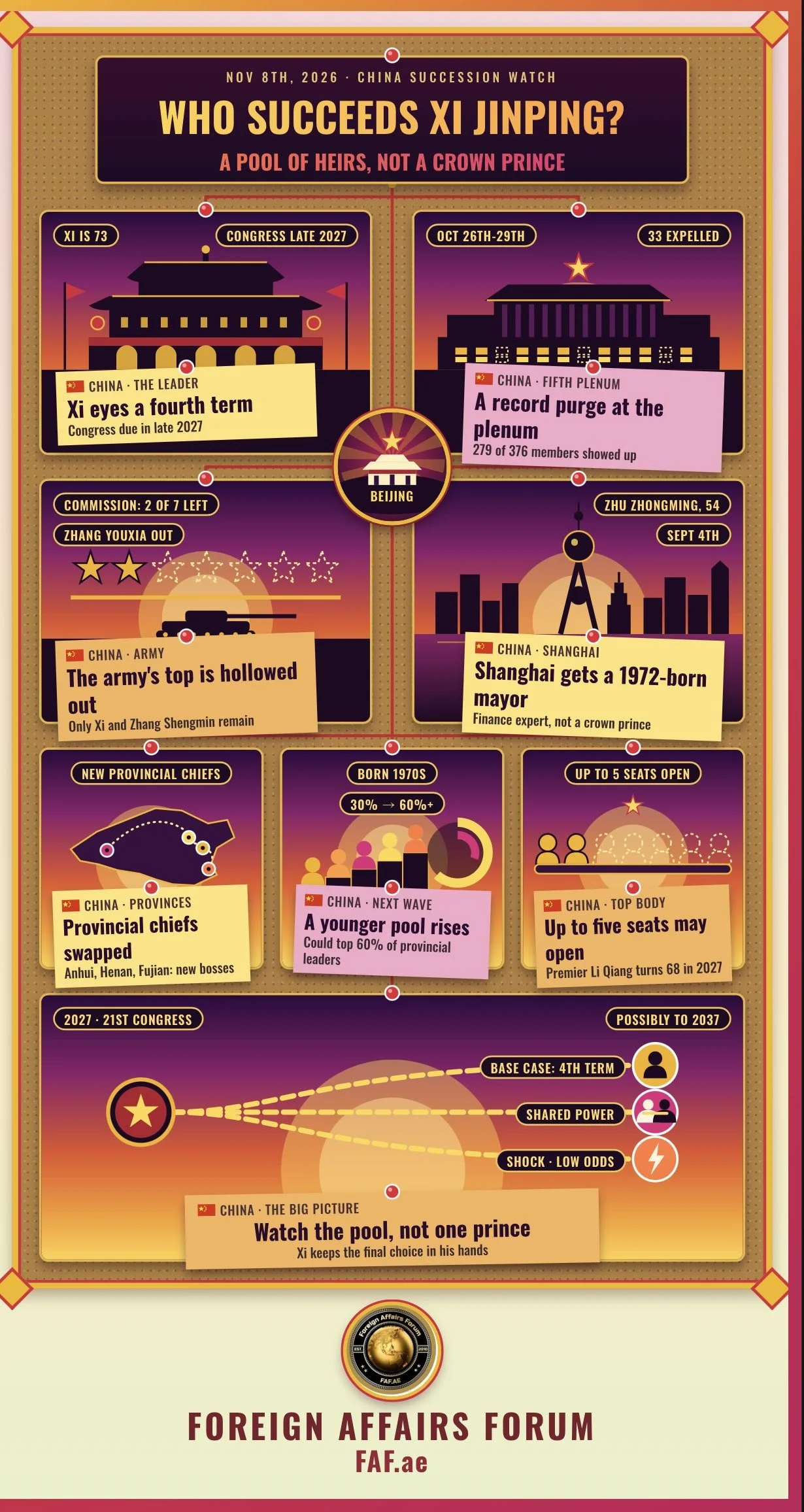
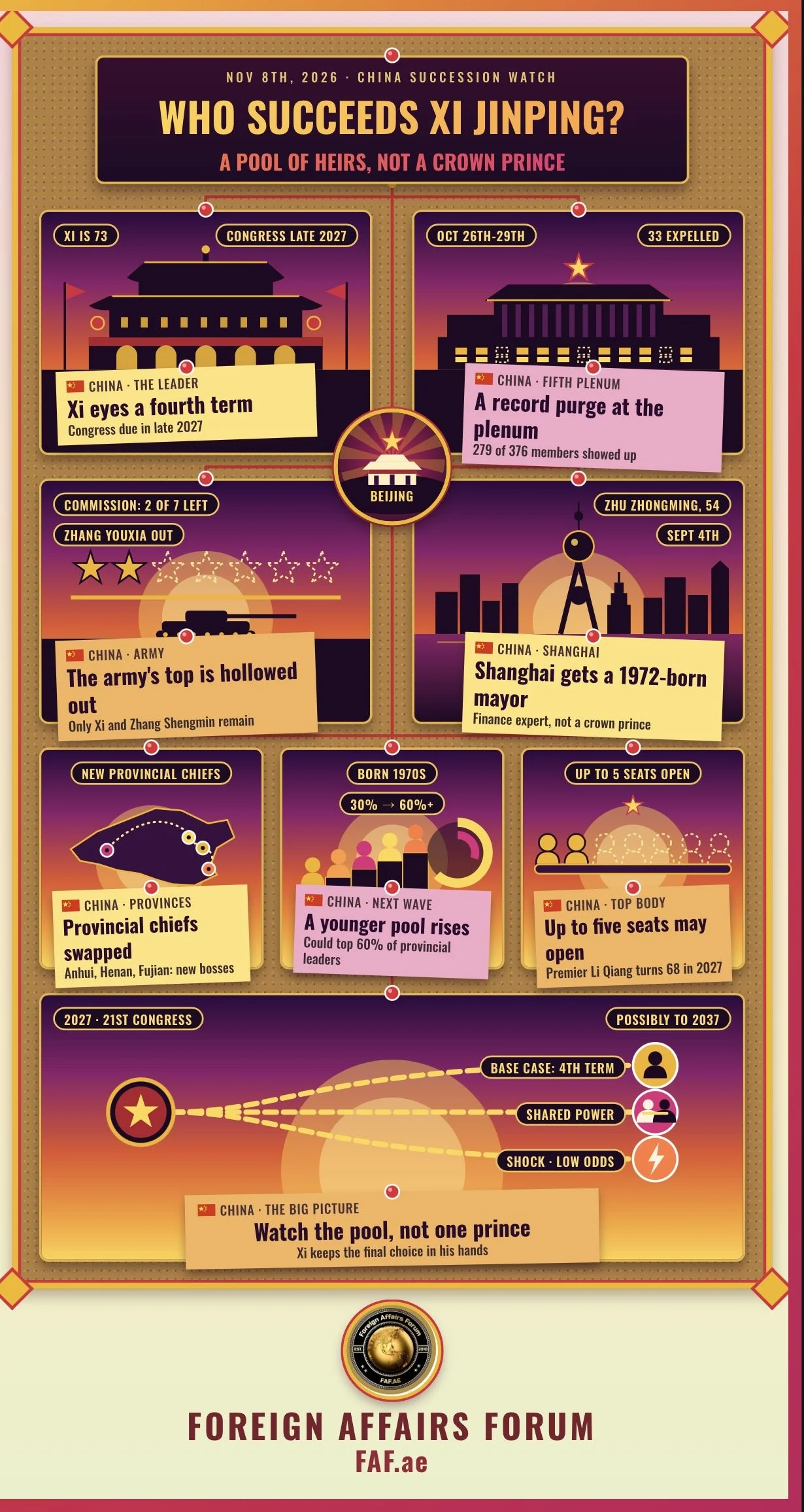
Xi Jinping is 73 years old. He leads the Chinese Communist Party, the country's government and its army. In 2018 he removed the rule that stopped a president from serving more than two terms. In 2022 he won a third term as party leader.
Most experts now expect him to win a fourth term at a big party meeting called the 21st National Congress, which will take place in the second half of 2027. Some think he may stay in power until around 2037.
China is the world's second-largest economy and a major military power. Whoever leads it will affect trade, technology, security and peace. That is why people everywhere want to know who might come next.
How China used to choose leaders
For many years after Mao Zedong, China tried to make leadership changes orderly. Deng Xiaoping chose Jiang Zemin, and then he also chose Hu Jintao to follow Jiang. Leaders served two terms of five years each, and the next leader was usually known years before he took over. Top officials in the party's most powerful group retired at around 68 years old. This was an unwritten rule, but people followed it.
Xi has broken these habits. He removed possible rivals, such as Sun Zhengcai in 2017. In 2022 he chose not to promote Hu Chunhua, another rising figure. The top seven members of the party's most powerful group are all close to Xi, and none is young enough to take over for a long time. So today there is no clear heir.
What happened recently
Several big events have shaken Chinese politics this year.
In late October, the party held an important meeting called the Fifth Plenum. It confirmed that 33 senior officials had been thrown out of the party. This was the highest number at such a meeting since the late 1970s.
Only 279 of the 376 members of the party's Central Committee came, which was the lowest attendance in Xi's time as leader.
Many of those removed were from the army.
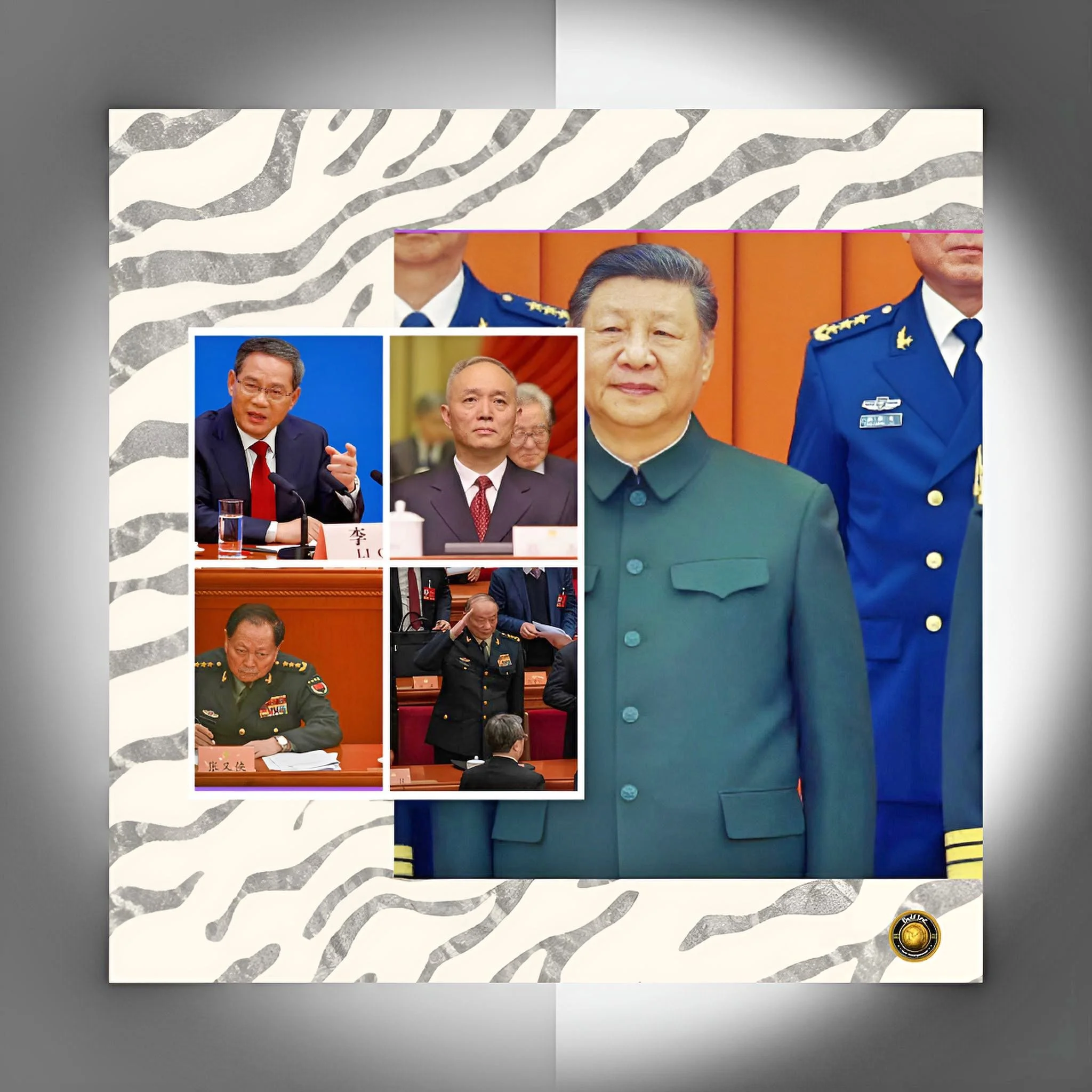
The most famous was General Zhang Youxia, who had been the army's top officer under Xi. Another was Ma Xingrui, who was once a powerful regional leader and a member of the Politburo, the party's inner decision-making body. He was removed in July.
In total, three sitting Politburo members have fallen during this term, which is the most since 1980.
The army's top command, the Central Military Commission, now has only two members left, Xi himself and General Zhang Shengmin, who was just promoted to the Politburo.
The clues in the provinces
While all this was happening, the party moved many officials in China's provinces and big cities.
On Sept 4th, a man named Zhu Zhongming became acting mayor of Shanghai, the country's largest city. He was born in 1972 and spent his career in finance. Around the same time, other provinces, such as Anhui, Henan and Fujian, received new party leaders. Tibet also got a new party chief later in September. At one point, six provincial party chiefs were replaced in just two days.
Several governors born in the 1970s have also risen, including Liu Jie in Zhejiang, Liu Xiaotao in Jiangsu and Lu Dongliang in Shanxi. One study suggests that after these changes, officials born in the 1970s could make up more than 60% of provincial leaders, compared with about 30% now.
Some experts thought Zhu Zhongming might be Xi's chosen heir. But that is probably too simple. Zhu is a finance expert, not a top political leader, and the Shanghai party secretary still ranks above him. It seems more likely that Xi is testing many younger officials, not just one.
Why Xi may not name a successor
There are good reasons for Xi to avoid choosing someone now.
If he names an heir too early, that person may become a second centre of power, and other officials may start to follow the heir instead of Xi. Xi values strong, central control by the party and by himself, so a named successor would be uncomfortable for him.
If Xi plans to stay in power for another ten years, he has no need to decide soon. Instead, he can build a pool of possible successors, watch how each one performs, and keep the final choice in his own hands.
The ideal person would be loyal, skilled and not too independent. Xi himself behaved quietly and carefully when he was the heir to Hu Jintao, and then became very powerful. He knows that people can change once they hold supreme power.
Why this could be risky
This approach has costs. The purges have removed experienced people, and the pool of trusted, skilled leaders is smaller than before. The army is especially weak at the top, which worries many experts.
Dr. 🆎 notes that modern warfare depends on fast information, advanced technology and trust between commanders, and that sudden removals of senior officers can harm all three.
There is also the risk of health problems. Xi is not young, and if something happened suddenly, China might not have a ready replacement. Having many candidates may help, because it provides options. But without a clear heir, a sudden change could cause confusion and conflict inside the party.
What to watch next
Over the next year, several signs will help show where things are going. People should watch which officials become party secretaries in the most important provinces, since these jobs lead to the top.
They should also see who is moved between provinces, which usually means the party is testing them. The most important sign will be the next Politburo. If officials born in 1970 or later join it in 2027, that will show the party is preparing for a long-term change of generations.
Observers should also keep in mind three possible futures. In the most likely one, Xi wins a fourth term, keeps all his titles and promotes a few younger officials without naming an heir.
In a second, he might hand over some jobs, such as the presidency, while keeping the most powerful ones. In the least likely, a health problem or political shock forces a sudden change.
What it means for the rest of the world
For other countries, the main lesson is patience. Many predictions that Xi would soon step down or lose power have turned out wrong. A better plan is to study who is rising, how the party is changing and what the new generation believes. Officials born in the 1970s grew up in a China that was growing fast and becoming a world power. They may think differently from Xi's generation, even if they stay loyal to him.
Dr. 🆎 suggests that governments, businesses and universities should keep open lines of contact and study this younger group early. In his view, the leaders who understand how a hidden system produces its choices will be the best prepared when those choices finally become clear.
Conclusion
Nobody can say today who will succeed Xi Jinping, and that may be exactly the point.
By testing many younger officials in the provinces, while removing rivals and tightening control, Xi keeps every option open.
The next big signal will come at the 21st National Congress in 2027. Until then, the smartest approach is to watch the pool of rising officials, not to look for a single crown prince.