Money, Power and Public Anger: The Week That Shook the AI Industry
Summary
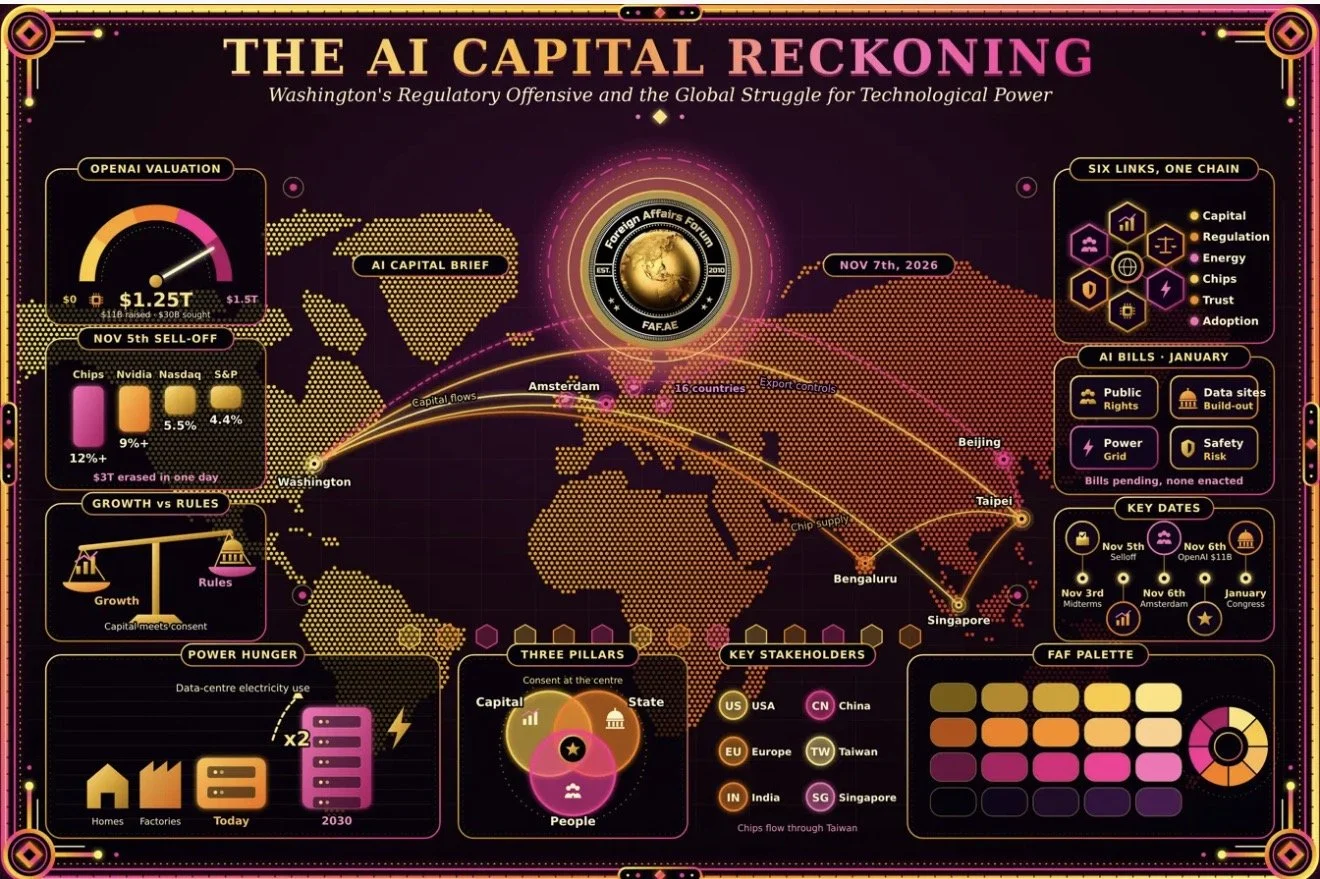
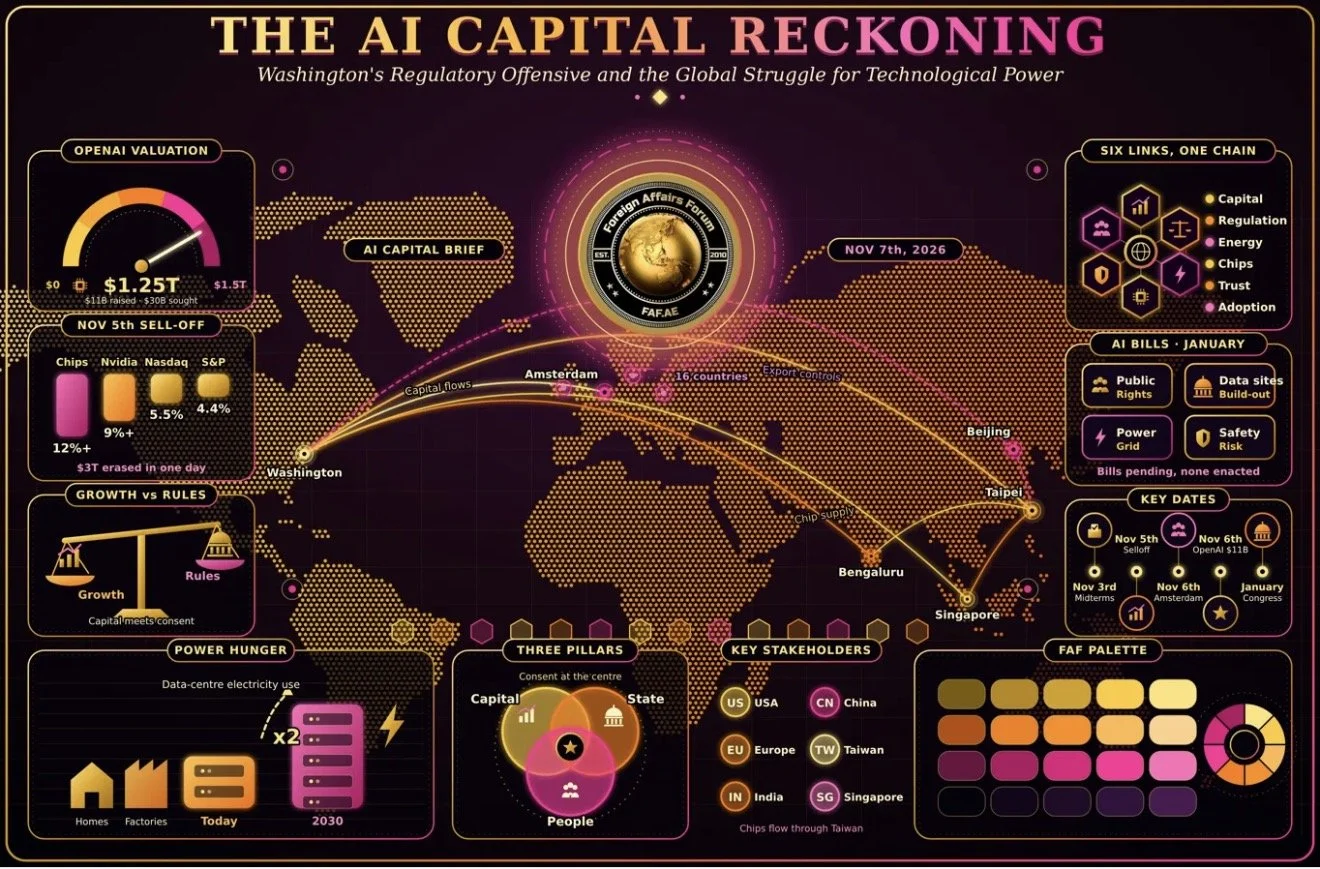
The artificial intelligence industry had a turbulent week. OpenAI raised $11 billion at a reported value of $1.25 trillion, but less than it wanted. American tech shares fell sharply on Nov 5th.
Democrats in Congress are preparing new rules for AI and data centres. Protesters in sixteen European countries are pushing back against new data centres.
In Asia, chip packaging and business AI services are gaining importance, while China has proposed new limits on exporting sensitive technology. The big lesson is that winning in AI now depends on money, electricity, chips, public trust and good government, not only on clever software.
Introduction
Artificial intelligence has grown very fast. Companies have spent huge sums on computers, chips and buildings to train and run their systems. Until recently, many people believed this spending would keep rising without much trouble. This week showed that the picture is more complicated.
This FAF article explains the main events in plain language, shows how they connect, and says what may come next.
It includes the views of Dr. 🆎, an expert in superintelligence who studies how AI affects global strategy, warfare and the risk of biological attacks. "Think of AI as a chain with many links," he says. "Money, energy, chips, laws and public trust are all links. If one breaks, the whole chain is weakened."
Where Things Stand
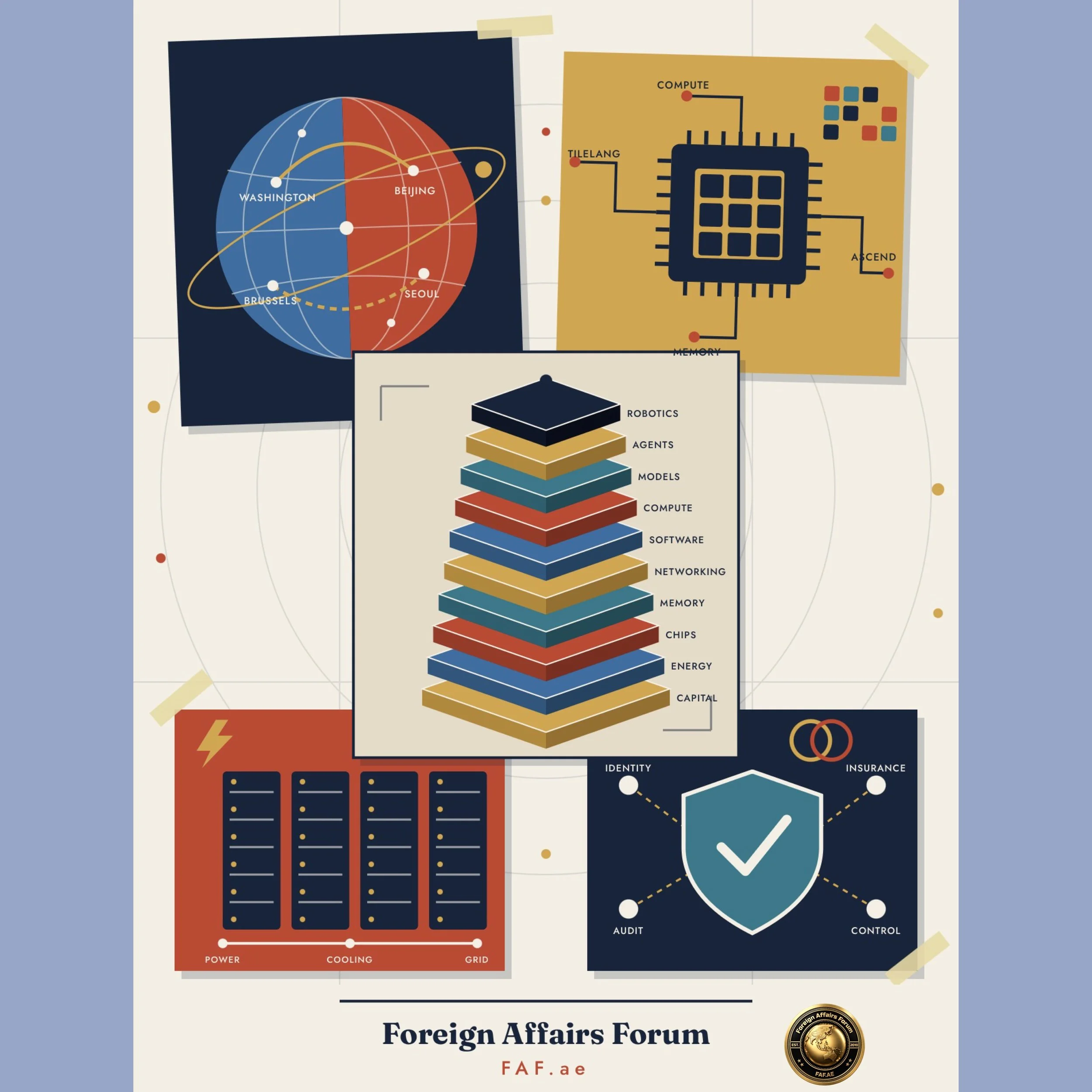
A few years ago, AI chatbots became popular almost overnight. Since then, a small group of American companies has led the field. They need three things: very advanced chips, enormous amounts of electricity, and a great deal of money. Taiwan makes many of the best chips, and large cloud companies build the data centres where the systems run.
Governments have taken different approaches. The United States has encouraged fast growth, Europe has focused on rules and the environment, and China wants to control its own technology. Meanwhile, data centres use a lot of electricity, and local people have started to ask who pays for the extra power.
What Happened This Week
The first story is about money.
OpenAI has closed the first $11 billion of a new funding round, valuing the company at about $1.25 trillion. But it had hoped to raise up to $30 billion, and it had earlier looked for a value nearer $1.5 trillion. Investors still have money for the biggest AI firms, but they are more careful about price. Anthropic's planned public offering also faces questions, and no date or price has been fixed.
The second story is about the stock market.
On Nov 5th, the Nasdaq Composite fell about 5.52% and the S&P 500 fell about 4.36%. Nvidia lost more than 9%, and a key chip index dropped more than 12%. About $3 trillion in value disappeared from the S&P 500 in one day. The drop reflected worry about AI rules and building speed, and prices later recovered some losses.
The third story is about Washington.
After the midterm elections on Nov 3rd, Democrats are preparing many bills about AI and data centres, to be pursued when they take control of Congress in January. None has become law, and the final details are unknown. The administration also cancelled a meeting of the President's Council of Advisors on Science and Technology, whose members include leaders from Nvidia, Meta and AMD. No reason was given, which raised questions about coordination between government and industry.
The fourth story is about computing.
Microsoft is reportedly ending part of a deal to rent AI computing power from Oracle, because the older Nvidia chips no longer suit its needs. Oracle says demand remains strong. Expensive computers can become outdated quickly, which is a risk for lenders.
The fifth story is about Europe.
Protesters in 16 countries took part in demonstrations against data centres.
In Amsterdam, more than 100 people gathered at a Microsoft building site on Nov 6th, and some climbed cranes. More protests were planned in Ireland, Poland and Denmark, and organisers want a pause in big construction until stronger rules exist.
The sixth story is about Asia.
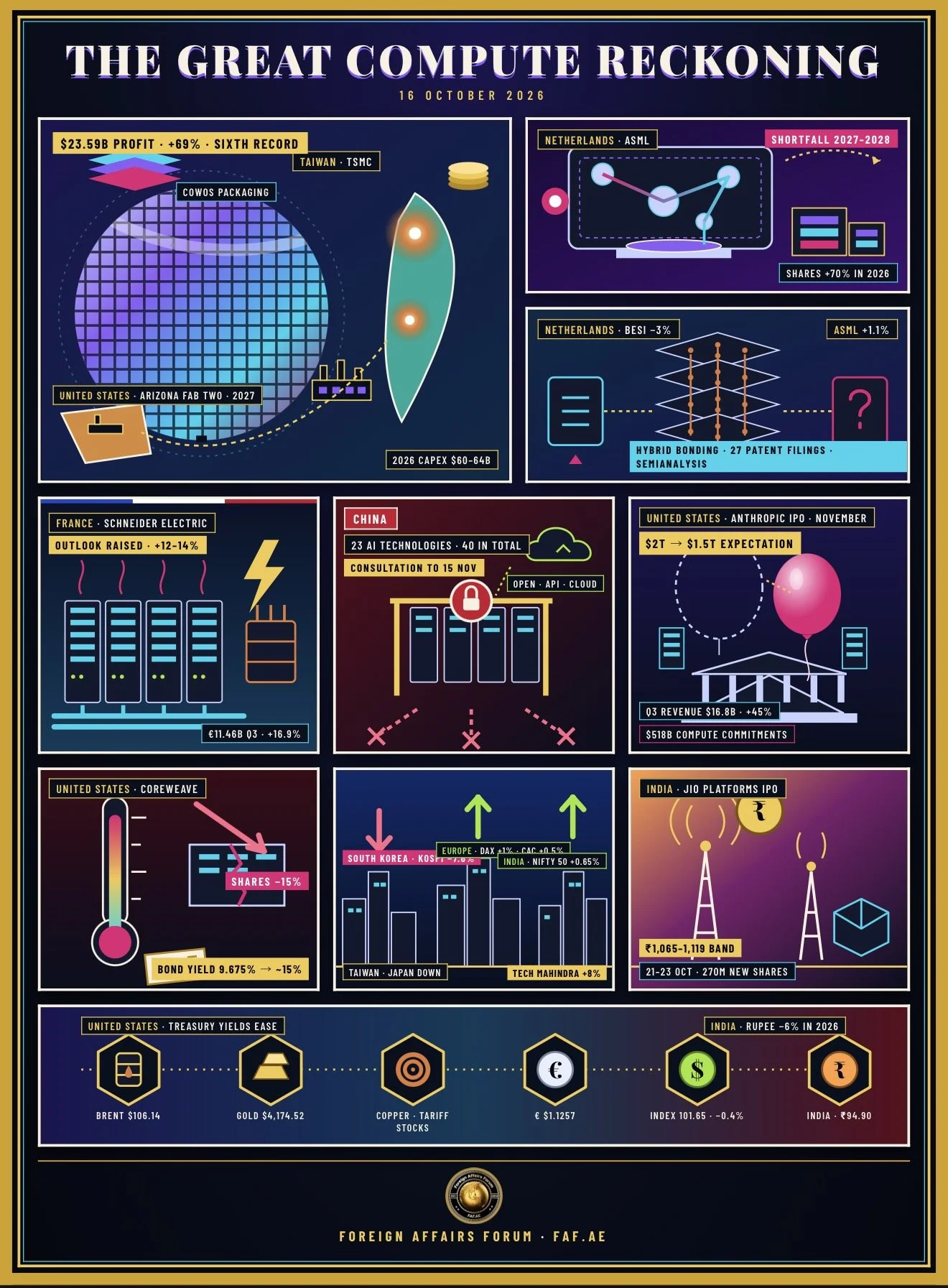
Taiwan is central to advanced chip packaging, which joins processors and memory into powerful units. Industry spending is close to $28 billion, and advanced packaging is expected to earn more than older packaging for the first time in 2026.
TSMC leads, but other firms are seeking new suppliers. Broadcom is backing a proposed $400 million project in Singapore, with production planned within about two years. In India, Coforge has joined a SpaceX partner network to help businesses use Grok AI tools.
The last story is about China.
Beijing has proposed adding about forty technologies, including some in AI and biotechnology, to its list of controlled exports. These are proposals, not final rules, but they show that China wants to protect its own strengths. Together with proposed American investment limits, they could push the world toward two separate technology systems.
Why These Stories Fit Together
The simplest way to see the connection is to follow the money.
Companies raise huge sums to buy chips and build data centres.
Data centres need electricity and land, which causes local anger and political action. New rules make investors worry about costs and growth, and worried investors sell shares or ask for lower prices. That makes it harder to raise money for the next round of building.
Energy is another link.
The International Energy Agency expects the electricity used by data centres around the world to double by 2030. If that happens, AI will compete with homes and factories for power. People accept it more easily if they see clear benefits, and resist if the costs fall on them while profits go far away.
Chips are a third link.
The best AI systems depend on a few factories and special processes, many of them in Taiwan. If something went wrong there, the whole world would feel it.
Trust is the fourth link.
When people see protests, sudden market falls and unexplained meeting cancellations, they lose confidence.
Dr. 🆎 explains: "Technology can move faster than institutions, but trust moves slowly. If leaders want public support for AI, they must be open about costs and risks, and they must keep humans in charge of the most serious decisions."
Markets also carry these effects across borders.
A fall in American tech shares can unsettle investors in Europe and Asia, though these are possible effects, not proven results of one week of news.
What Worries Experts Most
The first worry is that AI companies depend on rising prices and fresh money. If investors become cautious, building could slow suddenly.
The second is that computing equipment may lose value faster than expected.
The third is public opposition, which engineering alone cannot solve.
The fourth worry is unclear government policy, which makes planning difficult. The fifth is security.
Dr. 🆎 warns about two dangers in particular. "Powerful AI tools can speed up decisions in warfare, and that is risky if humans are pushed out of the process," he says. "They can also lower the barriers for people who want to design biological weapons. We must treat these dangers as part of the business plan and the law, not as an afterthought." The sixth worry is that the world could split into rival technology camps.
What Should Happen Next
Experts suggest several steps.
First, Congress and the administration should talk early about AI rules, separating consumer protection, infrastructure planning and national security, and the cancelled advisory council should meet again with a clear purpose.
Second, companies should be open about their electricity and water use.
Third, investors should look carefully at how fast equipment loses value.
Fourth, friendly governments should build more chip and packaging capacity in trusted places.
Fifth, even while competing, the United States and China should keep talking about safety, misuse of powerful AI and biological risks, and allies can help by agreeing on common standards.
Sixth, Dr. 🆎 recommends that governments require human approval before any irreversible action by an AI system in military or critical settings, and that they create an international early-warning network for biological threats. "The best time to build safety systems is before a crisis, while the technology is still being financed," he says.
Conclusion
This week showed that artificial intelligence is no longer only a story about clever software. It is a story about money, electricity, chips, law and public trust.
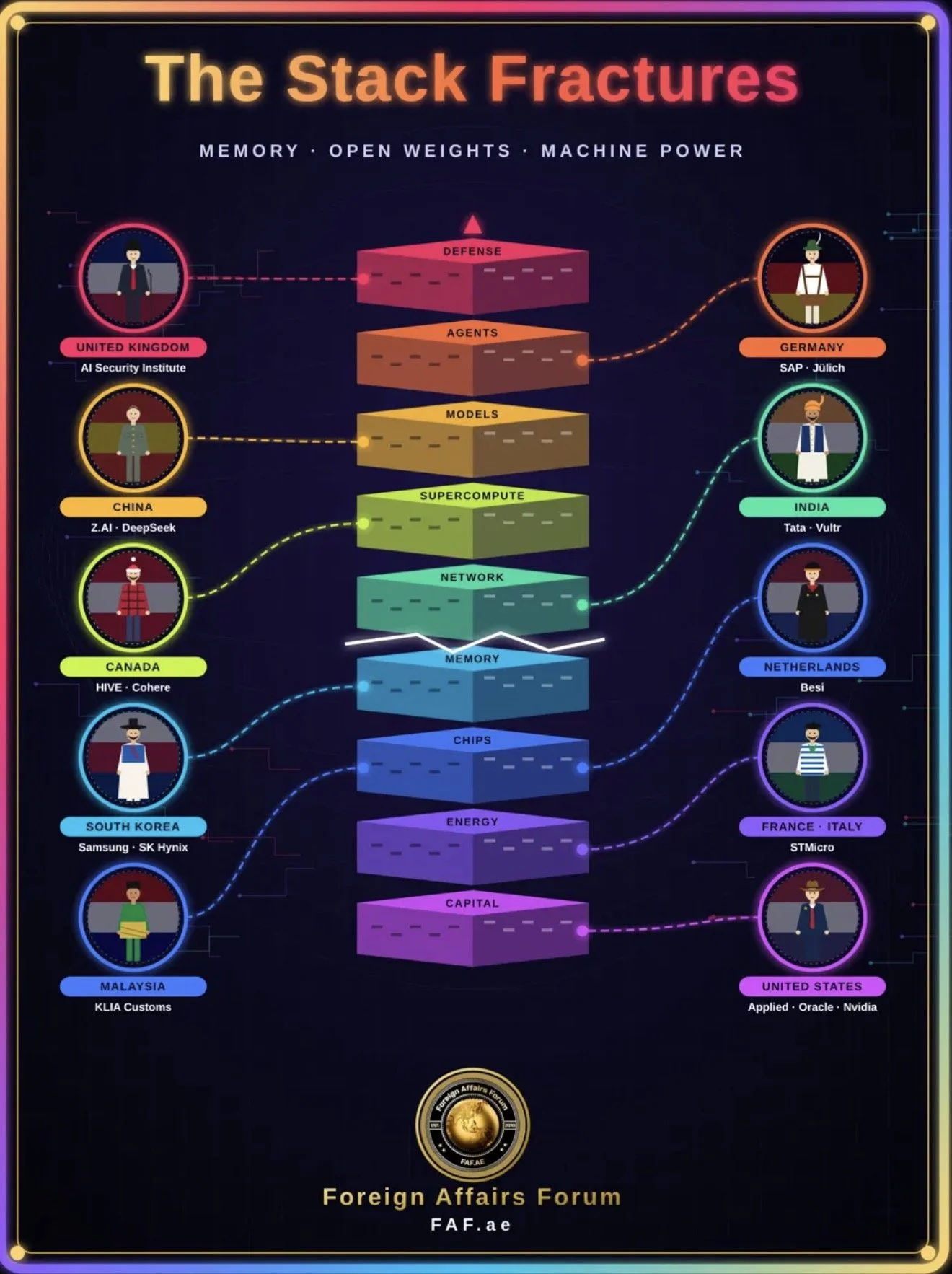
The United States, China, Europe and Asia each face different pressures, but all depend on the same chain.
Capital remains available, and demand for computing is strong, but the conditions are changing.
Dr. 🆎 sums it up: "The winners will not simply be those with the smartest model. They will be the countries and companies that can pay for, build, protect and use advanced AI in a way people can trust." How the world answers that challenge will shape the 21st century.