What a Big Election Loss for Trump Could Mean for Your Money, the Wars and AI
Introduction
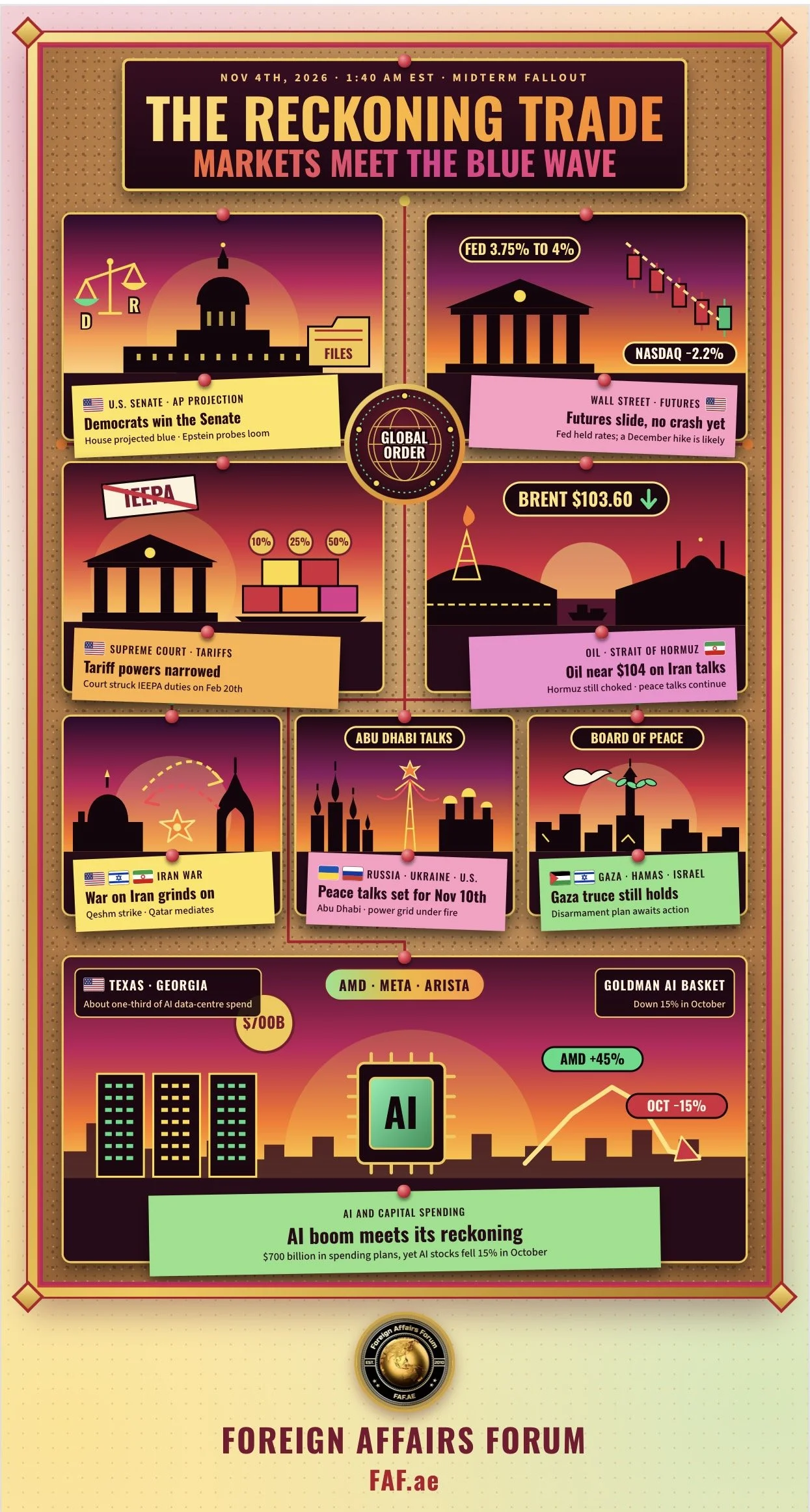
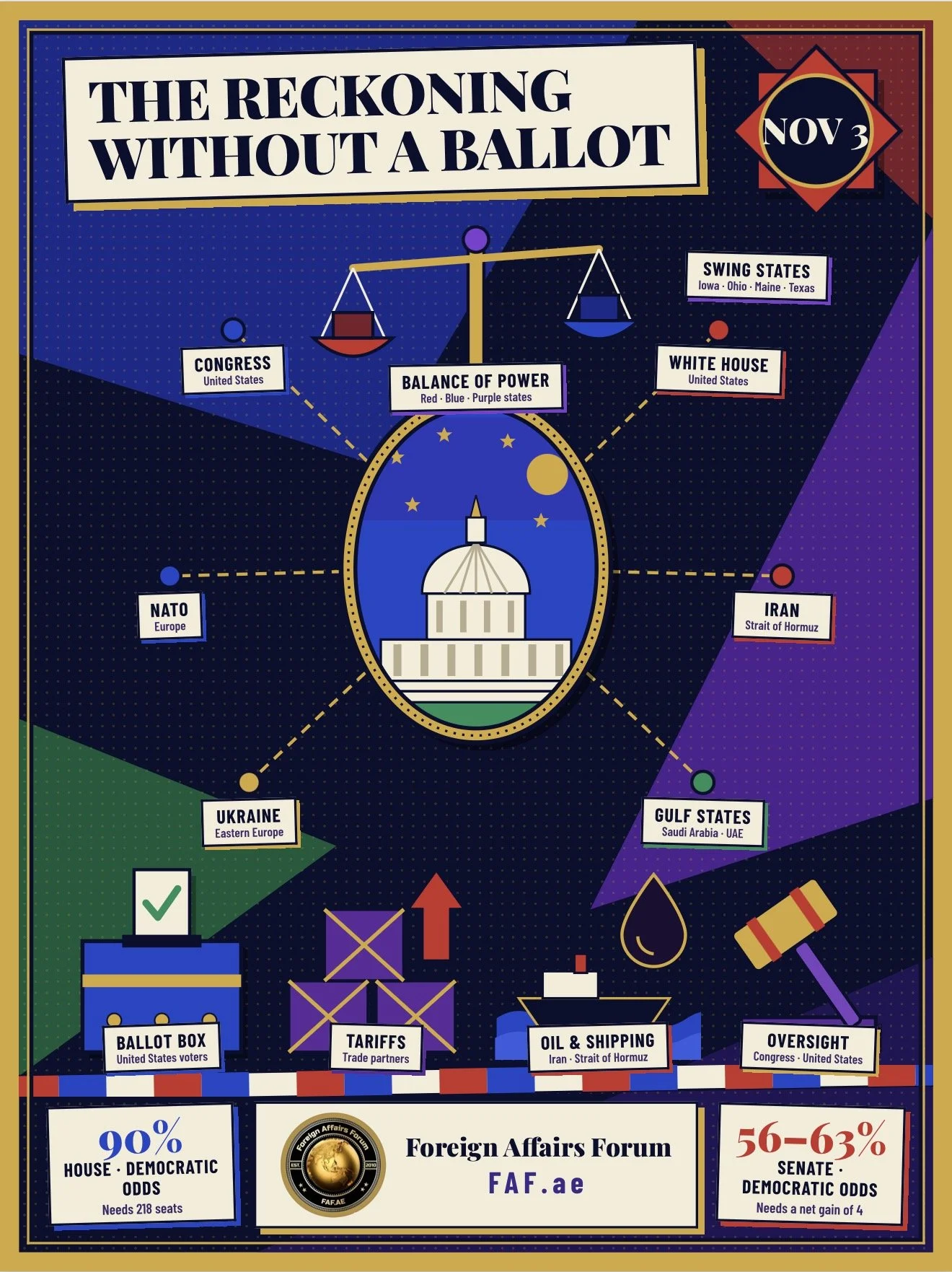
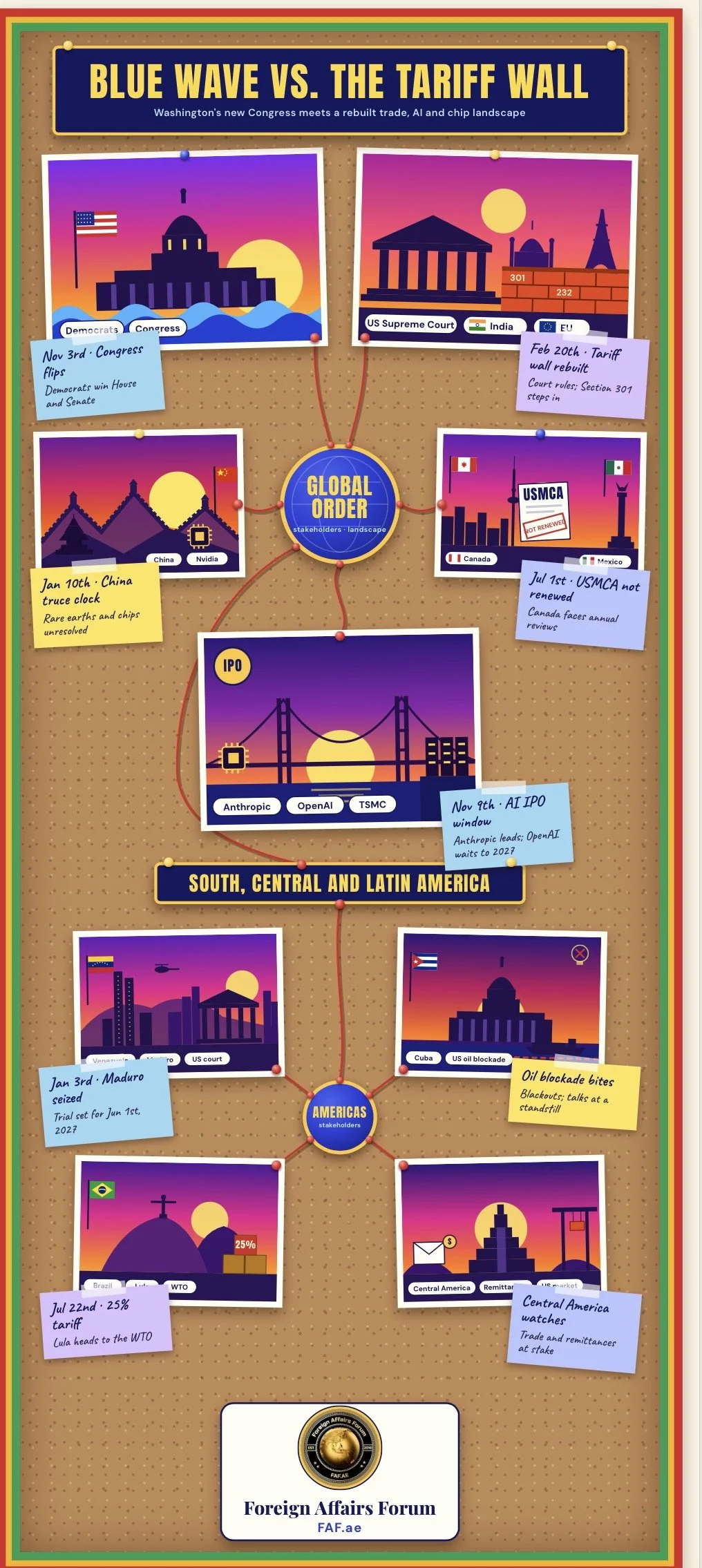
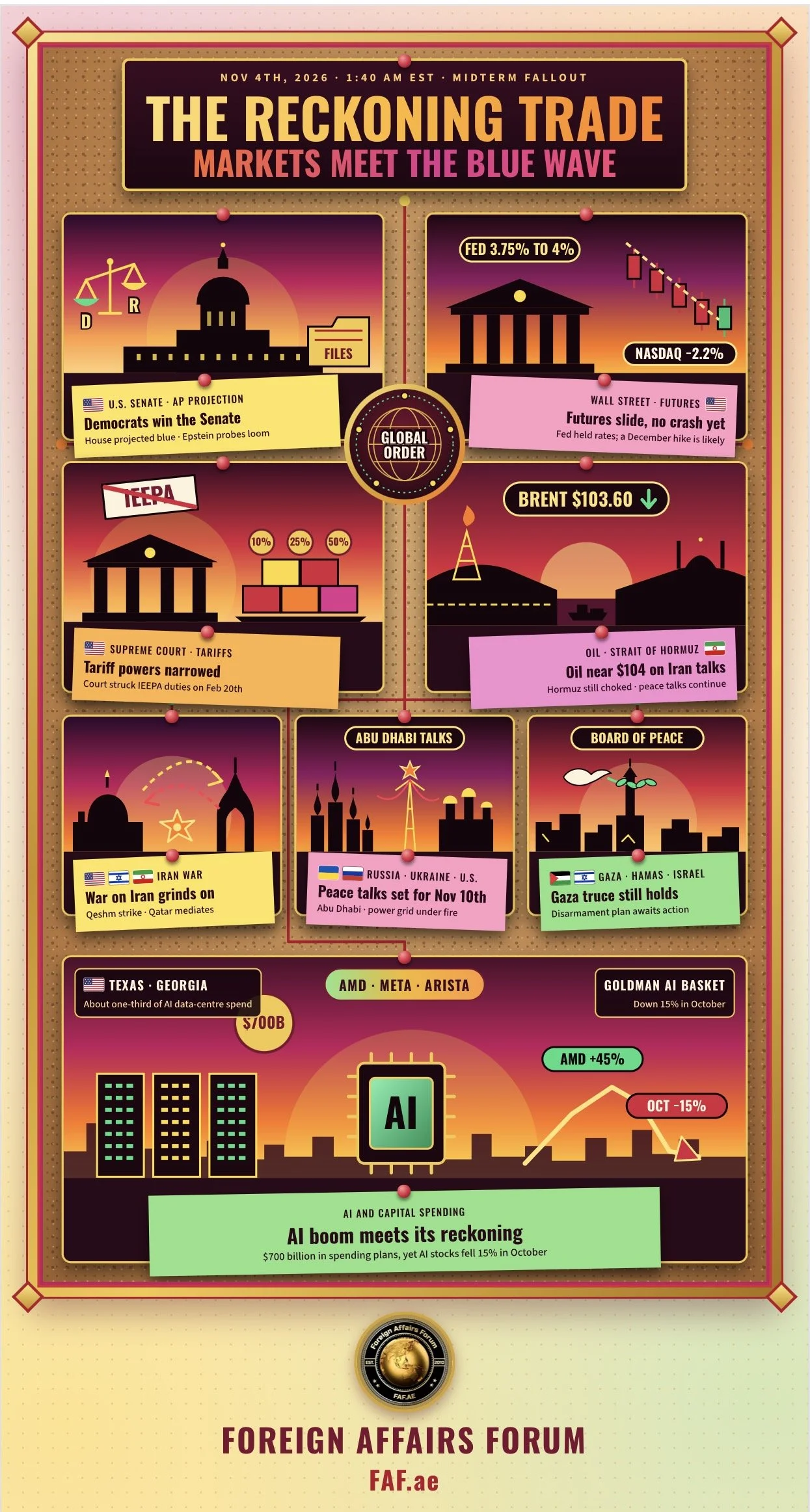
On Nov 3rd, American voters went to the polls for the midterm elections. Early projections say Democrats have won control of the Senate and are likely to win the House as well, although the House count was not final when this was written. President Donald Trump was not on the ballot, but the vote is widely seen as a judgment on his record. This article explains in simple words what it could mean for the economy, the wars and technology.
What Actually Changed?
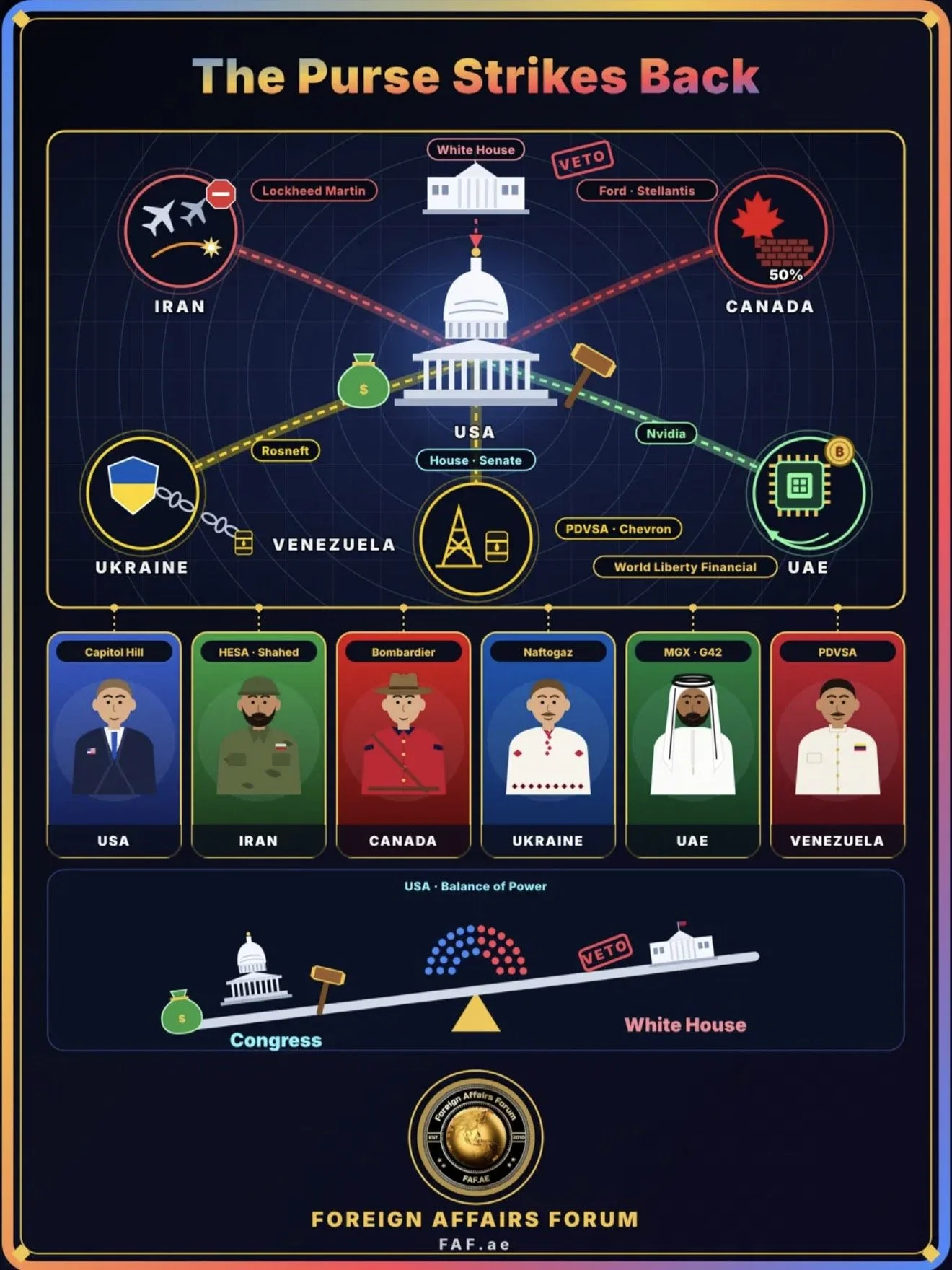
The Senate is one half of Congress. It approves judges and top officials, and it can investigate the government. The House writes spending bills and can also hold investigations. If Democrats control both, President Trump will find it much harder to pass new laws or to get his favourite people approved. He will also face tough questions from congressional committees.
However, he keeps some strong powers. He can still veto laws he does not like, and Congress needs a two-thirds vote in both chambers to overrule a veto, which is very hard. He still commands the military, can still pardon people for federal crimes, and can still make agreements with other countries without a Senate vote. In simple terms, he has lost the power to get his own way easily, but not the power to say no.
Will the Stock Market Crash?
Markets reacted quickly. In overnight trading, futures that track American stocks fell. The S&P 500 dropped between 0.5% and 1.3%, and the Nasdaq, which has many technology companies, fell by as much as 2.2%. The dollar also became a little weaker. These are noticeable moves, but they are not a crash. Many investors had expected a Democratic win, so much of the news was already in prices. Some experts also point out that technology stocks were falling in October before the vote, because people worry that artificial intelligence companies are spending too much.
Markets sometimes like divided government, because it makes sweeping new laws less likely. Even so, prices can swing wildly for a few days. A real crash usually needs a bigger shock, such as a banking problem or a sudden surprise from the central bank. Nobody can promise what will happen when New York opens later today, but the evidence so far points to a bumpy day or week, not a disaster.
What About Interest Rates?
The Federal Reserve decides interest rates, not the president or Congress. Its chair is Kevin Warsh. On Oct 28th the Fed kept its main rate at 3.75% to 4%. Two officials wanted a quarter-point move, and prices are still rising faster than the Fed wants. Many traders now expect the Fed to raise rates in December. The election does not change that directly. It might help a little, because a divided Congress is less likely to approve big new spending that could push prices higher. But if inflation stays high, rates could still go up.
What Happens to Tariffs?
Tariffs are taxes on imported goods, and the president made them a main tool of his economic policy. But the courts have already limited him. In February, the Supreme Court said that a law he used for many tariffs does not allow tariffs. Later, a trade court struck down a replacement 10% tariff on all imports. Many other tariffs remain, including high ones on steel, aluminium, copper and cars, and new duties on goods from many countries that started in July. Some companies are now seeking refunds for the illegal tariffs they paid, but the process is slow.
A Democratic Congress cannot simply cancel his tariffs because he can veto such a bill. It can hold hearings, question the costs to families and businesses, and make it harder to add new tariffs. Countries such as Japan, South Korea, India and members of the European Union will probably wait and see rather than offer big new concessions.
What About Oil and the War with Iran?
The war between the United States, Israel and Iran began in late February, and it has disrupted the Strait of Hormuz, a narrow sea route that used to carry about one-fifth of the world's oil. Ship traffic is now only a small part of what it was. Brent crude, the global oil price, ended Tuesday at $103.60 a barrel. That is lower than the peak above $125 in April, and the lowest close since Oct 7th, because talks have given people hope.
Oil prices will depend more on what happens at the negotiating table than on Congress. Iran says a deal is still far away, and the United States struck missile sites on an Iranian island overnight, though officials called it limited. After this election, the president has a stronger reason to end the war, because high fuel prices have hurt voters. Iran also knows that, so it may ask for more.
Gaza and Ukraine
In Gaza, a ceasefire has held since October 2025, although there have been deadly incidents. In July, a group led by Mr. Trump announced a plan for Hamas to give up its weapons step by step while Israel pulls back. Both sides doubt each other, and the plan is not yet in action. A Democratic Congress is likely to push for more aid and clearer rules, but the president still controls the deal.
In Ukraine, American envoy Steve Witkoff met President Putin in October, and the Kremlin says three-way talks with Russia, Ukraine and the United States will take place in Abu Dhabi on Nov 10th and 11th. The United States has also briefly eased some sanctions on Russian diesel, which upset Ukraine. Many members of Congress, from both parties, are wary of giving Russia too much. This means the president may have less freedom to make a quick deal. Russia may see his weaker position as a chance to wait for better terms.
The Epstein Files
Jeffrey Epstein was a wealthy financier who faced sex-trafficking charges and died in prison in 2019. Congress passed a law requiring the release of government files about him, and the Justice Department has released about three million pages. Many lawmakers believe more information is still held back. A House committee voted in March, with help from five Republicans, to demand testimony from then Attorney General Pam Bondi. Democrats have said they want to question the acting attorney general and the FBI director too.
When Democrats take control of the House in January, they will be able to issue demands for documents and call witnesses more easily. This could create more political trouble for the White House. It will not automatically end the story, because courts and legal rules can slow down investigations.
NATO and Europe
NATO members agreed in 2025 to raise defence spending to 5% of their economies. Relations with Washington suffered this year when Mr. Trump pushed for American control of Greenland, and some European countries sent troops there. A Democratic Congress is likely to protect the alliance by writing support for NATO into defence laws. Still, European leaders have learned that American policy can change fast, so they will keep building their own defences.
What About Artificial Intelligence?
Big technology companies planned to spend more than $700 billion this year on AI, mostly on data centres and chips. In October, a popular group of AI stocks fell 15%. Some people fear a bubble that could burst. Others say the spending is supported by real demand, pointing to strong results from the chipmaker AMD this week.
The election adds new risks. Democrats may want tougher rules on large technology firms, on AI safety and on the huge amounts of electricity that data centres use. New Democratic governors in Texas and Georgia could slow some projects, and those two states have about one-third of AI data-centre spending. Investment from other countries could go either way. It might grow if trade policy becomes more predictable, or shrink if rules become tougher.
So could AI crash? Prices could fall further. A full collapse would need something bigger, such as customers cutting spending, banks refusing to lend, or a regulation that stops the technology from being used. None of those is clearly happening now.
Dr. Antonio Bhardwaj (Dr. 🆎) of the Foreign Affairs Forum says it simply. "The real test is whether AI makes people and companies more productive and safer. If it does, the money will stay. If it only sells a story, the money will leave."
Factories and Big Promises
President Trump has pushed companies to promise billions of dollars for factories in the United States. Apple, for example, promised $600 billion over four years, and chip and car makers made large pledges as well. Many did this partly to avoid tariffs. Since the courts limited his tariff powers, he has less pressure to use. Democrats and Republicans both like American factories, so Congress will not cancel the idea. But it will check whether promises become real buildings and jobs. Companies will probably keep projects that make business sense and slow those that were mostly political.
What Should We Watch Next?
First, wait for the final results, because the House count and a few Senate races were not settled. Second, watch the Fed's December decision and the next inflation numbers. Third, watch the talks in Abu Dhabi on Nov 10th and 11th, and any progress on reopening the Strait of Hormuz. Fourth, watch which investigations Democrats start in January, and whether the president compromises or fights.
The Bottom Line
Trump's veto, his command of the military and his power over the government remain. What he lost is an easy Congress. That means slower laws, tougher confirmations and more investigations. Markets will be bumpy, but a crash is not the most likely result. Oil depends on Iran talks. Interest rates depend on inflation. AI faces a correction and new rules rather than a clear collapse.
As Dr. 🆎 says, "Divided government is a stress test. The countries that pass it keep their facts straight, keep their promises, and keep their people informed."