Lost the Senate, Kept the Sword: How Trump's Veto and Executive Power Survive a Democratic Tide
Foreign Affairs Forum | Dr. Antonio Bhardwaj (Dr. 🆎)| Nov 4th, 2026
Executive Summary
The loss of the Senate in the 2026 midterms has narrowed Donald Trump's ability to legislate, confirm and govern on his own terms, yet it has not disarmed him.
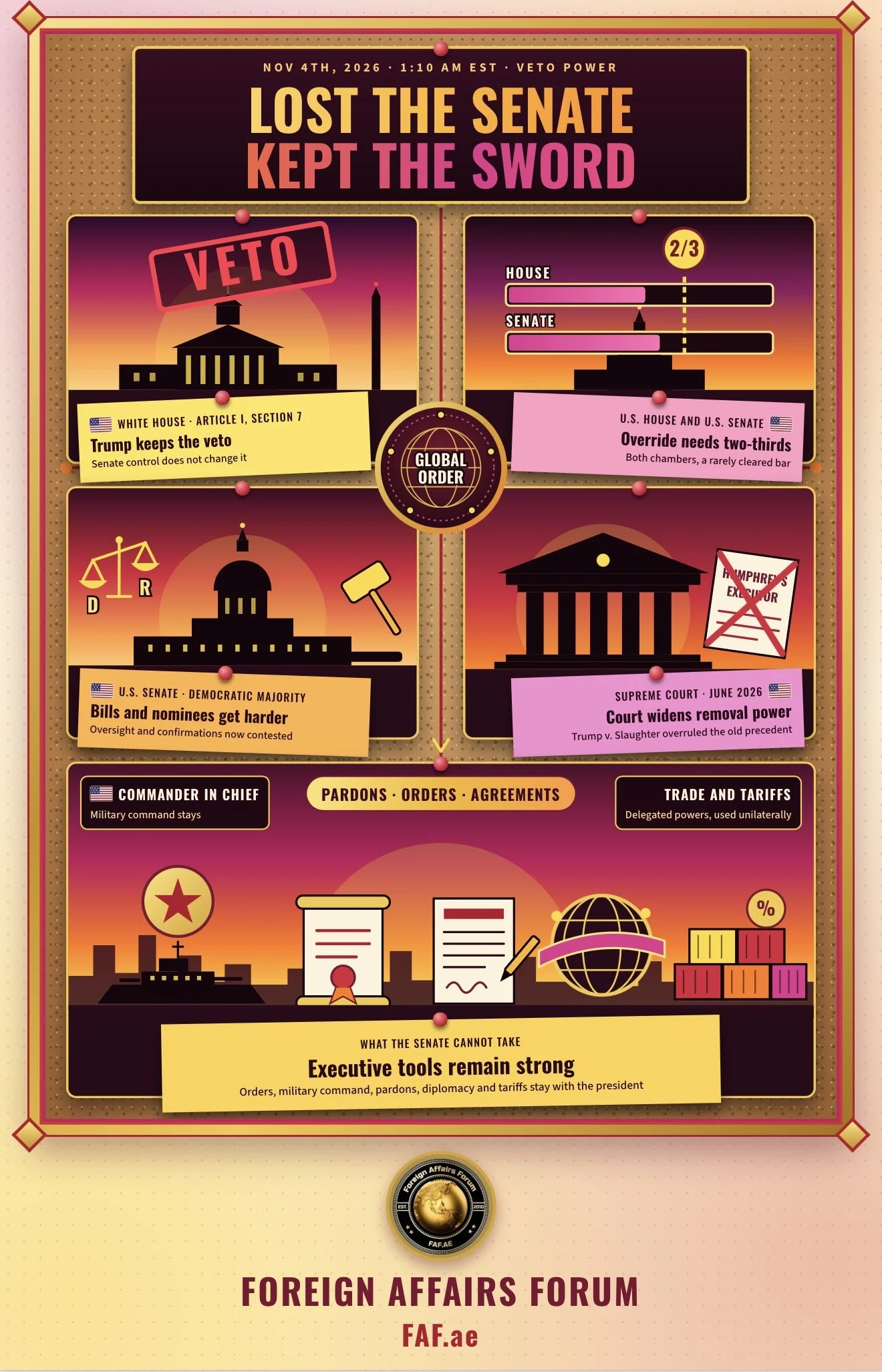
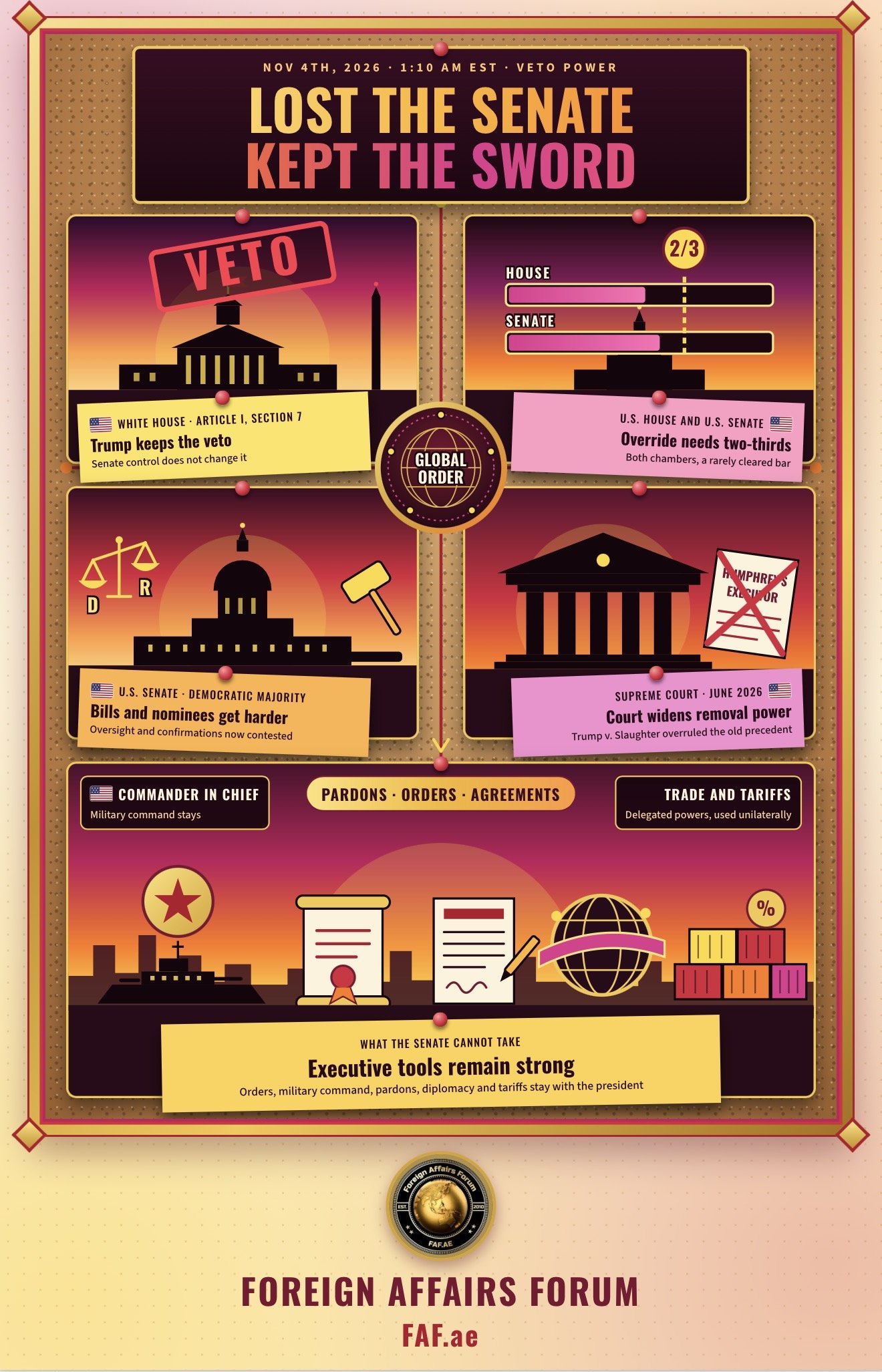
The presidential veto, grounded in Article I, Section 7 of the Constitution, is untouched by any change in congressional control. Overriding it requires two-thirds of both chambers, a threshold the new Democratic majority cannot reach alone.
Beyond the veto, the president retains command of the armed forces, the pardon power, wide latitude in diplomacy and trade, and an executive branch he can now reshape more freely after a June 2026 Supreme Court ruling.
The result is a landscape of asymmetric power: Democrats can block and investigate, while Trump can block and act. Washington is therefore heading toward a contest over who can govern without the other's consent.
Introduction
Elections change majorities, but they do not rewrite the Constitution.
That distinction is easy to lose in the hours after a political earthquake, when headlines announce a new order and the public assumes a president has been cornered.
Dr. Antonio Bhardwaj (Dr. 🆎), CEO of the Foreign Affairs Forum, urges a more disciplined reading. "A lost majority is a loss of leverage, not a loss of office," says Dr. 🆎. "The question after any election is which tools remain in the president's hands, and what those tools can still accomplish."
FAF article answers a question many readers are now asking: does Trump keep his veto power after losing the Senate?
The answer is yes, and the reasons reveal a great deal about how American power is divided, how it is exercised, and where the coming confrontation is likely to unfold.
History and Current Status
The framers designed the veto as a check on legislative excess.
Under Article I, Section 7, every bill that passes both chambers goes to the president, who may sign it, return it with objections, or allow it to become law without his signature after ten days while Congress is in session. If Congress adjourns before that period ends and the president withholds his signature, a pocket veto occurs, and it cannot be overridden.
A regular veto can be overturned only by a two-thirds vote in both the House and the Senate.
Across American history, such overrides have been rare, and most vetoes have stood.
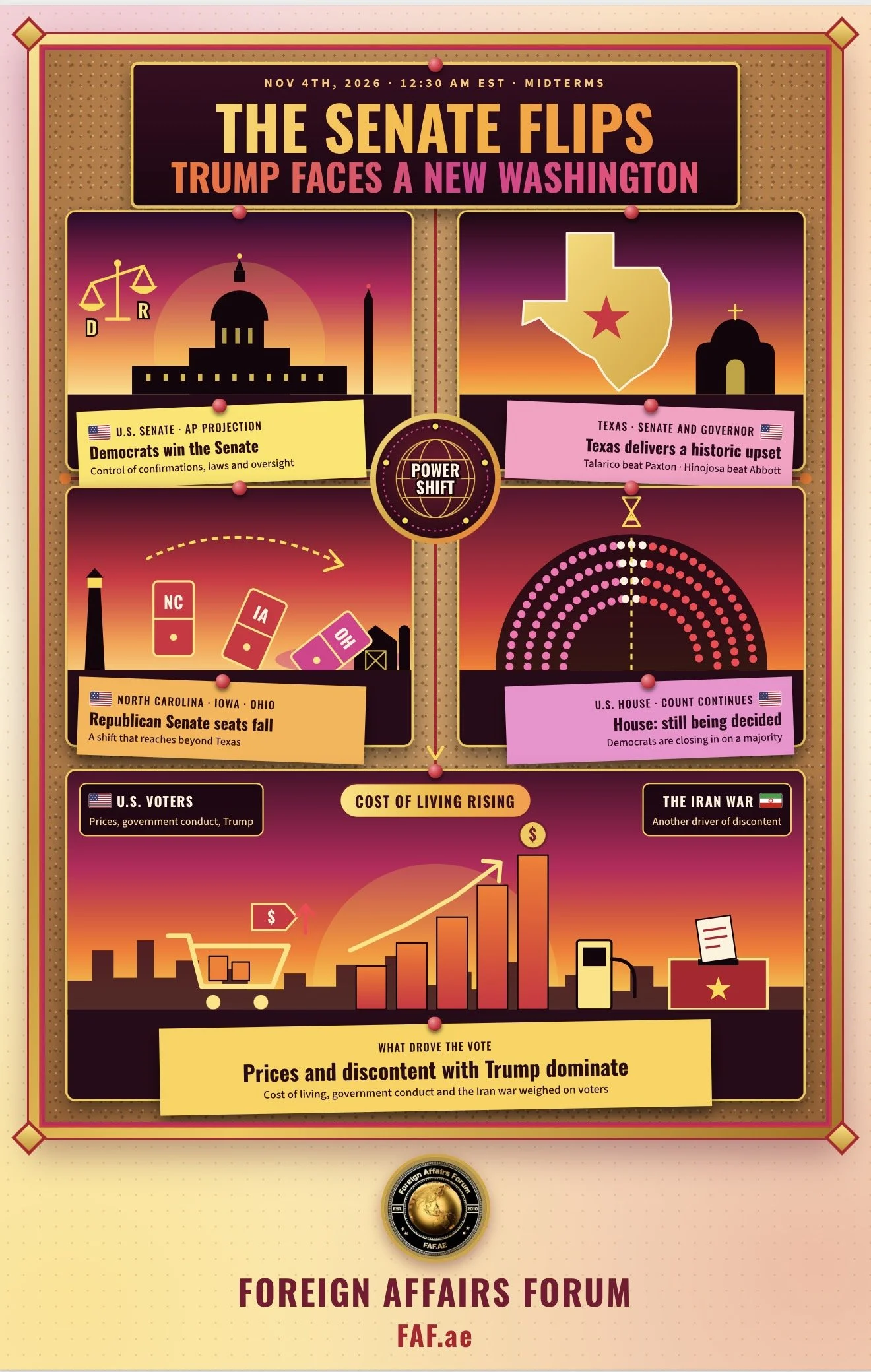
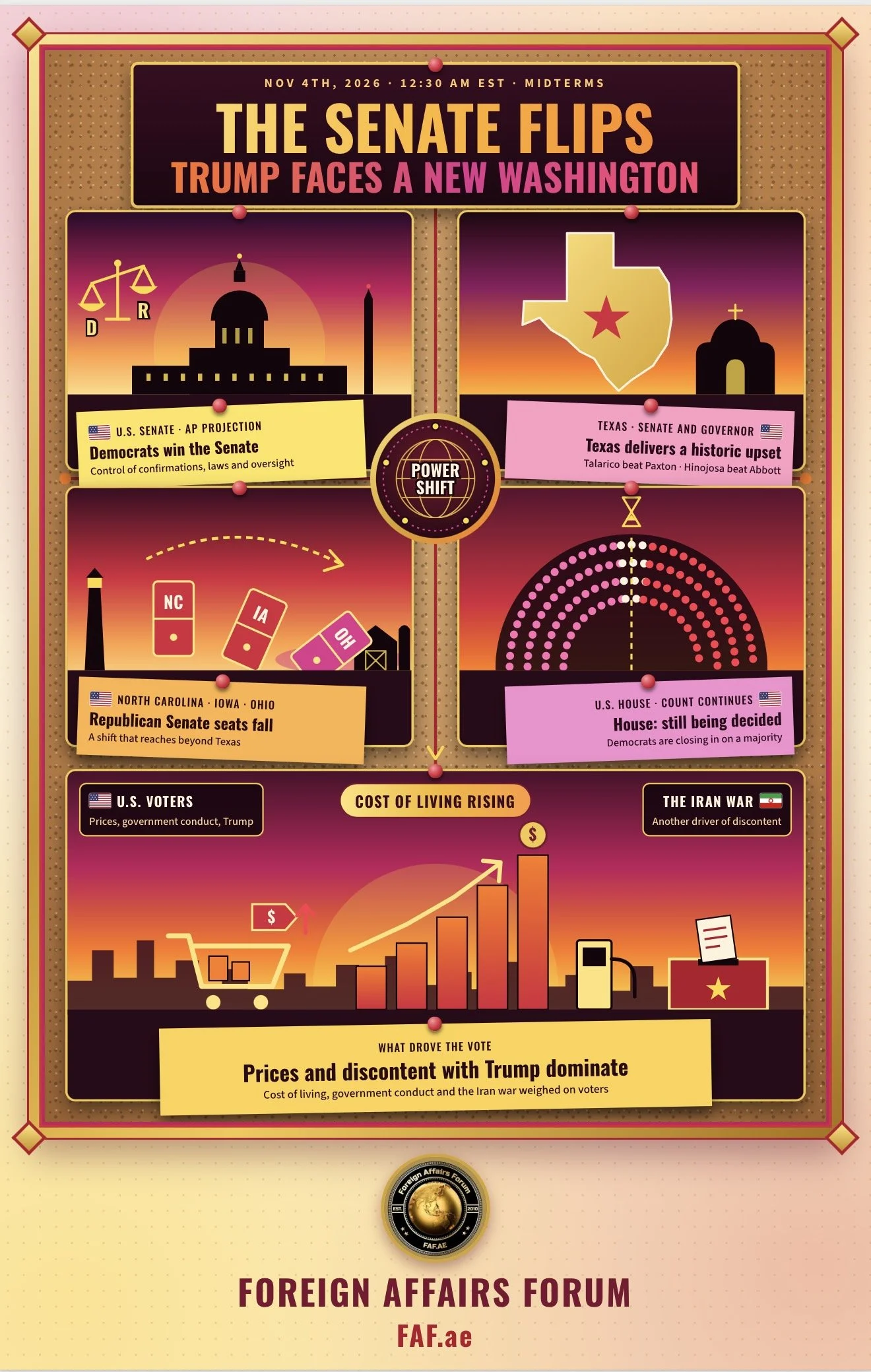
This is the current status. Democrats have regained the Senate after flipping multiple seats, and the House outcome remains the subject of careful counting.
Even if Democrats were to control both chambers, they would face the arithmetic of the override.
Two-thirds is a supermajority that no modern party has commanded without substantial support from the other side.
The veto therefore functions as a durable shield for any president whose opponents hold fewer than that number of seats, and this president is no exception.
Key Developments
The first development is the shift in what Trump can pass.
Losing the Senate makes it much harder to advance new legislation he supports, including budgets drafted on his terms. A Democratic majority controls the committee agenda, the floor schedule and the pace of confirmation. Legislative ambition, in other words, now requires negotiation.
The second development is the confirmation landscape.
Cabinet officials, judges and ambassadors generally require Senate approval, and a Democratic majority can delay, reshape or reject nominees. Recess appointments remain possible in limited circumstances, but they are narrow instruments rather than a general workaround.
The third development is judicial.
In June 2026, the Supreme Court decided Trump v. Slaughter, overruling the long-standing precedent of Humphrey's Executor and allowing the president to remove at will many agency officials who exercise executive power. The ruling strengthens his command of the bureaucracy at the very moment Congress is turning against him. The lesson is that authority has been migrating toward the executive through the courts even as it drains away in the legislature.
Latest Facts and Concerns
The president's remaining powers are substantial.
Executive orders direct how the branch implements existing law and carry force within the government, although courts can strike them down when they exceed statutory or constitutional limits.
As commander in chief, he holds operational control of the military, subject to the War Powers Resolution and to Congress's control of funding. His pardon power reaches federal offenses, except in cases of impeachment, and requires no approval from anyone. In foreign policy he can recognize governments and conclude executive agreements, which, unlike treaties, do not require Senate ratification. Delegated statutory authorities in trade, tariffs, immigration enforcement and emergencies can often be exercised unilaterally. Reporting indicates that White House planning has already turned toward advancing priorities through these channels.
These facts raise concerns that deserve plain statement.
The first is the risk of governing by directive, which is fast but fragile.
Orders can be reversed by a future president or struck down by a court, leaving policy unstable and allies unsure whether commitments will last.
The second is the prospect of sustained confrontation, in which the Senate uses oversight and funding restrictions while the White House uses vetoes and executive action.
The third is the information landscape. Disputes over constitutional power are fertile ground for distortion, and stakeholders from markets to foreign capitals will rely on verified sources to separate legal reality from political theater.
Dr. 🆎 puts it directly. "In a divided system, misunderstanding the rules is itself a risk," he says. "Investors, diplomats and citizens all need to know what a president can and cannot do."
Cause-and-Effect Analysis
The causal chain begins with the voters' verdict.
Dissatisfaction over prices, the conduct of government and the Iran war produced a Democratic Senate.
That majority produces three immediate effects. It raises the cost of legislation, because every bill now requires bargaining with opponents. It raises the cost of personnel, because nominees must satisfy a chamber that is no longer friendly. And it raises the cost of secrecy, because committees can summon officials and examine decisions that were once shielded from scrutiny.
The president responds to rising costs by shifting toward the tools that cost him least.
The veto lets him stop what he opposes. Executive orders and agency direction let him do what he wants without asking. The Slaughter ruling reduces the friction inside the bureaucracy. Each move is lawful in principle, yet each also invites a countermove. Congress can restrict funding, expand investigations or pass legislation designed to fit within his veto calculus. Courts can then be asked to referee. The cycle tends to concentrate decisive power in the judiciary, which becomes the arbiter of disputes that the political branches cannot settle.
Abroad, the same dynamic produces uncertainty. Allies may hope that a Democratic Senate will restrain abrupt shifts in alliances, tariffs or military commitments, while rivals will test whether executive power alone can sustain a strategy. Because executive agreements can be concluded without ratification, the president can still make commitments quickly. Because the Senate controls confirmations and funding, he may struggle to deliver on them over time. Foreign stakeholders will therefore weigh promises against the durability of the power behind them.
Future Steps
Several steps will shape the next two years.
Democrats must decide how to use their Senate majority, whether for aggressive oversight, for targeted legislation designed to attract enough Republican votes to threaten overrides, or for a measured combination of the two.
The most effective strategy is probably selective: concentrate on issues where public opinion is strong and a two-thirds coalition is conceivable, such as energy costs, transparency and specific questions of war powers.
The White House faces its own choice between compromise and confrontation.
A president can use the veto as a bargaining instrument, signaling which bills he will accept and which he will reject, or he can use it as a wall and govern primarily by order. The first path yields durable law, while the second yields speed and conflict. Courts will be asked to settle the limits of executive authority, and the Supreme Court's recent direction suggests it will keep expanding presidential control of the executive branch while still policing statutory boundaries.
Finally, foreign governments and businesses will need contingency plans, treating executive announcements as real but reversible until Congress and the courts have spoken.
Conclusion
The answer to the original question is clear.
Trump retains full veto power, and it does not depend on which party controls the Senate or the House.
What he has lost is the comfort of a friendly Congress: the easy passage of legislation, the smooth confirmation of loyal nominees, and protection from investigation.
What he retains is the veto, the military, the pardon, the diplomatic channel, the delegated statutory powers and, since June, a stronger hand over the agencies he leads. The Constitution has been consistent for more than two centuries: majorities can obstruct, but only supermajorities can override.
The coming years will test whether this arrangement produces compromise or collision. As Dr. 🆎 observes, "Divided government does not end the exercise of power. It changes the price, the pace and the place where power is exercised."
Understanding that shift, rather than assuming a president has been disarmed, is the foundation of sound judgment for every stakeholder in this landscape.