India's Custom Duty: Gold, Silver, Oil and Gas
What ten years of change can teach buyers before the 2027 Budget
Executive Summary
Custom duty is a tax on goods that enter a country from abroad. In India, it has a strong effect on the price of precious metals. Gold duty has moved sharply over the past ten years. It was 10% in 2016, fell to a low of 6% in July 2024 and returned to 15% on May 13th, 2026.
Gold and silver prices have often moved quickly after duty changes. A higher duty has raised local prices, while a lower duty has reduced them. World prices, the value of the rupee and demand can later change the picture.
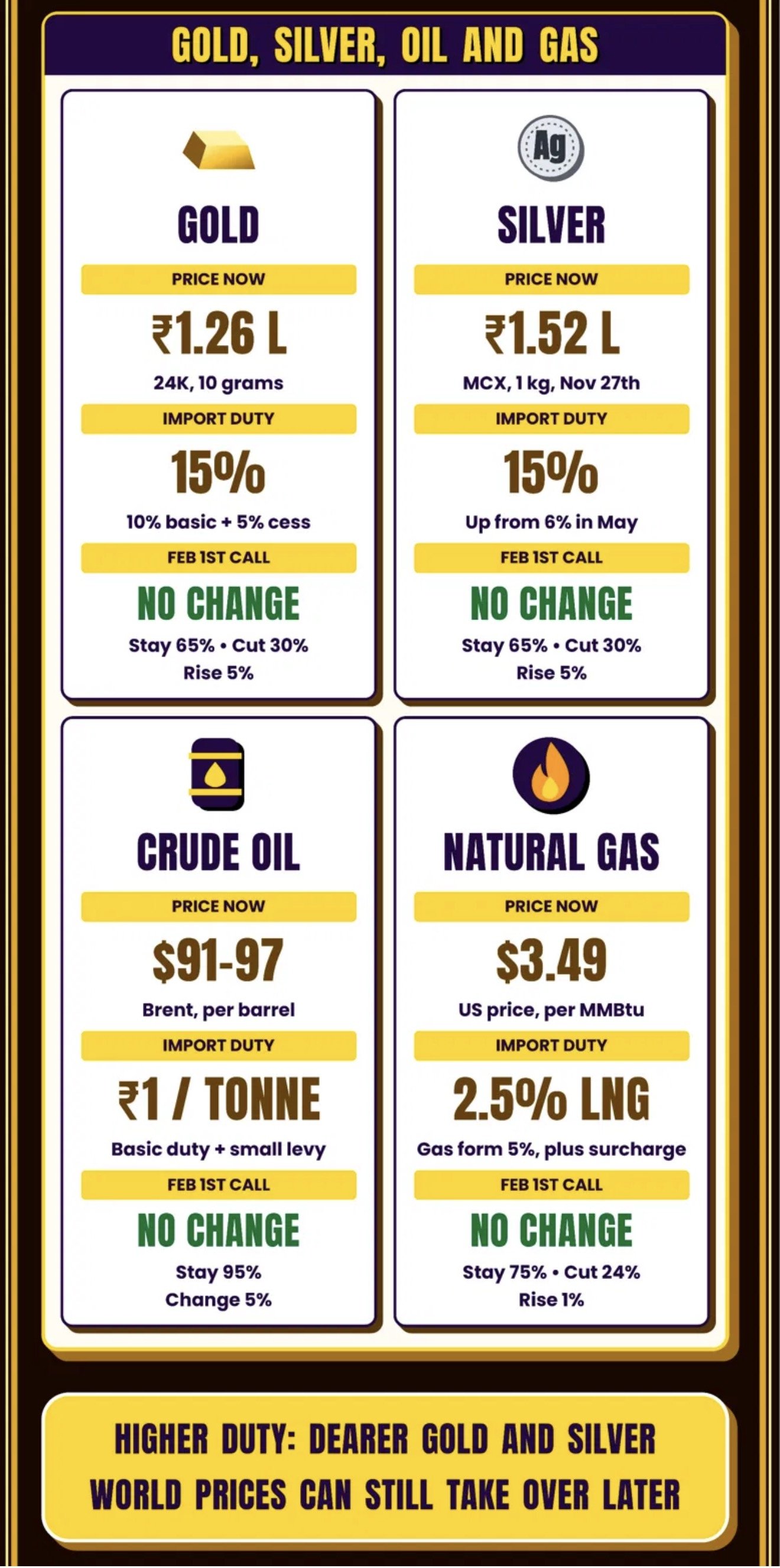
Oil and gas tell a different story. India's basic custom duty on crude oil is only ₹1 per tonne, with a small additional levy. The basic duty on liquefied natural gas, or LNG, is listed at 2.5%, plus a surcharge.
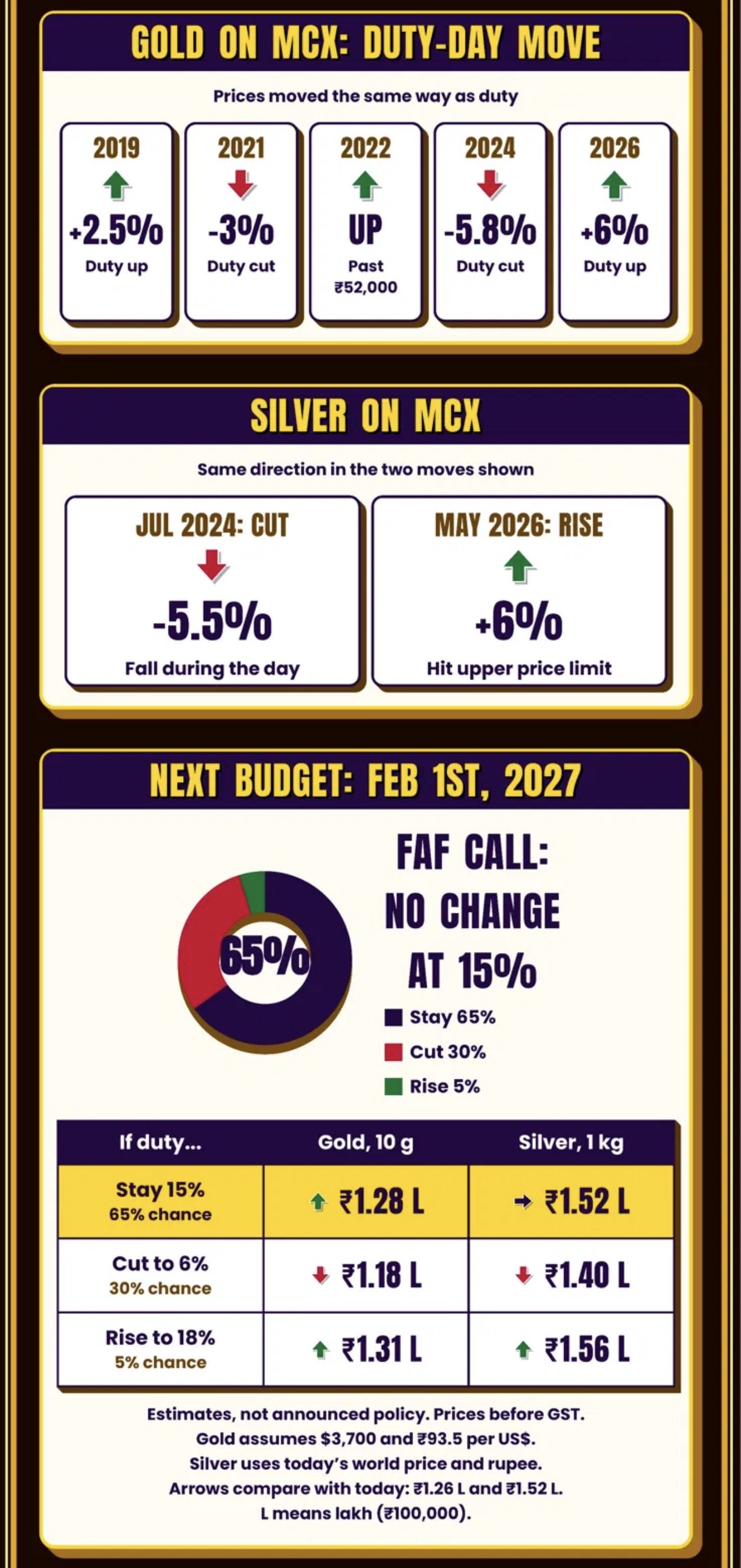
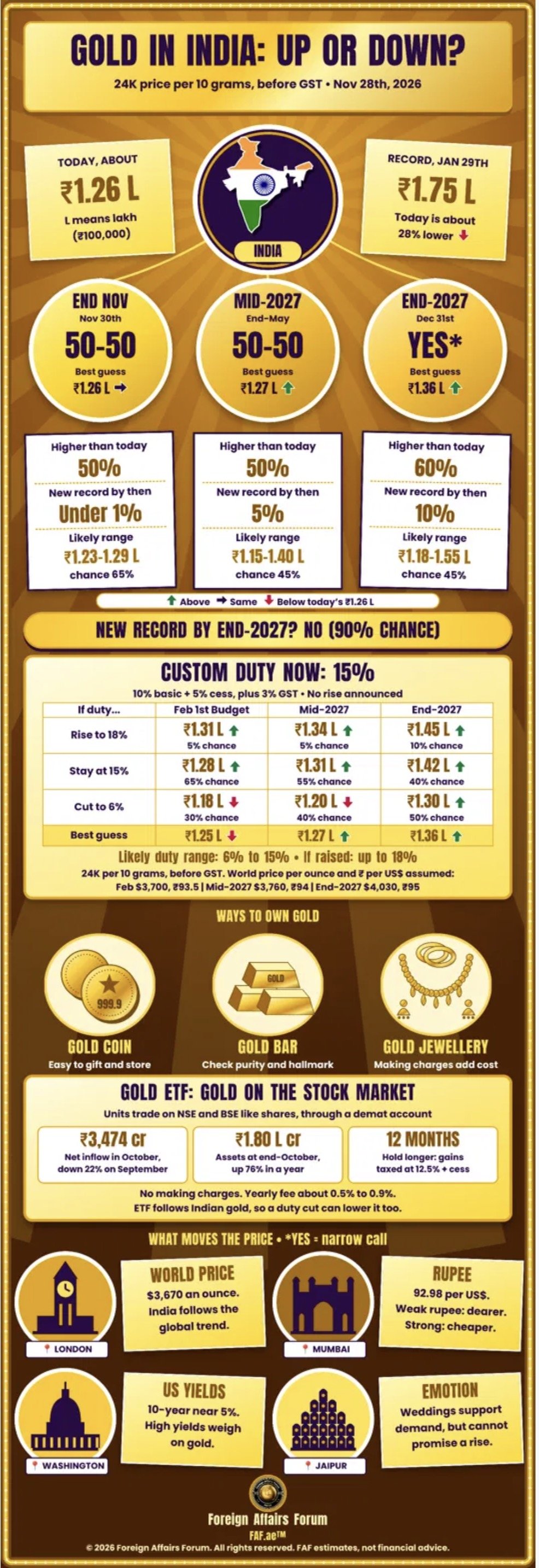
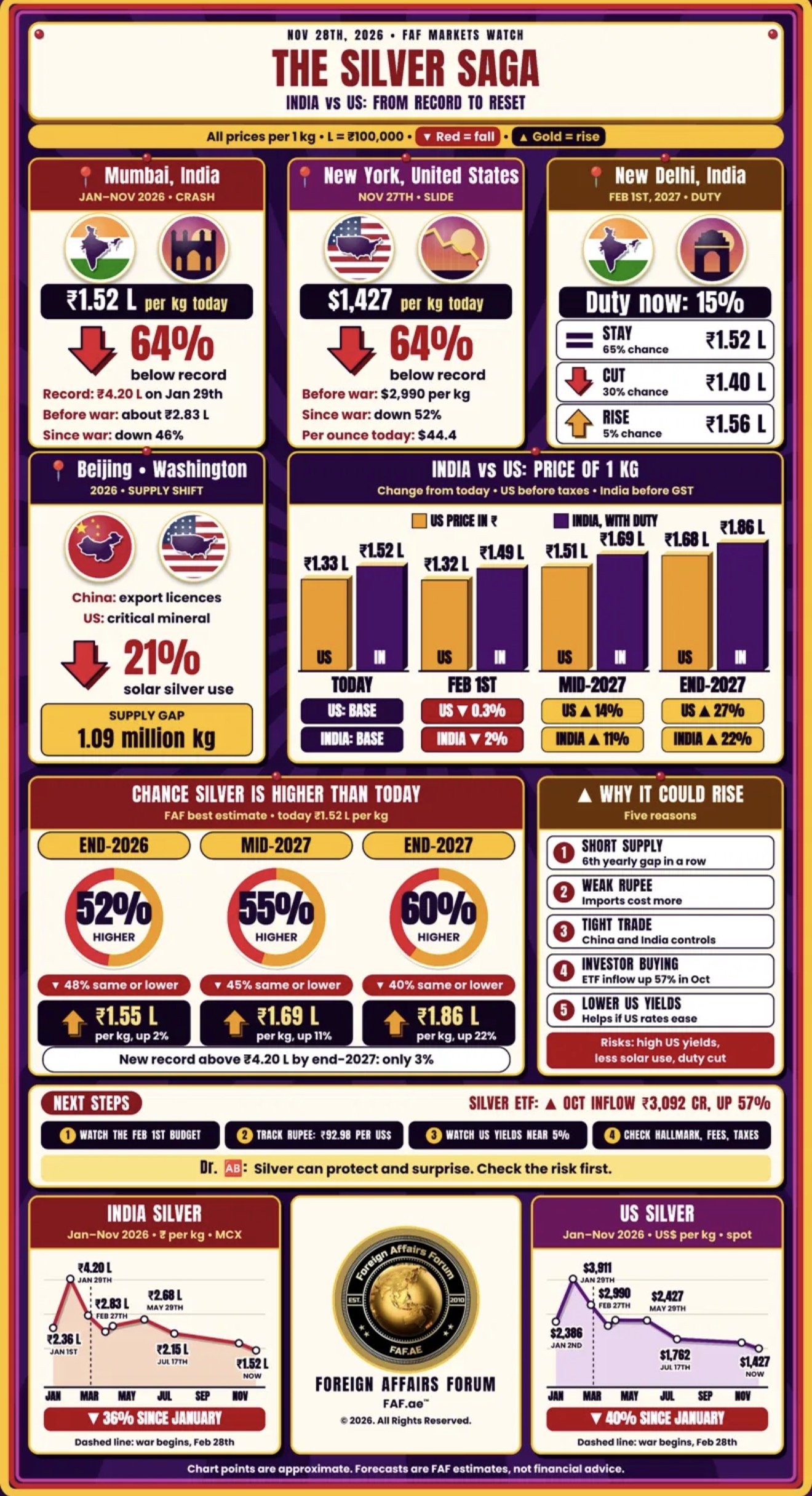
The next major test is the Union Budget expected on Feb 1st, 2027. Per FAF analysis, the most likely result is no change in gold duty. The estimated chance is 65%. A cut has a 30% chance, and a rise has a 5% chance. These are estimates and not announced government policy.
Introduction
A single tax decision can affect a family planning a wedding, a shop selling jewellery, an investor holding a gold fund and a lender accepting gold as security. This makes custom duty much more than a technical line in a government notice.
India buys large amounts of gold, crude oil and natural gas from other countries. Imports require foreign currency, mainly US dollars. When the import bill grows quickly, it can place pressure on the economy and the rupee.
The government may raise duty to slow imports or collect more money. It may cut duty to make goods cheaper, support an industry or reduce the reward for smuggling. Each choice creates winners and costs. Buyers, businesses and other stakeholders therefore need to understand both the tax and the wider market.
History and Current Status
Gold duty stood at 10% in 2016, continuing a rate introduced in 2013. In July 2019, it rose to 12.5%. The aim included collecting revenue and limiting imports.
The direction changed in February 2021, when the combined rate fell to 10.75%. This was expected to ease prices and reduce smuggling. In July 2022, duty rose to 15% as India sought to control imports and the current account deficit. This deficit appears when more money leaves the country through trade and certain other payments than comes in.
A large cut followed in July 2024. Duty fell from 15% to 6%. The move offered relief to buyers and the gems and jewellery industry. It also made smuggling less attractive.
Another reversal came on May 13th, 2026. Duty returned to 15%, made up of 10% basic custom duty and 5% Agriculture Infrastructure and Development Cess. The government sought to reduce imports and protect foreign exchange reserves. A separate Goods and Services Tax, or GST, of 3% applies to gold purchases.
Key Developments in Gold and Silver
Gold prices on the Multi Commodity Exchange, known as MCX, have shown the effect of duty changes clearly. In 2019, gold rose about 2.5% after the increase. In 2021, it fell about 3% after the cut. It also climbed after the July 2022 rise, crossing ₹52,000 for 10 grams.
The 2024 reduction brought a much sharper reaction. Gold futures fell about 5.8% on the day. In May 2026, they rose about 6% after duty returned to 15%.
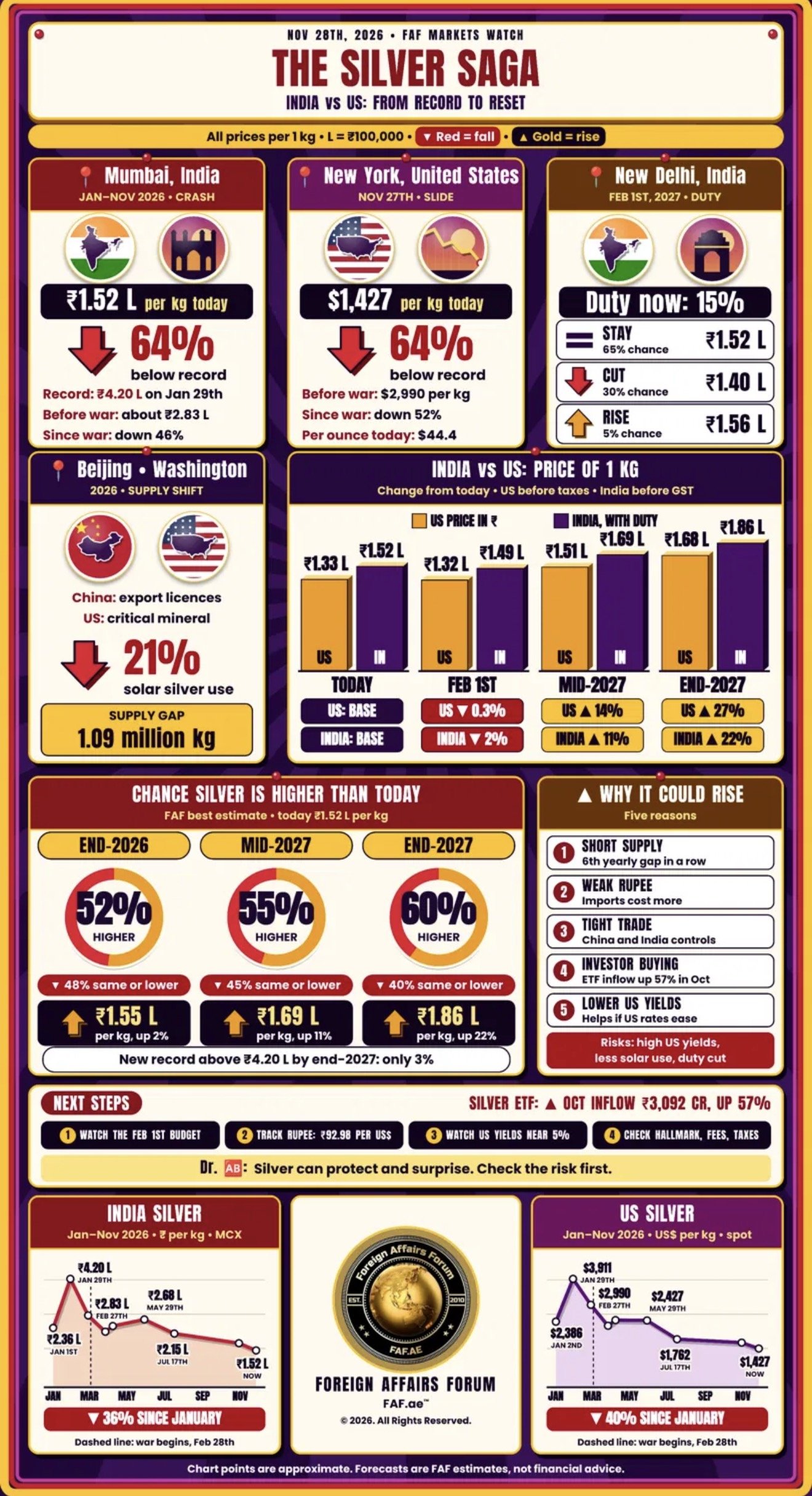
Silver showed a similar pattern in the two recent examples. It fell about 5.5% during trading on the day of the July 2024 cut. It rose 6% and reached the exchange's daily upper limit after the May 2026 increase.
These figures describe early market reactions. They do not show that prices must keep moving in the same direction. Gold reached a high Indian benchmark of about ₹1.75 lakh for 10 grams in January 2026. It later fell heavily even though duty was raised in May. One lakh means ₹100,000. This example shows that weakness in world prices can later outweigh the support created by a tax increase.
Who Feels the Effect
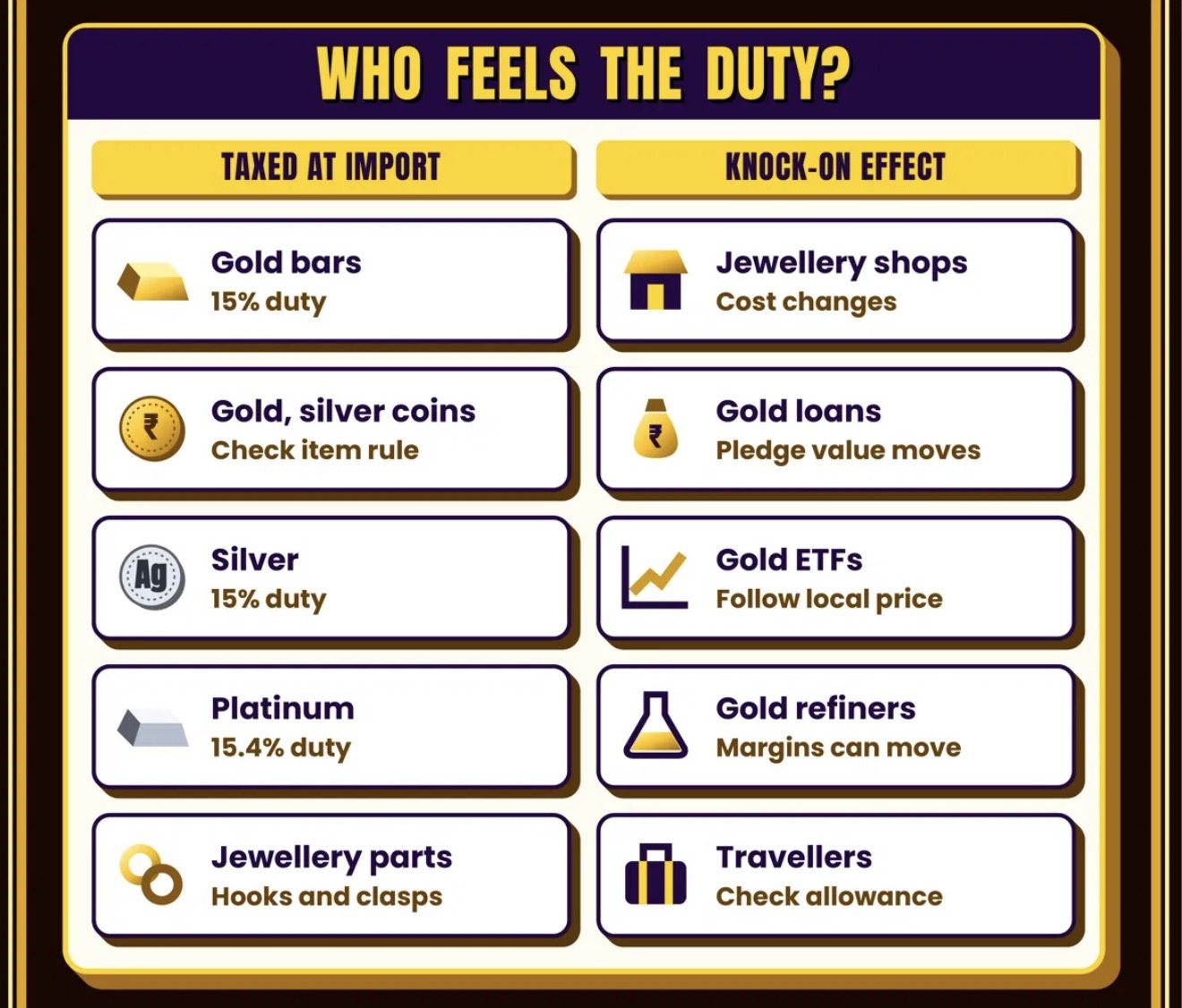
Custom duty directly affects imported gold, silver, platinum and some jewellery parts, including hooks and clasps. Platinum duty rose to 15.4% in May 2026. Coins can also become more costly when import taxes rise, although buyers should check the exact rule for each product.
Other effects travel through prices. Jewellery shops may pay more for material and may find that customers delay purchases. Gold refiners can see changes in costs and profit margins. Travellers carrying gold from abroad must check the allowance and duty rules.
Gold loans may also be affected because the value of pledged gold changes with its price. A lower price can reduce the value of the security. Gold exchange-traded funds, or ETFs, generally follow the local gold price. A duty cut can therefore lower their value, while an increase can lift it. These businesses and services feel the tax mainly through its effect on goods and costs.
Oil and Gas: A Different Landscape
Crude oil is vital to India, which imports close to 88% of its needs. However, basic custom duty has had a limited role in recent oil prices. In June 2011, India removed the 5% basic duty on crude oil. Since 2019, the rate has been a token ₹1 per tonne, with a small additional levy.
Excise duty has been a more visible tool. This is a different tax. In March 2026, India cut special excise duty on petrol from ₹13 to ₹3 per litre. The matching duty on diesel fell from ₹10 to zero. The action helped fuel companies facing high costs during the West Asia crisis.
For natural gas, the listed basic custom duty is 2.5% for LNG and 5% for gas in gaseous form. A surcharge also applies to custom duties. Buyers and companies should check for special exemptions because rules may differ by use and date. Parts of the energy industry have asked for the removal of LNG duty.
Latest Facts and Concerns
Around Nov 27th, gold was about ₹1.26 lakh for 10 grams before GST. Silver on MCX was near ₹1.52 lakh per kilogram. Brent crude was in a range of about $91 to $97 per barrel across different price quotes. A leading US natural gas benchmark was about $3.49 per million British thermal units. This US figure is not the price India pays for imported LNG.
The main concern is uncertainty. A tax cut can reduce the value of metal bought earlier. A tax rise can make weddings and festival purchases more expensive. High rates may also encourage illegal imports. Sharp changes make planning harder for both families and businesses.
Cause-and-Effect Analysis
A higher custom duty raises the cost of bringing goods into India. Sellers may pass this cost to buyers. Expensive goods can weaken demand and reduce imports. This may help save foreign currency, but it can also hurt legal sellers and increase smuggling.
A lower duty works in the opposite direction. Local prices may fall, demand may improve and illegal trade may become less rewarding. Government income from each imported unit may fall, while imports may increase.
The tax is only one part of the final price. The world price and the rupee also matter. If global prices fall strongly, local metal can become cheaper after a duty increase. If the rupee weakens, imports can become more costly even without a tax change.
Future Steps: The Next Budget
For Feb 1st, 2027, FAF analysis expects gold and silver duty to remain at 15%. In that case, gold may be near ₹1.28 lakh for 10 grams. Silver may be around ₹1.52 lakh per kilogram.
If duty falls to 6%, estimated prices are ₹1.18 lakh for gold and ₹1.40 lakh for silver. If it rises to 18%, the estimates are ₹1.31 lakh and ₹1.56 lakh. The gold figures assume $3,700 an ounce and ₹93.5 per US dollar. The silver figures hold the latest world price and exchange rate steady.
Crude oil duty has an estimated 95% chance of staying unchanged. LNG duty has a 75% chance of staying the same, a 24% chance of being cut and a 1% chance of rising.
Buyers should avoid relying on one Budget forecast. Staged purchases can spread price risk. Businesses should control stock levels and prepare for either direction. Policy makers can help by explaining changes clearly and weighing the effects on trade, jobs, consumers and illegal imports.
Conclusion
India's custom duty record shows that tax policy can change quickly. Gold and silver often react at once, while oil and gas depend more heavily on other taxes, global supply and currency movements.
The base view for the 2027 Budget is no major change, but a gold duty cut remains a real possibility. Smart decisions require a clear purpose, a sensible budget and attention to new facts.
This FAF article offers general information and is not personal financial advice.