Five Weak Spots, One Big Lesson: What This Week Teaches About Power
A bridge, a computer rule, a ceasefire line, a climate deal and an election show how countries press on the places others cannot do without
Foreign Affairs Forum | Dr. Antonio Bhardwaj (Dr. 🆎)| Nov 21st, 2026
The Big Idea in Plain Words
Some places matter far more than their size. A single bridge can feed a whole region. A few computer centers can decide who leads in artificial intelligence. A line on a map can hold a ceasefire together. When a country presses on one of these places, the effects spread far and wide.
This week, five stories showed the same pattern. Ukraine hit a famous bridge. The United States made a new rule about powerful computers. Israel moved tanks across a ceasefire line in Gaza. A big climate meeting ran late with no deal. And Taiwan got ready for local elections while China pressed on its seas.
Per FAF analysis, the lesson is simple. Pressing on a weak spot can feel strong. But it often brings a push back. Dr. 🆎 says the best test is a human one: who has to live with the results?
Introduction
This FAF article explains five news stories in simple English. Dr. Antonio Bhardwaj (Dr. 🆎) writes about human-centered AI, world strategy, AI warfare and the risk of biological terrorism.
Dr. 🆎 looks at each story with one question. Who pays when a weak spot is pressed, and does the pressure help reach a goal?
Each story also sits on top of a bigger talk that is stuck. The war talks on Ukraine have produced prisoner swaps but no deal. The United States and China have a trade pause that ends in the second week of January 2027. The Gaza ceasefire has a plan, but each side wants the other to move first. In every case, one side pressed on a weak spot while the bigger talks were already fragile.
Story One: The Bridge That Fell
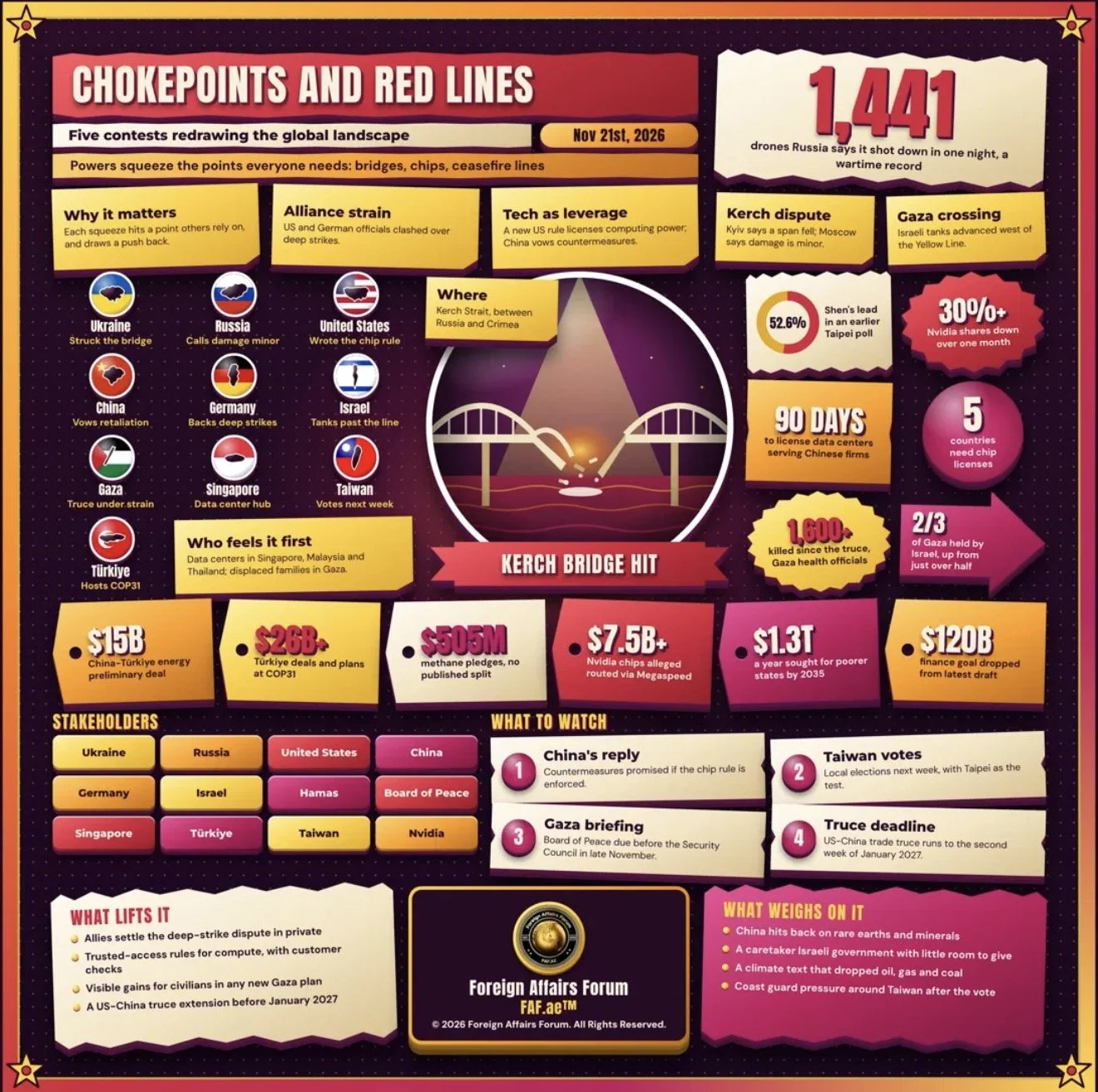
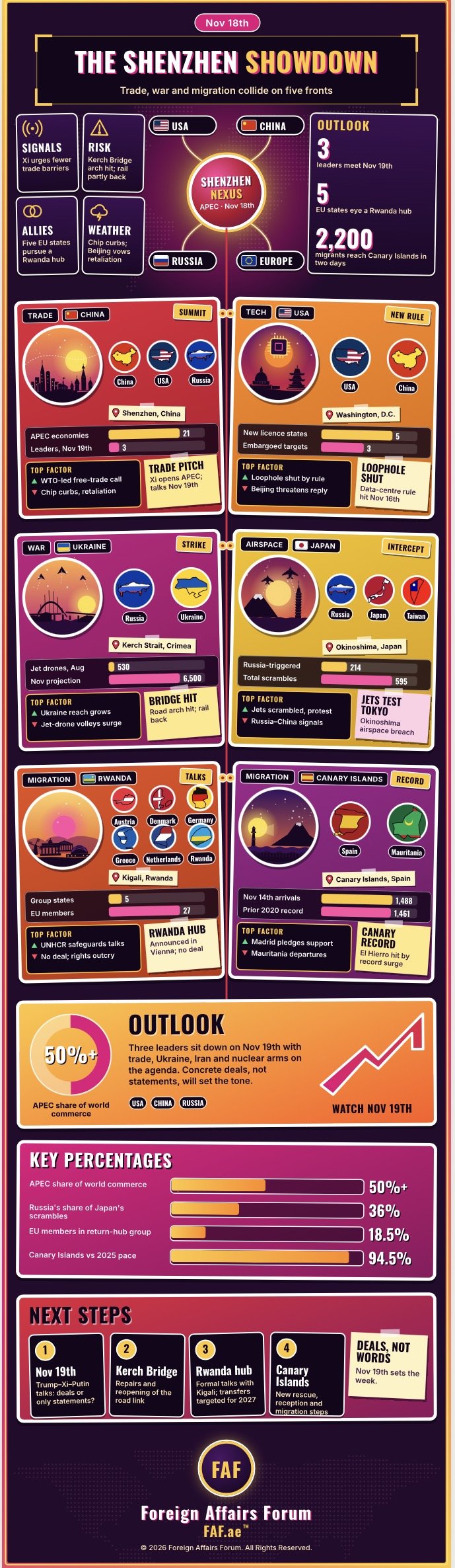
The Kerch Bridge links Russia to Crimea. It is the only road and rail link between them. Early on Tuesday, Ukraine hit it with drones and missiles. Drones are small flying machines with no pilot on board. Ukraine's army said a road section and an arch fell into the water. About 200 meters of road was badly damaged, according to one report. Trains could still use one track.
Russia said the damage was small. A Kremlin spokesman said the bridge would be rebuilt, and that Russia would keep fighting. Russia also said it shot down 1,441 drones in one night. That was a record, it said, after 1,336 the day before.
The strike then caused a fight among Ukraine's friends. A senior American defense official said that deep strikes inside Russia have not ended the war and have not stopped Russian advances. He said they can make Russia more determined. He asked European allies not to back attacks far from the front lines. Reports differ on whether he named the bridge. Some say he called it a civilian structure. Others say diplomats only believed he meant it.
Germany's defense minister, Boris Pistorius, answered at NATO headquarters. He called the criticism "pretty stupid." He said the targets were military and strategic. He said the real problem is Russian attacks on Ukraine's power, water and heating, which he called a form of terrorism.
Experts also disagree on how much the strike matters. One said Crimea is turning into an island. Another said it was a mistake, because almost no military supplies crossed the bridge in the past year.
Meanwhile, peace talks are stuck. Earlier this month, American, Ukrainian and Russian officials met in Abu Dhabi. They agreed on a big prisoner swap but nothing more. A meeting of Ukraine's allies in Berlin is planned, with no date yet for the next round with Russia. Russia says it wants a lasting peace, not a short ceasefire.
Story Two: The Rule About Computing Power
Advanced computer chips power artificial intelligence. The United States already stops its companies from selling the best chips to China. But Chinese firms could still rent the same power from data centers in other countries. A data center is a large building full of computers.
This week the United States closed that gap. A new rule went into force on Thursday. Any data center in the world now needs a license to rent large amounts of advanced chip power to firms based in China. Sending the best chips to Brazil, Indonesia, Malaysia, Singapore and Thailand now also needs a license. There is an exception for end users based in the United States. Data centers already serving Chinese firms have 90 days to get a license.
China said it firmly opposes the rule. Its foreign ministry called it economic bullying. It promised countermeasures, which means steps in return. Singapore said it is studying the rule and wants trusted access for honest firms.
One company sits at the center. Megaspeed is based in Singapore. Reports say more than $7.5 billion of Nvidia chips may have reached Chinese firms through its branches. Megaspeed denies any wrongdoing. US officials have confirmed a criminal investigation. Nvidia's chief executive resigned last week during a board investigation. Nvidia shares have fallen more than 30% in a month. These matters are not proven, and some details are unconfirmed. The California attorney general said red flags have been raised. He did not confirm a subpoena, which is an order to hand over records.
The rule also matters because of China's leverage. Reports say rare earth exports to the United States are still far below normal. Rare earths are minerals used in phones, cars and weapons. A Chinese reply that targets them would hurt American factories.
Dr. 🆎 adds a safety point. The same computing power that trains AI can help design new biology. A malicious user could misuse remote access to such power. That is one reason data centers need to know their customers. But a blunt rule also catches honest researchers.
Dr. 🆎 supports trusted-access systems, where checked institutions keep access and unknown customers do not.
Story Three: Tanks Cross the Yellow Line
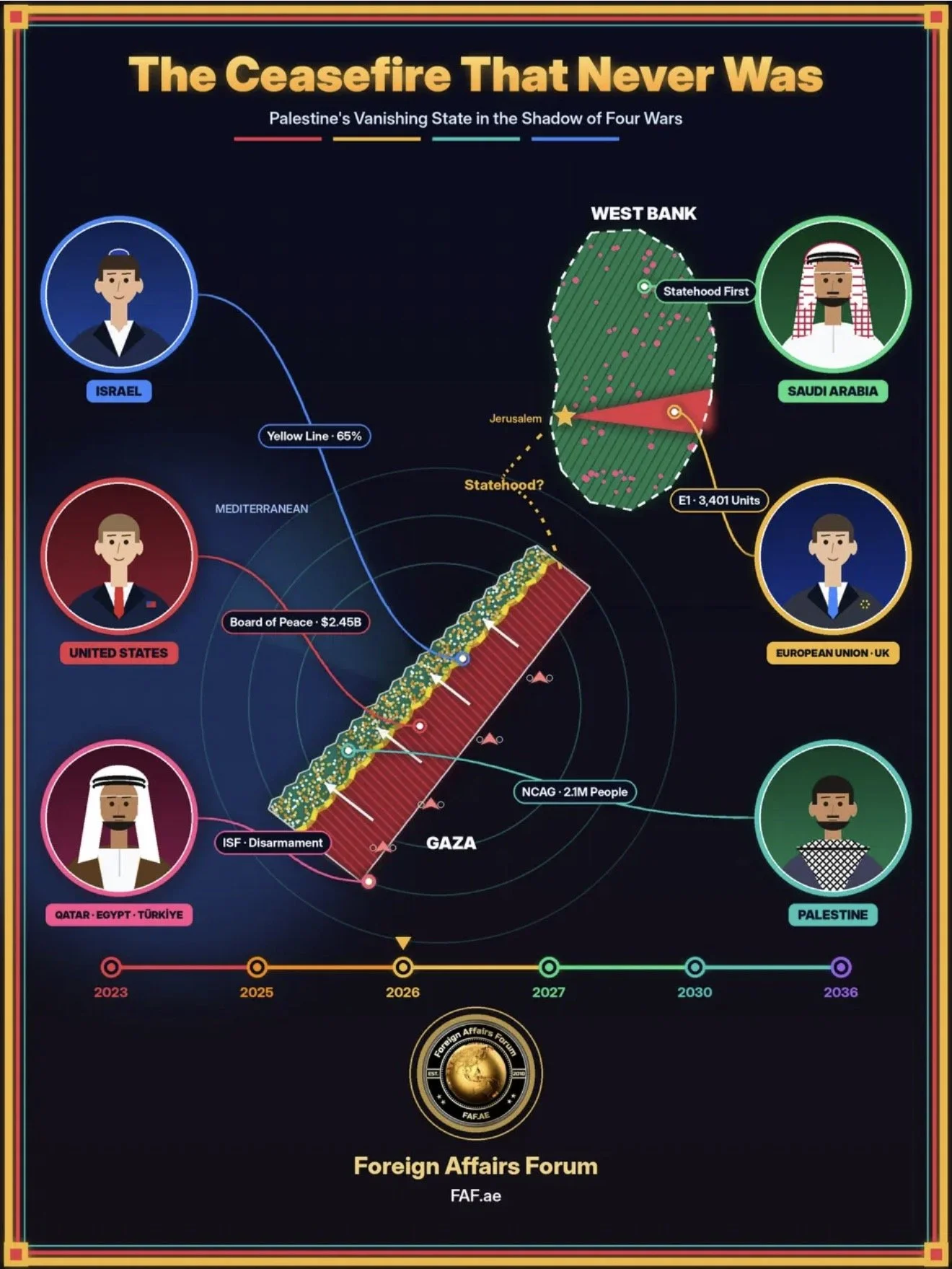
The Gaza ceasefire began in October 2025. A map line, called the Yellow Line, shows where Israeli control ends. On Wednesday, Israeli tanks moved past that line in central Gaza. It was the first time since the truce. Israel said it wanted to destroy a tunnel that threatened its soldiers. By the next day, it said the operation was done.
Dozens of displaced people fled their tents. Hamas called the raid a clear violation of the ceasefire. Israel's defense minister said Israel will not leave until Hamas is dismantled and Gaza is demilitarized, which means stripped of weapons.
The same week, a group called the Board of Peace sent a 12-page report to the United Nations Security Council. President Trump chairs it. The report blames both sides. It says Israel has been slow to build a Palestinian police force and has limited supplies. It says Hamas keeps attacking Israeli troops and taxes goods entering Gaza. It warns that a ceasefire that gives nothing visible cannot last. A Hamas official called the report disinformation.
The numbers are grim. Gaza health officials say more than 1,600 Palestinians have died since the truce began. The Israeli military says five of its soldiers have died. Israel now controls about two-thirds of Gaza. At the start of the ceasefire it held a little over half.
The core problem is order. The plan says Hamas should disarm and Israel should withdraw. Each side says the other must go first. Israel's politics make this worse. The country is led by a caretaker government after an unclear election at the end of October. The opposition leader, Gadi Eisenkot, has been asked to try to form a new government.
Story Four: A Climate Meeting That Ran Late
The COP31 climate conference is being held in Antalya, Türkiye. It started in early November. More than 100 world leaders came for the opening summit. It was due to end on Friday, but it ran into the weekend with no final deal.
The newest draft left out any mention of oil, gas and coal. An earlier draft had called for a faster move away from them. France's ecological transition minister, Monique Barbut, called this a black mark. Australia's climate minister, Chris Bowen, is steering the talks.
Other fights are still open. Some countries do not want praise for carbon capture, a way of trapping pollution before it escapes. Some want new electricity to be clean. Saudi Arabia and India want the next big science reports delayed to 2029, while many countries want them ready before 2028. On money, rich countries want China and other big economies to pay in. The draft drops a $120 billion goal that poorer countries wanted.
There was good news for the host. Türkiye announced more than $26 billion in deals and plans. That includes a first-stage $15 billion clean energy deal with China. Pledges of about $505 million were also made to cut methane, a gas that warms the planet.
Per FAF analysis, the worry is a hollow result. Energy security is a hot issue because of problems in the Gulf. Strong words on cutting fossil fuels are getting weaker, just when many countries feel nervous about energy supply.
Story Five: Taiwan Votes Next Week
Taiwan holds local elections next week. Voters will choose mayors and county leaders. The main race is in Taipei. Puma Shen of the ruling Democratic Progressive Party faces Chiang Wan-an of the Kuomintang, the main opposition party.
Polls disagree. One poll earlier this month had Shen ahead by 52.6% to 35.3%. A later poll had him ahead by only 46.3% to 42.2%. In New Taipei City, one poll had the Kuomintang candidate slightly ahead, at 37% to 33.4%.
China is watching closely. Beijing calls Taiwan's president, Lai Ching-te, a destroyer of peace. Since June, China's coast guard has patrolled east of Taiwan and has radioed foreign ships heading to Taiwan's ports. Experts say this makes pressure feel normal, step by step. Japan's defense think tank said last week that China wants control of the South China Sea so that it can stop American help in a Taiwan crisis.
A strong win for the ruling party could help President Lai before the 2028 presidential vote. It could also make Beijing push harder. The stakes are high because Taiwan makes a large share of the world's most advanced chips.
What Comes Next
Dr. 🆎 sees three possible paths for the coming months.
In the first path, the sides keep the damage small. Ukraine's allies settle their quarrel in private. Talks with Russia restart. The United States and China extend their trade pause. China's reply to the chip rule stays mild. Israel pulls back, and the climate meeting ends with a thin but usable text. This needs calm from many leaders at once, so it is less likely than it sounds.
In the second path, the pressure builds. China answers the chip rule by limiting minerals. The trade pause ends at the start of 2027. Russia hits Ukraine's power and bridges harder during winter. Gaza slides into a bigger war. Pressure around Taiwan grows after the vote. The danger is many crises at once, with too few leaders able to calm them.
In the third path, the world splits and adapts. Southeast Asian countries make deals with Washington while also courting China and Europe. Gulf states and Türkiye take more data center business. Europe builds its own way to back Ukraine. Climate money flows through banks and deals instead of a global text. This is steady for a while, but costs rise and the blocs drift apart.
Dr. 🆎 offers three practical steps. First, set up a regular channel between Washington and European capitals about deep strikes, so quarrels are settled in private. Second, build trusted-access rules for computing power, with customer checks and safety screening. Third, link any new Gaza plan to visible gains for ordinary people.
Conclusion
Power now flows through narrow places. A bridge, a rule, a ceasefire line, a text and a sea lane all show it. Each time a country presses on one, the other side presses back.
Per FAF analysis, pressure works best when it serves a clear goal and comes with a way to calm things down. Without that, it creates friction and no progress.
Dr. 🆎 offers a simple test. Ask who will live with the results, ask whether they were heard, and ask whether the move makes a deal more likely or less likely. On that test, several of this week's moves fall short.