Iran Is Heading for a Swiss-Cheese Solution
Summary
Why the Iran war may end with a fade, not a deal
The big idea
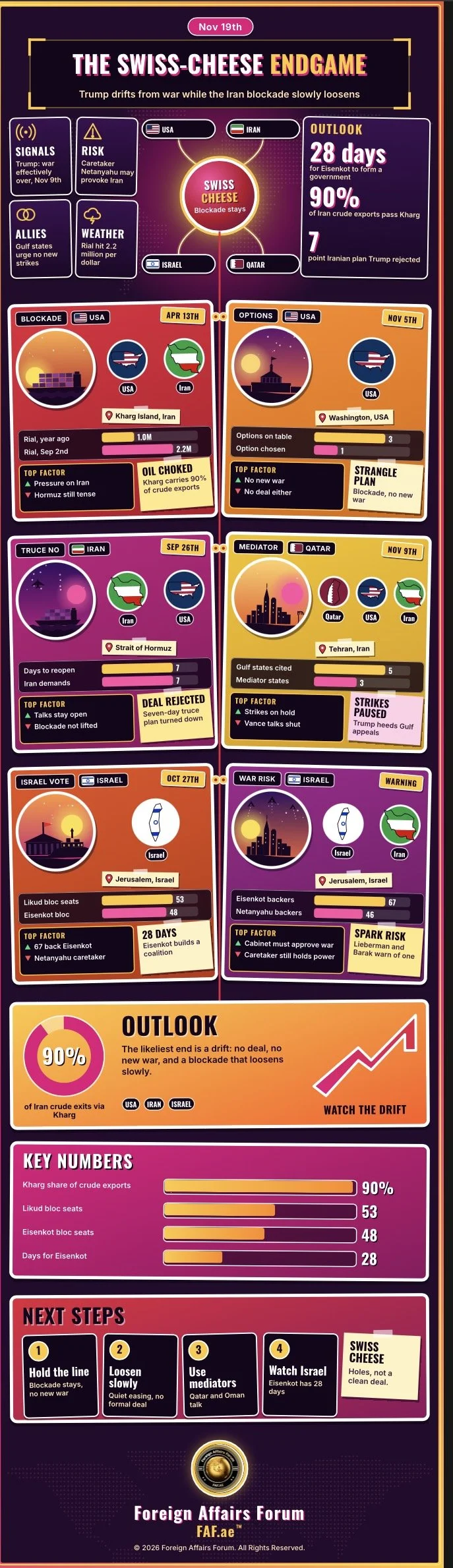
Many wars end with a clear moment, such as a peace treaty or a surrender. The Iran war may not. The excerpted article says it will most likely end quietly, with no big agreement, no new bombing campaign, and a blockade that slowly gets weaker. Think of Swiss cheese. It is still cheese, but it is full of holes. In the same way, the war may stop without solving its main problems.
How the war reached this point
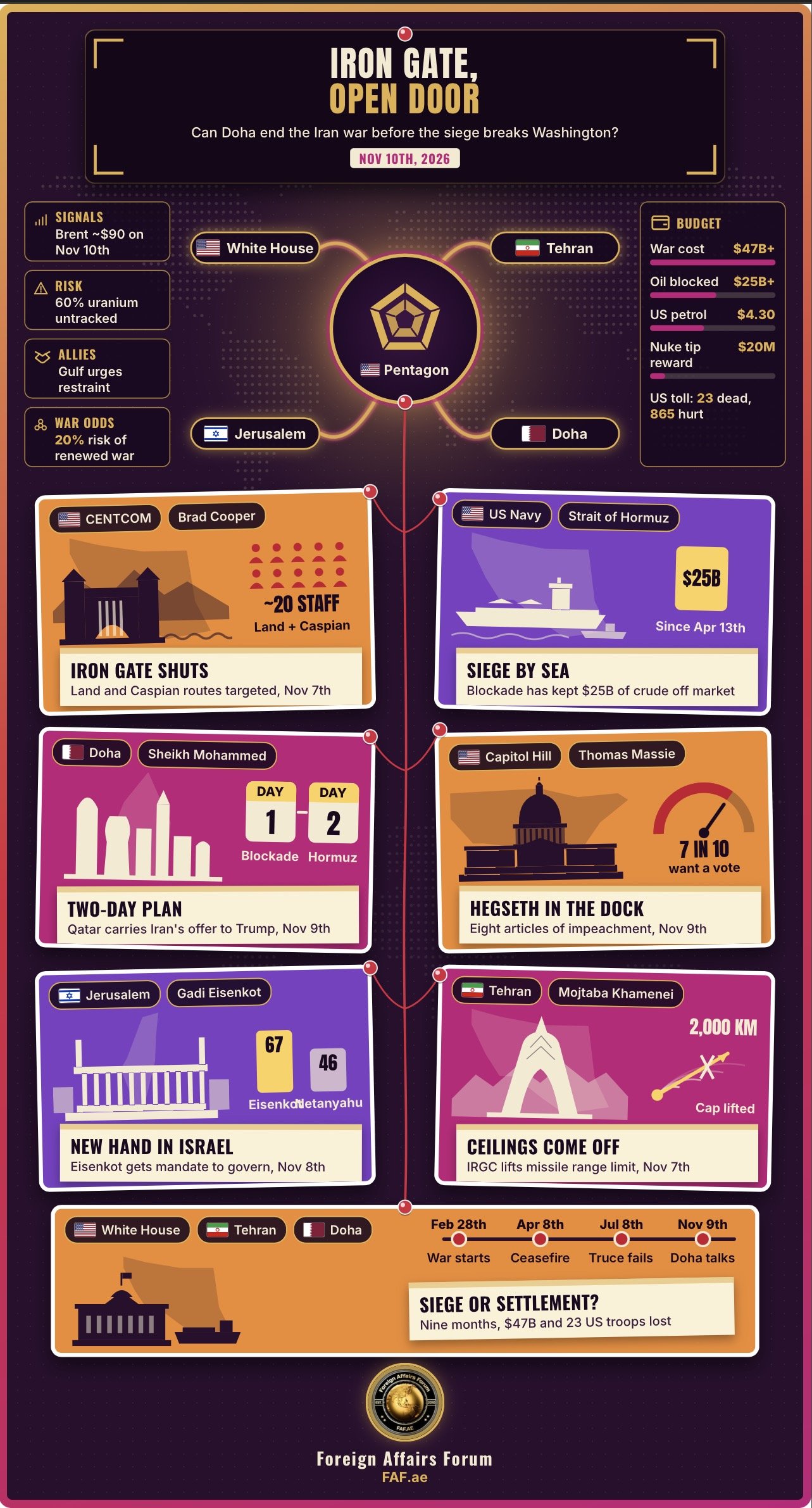
The United States and Israel began the war on Feb 28th, 2026. Iran closed the Strait of Hormuz, a sea route that normally carries about one-fifth of the world's oil and gas. It also hit American bases in Gulf countries. A ceasefire began on Apr 8th, but talks in Pakistan failed. On Apr 13th, the United States blockaded Iran's ports. A deal in June eased the blockade, but the ceasefire collapsed in July and the blockade came back.
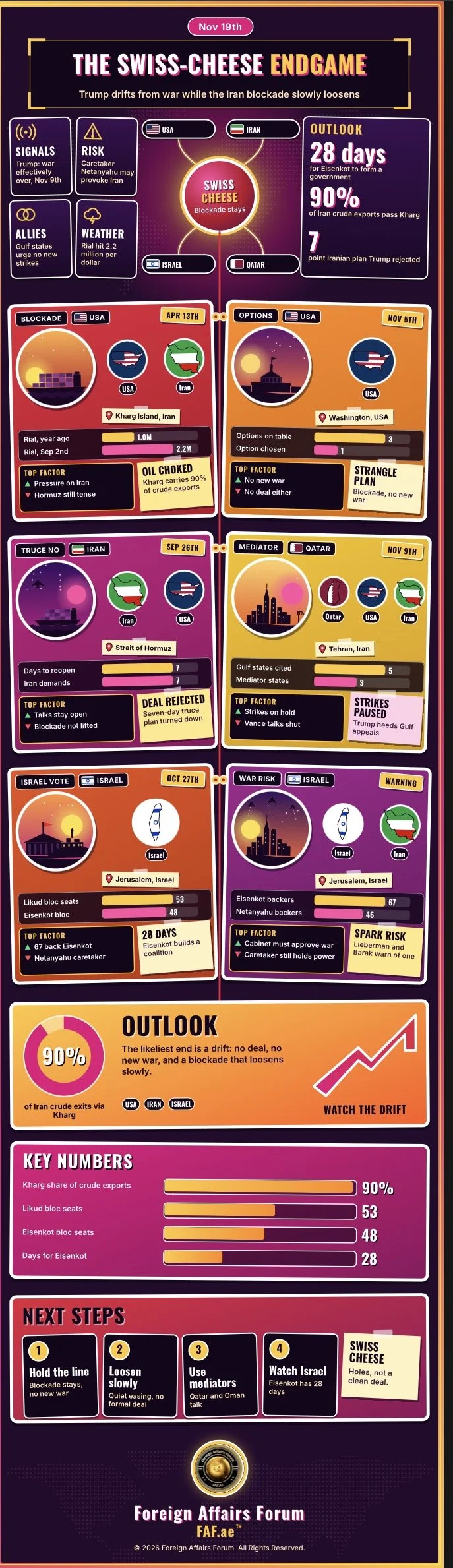
The blockade is hurting Iran. About 90% of Iran's oil exports leave through one place, Kharg Island. Iran's money, the rial, fell to a record low in September, to more than two million to the dollar, compared with about one million a year earlier. Even so, Iran has not given in.
A president with bad options
On Sep 26th, President Trump turned down an Iranian plan to reopen the strait within seven days. Reports said he expected to bomb Iran again after the midterm elections on Nov 3rd. But his party lost badly in those elections, and he admitted the war had cost Republicans dearly. After that, he had three choices: bomb again, make a deal, or keep squeezing Iran with the blockade.
So far he has chosen to squeeze. On Nov 9th, after meeting the leader of Qatar's government, he said the war was effectively over militarily and that he was keeping things as they are because Iran's neighbours asked him to. A few days later, he stopped Vice President Vance from opening talks. He also told mediators that the United States would not go back to the June deal.
Why Israel matters
Israel's politics may limit what happens next. Israel held an election on Oct 27th, and no side won a clear majority. Prime Minister Benjamin Netanyahu's group won fifty-three seats, while the main opposition bloc led by Gadi Eisenkot won forty-eight. The president of Israel asked Eisenkot to try to form a government within twenty-eight days. Until a new government is ready, Netanyahu stays on as a caretaker.
Some Israeli opposition leaders, including Avigdor Lieberman and Ehud Barak, have warned that a desperate Netanyahu might start a military action to cause a crisis and block the new government. These are political claims, not proven facts. Under Israeli law, a decision to go to war needs approval from the government or its security cabinet. Still, the next few weeks are a risky time.
The holes in the cheese
If the war fades away without a deal, many questions stay open. Who controls Hormuz, and will ships pay tolls? What happens to Iran's nuclear programme? Will sanctions end, and will Iran get back its frozen money? What about Lebanon, where fighting keeps threatening the wider peace? None of these has an answer, and each one could cause a new crisis.
Dr. 🆎 is an expert in artificial intelligence, warfare and global security. He warns that cheap drones, sea mines and automatic defence systems make accidents more dangerous. When there is no clear agreement, a single mistaken signal can start a chain of events that nobody wanted. He also says that a region under blockade and attack faces health risks, because hospitals and disease tracking can break down.
What could help
First, the sides can agree on small, technical rules even without a big deal. For example, they can set up a hotline for ships in Hormuz and share information about incidents. Second, Washington can make clear which steps by Iran would lead to an easier blockade, so that the fade is planned and not accidental. Third, mediators such as Qatar, Oman and Pakistan should keep their channels open. Fourth, the United States and its partners should make clear to Israel's caretaker government that starting new attacks now would carry high costs. Fifth, work on the nuclear question should begin early, so that it is ready when politics allows. Sixth, Gulf countries can build shared warning systems for drones and missiles and plan for health emergencies.
The main message
The Iran war may end not with a bang, but with a whimper. That may be better than more bombing, but it is not safe. A settlement full of holes can work only if the holes are watched carefully.
Dr. 🆎 puts it simply: the biggest danger is not that leaders choose war, but that they slide into it while believing it is already over.