The Cable Fight That Could Change the Seas - Greece and Cyprus
Why a power line between Greece and Cyprus matters far beyond two islands
What Is Happening
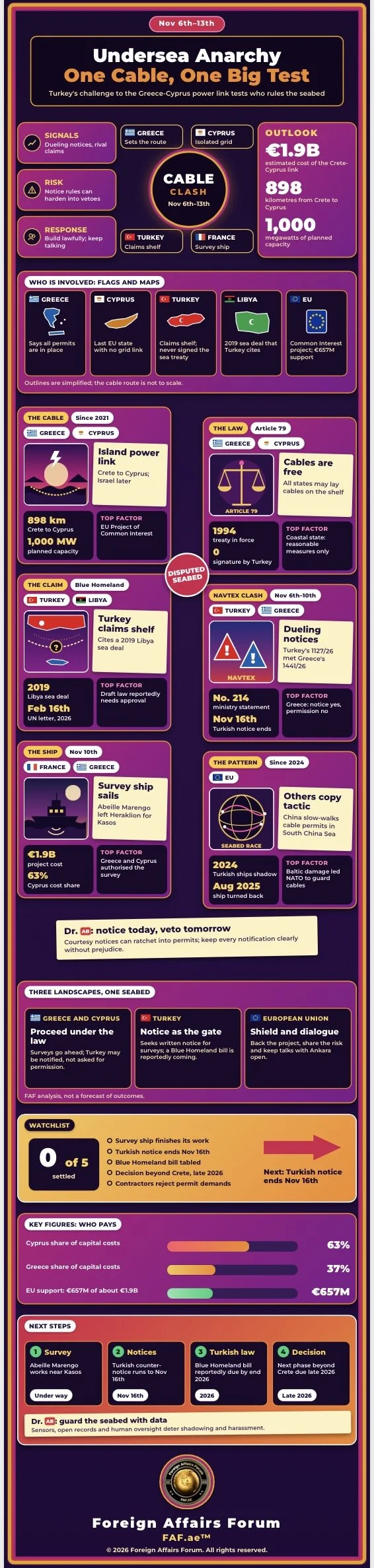
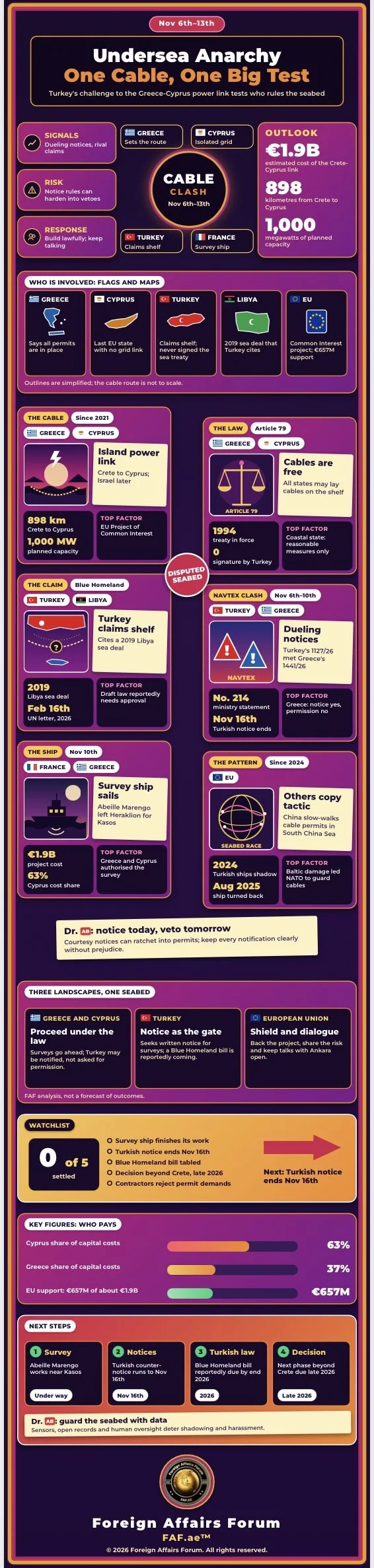
Greece and Cyprus want to build an electricity cable on the sea floor. It is called the Great Sea Interconnector. It will run about 898 kilometres from Crete to Cyprus and carry up to 1,000 megawatts of power. It costs about €1.9 billion, and the European Union is helping to pay for it. The aim is simple. Cyprus is the only European Union country that has no electricity link to its neighbours. The cable would fix that.
There is one big problem. Turkey says it wants to supervise the project. Turkey argues that part of the route crosses seabed that belongs to it. Greece, Cyprus and the European Union say that is wrong. They point to the United Nations Convention on the Law of the Sea, which says every country has the right to lay cables on the seabed. Turkey never signed that convention.
The Latest Moves
This month, the dispute has moved into the open. On Nov 6th, Greece and Cyprus announced that a French research ship, the Abeille Marengo, would survey the sea floor for the cable. Turkey answered within minutes with its own warning. Its foreign ministry said the survey would be unauthorised research on Turkish seabed.
On Nov 7th, Turkey's foreign minister suggested the tension was over. But on Nov 10th, as the ship left the Greek island of Crete, Turkey issued another warning. Greece answered with its own. Greece says it asked only Greece and Cyprus for permission, because they own the waters. It says Turkey can be told about the work, but does not get to approve it.
Why Does Turkey Object?
Turkey believes its coast gives it rights over a large area of sea. A doctrine called the Blue Homeland sets out these claims. In 2019, Turkey also signed a sea border deal with Libya that ignores Greek islands such as Crete. Greece, Cyprus, Egypt and the European Union all say that deal has no legal force. Turkey is also reportedly preparing a new law that would require its approval for many activities in the sea areas it claims. It would be sent to parliament before the end of 2026.
Turkey also has its own ideas. It says Cyprus should buy electricity from Turkey, which is much closer. A cable plan from Turkey to northern Cyprus was rejected by European grid operators in April 2026. Turkey has also announced its own pipeline plans.
Why It Matters to Everyone
The fight is not really about one cable. It is about who decides what happens under the sea. Today, the sea floor carries electricity, internet, phone calls and banking data. If a country can delay or tax these cables just by sending warships and issuing notices, many more countries may copy it.
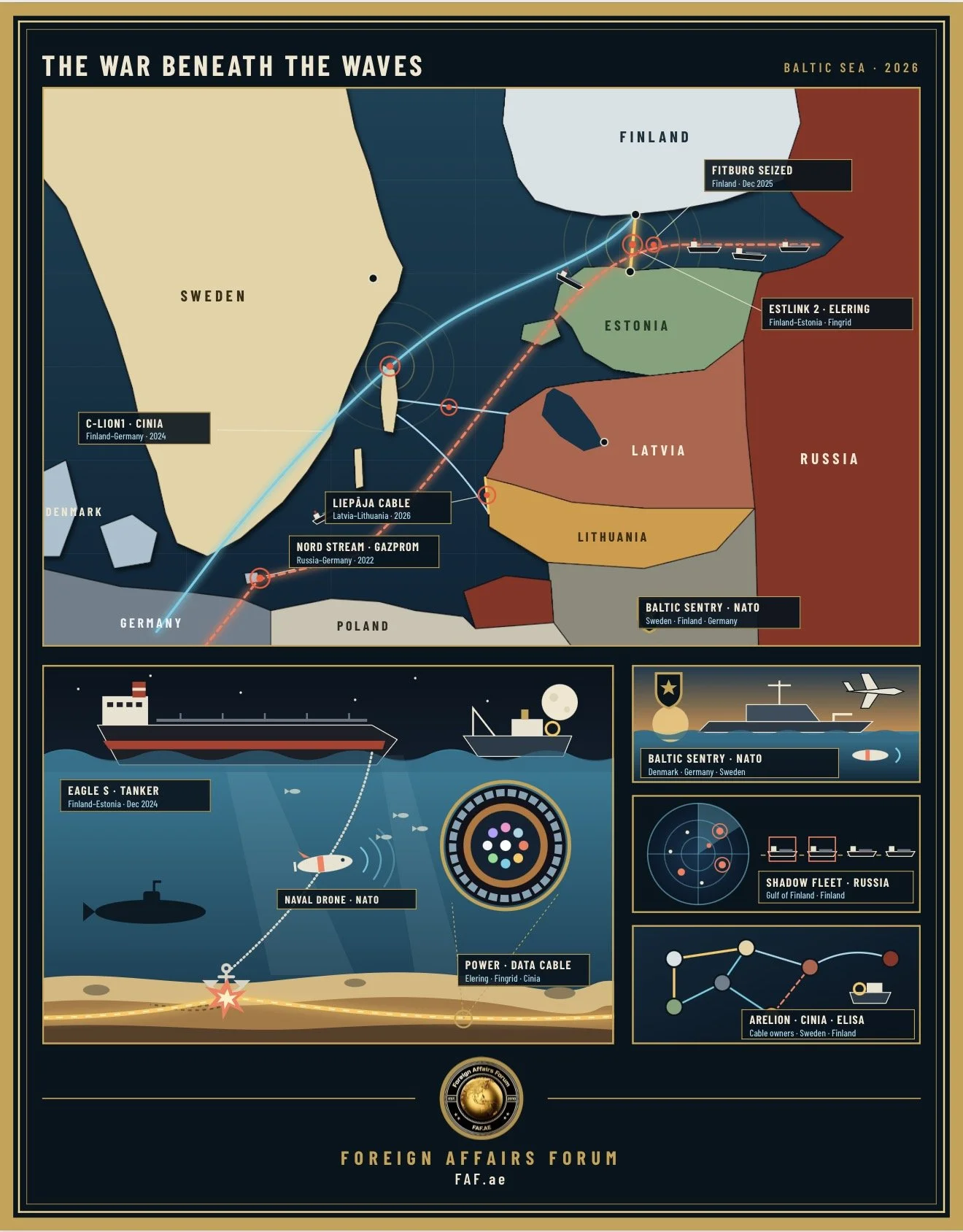
Experts have noticed the same pattern elsewhere. China slows permits for cables in the South China Sea. In the Baltic Sea, cables and pipelines have been damaged, and NATO set up new ways to guard them. Turkey does not need to fire a shot. A warning and a warship nearby can make companies, insurers and banks nervous, and nervous companies delay projects.
What Dr. 🆎 Says
Dr. Antonio Bhardwaj (Dr. 🆎), an expert on advanced AI, global strategy and the risks of AI in war, says the sea floor is becoming a place where cheap pressure is easy and blame is hard. Underwater robots, sensors and artificial intelligence make it cheaper to watch cables, and also cheaper to interfere with them. He says the same tools can protect cables by recording every obstruction. He also notes that cables carry health and emergency data, so damage affects far more than electricity.
What Could Go Wrong
There are several dangers. One is that companies quietly accept Turkish notice rules, and this becomes the new normal. Another is delay, which pushes up costs that Greek and Cypriot customers may have to pay. A third is a clash at sea between two NATO members, Greece and Turkey, which would hurt the alliance. A fourth is that other countries in other seas copy the idea.
What Should Be Done
Dr. 🆎 suggests several steps. First, Greece and Cyprus should keep building the cable under the law. They can tell Turkey about the work, but should make clear it is not asking for permission. Second, the European Union should speak with one voice and help contractors with insurance and support, so that no ship is left alone.
Third, talks with Turkey should continue. The goal is not to give Turkey a veto. It is to listen to its worries and find ways it can benefit too, such as sharing technical information or joining wider energy links. Fourth, many countries should agree a simple code for cable surveys in disputed waters, with clear rules for warnings and reporting.
Fifth, countries should use technology to watch the sea and record any interference, always with humans making the final decisions. Sixth, Europe should build more than one route for power, along with storage and local green energy, so that no single cable can be used as leverage.
The Big Lesson
A cable on the sea floor looks like a small thing. But the rules that let cables cross the oceans freely depend on countries agreeing to follow them. If those rules weaken, the sea floor could turn into a patchwork of gates, each guarded by whoever has the strongest navy.
Dr. 🆎 ends with a clear message. The world still has time to protect the seabed as a shared space, but only if countries stay calm, stay united and defend the law while most people still accept it.