Why Your Fuel, Food and Phone Bills Depend on Six Commodities in 2027
Summary
What Is Happening
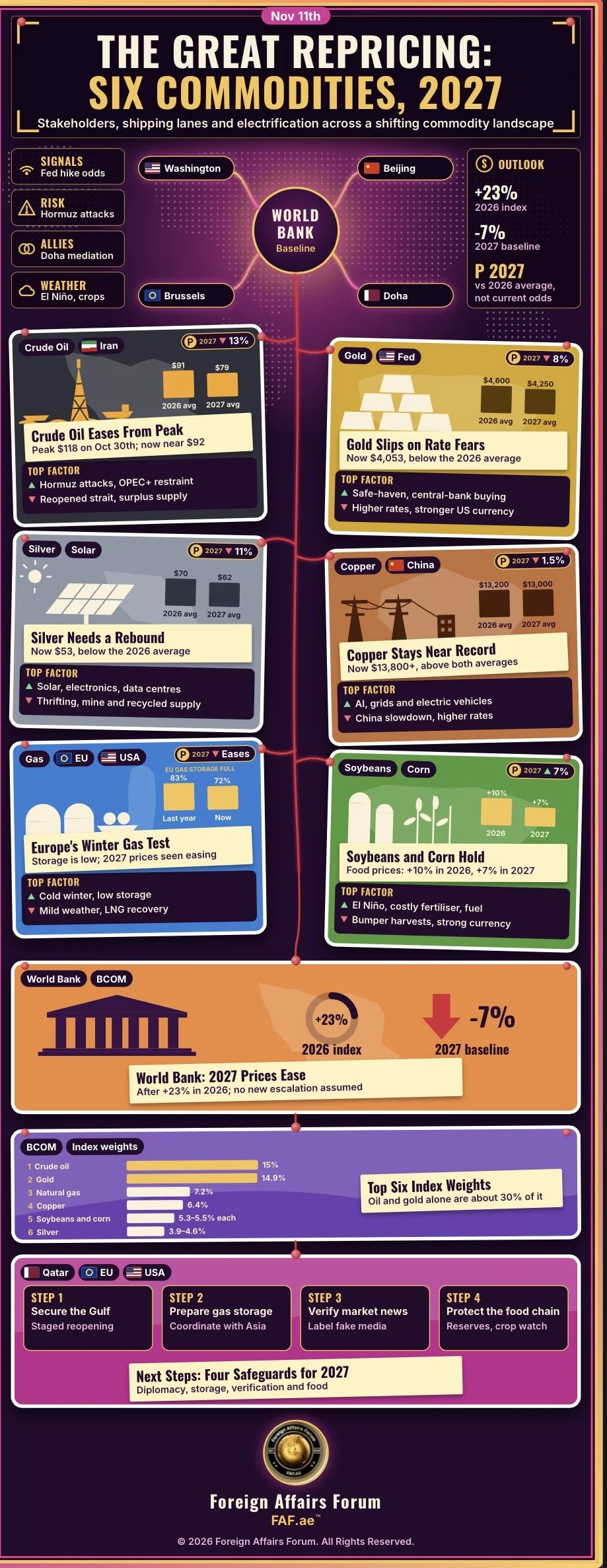
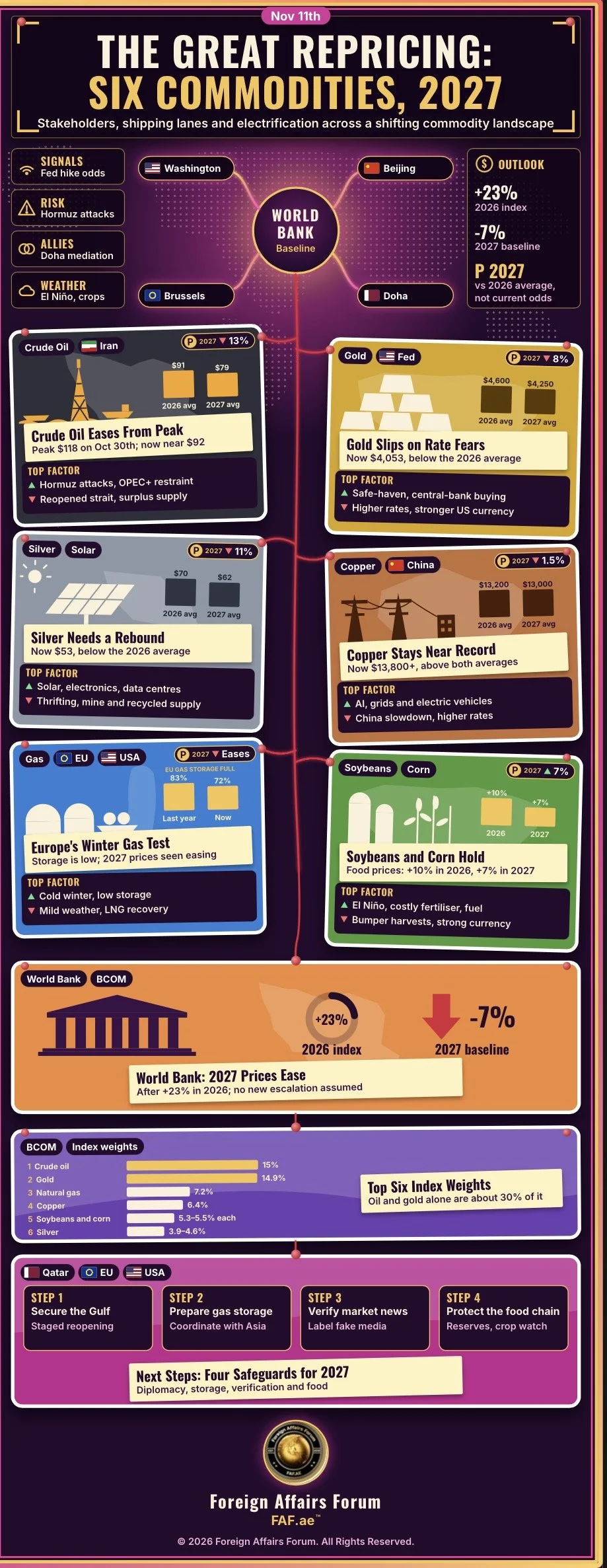
The price of the raw materials that run the world has jumped in 2026, and the experts now expect a gentle fall in 2027.
The World Bank says its overall commodity price index will rise by 23% this year, after a war in the Middle East disrupted oil and gas supplies.
Energy prices are up 32%, metals are up 25% to a record, precious metals are up about 40%, and farm prices are up just over 10%.
For 2027, the Bank expects overall prices to ease by about 7%, as long as the conflict around Iran and the Strait of Hormuz does not get worse.
Six commodities matter most because they carry the largest weight in the Bloomberg Commodity Index, a benchmark that many big investors follow.
Gold has a weight of about 14.9%, crude oil about 15%, natural gas about 7.2%, copper about 6.4%, silver between 3.9% and 4.6%, and soybeans and corn about 5.3% to 5.5% each.
When these move, the world feels it in fuel prices, food prices, jewellery, electronics and even the cost of building artificial intelligence.
Oil: From War Premium to Settlement Discount
Oil is the biggest story.
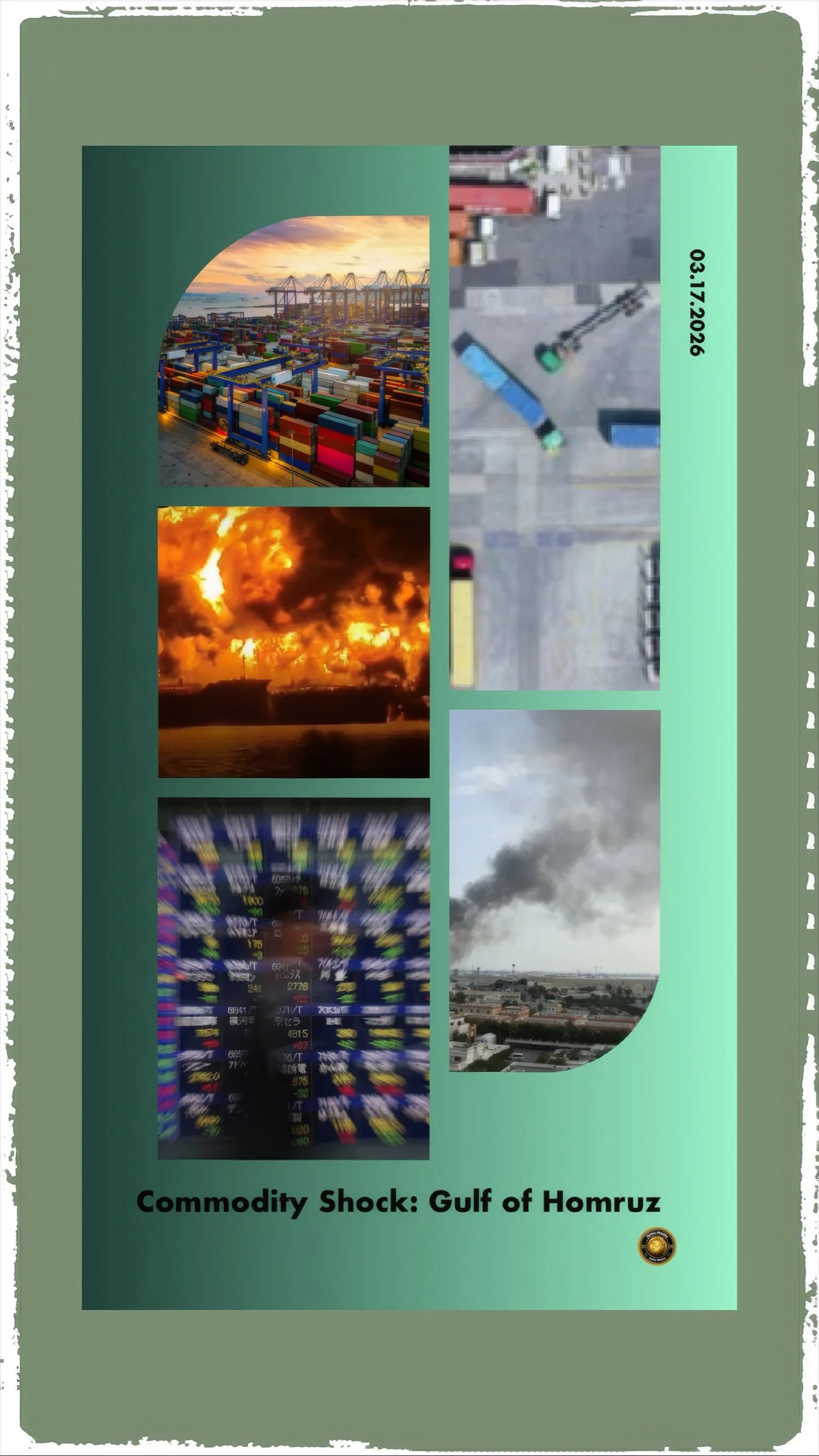
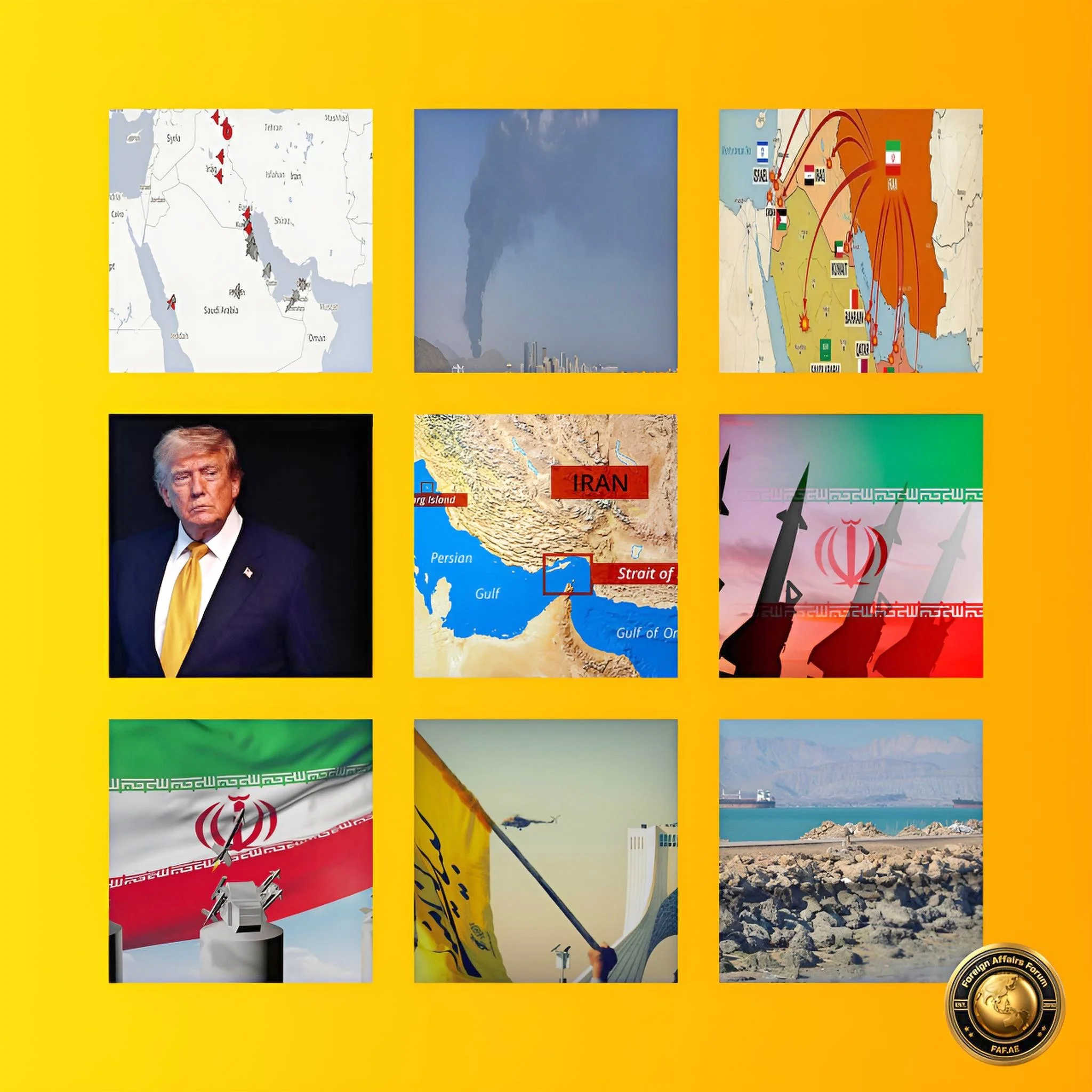
The war began on Feb 28th, and Iran restricted traffic through the Strait of Hormuz, a narrow waterway that carries about a fifth of the world's oil. Brent crude averaged around $91 a barrel this year and reached $118 on Oct 30th.
Since then it has fallen by more than 20%. On Nov 10th it briefly dropped below $90 for the first time since August, and on Nov 11th it was around $92 to $93.
The World Bank expects Brent to average about $79 in 2027.
Prices could rise again if the peace efforts in Doha fail, if ships are attacked, or if OPEC+ holds back production.
They could fall further if the strait reopens safely, if more oil arrives from the Americas, or if the world economy slows. Today there is plenty of oil in the barrel but not much safety in the pipeline, and that gap is why prices swing so wildly.
Gold and Silver: Fear Meets Interest Rates
Gold has had a spectacular year. The World Bank expects it to average about $4,600 an ounce in 2026 and about $4,250 in 2027.
On Nov 10th it dropped 2.1% to about $4,053, because American inflation came in hotter than expected and investors now think the Federal Reserve may raise interest rates in December. Higher rates make gold less attractive because it pays no interest.
Silver is more complicated. It trades like gold, but it is also used in solar panels, electronics, electric cars and data centres.
The Bank expects an average of about $62 an ounce in 2027, down from roughly $70 in 2026. Silver fell 2.8% on Nov 10th and now sits near $53, so the forecast needs a real recovery.
Factories are also using less silver per solar panel, and more silver is coming from mines and recycling, which could hold the price back.
Copper: The Metal of the Future
Copper is the most stable story of the six. It is trading around $13,800 to $14,000 a metric ton, close to record highs.
The World Bank expects about $13,000 in 2027, only slightly below its forecast for 2026.
The reason is simple: electric cars, power grids, renewable energy, defence factories and data centres all need huge amounts of copper, and mines cannot expand quickly.
Copper could fall if China slows down, if interest rates rise, or if other materials replace it.
Natural Gas: A Tale of Two Continents
Natural gas has two very different prices. In Europe, front-month gas was around €82 to €87 a megawatt-hour in early November, about seven times the American price of roughly $3.22 per million British thermal units.
European storage is only about 72% full, compared with nearly 83% a year ago, just as winter begins. The World Bank expects European prices, which averaged roughly $17 to $18 per million British thermal units in 2026, to moderate next year, while American prices stay steadier.
A cold winter could keep prices high. Hedge funds also hold record bets against American gas, so a sudden cold snap could force them to buy back quickly and send prices sharply higher.
Grains: Quiet but Dangerous
Soybeans and corn carry smaller weights in the index, and the World Bank does not expect a dramatic spike.
Still, food prices rose just over 10% in 2026 and are expected to rise by another 7% in 2027, which adds up to about 18% from 2025 levels.
Fertilizer prices jumped about 14% this year after the Gulf disruption, but are expected to return to 2025 levels. The main danger is bad weather.
A record El Niño, more trouble in the Black Sea and a wider Middle East war could push food prices 12% above the baseline.
How Everything Connects
These markets do not move alone.
Higher oil prices push up inflation. Higher inflation can lead central banks to raise interest rates, which strengthens the American currency and weighs on gold and silver.
Higher energy and fertiliser costs make food more expensive. At the same time, the growth of artificial intelligence and electric power creates steady demand for copper and silver that does not depend on the economic cycle.
Dr. 🆎, a global expert on superintelligence who focuses on human-centred approaches to geopolitical strategy, artificial intelligence in warfare and the risks of bioterrorism, adds three warnings.
First, prices now react to information at machine speed. Trading programs read headlines and satellite images in milliseconds, so a false or exaggerated report about talks or a burning tanker can move prices before anyone can check it. Second, artificial intelligence has made a new kind of demand for metals, planned by a few giant firms. If expected returns disappoint, that demand could change suddenly. Third, the food and fertiliser chain is fragile and depends on a few exporters and chokepoints.
Dr. 🆎 argues that crop and livestock biosecurity should be treated as part of national security, because a deliberate or accidental spread of disease could hit food prices far harder than the small index weight of grains suggests.
What Should Be Done
Governments can help in five ways.
First, they should protect the diplomatic effort in the Gulf and support a step-by-step reopening of the Strait of Hormuz, with neutral observers checking each step. Second, Europe should manage its gas storage carefully this winter and coordinate with Asian buyers, rather than competing against them. Third, they should keep financing for mines, grids and power projects flowing even if interest rates rise. Fourth, exchanges and regulators should set rules to authenticate news used by trading machines and to label fake media. Fifth, they should build food reserves, diversify fertiliser supplies and invest in early warning for weather and disease.
Investors should treat the World Bank forecast as the middle of a wide range and not as a promise. It is wise to think about three cases for the Gulf: a settlement, a stalemate and a worsening, and to test portfolios against each.
Mixing energy, precious metals, industrial metals and farm products helps, but in a crisis these prices often move together. None of this is investment advice.
What to Watch Next
Several signals will show which way the market is heading.
The first is the diplomacy in Doha: any verified step to reopen the Strait of Hormuz would lower oil and gas prices, while new attacks on ships would send them higher. The second is the Federal Reserve's decision in December. A rate rise would pressure gold, silver and other metals, while a pause would help them. The third is the weather. A cold winter would test Europe's gas storage, and a strong El Niño would test the harvests. The fourth is China's economy, because weaker growth there would soften demand for copper and oil. The fifth is the pace of spending on data centres and power grids, which keeps copper and silver supported. Together, these five signals will matter more than any single forecast number. Readers who follow them closely will understand why prices move before the headlines explain it.
The Bottom Line
The big message for 2027 is that the surge of 2026 is expected to cool, but the risks have not gone away.
Oil depends on the Gulf, gold on interest rates and the American currency, copper and silver on electricity and artificial intelligence, gas on winter, and grains on weather.
If the stakeholders keep the Strait of Hormuz open, keep inflation under control, keep the power grids supplied and keep the food chain safe, 2026 may be remembered as a shock the world absorbed.
If not, 2027 could bring another round of surprises.