Why Politicians Still Love a Speech from 1936: What Roosevelt's Most Famous Campaign Address Teaches Us Today
Introduction
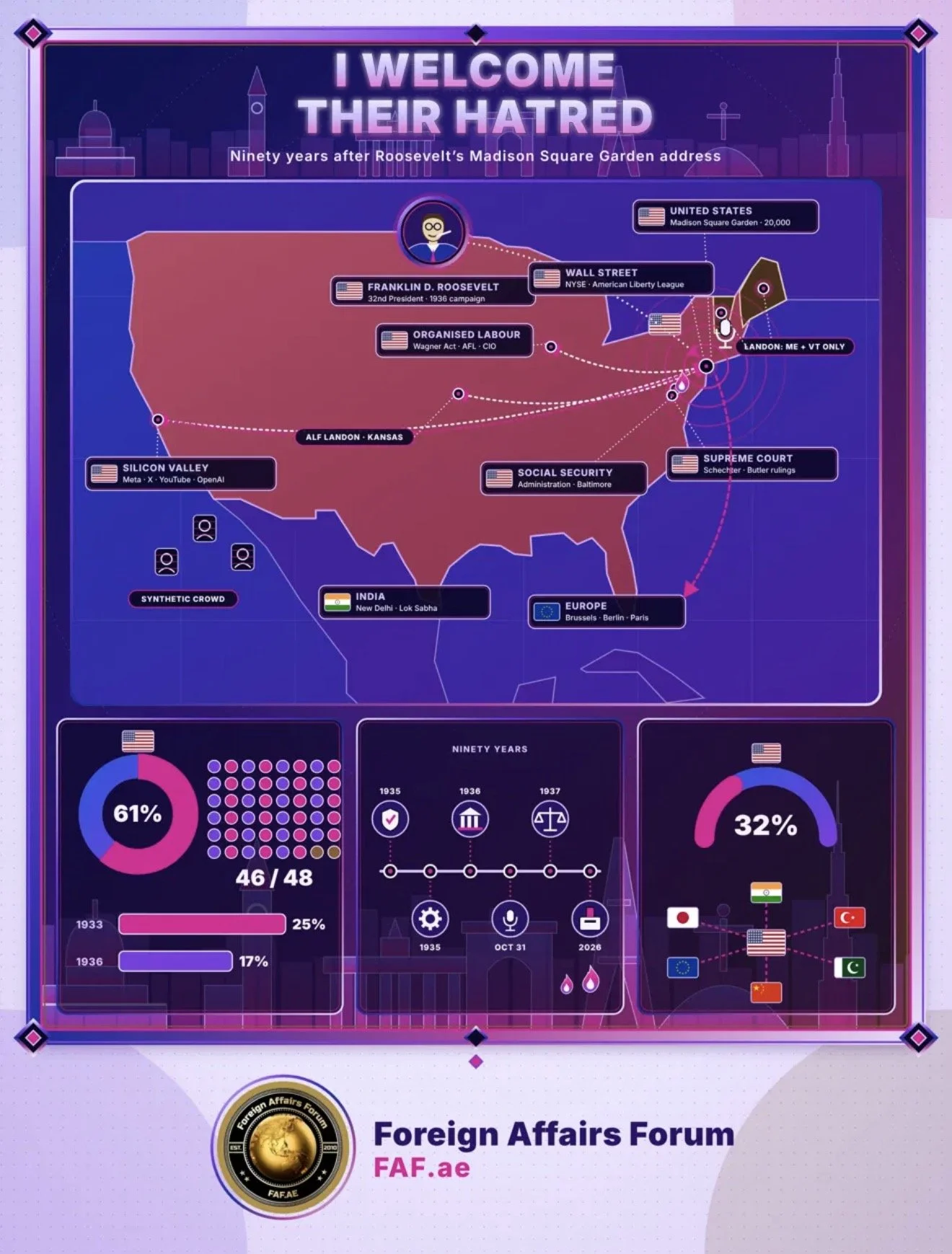
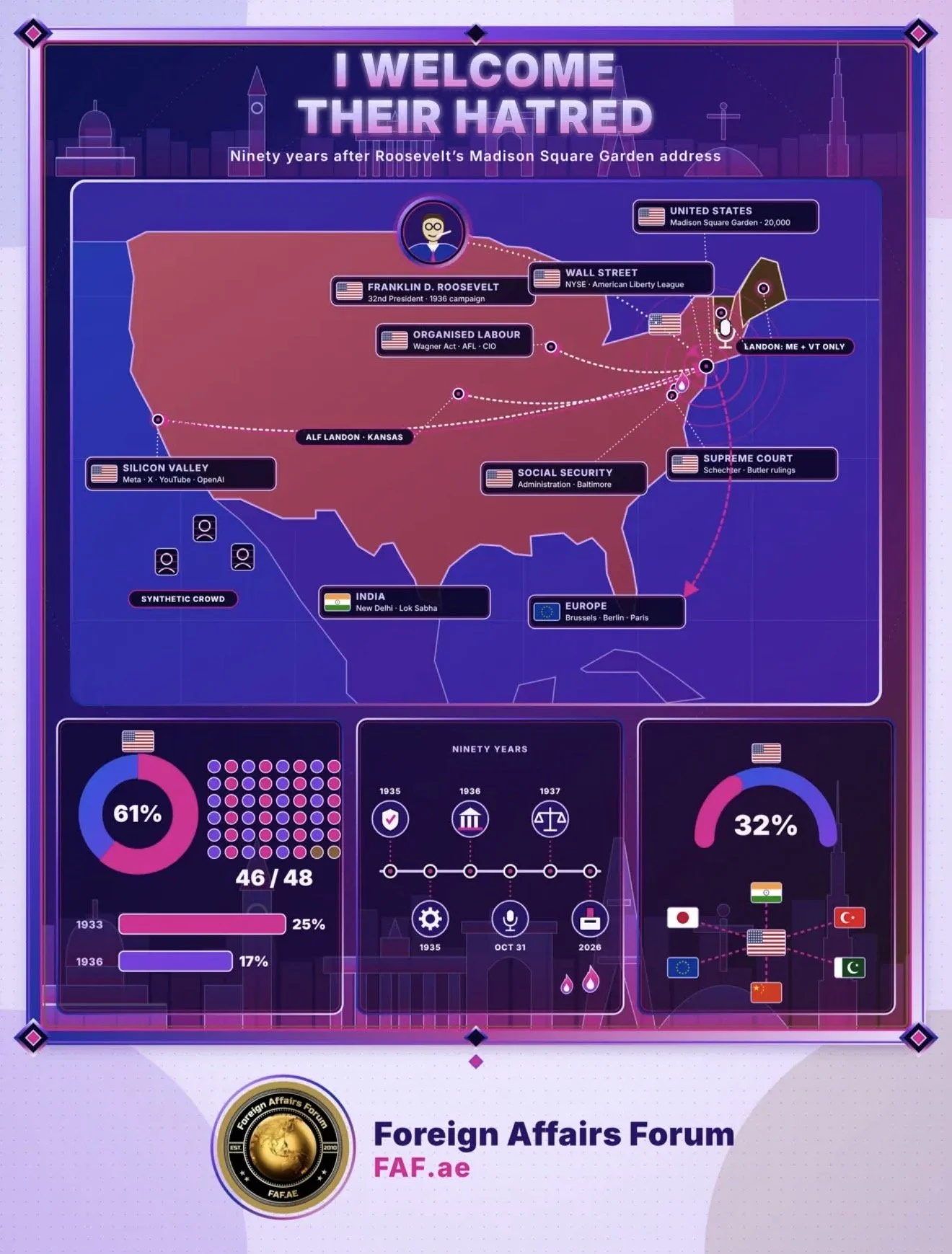
On October 31, 1936, President Franklin Roosevelt spoke to about 20,000 people at Madison Square Garden in New York.
The election was only three days away. He used the moment to make a bold claim. He said the powerful interests in the country were united against him, and that he welcomed their hatred.
The crowd cheered, and the line became one of the most famous in American political history.
Now, ninety years later, the speech is back in the news. The United States holds its midterm elections on November 3, 2026.
Many voters are worried about prices, jobs and whether the government works for ordinary people.
In this mood, politicians from different parties are borrowing Roosevelt's words and ideas.
This FAF article explains why the speech matters, what it can teach us, and why it can also be risky.
What Was Happening in 1936
To understand the speech, we need to remember what life was like in the 1930s.
The country had just lived through the Great Depression, the worst economic crisis in its history.
Around 25% of workers had been without jobs at the worst point, in 1933. By 1936 the numbers were better, but nearly 17% were still unemployed. Many families had lost their homes, their savings and their hope.
Roosevelt had spent his first term trying to fix the problem. He created programmes to protect bank deposits, regulate the stock market, build roads and bridges, and support farmers.
In 1935 he signed the Social Security Act, which gave older Americans a basic income, and the Wagner Act, which protected workers who wanted to form unions.
These reforms helped millions of people, but they also made enemies.
Many business leaders and wealthy families believed the government was becoming too powerful. Most large newspapers opposed him, and the Supreme Court struck down several of his early laws.
The Speech Itself
At Madison Square Garden, Roosevelt did not hide from this opposition. He described the groups he saw as his enemies: business and financial monopolies, speculators, and others who had put profit above the public good. He warned that government controlled by organised money was just as dangerous as government controlled by a mob.
Then he made his famous statement. He said his opponents were unanimous in their hate for him, and that he welcomed their hatred. He added that he hoped it would be said of his second term that these forces had met their master.
The audience loved it. Three days later Roosevelt won one of the biggest election victories in American history. He carried 46 of the 48 states and received about 61% of the votes.
People who had suffered during the Depression believed he was on their side.
Why Politicians Love the Speech Today
Politicians admire the speech for several reasons.
First, it gives them a simple story.
There are ordinary people on one side and powerful interests on the other, and the leader stands with the people.
Second, it turns criticism into a sign of strength. If your opponents hate you, it must mean you are doing something right.
Third, it fires up supporters and helps them feel part of a great cause.
Leaders on both the left and the right now use this approach.
Some target big corporations, billionaires and banks. Others target judges, journalists, government officials and what they call the elite.
The pattern is the same, even though the targets are different. In many countries, from Europe to Latin America to Asia, leaders have found that this kind of message can win votes, especially when people feel that life is becoming harder and unfair.
What Is Different Now
Although the words are similar, the world in 2026 is very different from 1936.
There are several important changes.
First, Roosevelt backed up his words with real policies. People could see new laws and programmes that changed their lives.
Today, many speeches sound angry but offer fewer clear plans. Voters may feel excited for a while and then disappointed if nothing improves.
Second, trust in institutions is much lower.
Many Americans now doubt Congress, the news media and even the courts. When leaders attack these institutions, trust falls further. This can make it harder for the country to settle arguments peacefully, because people no longer agree on whom to believe.
Third, political anger is now more personal and more intense.
Surveys show that many people see supporters of the other party not just as wrong but as a danger to the country. Threats against election workers, judges and politicians have increased. Strong language can excite a crowd, but it can also push a small number of people toward violence.
Fourth, technology has changed everything.
In 1936, a speech reached the crowd and the radio audience. Today, social media can spread a message to millions in seconds, and the most emotional messages often spread fastest.
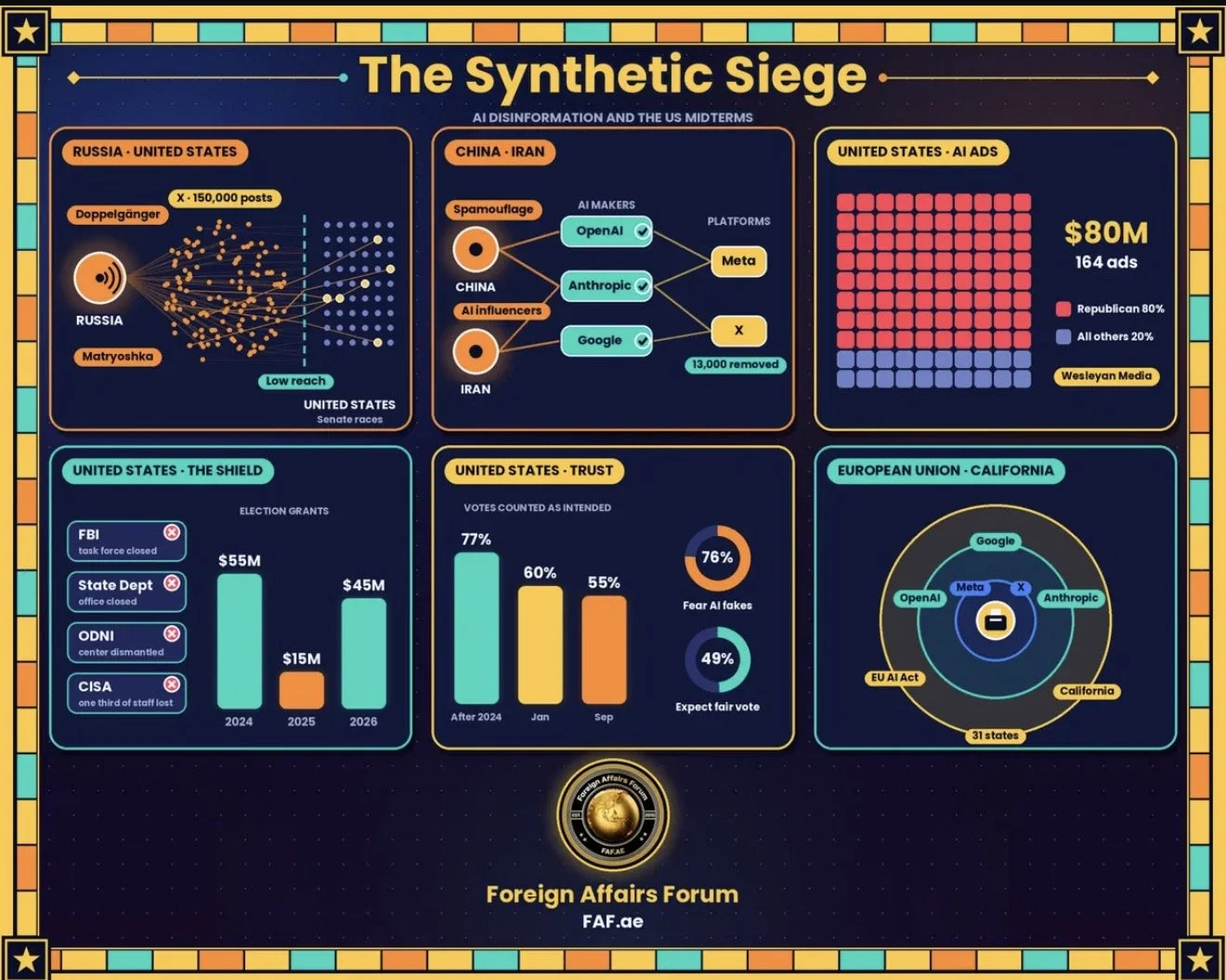
Artificial intelligence can also create fake videos, fake voices and thousands of fake accounts. This means that a crowd roaring on the internet may not be real.
The Warning from Dr. 🆎
Dr. 🆎, an expert on human-centred artificial intelligence and the risks of AI in conflict and security, says this new technology creates a serious danger for democracies. He explains that elections depend on a shared understanding of what is real. If voters cannot tell whether a video is genuine or whether support for a candidate is authentic, they may lose faith in the whole system. He also warns that fake material released just before an election can spread widely before anyone corrects it.
Dr. 🆎 suggests several remedies. Authentic videos and images should carry digital marks that prove where they came from. Trusted institutions should be ready to check suspicious content quickly. Schools and community groups should teach people how to spot manipulation. And governments should make sure that humans, not hidden computer systems, remain responsible for the tools that shape public debate.
Lessons from History
Roosevelt's story also contains a warning.
After his great victory in 1936, he tried to add more judges to the Supreme Court, hoping to stop it from blocking his laws.
Many people, including members of his own party, thought this went too far.
The plan failed and damaged his reputation. The lesson is that winning an election does not give a leader the right to override the checks and balances that protect everyone.
A leader can welcome the anger of powerful opponents but must still respect the rules.
What Should Happen Next
There are several steps that could help the United States and other democracies handle this moment well.
Leaders who use bold language should explain exactly what they will do about housing, health care, jobs and prices.
Citizens should ask for details, not only slogans. Courts, the press and election officials should work to earn trust through openness and fairness. Technology companies should work with governments and researchers to label fake content and to slow the spread of deliberate lies.
Ordinary people can help by checking claims before sharing them and by talking with who hold different views.
Leaders should also remember the difference between opposing a policy and hating a person. Roosevelt said his opponents defended privilege. He did not suggest that they were not Americans. When modern leaders point at groups based on religion, background or simple disagreement, they move away from the best part of his example.
Finally, democracies need to prepare for the next big challenge: artificial intelligence and automation.
Millions of jobs may change in the coming years. Governments will need new rules and new protections, much as Roosevelt created Social Security and labour laws for a new age. How leaders handle this change will shape the next wave of political anger.
Conclusion
Roosevelt's speech lives on because it gives politicians a powerful story and gives voters a reason to believe. But the speech worked in 1936 because it was joined to real reform, because the country still had strong institutions, and because the public could largely agree on the facts. In 2026, those foundations are shakier.
The lesson for today is to enjoy the drama less and to value the substance more.
Anger can be a force for positive change, but only when it leads to better laws, fairer opportunity and respect for the rules that protect us all.
When the cheering stops, the work of governing is what remains.