Russia the Disruptor: A Plain-English Guide
Foreign Affairs Forum | Dr. Antonio Bhardwaj (Dr. 🆎)
Why This Story Matters
There is a famous scene in a television series about American soldiers in World War II.
A German general surrenders, and the Americans let him speak to his troops before they put down their weapons. Even the winners are moved.
The scene may not be completely true, but it captures a belief that many leaders held in 1945.
When you win, you should be generous. Winston Churchill put it simply: in victory, magnanimity.
When the Cold War ended in the early 1990s, that idea was tested again.
The Soviet Union fell apart, and Russia was left weak, poor and unsure of its place in the world. The big question was what the winners should offer the loser.
This FAF article explains why the answer was not good enough, how Russia became a disruptor, and what this means for the world today. Dr. Antonio Bhardwaj (Dr. 🆎), an expert on artificial intelligence, geopolitics, modern warfare and the risks of biological terrorism, helps guide the story.
How It Began
In 1989, the Berlin Wall came down.
In 1990, Germany became one country again.
Soviet leader Mikhail Gorbachev agreed that it could join NATO, the Western military alliance. Some Western leaders told him that NATO would not move closer to Russia.
Later, many Russians said this was a promise that was broken. Western leaders said no official promise was ever written down. Both sides still argue about it today.
In 1991, the Soviet Union ended. Russia's economy collapsed during the 1990s.
Prices shot up, many people lost their savings, and a small group of rich businessmen took over big industries. Many Russians felt that the West had watched their pain and offered lectures instead of help. That feeling of humiliation did not go away.
Then NATO began to grow.
In 1999, it took in Poland, Hungary and the Czech Republic. In 2004, it took in many more countries, including the three Baltic nations that were once part of the Soviet Union.
For these countries, joining NATO was about safety. For Russia, it felt like a rival moving up to its front door.
The Turn Toward Confrontation
Vladimir Putin became Russia's leader in 2000.
At first he talked about working with the West. But relations got worse. The United States left an important missile treaty in 2002.
The Iraq war began in 2003.
Protest movements in Georgia and Ukraine brought in new leaders who wanted closer ties with the West, and Moscow believed foreign governments had helped cause this.
In 2007, Putin gave an angry speech in Munich, saying that one country should not run the world.
In 2008, NATO said Georgia and Ukraine would one day be able to join. Russia fought a short war with Georgia that same year.
In 2014, after Ukrainians forced out a leader who was friendly to Moscow, Russia took Crimea and backed fighters in eastern Ukraine.
The West put some sanctions on Russia, but not enough to change its path.
The Great War in Ukraine
On February 24, 2022, Russia invaded Ukraine on a huge scale.
Russian leaders probably expected a quick win. It did not happen. Ukrainians fought back, and Western countries sent weapons and money. The war has now lasted into its fifth year.
The human cost is enormous. Hundreds of thousands of soldiers have been killed or wounded. Millions of Ukrainians have had to leave their homes. Cities and power plants have been badly damaged.
Today Russia controls about 20% of Ukraine, but it has not taken everything it says it wants.
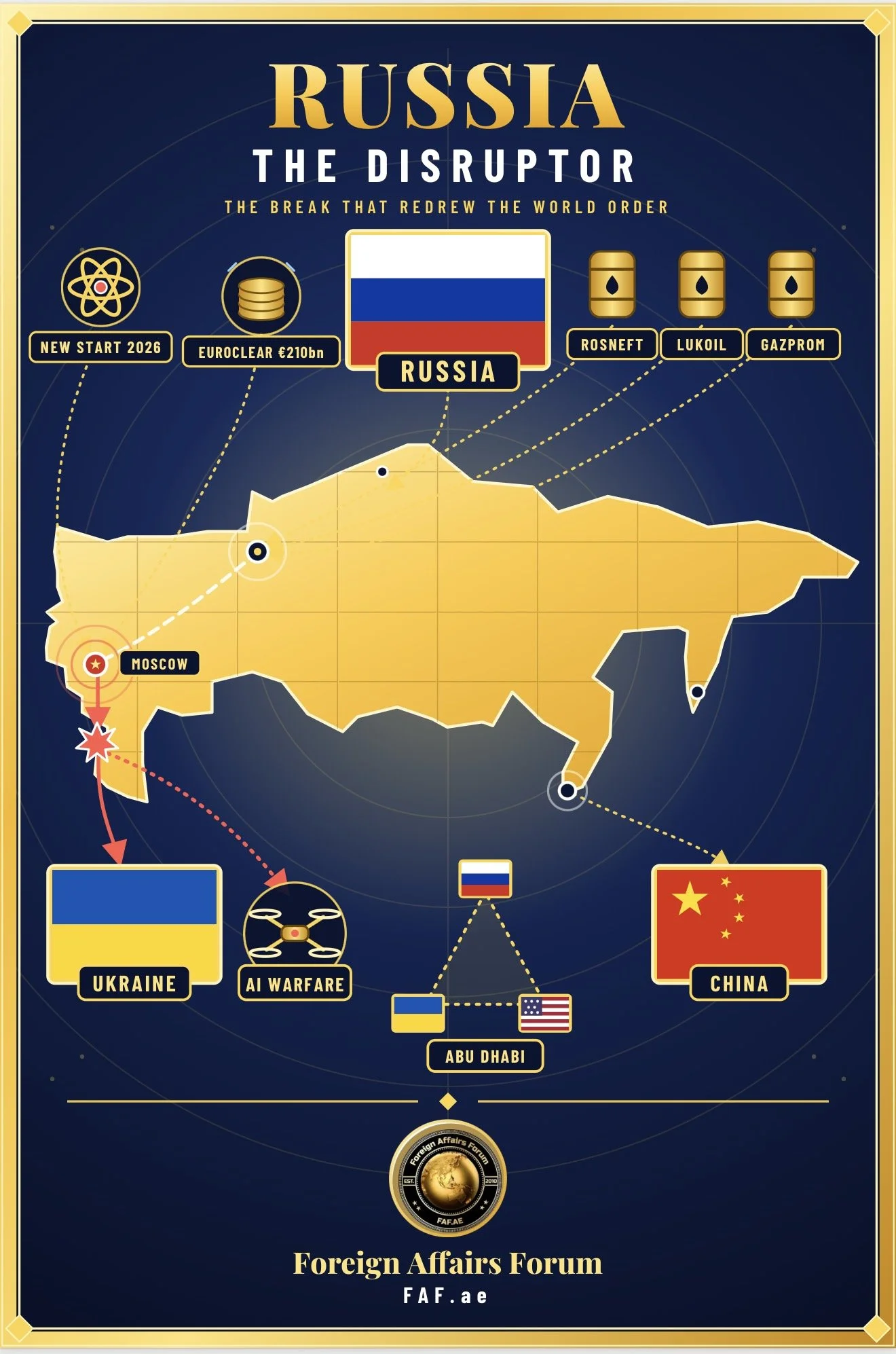
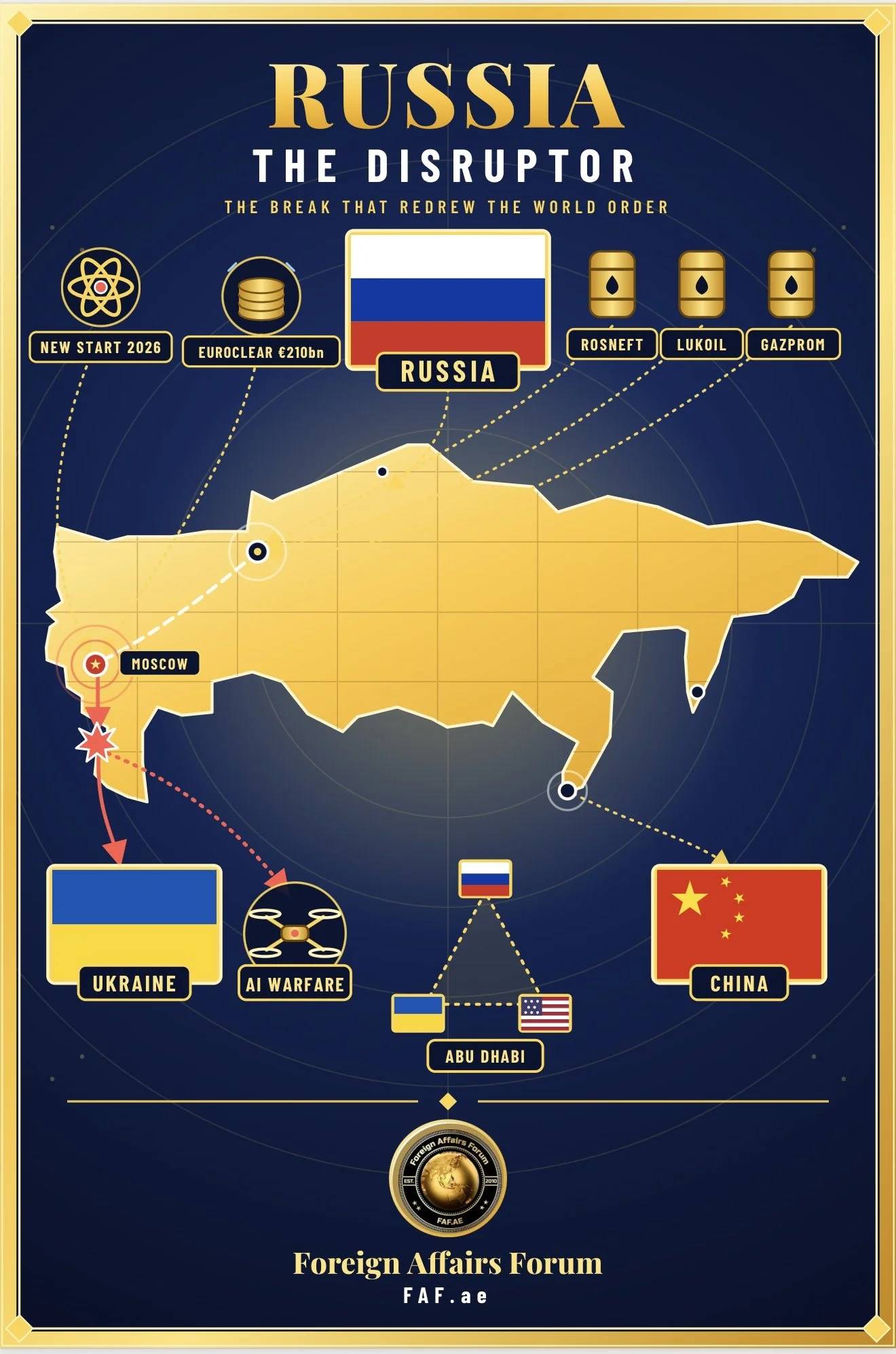
The West responded with strong sanctions. About €210 billion of Russian money held abroad was frozen. Many Russian banks were cut off from the global payment system. Europe cut back sharply on buying Russian gas. Finland and Sweden, which had stayed out of military alliances for a long time, joined NATO. This was the opposite of what Moscow wanted.
Inside Russia, power became more tightly held.
A mutiny by the Wagner group in 2023 showed cracks, but it ended quickly. Opposition leader Alexei Navalny died in prison in 2024. Russia also grew closer to China, Iran and North Korea, which gave it trade, drones, shells and political support.
What Is Happening Now
As of November 2026, there is a new push for peace talks.
Russia, Ukraine and the United States have agreed to meet in the United Arab Emirates in the first half of November.
A short local ceasefire has also been agreed around the town of Oleshky, so that food and aid can get in and people can leave. The wife of the American president, Melania Trump, helped arrange it, mainly to protect children caught in the war.
Still, the two sides remain far apart.
Russia wants Ukraine to give up all of the Donbas region in the east, including land Russia has not captured.
Ukraine refuses to hand over land it controls. Ukraine wants a ceasefire along current lines first, and then talks. It also wants strong security guarantees so that Russia cannot attack again later. Even while leaders talk about peace, missiles and drones keep flying.
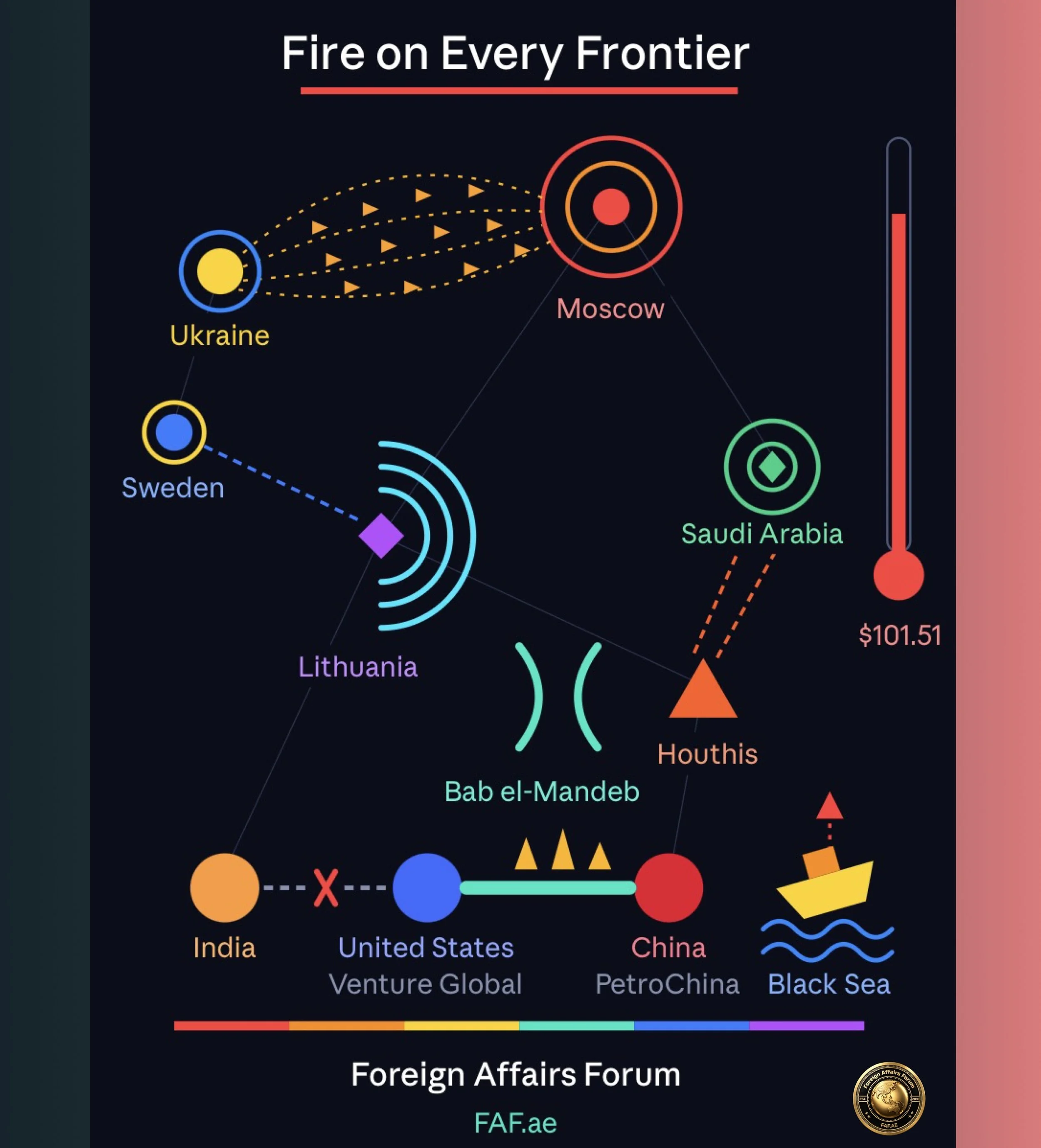
In late October, a Russian attack left more than 500,000 Ukrainians without electricity.
Russia's money problems are growing. Oil and gas bring in about a fifth of the government's income.
Because of lower prices and tougher sanctions, especially those placed on the big oil firms Rosneft and Lukoil, this income is expected to be about 14% lower this year than last year. Russia is not about to collapse, but the war is costing it more each year.
Another big worry is nuclear weapons. In February 2026, the last treaty limiting the nuclear weapons of the United States and Russia ran out.
For the first time in more than 50 years, there are no formal limits. Both countries say they may keep to the old limits for now, but nobody can check, and trust is low.
Why Did It Go So Wrong?
There was no single cause, but several things pushed in the same direction.
First, the Cold War ended without a clear peace plan. After World War II, the winners rebuilt their old enemies and brought them into new institutions. After 1991, no such plan was made for Russia. Western institutions simply grew, and Russia was left outside.
Second, Russia's leaders used the sense of humiliation to build their own power. Standing up to the West became a way to win support at home. Over time, giving ground became politically dangerous for them.
Third, Russia sees Ukraine as vital to its own security and identity.
Ukraine sees its freedom to choose its own path as a matter of survival. When both sides believe they are fighting for their existence, compromise becomes very hard.
Fourth, the West often reacted weakly to early warning signs.
After Georgia in 2008 and Crimea in 2014, the response was mild. Moscow may have concluded that force would pay off. In 2022 that guess proved badly wrong.
Fifth, the war itself has changed the world. Russia has become more dependent on China.
Europe has rearmed. Alliances have tightened. Disruption often produces the very reaction the disruptor wanted to avoid.
The Technology Danger
Dr. 🆎 warns about something that many people overlook. Artificial intelligence is changing warfare. Drones and software that can pick targets are being tested every day in Ukraine. When machines make decisions faster than humans can think, mistakes can grow into disasters in minutes. With nuclear limits gone, that is a frightening mix.
Dr. 🆎 also points out that the same technology makes it easier for small groups to misuse biology and computers to cause harm. In a world where major powers do not trust each other, it is harder to cooperate against such threats. His message is that countries need new rules and open lines of communication for the age of artificial intelligence, just as they built rules for nuclear weapons in the past.
What Should Be Done?
The first step is to keep up pressure on Russia while making clear what it could gain from peace.
Sanctions on oil money and on the ships that carry hidden Russian oil are working to some degree. But Russia needs to know that real changes in behaviour could bring real relief.
The second step is to protect Ukraine in the long run.
A peace deal that only gives Russia time to rebuild its army would not last. Ukraine needs strong guarantees and steady funding. Europe will need to carry much of that weight.
The third step is to rebuild nuclear arms control.
The expiry of the last treaty should be treated as a warning bell. The United States and Russia should talk about new limits and ways to check them, and in time China should be included. New rules should also cover artificial intelligence and make sure humans always stay in control of nuclear decisions.
The fourth step is for Europe to become stronger in its own defence.
It can no longer rely entirely on others. Building more weapons, working together on purchases and planning together will make Europe safer.
The fifth step is to keep talking. Even during the Cold War, the two sides had hotlines and agreements on safety. Today, such links are thin.
Working together on dangers that threaten everyone, such as nuclear accidents, deadly diseases and out-of-control technology, could slowly rebuild some trust.
The Lesson of Generosity
Being generous does not mean giving in to aggression. That would only invite more of it. It means offering a clear path for a future Russia that gives up expansion and chooses cooperation. The West failed to design such a path in the 1990s. It should try to do better now, before the chance is lost.
Conclusion
Russia's break with the West came from many mistakes on all sides, and from deliberate choices by Moscow.
The invasion of Ukraine did not appear from nowhere. It grew out of years of mistrust, missed chances and rising anger.
Yet the story is not finished. Russia's actions have made NATO stronger, hurt its own economy and pushed Europe to take defence more seriously. The new talks planned for November may bring progress or disappointment, but they show that diplomacy is still alive.
Dr. 🆎 reminds us that the greatest danger is a world where rules no longer matter, nuclear limits are gone and technology moves faster than wisdom. To avoid that future, leaders must be firm, patient and creative.
Churchill's old advice still holds some truth. Be strong when you must, be generous when you can, and learn from past mistakes.
Disruption will continue as long as it pays. The task now is to make it stop paying, while making peace possible.