Gulf Energy at Breaking Point: What Another Iran War Would Mean for Everyone
Introduction
The Big Picture
The war involving Iran has now lasted eight months. Many people expected the world's oil and gas supply from the Persian Gulf to collapse. It did not. In the week ending October 18, about twenty-four million barrels of oil a day moved out of the Gulf, using both the Strait of Hormuz and other routes. That is slightly more than the twenty-three point three million barrels a day before the war began.
Some officials and analysts see these numbers and conclude that the region can handle more fighting. This FAF article explains why that conclusion is wrong. Looking at how much oil leaves the Gulf is like checking whether a car is still moving without looking at the engine. The car may be moving, but the engine may be close to failing.
Dr. Antonio Bhardwaj (Dr. 🆎), an expert in human-centered super intelligence, AI warfare and bioterrorism risks, puts it simply. "A system can look healthy right up to the moment it breaks," Dr. 🆎 says. "The right question is not how much is flowing today. It is how much damage has been done and how much strength is left."
What Has Been Damaged
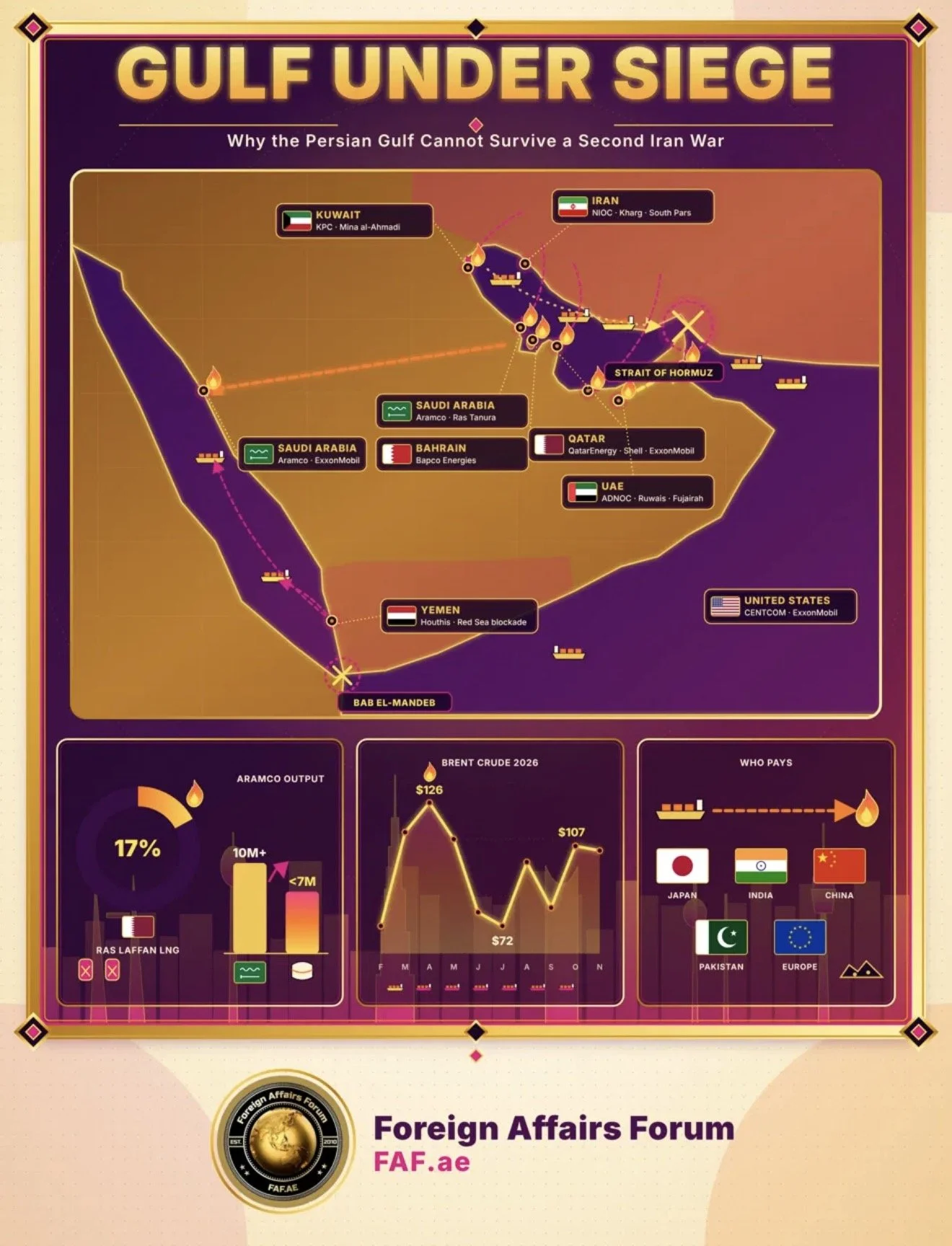
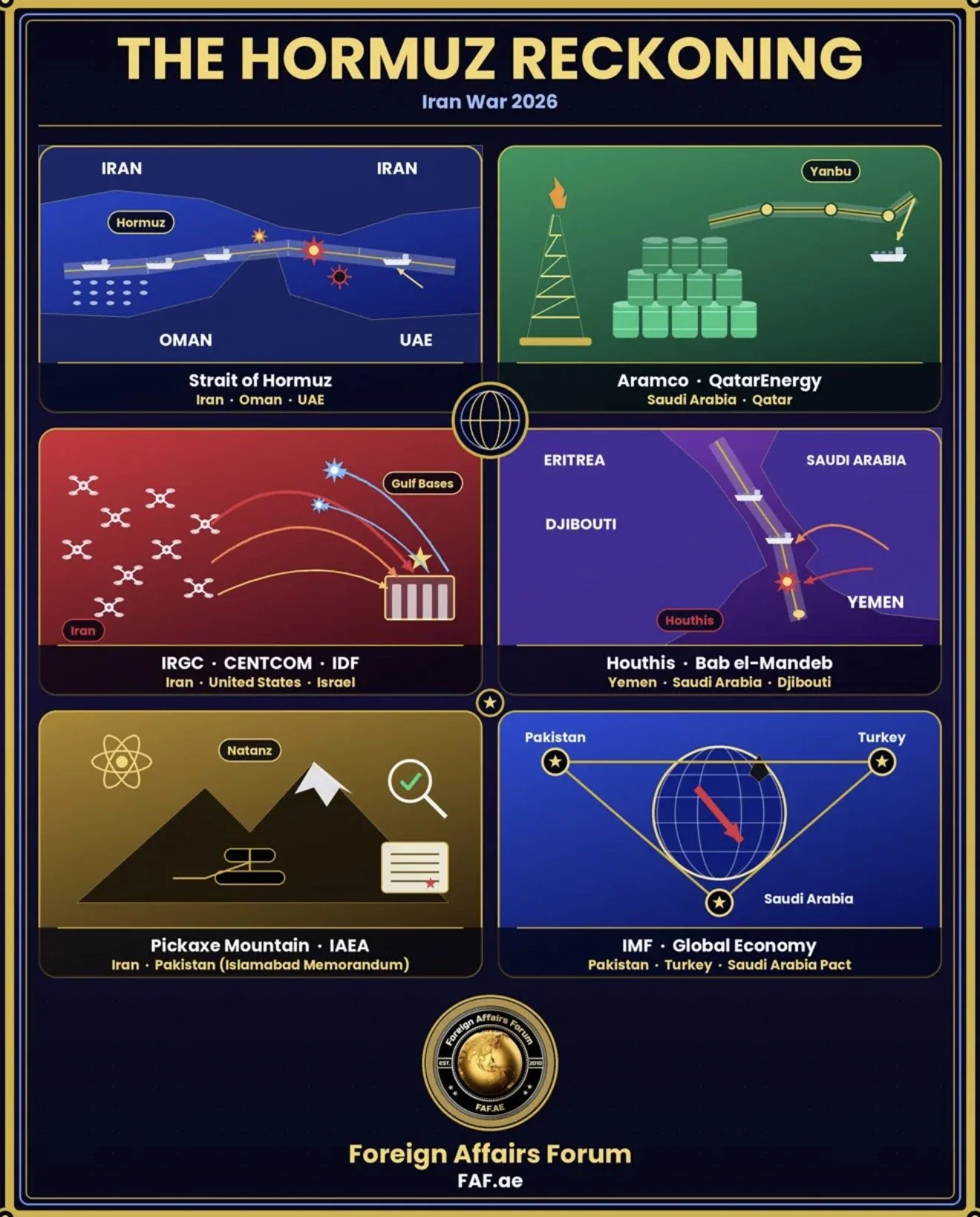
Since the war began on February 28, Iran and groups allied with it have attacked energy sites across the Gulf. Investigators counted at least one hundred and thirty-five attacks on at least eighty-four sites in seven countries. The targets include oil refineries, gas plants, ports, pipelines and storage tanks.
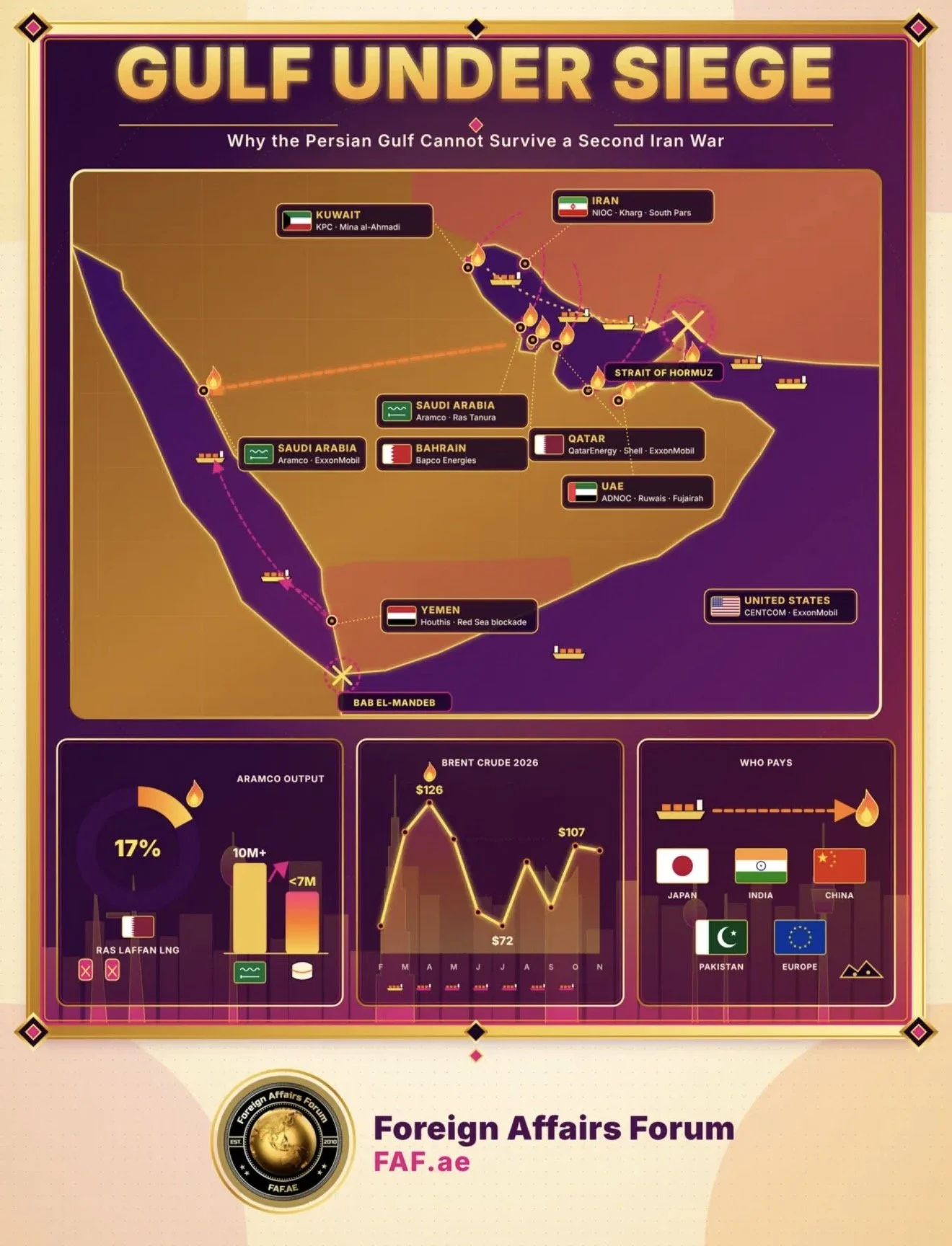
The most serious damage happened in Qatar, at a huge gas facility called Ras Laffan. It is the world's largest site for turning natural gas into liquid so it can be shipped by sea. Missiles destroyed key cooling equipment in two of its production lines.
That removed about 17% of Qatar's export capacity. Repairs are expected to take between three and five years and to cost about $3 billion. The equipment is so specialized that only a few companies in the world can build it, and they cannot make it quickly.
In Saudi Arabia, five of the nine largest refineries were damaged. For most of the first six months of the war, the country produced less than seven million barrels of oil a day, compared with more than ten million before. Other damaged sites include refineries in Kuwait and Bahrain, and gas and industrial facilities in the United Arab Emirates. At least four major sites will need a year or more to be fully restored.
Why the Oil Is Still Flowing
If so much was damaged, how is oil still reaching the world? The answer is that producers have used every spare tool they had. Saudi Arabia sends large amounts of oil through a pipeline to the Red Sea. The United Arab Emirates uses a pipeline to a port outside the Strait of Hormuz. Countries have taken oil from storage, and importers have released emergency stocks.
These are one-time fixes. Pipelines are working harder than they were designed to. Storage tanks have been emptied. Spare capacity has been used up. This means the system has little room left for another shock.
Dr. 🆎 compares it to a runner who has been sprinting for months. "The runner is still moving," Dr. 🆎 says, "but there is nothing left in reserve if the road gets steeper."
A Second Front in the Red Sea
The Houthis, a group in Yemen that is allied with Iran, have made things worse. In July they attacked two Saudi oil tankers in the Red Sea. Oil prices rose above $100 a barrel for the first time since May. The Houthis then announced a blockade of Saudi exports and attacked targets inside Saudi Arabia.
This matters because Saudi Arabia has been relying on Red Sea ports to get around the Strait of Hormuz. If both routes are threatened at the same time, the world faces what shipping experts call a double blockade. Asian countries would be hit hardest because they buy most of the oil and gas that leaves the Gulf.
Who Pays the Price
The people who suffer most are not in the Gulf. They are the countries that buy its energy. Before the war, more than 80% of the liquefied gas passing through the Strait of Hormuz was heading to Asia. With Qatar's supply reduced, many Asian power companies have switched to coal. Some governments have rationed gas. The International Energy Agency estimates the world will lose about 120 billion cubic meters of liquefied gas between 2026 and 2030.
Europe also feels the pressure. It must fill its gas storage for winter while competing with Asia for the same limited cargoes. Poorer countries are in the worst position. Pakistan, for example, faces a winter of possible gas shortages and a bill of about $1 billion for the liquefied gas it needs. When fuel is scarce and expensive, it leads to blackouts, higher food prices and sometimes political unrest.
Higher energy costs also push up prices for everything else. Shipping and insurance have become more expensive. Central banks find it harder to lower interest rates. Governments in several countries have had to spend large sums to protect their people from price shocks.
How One Broken Part Can Stop a Whole Plant
One lesson from the war is that attackers do not need to destroy everything. They only need to find the one part that cannot easily be replaced. A single piece of cooling equipment can stop a gas production line worth billions of dollars. A damaged control room or power connection can idle an entire refinery.
Dr. 🆎 explains that modern technology makes it easier to find these weak points. Satellite pictures, shipping data and computer analysis can show attackers which part of a facility matters most. "In the past, an attacker had to hit many targets," Dr. 🆎 says. "Today, smart analysis can point to the one target that matters most." The same technology is becoming cheaper and more widely available, including to groups that are not governments. That makes protecting power plants, water plants and energy sites even more important.
Why Another War Would Be Much Worse
Several things have changed since February. Qatar's gas plant is only partly working. Saudi refineries are damaged. Pipelines are running at their limits. Emergency oil stocks have been drawn down. Air defenses have used up large numbers of expensive interceptors. Even when defenses work well, they cannot stop everything. At Ras Laffan on March 18, Qatar stopped four of five missiles, which is a strong result. But the one missile that got through helped do damage that will last for years.
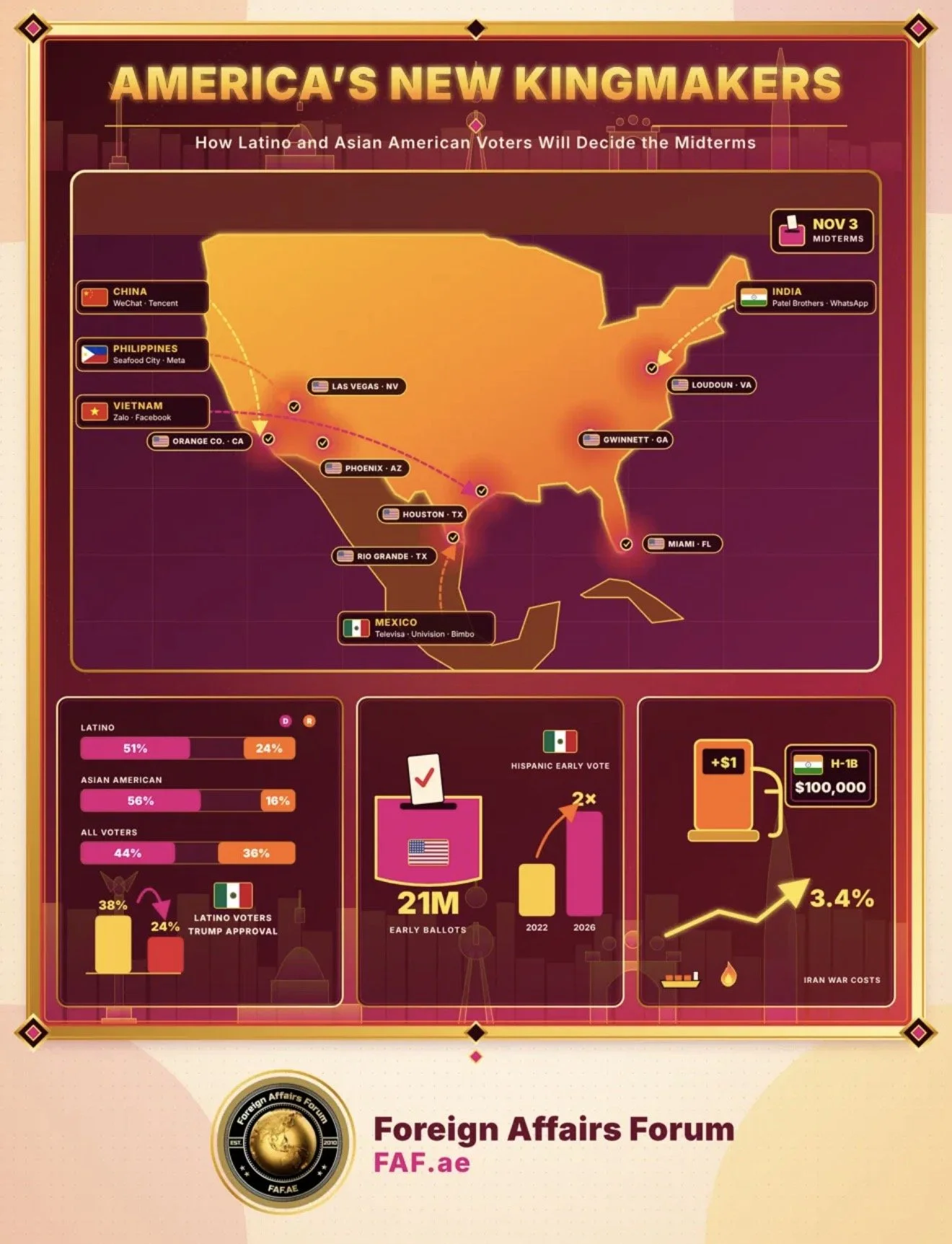
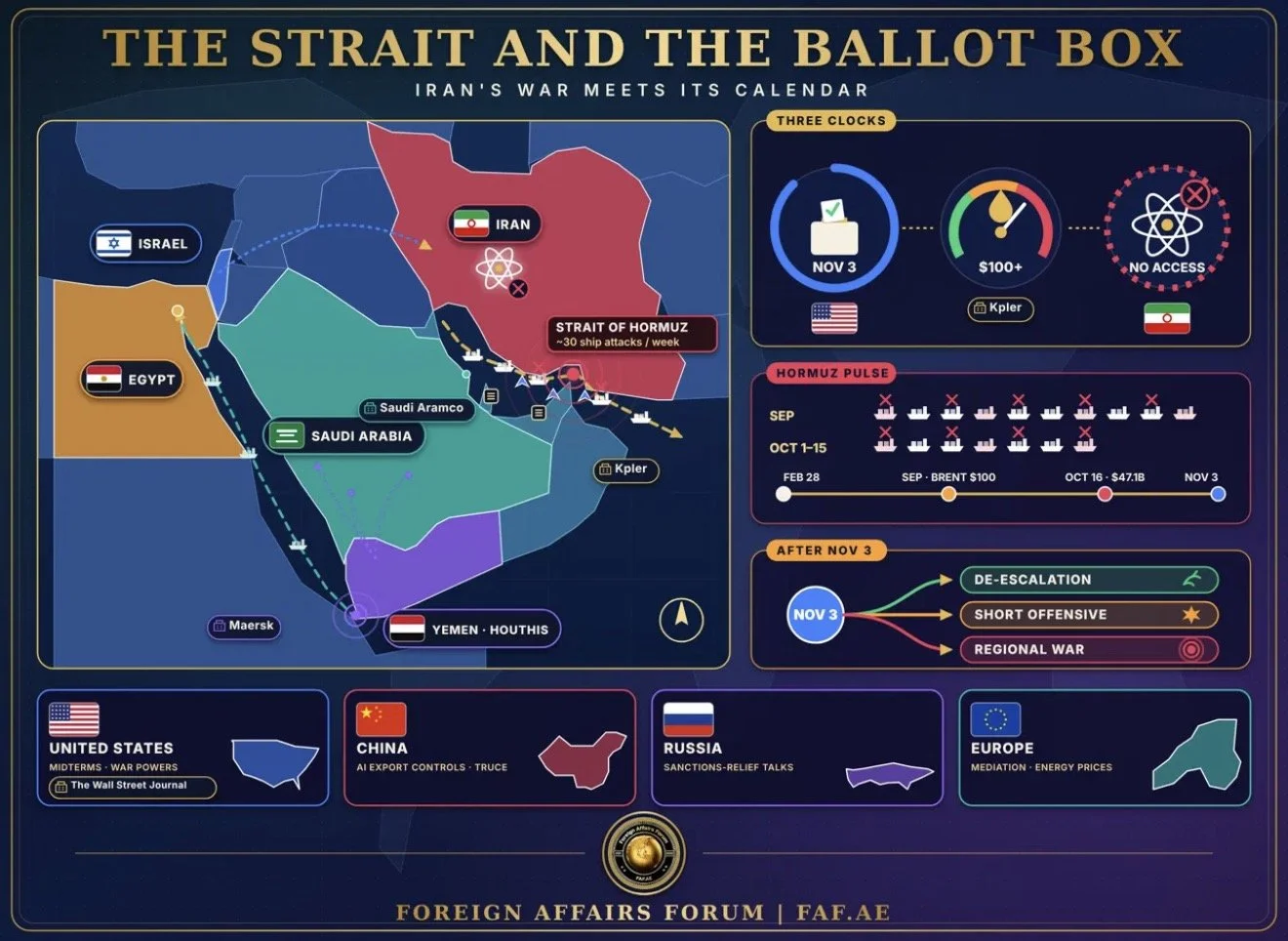
The politics are also tense. The cost of American military operations reached $47.1 billion by mid-October. High fuel prices are a problem for voters ahead of the American midterm elections this week. In such conditions, it is tempting to believe that the worst is over. That belief could lead to decisions that make the situation much worse.
If fighting resumed, the system would face another round of attacks with fewer reserves, less equipment and less time to recover. The result would likely be a bigger drop in supply and a sharper rise in prices than before.
What Should Be Done
There are practical steps that could reduce the risk.
The first and most important step is a peace deal that protects energy sites. Any agreement should cover refineries, gas plants, pipelines and water plants, not only ships. There should be ways to check that the promises are being kept.
Second, the world should create a shared fund and stockpile of spare parts for repairing the Gulf's damaged plants. If key equipment is ready in advance, repairs can be done faster and no single country can grab all the supplies.
Third, the region needs more than one way to export its energy. That means more pipelines that avoid both the Strait of Hormuz and the Red Sea, more storage outside the Gulf, and stronger protection for critical equipment so that one failure cannot stop a whole site.
Fourth, importing countries should rebuild their emergency stocks, share supplies fairly, and help poorer countries cope. Over time, they should also use a wider mix of energy sources so that no single region has so much power over their economies.
Fifth, the quarrel between Saudi Arabia and the Houthis needs to be calmed. A safe Red Sea would restore the one big alternative route that the region still has.
Finally, governments should be honest about damage. Gulf countries have sometimes said little about how badly their facilities were hurt. Clear information helps buyers plan, and it helps the world avoid unpleasant surprises.
Conclusion
The Gulf has shown that it can keep oil moving during a terrible war, but that success has come at a heavy price. Its reserves of spare capacity, stored fuel and public confidence have been used up. Its most important plants are damaged, and some will take years to repair.
Another war would meet a region with much less strength than before. The people who would suffer most are ordinary families and businesses in Asia, Europe and the developing world that rely on Gulf energy. Peace talks that protect energy sites, together with a serious plan to rebuild, offer a far better path than a new round of fighting.
Dr. 🆎 ends with a simple message. "The Gulf has bent, and it has not yet broken," Dr. 🆎 says. "The smart choice is to use this moment to repair and protect it, instead of finding out how much more it can take."