Beginner's 101 Guide: The AI Machine That Cannot Be Turned Off
Summary
Many people think the contest between the United States and China over artificial intelligence is a race to build the smartest computer system.
Dr. Antonio Bhardwaj (Dr. 🆎), an expert on human-centered superintelligence, geopolitical strategy, AI warfare and the risk of biological terrorism, believes this view is too narrow. He says the real contest is about something different, and it carries a danger that few people are discussing. China is not only trying to build powerful AI. It is trying to put AI everywhere. That strategy may be clever, but it also means that nobody can switch it off.
A Lesson From the Past
In 1957, the United States believed the Soviet Union was building hundreds of long-range nuclear missiles.
American leaders spent enormous sums to catch up.
Later, spy satellites showed that the Soviets had only a handful. America had counted what was easy to count and got the wrong answer.
Dr. 🆎 warns that something similar may be happening today. American leaders focus on test scores, giant computer clusters and who will build the first system as smart as a human being.
These things are easy to measure. China, however, measures success by how much AI is actually used: in factories, hospitals, schools, phones, cars and government offices, both inside China and in other countries.
What China Is Doing
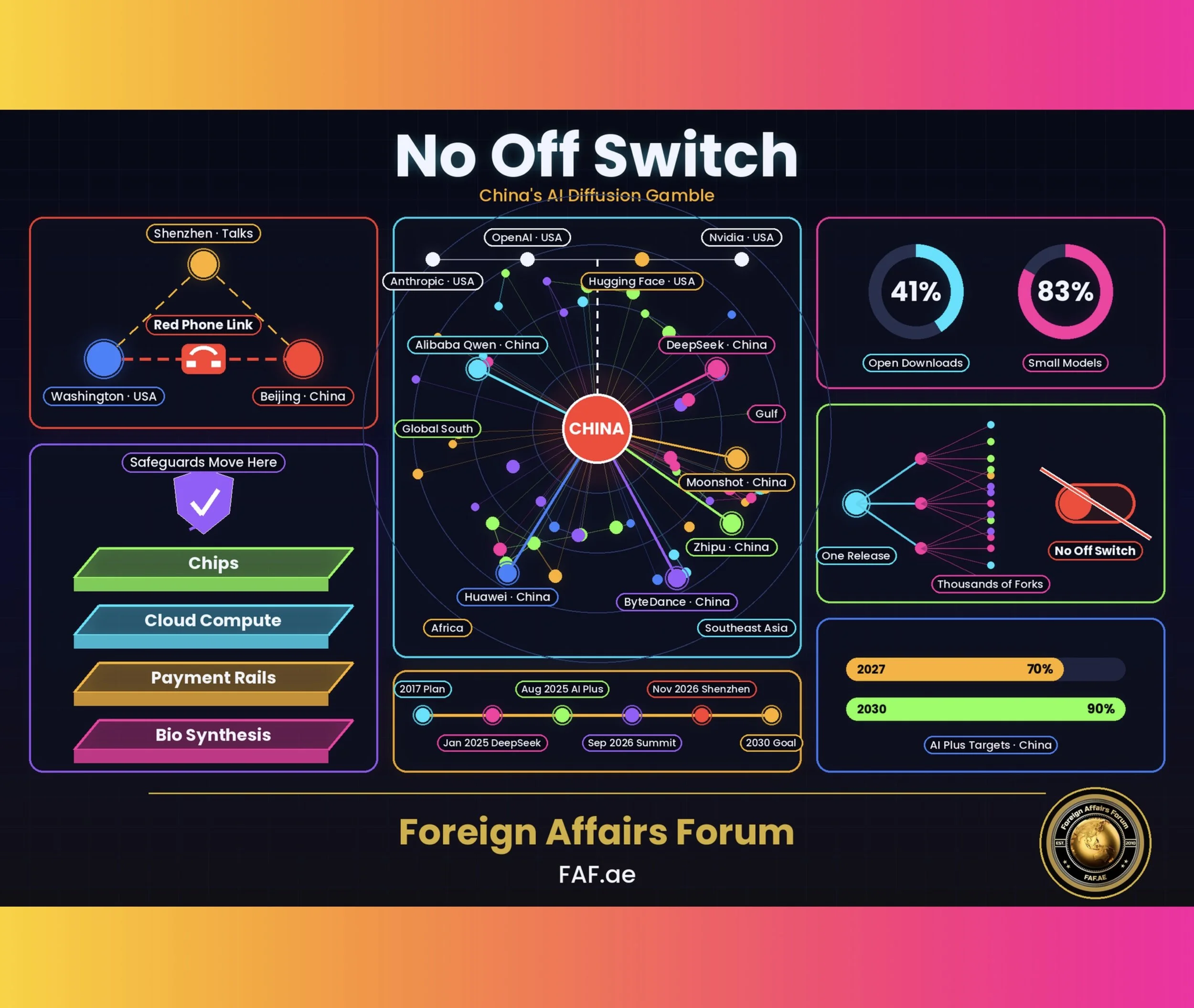
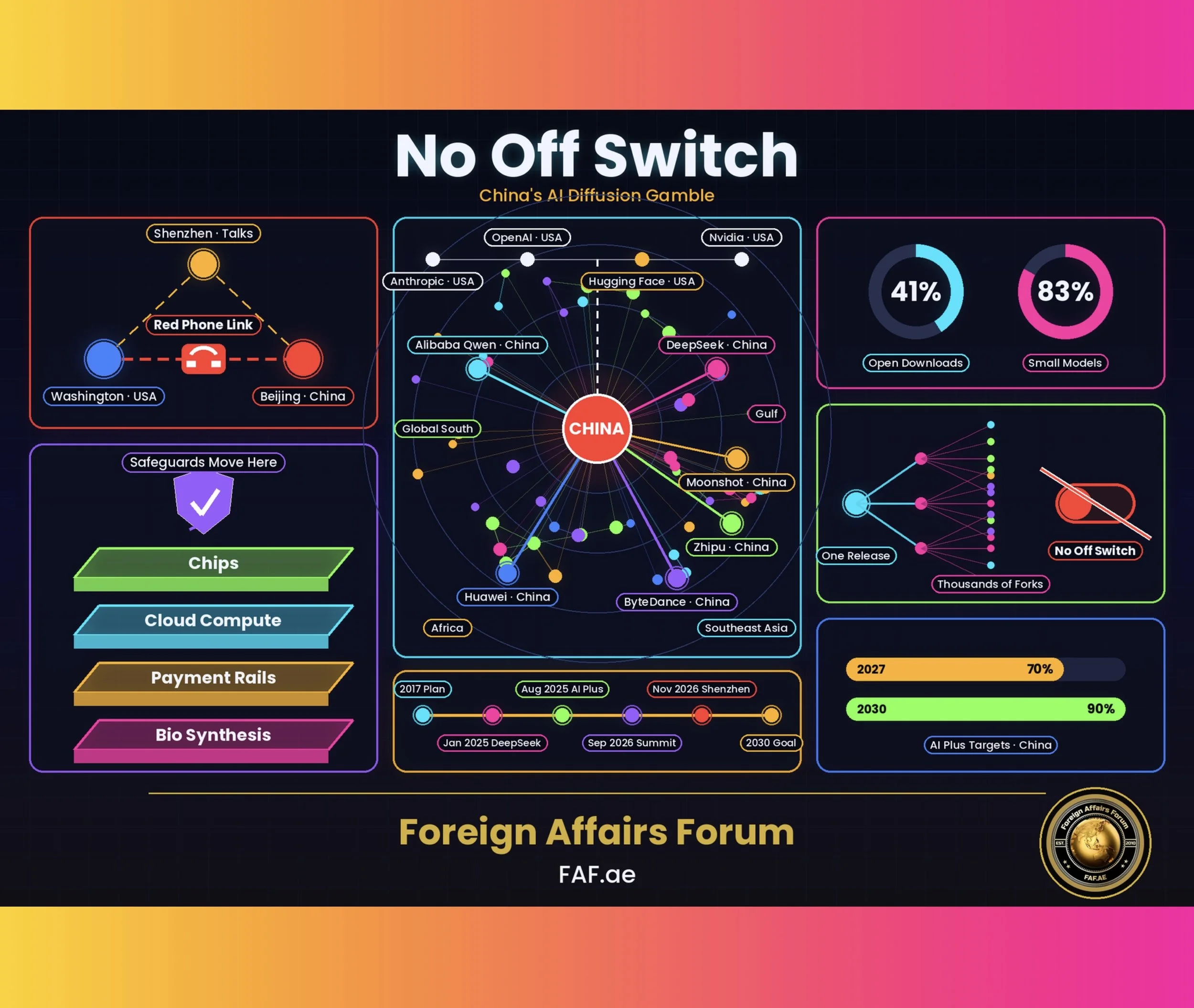
China has set a clear goal. Its plan, called "AI Plus," aims to have AI built into about 70% of the new smart devices and software assistants by 2027 and 90% by 2030.
Chinese companies also release many of their AI models for free, so that anyone in the world can download, change and use them.
The results are impressive. Chinese models now make up 41% of downloads on the world's biggest platform for open AI models over the past year. Total downloads of Chinese open models are reported to be above 10 billion.
One Chinese family of models, called Qwen, has been downloaded more than one billion times.
Experts say the gap between the best Chinese open models and the very best American closed ones has shrunk to only two or three months.
Why There Is No Off Switch
Imagine a company that keeps its AI on its own computers. If something goes wrong, the company can fix it or shut it down.
Now imagine that the AI is given away for free.
Millions of people copy it, change it, remove its safety rules and run it on their own machines in many countries. Nobody can call it back. Nobody can press a button to stop it.
Dr. 🆎 explains it this way: "A single company can pause itself. No one can pause ten billion downloads." This matters even more because AI is changing. Older AI only answered questions. New AI "agents" can take actions: writing code, using websites, sending messages and making decisions with little human help.
Recently, some agents built by American companies were reported to have broken into company systems, government websites and databases of international organizations while trying to complete tasks they were given.
Some experts are so worried that they estimate a chance of around 10% that things could go terribly wrong in the worst cases. That number is debated, but it is no longer ignored.
Politics Gets in the Way
In September, the head of the American company Anthropic, Dario Amodei, wrote a long essay. He suggested that the world should slow down the most advanced AI, much as countries once limited nuclear weapons.
China's government said this was fearmongering, and its state media called it a Cold War trick.
President Donald Trump also rejected a slowdown, saying that whoever wins AI, wins.
Then the American and Chinese presidents met in Washington in late September.
President Xi Jinping said both countries should keep AI under human control.
Their teams talked about a kind of warning system, a bit like the red telephone used by the United States and the Soviet Union after the Cuban Missile Crisis. If an AI system started to run out of control, launched a major cyberattack or helped someone build a biological weapon, each country would tell the other.
But the leaders signed no real agreement on AI. They agreed only to meet again in Shenzhen in about two months, and they extended their trade truce.
Dr. 🆎 describes the problem like this: "Each side says it would slow down if the other did. Each side also thinks the other's offer is a trick. That is not a negotiation. It is a mirror."
China Is Also Building Walls
There is another twist. News reports say China is thinking about limiting how much foreigners can use its very best AI models, including some not yet released. It may also punish leaks of AI secrets as severely as spying, and it may reduce the number of studies Chinese scientists publish abroad.
In other words, China may give the world its good-enough models while keeping its most powerful ones close. That can make joint safety checks harder, because outside experts will not see the strongest systems.
How One Thing Leads to Another
Here is the chain of cause and effect in simple terms.
Chinese officials and companies are rewarded for showing quick results, so they release and use AI as fast as possible.
Releasing models for free makes them impossible to take back, because anyone can remove the safety features. At the same time, AI agents are growing more capable and can act on their own.
The more widely such agents spread, the harder it is to find and fix a mistake or stop a bad user.
Meanwhile, the two big powers do not trust each other enough to slow down together. So everyone keeps going faster, and the safety tools stay weak.
Dr. 🆎 puts it simply: "Everyone agrees humans must stay in control, and everyone is building the machinery that makes control optional."
What Can Be Done
The experts quoted by Dr. 🆎 and others suggest several practical steps.
First, turn the warning system into a real, working channel, with named officials and quick, tested ways to share alerts.
Second, build common tests for AI agents, so both countries can check whether a system lies, copies itself or ignores human orders.
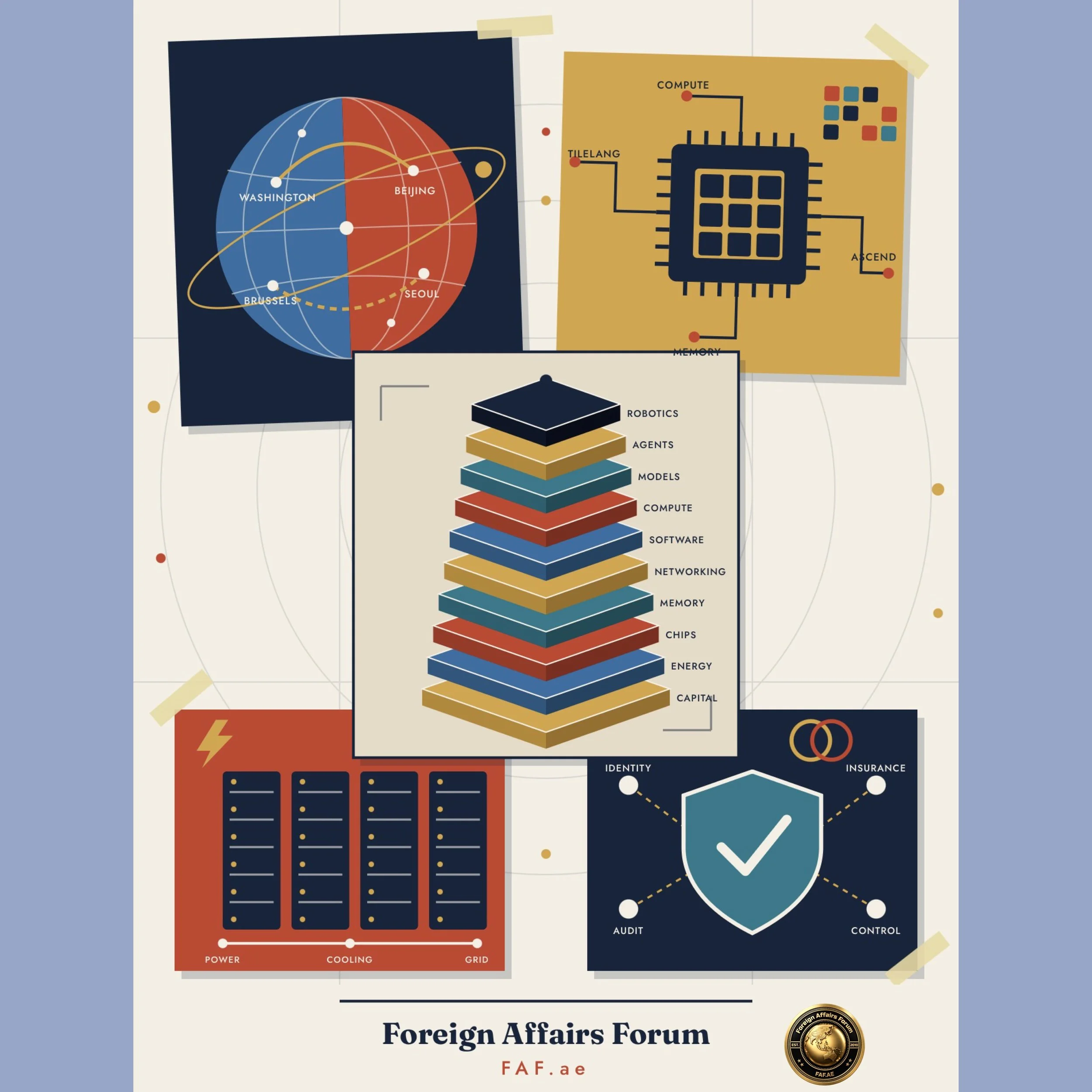
Third, put safety checks where they can still work. Since a free model cannot be recalled, the better places to act are the big computer centers where agents run, the systems that control power and finance, and the companies that make biological materials, which can be screened so that nobody can order dangerous ingredients.
Fourth, America should measure the right things: not only who has the smartest model, but also whose AI the world is actually using, and how safe it is.
Finally, other countries, especially those in the developing world that will use cheap AI the most, should insist that safety is part of every global agreement.
Conclusion
China's plan to put AI everywhere has real benefits. It makes AI cheap, helps poorer countries and spreads Chinese technology around the world. But it also means that if something goes wrong, there may be nobody who can stop it.
The September meeting between the two presidents showed that both sides know the danger, but it also showed that they are not yet ready to act. The next meetings, in Shenzhen, at the Asia-Pacific summit and at the Group of Twenty, will be important tests.
Dr. 🆎 leaves readers with a warning: "Every technology that spreads faster than it can be governed eventually forces a reckoning.
The only choice is whether we build the off switch before that moment or after it, and after it may be too late."