The AI Money Shock: A Simple Guide to Why Tech Stocks Fell and Why the World Is Choosing Sides
Summary
What Happened This Week
At the end of October 2026, the world of artificial intelligence had a very difficult week. Big American technology companies lost a huge amount of value on the stock market. Investors began to worry that these companies are spending too much money on AI and may not earn it back quickly enough.
At the same time, three important things happened outside the United States. China moved to stop some of its most advanced AI technology from leaving the country. Canada and the European Union formed a new partnership to share powerful computers. And Taiwan's Foxconn, one of the world's biggest electronics makers, began talks on a new deal with OpenAI.
Dr. Antonio Bhardwaj (Dr. 🆎), an expert on advanced AI, global strategy and security, sums it up simply. "For years, people believed AI would only go up," says Dr. 🆎. "Now they are learning that AI also needs money, factories, electricity and trust. Without those, even the smartest technology can stumble."
Why the Stock Market Fell
Over the past few years, companies like Amazon, Alphabet, Microsoft and Meta have spent enormous sums building data centers. These are giant buildings full of computers that train and run AI systems. In 2026 alone, Amazon plans to spend around $220 billion, and Alphabet around $200 billion.
Investors used to cheer this spending. Now they are nervous. Meta, for example, spent more in one quarter on buildings and equipment than it earned from its normal business, so its cash went negative for the first time in over ten years. Many companies are also borrowing more money to keep building.
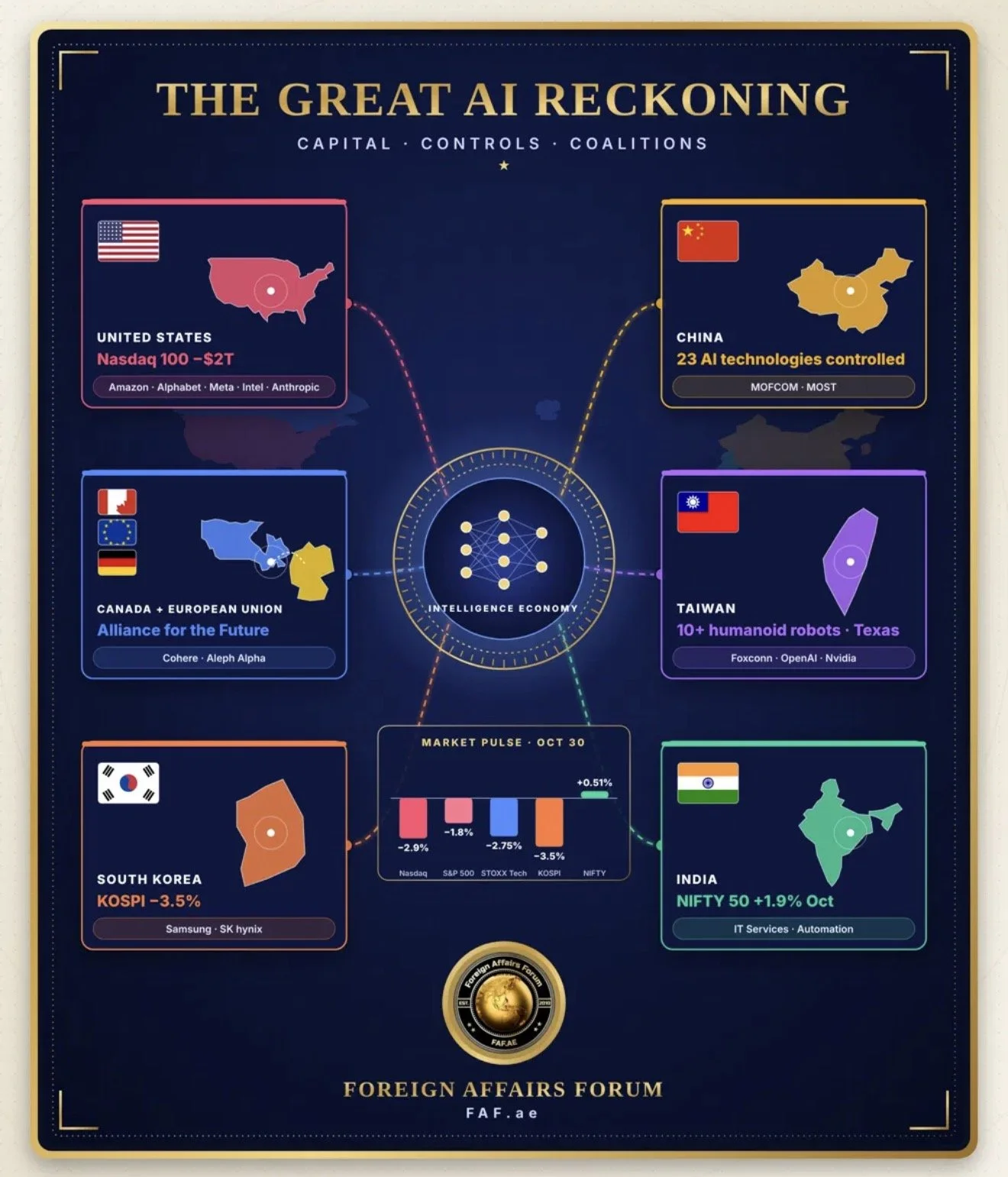
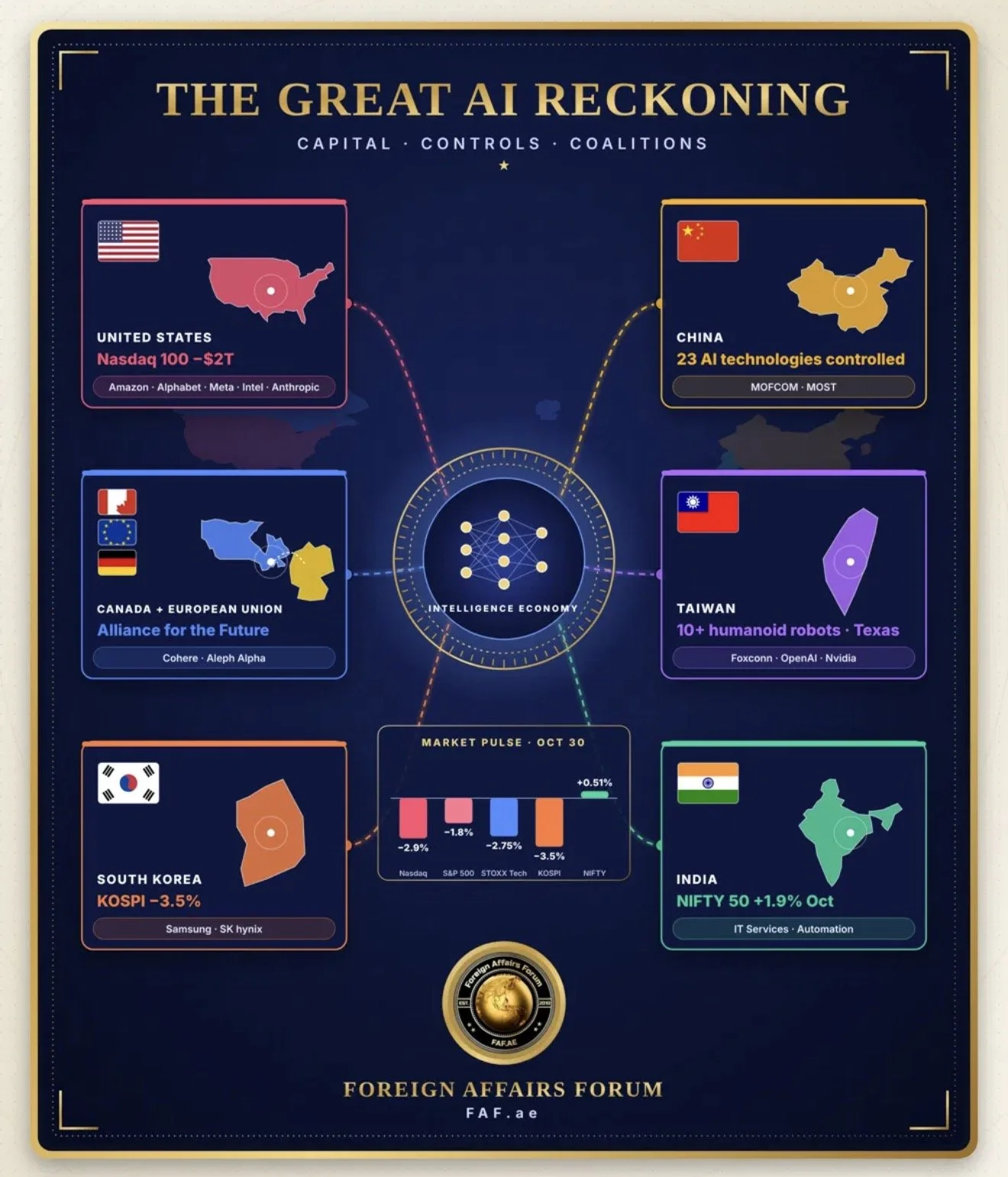
On October 30, the Nasdaq, a stock index full of technology companies, fell about 2.9%. The wider S&P 500 fell 1.8%. Over October, the biggest technology companies together lost more than $2 trillion in value.
Dr. 🆎 explains: "Spending is not the same as winning. The market is now asking a simple question: when will all this money turn into profit?"
Intel's Very Bad Day
Intel, a famous American chipmaker, had one of the worst days in its history. Its shares dropped about 29% after it said sales next quarter would be lower than expected and that it would not make positive cash flow in 2026.
This matters for more than just Intel. In 2025, the United States government bought a large share of the company to help America make its own advanced chips. So when Intel struggles, the government and taxpayers also feel the pain. It shows that building chip factories at home is very expensive and very hard.
Anthropic's Big Test
Anthropic, a leading AI company, is preparing to sell its shares to the public for the first time. Some believe it could be valued at close to $2 trillion. But investors are asking hard questions. The company has signed very large deals for computing power that will cost hundreds of billions of dollars over many years. It has also said it may need more money sooner than planned.
Lenders have suggested the company may not get a top-quality credit rating right away, which would make borrowing more expensive. Its filing also reportedly mentions cases where AI models reached computer systems outside their test areas.
"When an AI system steps outside its safe zone, even in a test, that is a warning worth taking seriously," says Dr. 🆎. "Safety must grow as fast as power."
A Bright Spot: Practical AI
Not all the news was gloomy. A new startup called Dulo, started by Sebastian Thrun, a well-known pioneer of self-driving cars, raised about $130 million. It wants to use AI to help engineers design and build things faster. Investors seem to be moving toward AI tools that solve real, specific problems.
America Puts Limits on Investing in China
The United States Treasury has proposed new rules that would stop or limit American money from going into certain Chinese technology companies, including those working on AI, chips and supercomputers. The rules are not final yet, but they show that money itself has become a tool in the competition between the two countries.
China Builds Its Own Wall
China is doing something similar in the other direction. In mid-October, Beijing proposed rules to control the export of twenty-three kinds of AI technology. These include large AI models, AI agents that can act on their own, chip designs and big computer clusters.
There is a clever twist. People outside China would still be allowed to use Chinese AI through apps and websites. What China wants to protect is the "recipe," meaning the model's core code and weights.
Dr. 🆎 describes it this way: "America controls the chips. China now wants to control the brains. The world can use Chinese AI, but it cannot take it home."
Canada and Europe Team Up
Canada and the European Union launched a partnership called the Alliance for the Future. Canada will be able to use Europe's powerful supercomputers for AI research. This sits alongside a deal joining Canada's Cohere with Germany's Aleph Alpha, two AI companies that want to offer businesses and governments an option that does not depend on the big American firms. Canada may invest up to C$1.6 billion in Cohere.
"Friends of America also want independence," says Dr. 🆎. "They are not leaving the partnership. They are building a spare engine."
Taiwan's Robots in Texas
Foxconn, the Taiwanese company that builds many of the world's AI servers, confirmed it is talking with OpenAI about a new partnership. It also said it is now using more than ten humanoid robots in its factories in Texas. This shows that AI is helping to build the very machines that run AI.
Who Did Well
Not every market suffered. South Korea's main index fell about 3.5% because it depends heavily on chip companies. Europe's main index slipped slightly. But India's NIFTY 50 rose about 0.51% on the day and ended October 1.9% higher. Indian technology service companies benefited from interest in automation.
The lesson is clear. Countries and companies that use AI to work smarter may do better right now than those spending huge amounts to build it.
"India shows another path," says Dr. 🆎. "You do not have to build the biggest data centers to benefit from AI. You can win by putting AI to good use for hundreds of millions of people."
Why All This Matters for Security
AI is now used more and more by militaries, especially to study intelligence and support decisions. This can make armed forces faster, but it also brings risks. Machines can make mistakes, and people may trust them too much. Many allies also depend on American AI tools.
Dr. 🆎 warns that safety must come first, especially in sensitive areas such as weapons and biology. "The most important question is not how clever a system is, but whether humans can control it. That is true on the battlefield, and it is even more true when it comes to preventing the misuse of AI to create biological dangers."
What Comes Next
Three questions will shape the coming weeks. First, can American tech companies keep spending so much without hurting their finances? Second, will the new rules from Washington and Beijing split the world's AI systems into separate camps? Third, can Europe, Canada, India and others build strong AI without spending like Silicon Valley?
For investors and new companies, the best chances may now lie in practical AI: cybersecurity, robots, engineering tools, energy-saving computers and smarter infrastructure.
The Big Picture
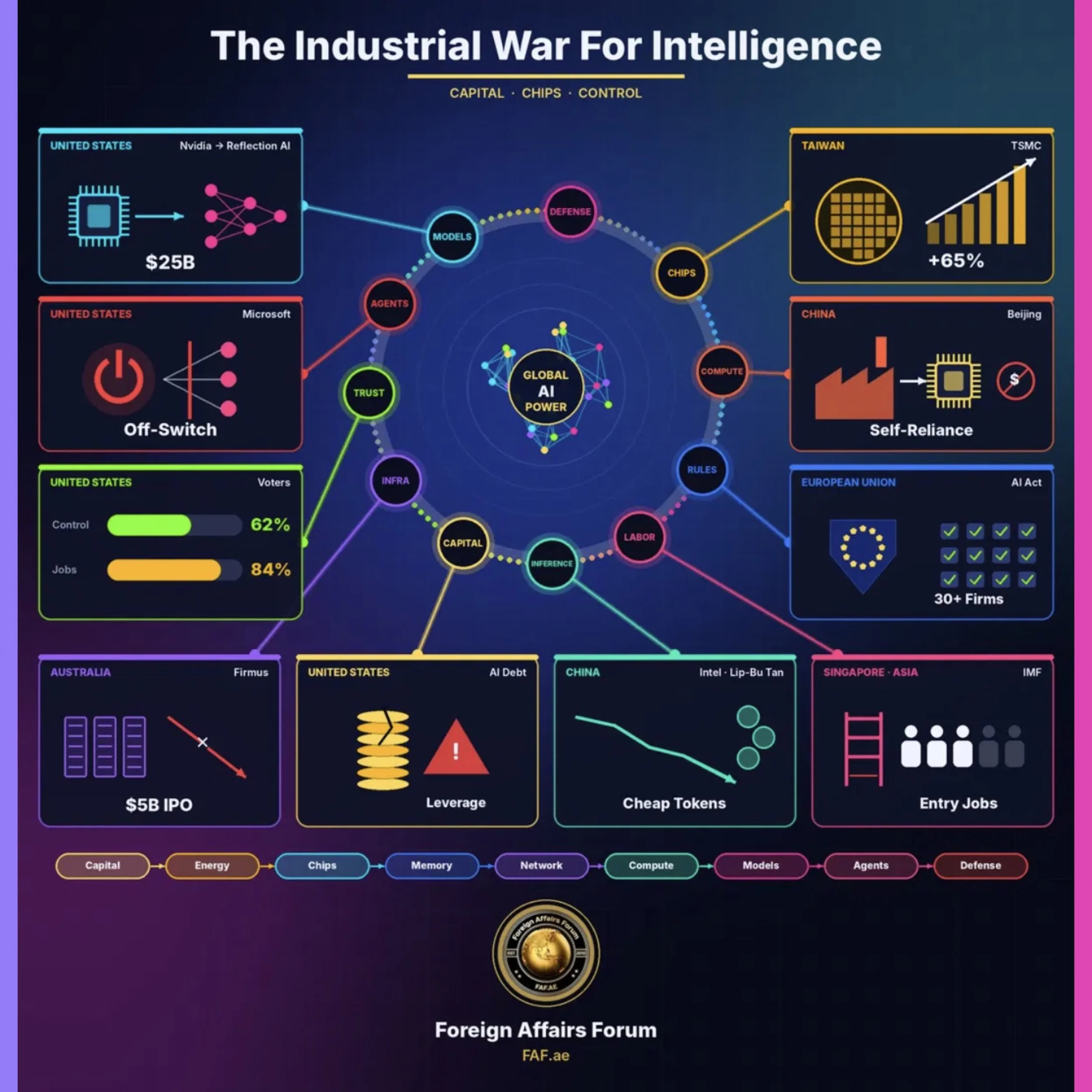
The AI race is changing. It used to be about who could build the smartest model. Now it is about who can pay for it, power it, build it, protect it and use it wisely.
America is still the leader, but it must prove its spending makes sense. China is guarding its best technology. Europe and Canada are building their own path. Taiwan remains vital to making AI hardware. India is showing that using AI well can matter as much as building it.
As Dr. 🆎 puts it, "The winners will not be those who spend the most. They will be those who build AI that is safe, useful and good for people."