Beginner's 101 Guide: Winning Battles, Losing Wars: Why America Keeps Falling Short
Foreign Affairs Forum | Dr. Antonio Bhardwaj (Dr. 🆎)
Summary
A Question Many Avoid
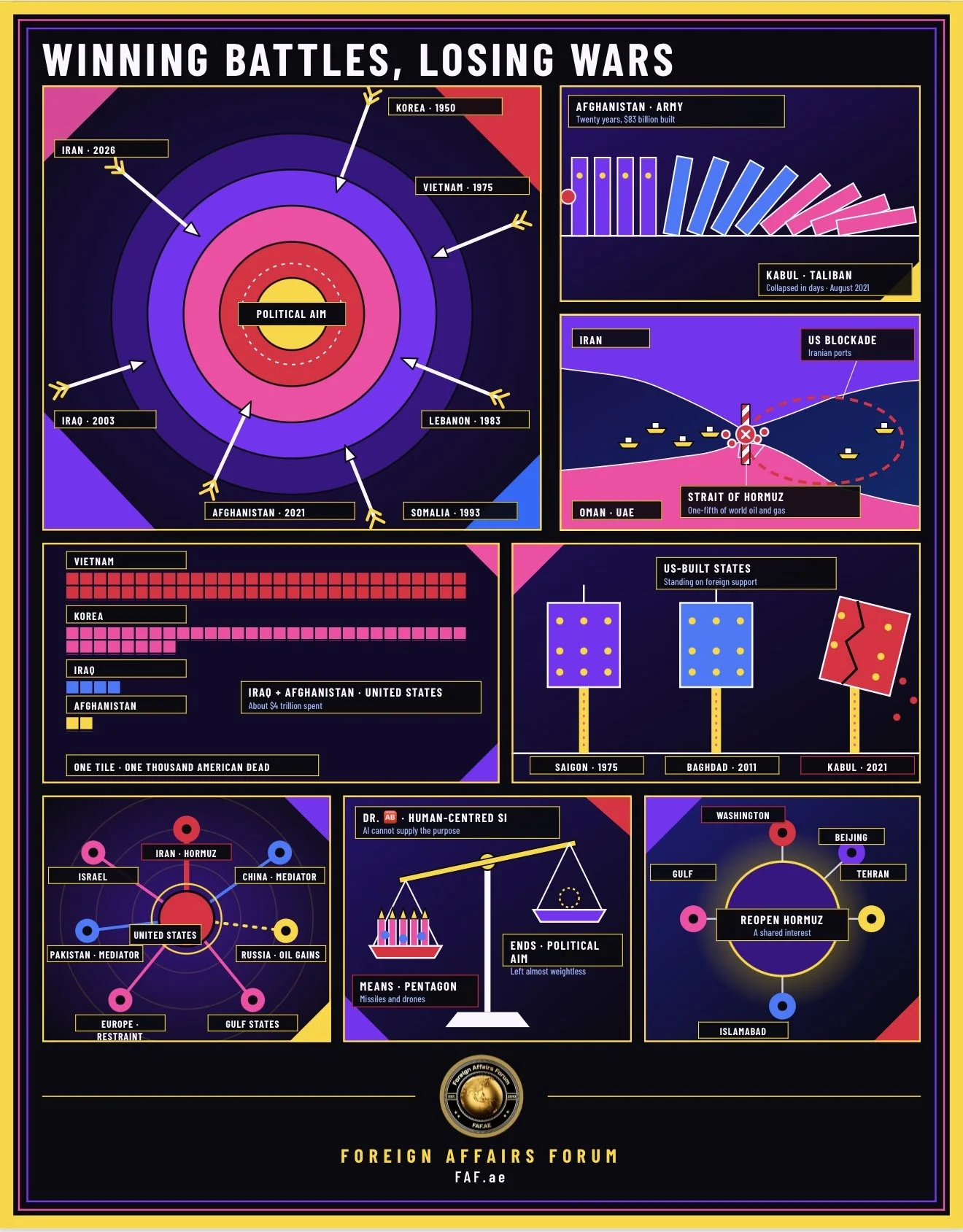
Since the Second World War, the United States has had the strongest military in the world. It has won many battles. Yet in many of its biggest wars, it did not get what it wanted. This is what experts mean when they say America has "lost" wars. A war is not only about who fights better. It is about whether the goals of the war are achieved.
Dr. Antonio Bhardwaj (Dr. 🆎) studies how technology and politics shape global security. He says the main problem is simple to state. America is very good at destroying enemy forces, but much less good at building the peace that is supposed to follow. This article explains why, looks at the main wars, and asks what the war with Iran might teach us.
Korea and Vietnam
The first big test came in Korea. In 1950 North Korea invaded the South. American-led forces pushed the invaders back and then went north, hoping to unite the whole country. China entered the war, and the fighting turned into a long stalemate. In 1953 the two sides signed an armistice, and the border stayed almost where it started. More than thirty-six thousand Americans died. South Korea was saved, which was an important achievement, but the bigger goal was not reached, and there is still no peace treaty.
Vietnam was much worse. America sent more than half a million soldiers and dropped enormous numbers of bombs. Fifty-eight thousand Americans died, along with perhaps two million Vietnamese civilians. In 1975, two years after American troops left, the capital of South Vietnam fell. Many Americans said politicians had stopped the army from winning. Most historians say the war could not be won, because the other side was fighting for its own nation and would not give up.
Small Defeats and a Big Mistake
In 1983 a bomb killed two hundred and forty-one American servicemen in Lebanon, and America left soon after. In 1993, eighteen Americans died in Somalia, and America left again. These were small wars with small losses, but they showed how quickly American political will could fade.
The Gulf War of 1991 was a success, because the goal was limited: push Iraq out of Kuwait. But the leader, Saddam Hussein, stayed in power, and that helped set up the next war.
Iraq and Afghanistan
After the attacks of September 2001, America invaded Afghanistan and then Iraq. The Afghan invasion removed the Taliban in weeks. But America stayed for twenty years to build a new Afghan state. It spent about $2.3 trillion and trained an army at a cost of about $83 billion. When American troops left in August 2021, that army collapsed in days, and the Taliban returned to power.
The Iraq war began in 2003 because of weapons that were never found. It cost about $2 trillion, more than four thousand American lives and an estimated three hundred thousand Iraqi civilian lives. It led to civil war and the rise of the Islamic State. In the end, Iran gained the most influence in Iraq. American troops have now left most of the country and are due to finish leaving at the end of September 2026, although some remain in the Kurdish north.
The War With Iran
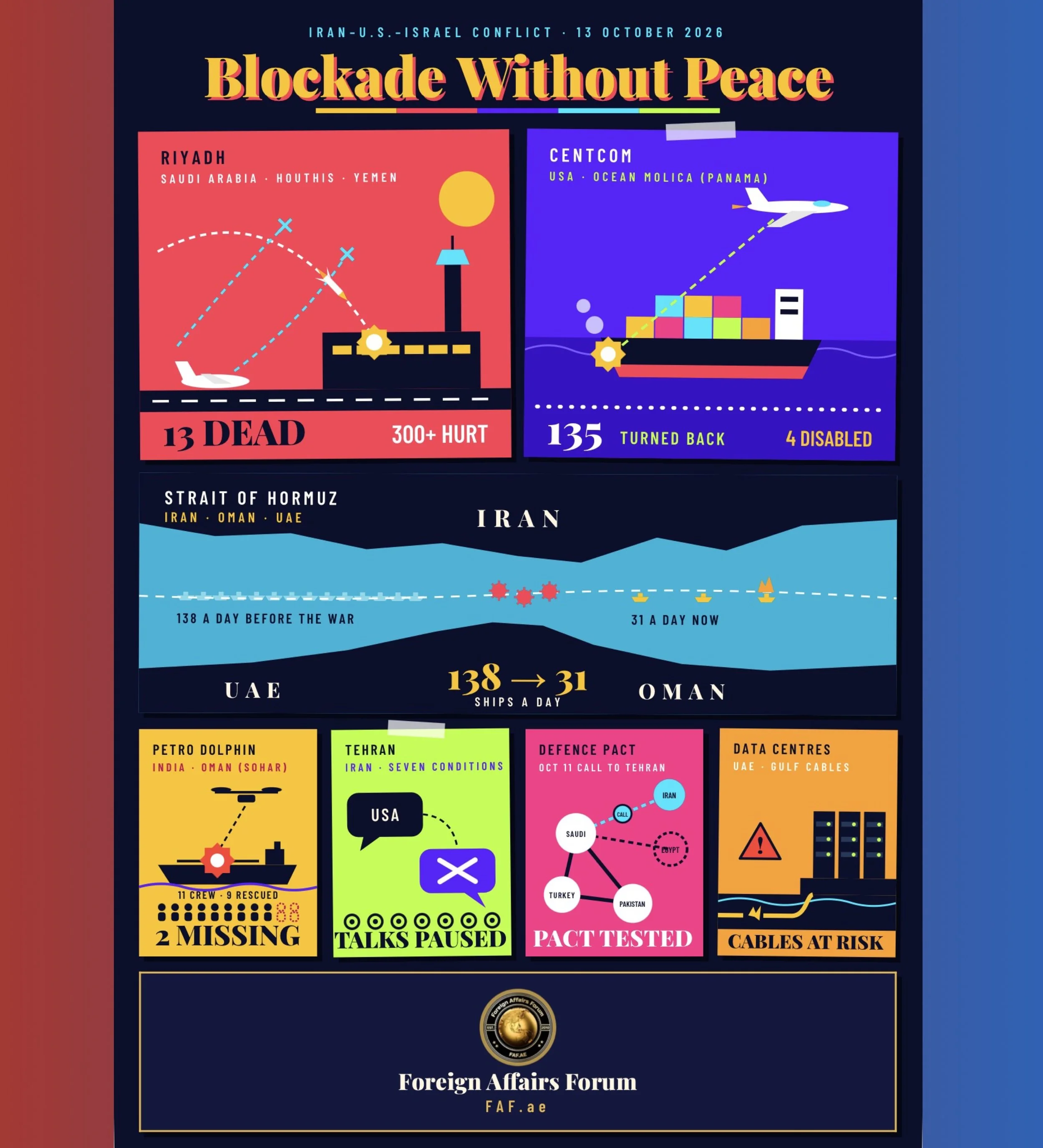
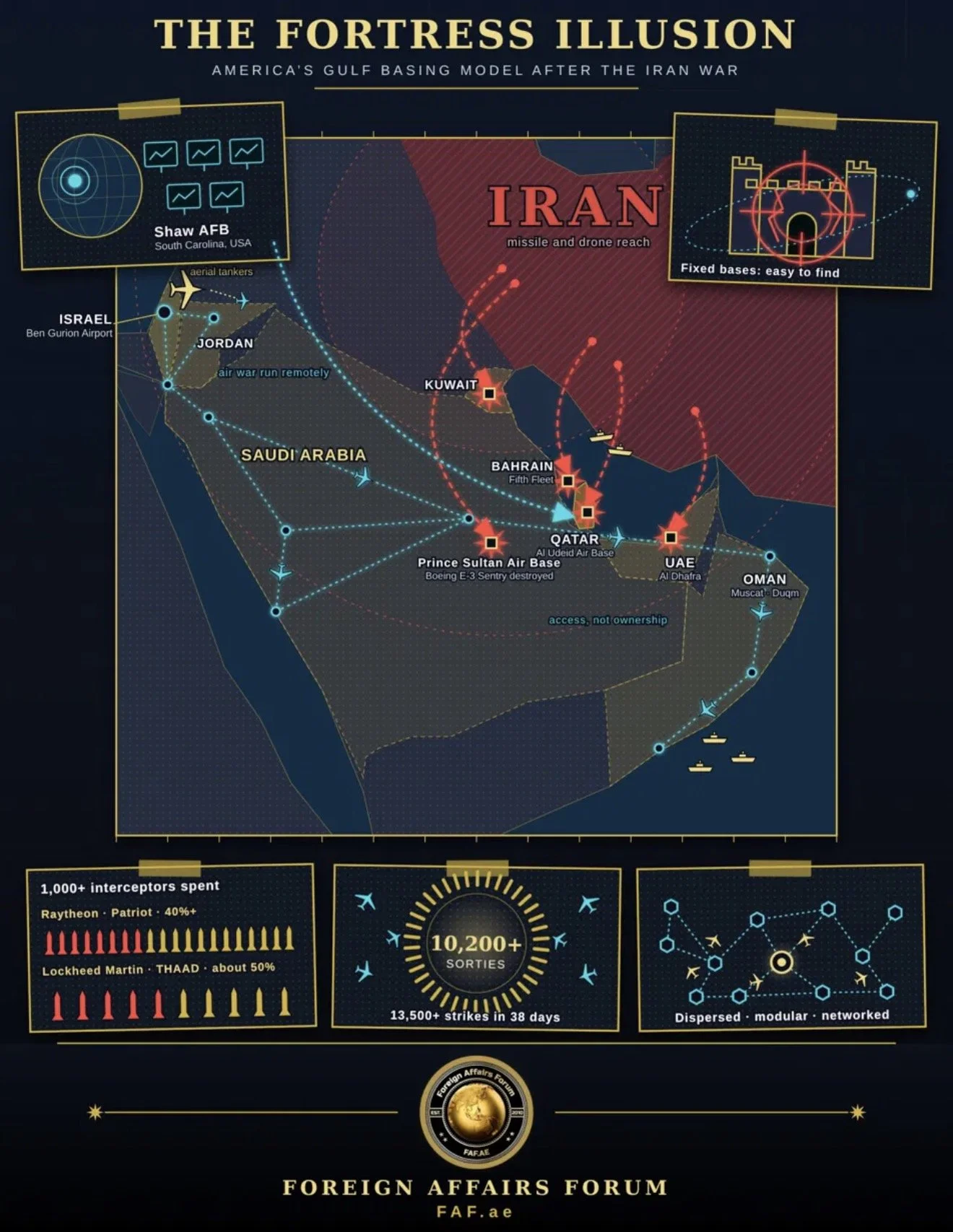
On the twenty-eighth of February 2026, America and Israel struck Iran and killed its supreme leader. Iran hit back at Israel, American bases and countries that host them. It also closed the Strait of Hormuz, the narrow sea passage through which about one-fifth of the world's oil and gas normally travels.
In April, Pakistan helped arrange a ceasefire, and talks were held in Islamabad. They failed, and America put a naval blockade on Iranian ports. In June there was a new agreement to keep talking for sixty more days. But by October, the strait is still mostly closed. Iran says it will not reopen it until America accepts its seven conditions. President Donald Trump has rejected Iran's plan and made harsh threats. Washington says it has won. Iran has not given in.
Why Does America Keep Falling Short?
Experts point to several reasons.
The first is that the goals are too big. Wars to remake whole countries, such as Iraq and Afghanistan, need political success, and soldiers cannot supply that alone.
The second is that the stakes are not equal. The enemies in these wars were fighting for their homes, their beliefs or their survival. America was fighting for influence and security far from its own shores. People with more at stake can usually endure more pain for longer.
The third is that local partners often had little support from their own people. Governments built with American money and protected by American power fell apart quickly once that protection was gone.
The fourth is that armies count what can be counted, like bodies, bombs dropped or soldiers trained. These numbers can look good while the real situation gets worse.
Dr. 🆎 warns that artificial intelligence can make this problem bigger. A smart machine can handle huge amounts of data, but if it is told to improve the wrong numbers, it may simply give leaders a more confident picture of a failing plan.
The fifth is that Americans no longer feel the cost of war directly. There is no draft, and wars are paid for by borrowing. This makes wars easier to start and harder to end.
What Is at Stake Today
The costs of the Iran war are already large. Higher energy prices hurt people everywhere, especially in poorer countries that import oil. Many civilians have died in Iran, Israel, Lebanon and the Gulf. America's allies in Europe and Asia, who depend on Gulf energy, have asked for restraint. China and Pakistan have gained influence as peacemakers, and Russia benefits from higher oil prices.
Dr. 🆎 also points to a quieter danger. In a long and messy war, small groups may get hold of dangerous tools, such as advanced drones, cyber weapons or even biological agents. Governments built their deterrence for other states, not for these groups, so a prolonged regional war can open doors that are very hard to close later.
What Could Be Done
Dr. 🆎 and other thinkers suggest several changes. First, before any war, leaders should say clearly what they want to achieve, what it will cost, and what they will do if the enemy does not collapse. If they cannot say it plainly, the plan is not ready.
Second, the Iran war should be treated as a problem to be solved with diplomacy backed by strength. Almost every country wants the Strait of Hormuz open. America should work with mediators to turn the June agreement into a lasting deal that reopens the strait, limits Iran's nuclear programme in ways that can be checked, and eases sanctions step by step.
Third, military and intelligence agencies should measure what matters politically, such as how much local people trust their government and how strong the enemy's will really is. Independent teams should be able to challenge official reports. Artificial intelligence can help, but only if it is designed to show its doubts and its blind spots.
Fourth, Congress should take back its power to approve wars, and the public should be told honestly what wars cost and how they are going. Fifth, America should invest in protecting trade routes with other countries, defending against drones and cyber attacks, and preparing for biological threats, instead of preparing only for the last war.
Conclusion
America's record since 1945 does not show weak soldiers or poor weapons. It shows a country that is very strong in battle but has often lacked a clear plan for turning force into lasting peace. The war with Iran is the newest test, and it is not yet over.
Dr. 🆎 believes that intelligent machines will make this lesson even more important. A machine can tell a general where the enemy is, but it cannot tell a country what a war is for. That question will always belong to people. The nations that keep it at the centre of their thinking will build a lasting peace. The nations that forget it may keep winning battles and losing wars.