Beginner's 101 Guide : Who Controls the Machines of War? A Plain-English Guide to the Week the Battlefield Moved Online
Executive Summary
This week brought seven news stories that, taken together, show something important about how modern wars are fought.
The weapons themselves are only part of the picture. Just as important are the satellites that connect them, the computer centers that power them, the factories that replace them and the artificial intelligence that helps guide them. Countries that depend on systems they do not control are taking a serious risk.
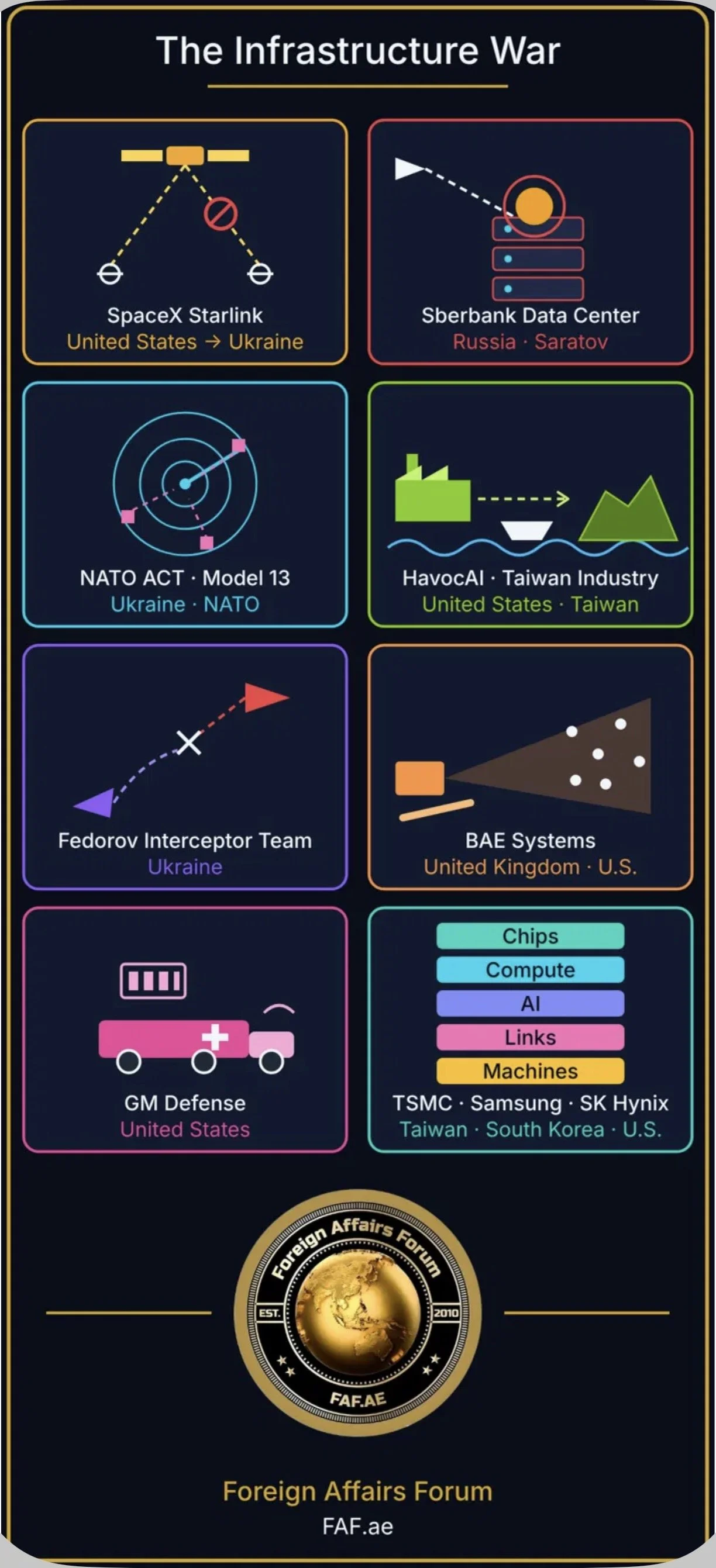
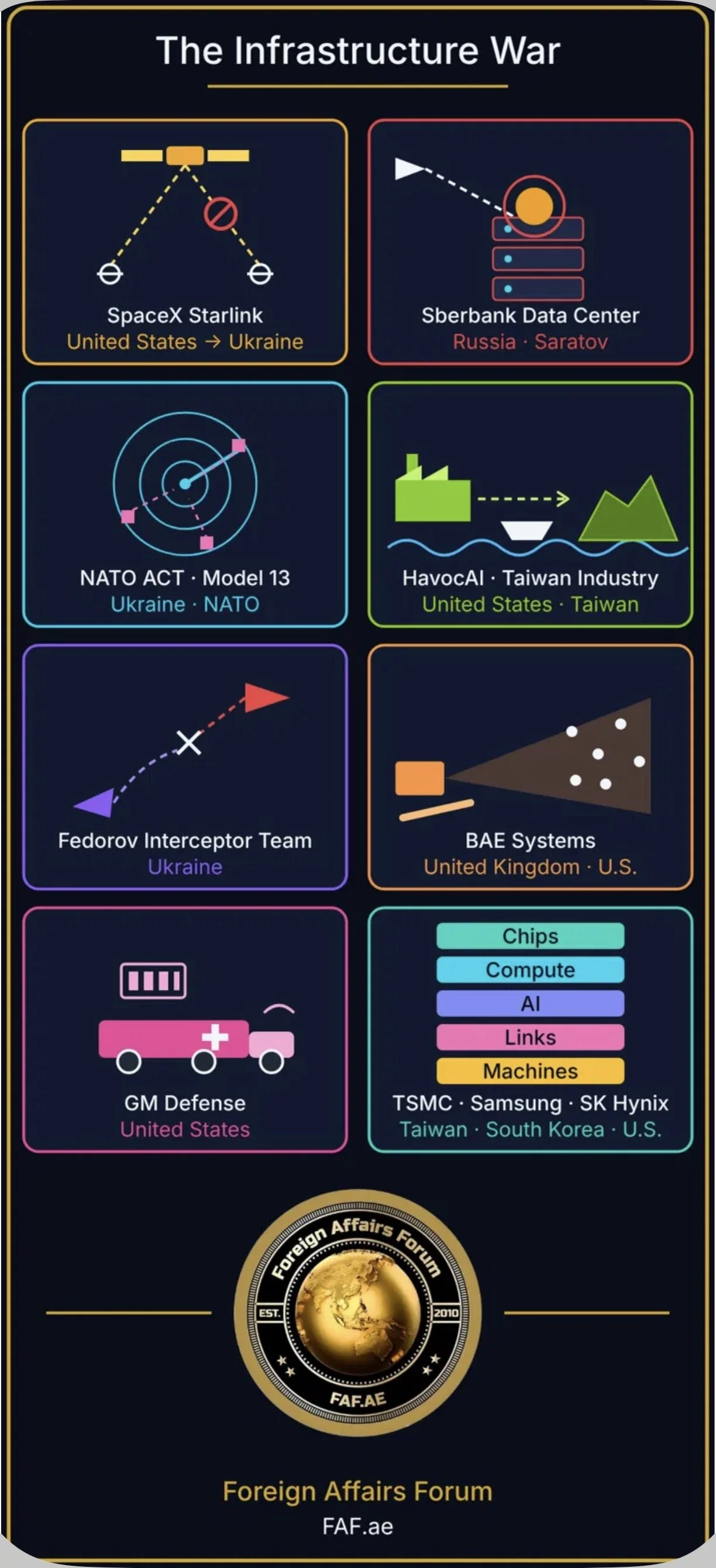
The biggest stories came from Ukraine. A company called SpaceX limited the speed at which some of its military satellite terminals can work in Ukraine, which disrupted missions.
Ukrainian drones also attacked a large data center in Russia. These events show that a private company can affect a war, and that computer facilities are now being treated as targets.
Financial markets moved too, but not mainly because of these stories. Asian stock markets rose about 0.8% as technology shares recovered. Oil and gold prices were driven more by Middle East tensions and by waiting for American inflation numbers.
Dr. 🆎 explains that the lasting lesson is about control: whoever controls the underlying systems holds the real power.
Introduction
When people think about military strength, they usually picture tanks, warships and fighter jets. That picture is out of date. Today, a drone is only useful if it can talk to its operator, and an artificial intelligence tool is only useful if it can run on a powerful computer somewhere. The factory that builds replacements matters as much as the machine itself.
Dr. Antonio Bhardwaj (Dr. 🆎), a polymath with global expertise in superintelligence, who specializes in human-centered approaches to geopolitical strategy, AI warfare and bioterrorism risk, has been warning about this change for some time. He argues that nations focus too much on which weapon to buy and too little on who controls everything that makes the weapon work. This week's news, he says, shows why that matters.
This FAF article explains the seven stories in simple language, why they matter, and what governments and investors should do about them.
What Has Happened and Why It Matters
Start with Starlink, the satellite internet network run by SpaceX.
Ukraine's forces rely on it to connect drones and vehicles.
This week, SpaceX reportedly placed a limit on how fast certain military terminals can move, set at 160 kilometres per hour.
Ukrainian officials say they were given no warning, and some missions were disrupted.
The lesson is simple. If your army depends on a service owned by a private company, that company's decisions can affect your battle.
Next, Ukrainian drones hit a large data center belonging to Sberbank in Russia.
Data centers are buildings full of powerful computers.
They run banking, communications and, increasingly, artificial intelligence. Sberbank confirmed the attack but said its services kept running, and no one has confirmed that its supercomputers were damaged. Even so, the message is clear: the buildings that hold a country's digital brain are now part of the battlefield.
Ukraine has also announced a new artificial intelligence system, called Model Thirteen, built with NATO.
It studies battlefield data, weather and past attacks to predict where and when Russian drones might strike. This could help commanders place their defenses more wisely. However, no one has independently proved how accurate it is, and an enemy can change tactics to confuse it.
Dr. 🆎 reminds us that a prediction is only a guide, and that a human must always understand it and be able to overrule it.
In Taiwan, American defense start-ups are teaming up with local manufacturers to build drones that do not depend on parts from China.
Taiwan plans to spend more than $7 billion on drones through 2032, and at least thirteen agreements between American and Taiwanese defense firms have reportedly been signed since September 2025. The goal is not just to buy drones but to be able to make and replace them quickly in a crisis.
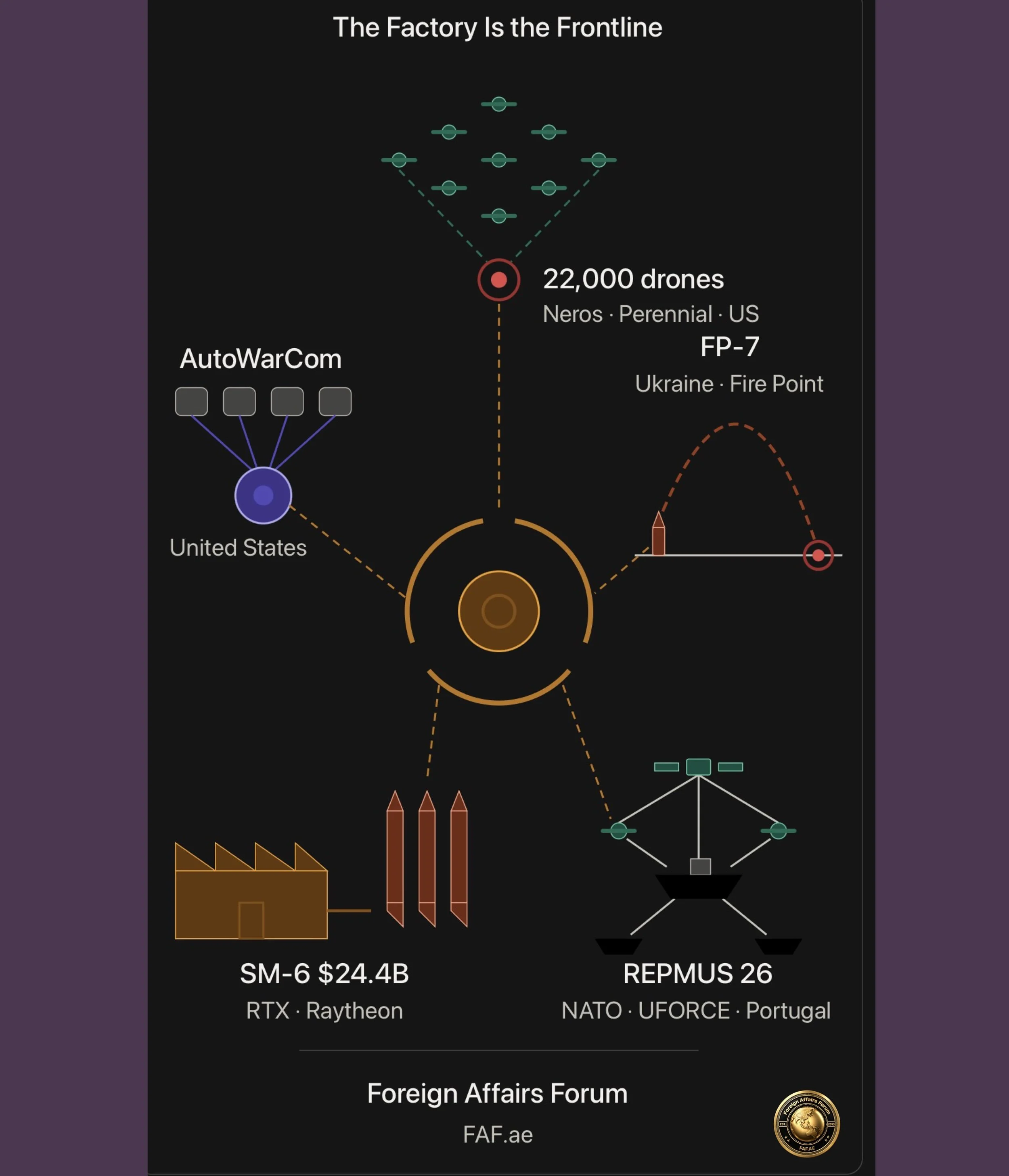
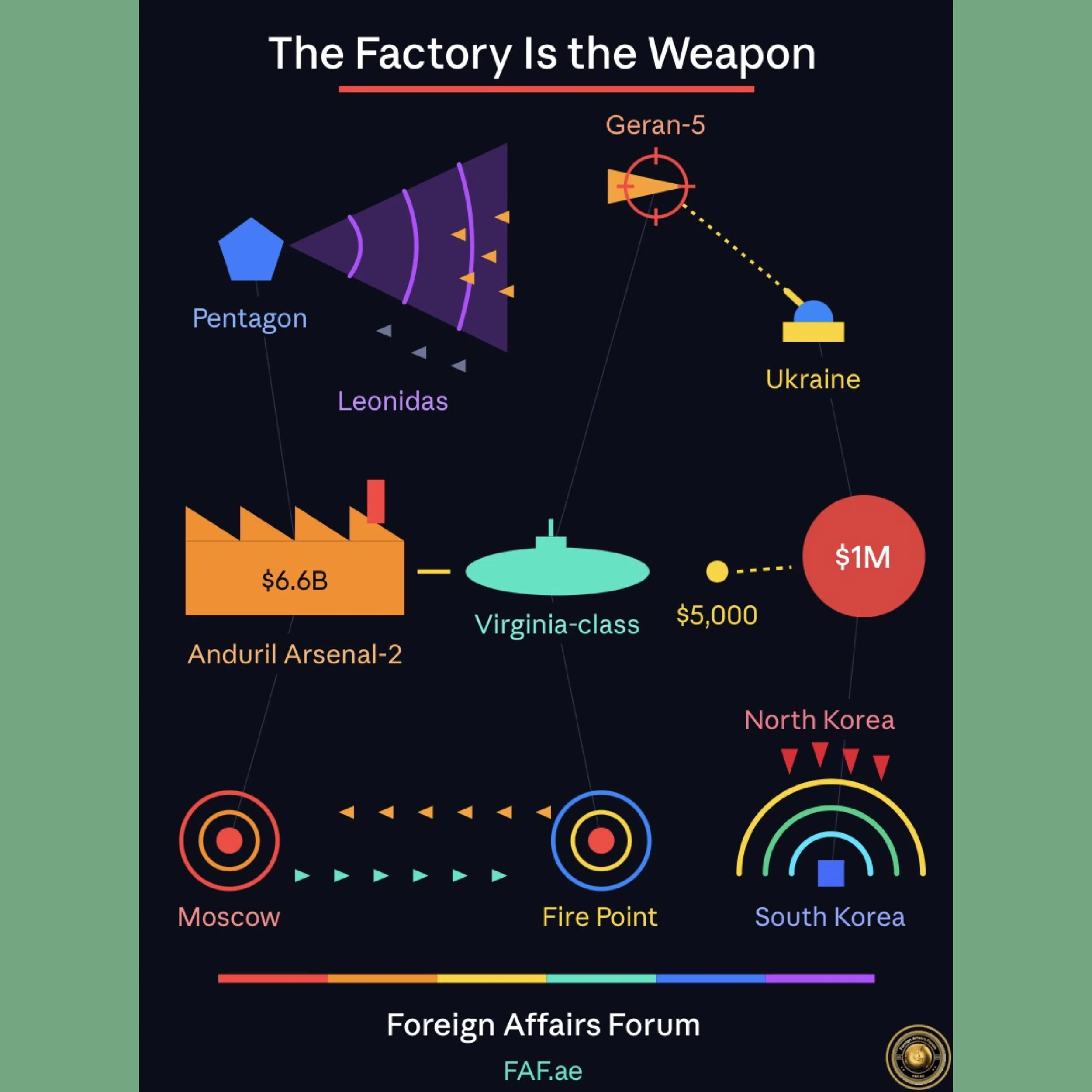
Ukraine also showed a new interceptor, designed to stop Russia's fast jet-powered Geran-5 drones.
It is flown by a person for now, but the plan is to add artificial intelligence. It has reportedly made two successful interceptions in tests, and the team hopes to build hundreds a month by the end of 2026. The reason is cost: it makes little sense to fire an expensive missile at a cheap drone.
BAE Systems revealed two new defense technologies in the United States.
One is a cannon system that can target things in the air and on the ground. The other is a high-power microwave device meant to knock out swarms of drones using energy instead of missiles. BAE says more than 99% of its parts are commercially available, which could make it easier to build. Both are still being developed, so they are not yet proven on a large scale.
Finally, GM Defense, part of General Motors, showed a driverless military truck based on the Chevrolet Silverado 3500HD.
It is meant to carry supplies and evacuate wounded soldiers. Tests are planned for 2027. The idea is that ordinary car technology can be adapted for war more cheaply and quickly than building everything from scratch.
Cause and Effect: How These Stories Connect
These stories are connected by a simple chain.
Cheap drones are hard to stop with expensive missiles, so countries need cheaper defenses. Those defenses depend on sensors, batteries, software and fast communications. Communications depend on satellites and networks, and satellites are often controlled by companies. Artificial intelligence depends on computers, and computers depend on advanced chips and reliable electricity. If one link breaks, the rest suffer.
Dr. 🆎 describes the chain this way: chips lead to computing, computing leads to artificial intelligence, artificial intelligence leads to communications, communications lead to autonomous machines, and those machines then change how battles are fought. A problem in one place, whether a satellite restriction or an attack on a data center, travels along the whole chain.
Money follows the same logic, but more slowly than headlines suggest.
On October 14th, Asian markets rose, with Samsung up about 2.4%, TSMC up about 1.4%, SK Hynix up about 0.8% and SoftBank up about 3.4%. This mostly reflected a recovery in technology and AI shares after a selloff the day before, not a reaction to the defense stories.
The U.S. $ Index was near 102.17 and the € near $1.1202. Brent oil traded near $106.27 a barrel and gold near $4,151.51 an ounce. Oil was pushed up mainly by worries about shipping through the Strait of Hormuz, and everyone was waiting for American inflation data.
Over the longer term, companies that make defense equipment, military software, computer chips and power systems could benefit, but these are possible effects and not confirmed price reactions. Higher oil prices also hurt countries that import energy, including India, and can weigh on the rupee.
What Should Be Done
Governments should avoid depending on a single satellite provider and should write firm service guarantees into their contracts. They should protect important data centers as strategic sites, spread computing across several locations and secure reliable power.
They should test artificial intelligence systems against deception before trusting them in combat, and they should keep humans in charge of key decisions.
Dr. 🆎 calls this a safety rule, not a slogan.
Allied countries should work together on supply chains for rare earths, batteries and specialized chips, so that moving away from one risky supplier does not create another. They should also begin talking about rules: what duties a company has when its service becomes vital in a war, and which digital facilities should be protected because civilians depend on them.
Investors should separate lasting trends from short-term noise. Lasting demand is likely in secure communications, defense software, counter-drone systems and power electronics, while day-to-day market swings will keep following oil, inflation and Middle East news.
Conclusion
The main lesson of this week is that modern military power is built on infrastructure as much as on weapons. Satellites, data centers, artificial intelligence, factories and energy supplies now decide how long a country can fight and how well. The countries and companies that control these foundations will hold the advantage.
Dr. 🆎 ends with a warning and a hope. The warning is that nations that ignore their dependencies will learn the cost at the worst moment. The hope is that keeping human judgment and responsibility at the center of new technology will let societies enjoy its benefits without losing control of it.